What it is
Goat pox is caused by a capripoxvirus, a member of the pox virus family. It is closely related to the sheep pox virus and to the lumpy skin disease virus of cattle. Many East African strains can infect both goats and sheep, although some strains affect one species more than the other. After the virus enters through the nose, mouth or broken skin, it multiplies in the local tissue. It then travels in the blood to the skin, lymph nodes (the 'glands' that filter infection, felt under the jaw, in front of the shoulder and in the flank) and internal organs such as the lungs and gut. In the skin it damages small blood vessels and skin cells. This first causes red patches, then raised firm nodules, and finally dead tissue that dries into a scab. Similar lesions form inside the mouth, nose, windpipe and lungs. That is why some goats struggle to breathe and develop pneumonia. Open lesions are easily invaded by bacteria and fly maggots, which makes the goat sicker. The time from infection to signs (the incubation period) is usually around one to two weeks, but it can be up to three weeks.
Which animals are most at risk
All breeds and ages of goats can be infected. Young kids, very old goats, pregnant does and animals that are thin, sick or heavily wormed suffer most. Imported or improved breeds such as Saanen, Toggenburg, Alpine and Boer crosses, and goats from areas where the disease has not recently circulated, often get more severe disease than local East African breeds. Unvaccinated flocks are at greatest risk. Outbreaks are more common where many flocks mix: livestock markets, pastoral and agro-pastoral areas, communal grazing and watering points, and along trade and migration routes. Droughts push herds together and weaken animals, and wet seasons with many biting flies help spread. Zero-grazing dairy goat units are not safe either if new stock is brought in without quarantine. Sheep kept with goats can also be infected.
Signs to look for
Early signs
- Fever: the goat feels hot, especially at the ears and inside the thighs. It stands apart, hunched and dull, and eats less.
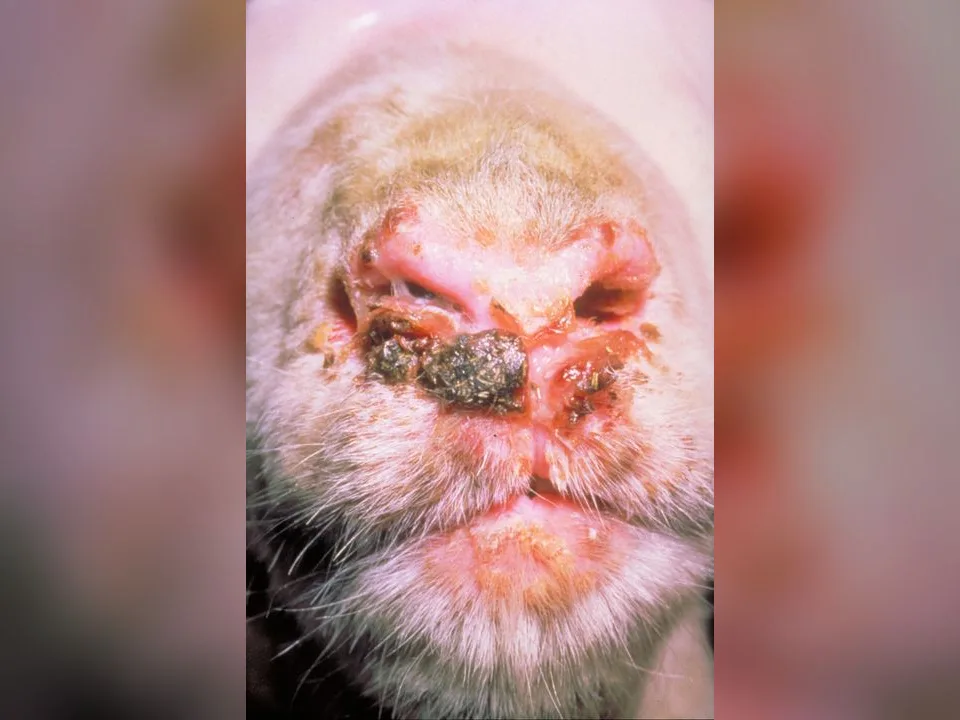
- Watery eyes and a clear runny nose that soon becomes thicker, together with drooling or a wet mouth.
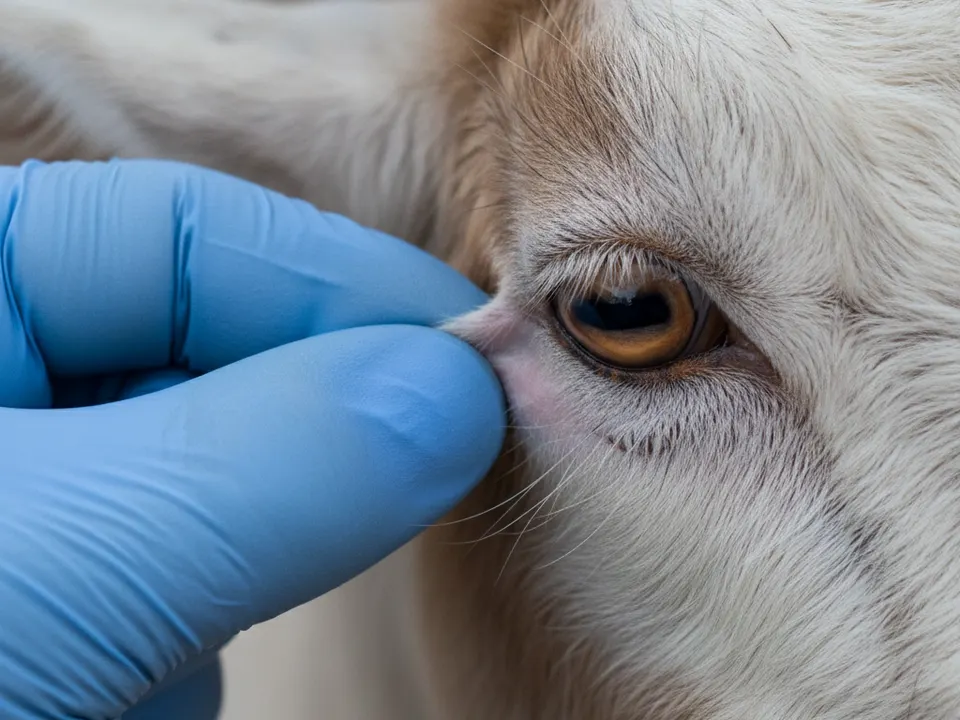
- Swollen lymph nodes, felt as firm lumps in front of the shoulder, under the jaw or in the flank, often before skin lumps appear.
- Small red, flat patches on hairless or thinly-haired skin: lips, nostrils, eyelids, ears, udder and teats, scrotum, under the tail and inside the thighs.
- Within a day or two these patches become raised, firm, round lumps (nodules), usually a few millimetres to about a centimetre across.
- Faster breathing and reluctance to move, and does may suddenly drop in milk.
As it gets worse
- Lumps turn grey or dark in the middle, the tissue dies and forms hard brown-black scabs that later fall off and leave scars.
- In severe cases lumps cover large parts of the body, including the woolly or hairy skin, and the eyelids swell shut.
- Sores in the mouth, tongue and nostrils make eating and drinking painful, so the goat loses weight fast.
- Laboured, noisy breathing, coughing and thick nasal discharge as lesions develop in the airways and lungs (pneumonia).
- Sores on the teats and udder make does refuse to let kids suckle, and mastitis can follow.
- Pregnant does may abort, and young kids may die suddenly, sometimes before many skin lesions are seen.
- Infected wounds may smell bad and attract flies and maggots, and very sick goats go down and cannot rise.
What to do right now
- Isolate every goat that shows fever or skin lumps in a separate shaded pen, downwind and away from the healthy flock and any sheep.
- Report immediately to your County Veterinary Officer, area veterinary officer or the nearest Directorate of Veterinary Services office. Goat pox is notifiable, and reporting is a legal duty.
- Stop all movement of goats and sheep on and off the farm: no selling, buying, lending bucks, taking animals to market or communal grazing until the vet advises.
- Give sick goats clean water at all times and soft, palatable feed such as fresh cut grass, leaves or soaked feed, because mouth sores make eating painful.
- Keep the pen dry, clean and well ventilated, and provide shade so feverish goats can rest. Separate kids from does with teat sores if suckling is too painful, and hand-feed if needed.
- Protect against flies, for example by keeping the pen clean and removing dung and wet bedding, because flies spread the virus and infest wounds.
- Wear gloves or wash hands well with soap after handling sick goats. Use separate boots, clothes and buckets for the sick pen, and handle healthy goats first.
- Record each goat's signs, temperature if you have a thermometer, and any deaths with dates. Keep carcasses covered and do not sell or eat meat from sick goats until the vet gives guidance.
How it spreads
- Direct contact between sick and healthy goats or sheep, such as sharing a pen, nose-to-nose contact at night bomas or crowding at water points.
- Breathing in virus from the nasal discharge, saliva and breath of sick animals, especially in closed, poorly ventilated housing.
- Scabs falling off healed or sick goats carry live virus. It can survive for months in dry, shaded pens, bedding and soil around the boma.
- Contaminated items such as feeding troughs, water buckets, ropes, vehicles, shearing or castration tools, clothing and shoes of people moving between flocks.
- Biting flies, especially stable flies, can carry the virus mechanically on their mouthparts from one goat to another.
- Buying goats from markets, or mixing flocks during trade, dowry exchange, communal grazing or pastoral migration, is a common way the disease enters new areas.
- Recovered goats do not stay long-term carriers in the way some diseases do, but their shed scabs can keep a pen infectious long after the sick animals have healed.
Could it be something else?
Orf (contagious ecthyma, 'scabby mouth')
Orf mainly causes thick, crusty, wart-like scabs around the lips, mouth corners, nostrils and sometimes teats, mostly in kids. Goats are usually bright with little or no fever, and there are no lumps spread over the body or breathing problems. Goat pox causes fever, swollen glands and firm nodules on many body sites. Only a lab can be sure, so report if unsure.
Peste des petits ruminants (PPR, goat plague)
PPR also causes fever, eye and nose discharge, mouth sores and pneumonia, but its key signs are severe, often watery diarrhoea and grey dead tissue on the gums and tongue, without firm lumps across the skin. PPR is also notifiable, so either way call the vet.
Mange (skin mites)
Mange causes intense itching, rubbing, hair loss and thickened, crusty or wrinkled skin that spreads slowly over weeks. Goats usually have no fever and no firm round nodules, and breathing is normal.
Dermatophilosis (streptothricosis) and insect or tick bites
Dermatophilosis gives raised tufts of matted hair with crusts that lift off like a paintbrush, usually on the back after rains, and goats stay fairly well. Bite reactions are small, itchy bumps that fade in days without fever or swollen glands.
How it is diagnosed
A vet will first examine the flock, take temperatures, feel the lymph nodes, look at the skin, mouth and eyes, and listen to the lungs. The typical picture of fever plus nodules on hairless skin, swollen glands and spread through the flock makes goat pox strongly suspected. Because it is notifiable and looks like other diseases, confirmation is done in a government laboratory. The vet or veterinary officer will take samples such as small skin biopsies or scabs from fresh lesions, nasal swabs and blood. These are tested with PCR (a test that detects the virus's genetic material), and sometimes by virus isolation, microscope examination of tissue, or blood tests for antibodies. If a goat dies, a post-mortem may show pox lesions in the lungs, windpipe and gut. Do not cut open lumps or bury dead goats before the vet arrives unless told to. To help, write down the number of goats, how many are sick or dead, when signs started, any recent purchases, market visits or mixing with other flocks, and your vaccination history with dates. Keep sick animals penned and ready for examination.
Treatment
There is no medicine that kills the goat pox virus, and antibiotics do not cure it. Treatment aims to keep the goat alive and comfortable while its own immune system fights the virus. A vet may prescribe antibiotics, such as oxytetracycline or penicillin-streptomycin combinations, to control bacterial infection in skin sores and pneumonia. These should only be used on a vet's prescription and given as a full course, because careless antibiotic use breeds resistant bacteria (antimicrobial resistance) that make future treatments fail. Anti-inflammatory or fever-reducing drugs may be used to ease pain and fever and help the goat eat. Wounds may be cleaned and treated with antiseptics and fly repellents to prevent maggot infestation, and eye lesions may need care. Supportive care, including water, soft feed and shelter, is just as important as drugs. All drugs have milk and meat withdrawal periods, the time after treatment when milk and meat must not be sold or eaten. Your vet will tell you how long these are. Because goat pox is notifiable, the veterinary authorities will also lead the outbreak response. This may include quarantining the farm, movement controls in the area, vaccinating healthy goats and sheep on your farm and neighbouring farms (ring vaccination), and in some situations culling severely affected animals. Expect recovery in surviving goats to take several weeks, with scabs falling off over three to six weeks and scars remaining.
Medicines must be prescribed and dosed by a vet. Always respect milk and meat withdrawal periods, and finish the full course of any antibiotic.
Prevention
- Vaccinate goats and sheep against sheep and goat pox. In Kenya a live vaccine is produced locally and available through veterinary offices and agrovets. Follow your vet on the right age for kids, how often to boost and how to keep the vaccine cold.
- Quarantine every new goat for at least three weeks in a separate pen before mixing it with your flock, and buy from known, healthy, vaccinated flocks where possible.
- Avoid mixing your goats with other flocks at markets, water points and communal grazing, especially when outbreaks are reported in your area. Listen to local veterinary alerts.
- Keep pens clean and dry, and remove dung, old bedding and shed scabs regularly. After an outbreak, clean thoroughly and disinfect with a vet-recommended product, and leave pens empty for as long as advised.
- Control biting flies by keeping manure away from the pens, drying out wet areas and using fly control methods your vet recommends.
- Keep goats strong with good feeding, clean water, regular deworming and tick control, because thin, wormy animals suffer more severe disease.
- Do not share tools, ropes, buckets or vehicles with other farms without cleaning them, and ask visitors and traders to keep out of pens.
- Respect quarantine and movement restrictions announced by veterinary authorities. Moving sick or exposed goats is how the disease spreads to new counties.
Risk to people
Goat pox is not considered a disease of people, and mainstream veterinary references do not regard it as a meaningful risk to human health. However, orf (scabby mouth), which looks similar, can infect people and cause painful sores on the hands. So wear gloves or wash hands well with soap when handling goats with skin lesions. Do not sell or consume milk or meat from goats under treatment until the withdrawal period your vet gives you has passed, because drug residues can harm consumers and are illegal.
Impact on your farm
Goat pox can be very costly for a Kenyan farm. In an unvaccinated flock many goats fall sick at once, and deaths can be high in kids and improved dairy or meat breeds. Dairy does drop sharply in milk, and teat sores can lead to mastitis and lost udders. Pregnant does may abort, so the next kid crop is lost. Sick goats lose weight quickly and take weeks to regain condition. Scarred skins fetch lower prices from tanneries. Treatment, labour and vet costs add up. Quarantine and movement bans mean you cannot sell goats for school fees, ceremonies or emergencies until the area is cleared. At a wider level, outbreaks disrupt livestock markets and export trade, which hits pastoral communities that depend on goats for income and food security.
Outlook and recovery
The outlook depends on the goat's age, breed, condition and immunity, and on the virus strain. Adult local-breed goats with mild skin lesions often recover over three to six weeks with good nursing. They are then usually protected for a long time, although they may stay thin for a while and keep scars. Kids, pregnant does, improved breeds and goats with lesions in the lungs or widespread lesions have a much poorer outlook, and many may die. Quick reporting, isolation, good supportive care, control of secondary bacterial infection and fly strike, and rapid vaccination of healthy animals all improve the chances for the rest of the flock. Once a flock is fully vaccinated, outbreaks are uncommon.
Common questions
Can I treat goat pox myself with antibiotics from the agrovet?
No. Goat pox is caused by a virus, and antibiotics cannot kill viruses. A vet may prescribe antibiotics to stop bacteria infecting the sores and lungs, but guessing drugs and doses yourself wastes money, can leave harmful residues in milk and meat, and encourages drug-resistant bacteria. Because it is notifiable, you must also report it so the veterinary authorities can stop it spreading.
What happens when I report goat pox to the County Veterinary Officer?
An officer will visit, examine your goats and take samples for laboratory confirmation. If goat pox is suspected or confirmed, your farm and possibly the surrounding area will be placed under quarantine. This means goats and sheep cannot be moved, sold or taken to markets without permission. Healthy animals nearby may be vaccinated. These rules protect your neighbours and the wider livestock trade, and reporting early usually means a shorter, smaller outbreak.
Should I vaccinate my goats during an outbreak?
Vaccination of healthy, unexposed animals is a key tool in controlling outbreaks, and veterinary authorities often carry out ring vaccination around affected farms. However, vaccination must be planned by the vet. Goats already incubating the virus may still fall sick, and using clean needles is important so you do not spread infection. Do not wait for an outbreak: routine vaccination is far more effective.
Is it safe to drink milk or eat meat from a goat with goat pox?
Goat pox is not regarded as a human disease, but you should not sell or eat meat or milk from visibly sick goats, and you must follow any instructions from the veterinary officer during quarantine. If goats have been treated with drugs, respect the milk and meat withdrawal periods the vet gives you. Never slaughter sick goats for sale to avoid losses, as this spreads the disease and can break the law.
Can goat pox spread to my sheep and cattle?
Many East African strains infect both goats and sheep, so keep sheep away from sick goats and vaccinate both species where advised. Cattle get lumpy skin disease, which is caused by a related but different virus. Goat pox is not usually considered a cattle disease, but good hygiene across all your livestock is still wise during an outbreak.
How long should I keep pens empty after an outbreak?
The goat pox virus can survive for months in dry scabs, dung and bedding, especially in shaded pens. Remove and burn or bury bedding and dung as your vet advises, scrub surfaces, use a vet-recommended disinfectant, and leave pens empty as long as the veterinary officer suggests before bringing in new stock. Make sure new goats are vaccinated and quarantined first.
A guide, not a diagnosis. This page is general information to help you recognise problems early. Always confirm with a vet or animal health worker before treating.