What it is
PPR is caused by a virus called small ruminant morbillivirus (often just called PPR virus). It belongs to the same family as the virus that once caused rinderpest in cattle and measles in people. When a goat breathes in the virus, it first multiplies in the throat and nearby lymph nodes (the glands that help fight infection), then spreads through the blood to the whole body. The virus attacks the lining of the mouth, nose, eyes, lungs and gut, killing cells and causing the sores, discharges and diarrhoea farmers see. It also badly weakens the immune system, the body's defence system. This is why many goats with PPR also get bacterial pneumonia (lung infection) on top of the virus, and that pneumonia is often what kills them. Death usually comes from a mix of dehydration from diarrhoea, starvation because the mouth is too painful to eat, and severe lung damage. Goats that survive develop strong immunity and are not usually infected again.
Which animals are most at risk
All goats that have not been vaccinated and have never had PPR are at risk, whatever the breed. Young goats, roughly from about three months old (when the protection they got from their mother's milk fades) up to about a year, often suffer the most severe disease and highest deaths. Local breeds such as Small East African goats and Galla goats, and improved or dairy breeds such as Toggenburg, Saanen and their crosses, can all be badly affected. Sheep can also catch PPR, though they are usually less severely affected than goats. Pastoral systems in northern and eastern Kenya, where herds move, mix at water points and are sold at large markets, have historically been hard hit, but zero-grazing and smallholder farms are also at risk when they buy new stock. Outbreaks often follow times of animal movement and stress, such as drought, the start of the rains when herds mix again, and busy market periods before holidays. Poor nutrition, worm burdens and cold, wet weather make the disease worse.
Signs to look for
Early signs
- A sudden high fever: the goat feels hot to the touch, especially under the tail and inside the ears, and a thermometer reading is well above normal.
- The goat becomes dull, stands apart with its head down, and stops eating or eats very little.
- The hair coat looks rough and stands up.
- A clear, watery discharge runs from the eyes and nose, and the goat may sneeze.
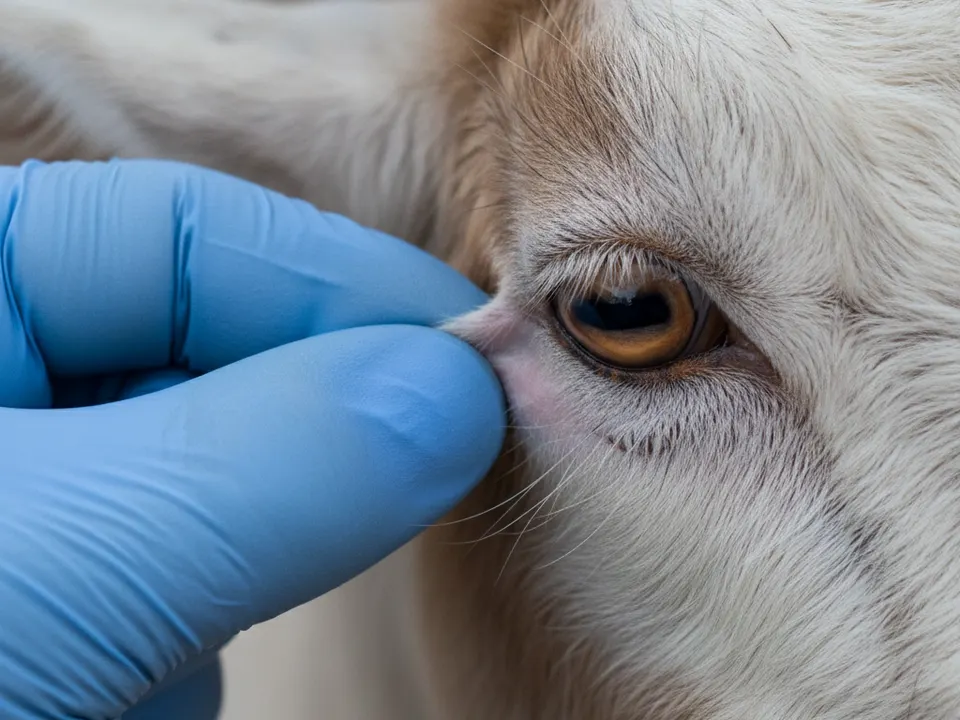
- The gums and inside of the eyelids look redder than normal.
- Several goats in the herd fall sick within a few days of each other, rather than one animal alone.
As it gets worse
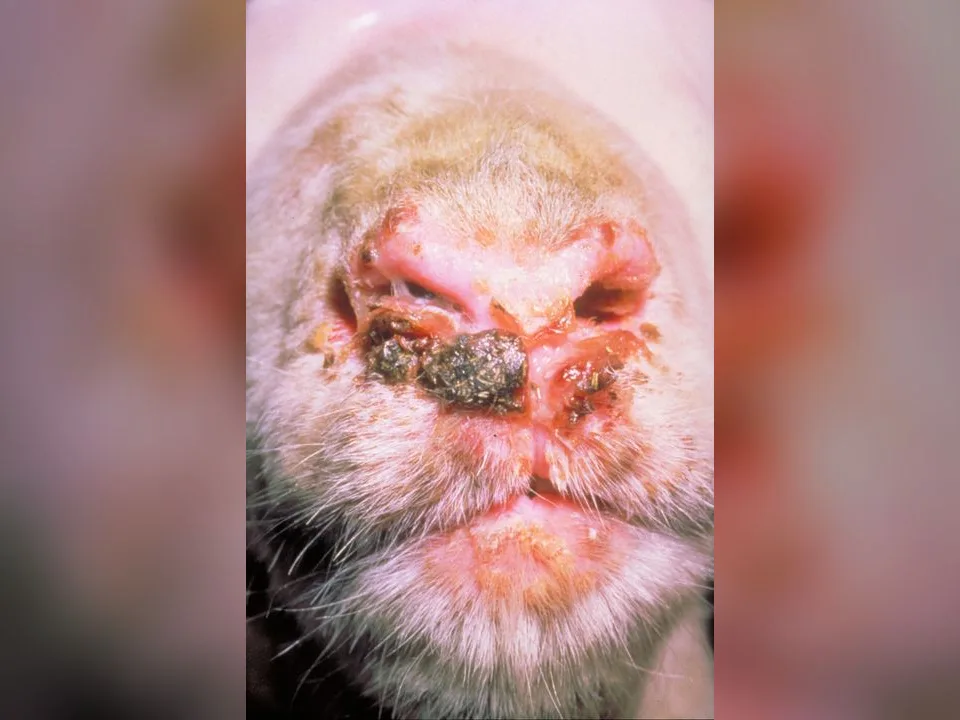
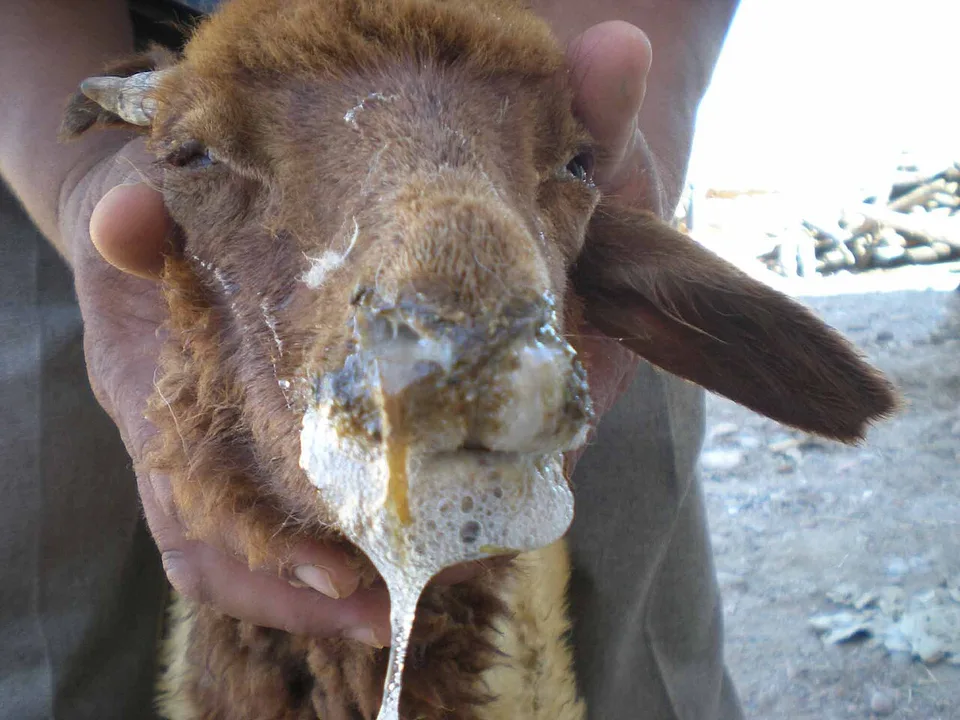
- The eye and nose discharge becomes thick, yellow and pus-like, then dries into crusts that block the nostrils and glue the eyelids shut.
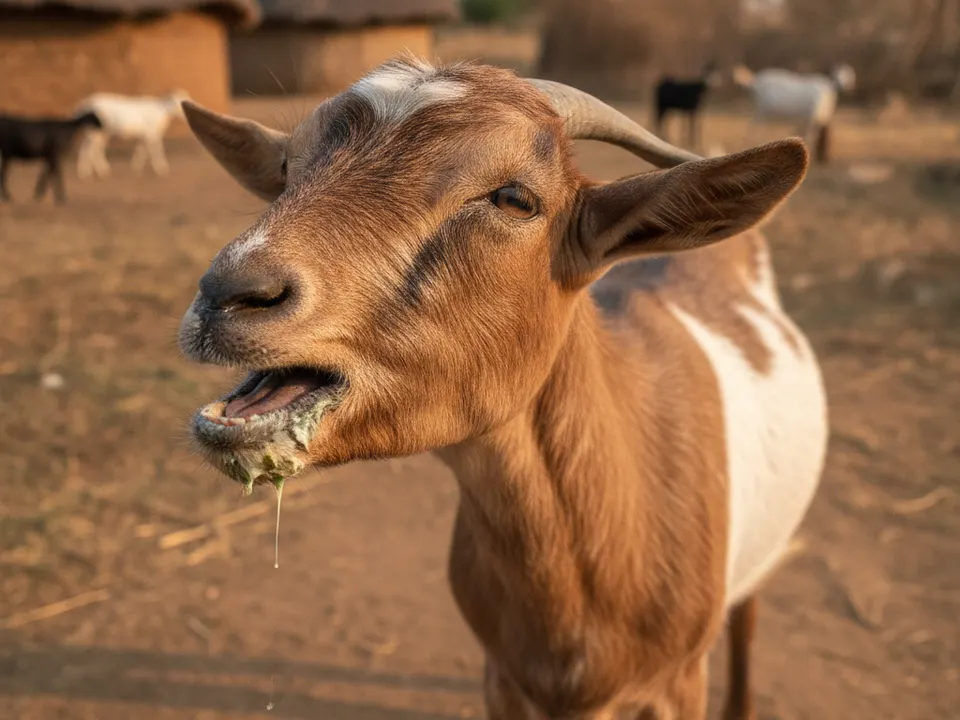
- Greyish or whitish sores and patches of dead tissue appear on the gums, lips, tongue and inside the cheeks; the mouth is painful, the goat drools and struggles to eat.
- The breath smells very foul and rotten.
- Severe watery diarrhoea starts, often very smelly and sometimes with blood or mucus, soiling the tail and back legs.
- Coughing, fast and laboured breathing, and noisy breathing show that pneumonia has developed.
- The goat becomes dehydrated, with sunken eyes and skin that stays tented when pinched, and loses weight quickly.
- Pregnant does may abort.
- Body temperature may drop below normal shortly before death; badly affected goats often die within about a week to ten days of first showing signs.
What to do right now
- Separate all sick goats from healthy ones straight away, in a pen or area downwind and away from the rest of the herd, and keep sheep away from them too.
- Stop all movement: do not sell, buy, lend, take goats to market or to communal grazing and water points until the vet tells you it is safe.
- Call your County Veterinary Officer, local veterinary office or a private vet today, because PPR must be reported by law and fast reporting helps protect neighbouring herds.
- Give sick goats clean, fresh water at all times in a container they can reach easily, as dehydration from diarrhoea kills quickly.
- Offer soft, tasty feed such as fresh green leaves, soft grass or soaked feed, since mouth sores make chewing painful.
- Keep sick goats in a dry, clean, shaded and draught-free shelter, protected from rain and cold at night, with clean bedding.
- Gently wipe crusts from the eyes and nostrils with a clean cloth dipped in clean, lukewarm water so the goat can see and breathe more easily, using a separate cloth per goat and washing your hands afterwards.
- Use separate boots, clothes and equipment for the sick pen, wash hands well, and do not visit other farms until the outbreak is over.
- Write down each sick and dead animal, the date signs started, and any recent purchases or market visits, so the vet can trace the source quickly.
- Do not slaughter, sell or move sick or dead goats, and do not give any drugs unless a vet prescribes them.
How it spreads
- Close contact between sick and healthy goats is the main route: the virus is in tears, nasal discharge, saliva, coughs and droppings of sick animals.
- Sick goats cough and sneeze out tiny droplets that healthy goats breathe in when they are housed or herded tightly together, for example in night bomas or crowded pens.
- Buying new goats, especially from livestock markets, is one of the commonest ways PPR enters a farm, because infected animals may look healthy for a few days before signs show.
- Communal grazing areas, shared watering points, and dips bring goats from many herds together and let the virus pass between flocks.
- Moving animals during drought, trade, dowry or festive seasons carries the virus to new villages and counties.
- Contaminated feed troughs, water containers, bedding, and people's hands, clothes and boots can carry the virus for a short time, although the virus does not survive long outside the animal, especially in sunlight and heat.
- Goats returning unsold from a market can bring the infection home to the rest of the herd.
Could it be something else?
Contagious caprine pleuropneumonia (CCPP)
CCPP is a bacterial lung disease that causes fever, coughing and painful, laboured breathing, and can also kill many goats. However, it does not usually cause mouth sores, thick crusty eye discharge or severe diarrhoea. In PPR, the mouth sores, foul breath and diarrhoea alongside breathing problems are the key clues. CCPP is also notifiable, so report both to the vet.
Orf (contagious ecthyma, sore mouth)
Orf causes thick, warty scabs on the lips, nose and sometimes udder, mainly in kids. The goats are usually otherwise bright, without high fever, diarrhoea or pneumonia, and deaths are few unless kids cannot suckle. PPR sores are inside the mouth, the goats are very sick with fever, and many die.
Pasteurellosis (shipping fever pneumonia)
This bacterial pneumonia often follows stress such as transport, and causes fever, nasal discharge and coughing. It does not usually cause mouth sores and severe diarrhoea, and spreads less dramatically through the herd. It is also a common secondary infection in PPR, so a vet may need lab tests to tell them apart.
Foot-and-mouth disease and bluetongue
Foot-and-mouth disease causes blisters in the mouth and on the feet, so goats limp, and cattle on the same farm are usually affected too. Bluetongue, spread by biting midges, is mostly seen in sheep and causes a swollen face, lips and tongue and lameness. Neither typically causes the crusty eye and nose discharge with severe diarrhoea that marks PPR. Both are notifiable, so the vet should confirm.
How it is diagnosed
A vet will strongly suspect PPR from the pattern on the farm: many goats falling sick quickly with fever, eye and nose discharge, mouth sores, diarrhoea and pneumonia, with deaths, especially after new animals arrived or goats visited a market. Because PPR is notifiable, confirmation by a laboratory is important. The vet or County Veterinary Officer will take swabs from the eyes, nose and mouth of goats in the early fever stage, blood samples, and, if a goat has died, tissue samples such as lung, lymph nodes, spleen and intestine. These are tested at a government laboratory, such as the Central Veterinary Laboratories at Kabete or a regional veterinary investigation laboratory, using tests such as PCR (which detects the virus's genetic material) and ELISA (which detects virus or antibodies). Rapid pen-side test kits are sometimes used in the field to give a quick result. At post-mortem, the vet may see mouth erosions, pneumonia, and dark red stripes in the lining of the large intestine, often called 'zebra stripes'. To help, the farmer should record how many goats are sick and how many have died, when signs started, ages of affected animals, recent purchases, market visits or contact with other herds, and vaccination history. Do not open dead goats yourself; keep carcasses covered and away from dogs and other animals until the vet advises.
Treatment
There is no medicine that kills the PPR virus, and antibiotics do not cure the virus itself. Treatment is supportive, meaning it helps the goat's body survive while its immune system fights off the infection. A vet may prescribe antibiotics, such as oxytetracycline or other drug classes they judge suitable, to control the secondary bacterial pneumonia and gut infections that often kill goats with PPR. They may also use anti-inflammatory drugs to reduce fever and pain, fluids for dehydration, and gentle care for mouth and eye sores. All treatment must be prescribed by a vet, who will decide which animals to treat, which drugs to use and for how long. Antibiotics should only be used when a vet advises, and the full course must be followed, because misuse of antibiotics leads to antimicrobial resistance, where drugs stop working for animals and people. Any drug used will have a milk and meat withdrawal period, a set time during which milk must be thrown away and the goat must not be slaughtered for food; ask the vet and follow it strictly. Because PPR is notifiable, the government veterinary service will also take control measures. These can include putting the farm or area under quarantine (no animals in or out), restricting movement and closing local markets, vaccinating healthy goats and sheep in the surrounding area (ring vaccination), and tracing where infected animals came from. Vaccinating goats that are already sick will not save them, so the focus is protecting the healthy ones. Even with good care, some goats will die, especially young ones and those with severe pneumonia.
Medicines must be prescribed and dosed by a vet. Always respect milk and meat withdrawal periods, and finish the full course of any antibiotic.
Prevention
- Vaccinate all goats and sheep against PPR. A single dose of the live PPR vaccine, produced in Kenya by KEVEVAPI and available through veterinary services and agrovets, gives long-lasting, usually lifelong protection; ask your vet about the right schedule for your herd.
- Vaccinate kids born after the main herd vaccination once their mother's protection fades, usually from around three to four months of age, as your vet advises, and join government vaccination campaigns when they come to your area.
- Keep any new goats or sheep in a separate pen for at least two to three weeks before mixing them with your herd, and watch them closely for fever, discharge or diarrhoea.
- Buy animals from known, healthy farms with a vaccination history where possible, rather than from unknown market sources, and ask for movement permits.
- Keep goats that come back unsold from the market separate for a period before they rejoin the herd.
- Limit contact with other herds at communal grazing, water points and dips during outbreaks in your area, and listen to announcements from your County Veterinary Officer.
- Keep goats strong with good nutrition, clean water, regular deworming and tick control, as well-fed, parasite-free goats cope better with any disease.
- Provide dry, well-ventilated housing that is not overcrowded, and clean pens, troughs and water containers regularly.
- Report any suspected PPR quickly, as early reporting allows ring vaccination and movement control that protect your neighbours and your own future herd. Kenya is part of the global effort to eradicate PPR by 2030, and every vaccinated herd helps.
Impact on your farm
PPR can wipe out a large part of a goat herd within weeks, especially among young stock, which means the loss of future breeding does, milk, meat and income. For many Kenyan families, particularly pastoralists and women smallholders, goats are savings for school fees, medical bills and emergencies, so an outbreak can push a household into hardship. Goats that survive lose a lot of weight and take weeks to recover condition, which lowers their sale price. Pregnant does may abort, so the next kid crop is lost. Dairy goat farmers lose milk sales during illness and during drug withdrawal periods. Quarantine and market closures mean farmers cannot sell animals even when they need cash, and whole areas can lose trade. Treating secondary infections costs money, while vaccination is cheap by comparison, which makes prevention by far the better investment.
Outlook and recovery
The outlook for goats with PPR is often poor, especially in herds that have never been vaccinated and among young goats, where many of the sick may die. Survival is better in older goats, well-fed animals, and those that receive early supportive care and vet-prescribed treatment for secondary pneumonia. Goats with severe diarrhoea, heavy pneumonia, or a temperature that drops below normal are less likely to survive. Goats that recover usually have lifelong immunity to PPR, though they may stay weak and thin for several weeks and need good feeding to regain condition. The outlook for the herd as a whole improves greatly when the outbreak is reported quickly, sick animals are isolated, movement is stopped and healthy animals are vaccinated.
Common questions
Can PPR infect people, and can we eat the meat or drink the milk?
PPR is not known to infect people. However, you should never slaughter or sell sick or dead goats during an outbreak. Moving carcasses and meat breaks quarantine rules and can spread the virus to other goats through blood, discharges and contaminated hands and tools. Sick goats may also be carrying other diseases or drug residues. Follow your vet's advice on disposing of dead animals, usually by deep burial or burning.
If I vaccinate my goats, how long are they protected?
The PPR vaccine used in Kenya is a live vaccine that gives strong, long-lasting protection, usually for life, after a single dose. Kids born later still need to be vaccinated once the protection from their mother's milk fades, usually from around three to four months old. Your vet or County Veterinary Officer will advise on the best timing and whether any repeat vaccination is needed in your area.
Can I vaccinate my goats now that some are already sick?
The vaccine will not cure goats that are already sick, and it takes some days to build protection in healthy goats. In an outbreak, the government veterinary service decides how and where to vaccinate, often by vaccinating healthy herds in a ring around the infected area. Call the vet first rather than vaccinating on your own, so the response is coordinated and the vaccine is handled and used correctly.
Why must I report PPR, and what will happen if I do?
Kenyan law requires anyone who suspects a notifiable disease like PPR to report it to the County Veterinary Officer or the Directorate of Veterinary Services. Reporting allows the vets to confirm the disease, vaccinate nearby herds and stop it spreading across the county. The vet may place your farm or area under quarantine, which means no goats or sheep can move in or out, and local markets may close for a time. This can be hard, but it protects your neighbours and helps end the outbreak sooner. Ask your County Veterinary Officer whether any support is available, as this varies and is not guaranteed.
Can my sheep and cattle catch PPR from my goats?
Sheep can catch PPR and should be vaccinated along with goats, though they are usually less severely affected. Cattle and camels can sometimes become infected without showing much illness, but they are not considered important in spreading the disease. Keep sheep away from sick goats and include them in your vaccination plan.
Can a goat that recovered from PPR get it again or spread it?
Goats that recover from PPR usually develop lifelong immunity and are not expected to get sick with it again. They can still shed virus for a short time after recovery, so keep them separated until your vet says the outbreak is over. Recovered goats are not considered long-term carriers, but follow the quarantine rules before selling or moving any animal.
A guide, not a diagnosis. This page is general information to help you recognise problems early. Always confirm with a vet or animal health worker before treating.