What it is
Aeromonas bacteria live naturally in almost all fresh water, pond mud and even in the gut of healthy fish. Normally a healthy fish with intact skin and slime keeps them out. When fish are stressed by low oxygen, high ammonia (a toxic waste from fish droppings and rotting feed), crowding, rough handling, transport, sudden temperature changes or parasite damage, their immune defences drop and the skin may be scratched. The bacteria then enter through damaged skin, gills or the gut. They release toxins and enzymes that break down blood vessels and tissue. This causes the red blotches (bleeding under the skin), ulcers (open sores where skin and muscle are eaten away), fin rot (fins fraying and dying back) and damage to internal organs such as the kidney, liver and spleen. When the kidney fails, fluid builds up in the body cavity, giving the swollen belly and sometimes raised scales and bulging eyes. In short, the bacteria are opportunists: they take advantage of fish already weakened by poor conditions.
Which animals are most at risk
African catfish (Clarias gariepinus, kambare) and Nile tilapia (ngege or perege) are the species most often affected on Kenyan farms, though almost any freshwater fish can get MAS. Fingerlings and juveniles, newly stocked or recently transported fish, and fish that have just been sorted or harvested from are at the highest risk. Earthen ponds with heavy feeding and little water exchange, overstocked liner ponds and tanks, recirculating systems with failing filters, hatcheries, and cages in lakes or dams during poor-water periods are all vulnerable. Risk rises in the hot dry months when water is shallow and oxygen is low, and at the start of the rains when temperature changes and muddy runoff hit the pond. Farms that overfeed, never test water, or leave dead fish in the pond see more outbreaks.
Signs to look for
Early signs
- Fish eat less or stop coming up for feed, and more feed than usual is left floating or sinking uneaten.
- Fish become slow and dull, hang near the surface, the inlet or the pond edges, or swim lazily on their own away from the shoal.
- Skin colour turns darker than normal, and the body may lose its shine as the slime layer changes.
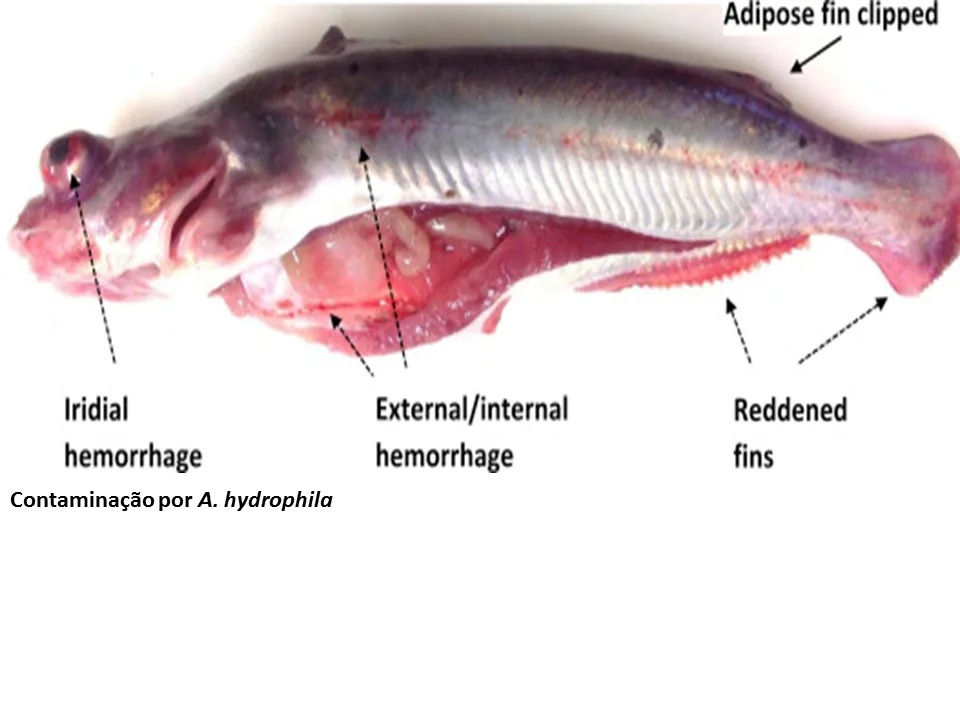
- Small red spots or streaks appear at the base of the fins, around the mouth, under the jaw or along the belly.
- Fins begin to look frayed, ragged or reddened at the edges, and a few scales may be loose or missing on tilapia.
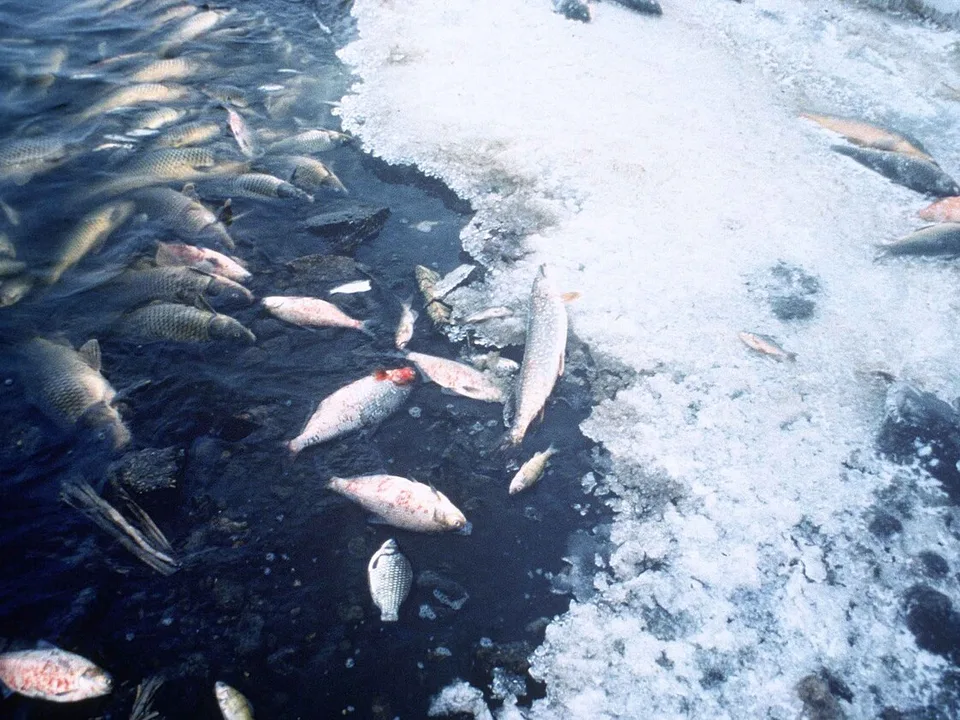
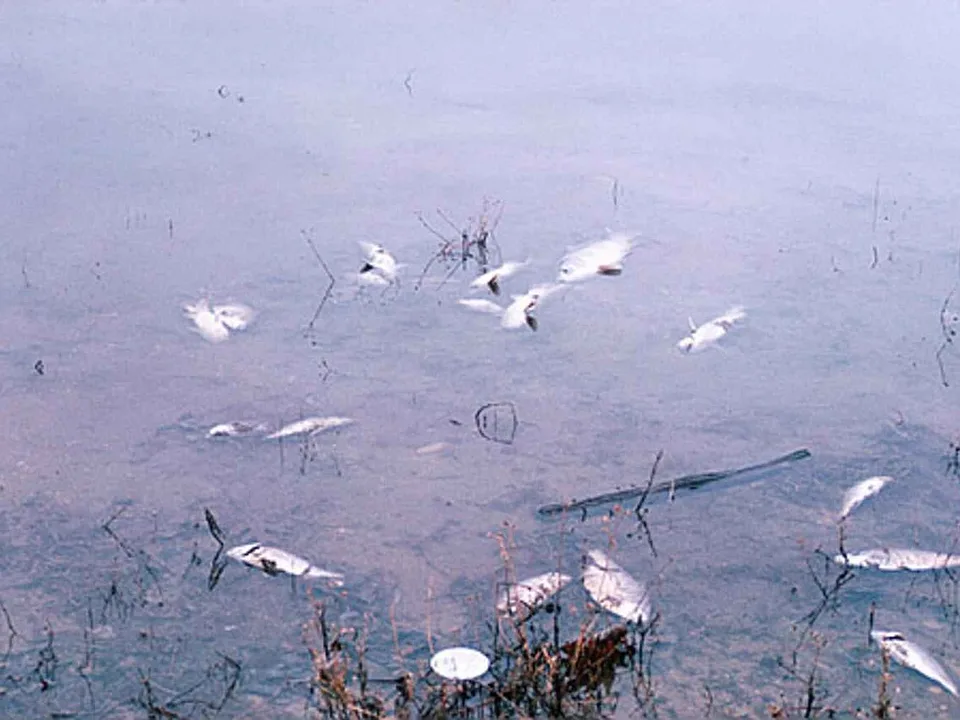
- A small number of fish die each day, often the smaller or weaker ones, instead of a sudden mass kill.
As it gets worse
- Large red blotches cover the body, and open ulcers appear that may be grey, white or red in the middle with a red ring around them.
- Fins rot back towards the body, and the tail may be badly eroded.
- The belly becomes swollen and soft with fluid, and the vent (the opening under the tail) looks red and swollen.
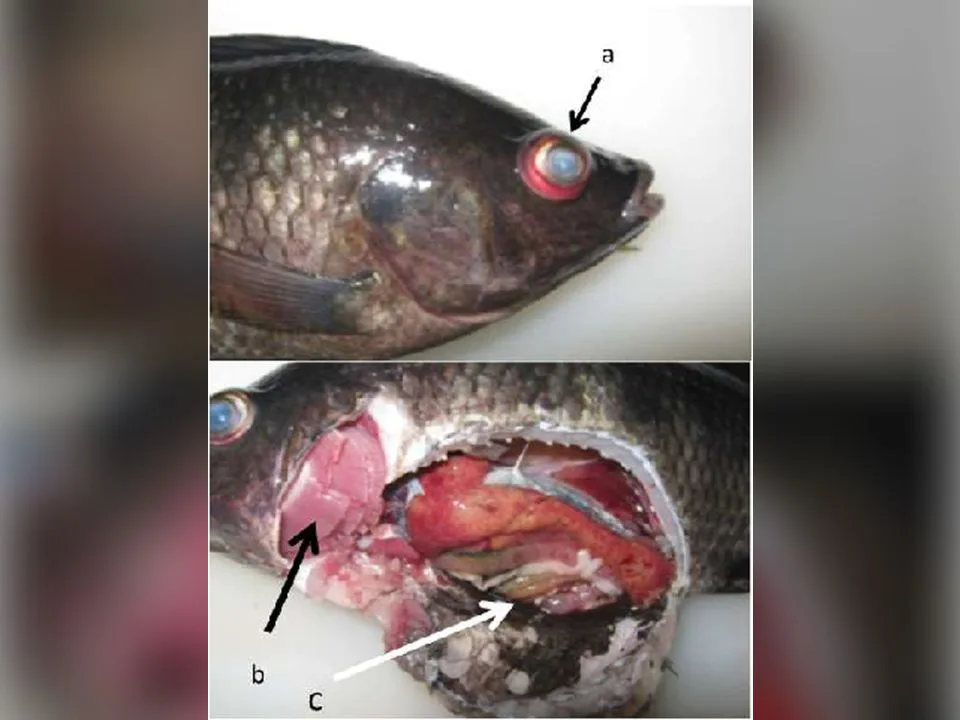
- Eyes may bulge outwards (pop-eye) or look cloudy or bloody, and scales may stand out from the body like a pine cone.
- Gills may look pale or blotchy instead of a healthy bright red.
- Fish swim abnormally, lie on their sides or roll, and daily deaths increase; a cut fish may show bloody fluid in the belly and a swollen, soft kidney or spleen.
What to do right now
- Remove dead and dying fish from the pond at least twice a day, and bury them deeply with lime away from water sources or burn them; never throw them into another pond or a river, and never feed them to other animals.
- Reduce or stop feeding for a day or two, because sick fish eat little and uneaten feed rots, lowers oxygen and feeds the bacteria; then restart with small amounts the fish actually finish.
- Improve the water straight away by adding clean fresh water from a safe source, running aerators or paddle wheels, or splashing water to add oxygen, especially at night and early morning.
- Stop all handling, sorting, seining, harvesting and moving of fish from the affected pond, and do not stock new fish until the problem is resolved.
- Keep separate nets, buckets and boots for the sick pond, and clean and dry equipment in the sun after use so you do not carry the bacteria to other ponds.
- Wear gloves when handling sick or dead fish, avoid touching them with cuts on your hands, and wash your hands well with soap afterwards.
- Write down daily deaths, the signs you see, feeding and any water test readings, and keep a few freshly sick fish cool for testing.
- Call a vet, the County Fisheries Officer or your aquaculture extension officer early, and do not add antibiotics, chemicals or home remedies to the pond without their advice.
How it spreads
- Poor water quality is the main trigger: low dissolved oxygen, high ammonia or nitrite, very green or murky water, and rotting uneaten feed all stress fish and feed the bacteria.
- Overstocking, where too many fish share too little water, raises stress, waste and fighting injuries, letting bacteria build up quickly.
- Handling, grading, netting, seining and transport damage the protective slime and scales, so outbreaks often start a few days after fingerlings are stocked or fish are moved.
- Sudden temperature swings, such as cold rain falling into a warm pond at the start of the long or short rains, or very hot shallow water in the dry season, weaken the fish.
- Dead and dying fish left in the pond release huge numbers of bacteria into the water, so infection spreads to the rest of the stock.
- Contaminated nets, buckets, boots and transport tanks moved between ponds, and water flowing from an infected pond into another, carry the bacteria between units.
- Buying fingerlings from an unknown or poorly managed hatchery can bring in stressed or already infected fish.
- Parasites and other infections that damage the skin and gills open the door for Aeromonas to enter.
Could it be something else?
Columnaris disease (Flavobacterium columnare)
Columnaris usually gives greyish-white or yellowish patches, often a pale 'saddle' band behind the head or fuzzy, eaten-looking gills, rather than deep red blotches. It often appears in warm water after handling. Both can occur together, so a lab test is the only sure way to separate them.
Streptococcosis in tilapia
Streptococcus infection in tilapia typically causes bulging, cloudy eyes, fish spinning or swimming in circles, and a curved body, often in warm water and larger fish. Red skin patches can appear in both, so bacterial culture by a lab is needed to confirm.
Epizootic ulcerative syndrome (EUS)
EUS is caused by a water mould (Aphanomyces invadans) and produces very deep, crater-like red ulcers that can expose muscle, often after cool weather. It is a WOAH-listed disease, so if a vet suspects it they must investigate and may need to report it. Only lab examination of tissue can tell it apart from MAS.
Low oxygen or ammonia poisoning
Oxygen crashes usually kill many fish suddenly, often at dawn, with fish gasping at the surface, and the dead fish have no red sores or ulcers. Ammonia stress can cause reddened gills and fins but is confirmed by a water test. Poor water often comes first and MAS follows a few days later.
How it is diagnosed
A vet or trained fish health officer starts by looking at the whole pond: how the fish behave, how many are dying, feeding records, stocking density and recent handling or weather changes. They will test the water for temperature, dissolved oxygen, pH, ammonia and nitrite, because finding and fixing the stress is part of the diagnosis. They then examine sick fish closely, checking skin, fins, eyes, gills and the inside of the body during a post-mortem (opening the fish to look at the organs). To confirm Aeromonas, samples from the kidney, liver or ulcers are sent to a laboratory for bacterial culture, and sometimes molecular tests such as PCR. A sensitivity test shows which antibiotics, if any, will actually work against the bacteria on your farm. In Kenya, samples may go to the Central Veterinary Laboratories at Kabete, KMFRI (Kenya Marine and Fisheries Research Institute) centres such as Sagana, county or university labs. The best samples are live, sick fish carried in a bag with pond water and air, or fish that have only just died, kept cool on ice but not frozen. Rotten fish are of little use. Before the visit, write down when the problem started, daily deaths, feeding amounts, stocking date and numbers, where the fingerlings came from, any recent handling, and any water test results you have.
Treatment
The first and most important treatment is fixing the cause: the vet will help you correct oxygen, ammonia, stocking density, feeding and water exchange, because drugs will not work if the fish stay stressed. Some fish professionals may advise short supportive measures such as salt treatments or other bath treatments to help the skin and slime recover; these must be done exactly as advised, because wrong strengths can kill fish. When antibiotics are needed, they are usually given in medicated feed, using drugs such as oxytetracycline or florfenicol, but only where a product is registered for fish and prescribed by a vet, ideally after a sensitivity test shows it will work. The vet decides the drug, the amount and how long to feed it. Medicated feed only reaches fish that are still eating, so it helps most when started early; badly sick fish that have stopped feeding often cannot be saved. Antibiotics should never be poured into pond water routinely, as this wastes drugs, harms the pond environment and breeds resistant bacteria. Aeromonas is known for developing antimicrobial resistance, which means the bacteria learn to survive drugs and future outbreaks become harder to treat, so antibiotics must be used responsibly and only under prescription. Any fish treated with antibiotics must not be harvested or sold until the withdrawal period on the product label or given by the vet has passed, so that no drug residues reach consumers. Vaccines against Aeromonas exist in some countries but are not widely available on Kenyan farms. Expect deaths to continue for a few days after treatment begins before they slow down.
Medicines must be prescribed and dosed by a vet. Always respect milk and meat withdrawal periods, and finish the full course of any antibiotic.
Prevention
- Test water regularly for dissolved oxygen, ammonia, nitrite, pH and temperature using a simple test kit, and act early when readings worsen rather than waiting for fish to die.
- Stock at a density your pond, water supply and aeration can support, and harvest or split fish as they grow instead of letting the pond become crowded.
- Feed good-quality fish feed at the right amount for fish size and water temperature, feed only what is eaten within a few minutes, and store feed dry and away from mould.
- Buy fingerlings from a certified, well-run hatchery, check them for sores and weak swimming before accepting them, and acclimatise them slowly to your pond water temperature.
- Handle fish as little and as gently as possible, use smooth knotless nets, avoid handling during the hottest part of the day, and plan grading or transport for cool mornings.
- Prepare ponds well between cycles by draining, removing excess mud, sun-drying and liming the bottom, and keep pond banks and inlets clean so runoff does not carry dirt in during the rains.
- Remove dead fish every day, keep separate equipment for each pond or clean and dry it between uses, and use a footbath or clean boots when moving between units.
- Control predators and birds with netting where possible, manage parasites with advice from a fisheries officer, and keep simple farm records of feeding, deaths and water tests so problems are spotted early.
Risk to people
Aeromonas bacteria can occasionally infect people. They can cause wound infections if bacteria from fish or pond water enter cuts or scratches, and stomach upsets with diarrhoea if contaminated fish or water are swallowed. People with weak immune systems, liver disease, diabetes, young children and the elderly are more at risk of serious illness. Wear gloves when handling sick or dead fish, cover any cuts, wash hands and tools well with soap, and seek medical care if a wound becomes red, swollen or painful after working with fish. Do not eat or sell visibly sick, ulcerated or dead fish, and always cook fish thoroughly. If fish have been given antibiotics, do not eat or sell them until the full withdrawal period has passed, because drug residues can harm consumers and add to antibiotic resistance in people.
Impact on your farm
On a Kenyan fish farm, MAS can cause steady daily losses that add up to a large part of the stock, especially among fingerlings and newly stocked fish. Survivors often grow more slowly because they eat less while sick, which delays harvest and wastes feed, the biggest running cost in fish farming. Fish with red sores and ulcers are hard to sell, as buyers in local markets, hotels and supermarkets reject damaged fish, and a farm's reputation can suffer. Treatment adds costs for testing, medicated feed and extra aeration or water pumping, and fish under antibiotic withdrawal cannot be sold on time. For smallholders who have invested savings or group funds in a pond or cage, one bad outbreak can wipe out a season's profit, so prevention through good water and stocking management pays back many times.
Outlook and recovery
The outlook is good for the pond as a whole if the problem is caught early and water quality and stress are quickly corrected; deaths usually slow down within days once conditions improve. Fish with only small red spots or mild fin damage often recover and heal if kept in good water. Fish with deep ulcers, a swollen fluid-filled belly, bulging eyes or that have stopped eating rarely recover and are best removed. Losses are higher in fingerlings, in warm, crowded or dirty ponds, and where treatment is delayed or the wrong antibiotic is used. Because the bacteria stay in the water and mud, outbreaks can return whenever fish are stressed again, so long-term success depends on management, not just treatment.
Common questions
Is it safe to eat fish from a pond that has red sore disease?
Do not eat or sell fish that are visibly sick, ulcerated, swollen or already dead. Healthy-looking fish from the same pond that have not been given antibiotics are generally safe if handled hygienically and cooked thoroughly, but ask your vet or fisheries officer first. If the pond has been treated with antibiotics, no fish can be eaten or sold until the withdrawal period is complete.
Can I just buy antibiotics at the agrovet and put them in the pond water?
No. Pouring antibiotics into pond water wastes the drug, harms the useful bacteria and algae in the pond, leaves residues in fish and breeds bacteria that resist treatment. Many cases improve with water management alone. If antibiotics are truly needed, a vet should choose a registered product, usually in feed, ideally after a lab sensitivity test, and tell you the withdrawal period.
Why does this disease often appear after I stock new fingerlings?
Catching, packing and transporting fingerlings damages their skin and slime and stresses them badly. Temperature and water differences between the hatchery and your pond add more stress. Aeromonas already in your water then takes its chance, so deaths often begin a few days to two weeks after stocking. Buy from good hatcheries, transport fish in cool hours, and acclimatise them slowly by floating the bags and mixing in pond water gradually.
Should I drain the pond and start again?
Not always. Many outbreaks can be controlled by removing dead fish, improving water and reducing feeding. If losses are very heavy, or the problem keeps returning, your fisheries officer may advise harvesting what can be saved, draining, removing sludge, sun-drying and liming the pond before restocking. Make this decision with professional advice, and never release pond water carrying sick fish into rivers or other ponds.
Why do I see more red sores at the start of the rains?
The first heavy rains can cool a warm pond suddenly, wash mud, manure and soil into the water, and change the pH and oxygen levels. Fish become stressed and their immunity drops, while the extra organic matter feeds bacteria. Protect ponds with diversion trenches and grass on the banks, keep good aeration, and watch fish closely in the days after heavy rain.
Will the disease keep coming back?
Aeromonas lives naturally in water and mud, so you cannot remove it completely. It causes disease mainly when fish are stressed. If you keep stocking density reasonable, test water, feed correctly, handle fish gently and remove dead fish daily, outbreaks become much less frequent and less severe. Repeated outbreaks are a sign that something in the system, such as oxygen, crowding or feeding, needs fixing.
A guide, not a diagnosis. This page is general information to help you recognise problems early. Always confirm with a vet or animal health worker before treating.