What it is
Fish pass most of their waste as ammonia straight out through their gills, and more ammonia is released when uneaten feed, dead fish, manure or decaying plants rot in the water. In a healthy pond, helpful bacteria turn ammonia into nitrite and then into nitrate, which is much less harmful, and algae and plants also take some up. Trouble starts when there are too many fish, too much feed or too little clean water, so ammonia builds up faster than it is removed. Ammonia exists in two forms: a less harmful form and a very toxic gas-like form. The warmer the water and the higher the pH (how alkaline the water is), the more of the toxic form there is, so the same test reading can be far more dangerous on a hot afternoon. The toxic ammonia damages the delicate gill tissue, which swells, produces extra mucus and becomes red and inflamed, so the fish cannot take in oxygen properly or get rid of waste. It also harms the skin, fins, liver and kidneys and weakens the immune system. If nitrite also builds up, it enters the blood and stops it carrying oxygen, turning the blood and gills chocolate brown. Low oxygen usually goes hand in hand with poor water, so fish are hit by several stresses at once, and bacteria and parasites then attack the weakened fish.
Which animals are most at risk
All farmed fish can be affected, but tilapia and especially fingerlings and fry are sensitive, as are fish in hatcheries and nursery tanks. African catfish (Clarias) tolerate poor water better because they can breathe air, but they still suffer gill damage, poor growth and disease. Fish in small liner ponds, concrete tanks, raised tanks and recirculating aquaculture systems (RAS, where water is filtered and reused) are at higher risk because waste builds up quickly. Heavily stocked cages and ponds near the end of a production cycle, when fish are big and eating the most feed, are a common problem point. Risk rises in the hot dry months, during spells of cloudy weather that cause algae to crash, after heavy manuring, and when water supply drops in the dry season. Farms that feed by guesswork, use poor-quality feed that breaks up quickly, or rarely test their water are the most likely to see losses.
Signs to look for
Early signs
- Fish eat less or ignore feed, and pellets are left floating or sinking uneaten.
- Fish gather near the surface, the water inlet or aerator, gulping air, often worst in the early morning.
- Fish are slow, sluggish or hang in one place instead of swimming actively.
- Fish appear darker than usual or show uneven colour from stress.
- Some fish rub or flash against the sides or bottom, a sign of gill and skin irritation.
- The water looks cloudy, very green, brown or foamy, or smells sour, rotten or like a toilet.
- Growth slows and fish at harvest are smaller than expected for their age.
As it gets worse
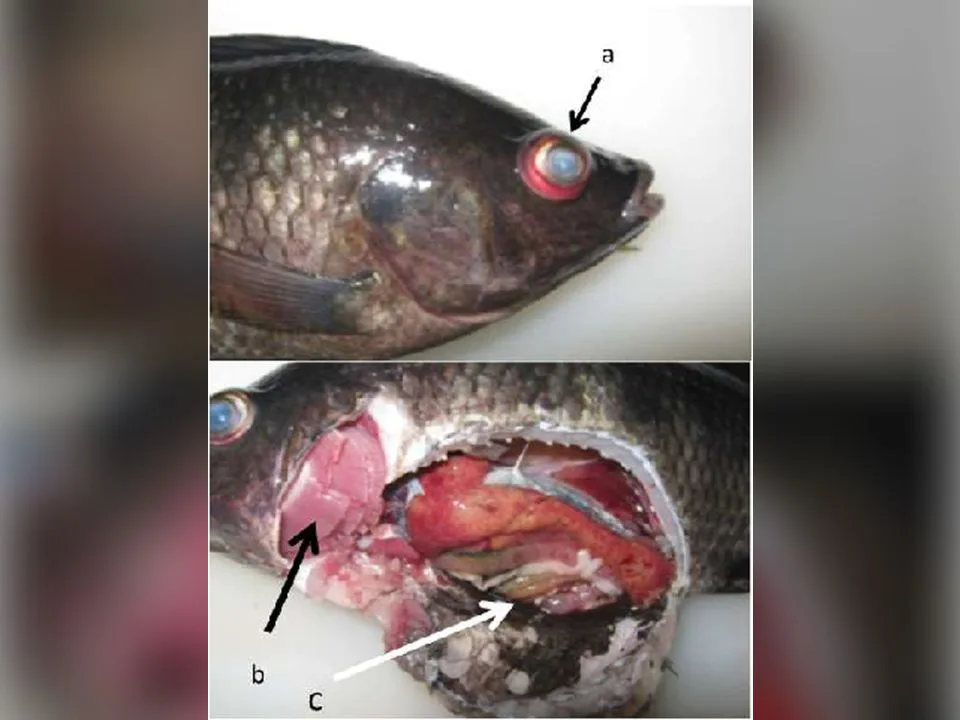
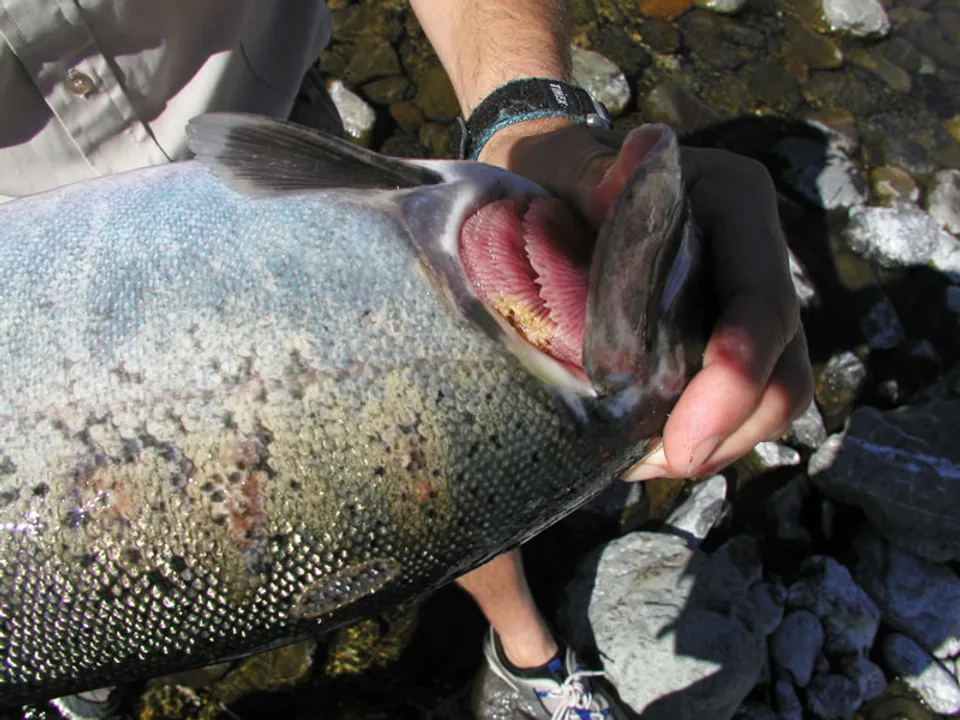
- Gills look swollen, dark red or blotchy, covered in thick mucus, or brown in colour when nitrite is also high.
- Gill covers flare open and breathing is fast and laboured.
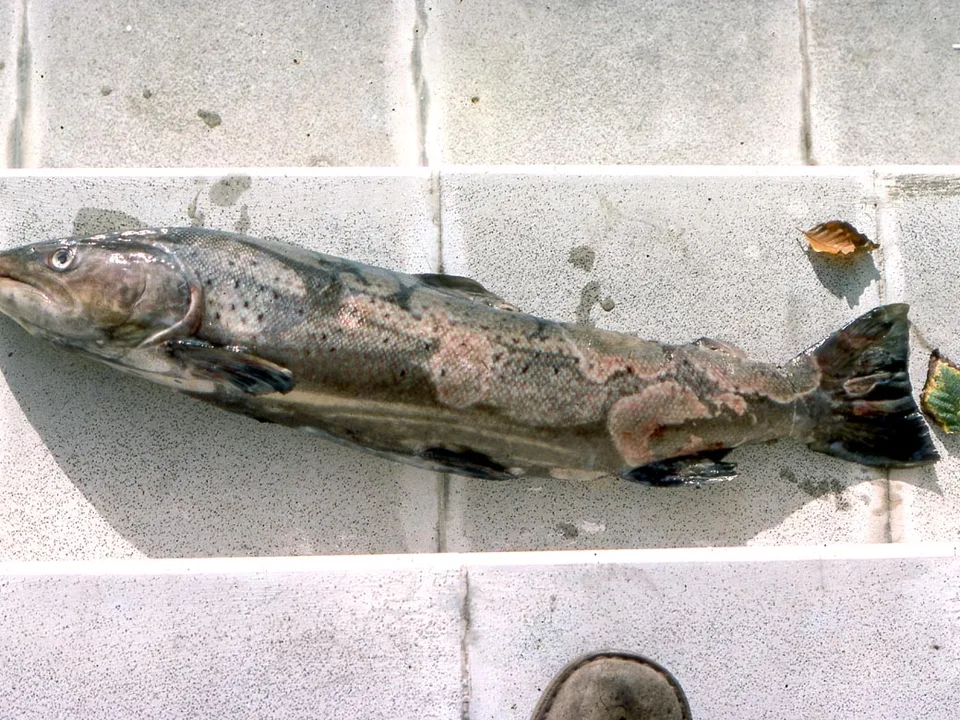
- Fins look frayed, ragged or eroded, sometimes with red streaks or a white edge.
- Red patches, bleeding spots or sores appear on the skin, often where bacteria have moved in.
- Eyes look cloudy or bulging, and fish may swim on their side, spin or lose balance.
- Fish lie on the bottom or float weakly and do not react when you approach.
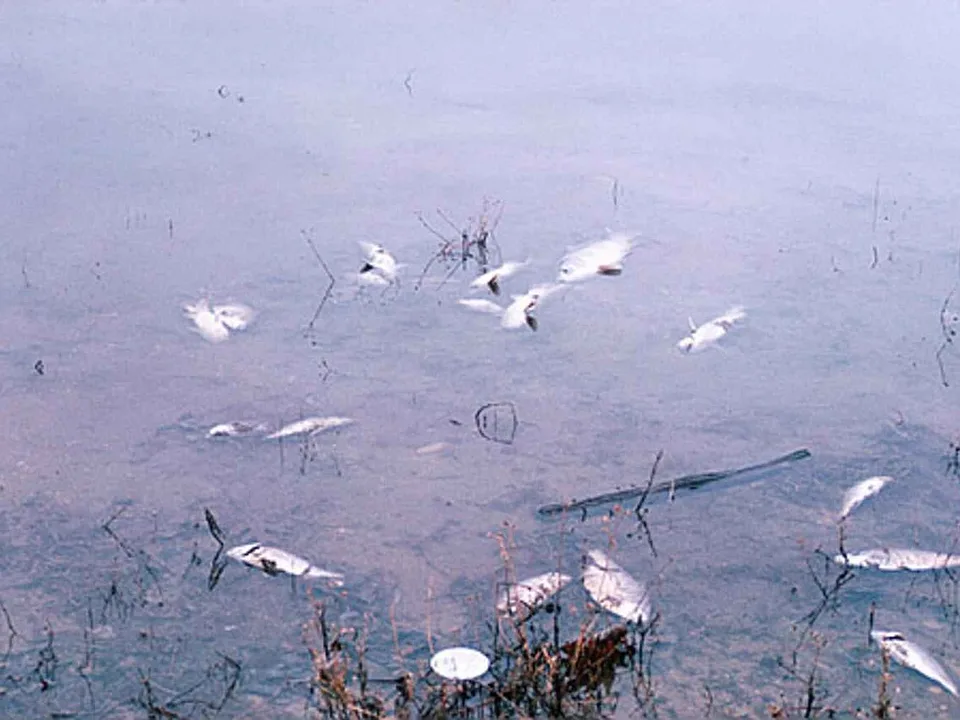
- Daily deaths begin, often bigger fish first, and can turn into a sudden mass die-off, especially at dawn.
What to do right now
- Stop feeding completely for now; less feed means less ammonia, and stressed fish cannot digest well anyway. Resume slowly and in small amounts once fish are eating and water improves.
- Increase oxygen straight away by running aerators or pumps, splashing water in, or letting fresh water flow in; this helps fish cope while you fix the ammonia.
- Do a partial water change with clean water of similar temperature, replacing only part of the water at a time rather than draining the pond, to avoid shocking the fish.
- Remove dead and dying fish and any rotting feed, weeds or debris from the water at least twice a day and bury or burn them away from the water.
- Test the water for ammonia, nitrite, pH and oxygen if you have a kit, and write down the results with the time and temperature.
- Do not add quicklime, hydrated lime, fertiliser or manure now, because raising the pH makes ammonia more toxic and fertiliser adds more waste.
- Do not add any medicines, antibiotics or chemicals to the water without advice from a vet or fisheries officer.
- Avoid netting, grading, transporting or selling fish while they are stressed, and wear gloves when handling sick or dead fish.
- Call your County Fisheries Officer, aquatic vet or a trusted agrovet with fish experience the same day, especially if deaths are rising.
How it spreads
- Overfeeding is the most common trigger: feed that is not eaten within a few minutes sinks, rots and releases ammonia.
- Stocking too many fish for the size of the pond, tank or water flow means more waste than the water can handle.
- Rotting material such as dead fish left in the pond, too much manure or fertiliser, and decaying weeds or grass add large amounts of ammonia.
- Poor water exchange or slow flow, especially in liner ponds, concrete tanks and recirculating systems, allows waste to collect.
- A sudden algae die-off after cloudy weather or a sharp temperature change releases ammonia and uses up oxygen at the same time.
- New ponds, newly cleaned tanks or filters that have been washed with chlorinated water lack the helpful bacteria that break down ammonia.
- Hot sunny afternoons and high pH, including after adding too much quicklime or hydrated lime, turn more ammonia into its toxic form.
- It is not an infection and does not pass from fish to fish, but the secondary bacterial and parasite infections that follow can spread through shared water, nets and equipment.
Could it be something else?
Low dissolved oxygen
Low oxygen also makes fish gasp at the surface, and the two often happen together. Pure oxygen shortage is usually worst just before sunrise and improves quickly once aeration or fresh water is added, and the gills may look pale rather than red and swollen. Only an oxygen test and an ammonia test can tell you which is driving the problem.
Nitrite poisoning (brown blood disease)
This is part of the same poor-water problem but shows chocolate-brown gills and blood rather than bright red inflamed gills. It is common in new or overloaded systems where the bacteria have not caught up. A nitrite test confirms it.
Bacterial gill disease and columnaris
Bacteria can cause swollen gills, white or yellow patches on gills, skin and mouth, and fin rot. These infections often follow poor water, but the water tests may be normal if the original trigger has passed. A vet needs to look at gill samples and may culture the bacteria.
Gill and skin parasites
Parasites such as Trichodina and gill flukes cause flashing, rubbing, extra mucus and gasping. Unlike ammonia, the water tests are often fine. A vet or fisheries officer can see the parasites by looking at a gill or skin scraping under a microscope.
Chemical or pesticide poisoning
Runoff from sprayed farms, cattle dips or car washing can cause sudden deaths of many fish of all sizes at once, sometimes with twitching or erratic swimming. Think of it if deaths follow rain, spraying or a new water source, and water tests for ammonia are normal.
How it is diagnosed
Diagnosis starts with testing the water, because the problem is in the water, not just the fish. A fisheries officer or aquatic vet will measure total ammonia, nitrite, pH, temperature and dissolved oxygen, and sometimes alkalinity, then use the pH and temperature to work out how much of the ammonia is in the toxic form. They will look at your stocking density, feeding records, water source and pond or tank set-up. They usually examine a few sick fish, lifting the gill cover to check gill colour and swelling, and may look at gill and skin scrapings under a microscope to rule out parasites. If infection is suspected, they may take samples for bacterial culture at a laboratory, such as a county or national veterinary lab or a KMFRI aquaculture centre, and sometimes tissue samples to examine gill damage. To help, keep a record of daily feed amounts, fish numbers and size, deaths per day, recent water changes, fertiliser or manure use and weather. Collect a water sample in a clean bottle rinsed with pond water, from mid-depth away from the inlet, and keep it cool but not frozen. If possible, bring a few live, sick fish in a bag of pond water rather than dead ones, as fish decay very fast. Have your own test kit results ready if you have taken them.
Treatment
There is no medicine that cures ammonia poisoning; the treatment is to fix the water and remove the cause. The vet or fisheries officer will guide you on how much water to exchange and how quickly, how to improve aeration, and how many fish to remove or harvest early to reduce the load. In tanks and recirculating systems they may advise cleaning or rebuilding the biological filter, adding a starter culture of helpful bacteria, or adjusting pH and alkalinity carefully. Where nitrite is high, they may recommend adding a measured amount of plain, non-iodised salt, because chloride helps block nitrite from entering the fish; the amount depends on your water and fish, so follow their advice. Products such as zeolite are sometimes sold to bind ammonia, but results in ponds vary and they do not replace water exchange. If fish have developed bacterial infections such as fin rot or ulcers, the vet may prescribe an antibiotic, usually as medicated feed, after confirming the infection. Antibiotics should only be used on a vet's prescription, as wrong use breeds resistant bacteria that harm fish and people, and drug-treated fish must not be sold or eaten until the withdrawal period on the prescription is over. Parasites, if found, are treated separately. Once the water is right, healthy fish usually start feeding again within days, though damaged gills take longer to heal.
Medicines must be prescribed and dosed by a vet. Always respect milk and meat withdrawal periods, and finish the full course of any antibiotic.
Prevention
- Feed carefully: give only what the fish eat in a few minutes, split into two or more meals, and adjust the amount as fish grow using a feeding chart from your feed supplier or fisheries officer.
- Reduce or skip feeding on very hot afternoons, cloudy or cold days, and when fish show little appetite, because uneaten feed quickly becomes ammonia.
- Stock fish at the density recommended for your pond type, water supply and aeration, and harvest or thin out fish as they grow rather than overcrowding near harvest.
- Test water regularly, ideally weekly and more often in tanks and RAS, for ammonia, nitrite, pH and oxygen, and keep written records so you can spot rising trends early.
- Keep a steady supply of clean water and plan partial water changes, especially in the dry season and in liner ponds and tanks.
- Use good-quality, water-stable feed that does not break up quickly, and store it dry and off the floor so mouldy or spoiled feed is not used.
- Fertilise and manure ponds lightly and only on advice, keep water colour a moderate green, and remove excess weeds and decaying plants.
- Remove dead fish daily, keep inlets and outlets clear, and for new ponds or tanks stock slowly so helpful bacteria have time to build up.
- Never clean biofilters with chlorinated tap water, and use aerators or water flow to keep oxygen up, especially at night and at dawn.
Risk to people
Ammonia in pond water is not a direct danger to people at the levels found in fish farms. The risk comes from what happens next: fish weakened by poor water often carry bacteria such as Aeromonas, which can infect cuts and wounds on hands, so wear gloves, wash well after handling sick or dead fish and do not handle them with open cuts. Do not sell or eat fish that were found dead or dying, as they spoil very quickly. If a vet prescribes antibiotics or other drugs, respect the withdrawal period fully before harvesting, selling or eating the fish, to avoid drug residues reaching consumers.
Impact on your farm
Poor water quality is one of the biggest hidden costs on Kenyan fish farms. Even before fish die, ammonia stress slows growth, so fish take longer to reach market size and more feed is spent for every kilo of fish, and feed is already the largest cost in most tilapia and catfish enterprises. Stressed fish catch bacterial and parasite infections more easily, bringing more losses and treatment costs. When things go badly, a whole pond or tank can be lost in one night, wiping out months of feed, fingerlings and labour. Smaller, damaged or blemished fish fetch lower prices from buyers, hotels and markets. For farmers who borrowed to start or who sell into contracts, one bad die-off can make the season unprofitable. Regular testing and careful feeding cost far less than these losses.
Outlook and recovery
If the problem is caught early and the water is corrected quickly, most fish recover well and start feeding again within a few days, although growth may be set back for a while. Mildly damaged gills can heal over a few weeks once water stays clean. The outlook is poorer when fish are already showing severe gill damage, sores, loss of balance or many daily deaths, when fry and fingerlings are affected, or when low oxygen and nitrite are also high. Fish that survive a serious episode can remain weaker and more prone to disease. The biggest factor in long-term success is fixing the root cause, such as overfeeding or overstocking, so the problem does not keep coming back.
Common questions
Why do my fish die mostly early in the morning?
At night, algae and plants stop producing oxygen and instead use it up, as do fish and rotting waste. By dawn, oxygen is at its lowest, and fish already stressed by ammonia cannot cope. That is why you often find fish gasping or dead at sunrise. Aerating at night and early morning, feeding less and keeping the water cleaner all help.
How do I know if I am overfeeding?
If pellets are still floating or lying on the bottom several minutes after feeding, you are giving too much. Other signs are water that smells bad, turns very green or cloudy quickly, or foam on the surface. Feed small amounts, watch the fish eat, and stop when they slow down. Ask your feed supplier or fisheries officer for a feeding chart based on fish weight and water temperature.
Can I test the water myself?
Yes. Simple test kits for ammonia, nitrite and pH are sold in some agrovets and aquaculture suppliers, and oxygen meters are available for larger farms. Follow the instructions carefully and note the water temperature. A reading that rises week by week is an early warning even before fish look sick. If readings are high or you are unsure what they mean, share them with your fisheries officer.
Should I add lime to fix the problem?
Not during an ammonia problem without advice. Quicklime and hydrated lime raise the pH sharply, which turns more ammonia into its toxic form and can kill fish quickly. Agricultural lime is used to correct acidic or soft water, usually when preparing a pond, and only after testing. Let the fisheries officer guide any liming.
Can antibiotics save my fish?
Antibiotics do not remove ammonia or fix bad water, so they will not solve the main problem. They only help when a vet confirms a bacterial infection on top of the water problem, and they must be prescribed. Using them without need wastes money, encourages resistant bacteria and leaves residues, so fish cannot be sold until the withdrawal period ends.
Are the surviving fish safe to eat and sell?
Healthy-looking fish that recover after the water is corrected are generally safe to harvest, as ammonia itself does not stay in the flesh in a way that harms people. Do not sell fish found dead or dying, and if any drugs were used, wait for the full withdrawal period on the prescription. Harvest and chill fish quickly to keep quality good.
A guide, not a diagnosis. This page is general information to help you recognise problems early. Always confirm with a vet or animal health worker before treating.