What it is
Fish take oxygen from the water through their gills, so the water must keep enough of it. In a fish pond, most oxygen comes from tiny green plants called algae (the green colour in the water) or phytoplankton. They make oxygen in sunlight. At night, and on dull cloudy days, the algae stop making oxygen but keep using it, along with the fish and the bacteria breaking down waste. So oxygen falls all night and is lowest just before dawn. Problems arise when this night-time demand is too high. Common reasons are too many fish, too much feed or manure, a very thick algae bloom, or several cloudy days in a row. Uneaten feed, fish droppings and manure rot on the pond bottom, and the bacteria doing the rotting use up large amounts of oxygen. A sudden algae die-off, also called a crash, is especially dangerous. Millions of algae die at once, stop producing oxygen, and their rotting bodies use up even more. Warm water holds less oxygen than cool water, while warm fish need more. Heavy cold rain or strong wind can also suddenly mix oxygen-poor bottom water into the whole pond, which is called a pond turnover. When oxygen drops, fish first move to the surface to gulp the thin oxygen-rich top layer. If levels keep falling, their gills cannot supply the body, they become weak, lose balance and die of suffocation. Larger fish need more oxygen and usually die first.
Which animals are most at risk
All farmed fish can suffocate. Tilapia, the most common pond fish in Kenya, cope with fairly low oxygen for short periods, but they still die when levels crash. African catfish (Clarias, locally called mumi or kamongo) can breathe some air from the surface, so they often survive when tilapia die. However, crowded catfish can still suffer, especially if they cannot reach the surface. Large fish close to harvest are most at risk because they need the most oxygen and the pond carries its heaviest load then. Fry and fingerlings in small tanks, hapas or transport bags are also very vulnerable. High-risk systems include intensively fed earthen ponds and liner ponds with little or no water exchange, backyard ponds fertilised heavily with manure, and recirculating or tank systems that depend on pumps and electricity. The highest-risk times are the long and short rains, when skies stay cloudy for days, hot still periods, and the hours between about midnight and sunrise. Ponds in warm lowland areas such as parts of Western, Nyanza and Coast regions, and ponds that have not been drained and desilted for several cycles, face extra risk.
Signs to look for
Early signs
- Fish come to the surface early in the morning and gulp air with their mouths, a behaviour called piping. Small ripples or popping sounds may be heard across the pond.
- Fish crowd together near the water inlet, a waterfall or wherever fresh water enters, and stay there.
- Fish refuse feed or eat much less than usual, especially at the morning feed.
- Fish swim slowly and sluggishly near the surface or edges instead of staying deeper in the pond.
- The water colour changes suddenly, for example from bright green to brown, grey, milky or unusually clear. This is a sign the algae may be dying.
- The pond may smell stale, earthy or like rotten eggs, and foam or scum may appear on the surface.
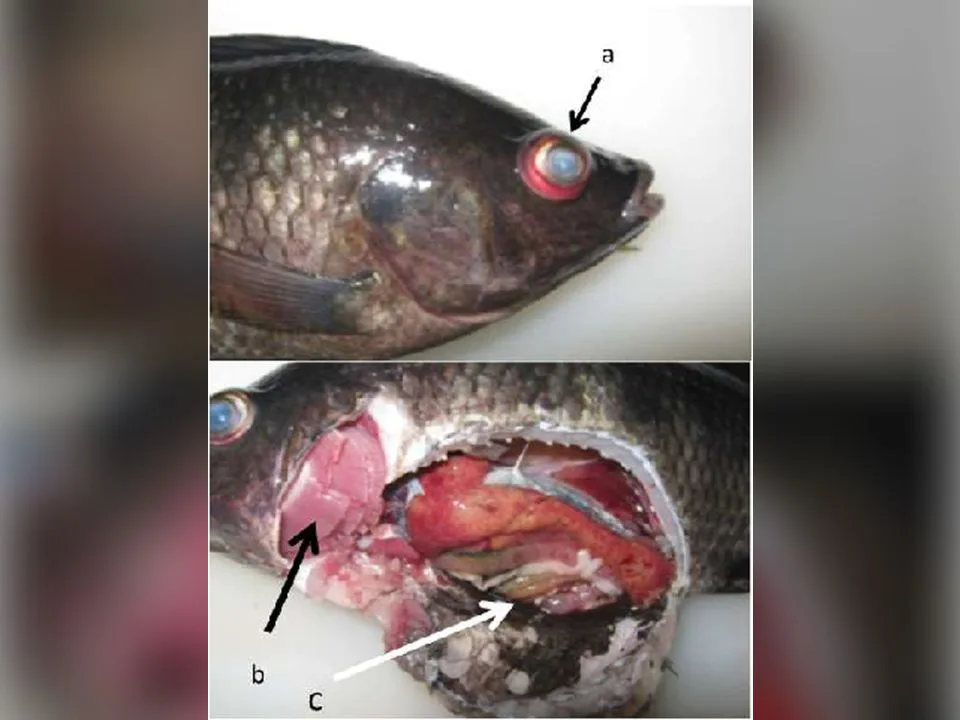
- Gill covers move fast and wide as fish breathe harder, and gills may look pale when a fish is examined.
As it gets worse
- Large numbers of fish stay at the surface gasping even after sunrise, and they do not dive away when you approach or clap.
- Fish lose balance, swim on their sides or in circles, or lie weak at the pond edges.
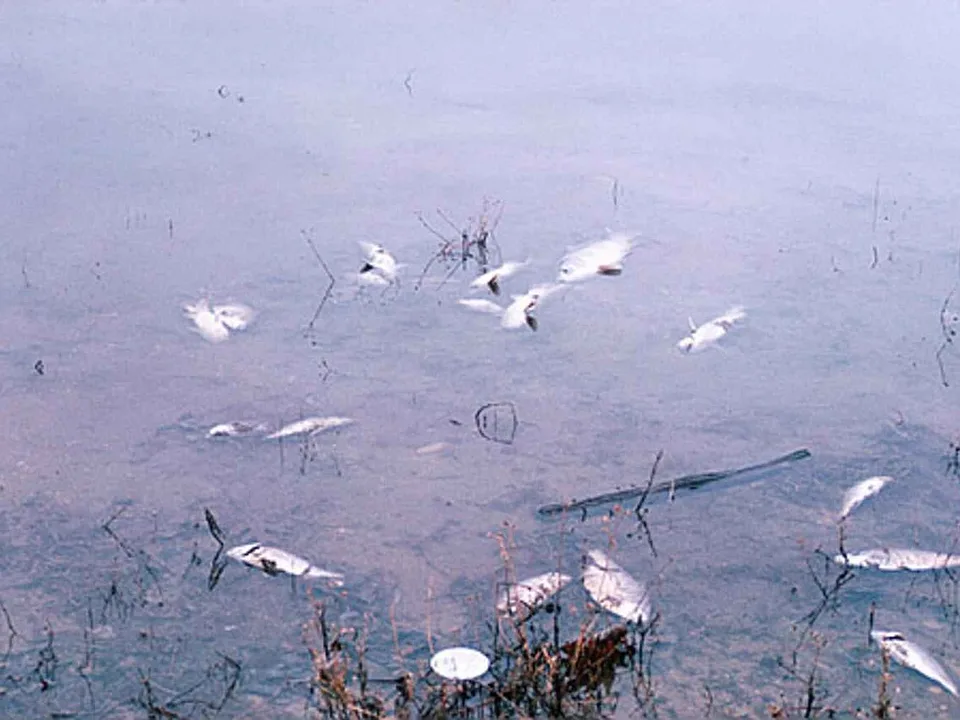
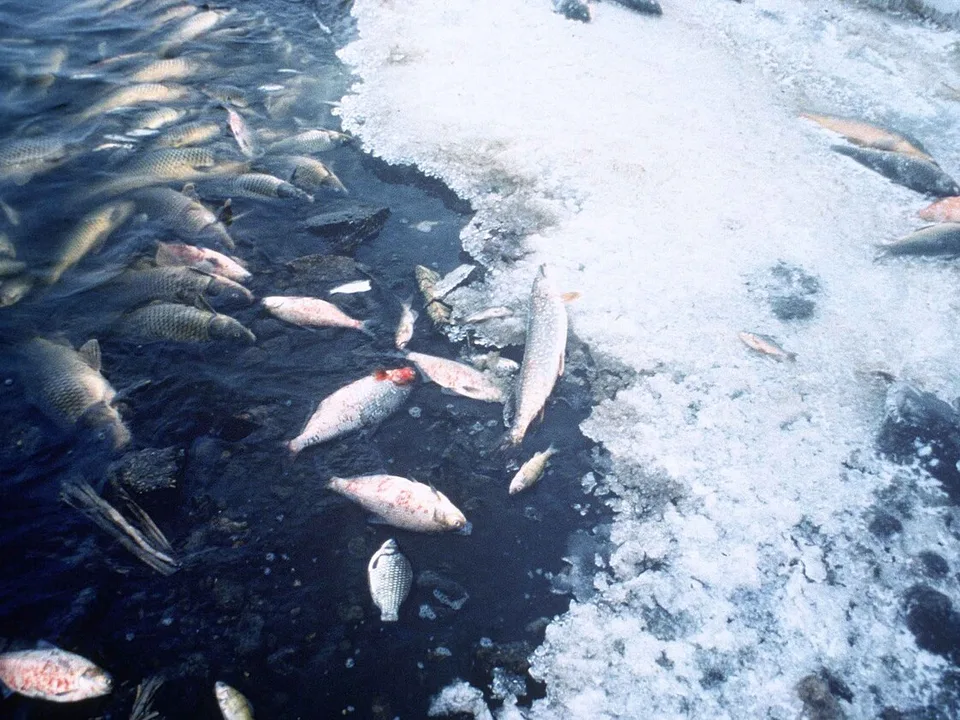
- Sudden deaths occur, often overnight or at dawn, with the biggest fish dying first and many found floating or along the banks.
- Dead fish may have mouths wide open and gill covers flared out.
- Catfish may still be gulping while most tilapia are dead, or even catfish start dying in severe cases.
- Within hours, a whole pond can be lost if oxygen is not restored.
What to do right now
- Stop feeding immediately and do not feed again until fish are behaving normally. Uneaten and digesting feed uses up oxygen the fish need to survive.
- Add fresh, clean, oxygen-rich water straight away, ideally from a stream, borehole or canal. Let it fall or splash onto the surface so it picks up air. At the same time, let out bottom water from the drain if your pond allows it.
- Create aeration (mixing air into water). Run a paddlewheel or aerator if you have one, or use a pump to spray water back onto the pond surface. In an emergency, people can splash and stir the surface with paddles, boards or buckets, working in shifts.
- Do not stir up or disturb the bottom mud, and do not drain the pond very low. Bottom mud is oxygen-poor and can release harmful gases.
- Do not add manure, fertiliser, lime, salt or any chemical as an emergency fix, as these do not add oxygen and some make things worse.
- Remove dead and dying fish quickly using a net and gloves. Bury them away from the water with lime or soil, or dispose of them as your officer advises, because rotting fish use oxygen and attract predators.
- Keep safe. Keep electric pumps and cables well away from water and people, never work alone at a deep pond at night, and keep children away from the edges.
- Call your County Fisheries Officer or aquaculture extension officer, and record times, numbers and sizes of dead fish, weather and feeding. Keep checking the pond through the night and the next dawn, because oxygen may fall again.
How it spreads
- Low oxygen is not an infection and does not spread from fish to fish, but it can hit every fish in the pond at the same time.
- Several cloudy, rainy or still days in a row reduce sunlight, so algae produce less oxygen while demand stays high.
- Overfeeding leaves uneaten pellets on the pond bottom, where they rot and use up oxygen, especially overnight.
- Overstocking means too many fish breathing the same water. Problems often appear as fish grow bigger towards harvest.
- Too much manure, chicken droppings or fertiliser causes a very thick algae bloom that can suddenly crash and die.
- Hot weather, very warm water, or water flow stopping (a dry inlet, broken pump, power cut, or blocked canal) can quickly tip a borderline pond into crisis.
- Heavy cold rain, strong winds or disturbing deep, smelly bottom mud can mix oxygen-poor water and harmful gases such as hydrogen sulphide (rotten-egg smell) through the pond.
- Using pesticides or herbicides near the pond, or chemicals that kill algae, can cause an algae die-off followed by an oxygen crash.
Could it be something else?
Ammonia or nitrite poisoning (brown blood disease)
These also cause gasping because the toxic waste stops blood carrying oxygen. They often follow heavy feeding in ponds or tanks with poor water exchange. With nitrite, the gills and blood may look chocolate-brown instead of bright red. Gasping may continue during the day even when oxygen is good. A water test kit for ammonia and nitrite tells them apart.
Gill parasites or bacterial gill disease (e.g. columnaris)
Damaged gills cause fish to gasp and crowd at the inlet, but deaths usually build up over several days rather than all at once overnight. Fish of all sizes may be affected, and you may see swollen, slimy, patchy or rotting gills, white or yellow patches on the body, or flashing (rubbing against the bottom). Fish keep gasping even when oxygen levels are good. Diagnosis needs a fisheries or vet lab check of gill samples.
Chemical or pesticide poisoning
Deaths are sudden and may follow spraying of nearby crops, runoff after rain, or cattle dip washings entering the water. Fish may twitch, jump, or swim wildly in spirals rather than just gasping quietly. Small fish, frogs and insects in the pond may die too. Oxygen levels may be normal at first. Note the timing and any nearby spraying.
Heat stress from very warm water
Shallow ponds and tanks overheat on hot sunny afternoons, and fish become stressed and gasp in the heat of the day, not mainly at dawn. Warm water also holds less oxygen, so the two problems often overlap. A thermometer reading and the time of day help separate them.
How it is diagnosed
Diagnosis is mainly made by measuring dissolved oxygen and reading the signs and timing. A County Fisheries Officer, Kenya Fisheries Service officer, aquaculture extension officer or fish vet will usually test the water with a dissolved oxygen meter or chemical test kit. Testing at or just before dawn gives the most useful reading, because oxygen is lowest then. As a general guide, warm-water pond fish do best when oxygen is kept well above about 5 milligrams per litre and become stressed when it falls much below about 3. Fish start dying when it stays very low, although tolerance differs between species and sizes. The officer will also check water temperature, pH (acidity), ammonia and nitrite, and look at the water colour, depth of visibility and bottom condition. If fish are still dying after oxygen is restored, they may examine gills and send fresh or chilled fish to a lab, such as KMFRI or a veterinary laboratory, to rule out parasites, bacteria or poisoning. To help, the farmer should note when gasping and deaths started, and how many and what size fish died. Record recent weather (cloudy days, heavy rain), feeding amounts, stocking numbers, any manure or fertiliser added, changes in water colour or smell, and any spraying nearby. Keep two or three freshly dead or dying fish cool, not frozen, in a clean bag for examination.
Treatment
There is no medicine that cures low oxygen. The treatment is to restore oxygen and remove its causes. A fisheries officer or fish vet will usually confirm oxygen levels with a meter, then advise on emergency aeration, water exchange and how long to withhold feed. Next, they will help you find the root cause, such as overstocking, overfeeding, too much manure, an algae crash, or a failed water supply. They may recommend partial harvest to reduce the number of fish, adjusting feed amounts, or changing how you fertilise. Where a turnover or rotten bottom is suspected, they may advise draining, drying and desilting the pond after harvest. Survivors are stressed and may develop infections in the following days and weeks. If disease appears, the officer may take samples and, only if a bacterial infection is confirmed, a vet may prescribe a treatment such as a medicated feed. Antibiotics do nothing for low oxygen itself, and using them without a diagnosis wastes money and encourages antimicrobial resistance (germs no longer responding to medicines). Any medicine must be prescribed by a vet and comes with a withdrawal period, a waiting time before fish can be harvested and eaten, which must be followed strictly. Expect fish to resume feeding within a day or two if the crisis was caught early. Restart feeding with small amounts.
Medicines must be prescribed and dosed by a vet. Always respect milk and meat withdrawal periods, and finish the full course of any antibiotic.
Prevention
- Stock at a density suited to your pond, water supply and aeration. Follow guidance from your fisheries officer or KALRO/KMFRI materials rather than adding extra fish, because problems often appear as fish grow.
- Feed carefully. Give only what fish eat within a short time, watch that feed is cleared, and adjust amounts as fish grow. Never dump extra feed to speed up growth.
- Reduce or skip feeding on cloudy, rainy or very hot still days, and whenever fish show any surface gasping in the morning.
- Go to the pond at dawn every day and look for fish at the surface. This simple habit catches most problems before mass deaths. If you can, get a dissolved oxygen meter or test kit, or ask your extension officer to test regularly.
- Manage the green water. Use manure and fertiliser only in moderate amounts as advised. A simple check is to put your arm in the water: if the water is so thick you cannot see your hand just below the surface, the bloom is too dense. Stop fertilising and add fresh water.
- Keep a reliable supply of fresh water and a way to aerate. Consider an aerator, paddlewheel or spray pump for intensive ponds, along with a backup plan for power cuts or a dry inlet.
- Between production cycles, drain, dry and remove excess black mud from the pond bottom. Keep ponds at a sensible depth, and cut back overgrown water weeds and overhanging vegetation that rot in the water.
- Harvest or partly harvest fish once they reach market size rather than holding very heavy fish in the pond. Keep pesticide spraying, dip wash and runoff away from ponds.
Risk to people
Low oxygen itself does not infect people. However, fish that are found dead in the pond, especially after some hours in warm water, spoil quickly and can cause food poisoning. They should not be sold or eaten unless they were collected while still alive and fresh and handled hygienically, and if unsure, dispose of them safely. Wear gloves when handling dead fish and wash hands well afterwards. Take care with electric pumps near water and with deep ponds at night, as drowning and electric shock are real risks during emergencies.
Impact on your farm
Low oxygen is one of the fastest ways a Kenyan fish farmer can lose an investment. A single bad night can kill most of the fish in a pond, and the biggest fish, which have eaten the most feed and are closest to sale, usually die first. The farmer loses the cost of fingerlings and months of feed, and often the expected harvest income or school fees. Fish that die in the pond quickly spoil in warm weather and usually cannot be sold. Repeated mild low-oxygen periods that do not kill fish still cause poor appetite, slow growth, poor feed conversion (more feed for each kilo of fish) and weaker immunity, so disease outbreaks become more likely. For groups and commercial farms supplying hotels, schools or markets, sudden losses can also break supply contracts and damage trust. Prevention through careful feeding, sensible stocking and simple aeration costs far less than a single crash.
Outlook and recovery
If the problem is noticed early, at the first signs of gasping, and oxygen is restored quickly with fresh water and aeration, most fish usually survive. They start feeding again within a day or two. Once mass deaths have started, losses can be heavy, and the outcome depends on how quickly oxygen is raised and how big and crowded the fish are. Survivors may be stressed for some days, grow more slowly and be more likely to pick up infections, so watch them closely. Unless the cause is fixed, such as overstocking, overfeeding, too much manure or no aeration, the problem often returns at the next cloudy spell. The long-term outlook for the farm is good when daily dawn checks, careful feeding and a water or aeration backup become routine.
Common questions
Why do my fish always gasp and die early in the morning, not in the afternoon?
During the day, the green algae in the water use sunlight to make oxygen, so levels usually rise through the afternoon. At night there is no sunlight, and the algae, fish and the bacteria rotting waste all use oxygen without any being made. So oxygen falls all night and is lowest just before sunrise. That is why dawn is the most dangerous time and the best time to check your pond.
My catfish survived but all my tilapia died. Why?
African catfish have a special breathing organ that lets them gulp air at the surface. They can survive in water with very little oxygen for longer than tilapia. Tilapia depend on oxygen dissolved in the water, so they suffocate first. If you see tilapia dying while catfish look fine, low oxygen is a strong suspect. Even catfish can die if oxygen stays very low, so don't rely on them as an all-clear.
Can I sell or eat fish that died from low oxygen?
Fish collected alive and still fresh during a crisis can be harvested, kept cool and used like normal fish, as long as no medicines have been given. Fish found already dead in the water, especially after several hours in warm weather, spoil fast and can cause food poisoning, so do not sell or eat them. Bury or dispose of them away from the pond.
Will adding salt, lime or medicine help my gasping fish?
No. None of these add oxygen to the water, and in an emergency some can make things worse or stress fish further. The fix is fresh, splashing water and aeration, plus stopping feeding. Antibiotics do not help low oxygen at all and should only be used if a vet diagnoses a bacterial infection afterwards. Lime and salt have specific uses in pond management, so ask your fisheries officer when and how to use them.
How can I tell if my pond oxygen is low if I do not have a meter?
Watch your fish at dawn. Fish at the surface gulping air, crowding at the inlet or refusing morning feed are warning signs. Also watch the water: a sudden change in colour, from green to brown, grey or very clear, a bad smell or scum may mean the algae are dying. Be extra careful after two or three cloudy days, in very hot weather or after heavy feeding. Ask your extension officer to test with a meter, and consider buying a simple test kit if you farm intensively.
How do I stop this happening again?
Look at what changed before the crisis. Often it is too many fish for the pond, too much feed or manure, cloudy weather, or the water supply stopping. Reduce stocking or harvest some fish, feed only what is eaten quickly, and cut back feed on dull days. Avoid overfertilising, and keep a fresh water source or aerator ready. Most importantly, check the pond every morning at first light. Desilting and drying the pond between cycles also reduces the rotting mud that uses up oxygen.
A guide, not a diagnosis. This page is general information to help you recognise problems early. Always confirm with a vet or animal health worker before treating.