What it is
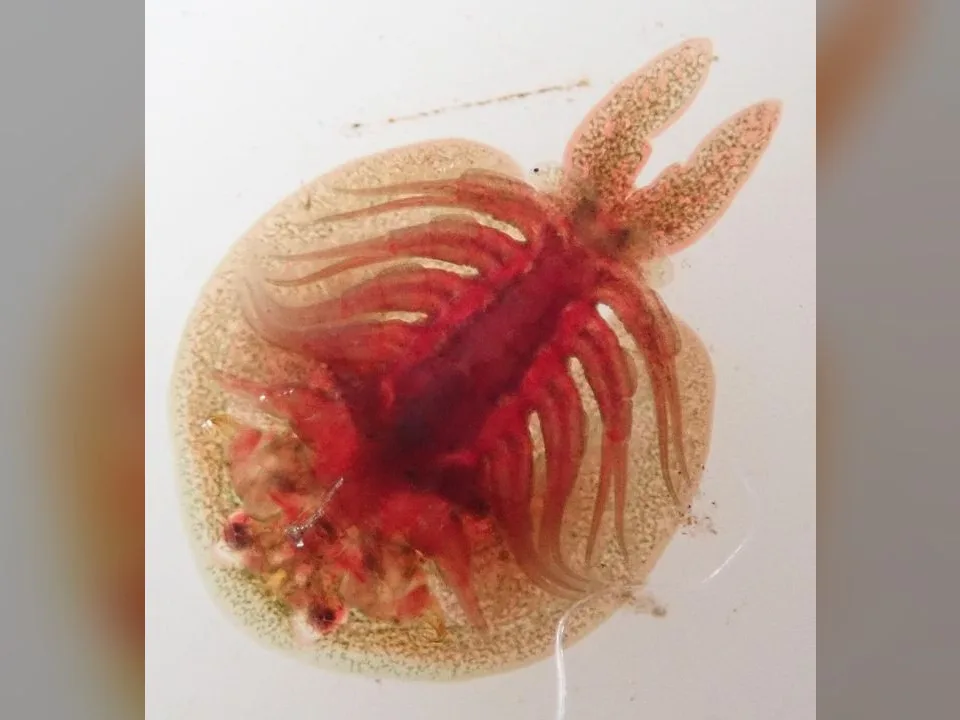
Fish lice (Argulus) are flat, round to oval parasites, usually a few millimetres across and up to about the size of a fingernail. They are almost transparent or greenish, so they blend in with the fish. They hold on with two strong suckers and can swim freely from fish to fish. To feed, a louse pierces the skin with a sharp mouthpart and injects digestive juices, then sucks blood and tissue fluid. This leaves small red pinpoint wounds that become swollen and inflamed. Adult females leave the fish to lay rows of eggs on hard surfaces such as stones, pond walls, sticks and pipes. Anchor worm (Lernaea) is a different parasite. Only the adult female attaches. She buries her head deep into the fish's skin and muscle, and the head grows into an anchor-shaped hook that holds her in place. What the farmer sees is the thin body, about one to two centimetres long, hanging out of the fish, often with two small egg sacs at the end that look like a split tail. Around the entry point the flesh becomes red, swollen and sometimes ulcerated. The young stages of anchor worm swim free in the water and also feed on fish, including on the gills. With both parasites, the real danger is often what follows: the open wounds let in bacteria such as Aeromonas and water moulds (fungus), which cause ulcers, fin rot and deaths. Constant irritation also stresses the fish, so they eat less, grow slowly and become more likely to catch other diseases. Fish lice have also been reported to carry some viral and bacterial diseases from fish to fish.
Which animals are most at risk
All farmed fish can be affected, but common carp, koi and goldfish are classic hosts, and Nile tilapia and African catfish are also affected in Kenyan ponds. Fingerlings and small fish suffer most because a few parasites take a large share of their small body. Problems are most common in earthen ponds fed by river or canal water, in ponds stocked with fish from unknown sources, and in overstocked ponds with poor water exchange. Warm seasons and warm lowland areas, such as the Lake Victoria basin and coastal regions, favour fast parasite build-up, but ponds in central Kenya can also be hit during hot dry months. Ornamental fish ponds and aquariums that keep adding new fish are at high risk. Cage farms in lakes can be exposed through wild fish living around the cages.
Signs to look for
Early signs
- Fish flashing, which means suddenly turning on their side so the belly flashes silver in the light.
- Fish rubbing or scraping their bodies against the pond walls, bottom, stones or nets.
- Fish jumping out of the water more than usual, or darting about restlessly.
- Small flat discs that move across the skin or fins when you look closely at a netted fish, or thin threads sticking out of the skin.
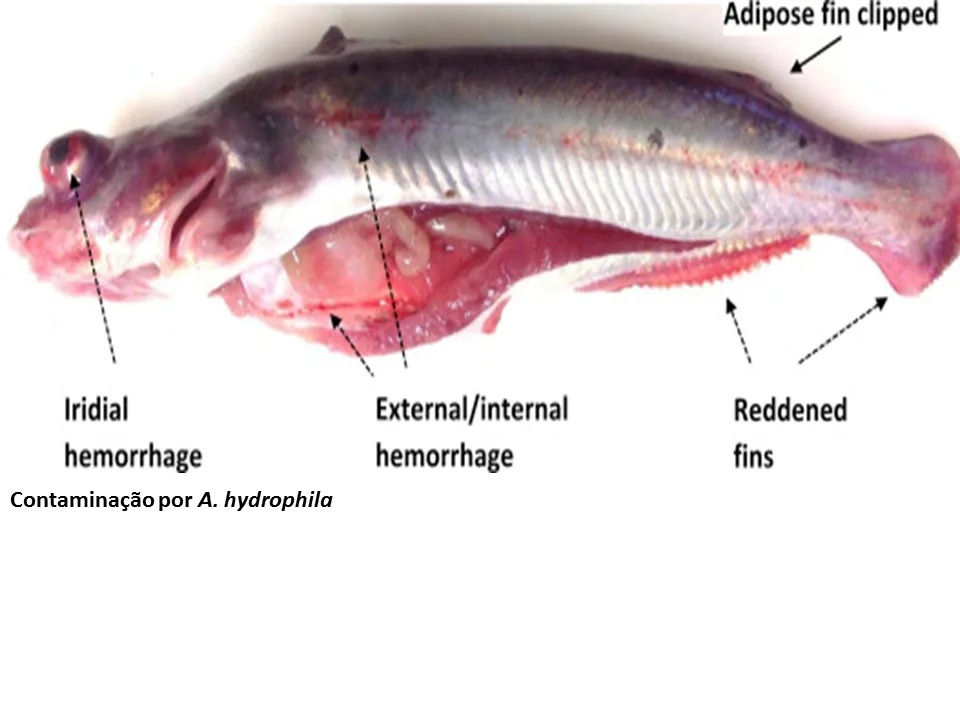
- Small red pinpoint spots or slightly raised red patches on the skin, often near the fins or base of the tail.
- Fish slightly slower to come to feed or eating less than normal.
As it gets worse
- Many lice or anchor worms visible on each fish, sometimes in the mouth, on the gills or around the eyes.
- Red, swollen, open sores and ulcers around the attachment points, sometimes with white cotton-wool tufts of fungus.
- Ragged, frayed or reddened fins and loss of scales.
- Thin fish with poor growth and uneven sizes in the same pond.
- Fish gasping at the surface or crowding near the water inlet, especially if gills are damaged or oxygen is low.
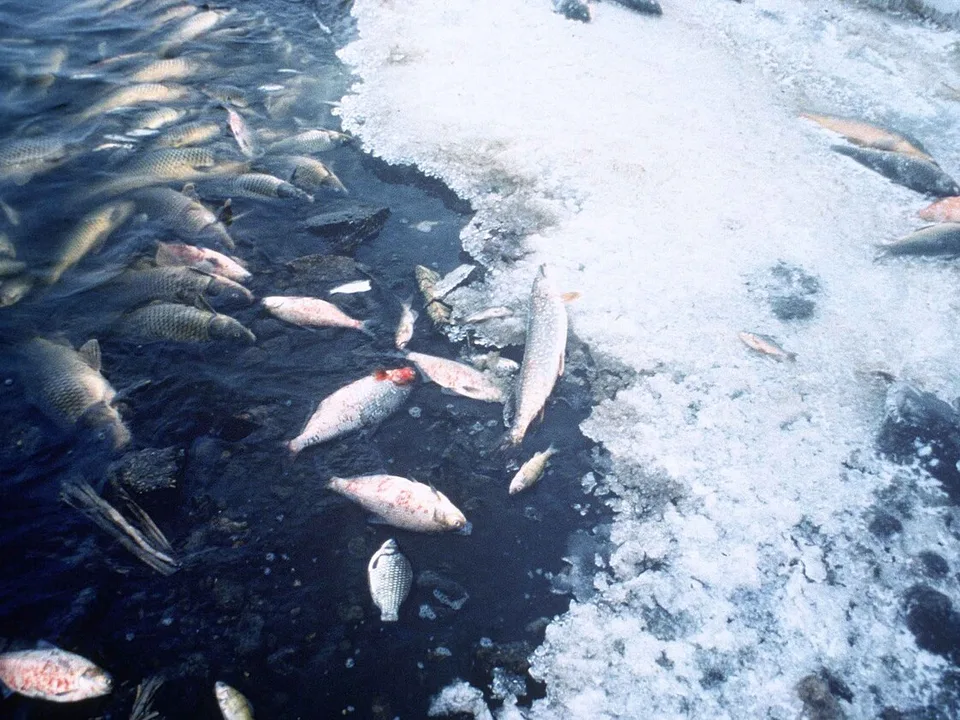
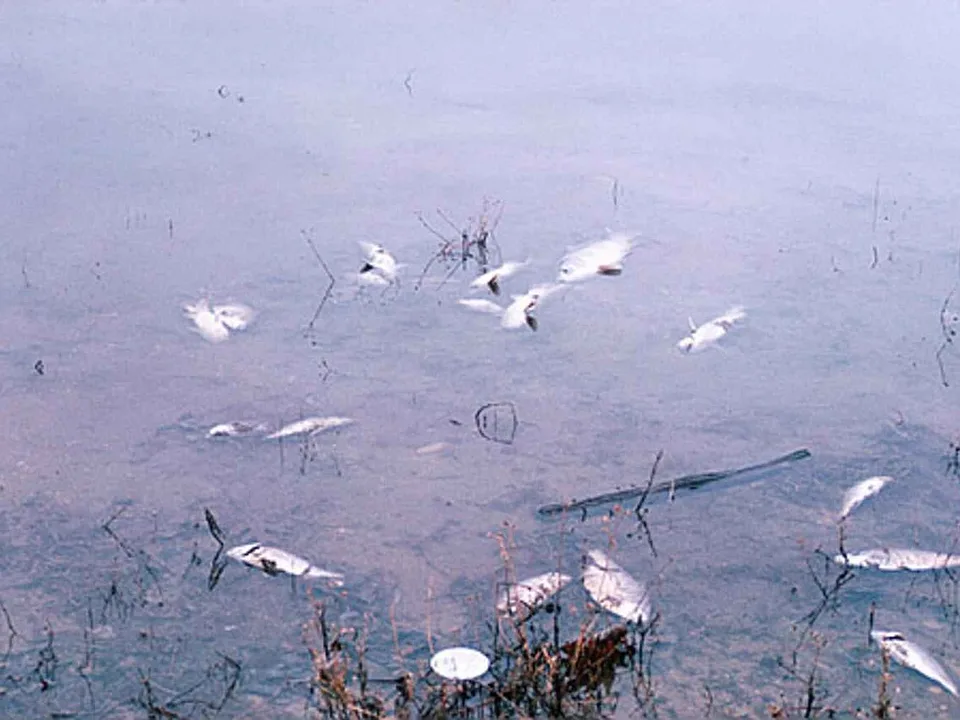
- Daily deaths, often starting with fingerlings and the weakest fish.
- Harvested fish with marked, scarred or sore skin that buyers reject or pay less for.
What to do right now
- Net a few fish from each affected pond and look closely at their skin, fins and gills in good light so you know what you are dealing with and how many fish are affected.
- Stop moving fish, water and equipment between ponds, and do not sell or give away live fish from affected ponds, so you do not spread the parasites to clean ponds or other farms.
- Remove dead and dying fish every day and dispose of them by burying them away from the pond with lime or burning them, never throwing them into rivers or other ponds.
- Check and improve water quality: if you can, increase aeration or add clean, screened water, and remove rotting feed, weeds and debris.
- Reduce feeding to what the fish clear quickly, because uneaten feed rots, lowers oxygen and stresses fish further.
- Clean and dry nets, buckets and boots after use, and keep a separate set of equipment for the affected pond if possible.
- Do not pour livestock dips, crop pesticides or household chemicals into the pond; many are deadly to fish and leave dangerous residues in fish people will eat.
- Keep a written record of signs, deaths and dates, then call your County Fisheries Officer, an aquaculture extension officer or a vet who handles fish for advice on safe treatment.
How it spreads
- Bringing in infested fingerlings, brood stock or ornamental fish from another farm, hatchery or market is the most common way both parasites reach a new pond.
- Wild fish entering through unscreened inlets from rivers, dams or canals can carry lice and anchor worms into a clean pond.
- Free-swimming young parasites and adult fish lice move with the water, so water flowing from one pond to the next can carry them downstream.
- Nets, buckets, seine nets and transport containers moved wet between ponds can carry eggs and young parasites.
- Fish lice eggs stuck on stones, pond walls, roots and debris can survive after the fish are harvested and hatch when the pond is restocked if it is not dried and cleaned.
- Warm water speeds up the life cycle of both parasites, so numbers can build up very quickly during hot, dry spells and in shallow, warm ponds.
- Overcrowding, poor water quality, low oxygen and too much organic waste stress the fish and let parasite numbers rise faster.
Could it be something else?
White spot disease (Ich)
White spot shows as many tiny white dots like grains of salt or sugar scattered over the skin and fins. The dots do not move and do not stick out as threads. Fish lice are larger, flat and move around, and anchor worms are visible threads with a tail.
Fish leeches
Leeches are longer, worm-like and segmented, with a sucker at each end. They move by looping like an inchworm and stretch and shrink. Fish lice are flat and round, and anchor worms stay fixed in one place with the head buried in the flesh.
Bacterial ulcer and fin rot (such as Aeromonas infection)
Bacterial disease also causes red sores and ragged fins, but when you look closely there are no lice or threads on the fish. Note that the two often go together, because bacteria invade parasite wounds, so a vet may find both.
Poor water quality or tiny skin flukes
High ammonia, low oxygen or microscopic parasites like flukes also cause flashing and rubbing, but you will not see anything on the skin with the naked eye. A water test and a skin or gill scraping under a microscope are needed to tell them apart.
How it is diagnosed
Fish lice and anchor worms are usually large enough to see with the naked eye, so diagnosis often starts with simply netting several fish and examining them closely in good light, ideally with a magnifying glass. The vet or fisheries officer will check the skin, fins, mouth and gills, count roughly how many parasites each fish has, and may scrape a little mucus from the skin and gills to look under a microscope for young parasite stages and other parasites such as flukes or white spot. They will look for secondary bacterial or fungal infection in the sores, and may send swabs or whole sick fish to a laboratory if deaths are high. Because water quality affects how badly fish suffer, they will usually test or ask about oxygen, temperature, ammonia and pH. To prepare, keep a few live, affected fish in a clean bucket or plastic bag of their own pond water with air, rather than dead or frozen ones. Write down when signs started, the number of deaths per day, the source and date of your last stocking, the stocking density, feed type and amount, water source, and any treatments already used.
Treatment
Treatment must be planned and prescribed by a vet or qualified fisheries health officer, because the wrong chemical or amount can kill all the fish, and some products are not allowed for food fish. Treatment usually targets both the parasites on the fish and the eggs and young stages in the water, so more than one step is often needed over several weeks. For small numbers of valuable fish such as koi or brood stock, anchor worms can be gently pulled out with fine forceps close to the skin, and the wound cleaned, by a trained person. Short salt baths or dips are sometimes used to reduce lice and help the skin heal, but salt does not reliably kill embedded anchor worms. For whole ponds, a vet may recommend approved anti-parasite treatments; drug groups used in aquaculture in different countries include chitin-inhibitors such as diflubenzuron or lufenuron, which stop the parasites from growing their shell, in-feed treatments such as emamectin benzoate, and older organophosphate chemicals, some of which are now restricted or banned for food fish. Products such as potassium permanganate or formalin are sometimes used for skin infections but must be handled with great care. Which products are legal and available in Kenya varies, so rely on your vet. Fish lice eggs stuck to hard surfaces resist most treatments, so after harvest the vet may advise draining, drying and liming the pond to break the cycle. If sores are badly infected with bacteria, a vet may prescribe an antibiotic, usually given in medicated feed. Antibiotics do not kill the parasites themselves, and should only be used when truly needed, because misuse in ponds creates antibiotic-resistant bacteria that harm fish and people. Every drug used in food fish has a withdrawal period, a set number of days during which the fish must not be harvested or eaten. Follow the vet's instructions and the label exactly. Expect fish to start eating better and rubbing less within days to weeks if treatment works, and sores to heal more slowly.
Medicines must be prescribed and dosed by a vet. Always respect milk and meat withdrawal periods, and finish the full course of any antibiotic.
Prevention
- Buy fingerlings and brood stock only from certified, reputable hatcheries, and ask about their parasite and disease history.
- Quarantine all new fish in a separate tank or small pond for at least two to three weeks, checking them closely for lice and threads before adding them to your main ponds.
- Screen water inlets with fine mesh or pass river water through a simple sand or gravel filter to keep out wild fish and free-swimming parasites.
- Between production cycles, drain the pond fully, let the bottom dry and crack in the sun, remove mud and debris, and apply agricultural lime as advised by your extension officer to kill eggs and larvae.
- Keep stocking density within recommended levels for your pond size and species, and maintain good water quality with regular water exchange, aeration where possible and careful feeding.
- Check a sample of fish every week or two, especially in hot dry months, so you catch a few parasites before they become thousands.
- For fish lice, some farmers place smooth boards or tiles in the pond as egg-laying surfaces, then lift, dry or scrub them regularly to remove the eggs; ask your fisheries officer if this suits your system.
- Keep separate nets and buckets for each pond or disinfect and dry them between ponds, and do not let water from an infested pond flow into clean ones.
Risk to people
Fish lice and anchor worms do not infect people, and properly cleaned and well-cooked fish from a pond with these parasites is not known to be harmful. Cut away and discard any badly ulcerated or infected parts of the flesh and cook fish thoroughly. The main human risk comes from chemical residues: never use livestock dips, crop pesticides or unapproved products in fish ponds, and always observe the withdrawal period of any treatment before harvesting, selling or eating the fish. Wear gloves when handling pond chemicals such as lime, potassium permanganate or formalin, avoid breathing fumes, and wash hands after handling sick fish, as some bacteria in fish sores can infect cuts on human skin.
Impact on your farm
On a Kenyan fish farm, fish lice and anchor worms mainly cost money through slower growth, poorer feed conversion and losses of fingerlings. Fish that are constantly irritated eat less and turn more of their feed into fighting the parasites than into flesh, so it takes longer and costs more in feed to reach market size. Heavy infestations can kill many fingerlings within weeks, wasting the money spent on stocking. Table tilapia and catfish with red sores, scars and missing scales fetch lower prices or are rejected by hotels, supermarkets and traders, and ornamental koi and goldfish can lose most of their value. Secondary bacterial infections can cause bigger die-offs. Treatment, extra labour for checking fish, pond drying and lost production time between cycles add further costs. Because parasites spread easily, an infested hatchery or farm can damage its reputation with buyers of fingerlings.
Outlook and recovery
The outlook is good when infestations are found early and the farmer combines vet-guided treatment with better pond management. Lightly affected fish usually recover, start eating normally again and their small wounds heal over a few weeks, although scars may remain. Fingerlings, heavily infested fish and fish with badly infected sores or damaged gills are less likely to recover. Parasites often come back if only the fish are treated and the eggs and young stages in the pond are ignored, or if new infested fish or unscreened water keep coming in. Breaking the cycle by drying and liming ponds, quarantining new stock and screening inlets gives the best long-term results, but no single step guarantees the pond stays free.
Common questions
Can I eat fish that had fish lice or anchor worms?
Yes, in most cases. These parasites do not infect people. Remove the parasites, cut away any badly damaged or ulcerated flesh, and cook the fish well. If the fish were treated with any drug or chemical, do not eat or sell them until the withdrawal period given by your vet or on the label has passed.
Can I just pull the anchor worms out by hand?
For a few valuable fish such as koi or brood fish, a trained person can remove anchor worms with fine forceps, pulling gently close to the skin so the head comes out. If the head breaks off inside it can cause infection, so ask your vet first. Pulling worms off a whole pond of table fish is not practical, and it does not deal with the young parasites in the water.
Will adding salt to my pond get rid of them?
Salt can help fish heal and may reduce some fish lice when used as a short bath for small numbers of fish, but it does not reliably kill embedded anchor worms or eggs on pond surfaces. Salting a whole earthen pond takes very large amounts and can harm some fish and plants. Ask your fisheries officer or vet before using salt, and follow their guidance.
I treated my pond but the parasites came back. Why?
Both parasites have stages that are hard to kill. Fish lice eggs stick to stones and walls and resist most treatments, and anchor worm larvae live in the water. If treatment only kills adults, new parasites hatch a few weeks later. New fish or unscreened river water can also bring them back. Your vet may recommend repeat treatments, and drying and liming the pond after harvest is one of the best ways to break the cycle.
Can I use cattle dip or tick spray in my fish pond?
No. Livestock dips and crop pesticides are made for land animals or plants and are often extremely poisonous to fish, even in tiny amounts. They can wipe out your whole pond, poison downstream water and leave dangerous residues in fish people eat. Only use products a vet has prescribed for fish.
Do tilapia and catfish really get these parasites, or only koi and goldfish?
Carp, koi and goldfish are the best-known hosts, but tilapia and African catfish in Kenyan ponds can also be affected, especially fingerlings and fish in crowded, warm ponds with poor water quality. Checking a sample of your fish regularly is the best way to know whether your pond has a problem.
A guide, not a diagnosis. This page is general information to help you recognise problems early. Always confirm with a vet or animal health worker before treating.