What keeps them healthy
Fish health depends mostly on the water they live in. Unlike cattle or chickens, fish breathe, eat, drink and get rid of waste all in the same water. So water quality is the main thing that keeps them healthy. Fish need enough dissolved oxygen, which is oxygen mixed into the water that they take in through their gills. They also need a steady temperature, a pH (a measure of how acidic or alkaline the water is) in a safe range, and low ammonia. Ammonia is a poisonous waste that fish give off through their gills and that also comes from rotting leftover feed and manure. Useful general targets from FAO and Kenyan extension guidance are these. Water temperature should be about 25–30°C for both tilapia and catfish; below about 20°C they eat little and grow slowly. Dissolved oxygen should ideally stay above 5 mg/L; tilapia get stressed below about 3 mg/L. Catfish cope better with low oxygen because they can gulp air, but they still grow best in good water. pH should be about 6.5–8.5. Ammonia should be as close to zero as possible; the toxic form (un-ionised ammonia) should stay below about 0.05 mg/L. Ammonia becomes more poisonous when water is warm and pH is high. Pond water should be light green, from healthy algae (tiny water plants), so that a white disc or your palm disappears at roughly 30–40 cm depth. Next comes good nutrition. Fish need a balanced feed with the right protein for their size, fed in amounts they finish quickly. They need fair stocking density, meaning not too many fish for the pond size. Finally, stress must be kept low. Stress from rough handling, crowding, sudden water changes or poor water weakens the immune system and the protective slime on the skin. That lets bacteria, parasites and fungi take hold.
What to keep an eye on
Fingerlings and newly stocked fish are the most fragile, especially in the first two weeks after transport. Crowded ponds and ponds that are fed heavily are at greater risk of oxygen crashes and ammonia build-up. Tilapia are more sensitive to low oxygen than catfish. Catfish in crowded tanks tend to bite each other and develop skin wounds. In the hot dry season (roughly January to March) warm, still water holds less oxygen and blooms can crash. During the rains, runoff and muddy water are bigger risks. In highland areas such as Nyeri, Kiambu and Meru, the cold season (June to August) brings water temperatures that slow feeding and weaken fish. Liner ponds and tanks without aeration, recirculating systems where a pump can fail, and ponds fertilised with too much manure need extra care.
Normal vs warning signs
Signs of good health
- Tilapia swim together in loose, calm groups at mid-depth and move away smoothly when your shadow falls over the pond.
- Fish rush to the feed within seconds and eat it all within about 10–15 minutes, leaving little or nothing floating or sinking.
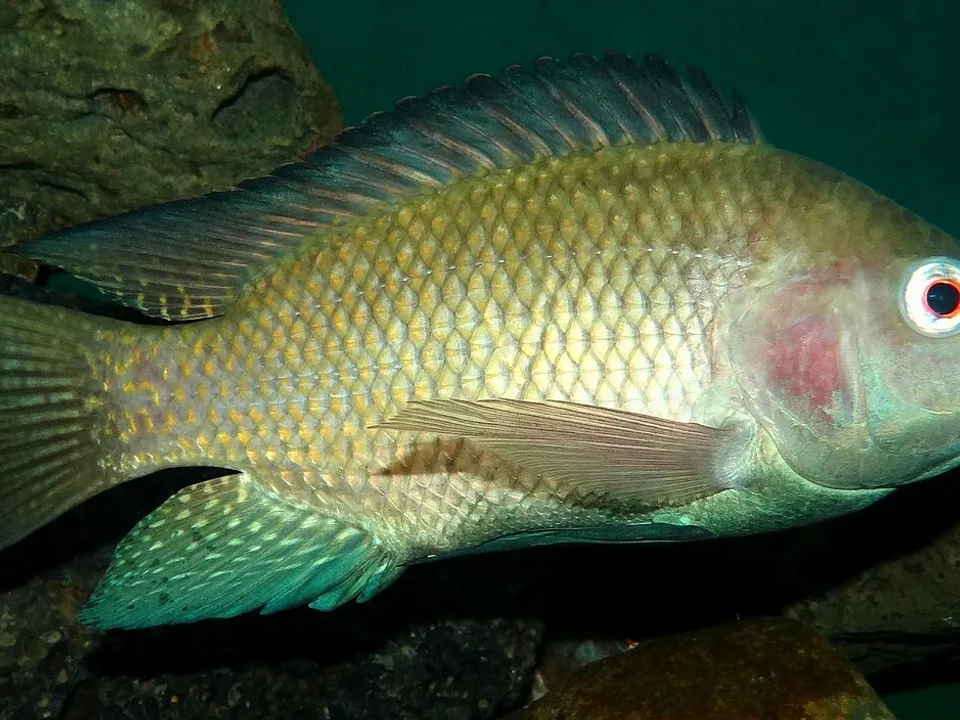
- Tilapia have clear, bright colours with a shiny silver-grey to olive body. Breeding males may show darker or reddish colours on the head and fins, which is normal.
- Catfish are smooth, dark grey-olive to mottled, with a clean slimy skin, long whole barbels (the 'whiskers') and strong, quick movements.
- Fins are whole, held open and smooth-edged, with no frayed tips, red streaks or white cotton-like patches.
- Gills are bright red to deep pink when you gently lift the gill cover of a netted fish, with no pale, brown, grey or swollen patches.
- Eyes are clear and sit normally in the head, not cloudy, bulging or sunken.
- Fish in a group are a fairly even size and grow steadily when you sample-weigh them every few weeks.
- Pond water is light green, smells fresh or earthy, and there are no dead fish at the edges or the outlet.
First signs something is wrong
- Fish come slowly to feed, eat only part of it, or leave feed floating. This is often the very first sign that water or health is going wrong.
- Many tilapia gulp at the surface in the early morning or crowd at the water inlet. This means low oxygen and needs action that same morning.
- A fish swims alone, sits still at the edge or bottom, swims in circles or on its side, or flashes and rubs its body against the pond bottom or walls.
- The skin turns dull, very dark or pale, has too much slime or too little, or shows red spots, sores, white or grey cotton-like patches or missing scales.
- Fins become frayed, ragged, reddened at the base or eaten away, or are held clamped tightly against the body.
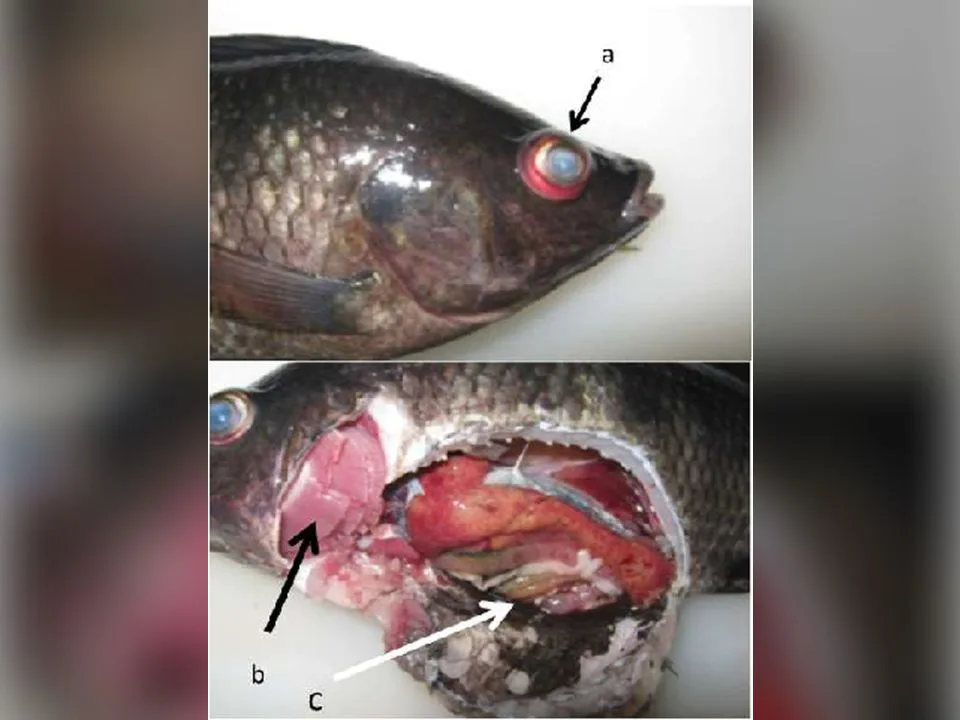
- Gills look pale, brown, blotchy or swollen, or the gill covers stay flared and move fast.
- Eyes become cloudy or bulging, or the belly becomes swollen.
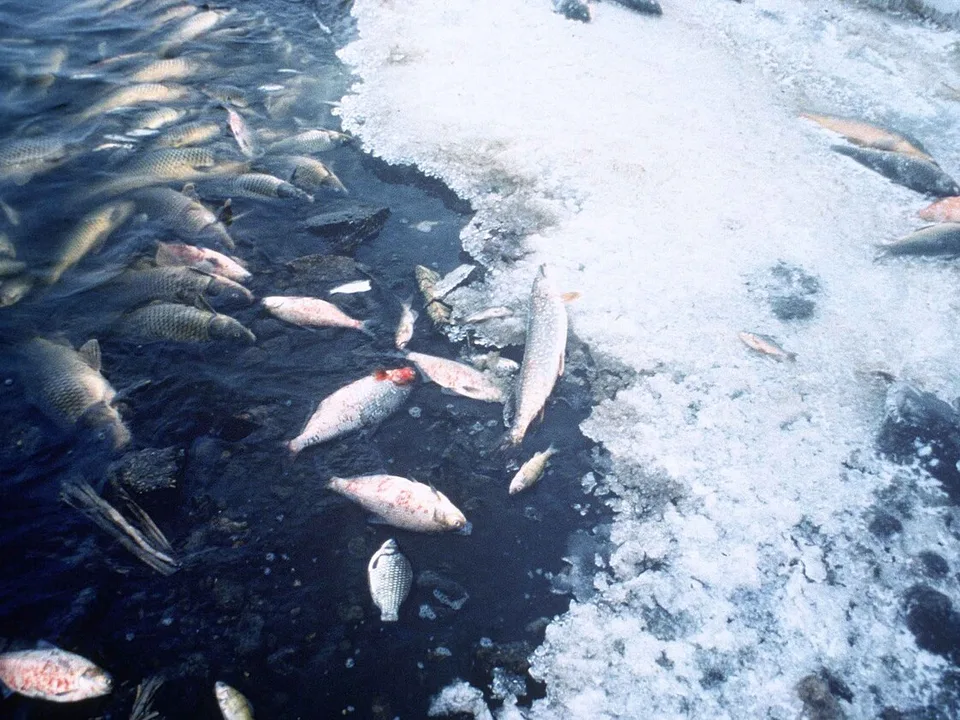
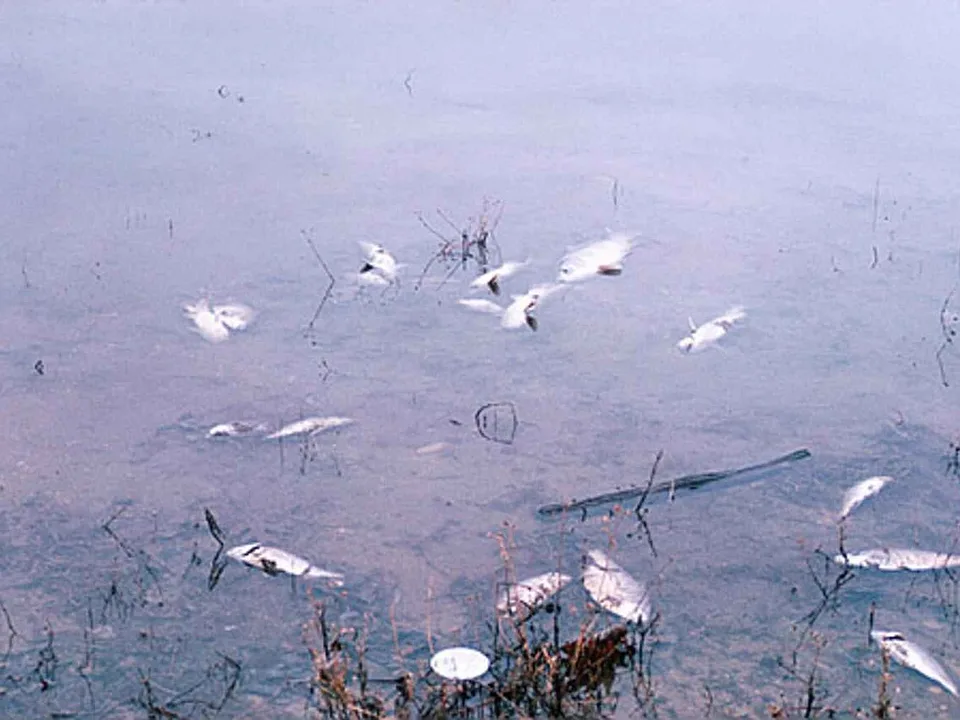
- The water suddenly changes colour (very dark green, brown, grey or clear after being green), smells bad, or a few fish are found dead each day.
Daily routine
- Watch your fish at every feeding and check the pond edges and outlet each morning, so you know clearly what normal looks like in your own pond.
- Feed only what the fish clear in about 10–15 minutes, and reduce feed at once if they are slow to eat or the water is cold.
- If fish gasp at the surface at dawn, stop feeding that day, add fresh well-oxygenated water or run an aerator, and splash or agitate the water if you have nothing else.
- Test water temperature, pH and ammonia regularly, and immediately whenever the fish behave differently.
- Remove dead or dying fish quickly and bury them away from the pond, because rotting fish foul the water and spread germs.
- Keep separate nets and buckets for each pond, or clean and dry them in the sun between ponds.
- Wash your hands after handling fish or pond water, and cover any cuts on your hands.
- Write down feeding, water readings and any deaths, and call your County Fisheries Officer, an aquaculture extension officer or a vet early if changes do not settle within a day or two.
Common risks
- Most fish health problems are triggered by poor water quality: low oxygen, high ammonia, sudden temperature changes or pH swings stress fish before any germ is involved.
- Oxygen is lowest just before dawn, because algae use up oxygen at night. It is worst after several cloudy days, during very hot calm weather, or when a thick algal bloom suddenly dies.
- Overfeeding is a common trigger. Uneaten feed rots at the bottom, uses up oxygen and releases ammonia.
- New fingerlings from uncertified sources can bring parasites and bacteria into a clean pond.
- Heavy rain can wash soil, manure, pesticides or wild fish into ponds, causing muddy water and pH changes. This is most common in the long rains (March to May) and short rains (October to December).
- Rough netting, sorting and transport damage the protective slime and scales, opening the way for infection.
- Birds, frogs, wild fish and shared nets or buckets can carry parasites and germs between ponds.
Often mistaken for illness
Catfish coming up for air
African catfish are air-breathers. They normally rise briefly to gulp air and dive straight back down, even in good water. Worry only if they hang at the surface for long periods, if they stop feeding, or if tilapia in the same pond are also gasping at the surface.
Tilapia breeding behaviour
Mature male tilapia dig round nests in the pond bottom, darken in colour, chase other fish and may have small nips on the fins. Females may stop eating while they carry eggs or fry in their mouths. The fish are otherwise active and their skin is clean. Sick fish are dull, slow and often show sores or frayed fins on many fish, not just a few chasing ones.
Slow feeding in cold weather
In the cold season, or on cold mornings in the highlands, all the fish eat less and move slowly because the water is cool. The water thermometer will read below about 22°C. Feeding picks up as the water warms in the afternoon, and there are no sores, gasping or deaths. In that case reduce feed rather than treating.
Stress after stocking or handling
Fish that have just been transported, netted or sorted may hide, change colour and eat poorly for a few days. If water quality is good and they return to normal feeding within about a week with no wounds spreading, it was handling stress. If sores, fungus or deaths appear, call for advice.
Doing a health check
You cannot take a fish's temperature the way you do with a cow. Instead, a home fish health check means checking the water, then watching the fish, then looking closely at a few fish. Do it the same way every time so you can compare. First, the water. Use a pond thermometer at about 30 cm depth, morning and afternoon. Use a simple test kit, sold by agrovets, aquaculture suppliers and some county fisheries offices, to check pH and ammonia at least weekly, and more often in tanks or crowded ponds. If you can get a dissolved oxygen meter or kit, test at dawn, when oxygen is lowest. Check water colour and clarity with a white disc or your hand: if you lose sight of it at shallower than about 20 cm the bloom is too thick, and if you can see past about 60 cm the water is too clear and poor in natural food. Second, watch the fish at feeding time. Note how fast they come, how much they eat, and whether any fish stay away. Look at the pond edges and outlet every morning for dead or weak fish. Third, every few weeks, gently net a small sample of fish with wet hands or a soft net. Look at the skin, fins, eyes and gills, then weigh them and return them quickly, keeping them out of water for as short a time as possible. Write everything in a pond record book: date, water readings, feed given, feeding response, deaths and sample weights. If something looks wrong, a fisheries officer or fish vet will want this record. They may also ask you to bring live, sick fish in a container of pond water with air, because dead fish spoil quickly and are hard to test. They can then examine skin scrapings and gills under a microscope, or send samples to a laboratory such as KMFRI or a veterinary lab.
Routine vet care
Healthy fish do not need routine medicines. Fish health care in Kenya is mostly about prevention and advice. It is provided by County Fisheries Officers, the Kenya Fisheries Service, KMFRI and other research stations, aquaculture extension officers, and vets trained in fish health. Useful routine support includes advice on pond design, stocking density, liming (adding agricultural lime to correct acid water) and fertilising. Officers can also help you test water, train you to sample and weigh fish, and check hatchery fingerlings. When fish do get sick, the officer or vet first looks for a water problem, because fixing the water often solves the problem without any drug. If a parasite, bacterium or fungus is confirmed, they may advise salt baths, improved water management, or in some cases a licensed medicine. Any medicine, especially antibiotics in feed or water, must only be used when prescribed by a vet. Treating a whole pond is costly, can harm the pond ecosystem, and careless use breeds antimicrobial resistance, where germs stop responding to medicines. Any treated fish must not be harvested or sold until the withdrawal period stated by the vet has passed, so that no drug residues reach consumers.
Keeping them healthy
- Buy fingerlings only from hatcheries certified by the Kenya Fisheries Service. Check that they are active and even-sized, and acclimatise them by floating the bag in the pond for 15–30 minutes before slowly mixing in pond water.
- Stock at the density recommended by your fisheries officer for your pond type and aeration. Crowding is one of the most common causes of poor water and disease.
- Feed a good-quality feed with the right pellet size and protein for the fish's age. Store it dry and off the floor to stop mould, and never feed mouldy or caked feed.
- Test water regularly, keep pH in range using agricultural lime on acidic soils as advised, and avoid over-fertilising with manure.
- Keep oxygen up with aeration or fresh water flow where possible, especially in the hot season, in crowded ponds and after cloudy days.
- Dig cut-off drains around ponds so rainwater runoff, soil and chemicals do not wash in. Screen inlets to keep out wild fish.
- Handle fish gently and as little as possible, using wet hands and soft nets. Sort or harvest in the cool early morning.
- Dry and lime ponds between production cycles where practical. Keep grass trimmed around the banks and discourage predatory birds.
Risk to people
Healthy, well-handled fish pose little risk to people, but basic hygiene still matters. A few germs found in pond water and fish, such as certain Streptococcus and Mycobacterium bacteria, can infect cuts on the hands of people who handle fish. Wear gloves or cover cuts, avoid spines puncturing the skin, and wash hands with soap after handling fish or pond water. Cook fish thoroughly. If fish have ever been treated with any medicine, follow the vet's withdrawal period strictly before eating or selling them, to avoid drug residues in food.
Impact on your farm
On a Kenyan fish farm, feed is usually the biggest cost. Healthy fish turn that feed into growth efficiently. They reach market size on time and fetch better prices from hotels, fish traders and local markets that want even-sized, fresh-looking fish. When water or health goes wrong, the first loss is often invisible. Fish eat less, grow slowly, and wasted feed rots in the pond, so you pay for feed that never becomes fish. Next come scattered deaths, then sometimes sudden mass deaths after an oxygen crash, which can wipe out a pond overnight. Poor-looking fish with sores or uneven sizes sell for less, and buyers may lose trust. Daily observation and regular water testing cost little compared with losing a whole crop.
Long-term health
Fish kept in good water, fed correctly and stocked at the right density usually stay healthy and grow well through the cycle. Most early warning signs come from water quality, such as slow feeding, morning gasping or dull colours. When they are caught within a day or two and the water is corrected, fish often recover fully without medicine. Recovery is less likely when problems are noticed late, when many fish already have sores or gill damage, or when the cause, such as overcrowding, overfeeding or no aeration, is not fixed. Keeping records and knowing your normal baseline is the best protection.
Common questions
Why do my fish come to the surface early in the morning?
If catfish rise briefly to gulp air and dive again, that is normal because they are air-breathers. If tilapia, or many fish of either kind, hang at the surface gasping at dawn, oxygen is too low. Stop feeding that day and add fresh water or aeration. Then look for the cause: overfeeding, too many fish, a thick algal bloom, or several cloudy days. Test the water and talk to your fisheries officer if it happens again.
What colour should my pond water be?
A light to medium green is best. It shows healthy algae that produce oxygen and natural food. If you can still see your hand or a white disc deeper than about 60 cm, the water is too clear and may need fertilising as advised. If it disappears above about 20 cm, or the water is very dark green, brown or smells bad, the bloom is too thick or dying. Reduce feed and fertiliser and add fresh water.
How do I know I am feeding the right amount?
Watch the fish. The right amount is what they eat eagerly and finish in about 10–15 minutes. If feed is left floating or sinking, you are overfeeding, which wastes money and fouls the water. Feed needs change as fish grow and as water temperature changes, so sample-weigh fish every few weeks. Ask your extension officer or feed supplier for a feeding guide matched to fish size.
Should I add antibiotics to the feed to prevent disease?
No. Healthy fish do not need antibiotics. Adding them 'just in case' wastes money and leaves residues in fish meant for people. It also breeds germs that no longer respond to medicine. Prevention comes from clean water, good feed, correct stocking and careful handling. Medicines should only be used when a vet has confirmed a bacterial disease and prescribed them, and you must observe the withdrawal period before selling fish.
Can I keep tilapia and catfish in the same pond?
Yes. Many Kenyan farmers keep them together, and catfish help by eating the extra tilapia fry that cause overcrowding. Stock the catfish at the right ratio and size so they do not eat your main tilapia crop. Remember that the pond now carries more fish, so watch oxygen and feeding closely. Your fisheries officer can advise on ratios for your pond.
How often should I test my pond water?
Check temperature daily if you can, and pH and ammonia at least once a week in earth ponds. Test more often in tanks, liner ponds, crowded ponds and recirculating systems. Always test straight away if fish stop feeding, gasp, or change behaviour. Testing oxygen at dawn tells you the worst point of the day. Write all results down so you can see trends.
A guide, not a diagnosis. This page is general information to help you recognise problems early. Always confirm with a vet or animal health worker before treating.