What it is
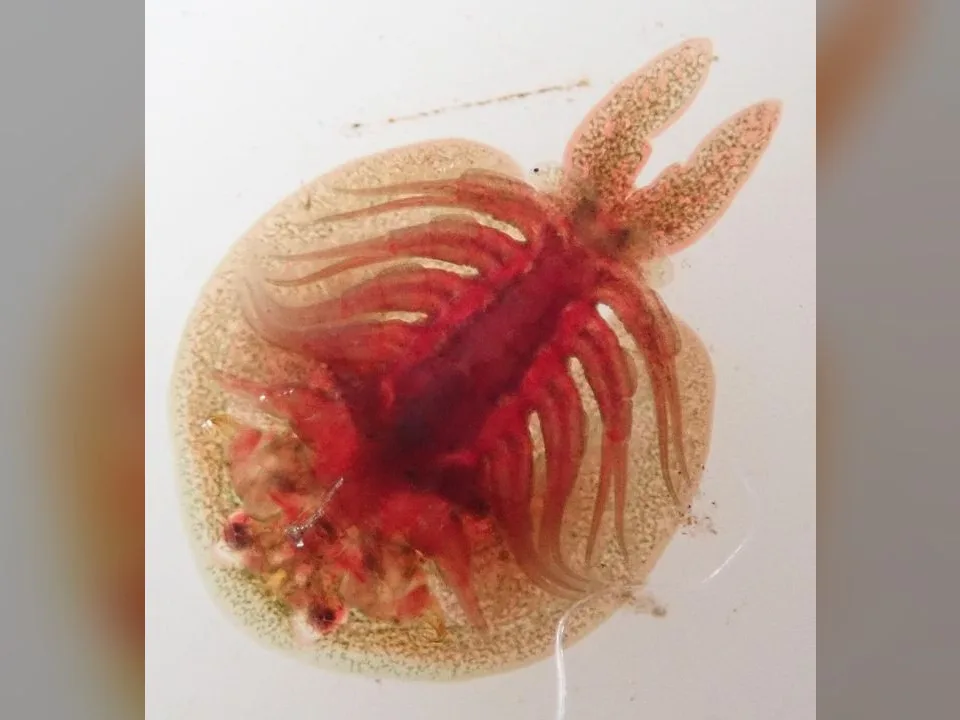
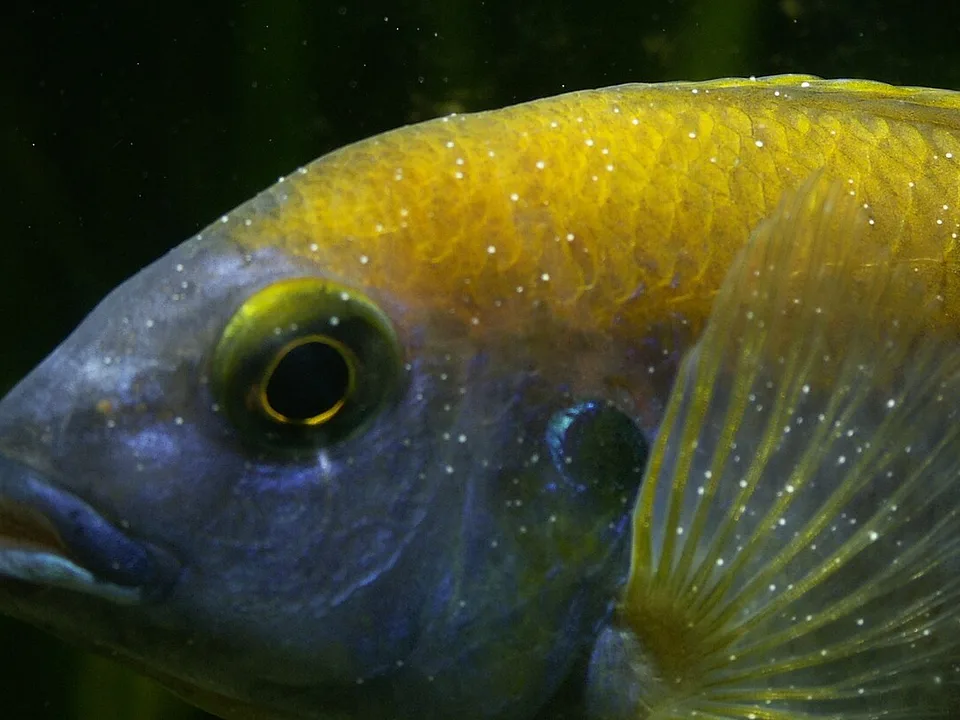
White spot is caused by Ichthyophthirius multifiliis, a protozoan. That means a tiny single-celled organism, too small to see one by one without a microscope. It is covered in fine hairs called cilia that help it move. The feeding stage, called the trophont, burrows under the outer skin and gill lining and feeds on the fish's cells and body fluids. The fish's body forms a small blister around each parasite, and that is the white spot you see. When mature, the parasite breaks out and drops off. On the pond floor, plants or tank walls it forms a cyst called a tomont. Inside the cyst it divides into hundreds or even thousands of young swimming parasites called theronts. These swim off and must find a fish quickly, usually within a day or two, or they die. Each one burrows into a fish and the cycle starts again. So the number of parasites can multiply very fast. The damage comes from many small wounds in the skin, which upset the fish's control of water and salts and let bacteria and fungi enter. The gills are the most dangerous site. Damaged, swollen gills cannot take in oxygen well, so fish suffocate even when the water has enough oxygen. The speed of the life cycle depends on water temperature. In warm water it may take only a few days. In cool water it can take weeks. This matters for treatment, because only the free-swimming stage can be killed by most treatments. Parasites under the skin and inside cysts are protected.
Which animals are most at risk
All freshwater fish can get white spot, but fry and fingerlings are hit hardest because their small gills are easily damaged. African catfish (Clarias), which have no scales, and ornamental fish such as goldfish and koi are very sensitive. Nile tilapia and common carp also suffer outbreaks, especially in hatcheries and nursery ponds. Risk is highest in crowded tanks, hatcheries, recirculating systems, aquaponics and small ponds with poor water exchange. Farms in cooler highland areas and fish moved between farms or newly stocked are at special risk. Outbreaks are common after transport, during cool spells and after a sudden change in weather, such as cold nights in the long rains or the cold dry season. Fish that are underfed, kept in dirty water with high ammonia, or recovering from another illness are also more likely to get sick.
Signs to look for
Early signs
- A few small white spots, about the size of a grain of salt, appear on the fins, tail or body of some fish.
- Fish flash, meaning they suddenly turn and rub their sides against the bottom, walls or stones to scratch an itch.
- Fish become restless, dart around or hold their fins close to the body.
- Some fish eat less and do not rush to the feed as usual.
- Fish may gather near the water inlet or the aerator where there is more oxygen.
- Gills may be affected before any spots show on the skin, so unusual breathing can be the first sign.
As it gets worse
- Many white spots cover the skin, fins and gills, sometimes so many that the fish looks dusted with salt.
- Fish gasp at the surface and breathe fast, with gill covers moving quickly, because the gills are damaged.
- Gills look pale, swollen or covered in mucus when you gently lift the gill cover.
- The skin becomes cloudy with extra slime, and patches of skin may peel, leaving raw-looking areas.
- Fish stop eating, become weak, hang still in the water or lie on the bottom.
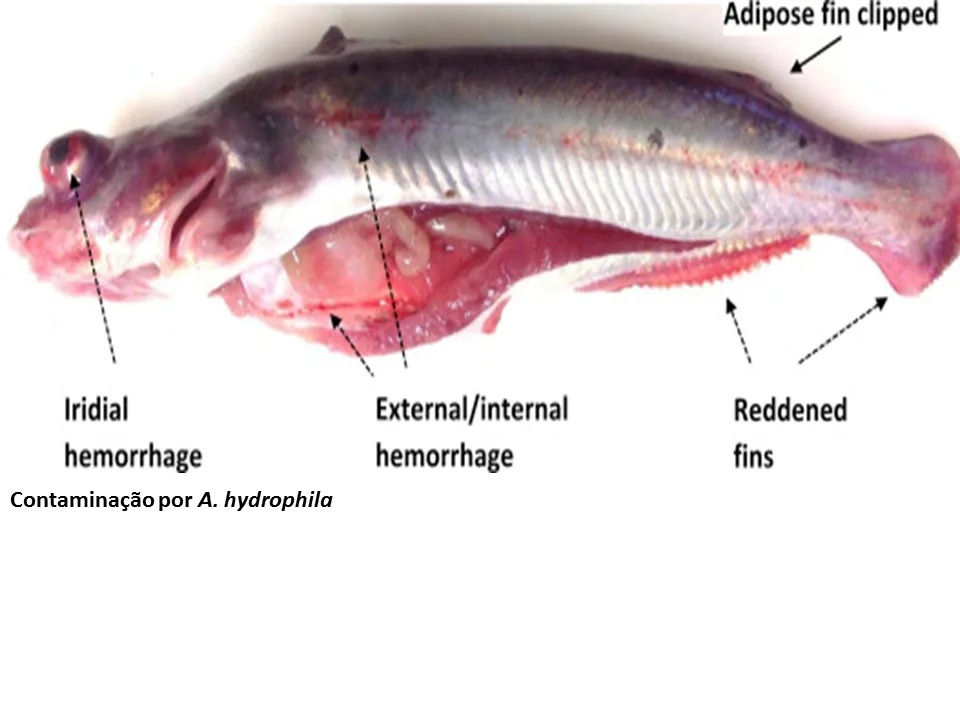
- Secondary bacterial or fungal infections appear, such as red sores or cotton-like growths.
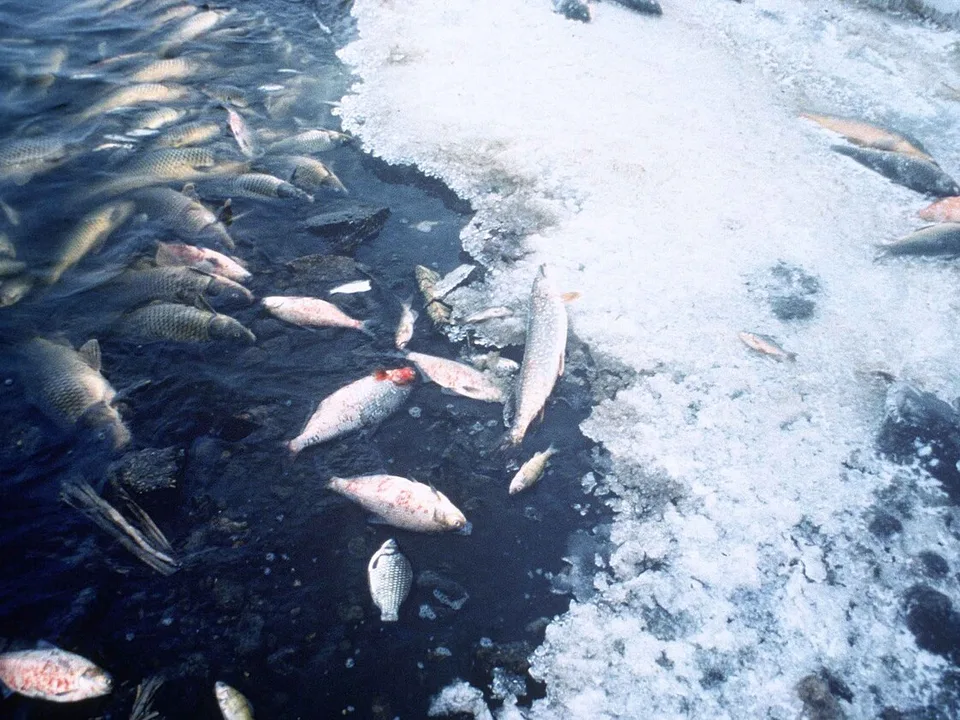
- Fish start dying, often many per day, with young fish dying first.
What to do right now
- Stop moving fish in or out of the affected pond or tank, and do not sell, share or restock until a vet or fisheries officer has advised you.
- Increase aeration and water flow if you can, because damaged gills need more oxygen, and flushing with clean water carries away some free-swimming parasites.
- Reduce feeding to what the fish clear quickly and remove uneaten feed, since rotting feed fouls the water and stresses sick fish further.
- Remove dead and dying fish every day, bury them away from water or dispose of them as advised, and never throw them into other ponds or rivers.
- Use separate nets, buckets and boots for the affected unit, and clean and dry them after use so you do not carry the parasite to healthy ponds.
- Avoid handling, grading or transporting the fish, because stress makes the disease worse.
- Do not add salt, copper, formalin, dyes or other chemicals on your own, because the wrong amount can kill fish quickly and some products are banned for food fish.
- Record daily deaths, signs and water readings, then call a vet, County Fisheries Officer or aquaculture extension officer as soon as possible.
How it spreads
- New fish brought in from another farm, hatchery, market or the wild can carry the parasite in their skin or gills even when they look healthy.
- Water from rivers, streams, dams or lakes that hold wild fish can carry free-swimming parasites into ponds and tanks.
- Wet nets, buckets, transport bags, boots and other shared equipment can carry parasites and cysts from one pond or farm to another.
- Cysts on the pond floor, walls, plants and stones release new waves of parasites, so infection keeps building inside the same pond or tank.
- Stress lowers the fish's defences and triggers outbreaks, especially after transport, handling, grading, overcrowding or poor water quality.
- Sudden drops or swings in water temperature, common in highland ponds and during the cold months around June to August, often set off outbreaks.
- In recirculating and aquaponic systems, water shared between tanks lets the parasite spread to every tank linked to the system.
Could it be something else?
Fungal infection (Saprolegnia, water mould)
Fungus grows as white or grey fluffy tufts like cotton wool, usually on wounds or damaged areas, not as separate salt-sized dots spread evenly over the body.
Columnaris (bacterial cotton-mouth or saddleback)
Columnaris causes larger greyish-white or yellowish patches, often on the mouth, fins or as a band across the back, and the patches spread and erode the skin rather than appearing as many tiny raised spots.
Other skin and gill parasites (Trichodina, Costia, gill flukes)
These also cause flashing, extra slime and gasping, but they do not usually make clear white dots. A vet must look at a skin scrape or gill sample under a microscope to tell them apart.
Low oxygen or poor water quality
Fish gasp at the surface, often early in the morning, but have no white spots. Many fish are affected at once, and testing oxygen and ammonia, or adding aeration, quickly shows the problem.
How it is diagnosed
A vet or fish health officer usually confirms white spot by catching a few affected fish and taking a skin scrape and a small gill sample. These are looked at under a microscope straight away. The parasite is large for a protozoan, round, covered in cilia, moves slowly in a rolling way and has a typical horseshoe-shaped nucleus, which makes it fairly easy to identify by someone trained. Fish that have just died can also be checked, but the parasite may leave dead fish within hours, so live, sick fish give the best result. The officer will also check water quality, because poor water often drives the outbreak and affects which treatment is safe. To prepare, keep a few live sick fish in a clean bucket or bag of their own pond water with air, do not freeze them, and do not add any chemicals before the visit. Write down when signs started, how many fish have died each day, recent fish movements or new stock, feeding, water source and any recent changes in weather or water temperature. If you have a test kit, record oxygen, temperature, pH and ammonia. Know the size or volume of your pond or tank, because treatment depends on it.
Treatment
Treatment must be chosen and prescribed by a vet or qualified fish health professional, because the right product and strength depend on the fish species, their size, the water volume, water hardness, temperature and whether the fish are for food. Treatments only kill the free-swimming young parasites and the swimming stage leaving the fish. Parasites under the skin and in cysts are protected, so treatment has to be repeated several times over the whole life cycle, and the timing depends on water temperature. Stopping too early is a common reason spots return. Common options include salt (sodium chloride) baths or longer salt treatments, which many fish such as tilapia tolerate well, though some species tolerate it less. Formalin is used in some hatcheries and tanks, but it reduces oxygen in the water and is dangerous to people, so it needs strong aeration and careful handling. Copper sulphate and potassium permanganate are sometimes used, but they are toxic to fish if the dose is wrong, especially in soft water. Malachite green, an old dye treatment, is banned for food fish in many countries because of residue concerns and must not be used on fish for eating. In aquariums, a vet may advise slowly raising the water temperature for species that tolerate it, which speeds up the cycle so treatment works faster; this is rarely practical in ponds. In flow-through tanks and raceways, increased water flow and frequent cleaning of the bottom help remove cysts. Treating a large earthen pond can be costly and difficult, so the vet may advise focusing on aeration, water exchange and partial harvest. If secondary bacterial infections are present, the vet may consider an antibiotic, but antibiotics do not kill the Ich parasite. Use them only when prescribed, to protect against antimicrobial resistance, which is when germs stop responding to medicines. For any chemical or drug used in food fish, follow the withdrawal period, meaning the time you must wait before harvesting and selling fish, as set by the vet and the label. Expect fish to stop dying within days if treatment works, with spots clearing over one to two weeks depending on temperature.
Medicines must be prescribed and dosed by a vet. Always respect milk and meat withdrawal periods, and finish the full course of any antibiotic.
Prevention
- Buy fingerlings only from certified, reputable hatcheries, and ask about recent disease problems before buying.
- Quarantine all new fish in a separate tank or pond for at least two to three weeks, watching for spots, flashing and gasping before mixing them with your stock.
- Avoid filling ponds directly from rivers, streams or dams with wild fish where possible; use screened or filtered inlets, boreholes or settled water, and never put wild-caught fish into your ponds.
- Keep stocking densities sensible for your system and keep water clean, with good oxygen, by regular partial water changes and avoiding overfeeding.
- Reduce temperature shocks by keeping ponds at a good depth, avoiding sudden large additions of cold water, and being extra watchful in cool months and after cold nights.
- Handle and transport fish gently and only when needed, using clean water of similar temperature, to limit stress.
- Between production cycles, drain, dry and lime earthen ponds, and clean and disinfect tanks, so cysts in the mud and on walls are destroyed.
- Give each pond or tank its own nets and buckets, or clean and dry shared equipment fully between units, and limit visitors walking from farm to farm.
- Feed a good-quality, fresh, properly stored fish feed in the right amount so fish stay strong and better able to resist infection.
Risk to people
White spot does not infect people, and fish that recover are not a disease risk to the people who eat them. The human risk comes from the chemicals used to treat it. Formalin and some other products are harmful to breathe or touch, so wear gloves and protect your eyes and skin when a vet advises their use. Banned chemicals such as malachite green can leave residues in fish meat, so never use them on food fish, and always observe the withdrawal period before harvesting fish treated with any chemical or drug.
Impact on your farm
White spot can cause heavy losses on Kenyan fish farms, especially in hatcheries and nursery ponds where fry and fingerlings can die in large numbers within a few days. For a hatchery, an outbreak can wipe out a batch of fingerlings meant for sale to other farmers, causing lost income and damaged reputation. In grow-out ponds and cages, sick fish stop eating and grow slowly, so harvest is delayed and feed, the biggest cost in fish farming, is wasted. Survivors with scarred skin and secondary infections may look poor at market and sell for less. Treatment costs, extra aeration, water pumping and labour add to expenses, and fish movement must stop, delaying sales and restocking. Because the parasite can live on in pond mud and equipment, one outbreak can affect later cycles if ponds are not cleaned well.
Outlook and recovery
The outlook is good when white spot is noticed early, the cause of stress is fixed and the full course of treatment is completed across the whole life cycle. Fish with only a few skin spots usually recover well. The outlook is poorer when the gills are badly damaged, when fry or very young fingerlings are affected, when water quality is poor or when secondary bacterial and fungal infections set in. Outbreaks in cool water last longer because the parasite develops slowly and treatment must continue for longer. Large earthen ponds are harder to treat than tanks. Fish that survive often develop some resistance to reinfection for a time, but this protection is not complete and new fish brought in can start a fresh outbreak.
Common questions
Can we eat fish that have white spot?
The Ich parasite does not infect people, so properly cooked fish from an affected pond are not a disease danger. However, very sick fish are of poor quality and should not be sold. If the fish have been treated with any chemical or drug, you must wait for the withdrawal period advised by the vet before harvesting, and never sell fish treated with banned products such as malachite green.
Is ordinary salt enough to treat white spot?
Salt is one of the treatments vets use, and many fish, including tilapia, tolerate it well. But the right type of salt, strength and length of treatment depend on the species, the fish size and the exact volume of water. Too little does not work and too much can kill fish, and some species such as catfish may be more sensitive. Get the plan from a vet or fisheries officer rather than guessing, and use plain salt without additives such as iodine or anti-caking agents unless advised otherwise.
I treated once and the spots went away, but now they are back. Why?
Treatments only kill the swimming stage of the parasite. The ones under the skin and inside cysts on the pond floor are protected. When they mature, a new wave of swimming parasites comes out and attacks the fish again. That is why treatment must be repeated over the whole life cycle as your vet advises. Spots disappearing from the fish does not always mean the parasite is gone from the water.
Will white spot go away on its own?
Sometimes a mild outbreak settles if the fish are strong, the water is clean and the temperature becomes warmer. But it can also explode very quickly, because each parasite can produce hundreds of new ones. In fry, fingerlings and crowded ponds, waiting often leads to heavy deaths. It is safer to improve aeration and water quality straight away and get professional advice.
Can white spot spread from one pond to my other ponds?
Yes. The parasite travels in water, on wet nets, buckets and boots, and in fish moved between ponds. Keep separate equipment for the sick pond, clean and dry tools between uses, do not let water from the sick pond flow into others, and do not move fish until the outbreak is over.
How can I stop it coming in with new fingerlings?
Buy from a certified hatchery, check the fish closely on arrival, and keep them in a separate quarantine tank or small pond for at least two to three weeks before mixing them with other fish. Avoid sudden temperature changes when releasing them by slowly mixing pond water into the transport bag. Watch for white spots, flashing and gasping during quarantine and call for advice if you see them.
A guide, not a diagnosis. This page is general information to help you recognise problems early. Always confirm with a vet or animal health worker before treating.