What it is
A goat's rumen works like a fermentation tank. Microbes break down feed and make large amounts of gas, which the goat normally gets rid of by belching many times an hour. Bloat happens when that gas cannot escape. There are two main types. In frothy bloat, the most common type in goats, lush legumes or young wet pasture release substances that create a stable foam, a bit like soap bubbles. The gas is trapped inside millions of tiny bubbles, so the goat cannot belch it up. Grain overload can also produce froth and makes the rumen acidic (sour), which slows the rumen down further. In free-gas bloat, the gas forms a normal pocket but something stops it coming out. This can be a blockage in the throat or food pipe (called choke), for example a piece of avocado, Irish potato, mango, maize cob or plastic, or the goat lying stuck on its side or back, or a rumen that has stopped moving because of illness or acidosis. As the rumen swells it pushes forward against the diaphragm (the muscle sheet between chest and belly). The lungs cannot fill properly and blood flow back to the heart is squeezed, so the goat struggles to breathe, becomes weak, collapses and can die of suffocation and heart failure.
Which animals are most at risk
Any goat can bloat, but the risk is highest in zero-grazed and semi-zero-grazed dairy goats such as Toggenburg, Saanen, Alpine and their crosses, which are often fed cut lucerne, desmodium or sweet potato vines. Goats that are greedy eaters, very hungry after a long time without feed, or newly moved onto lush pasture are at high risk. Weaned kids and young goats moved suddenly onto concentrates are also vulnerable. Risk rises during the long and short rains, when pasture is young, wet and growing fast. Free-range and pastoral goats are less often affected by legume bloat, but can bloat after raiding crops, grain stores or kitchen waste, or after choking on fruit or plastic. Goats that are sick, heavily pregnant or weak may struggle to belch normally and are more likely to bloat or to die from it.
Signs to look for
Early signs
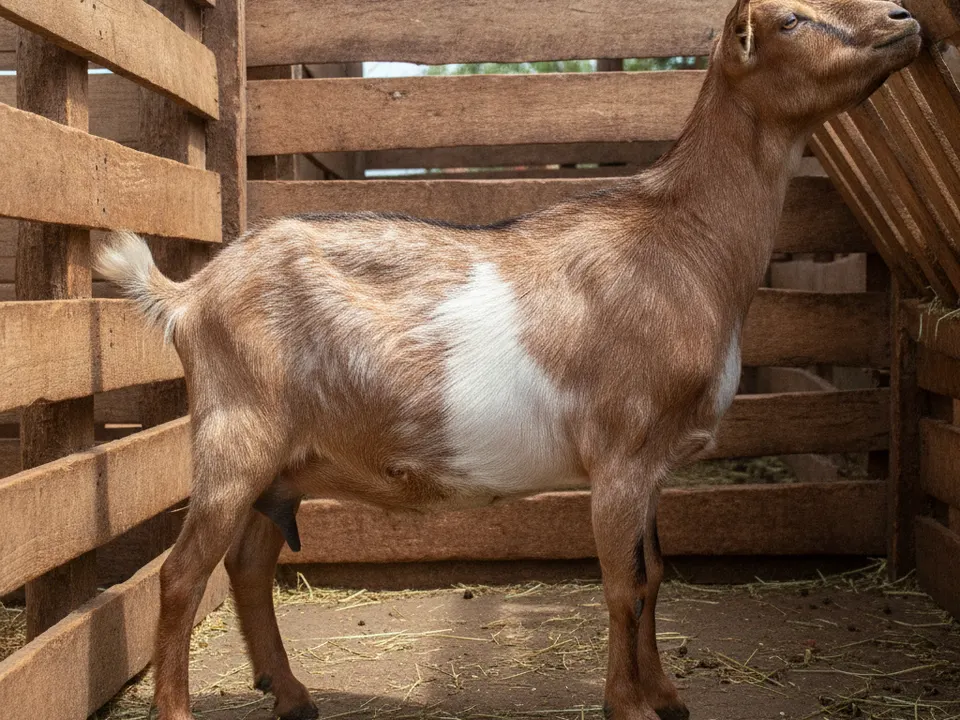
- The left side of the belly, high up just behind the last rib, starts to bulge outwards and looks fuller than the right side.
- When you tap the swollen left side with your fingers it sounds hollow, like a drum, and feels tight.
- The goat stops eating and stops chewing the cud, and you hear little or no belching.
- The goat is restless, gets up and lies down often, stamps its feet, kicks at its belly, or looks round at its flank.
- The goat may grunt, groan or cry, and may grind its teeth because of pain.
- You may see frequent passing of small amounts of dung or urine as the goat strains.
As it gets worse
- The whole belly becomes very swollen, and the left side may stick out above the line of the backbone.
- Breathing becomes fast and difficult, with the mouth open, tongue sticking out, neck stretched forward and drooling.
- The goat stands with its legs spread apart, staggers, or becomes unwilling to move.
- Gums and the inside of the eyelids may turn bluish or dark because of poor oxygen.
- The goat collapses, lies flat and cannot rise.
- Without help, death can follow quickly, sometimes within an hour or two of severe signs appearing, and goats are sometimes simply found dead with a hugely swollen belly.
What to do right now
- Remove all feed immediately from the affected goat and from any other goats that ate the same fodder, and move the group off the lush pasture or legume plot.
- Phone your vet or the nearest animal health assistant at once and tell them it is bloat, as minutes matter, and be ready to describe the feed and how fast the swelling is growing.
- Keep the goat standing and walk it slowly and gently, because movement helps the rumen work and helps gas escape, but never chase or run it.
- Stand the goat with its front legs higher than its back legs, for example on a slope or with front feet on a low raised platform, which takes pressure off the lungs and helps belching.
- Place a clean, smooth stick or a piece of rope across the mouth like a horse's bit and tie it gently behind the horns, as this makes the goat chew and salivate and can help it belch.
- Gently massage the left side of the belly with a flat hand, unless this causes clear pain.
- If the goat is lying on its side or back, help it roll up to rest on its chest or stand, as it cannot belch properly lying flat.
- Do not pour liquids, oils or home remedies into the mouth unless your vet tells you to by phone, because a distressed goat can easily inhale liquid into its lungs, and never try to puncture the belly with a knife or sharp object yourself, as this can cause fatal infection and does not release frothy bloat.
- Check all other goats that shared the feed every 15 to 30 minutes for the next several hours, because more cases often appear.
How it spreads
- Bloat is not infectious and does not spread from goat to goat, but several goats can bloat at the same time because they ate the same feed.
- Sudden access to lush legumes such as lucerne, desmodium, clover or bean leaves, especially when the goats are hungry, is the most common trigger of frothy bloat.
- Grazing or feeding fresh, wet fodder, for example morning dew, or forage cut after rain in the long or short rains, makes frothy bloat more likely.
- Overeating grain, maize bran, dairy meal, leftover ugali, bread or kitchen waste, for example when goats break into a feed store, can cause bloat and acid indigestion.
- Large pieces of root crops or fruits such as potatoes, avocados, mangoes or carrots can lodge in the throat and block belching, causing free-gas bloat.
- Sudden changes in diet, irregular feeding times, and feeding cut fodder that has heated or started to ferment in a heap can all upset the rumen.
- A goat that is cast, meaning stuck lying on its side or back, cannot belch properly and may bloat quickly.
Could it be something else?
Grain overload (rumen acidosis)
This often comes together with bloat after goats eat too much grain or concentrate. The belly may look full but often feels more doughy or sloshy than drum-tight, and the goat usually has watery, sour-smelling diarrhoea, looks dull and dehydrated, and may stagger or seem blind. A history of breaking into the feed store is a strong clue.
Choke (blocked food pipe)
Choke can cause free-gas bloat, but the main signs come first: heavy drooling, repeated swallowing or retching, coughing, stretching the neck, and feed or saliva coming out of the nose or mouth. You may feel a lump on the left side of the neck. Do not push your hand down the throat; call the vet.
Enterotoxaemia (pulpy kidney or overeating disease)
This is a bacterial toxin disease that also follows sudden rich feeding. Goats may show diarrhoea, nervous signs such as head pressing, circling or convulsions, and often die suddenly. The belly swelling is usually less marked than in bloat and the left side is not drum-tight early on. A post-mortem by a vet is often needed to tell them apart. Vaccination helps prevent it.
Late pregnancy or pregnancy toxaemia
A heavily pregnant doe has a large belly on both sides, it does not sound like a drum when tapped, and it develops over weeks, not hours. Pregnancy toxaemia causes dullness, poor appetite, trembling and lying down, but without the sudden tight, hollow left-sided swelling of bloat.
How it is diagnosed
Bloat is usually diagnosed on the farm from the signs and the feeding history. The vet looks at the shape of the belly, taps the left flank to hear the drum-like sound, and listens for rumen movements and belching. Passing a stomach tube through the mouth into the rumen is both a test and a treatment. If a lot of gas rushes out and the swelling goes down, it is free-gas bloat. If little gas comes out and froth blocks the tube, it is frothy bloat. If the tube will not pass, it points to choke. The vet may smell or check the rumen fluid for sourness if grain overload is suspected. If a goat dies, a post-mortem can confirm bloat and rule out conditions like enterotoxaemia. To help the vet, note exactly what the goat ate in the last 24 hours, including any new fodder, wet forage or grain; when the signs started; how many goats are affected; and any recent feed changes. Keep a sample of the suspect feed aside.
Treatment
Treatment depends on the type of bloat and how severe it is. For free-gas bloat, the vet usually passes a stomach tube through the mouth into the rumen to let the gas out, which often gives quick relief. If there is choke, the vet will try to carefully move or remove the blockage. For frothy bloat, the tube alone does not work well because the gas is trapped in foam, so the vet gives an anti-foaming agent through the tube or by drench. Commonly used products include poloxalene, dimethicone or other silicone-based anti-foams, surfactants such as docusate, and vegetable or mineral oils. These break the froth so the goat can burp the gas out. Where grain overload is part of the problem, the vet may give an antacid such as magnesium oxide or magnesium hydroxide into the rumen, fluids into a vein to correct dehydration and acid, and sometimes B vitamins such as thiamine, pain relief or anti-inflammatory drugs. Antibiotics are not a treatment for bloat itself. A vet may only use them where there is a real risk of secondary infection, for example after severe acidosis or after an emergency puncture, and they should never be used routinely, because unnecessary antibiotic use builds antimicrobial resistance. In a life-threatening case where the goat is about to collapse, the vet may make an emergency puncture of the rumen with a trocar and cannula (a hollow spike placed through the left flank) or perform a rumenotomy, which is surgery to open the rumen and empty it. All treatments, including doses and products, must be chosen and prescribed by a vet. Any drug used will carry milk and meat withdrawal periods, the time you must wait before milk or meat can be sold or eaten, and you must follow these exactly. After treatment, expect the goat to be kept on good quality grass hay and water only for a day or more, with fresh legumes and grain reintroduced slowly as the vet advises. Recovery can take a few days, especially after grain overload.
Medicines must be prescribed and dosed by a vet. Always respect milk and meat withdrawal periods, and finish the full course of any antibiotic.
How Agrikima products can help
These support the animal alongside — never instead of — your vet's treatment, vaccination and good management.
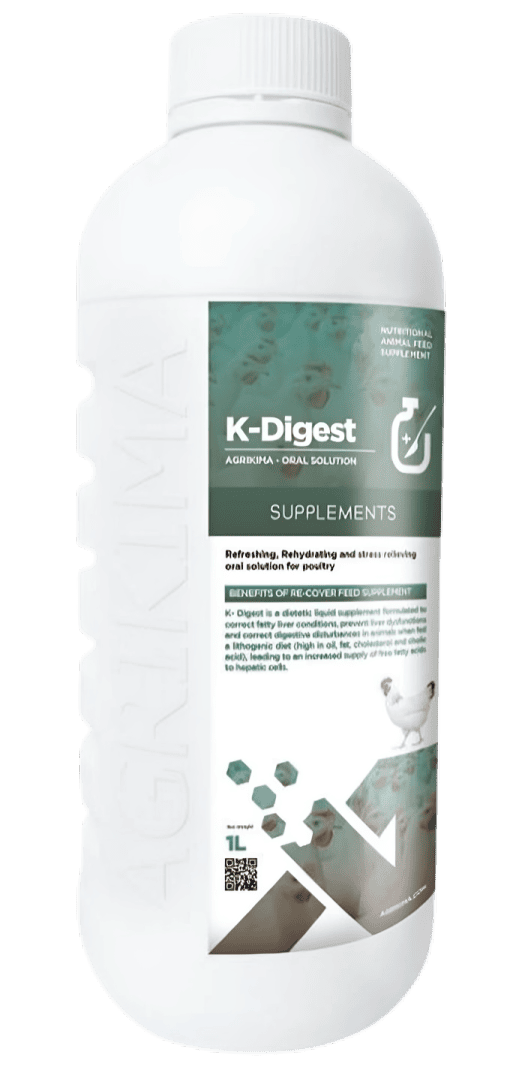
K-DIGEST
Can be used during recovery, once the vet has relieved the bloat and advised that the goat can be fed again, to support digestion and the liver after the digestive stress of bloat or grain overload; it does not treat bloat and must never be given to a goat that is still bloated.
View product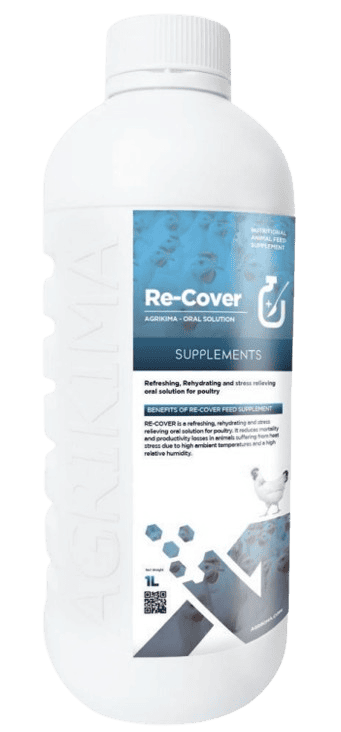
RE-COVER
An oral rehydration solution the vet may advise offering after the bloat has been relieved, particularly where grain overload has caused diarrhoea or dehydration, to help the goat replace lost fluids and salts while it recovers; it is not a treatment for bloat and should not be drenched into a distressed, bloated goat.
View productPrevention
- Always give goats a feed of dry grass hay or mature grass before giving lucerne, desmodium, sweet potato vines or other legumes, so they are not hungry and greedy when they reach the rich feed.
- Wilt freshly cut legumes in the shade for several hours before feeding, and avoid feeding forage that is wet with dew or rain, especially during the long and short rains.
- Mix legumes with grass or other fibre, rather than feeding legumes alone, and introduce any new legume plot or lush pasture gradually over one to two weeks.
- Introduce grain, dairy meal, maize bran and other concentrates slowly over several weeks, split them into small feeds through the day, and never let goats eat large amounts at once.
- Store grain, concentrates and kitchen waste securely in a goat-proof store, because goats that break in can bloat or develop acidosis quickly.
- Chop root crops and fruits such as potatoes, carrots and avocados into small pieces, or avoid feeding them, to prevent choke, and keep plastic bags and string away from goats.
- Keep feeding times regular, provide clean water at all times, and avoid feeding cut fodder that has heated up or started fermenting in a pile.
- Watch goats closely for the first hour or two after they are let onto new pasture or fed a new feed, so you can catch early swelling, and speak to your vet about anti-bloat products if you must graze high-risk legume pasture regularly.
- Keep goats vaccinated against enterotoxaemia as advised by your vet, because the same rich feeding that causes bloat also raises the risk of this deadly disease.
Risk to people
Bloat itself does not infect people, and meat from a goat that died of bloat should not be eaten because the cause of death cannot be confirmed without a vet and the carcass spoils quickly. If your goat is treated with drugs, follow the milk and meat withdrawal periods your vet gives you, and do not sell or consume milk or meat before that time, to avoid drug residues reaching your family or customers.
Impact on your farm
Bloat can kill a healthy, well-fed goat in a few hours, and it often strikes the best animals, such as high-yielding dairy does that are fed the richest fodder. Losing a dairy goat means losing its milk income, its future kids and the money spent raising it, which is a heavy blow for a smallholder with only a few animals. Several goats can be affected at once when a whole group eats the same lucerne or breaks into the grain store. Goats that survive may drop sharply in milk yield for some days, and pregnant does may abort after severe stress. Severe grain overload can leave lasting damage to the rumen wall and liver, causing poor growth and condition afterwards. There are also costs of emergency vet call-outs, often at night and over long distances, and milk that must be discarded during drug withdrawal periods. Because bloat is mostly caused by feeding practices, good feed management protects both the animals and the farm income.
Outlook and recovery
If bloat is caught early and the goat is treated quickly, most goats recover well, often within hours once the gas is released. Free-gas bloat is usually easier to relieve with a stomach tube. Frothy bloat needs anti-foaming treatment and can be harder to resolve. The outlook becomes poor once the goat is struggling badly for breath, has bluish gums or has collapsed, and some goats die even with treatment. Goats with bloat caused by grain overload may take several days to recover and can have lasting rumen or liver damage. A goat that bloated once can bloat again if the feeding causes are not corrected, so changing how you feed is the key to preventing repeat cases.
Common questions
Can I use cooking oil to treat bloat?
Vegetable oils are one of the anti-foaming agents vets sometimes use for frothy bloat, because they break up the foam. However, a bloated goat is distressed and short of breath, and liquids poured into the mouth can easily go down into the lungs and cause pneumonia or choking. Oil also does little for free-gas bloat or choke. Only give anything by mouth if your vet tells you to over the phone and explains how, and get the vet to the goat as quickly as possible.
Should I stab the goat's belly to let the gas out?
No, not unless you have been trained and it is the only way to save a goat that is collapsing with no vet on the way. Stabbing with a knife or sharp object often causes deadly infection in the belly, can hit the wrong organ, and does not release frothy bloat, which is the most common type, because the gas is trapped in foam. Vets use a proper trocar and cannula in the right place on the left flank, and only as an emergency measure. Ask your vet or extension officer for training if you farm far from veterinary help.
Is lucerne or desmodium bad for goats?
No. These legumes are excellent, protein-rich feeds that boost milk and growth. The problem is how they are fed. Feed hay or grass first, wilt fresh legumes before feeding, avoid wet forage, mix legumes with grass and make changes gradually. With these steps, most farmers can feed legumes safely.
Why did my goat bloat after the rains started?
During the long and short rains pasture and fodder grow fast, are young, soft and full of water and protein. This type of forage is the most likely to form a stable froth in the rumen. Forage wet with rain or dew adds to the risk. Take extra care during the rains by giving dry hay before turning goats out, letting dew dry before grazing and wilting cut fodder.
How can I tell bloat from a goat that is just full or pregnant?
A goat that has eaten well is round on both sides but stays bright, chews cud and breathes normally. A pregnant doe gets bigger slowly over weeks and does not sound like a drum when tapped. Bloat comes on over hours, the swelling is mainly high on the left side, it sounds hollow and tight when tapped, and the goat is restless, stops chewing cud and may struggle to breathe. If in doubt, treat it as bloat and call the vet.
Can bloat spread to my other goats?
Bloat is not contagious, so a bloated goat will not infect the others. But goats that ate the same feed are at the same risk and can bloat at the same time or shortly after. Remove the suspect feed from all goats and keep checking them every 15 to 30 minutes for several hours.
A guide, not a diagnosis. This page is general information to help you recognise problems early. Always confirm with a vet or animal health worker before treating.