What it is
Selenium is a trace mineral and vitamin E is a vitamin. Working together, they protect the walls of body cells from damage by harmful by-products of normal energy use, called free radicals (unstable molecules that attack cells). Muscle cells work hard and produce many of these by-products. When a kid lacks selenium, vitamin E, or both, the muscle cells are not protected. They break down and are replaced by scar-like tissue that looks pale or chalky white. This is where the name 'white muscle' comes from. When the leg and back muscles are hit, the kid becomes stiff, weak and shaky. When the muscles used for breathing or swallowing are hit, the kid struggles to breathe or suckle. When the heart muscle is hit, the heart can fail suddenly, often after exercise or stress. The deficiency usually starts in the doe. If her feed and soil are low in selenium, or her feed is low in vitamin E, she cannot pass enough to the kid in the womb or through her colostrum and milk.
Which animals are most at risk
Kids are most at risk, from birth up to about two to three months old, although older kids and occasionally adults can be affected. Fast-growing kids, twins and triplets, and kids of improved dairy breeds such as Toggenburg, Saanen, Alpine and their crosses are often noticed first because they grow quickly and need more. Goats are thought to be at least as sensitive as sheep. Risk is highest where does are kept on poor dry-season grazing, crop residues or old hay in late pregnancy, especially at the end of a long dry season before the long or short rains bring green growth. Zero-grazed dairy goats fed mainly on stored feed with no mineral supplement, and pastoral or free-range flocks on known low-selenium soils, are both at risk. Kids that miss colostrum are at greater risk.
Signs to look for
Early signs
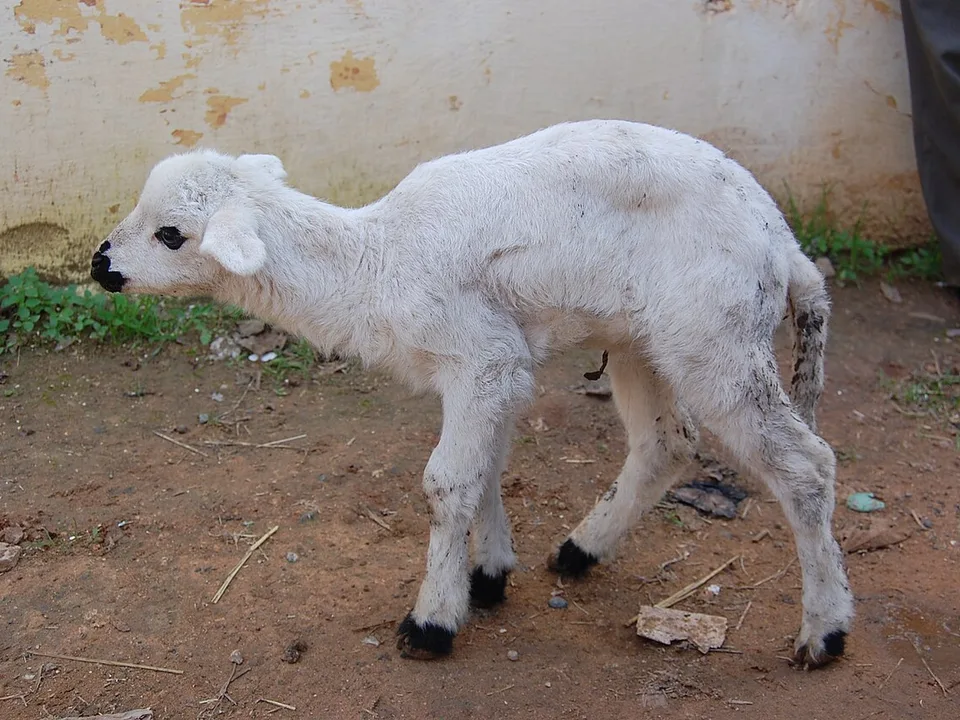
- The kid walks stiffly, with short, stilted steps, like it is walking on hot ground.
- Legs tremble or shake when the kid stands, and it may stand with its back arched and legs bunched under it.
- The kid tires quickly, lies down a lot and is slow to follow its mother.
- It has trouble suckling: it may want to drink but cannot grip the teat well, or milk dribbles from the mouth because the tongue and throat muscles are weak.
- Muscles of the hind legs or shoulders may feel firmer or swollen and the kid may seem sore when you handle them.
- The kid stays bright and alert even though its body is weak, which helps tell it apart from infections that make kids dull.
As it gets worse
- The kid cannot stand at all and lies on its side or chest, though it may still try to get up.
- Fast, laboured breathing or flank breathing when the breathing muscles or heart are affected.
- Milk coming from the nose or coughing after feeding, which can lead to pneumonia from inhaled milk.
- Kids born weak, unable to stand, or born dead in a group of kids from the same herd.
- Sudden collapse and death, sometimes with no warning, especially after running, handling or transport, due to heart damage.
- Urine may be darker than normal in some cases because of breakdown products from damaged muscle.
What to do right now
- Keep the affected kid quiet and still; do not chase it, force it to walk, or let it run, because exercise can cause fatal heart failure.
- Move the kid and its mother to a clean, dry, draught-free pen with soft bedding, and keep the kid warm, especially at night.
- Make sure the kid gets colostrum in its first hours and milk after that. If it cannot suckle, gently hold it up to the teat or bottle-feed slowly, letting it swallow at its own pace to avoid milk going into the lungs.
- If the kid cannot swallow at all, do not pour milk into its mouth; call the vet, who can tube-feed safely.
- Turn a kid that is lying down from side to side every few hours and prop it on its chest so it can breathe easier.
- Check the other kids and the does for stiffness or weakness and handle all young kids calmly.
- Write down the kids affected, their ages, signs and what the does have been eating, and call your vet or County Veterinary Officer the same day.
- Do not give selenium injections or extra selenium powders on your own, because selenium is poisonous in overdose and the safe range is narrow.
How it spreads
- White muscle disease is not infectious and does not spread from goat to goat; it appears in several kids at once because they share the same deficient diet.
- Soils low in selenium grow pasture and crops low in selenium. Some soils in East Africa are low in selenium, but levels vary widely and are not well mapped, so a farm may be deficient without the farmer knowing.
- Vitamin E is high in fresh green grass and browse but falls quickly in dry hay, old stored feed, crop residues and dry-season pasture. Long dry spells and stall feeding on poor hay increase the risk.
- Does fed poorly in late pregnancy give birth to kids with low reserves, and their colostrum and milk carry less selenium and vitamin E.
- Sudden exercise or stress can trigger signs in a kid that is already deficient, for example being chased, moved, transported, or released to run after being penned.
- Feeds that are mouldy or rancid, or high in certain oils, can use up the vitamin E the animal has and make deficiency worse.
- Heavy use of sulphur-containing fertilisers on pasture can reduce how much selenium plants take up from the soil.
Could it be something else?
Navel ill / joint ill (bacterial infection)
Joint ill causes hot, swollen, painful joints, often with a swollen or wet navel and fever. The kid is usually dull and off feed. White muscle kids have stiffness without hot swollen joints and are often bright despite weakness.
Swayback (copper deficiency, enzootic ataxia)
Swayback kids wobble and sway, especially in the hind end, because the nerves are affected, not the muscles. They do not usually have firm, sore muscles, and they do not improve after a vitamin E/selenium treatment. A vet may need blood or post-mortem tests to tell them apart.
Tetanus
Tetanus usually follows a wound, castration or disbudding. The kid becomes rigid all over, with a 'sawhorse' stance, a stiff tail, a locked jaw and a third eyelid that flicks across the eye. It overreacts sharply to noise and touch. White muscle kids are weak and stiff but not rigid and jumpy.
Starvation, hypothermia or pneumonia in newborns
Kids that have not had enough milk are cold, hollow-bellied and dull. Pneumonia causes fever, cough and nasal discharge. These can occur together with white muscle disease, so a vet check is important.
How it is diagnosed
A vet usually suspects white muscle disease from the signs, the age of the kids, the season and the feeding history. The vet will examine the muscles, listen to the heart and lungs, and check for fever to rule out infection. Blood tests can show high levels of muscle enzymes (substances that leak out of damaged muscle, such as creatine kinase and AST) and can measure selenium or a selenium-dependent enzyme called glutathione peroxidase. A quick improvement after vet treatment also supports the diagnosis. If a kid dies, a post-mortem is very useful: the vet looks for pale, white or chalky streaks in the leg muscles, diaphragm and heart, and may send liver samples to a laboratory to measure selenium. To help the vet, note how many kids are affected and their ages, when signs started, what the does were fed in late pregnancy, whether they had a mineral lick and which one, any recent vitamin or mineral injections, and whether kids got colostrum. Keep any dead kid cool and covered, not buried, until the vet advises.
Treatment
The vet will usually treat affected kids with a prescribed injectable vitamin E and selenium product, and will often advise treating other kids and pregnant does in the same group. The dose depends on the animal's weight and the product, and must only be decided by a vet, because too much selenium can poison and kill goats. Kids with mainly leg-muscle damage often start to improve within a few days of treatment, but recovery of damaged muscle takes longer. Kids with heart damage may not respond and can still die suddenly. The vet may also give supportive care, such as tube feeding, warmth, and fluids. If milk has entered the lungs or the kid has a secondary pneumonia, the vet may prescribe an antibiotic; antibiotics do not treat the deficiency itself, so they should only be used when a vet finds an infection, and the full prescribed course should be completed to reduce antimicrobial resistance (germs becoming resistant to drugs). Ask your vet about milk and meat withdrawal periods, the time after treatment before milk or meat can safely be used, for every product given. The vet will also help you plan herd-level prevention, such as mineral supplements and pre-kidding injections.
Medicines must be prescribed and dosed by a vet. Always respect milk and meat withdrawal periods, and finish the full course of any antibiotic.
How Agrikima products can help
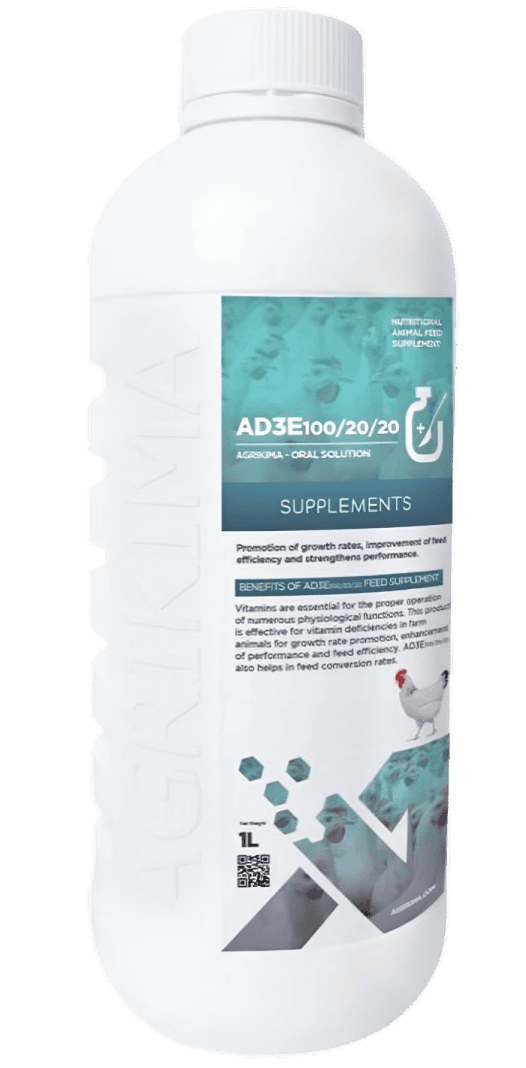
These support the animal alongside — never instead of — your vet's treatment, vaccination and good management.
Prevention
- Give goats free access to a good-quality goat or ruminant mineral lick or mineral mix that contains selenium, all year round, and check the label to be sure selenium is included.
- Ask your vet whether pregnant does should receive a vitamin E and selenium injection in the last weeks of pregnancy, and whether newborn kids should be treated, especially if you have had cases before.
- Do not combine several selenium sources (licks, premixes and injections) without vet advice, because too much selenium is poisonous.
- Feed does well in late pregnancy, with green forage, browse or good leafy fodder where possible, since fresh green feed is rich in vitamin E. Plan fodder conservation so that late-pregnant does are not left on dry stalks at the end of the dry season.
- Avoid feeding mouldy or rancid feeds, stale concentrates, or old poorly stored hay, which lose vitamin E and can increase the body's need for it.
- Make sure every kid gets enough colostrum within the first hours of life, as this is a key source of vitamin E, selenium and protective antibodies.
- Handle young kids calmly, avoid sudden hard exercise, and take care when moving, transporting or releasing kids after they have been confined.
- If you suspect your area is low in selenium, ask your County Veterinary Officer or KALRO about soil or blood testing, and share results with neighbours, as the problem is often regional.
Risk to people
White muscle disease itself does not infect people. However, the vitamin E/selenium products and any antibiotics used in treatment can leave residues in milk and meat. Follow the withdrawal periods your vet gives before drinking or selling milk or slaughtering a treated goat. Store selenium products safely away from children and other animals.
Impact on your farm
White muscle disease causes losses through kid deaths, weak kids that need extra labour and feed, slow growth and poor weight at sale. Kids from valuable dairy breeds are costly to lose. The underlying deficiency also affects adults: low selenium and vitamin E are linked to retained afterbirth, poorer fertility, weaker immunity and more infections such as mastitis and diarrhoea in kids, which together reduce milk and meat income. Because it is not infectious, many farmers do not notice the pattern and keep losing kids each kidding season. The good news is that prevention with proper minerals and feeding is usually cheaper than losing even one kid.
Outlook and recovery
Kids with mild to moderate stiffness that are treated early by a vet often recover well and can grow normally, although muscle healing takes time. Kids that cannot stand, cannot swallow or have breathing problems have a poorer outlook, and those with heart damage may die suddenly even after treatment. Kids born weak or that miss colostrum also do less well. Recovery is helped by early treatment, rest, warmth, good feeding and preventing pneumonia. Once you know your herd is at risk, good prevention can greatly reduce future cases.
Common questions
Can I just buy a selenium injection at the agrovet and treat my kids myself?
It is not safe to do this without a vet. Selenium has a very narrow safe range, and a small overdose can poison and kill a goat, especially a small kid. The right product and dose depend on weight, age and what else the goats are getting. Call your vet, who can confirm the diagnosis, prescribe the right treatment and advise on withdrawal periods.
Why did my healthy-looking kid die suddenly after I let it out to run?
In white muscle disease, the heart muscle can be damaged before you see any stiffness. When the kid suddenly runs or gets excited, the weak heart cannot cope and fails. This is why deficient kids should be handled calmly, and why a sudden death in a young kid should be checked by a vet, ideally with a post-mortem.
I give my goats a salt lick. Is that enough?
Plain salt licks give sodium only and do not contain selenium. Choose a mineral lick or mix made for goats or ruminants that lists selenium on the label. Ask your vet or agrovet to help you choose one, and do not add other selenium products on top without advice.
Does this only happen in the dry season?
It can happen at any time, but it is more common when does have been on dry pasture, old hay or crop residues in late pregnancy, because vitamin E levels in dry feed are low. Many cases appear in kids born near the end of a long dry season, before the rains bring fresh green growth. Selenium deficiency depends on the soil, so it can occur all year on low-selenium land.
Will my other goats catch it?
No, white muscle disease is not contagious. But if one kid has it, others on the same farm are likely low too because they share the same feed and soil. Ask your vet whether the other kids and pregnant does should be checked or treated, and improve minerals and feeding for the whole herd.
Can adult goats get white muscle disease?
It is mainly a disease of young kids, but older goats can sometimes show stiffness or heart problems. More often, adults with low selenium and vitamin E show poor fertility, retained afterbirth and weaker resistance to infections. Correcting the deficiency benefits the whole herd.
A guide, not a diagnosis. This page is general information to help you recognise problems early. Always confirm with a vet or animal health worker before treating.