What it is
The disease is caused by Brucella melitensis, a small bacterium that lives inside the animal's cells, where it can hide from the immune system and from many medicines. Bacteria usually enter through the mouth when a goat licks an aborted kid, afterbirth or contaminated ground, or drinks contaminated water; they can also enter through the eye, nose or broken skin. From there they travel to the lymph nodes (the glands that filter infection) and spread through the blood. In a pregnant doe the bacteria multiply heavily in the placenta (afterbirth) and the womb, damaging the placenta so the unborn kid no longer gets enough food and oxygen. This leads to abortion, stillbirth or the birth of weak kids. The bacteria also settle in the udder and the lymph nodes near it, so they are passed out in milk, sometimes for months or years. In bucks they can settle in the testicles and the tubes beside them, causing swelling, pain and poor fertility. Once infected, most goats remain carriers for life, even if they never abort again.
Which animals are most at risk
Sexually mature goats, especially does in their first pregnancy after infection, are most at risk of aborting. Young kids can be infected but usually show no signs until they are older. All breeds can be affected, including local East African and Galla goats and dairy breeds such as Toggenburg, Saanen and Alpine crosses. Risk is highest in pastoral and agro-pastoral systems in arid and semi-arid areas, where large mixed herds of goats, sheep, cattle and camels share grazing and watering points and where stock is frequently bought and sold at markets. Herds that kid together in crowded bomas, and seasons when many does kid at once (often linked to the long and short rains), see more spread because many birth materials are produced in one place. Zero-grazing and small dairy goat units are at risk mainly when they bring in new animals, use an untested breeding buck, or share a buck with neighbours. Families who drink raw goat milk or help with kidding without protection are the people most at risk.
Signs to look for
Early signs
- Abortion, usually in the last one to two months of pregnancy (about the fourth or fifth month), often with little warning and with the doe otherwise appearing fairly normal.
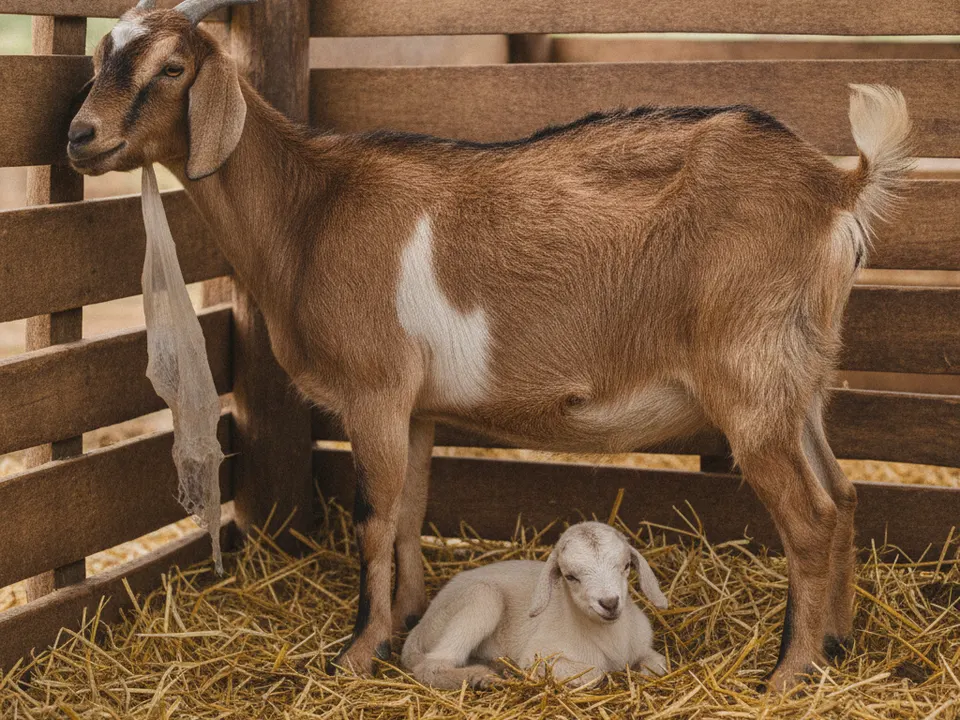
- Afterbirth that does not come out within a few hours of aborting or kidding (retained afterbirth), sometimes with a dirty, smelly discharge from the vulva afterwards.
- Kids born dead, or born weak, small and unable to stand or suckle properly, with some dying in the first days of life.
- Several does in the herd aborting over a few weeks, which is often called an abortion storm when the disease first enters a herd.
- Many infected goats show no visible signs at all, which is why testing is so important.
As it gets worse
- A drop in milk yield in infected does, sometimes with hard, lumpy areas in the udder or signs of mastitis (udder inflammation).
- Repeated breeding failures, does that do not conceive easily, or a herd with far fewer kids than expected.
- Swollen, hard, hot or painful testicles in bucks, sometimes only on one side, with reduced interest in mating and poor fertility.
- Occasional lameness from swollen, painful joints in some goats.
- A long-term pattern in the herd where abortions become less frequent but the herd never fully clears, with new does aborting in their first pregnancy and milk remaining infectious.
What to do right now
- Protect yourself first: wear gloves (or plastic bags over your hands), cover cuts, avoid splashing fluids into your eyes or mouth, and wash hands and arms with soap and clean water afterwards.
- Move the doe that aborted or has retained afterbirth into a separate pen or tethering area away from other pregnant does, and keep her there until the vet advises, because she sheds bacteria for weeks.
- Do not pull on a retained afterbirth yourself; leave it for the vet, keep the doe calm with shade, clean water and good feed, and keep flies away as best you can.
- Collect the aborted kid and afterbirth safely in double sealed bags for the vet; if the vet does not need them, bury them deep with quicklime away from water sources or burn them completely, so dogs and other animals cannot reach them.
- Clean the spot where the abortion happened: remove contaminated bedding and soil, burn or bury it, and treat the area with a suitable farm disinfectant or lime, then allow sunlight to dry it.
- Boil all milk from the herd before anyone drinks it or makes mala or other milk products, and stop selling raw milk until your vet has tested the herd.
- Keep children, pregnant women and anyone with a weak immune system away from kidding, abortions and the sick doe.
- Stop buying, selling, lending or mixing goats, and do not share your buck with neighbours, until the vet has assessed the herd; then call your vet or County Veterinary Officer and give them your records.
How it spreads
- The biggest source of infection is an aborted kid, the afterbirth and the fluids that come out during abortion or kidding, which contain very large numbers of bacteria.
- Healthy goats pick up the infection by sniffing, licking or grazing pasture and bedding contaminated by these birth materials, or by drinking from shared water points and pans.
- Infected does shed bacteria in vaginal discharge for several weeks after aborting or kidding, and in milk, often for a long time.
- Kids can become infected by suckling milk from infected mothers, and some become hidden carriers that show signs only when they become pregnant later.
- Buying or borrowing goats from markets, other herds or neighbours without testing is a common way the disease enters a clean herd.
- Shared grazing, communal watering points, and mixing goats with sheep and cattle during migration or at markets spread the disease between herds, especially in pastoral areas.
- Dogs, wild animals and birds can drag aborted kids and afterbirths around the homestead and pasture, spreading contamination.
- Bucks used for breeding across several herds can carry infection, and contaminated hands, ropes, boots and tools can move bacteria between pens. The bacteria can survive for weeks to months in cool, damp, shaded places and manure, but are killed faster by direct sunlight, drying and disinfectants.
Could it be something else?
Q fever (Coxiella burnetii infection)
Q fever also causes late abortions and weak kids in goats and is also dangerous to people, often spreading through dust from dried birth materials. It is impossible to tell apart from brucellosis by looking at the goats; only laboratory tests on blood, the aborted kid or afterbirth can separate them, so treat both with the same protective precautions.
Enzootic abortion (chlamydial abortion)
Caused by Chlamydia abortus, it also causes abortion in the last two to three weeks of pregnancy and stillborn kids. The afterbirth is often thick, leathery and reddish-brown. Buck swelling and long-term milk shedding are more typical of brucellosis, but a lab test is needed to be sure, and it can also infect pregnant women.
Toxoplasmosis
Caused by a parasite carried by cats, it leads to abortions, mummified (dried, shrunken) kids and weak kids, often in herds where cats contaminate feed or stores. Small white spots on the afterbirth may be seen. There is no buck testicle swelling. Laboratory testing confirms which disease is present.
Rift Valley fever
This viral disease causes sudden abortion storms in goats, sheep and cattle together, usually after unusually heavy rains and flooding when mosquitoes increase, along with high death rates in young kids and lambs and illness in people. It spreads fast across many herds in an area. It is notifiable, so suspected cases must be reported to the County Veterinary Officer immediately.
How it is diagnosed
Brucellosis cannot be confirmed by signs alone, because several other diseases cause similar abortions. A vet will examine the herd, ask about abortions, kidding records, new animals and milk use, and take samples. Blood is commonly screened with the Rose Bengal test, a quick test that detects antibodies (the body's defence proteins against the infection), and positive samples are usually confirmed with more specific laboratory tests such as ELISA or the complement fixation test. The strongest proof comes from growing the bacteria (culture) or detecting their genetic material (PCR) from the aborted kid's stomach contents, the afterbirth, vaginal swabs or milk; this work must be done in a properly equipped laboratory because the bacteria are dangerous to lab staff. Testing is usually done at herd level, since single negative results in one goat can miss early infections. Your vet may send samples through the County Veterinary Office to government or research laboratories. To help, keep any fresh aborted kid and afterbirth for the vet if you can do so safely: use gloves or plastic bags over your hands, place them in two sealed plastic bags, keep them cool and in shade away from dogs, and do not open them. Also prepare a simple record of which does aborted, when, at what stage of pregnancy, where new goats came from and whether any family members have had recurring fevers.
Treatment
Treating infected goats is generally not recommended and is rarely successful. Because Brucella hides inside the animal's cells, even long courses of combined antibiotics, typically a tetracycline-type drug together with an aminoglycoside such as streptomycin, may reduce signs but often fail to clear the infection, and treated goats may continue to shed bacteria in milk and birth fluids. For this reason, most vets advise identifying infected goats through testing and removing them from the herd, usually by slaughter under veterinary guidance, rather than treating them. In some situations a vet may treat a doe for a secondary womb infection after retained afterbirth or abortion, but this is to manage the complication, not to cure brucellosis. Any antibiotic must be prescribed by a vet, who will decide whether it is appropriate; using antibiotics casually or in incomplete courses wastes money and encourages antimicrobial resistance, where bacteria stop responding to medicines that people and animals depend on. If any drug is given, observe the milk and meat withdrawal periods on the label and as advised by your vet, meaning milk and meat from that goat must not be used or sold until the period has passed. At herd level, your vet may recommend a control plan that combines testing, removing positive animals, vaccinating young replacement does where the vaccine is available, and strict hygiene at kidding time. Expect this to take time, often with repeated testing over months.
Medicines must be prescribed and dosed by a vet. Always respect milk and meat withdrawal periods, and finish the full course of any antibiotic.
Prevention
- Buy new goats only from herds known or tested to be free of brucellosis, ask your vet to test them before purchase where possible, and keep all new arrivals separate for at least a few weeks and until tested.
- Ask your vet or County Veterinary Officer about vaccination with the Rev.1 vaccine, a live vaccine for goats and sheep that is usually given to young females before their first pregnancy; availability in Kenya varies, it must be given by a trained person because it can cause abortion in pregnant goats and can infect people if accidentally injected, and it can interfere with later blood tests.
- Set up a clean kidding area away from the main herd and water sources, and remove and safely dispose of all afterbirths and dead kids immediately, using gloves.
- Isolate any doe that aborts at once and get every abortion investigated by a vet, rather than assuming it was caused by stress or bad luck.
- Use your own tested breeding buck instead of borrowing or sharing bucks between herds.
- Avoid communal watering points and shared grazing where abortions are happening in neighbouring herds, and keep dogs from carrying birth materials around the homestead.
- Clean and disinfect kidding pens, boots, ropes and tools regularly, and let sunlight dry out pens, since sunlight and drying kill the bacteria faster.
- Always boil milk before drinking it or making milk products, and teach everyone on the farm, including herders and children, about the human risk.
Risk to people
Brucella melitensis is the most serious Brucella type for people and causes brucellosis, also called Malta fever or undulant fever. People catch it mainly by drinking raw goat milk or eating products made from raw milk, by handling aborted kids, afterbirths and birth fluids, by helping with difficult kidding, and when slaughtering infected animals; laboratory workers and anyone accidentally injected with the live Rev.1 vaccine are also at risk. In people it causes fever that comes and goes, night sweats, headache, severe tiredness, back and joint pain and weight loss, and it can become a long-lasting illness affecting joints, the heart, the nervous system or the reproductive organs. It may cause miscarriage in pregnant women. It is often mistaken for malaria or typhoid, so if anyone on the farm has recurring fevers, tell the doctor or clinic that you keep goats and that abortions have occurred. Human brucellosis is treated by doctors with long courses of specific medicines, and early treatment works best. To protect your family: boil all milk before use, wear gloves and cover cuts when handling births or abortions, wash thoroughly afterwards, keep children and pregnant women away from kidding and aborted material, and buy milk and meat from safe, inspected sources. Thorough cooking of meat reduces risk, but handling raw carcasses and organs of infected goats still carries some risk.
Impact on your farm
Brucellosis causes heavy, often hidden losses on Kenyan goat farms. Each abortion means a lost kid, a lost season of production and, for dairy goat farmers, a shortened or poorer lactation and less milk to sell. Weak kids that die soon after birth add to the loss, and infertile does and bucks slow herd growth and genetic improvement. Culling infected goats removes valuable breeding stock, and farmers may struggle to sell breeding animals or milk if their herd is known to be infected. In pastoral communities, where goats are savings, food and a source of school fees, repeated abortions directly reduce household income and food security. There are also human costs: family members who catch Malta fever may be unable to work for weeks or months and face medical bills, sometimes after being misdiagnosed with malaria or typhoid. Control programmes require testing, vet visits and replacement stock, but these costs are usually far smaller than the long-term losses from a herd that stays infected.
Outlook and recovery
For the individual goat, the outlook for full recovery is poor. Most infected goats stay infected for life, even though many do not abort again and may later kid normally, which can falsely suggest they have recovered while they continue shedding bacteria in milk and birth fluids. Does with retained afterbirth may recover from that complication with vet care, but remain carriers. Bucks with damaged testicles may stay infertile. For the herd, the outlook is much better when the farmer acts early: testing, removing infected animals, vaccinating replacement does where possible, strict kidding hygiene and buying only tested stock can gradually reduce and, over time, may clear the disease from a herd. Success depends on how widespread infection is, how often new animals are brought in, contact with neighbouring herds, and how consistently the control plan is followed.
Common questions
Can I just inject my goats with antibiotics from the agrovet to stop the abortions?
No. Brucellosis bacteria hide inside the goat's cells, so antibiotics rarely clear the infection, even when given for a long time. A treated goat often keeps carrying and shedding the bacteria, so your family and herd stay at risk. Using antibiotics without a vet also leaves drug residues in milk and meat and helps create resistant bacteria. Talk to your vet, who will usually recommend testing and removing infected goats rather than treatment.
My doe aborted once but kidded normally the next year. Is she now healthy?
Not necessarily. Many does abort only once and then kid normally, but they usually remain infected and can shed large numbers of bacteria in milk and at every kidding. The only way to know is to have her tested by a vet. Until then, boil her milk and handle her kidding with gloves.
Is boiling milk really enough to make it safe?
Bringing milk to a full rolling boil kills Brucella and makes it safe to drink. Do this every time, including milk used for tea, mala, yoghurt or for feeding kids. Warming milk only slightly is not enough. Raw milk cheeses and fermented products made from unboiled milk can still carry the bacteria.
Can my cattle, sheep or dogs catch brucellosis from my goats?
Yes. Brucella melitensis mainly affects goats and sheep, but it can also infect cattle, camels and dogs that are in close contact, especially if they share grazing, water or come into contact with aborted material. Cattle are more commonly affected by another type, Brucella abortus. If you keep mixed livestock, ask your vet to consider testing all species and keep dogs away from afterbirths and aborted kids.
Should I vaccinate my goats against brucellosis?
Vaccination can help a lot in infected areas, but it must be planned with your vet or County Veterinary Officer. The Rev.1 vaccine is usually given to young female goats before their first pregnancy. It is a live vaccine, so it can cause abortion if given to pregnant does and can infect the person giving it if they are accidentally injected. Availability in Kenya varies by area, so ask your County Veterinary Office what is possible where you farm.
Is it safe to eat meat from a goat that tested positive?
Infected goats should be slaughtered only under veterinary guidance, with meat inspection. The highest risk is to the people doing the slaughter, through contact with blood, the udder, the reproductive organs and lymph nodes, so they should wear gloves and cover cuts. Meat that passes inspection and is thoroughly cooked carries low risk, but organs such as the udder, womb and testicles should not be eaten and should be safely disposed of.
A guide, not a diagnosis. This page is general information to help you recognise problems early. Always confirm with a vet or animal health worker before treating.