What keeps them healthy
Good health in goats rests on a few simple foundations. First is good feeding. Goats are browsers, which means they prefer leaves, shrubs and tree pods over short grass. They need enough roughage (fibre) to keep the rumen working. The rumen is the large first stomach on the left side of the belly, where microbes break down fibre. When the rumen is full and working well, the goat chews its cud, burps gas quietly and passes firm pellets. Second is clean water, always available, because goats drink more in hot weather and when milking. Third is minerals and vitamins, especially salt, calcium and phosphorus, which keep bones, teeth, milk production and the immune system strong. Fourth is low parasite pressure. Worms in the gut, especially the blood-sucking barber's pole worm, and external parasites such as ticks, mites and lice drain blood and energy. Fifth is dry, clean, well-ventilated housing that protects goats from rain, cold wind and damp floors, which goats handle poorly. Finally, vaccination and calm handling reduce disease and stress. When these foundations are in place, the goat's immune system can fight off most everyday germs, and the animal grows, breeds and milks well.
What to keep an eye on
Every goat benefits from a daily check, but some need closer attention. Young kids in their first weeks are the most fragile: they chill easily, can quickly become dehydrated, and depend on getting colostrum (first milk) soon after birth. Weaned kids and young stock are very vulnerable to worms. Pregnant does in late pregnancy and does in the weeks after kidding have high nutritional needs. High-yielding dairy breeds such as Toggenburg, Saanen and Alpine, and their crosses, are often more sensitive to poor feeding and parasites than hardy local breeds such as the Small East African goat and the Galla. Zero-grazed goats depend completely on the farmer for good feed, minerals and clean housing. Free-range and pastoral goats face more ticks, worms and contact with other herds. Risk rises during the rains, when worms and pneumonia increase, and during long dry seasons, when feed quality drops and goats lose condition.
Normal vs warning signs
Signs of good health
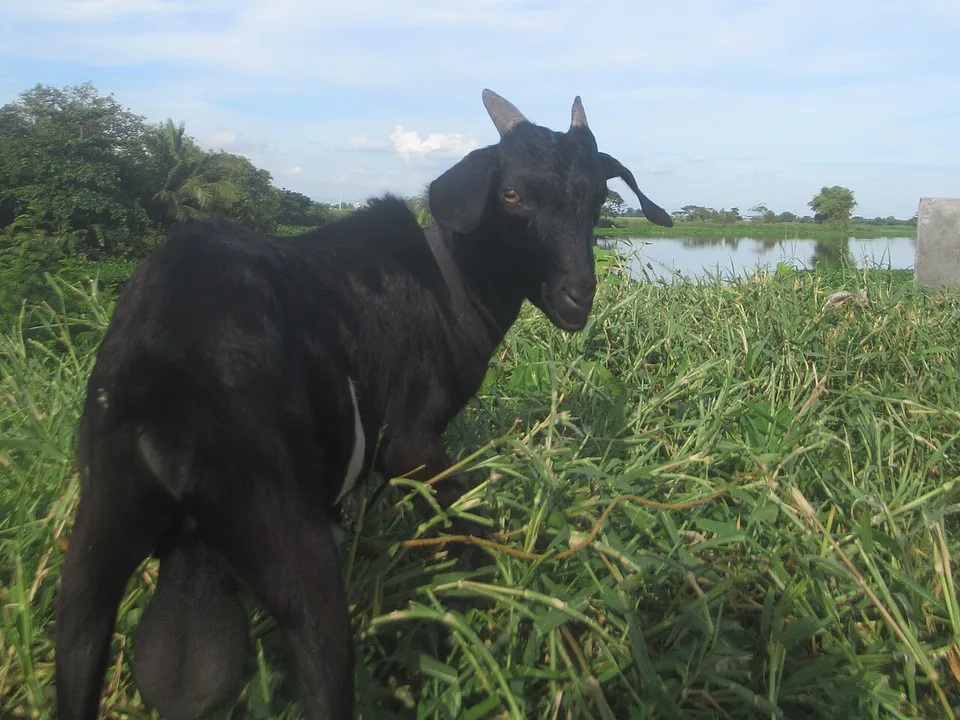
- Behaviour: the goat is alert, curious and aware of its surroundings, with head and ears up. It moves freely with the group and comes to feed eagerly.
- Rectal temperature is between about 38.5 and 40 °C. It is often slightly higher in the hot afternoon, after exercise, and in young kids.
- Cud chewing: when resting, the goat lies on its chest, chewing its cud steadily. It regularly brings up a ball of feed, chews it, swallows, and repeats.
- Rumen: the left side behind the ribs feels full but not tight. If you press a fist there gently, you can feel the rumen contract, roughly once or twice per minute.
- Droppings are firm, dark, separate pellets. Urine is clear to pale yellow, and males pass it without straining.
- Eyes are bright and clear, with no heavy tears or crust. The inner lower eyelid is pink to red, which means a good blood level (FAMACHA score 1 or 2).
- The coat is smooth and fairly glossy and lies flat, with no bald patches, scabs or crawling lice. The skin is supple.
- Breathing at rest is quiet and regular, roughly 15–30 breaths per minute in adults. It is faster in heat and in kids. The nose may be slightly moist but has no thick discharge.
- The goat walks evenly on all four feet, with no limping. Hooves are trimmed, and there is no smell or heat between the claws.
- Body condition: ribs and spine can be felt under a light layer of flesh, but are not sharp or hidden under fat. The udder of a milking doe is soft, even and warm, not hot or hard.
First signs something is wrong
- The goat stands apart from the herd, or stays lying down when others get up. It looks dull, with head and ears down.
- It refuses feed or water, or eats much less than usual. It is often the last to come to the feeder, or does not come at all.
- There is no cud chewing for several hours. The left side looks swollen and tight like a drum, or looks hollow and sunken.
- Rectal temperature is above about 40 °C, which suggests fever. A temperature below about 38 °C is also serious, especially in kids or does that have just kidded.
- Droppings change: soft clumps or watery diarrhoea, a dirty back end, very dry small pellets, or no droppings at all. A male straining to urinate is an emergency.
- The inner eyelids are pale pink or white (FAMACHA 3, 4 or 5). Look also for swelling under the jaw, called 'bottle jaw'. Both suggest anaemia, often from barber's pole worm.
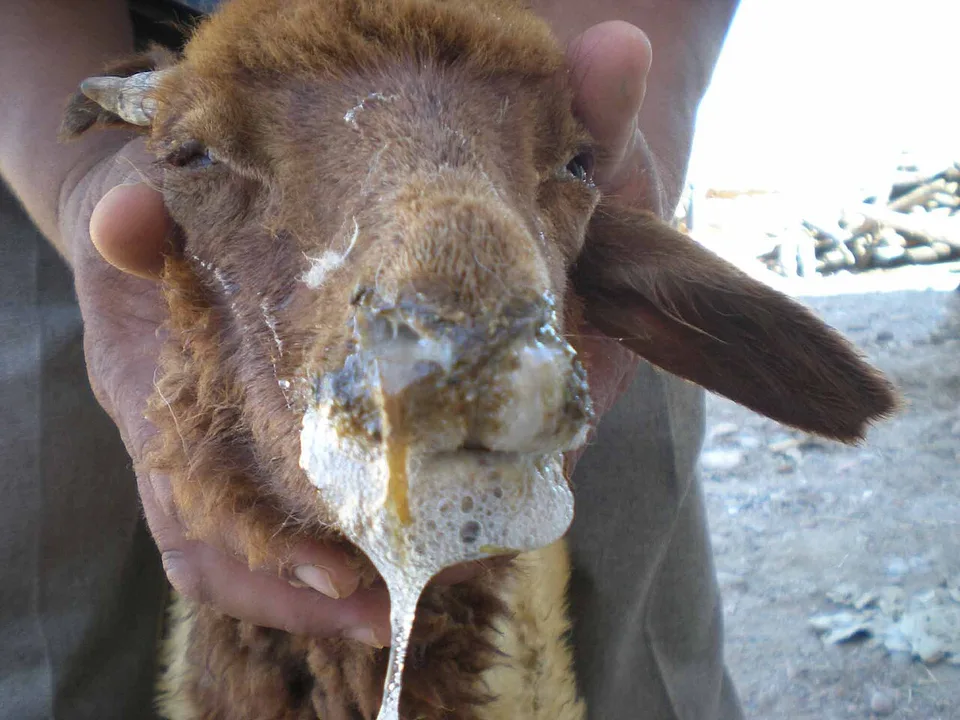
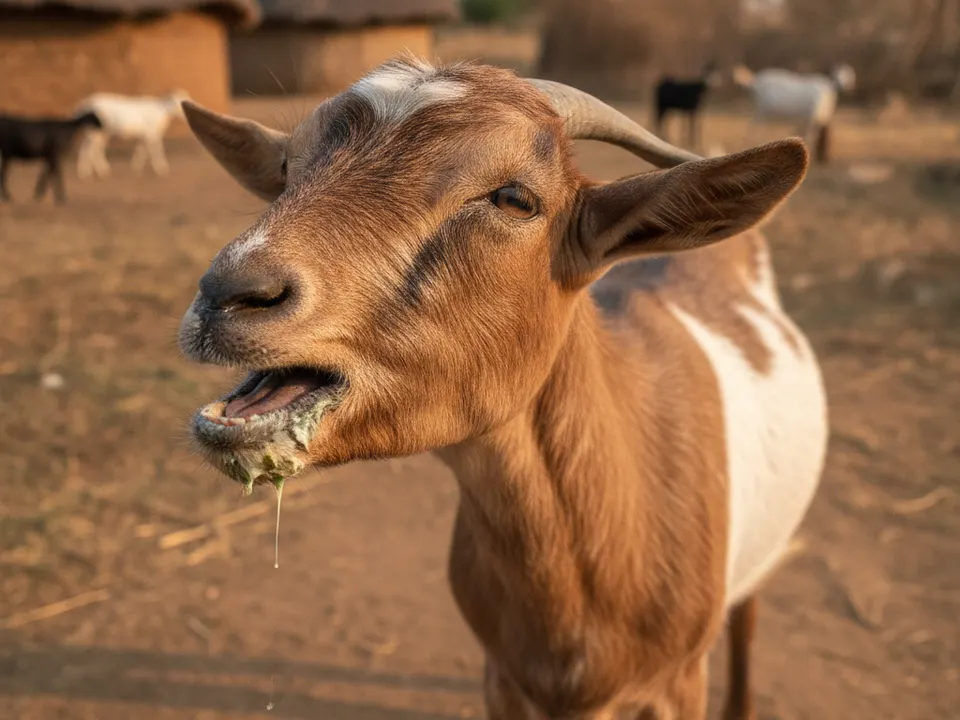
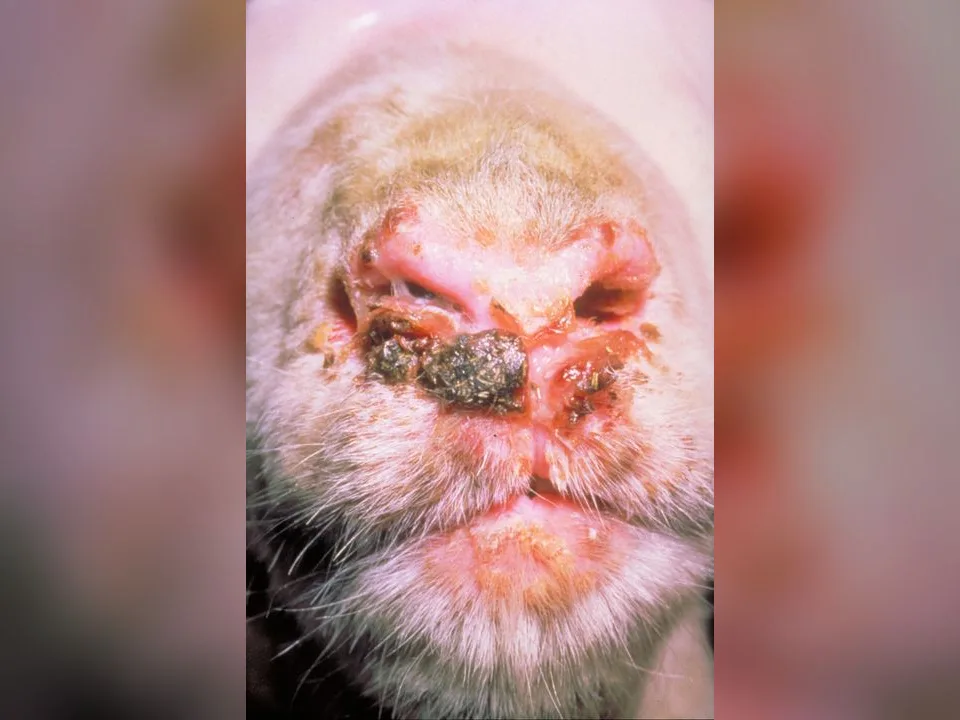
- Coughing, fast or laboured breathing, or thick nasal discharge. Sores around the mouth and nose, or crusty lips.
- Teeth grinding, groaning, or kicking at the belly are signs of pain. Limping, a rough dull coat, weight loss, or a hot, hard or lumpy udder.
Daily routine
- Make the daily check a habit: at morning feeding, watch every goat eat, look at droppings and bedding, and note any goat that is slow, dull or not eating.
- If one goat looks unwell, move it to a clean, dry, shaded pen away from the others. It should still be able to see other goats, to reduce stress.
- Take and write down its temperature, FAMACHA eye colour, appetite, droppings and breathing, with the date and time. Recheck later the same day.
- Give clean, fresh water and good-quality hay or browse. Do not force-feed, and do not drench liquids into a goat that is weak or struggling to swallow.
- Protect yourself: wear gloves if there is diarrhoea, discharge, abortion or mouth sores. Wash your hands well afterwards, and keep children away from sick animals.
- Stop buying, selling or moving goats from the herd until you know what the problem is, especially if more than one goat is sick.
- Do not give antibiotics, dewormers or other drugs by guesswork. Call your vet, animal health assistant or the County Veterinary Office and describe what you have recorded.
Common risks
- Health problems often start after a sudden change in feed, such as moving goats onto lush green pasture after the rains, or giving large amounts of grain or kitchen waste at once.
- Worm burdens rise quickly during and just after the long and short rains, when worm larvae survive well on wet grass.
- Damp, muddy or crowded housing with poor airflow encourages pneumonia, foot rot and skin problems.
- New goats bought from markets, or goats returning from shows, can bring in diseases such as PPR (goat plague), CCPP (contagious caprine pleuropneumonia), orf or mange.
- Shared water points, dipping areas and communal grazing in pastoral areas allow ticks, worms and infections to pass between herds.
- Stress from transport, weaning, kidding, extreme heat or poor handling weakens the immune system and lets hidden infections take hold.
- Dirty water troughs, mouldy feed and poor feeder hygiene can upset digestion and spread germs.
Often mistaken for illness
Normal rest and digestion
A healthy goat lying quietly in the shade after feeding is usually chewing cud with bright eyes, and gets up readily when you approach. A sick goat lies with its head down, does not chew cud, and is slow or unwilling to rise.
A full rumen mistaken for bloat
After a good feed, the left side is round but soft, and the goat chews cud and burps comfortably. In bloat, the left upper flank is tight like a drum, and the goat is uneasy, may kick at its belly, breathe with effort, or stop eating. Bloat needs urgent vet help.
Raised temperature from heat or exercise
On a hot afternoon, or after goats have been chased or walked far, temperature can rise near or slightly above 40 °C in a goat that is otherwise eating and alert. Recheck after the goat has rested in the shade for some time, ideally in the cool of the morning. A true fever stays high and usually comes with dullness or poor appetite.
Heat (oestrus) behaviour and softer droppings on lush feed
A doe on heat may bleat loudly, wag her tail, mount others, eat a little less, and have a clear discharge, but she stays bright and recovers within a day or two. Goats on fresh green pasture after the rains may pass softer, clumped droppings without being ill. Watery diarrhoea, a dirty tail, or dullness is not normal.
Doing a health check
A home health check takes only a few minutes per goat. Do it calmly and in good light. Start by watching the herd from a distance before you disturb them: who is eating, who is chewing cud, and who is standing apart? Then check each goat you are unsure about. To take the temperature, use a digital thermometer, ideally one kept only for animals. Restrain the goat gently against a wall or with a helper holding the head. Lubricate the tip with a little petroleum jelly or cooking oil. Lift the tail and slide the tip a few centimetres into the rectum, angled slightly towards the side wall. Hold it until it beeps, then read and record it. Clean the thermometer with soap and water and disinfect it afterwards. Next, check the eyes using the FAMACHA method. Gently pull down the lower eyelid and look at the colour of the inner lining. Red to pink is good. Pale pink is borderline. White means serious anaemia and needs action the same day. FAMACHA only detects anaemia from blood-sucking worms, mainly barber's pole worm. It does not show other worms such as tapeworms, or coccidia. Ideally, learn it from a trained extension officer or vet. Press your fist into the hollow on the left flank to feel rumen movement. Run your hands along the spine and ribs to judge body condition. Part the hair to look for lice, ticks and skin scabs. Look at the droppings and the back end, check the mouth and nose for sores, and check the udder of milking does. Watch the goat walk. If you find something abnormal, write down the temperature, what you saw, when it started, recent feed changes, and treatments or vaccines given. A vet or animal health assistant will use this record together with an examination, dung tests for worm eggs, blood tests, or a post-mortem on any goat that dies, to find the cause.
Routine vet care
For healthy goats, the vet's role is mainly prevention. Routine vet or animal health assistant care usually includes a herd health plan: a vaccination schedule suited to your area, which in Kenya often covers PPR, CCPP, enterotoxaemia (pulpy kidney) and others your vet recommends. It also includes a parasite control plan, which uses FAMACHA scoring and dung egg counts to deworm only the goats that need it, rather than dosing everyone by routine. This slows resistance to dewormers. The vet may also advise on tick and mange control, trim hooves or show you how, check teeth and udders, castrate and disbud kids, assess body condition before breeding, and check pregnancies. Ask for advice on minerals and ration balancing for dairy goats. When a goat does fall sick, the vet examines it and may prescribe treatments such as antibiotics for bacterial infections, dewormers, anti-inflammatories or fluids. Only a vet should prescribe these. Always follow the milk and meat withdrawal periods on the label or given by your vet. Withdrawal is the time after treatment when milk must be thrown away and the animal must not be slaughtered for food. Using antibiotics only when a vet confirms they are needed, and finishing the full course, helps prevent antimicrobial resistance, where germs stop responding to medicines. Antibiotics do not cure viral diseases such as PPR or orf.
How Agrikima products can help
These support the animal alongside — never instead of — your vet's treatment, vaccination and good management.

DCP-18
A dicalcium phosphate supplement that can help supply calcium and phosphorus for bones, teeth and milk production. This is especially useful where browse or pasture is poor, or for growing kids and milking does. Use it as part of a balanced ration agreed with your vet or nutrition adviser.
View product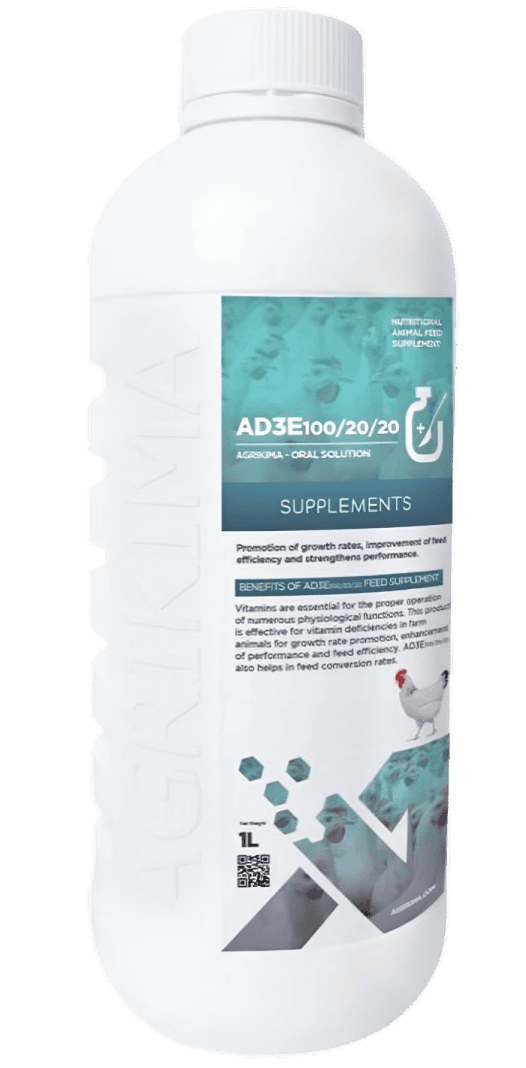
AD3E 100/20/20
Can help cover vitamins A, D3 and E during long dry seasons, when green feed is scarce, and around breeding and late pregnancy. These vitamins support eyesight, bones, fertility and immunity. Use it on vet or agrovet advice as a supplement to good feeding, not a replacement for it.
View productKeeping them healthy
- Vaccinate according to a plan agreed with your vet or County Veterinary Office. Join government vaccination campaigns for diseases such as PPR, and keep a record card for each goat.
- Control worms strategically. Check FAMACHA scores regularly, especially during and after the rains. Deworm only the goats that need it, rotate grazing, and avoid grazing wet, short grass early in the morning, when larvae are most active.
- Feed plenty of roughage and browse, and make feed changes gradually over about a week or more. Provide clean water at all times, and offer a goat mineral lick or mineral supplement suited to your area.
- Keep housing dry, clean and airy. Raised slatted floors are ideal in wet areas. Remove wet bedding and droppings often, and avoid overcrowding.
- Quarantine new or returning goats in a separate pen for at least two to three weeks. Watch them daily and get vet advice on vaccinating and deworming them before they mix with the herd.
- Make sure newborn kids suckle colostrum within the first hours of life. Keep kid pens warm, dry and free of draughts.
- Trim hooves regularly, control ticks and lice, and check the udders of milking does daily. Keep milking hygienic.
- Keep simple records of births, weights, treatments, vaccinations and deaths. Records help you and your vet spot patterns early.
Risk to people
Healthy-looking goats can still carry some infections that affect people, such as brucellosis, Q fever and orf (sore mouth). Brucellosis and Q fever are often linked to abortions and birth fluids, and orf causes scabs on the lips that can spread to hands. Wear gloves when handling birth fluids, aborted kids or mouth sores, and wash your hands with soap after handling goats. Boil or pasteurise milk before drinking it, and observe withdrawal periods after any drug treatment so residues do not reach your family or customers.
Impact on your farm
Healthy goats grow faster, reach breeding and market weight sooner, kid more regularly, and give more milk, all of which directly raise farm income. In Kenya, goats are often a household's savings account and a source of cash for school fees. Losing even one doe or a group of kids is a real setback. Most losses on smallholder and pastoral farms come from problems that are easier and cheaper to prevent or treat early, such as worms, pneumonia, kid deaths and poor nutrition. A daily check costs nothing but time. It can catch a problem while one goat is affected rather than ten, reduce spending on drugs and vet visits, protect milk sales by avoiding long withdrawal periods, and keep goats in good condition for better prices at market.
Long-term health
A goat that is well fed, dewormed only when needed, vaccinated and kept in clean, dry housing has a good chance of staying productive for many years. The biggest factor in recovery when illness strikes is how early it is noticed. Goats often show only small changes at first, such as eating a little less or skipping cud chewing, before they collapse. Farmers who check daily and act on small changes usually lose far fewer animals. Even with good care, some losses can happen, so regular vet contact and good records remain important.
Common questions
Do I need to take every goat's temperature every day?
No. Watching each goat eat, chew cud, move and pass droppings every day is usually enough. Take the temperature of any goat that looks dull, is off feed, has diarrhoea or is breathing fast. It also helps to take a few normal readings from healthy goats in your herd, so you know what is normal on your farm in the morning and afternoon.
How long should a goat spend chewing cud?
Healthy goats spend several hours each day chewing cud, mostly when resting and at night. You should see most resting goats chewing at any time. If a goat has not chewed cud for several hours and is also eating poorly, check its temperature and rumen, and call your vet.
Can I rely only on FAMACHA to decide when to deworm?
FAMACHA is a very useful tool for barber's pole worm, the most dangerous worm in many Kenyan goat herds, and it helps you avoid dosing goats that do not need it. However, it does not detect other worms, coccidia or tapeworms. Combine it with body condition, a check of the back end for diarrhoea, and occasional dung egg counts from your vet or a lab.
My goat's droppings became soft after the rains started. Is it sick?
Fresh green grass after the rains often makes droppings softer and clumped, and this can be normal if the goat stays bright and eats well. Watery diarrhoea, a dirty tail, weight loss, pale eyelids or dullness are not normal. They may point to worms, coccidia or other infection and need a vet's advice.
Why does my healthy goat grind its teeth sometimes?
Occasional light grinding while chewing cud can be normal. Loud, repeated grinding, especially with a hunched back, groaning, kicking at the belly or poor appetite, is a sign of pain. It needs a full check and a call to your vet.
A guide, not a diagnosis. This page is general information to help you recognise problems early. Always confirm with a vet or animal health worker before treating.