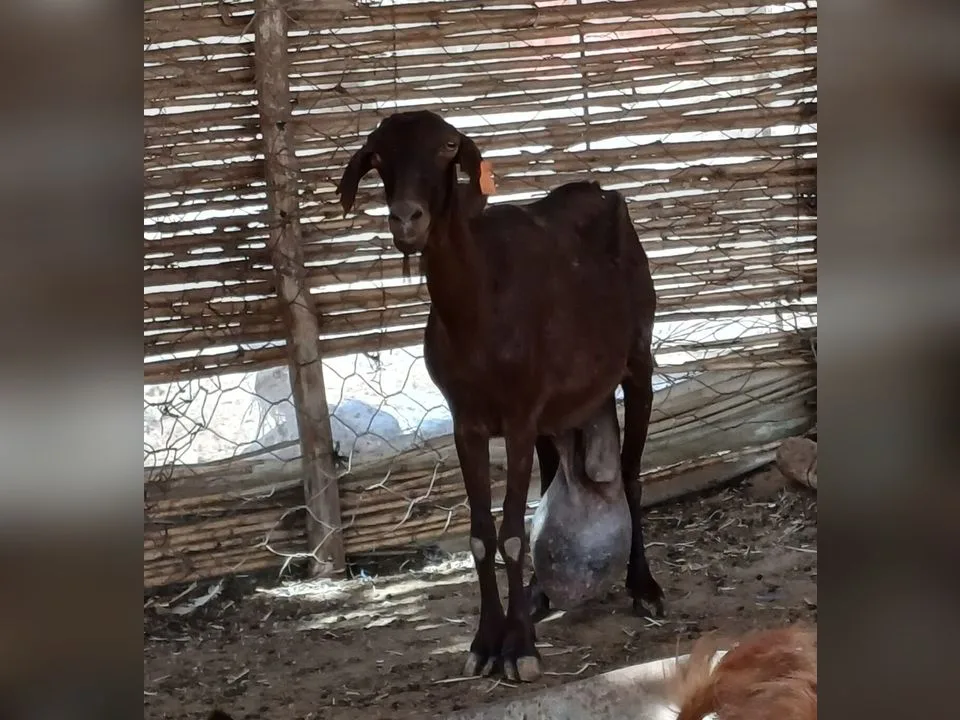
What it is
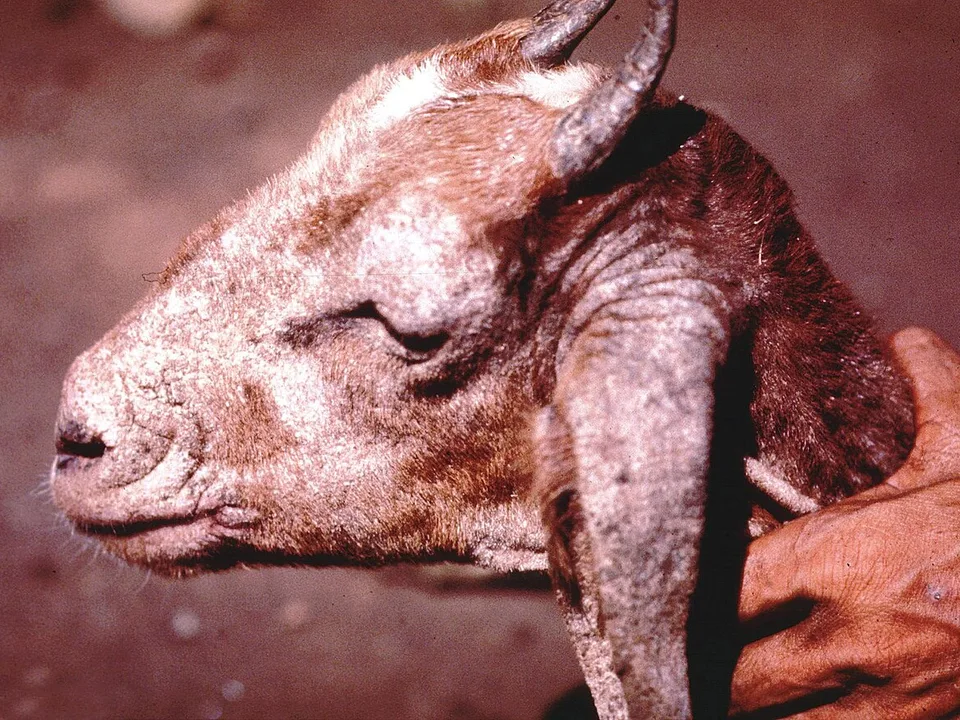
Several different parasites cause these problems. Sarcoptes mites (Sarcoptes scabiei) burrow into the top layer of the skin to lay eggs; their burrowing and droppings cause an intense allergic itch, and the skin becomes thick, wrinkled, grey and crusty, usually starting on the face, around the eyes, ears, neck and inner legs before spreading over the body. Psoroptes mites live on the skin surface, mainly inside the ears in goats, where they cause head shaking, ear scratching and brown crusty wax, sometimes spreading to the head and neck. Chorioptes mites, a close relative, often affect the lower legs, feet and udder area. Demodex mites live deep inside hair follicles and skin glands; instead of a bad itch they cause small, firm lumps (nodules) the size of a pea or bigger, mostly on the face, neck, shoulders and flanks, which contain a cheesy grey-white paste and leave holes in the hide. Lice are divided into biting (chewing) lice, which feed on skin flakes and cause itching and a rough, scruffy coat, and sucking lice, which pierce the skin and drink blood. Heavy sucking lice numbers can cause anaemia (a shortage of red blood cells), which shows as pale gums and eyelids and weakness, especially in kids. In all cases, broken skin from rubbing and biting can become infected by bacteria, and constant irritation stops goats from feeding and resting well.
Which animals are most at risk
Any goat can get mange or lice, but the most at risk are kids, young weaners, old goats, pregnant and heavily milking does, and any goat that is thin, wormy or recovering from illness. Goats in crowded houses or bomas, and herds that often mix with other flocks at markets, communal grazing or water points, are at high risk. Newly bought goats and visiting bucks are a common source. Demodectic mange is more common in some dairy breeds and their crosses, such as Saanen and Toggenburg types, and usually shows in younger animals, though it can appear in any breed including Galla and small East African goats. Lice tend to build up in the cool, dry season and in goats with poor feeding during dry periods, while mange can strike at any time of year. Farms that only treat sick-looking goats, rather than the whole herd, often see the problem keep coming back.
Signs to look for
Early signs
- The goat scratches with its hind feet, rubs against walls, posts, trees or fences, and nibbles or bites at its legs, flanks and tail more than normal.
- Small patches of thin or broken hair appear, often on the face, around the eyes and ears, on the neck, or inside the legs.
- The coat looks dull, rough and scruffy, and you may see white flakes like dandruff when you part the hair.
- When you part the hair along the neck, back and tail base in good light, you may see tiny grey or brown lice moving and white or cream eggs (nits) glued to the hairs.
- With ear mites, the goat shakes its head, scratches its ears and holds an ear lower than the other, and you may see brown crusts or wax inside the ear.
- With Demodex, you feel or see small, firm, painless lumps under the skin, often without much itching.
- Small red bumps and scabs appear where the goat has been scratching.
As it gets worse
- Large areas of hair loss with thick, grey, wrinkled, leathery skin, especially over the head, neck, shoulders and legs, typical of sarcoptic mange.
- Heavy, cracked crusts that may ooze or bleed, with bacterial infection causing a bad smell or pus in the skin folds.
- Constant restlessness and itching so severe that the goat stops feeding properly, loses weight and becomes very thin.
- Pale gums and inner eyelids, weakness and poor growth in kids carrying many sucking lice, due to blood loss.
- Demodex nodules become numerous and larger, and when squeezed they release a thick, cheesy grey-white paste.
- Ear mange spreading from the ears onto the face and neck, with thick crusts and head tilt in some goats.
- Drop in milk yield, stunted kids, abortion or weak kids in very run-down does, and in rare severe cases death from exhaustion and secondary infection.
What to do right now
- Separate the itchy or bald goats from the rest of the herd in a clean, dry, well-aired pen, and keep kids with their mothers only if both are being watched.
- Check every goat in the herd, including kids and bucks, by parting the hair along the neck, back, tail base and legs and looking inside the ears, and write down which goats show signs.
- Wear gloves or wash your hands and arms well with soap after handling affected goats, because sarcoptic mites can cause an itchy rash in people.
- Stop buying, selling, lending or borrowing goats, and keep your goats away from communal grazing or markets, until the vet has confirmed the problem and treatment has started.
- Give clean water and good-quality feed, and make sure the goats are not hungry, because well-fed goats cope better and recover faster.
- Clean out old bedding, dung and hair from the house, burn or bury it away from the goats, and let the house dry out in the sun if possible.
- Do not use engine oil, used motor oil, paraffin, battery acid or strong home-made chemicals on the skin, as these can burn the skin, poison the goat and contaminate milk and meat.
- Call your vet, County Veterinary Officer or a trained animal health officer to confirm whether it is mites, lice or another skin disease, and do not use any dip, spray, pour-on or injection until they advise you.
How it spreads
- Direct contact between goats is the main route: mites and lice crawl from one animal to another when goats sleep together, feed side by side or are crowded in a small house.
- Buying or borrowing goats, including breeding bucks, that carry mites or lice brings the parasites into a clean herd, sometimes before any signs show.
- Shared rubbing posts, walls, feeders, bedding, ropes, brushes and transport vehicles can carry mites and lice for a short time, so a goat can pick them up from a place where an infested goat has been.
- Crowded, dark, damp or poorly cleaned housing, common in zero-grazing units and night bomas, keeps parasites close to many animals and helps numbers build quickly.
- Mothers pass lice and mites to their kids during suckling and close contact in the first weeks of life.
- Poor nutrition, worm burdens, pregnancy and other illness weaken the goat's defences and allow mite and lice numbers to explode.
- Lice numbers usually rise in the cooler months, such as the cold season around June to August in Kenya, when coats are longer and goats huddle together; they often drop when the weather warms.
- Markets, shows and communal grazing or watering points in pastoral areas bring many herds together and are common places for spread.
Could it be something else?
Ringworm (fungal skin infection)
Ringworm makes round, grey, crusty bald patches, often on the face, ears and neck, but goats usually itch only a little or not at all. Mange is usually very itchy and spreads in wider areas of thickened skin. A vet can tell them apart with skin scrapings and hair samples. Ringworm also spreads to people as round red rings.
Dermatophilosis (streptothricosis, rain scald)
This bacterial skin disease causes raised, thick scabs that matt the hair into 'paintbrush' tufts, often along the back and ears after long periods of rain. When pulled off, the scabs leave a moist raw area underneath. It is usually less itchy than mange and is linked to wet weather and ticks.
Orf (contagious ecthyma)
Orf is a viral disease causing crusty, warty scabs mainly on the lips, mouth corners, nostrils and sometimes the udder and feet, mostly in kids. It is not mainly itchy and does not cause hair loss over the body. Orf can also infect people's hands, so wear gloves.
Sheep and goat pox
Pox causes fever, dullness, runny eyes and nose, and many raised round lumps over the skin, especially where hair is thin, followed by scabs. Goats are clearly sick, not just itchy, and several may die. Sheep and goat pox is a notifiable disease, so if you see fever with widespread lumps, report it to the County Veterinary Officer immediately.
How it is diagnosed
A vet or animal health officer will look at where the hair loss and crusts are, how itchy the goat is, and how many goats are affected. Lice can usually be seen with the naked eye or a magnifying glass by parting the hair, and the type (biting or sucking) can be identified. For mange, the vet takes a deep skin scraping from the edge of a fresh lesion with a blade until a little blood oozes, then looks at it under a microscope to find mites or eggs; Sarcoptes can be hard to find, so several scrapings may be needed and a negative result does not always rule it out. Ear wax and crusts are examined for Psoroptes. For Demodex, the vet squeezes or cuts into a nodule and checks the cheesy contents for the long, cigar-shaped mites. The vet may also take hair or crusts to rule out ringworm or dermatophilosis, and check gums for anaemia. To help, keep the affected goat in a pen without washing or treating it first, note when the itching started, which goats are affected, any recent purchases or visits to markets, what dips or sprays you have used and when, and whether you see the same signs on people in the household.
Treatment
Treatment depends on which parasite is found, so getting the right diagnosis first saves money and avoids failure. The vet usually treats the whole herd, not just the goats showing signs, because others may be carrying parasites without obvious signs. Common options include injectable or pour-on macrocyclic lactones such as ivermectin, doramectin or moxidectin, which work well against Sarcoptes mites and sucking lice but less reliably against biting lice; dips, sprays or washes containing amitraz, or synthetic pyrethroids such as cypermethrin, deltamethrin or flumethrin, which are used for lice and surface mites; and older options such as organophosphates or lime sulphur washes in some situations. Most products do not kill eggs, so a second and sometimes third treatment is needed after a gap set by the vet to kill newly hatched mites or lice. For dips and sprays, the coat must be soaked thoroughly, including the head, ears, legs and under the belly, and crusts may need softening first. Ear mange may need treatment applied into the ears. Demodectic mange is difficult to treat; the vet may drain or treat individual nodules and may advise culling badly affected goats from breeding, as the problem can run in families. If the skin has become badly infected, the vet may prescribe antibiotics; these treat only the bacterial infection, not the mites or lice, and should be used only when needed and exactly as prescribed to help prevent antimicrobial resistance. All these medicines have milk and meat withdrawal periods, meaning milk must be thrown away and goats must not be slaughtered for a set time after treatment. Some products are not allowed at all in goats producing milk for people, so tell the vet if your does are milking. Wear gloves and protective clothing when dipping or spraying, and never use more or less than the vet advises, because underdosing helps parasites become resistant to acaricides (mite and tick killers). Itching usually reduces within one to two weeks of effective treatment, but hair and skin can take several weeks to recover.
Medicines must be prescribed and dosed by a vet. Always respect milk and meat withdrawal periods, and finish the full course of any antibiotic.
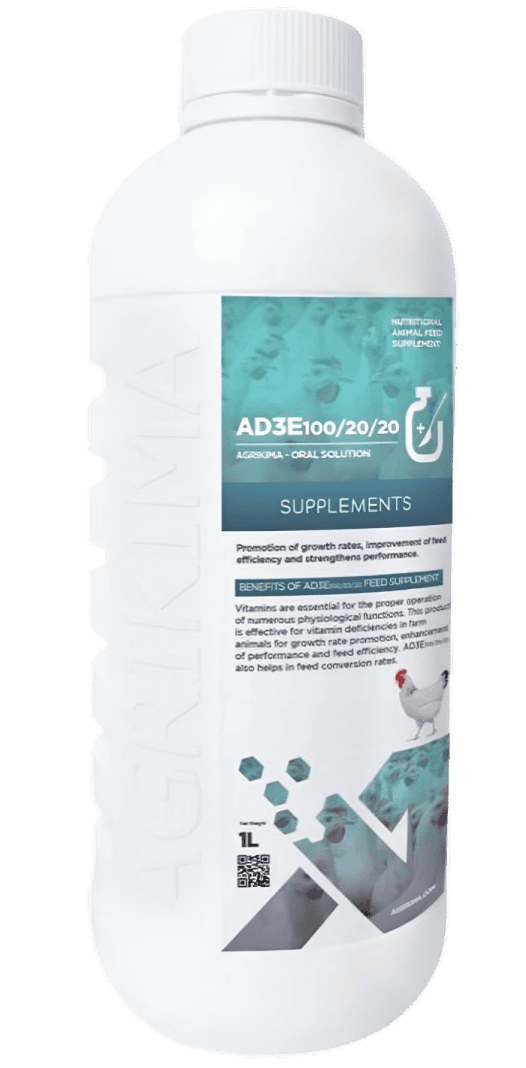
How Agrikima products can help
These support the animal alongside — never instead of — your vet's treatment, vaccination and good management.
Prevention
- Quarantine every newly bought or returning goat, including breeding bucks, for at least two to three weeks in a separate pen, check its skin and ears carefully, and have it treated on vet advice before it joins the herd.
- Check the whole herd for itching, hair loss, lice and nits regularly, for example once a month and more often in the cool season, so you catch problems while only one or two goats are affected.
- When mange or lice are found, treat all the goats that share housing or grazing at the same time, and repeat treatment as advised, rather than treating only the worst-looking animals.
- Keep goat houses clean, dry, well ventilated and not overcrowded; raised slatted floors help, and old bedding and droppings should be removed often.
- Clean and, where possible, spray or wash housing, rubbing posts, feeders and handling equipment after an outbreak, and leave the house empty and sunny for some days if you can.
- Feed goats well all year with enough energy, protein, minerals and vitamins, including supplementation during the dry season, because thin, poorly fed goats carry much heavier parasite loads.
- Control worms and ticks under your vet's or extension officer's guidance, since goats weakened by other parasites are more likely to develop severe mange or lice.
- Avoid sharing ropes, brushes and transport with other farmers' goats, and limit contact with other herds at markets, water points and communal grazing where possible.
- Rotate the type of acaricide only on professional advice and always use the correct strength, to slow the development of resistance in mites, lice and ticks.
- Consider culling goats that repeatedly get Demodex nodules or chronic mange, and avoid breeding from them, to reduce the problem in future generations.
Risk to people
Sarcoptic mange mites from goats can pass to people who handle infested animals, causing small, very itchy red spots, usually on the arms, hands, chest and waist. In most people this is temporary because the goat mite does not survive long on human skin, but it can be very uncomfortable, and anyone with a persistent itchy rash should see a health worker and mention contact with mangy goats. Wear gloves and long sleeves when handling affected goats, wash hands and arms with soap afterwards, and wash work clothes. Goat lice are host-specific and do not live on people. Ringworm, which can look like mange, does spread to people. The dips, sprays and injections used to treat mange and lice can be harmful to people: wear gloves and protective clothing, avoid splashing eyes and skin, keep children away, never mix chemicals near food or water sources, and strictly follow milk and meat withdrawal periods so that no drug residues reach your family or customers.
Impact on your farm
On a Kenyan farm, mange and lice quietly cost money even when no goats die. Itching goats spend less time feeding and resting, so they grow slowly, lose condition and take longer to reach market weight. Dairy goats produce less milk, and kids from run-down does are smaller and weaker. Kids with heavy sucking lice can become anaemic and stunted, and some may die if other diseases strike at the same time. Goats with bald, crusty skin fetch lower prices at the market because buyers see them as sick, and the skin is worth less or nothing to tanners because mites, lice and Demodex nodules leave holes and scars in the leather. Treating a whole herd several times, plus labour, adds cost, and a single infested goat brought in from a market can spread the problem to the whole herd. In pastoral areas where goats mix at water points and markets, mange can spread widely between herds.
Outlook and recovery
The outlook for sarcoptic, psoroptic and chorioptic mange and for lice is good when the problem is confirmed early and the whole herd is treated properly, including repeat treatments. Most goats stop itching within a couple of weeks and regrow hair over the following weeks, though very thickened skin can take longer to return to normal. Recovery is slower and less certain in goats that are very thin, old, heavily wormed or have badly infected skin. Re-infestation is common if only some goats are treated, if repeat treatments are skipped, if housing is not cleaned, or if new animals are brought in without quarantine. Demodectic mange has a less predictable outlook; some goats improve on their own as they mature, but others keep getting new nodules and may be better culled from breeding. Hide damage from mites, lice and nodules may be permanent.
Common questions
How can I tell if my goat has mange or just lice?
Part the hair along the neck, back and tail base in bright light. If you see small moving insects and white eggs glued to the hair, lice are present. Mange mites are too small to see with the naked eye, and mange usually causes thicker, grey, wrinkled or crusty skin, often on the face, ears and legs, with intense itching. Goats can have both at once, so a vet's skin scraping is the best way to be sure before you treat.
Why does the itching come back after I spray my goats?
This is very common. Most sprays and dips do not kill eggs, so a new generation hatches days later unless you repeat the treatment at the interval your vet advises. Other reasons include treating only the itchy goats while others still carry parasites, not soaking the coat fully, using the wrong product for that parasite, diluting it too weakly, parasites resistant to the chemical, or bringing in new goats without quarantine.
Can I use engine oil or paraffin on mangy goats?
No. Used engine oil, paraffin and similar home remedies can burn and crack the skin, poison the goat if it licks itself, and leave harmful residues in milk and meat. They also do not reliably kill mites. Ask your vet or animal health officer for a proper product and how to use it safely.
Can I drink milk from a goat that is being treated for mange or lice?
Only after the withdrawal period on the product has passed, as advised by your vet. Many mange and lice medicines pass into milk, and some are not allowed in goats producing milk for people at all. Tell the vet that the goat is milking so they can choose a suitable product and tell you exactly how long to throw milk away.
Will mange spread to my children?
Sarcoptic mites from goats can cause an itchy rash in people, especially those who hold or carry affected goats. It usually clears once contact stops and the goats are treated, but anyone with a lasting rash should see a health worker. Keep children from handling mangy goats, use gloves, and wash hands and clothes well. Lice from goats do not live on people.
Do vitamins or good feeding cure mange?
No. Good feeding and vitamins cannot kill mites or lice, so a proper vet-advised treatment is still needed. However, well-fed goats with enough vitamins and minerals have healthier skin, resist heavy infestations better and recover faster after treatment, so nutrition is an important part of both treatment and prevention.
A guide, not a diagnosis. This page is general information to help you recognise problems early. Always confirm with a vet or animal health worker before treating.