What it is
ASF is caused by the African swine fever virus, a large and very tough virus. It only infects pigs and their wild relatives. In Africa, warthogs and bushpigs can carry the virus without getting sick, and soft ticks that live in warthog burrows can carry it for a long time. When the virus enters a domestic pig, usually through the mouth or nose, it attacks the white blood cells that normally defend the body. It then damages the lining of the blood vessels, so blood leaks into the skin and organs. This is why the ears, belly and legs turn red or purple, why the spleen and lymph nodes (glands that filter blood) swell and darken, and why pigs bleed internally. The body's defences collapse, the fever climbs, and most pigs with the severe form die within about a week of showing signs. The virus survives for a long time in blood, meat and the environment: it can stay alive for weeks to months in raw, frozen, salted or smoked pork, and in pig dung and contaminated pens, which is why it travels so easily from farm to farm.
Which animals are most at risk
All domestic pigs of every breed, age and sex can catch ASF, and local breeds are not protected. Piglets, growers, fatteners and pregnant sows are all affected; pregnant sows often abort. The highest risk is on free-range and scavenging systems, small backyard units that feed swill, and farms close to markets, slaughter slabs, roads used by pig traders or areas with warthogs and bushpigs. In Kenya outbreaks have been reported in several pig-keeping areas, including western Kenya near the Uganda border and central Kenya. Risk often rises when pigs are moved a lot, for example around festive seasons when trade and pork demand increase, and when farmers panic-sell during an outbreak nearby. Commercial zero-grazing units with poor fencing, shared boars, or many visitors are also at serious risk.
Signs to look for
Early signs
- Sudden high fever: the pig feels very hot to touch, especially behind the ears and on the belly.
- Loss of appetite: the pig stops coming to the trough or eats very little.
- Dullness and weakness: pigs lie down most of the time and are slow to get up when you enter the pen.
- Huddling together or burying themselves in bedding, even when the weather is warm.
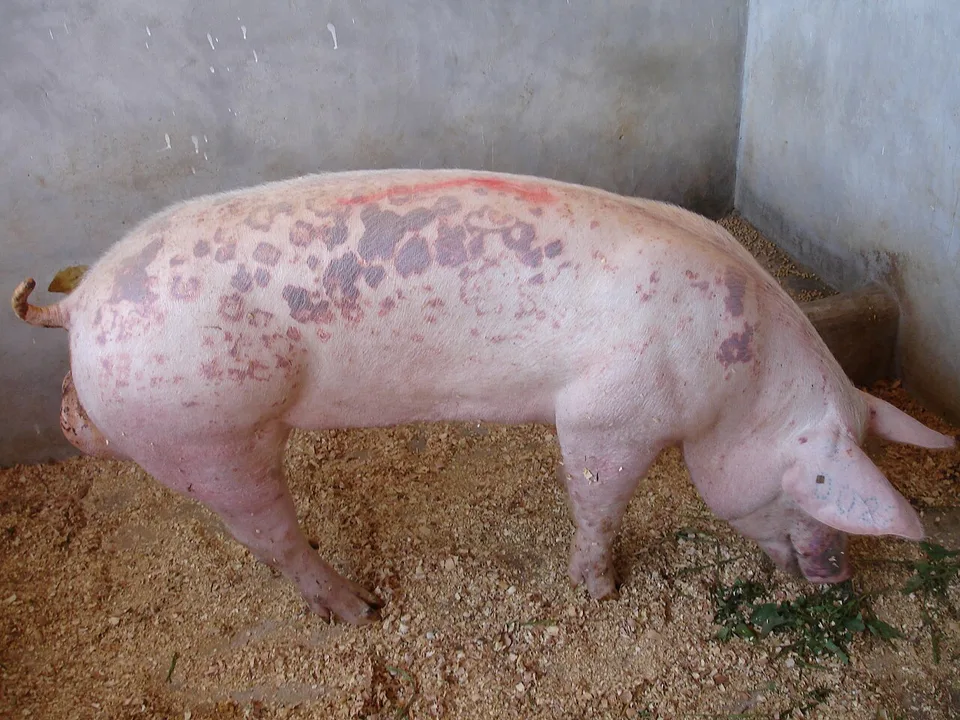
- Redness of the skin, especially the ears, belly, tail and inner legs, which may be the first thing you notice on white or light-coloured pigs.
- One or two pigs found dead suddenly without having looked very sick.
As it gets worse
- Dark red, purple or bluish blotches on the ears, snout, belly, tail and legs, which do not fade.
- Staggering, wobbly walking, weakness of the back legs, and sometimes fits or paddling.
- Breathing difficulty, coughing and froth or a bloody discharge from the nose.
- Vomiting and diarrhoea, which may be bloody, or constipation with hard dark dung.
- Discharge from the eyes and redness around them.
- Abortions in pregnant sows, often at any stage of pregnancy.
- Many pigs dying over a few days, with deaths spreading from pen to pen and to neighbouring farms.
What to do right now
- Report immediately to your County Veterinary Officer, local veterinary office, or your nearest vet or animal health assistant; this is required by law for ASF in Kenya.
- Stop all movement of pigs, pork, manure and equipment on and off the farm, and do not sell, give away or slaughter any pig, even ones that look healthy.
- Confine all pigs in their pens so none roam, and keep visibly sick pigs apart from the others if you can do so safely.
- Close the farm gate to visitors, traders, butchers and boar keepers, and keep dogs and other animals away from the pigs and any carcasses.
- Use one set of boots and clothes only for the pig unit, wash hands well after handling pigs, and do not visit other pig farms, markets or slaughter slabs.
- Give sick pigs clean drinking water, shade, and dry bedding to keep them as comfortable as possible, but do not give any injections or drugs without a vet.
- Do not throw dead pigs into rivers, the bush or latrines, and do not eat or sell their meat; cover the carcasses and wait for the vet's instructions on burial or burning.
- Write down the number of pigs sick and dead each day, the dates signs began, and all recent pig movements and feed sources to help the investigation.
How it spreads
- Direct contact between sick or carrier pigs and healthy pigs, for example when new pigs are bought, boars are borrowed for mating, or pigs roam freely and mix with neighbours' pigs.
- Feeding swill, kitchen leftovers, hotel or school waste that contains pork or pork products, including sausages, smokies, bacon and ham, even if they looked fine to eat.
- Pork and pig products moved from infected areas, including meat bought cheaply during an outbreak when farmers rush to sell sick pigs.
- Contaminated boots, clothes, hands, buckets, feeding troughs, castration tools and knives carried between farms by farmers, traders, butchers, boar keepers and even helpful neighbours.
- Vehicles, motorbikes and handcarts that carried pigs or pork and were not cleaned and disinfected.
- Blood, dung, urine and saliva from sick pigs, and carcasses dumped in rivers, bush or open pits where dogs, other pigs or people can reach them.
- Soft ticks (Ornithodoros) and contact with warthogs or bushpigs in areas near wildlife, especially where pigs scavenge near game areas.
Could it be something else?
Swine erysipelas
Erysipelas often causes raised, diamond- or square-shaped red patches on the skin, and fewer pigs usually die. Affected pigs often respond quickly to antibiotics given by a vet, while ASF does not respond to any treatment. Only a laboratory test can safely rule out ASF, so never assume it is erysipelas during deaths.
Classical swine fever (hog cholera)
Classical swine fever looks almost identical to ASF in the field, with fever, red-purple skin and deaths. It is caused by a different virus and can only be told apart by laboratory tests. Both are serious and must be reported.
Salmonellosis and other bacterial blood infections
Salmonella can cause fever, purple ears and diarrhoea, often in weaners and growers, but usually spreads more slowly and often fewer pigs die. Some cases improve with vet treatment. A vet and laboratory are needed to confirm.
Heat stroke
Heat stroke happens on very hot days, often after pigs are moved or crowded without shade or water. Pigs pant heavily and skin may redden, but they usually recover when cooled. It does not spread from farm to farm and does not keep killing pigs over days.
How it is diagnosed
ASF cannot be confirmed by looking alone, because several diseases cause fever and red skin. The vet or County Veterinary Officer will examine the live pigs, take temperatures, and ask about recent pig purchases, swill feeding, deaths and contacts with other farms. They will collect blood samples from sick pigs and tissue samples (often spleen and lymph nodes) from dead pigs. On post-mortem, ASF typically shows a greatly enlarged, dark, soft spleen, swollen and bloody lymph nodes, and bleeding in the kidneys, heart and other organs, but the final answer comes from the laboratory. Samples are sent to a government or approved laboratory, such as the Central Veterinary Laboratories at Kabete, where tests like PCR (which detects the virus itself) and antibody tests are used. Do not open carcasses yourself, because this spreads the virus. To help the vet, prepare a written record of when signs started, how many pigs are sick and dead, their ages, any pigs bought, sold or borrowed in the last three weeks, what you have been feeding, and who has visited the farm. Keep dead pigs covered and in one place until the vet advises how to dispose of them.
Treatment
There is no cure for African swine fever and no approved vaccine available in Kenya. Antibiotics do not kill the virus, and injecting pigs with antibiotics or other drugs will not save them; it only wastes money, risks drug residues in pork, and helps antimicrobial resistance (germs becoming resistant to medicines) to develop. Any medicine for pigs must be prescribed by a vet, and the milk and meat withdrawal periods on any drug must always be respected before pork is eaten or sold. When ASF is suspected, the veterinary authorities focus on control rather than treatment. This usually includes placing the farm under quarantine, restricting pig and pork movement in the surrounding area, humane killing of infected and exposed pigs under official supervision where this is ordered, safe disposal of carcasses by deep burial or burning, and thorough cleaning and disinfection of pens, equipment and vehicles. Neighbouring farms are inspected and monitored. Whether farmers receive compensation for pigs killed varies and depends on government decisions at the time, so ask your County Veterinary Officer. After cleaning, the farm must stay empty of pigs for a period set by the vet before restocking.
Medicines must be prescribed and dosed by a vet. Always respect milk and meat withdrawal periods, and finish the full course of any antibiotic.
Prevention
- Never feed swill, kitchen leftovers or hotel and school waste to pigs unless it contains no pork at all; if waste is used, it must be thoroughly boiled first, but avoiding pork-containing waste completely is the safest choice.
- Keep pigs confined in a fenced or walled unit instead of letting them roam, so they cannot mix with other pigs, scavenge pork waste, or meet warthogs and bushpigs.
- Buy new pigs only from known, healthy farms, avoid buying cheap pigs during or near an outbreak, and keep newcomers separate for at least three weeks while watching for signs.
- Avoid sharing boars; use artificial insemination where possible, or bring the sow to a trusted boar only after checking that farm is disease-free.
- Set up a footbath with a vet-recommended disinfectant at the pig unit entrance, keep dedicated boots and clothes for the piggery, and limit visitors, especially traders, butchers and other pig farmers.
- Clean and disinfect feeding troughs, water containers, tools, and any vehicles or handcarts that come into contact with pigs or pork.
- Stay informed through your County Veterinary Officer and local farmer groups about outbreaks in your area, and tighten all measures immediately when ASF is reported nearby.
- Report any sudden deaths or sick pigs quickly, and never sell or slaughter sick pigs, as panic-selling is one of the main ways ASF spreads across whole regions.
Impact on your farm
ASF is one of the most costly pig diseases for Kenyan farmers because it can kill nearly every pig on a farm within one to two weeks. A smallholder can lose all their savings in pigs, which are often kept as a 'bank' to pay school fees or emergencies. Breeding sows abort, so future litters are lost as well. Quarantine and movement restrictions stop pig and pork sales in the area, hurting healthy farms, butchers and traders too. Restocking takes time and money, and farms must stay empty for a period before new pigs come in. Outbreaks also shake buyer confidence, lower pork prices locally, and can discourage farmers from continuing pig keeping.
Outlook and recovery
The outlook for pigs with acute ASF is very poor: most die, often within a week of first showing signs, and there is no treatment that changes this. A small number of pigs, especially with milder forms of the disease, may survive, but survivors can remain carriers and spread the virus to other pigs, which is why authorities usually do not allow them to be kept or sold. For the farm, the outlook depends on how quickly the disease is reported, how strictly movement is stopped, and how well carcasses are disposed of and pens are cleaned. Farms that report early, follow the vet's instructions, clean thoroughly and improve biosecurity can successfully restart pig keeping after the period advised by the veterinary authorities.
Common questions
Can people catch African swine fever from pigs or pork?
No. ASF does not infect people, and it is not a danger to human health. However, people are one of the main ways the virus moves between farms, on boots, clothes, hands, vehicles and in pork products. So even though you cannot get sick, you can carry the virus to your pigs or a neighbour's pigs. Meat from sick or dead pigs should never be sold or moved, because it spreads the disease to other pigs.
Is there a vaccine or injection I can buy at the agrovet to protect my pigs?
No vaccine for ASF is approved or available in Kenya at present, and no injection from the agrovet can prevent or cure it. Be careful of anyone selling a so-called ASF cure or vaccine. The only protection is good biosecurity: confining pigs, not feeding pork-containing swill, controlling visitors, buying pigs from safe sources, and reporting sick pigs quickly.
My neighbour's pigs are dying. Should I sell my pigs quickly before they get sick?
No. Selling pigs during an outbreak is one of the biggest ways ASF spreads to new areas, and your pigs may already be carrying the virus without showing signs. Moving them can also break the law if movement restrictions are in place. Instead, lock down your farm: keep pigs confined, stop visitors, use separate boots, do not share equipment, and inform the County Veterinary Officer. This gives your pigs the best chance of staying free.
What does it mean when the vet says my farm is under quarantine?
Quarantine means no pigs, pork, pig manure or pig equipment may leave or enter the farm without permission from the veterinary authorities. Often the restrictions cover an area around the farm too, and pig markets and slaughter may be closed for a time. These rules are legal requirements under Kenya's animal disease laws, and breaking them can lead to penalties. They exist to stop the virus spreading. The restrictions are lifted only when the vet is satisfied the disease is under control.
How long should I wait before bringing new pigs after an outbreak?
The waiting time is set by the veterinary authorities and depends on how well the farm has been cleaned and disinfected. The virus can survive for a long time in dung, blood and pens, so everything must be cleaned, disinfected, and left empty. Your vet may suggest bringing in a few pigs first and watching them closely before restocking fully. Never restock without the vet's advice, and fix the biosecurity gaps that let the disease in.
Will boiling or cooking pork make swill safe for my pigs?
Thorough boiling can kill the ASF virus, but in practice swill is often not heated long or evenly enough, and it can be contaminated again after cooking. Cured, smoked or frozen pork can still carry live virus for months. The safest rule is not to feed any kitchen waste that contains pork or pork products. Use commercial feeds, home-mixed rations from clean ingredients, or vegetable waste that has never been in contact with meat.
A guide, not a diagnosis. This page is general information to help you recognise problems early. Always confirm with a vet or animal health worker before treating.