What it is
FMD is caused by a virus from the picornavirus family (genus Aphthovirus). There are seven main types of the virus, called serotypes: O, A, C, SAT1, SAT2, SAT3 and Asia1. Several of these, especially O, A, SAT1 and SAT2, have been found in Kenya and East Africa. Immunity to one serotype does not protect against the others, which is why animals can get FMD more than once. Once the virus enters the pig, usually through the mouth, nose or a small break in the skin, it multiplies quickly and spreads through the blood. It then attacks the skin cells in places that rub or carry weight: the snout, lips, tongue, the coronary band (the soft band of skin where the hoof meets the leg), the heels, between the claws and the teats of nursing sows. Fluid collects under the skin and forms blisters, called vesicles. These burst within a day or two, leaving raw, painful sores. On the feet, the damage can separate the hoof horn from the tissue underneath, so the claw may partly or completely come off (sloughing). In very young piglets the virus often attacks the heart muscle instead, causing heart failure and sudden death, sometimes before any blisters appear. Pigs are especially dangerous spreaders because they breathe out very large amounts of virus into the air, far more than cattle, which is why they are called 'amplifier' hosts.
Which animals are most at risk
All pigs of any age, breed or sex can catch FMD. Young piglets, especially those under a few weeks old, are most likely to die because the virus damages their heart. Pregnant sows may abort, and nursing sows with sore teats may refuse to let piglets suckle. Pigs kept close to cattle, sheep or goats, as on many mixed smallholder farms in Central, Western and Rift Valley regions, face extra risk, as do herds that are fed hotel or kitchen swill. Free-range and village pigs that roam, share water points or mix with neighbours' stock are exposed more often than pigs in closed, well-run units. Risk rises when animals are moved a lot, such as during dry-season grazing movements, festive-season trading and around livestock markets, and when outbreaks are already being reported in cattle in the county. Farms near wildlife areas where buffalo live also face a higher background risk.
Signs to look for
Early signs
- Sudden lameness in several pigs at once, with pigs lying down, refusing to get up, squealing loudly when forced to stand, or shifting weight from foot to foot.
- Fever, dullness and reduced appetite; pigs may stop coming to the feed trough or eat only a little.
- Pigs walking on their knees or on the tips of their claws, or arching their back to avoid putting weight on painful feet.
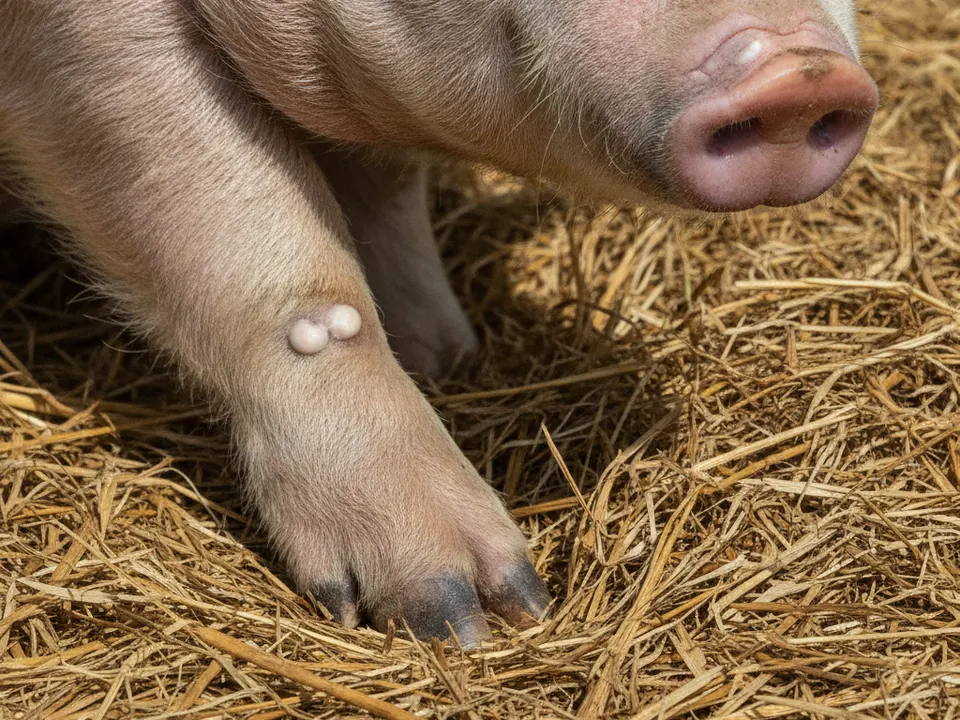
- Pale, white or slightly raised areas, or small fluid-filled blisters, on the snout, lips and tongue.
- Redness, heat and small blisters along the coronary band at the top of the hooves, on the heels and between the claws.
- Blisters on the teats of nursing sows, and sows unwilling to let piglets suckle.
- Sudden, unexplained deaths of young piglets, sometimes before any adult pigs look sick.
As it gets worse
- Burst blisters leaving raw, red, painful sores on the snout, mouth and feet, often with flaps of dead skin.
- Hoof horn separating from the foot, with claws partly or completely coming off (sloughing) in severe cases.
- Pigs lying down most of the time, becoming thin and losing condition because pain stops them feeding and drinking.
- Secondary infection of the foot sores, with swelling, bad smell and pus, and long-lasting lameness.
- Abortions in pregnant sows and poor milk supply, leading to weak, starving piglets.
- High death rates in piglets in affected litters, while most adult pigs survive but recover slowly.
What to do right now
- Report the suspected outbreak immediately to your County Veterinary Officer, the nearest government veterinary office or your local vet; this is required by law in Kenya and is the fastest way to get help and protect your neighbours.
- Stop all movement on and off the farm: do not sell, buy, lend or move any pigs, cattle, sheep or goats, and do not send meat, manure or feed off the farm until the vet says it is safe.
- Keep sick pigs in their pen and separate them from healthy pigs and from other livestock as far as possible, without herding or chasing them, as stress and walking worsen foot damage.
- Give sick pigs a clean, dry, soft bed such as dry straw or grass, and keep the pen shaded, quiet and draught-free, because standing on hard or wet floors is very painful.
- Provide plenty of fresh, clean water within easy reach, and offer soft, wet feed such as moistened mash or porridge, since sore mouths and feet make eating and drinking difficult.
- Keep piglets warm and close to the sow, and watch them closely; if the sow refuses to suckle because of sore teats, ask the vet how best to keep piglets fed.
- Limit visitors to the farm, set up a footbath or boot-washing point at the gate, and make sure anyone handling sick pigs changes clothes, washes and avoids contact with other livestock for several days.
- Record the date signs started, the number of pigs affected and any deaths, and keep feed and medicine records ready for the vet; do not give any drugs unless the vet has prescribed them.
How it spreads
- Direct contact with infected pigs, cattle, sheep or goats, for example at markets, shared boar services, communal grazing or when animals are bought and mixed with the herd.
- Feeding swill (kitchen or hotel waste) that contains raw or undercooked meat, bones or offal from infected animals; the virus can survive for a long time in chilled, frozen and some cured meats, bone marrow and lymph nodes.
- Breathing in virus carried in the air from infected animals nearby; pigs exhale huge amounts of virus, which can then infect cattle and other animals on neighbouring plots.
- People carrying the virus on their boots, clothes, hands and even in their nose after visiting an infected farm, market or slaughter slab.
- Contaminated vehicles, crates, feed bags, tools, water and bedding moved from one farm to another.
- Contact with infected cattle or wildlife, especially African buffalo, which can carry SAT-type viruses without looking sick and pass them to cattle that then infect pigs.
- Manure, urine, saliva, blister fluid and milk from infected animals, which all contain virus and can contaminate pens, paths and shared water points.
Could it be something else?
Other vesicular (blister) diseases such as swine vesicular disease, vesicular stomatitis and Senecavirus A infection
These diseases cause blisters on the snout and feet that look exactly like FMD, and no farmer or vet can tell them apart by eye. Only laboratory tests on blister samples can separate them. Because they look the same, any pig with blisters on the snout or feet must be treated as suspected FMD and reported.
Foot injuries, foot rot or rough, wet floors
Injuries and foot infections usually affect one or a few pigs, often on one foot, and there are no blisters on the snout, mouth or teats. FMD affects many pigs quickly, causes fever, and produces blisters in several places at once, including the snout.
Swine erysipelas
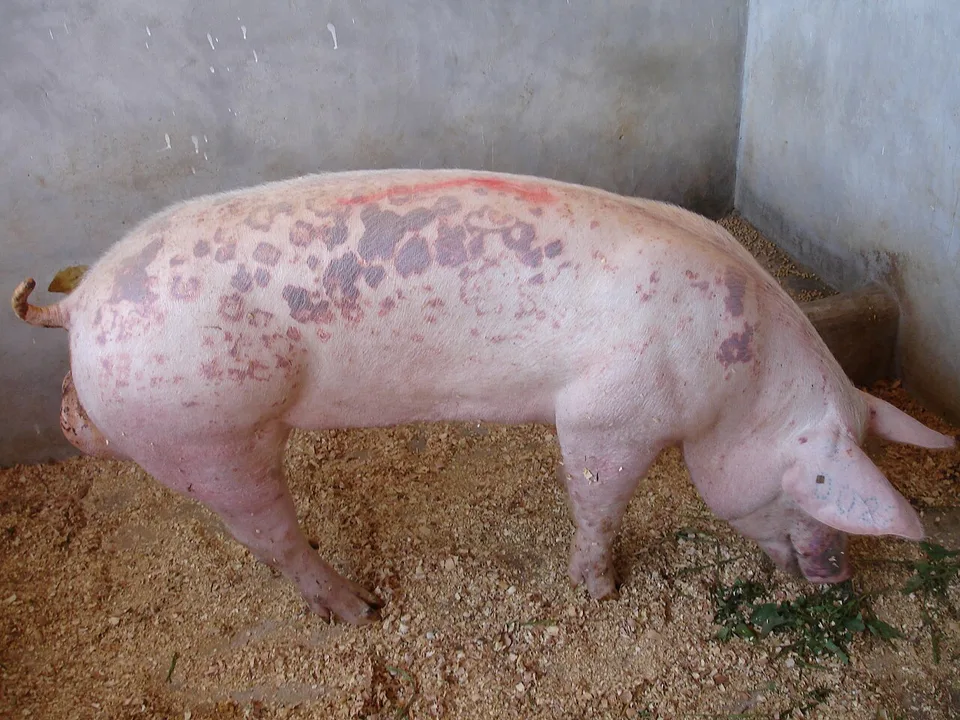
Erysipelas can cause fever, lameness and swollen joints, and often raised, diamond-shaped red or purple patches on the skin of the body. It does not cause fluid-filled blisters on the snout, tongue or coronary band, and a vet may see a response to the right treatment.
African swine fever
African swine fever causes high fever, red or purple skin on the ears, belly and legs, weakness and very high deaths in pigs of all ages, but not blisters on the snout and feet. Both are emergencies and both must be reported to the County Veterinary Officer, so call the vet either way.
How it is diagnosed
A vet cannot confirm FMD by looking alone, because other blister diseases look identical. When you report a suspected case, a government or private vet will visit, examine the pigs, check their temperature, look closely at the snout, mouth, feet and teats, and ask about recent purchases, swill feeding, visitors and sick cattle nearby. The vet will collect samples, usually pieces of blister skin and blister fluid, and sometimes blood or swabs, in a special transport solution. These are sent to the national FMD laboratory at Embakasi, Nairobi, or another approved laboratory, where tests such as ELISA and PCR (a test that detects the virus's genetic material) confirm FMD and identify the serotype. Knowing the serotype helps the authorities choose the right vaccine for cattle and other animals in the area. If piglets have died, the vet may do a post-mortem; pale streaks in the heart muscle (sometimes called 'tiger heart') strongly suggest FMD in young piglets. To help, keep the sick pigs penned in one place, do not move or sell any animals, write down when signs started, how many pigs are sick or dead, any recent purchases, visitors and feed sources, and keep dead piglets covered and away from dogs until the vet advises how to dispose of them. Do not cut open dead pigs yourself.
Treatment
There is no medicine that kills the FMD virus, and antibiotics do not cure it, because antibiotics work only against bacteria. Most adult pigs recover on their own over a few weeks if they are kept comfortable and well cared for, while young piglets often die despite care. Treatment is supportive, meaning it helps the pig cope while its own immune system fights the virus. A vet may prescribe pain relief and anti-inflammatory drugs (for example from the NSAID group) to reduce pain so pigs can stand, eat and drink. Where foot or mouth sores have become infected with bacteria, the vet may prescribe an antibiotic or apply antiseptic dressings and sprays to the wounds; these must be used only as prescribed, for the full course and at the correct dose, because careless antibiotic use breeds resistant bacteria that make future infections harder to treat. All drugs must be prescribed by a vet, and you must respect the meat withdrawal period on the label, which is the time after treatment before the pig can be slaughtered for food. Because FMD is notifiable, the Directorate of Veterinary Services and the County Veterinary Officer will also manage the outbreak itself. This usually means placing your farm, and possibly the surrounding area, under quarantine. Quarantine and movement restrictions mean that no animals, meat, milk, hides or manure may leave or enter the area without official permission, markets and slaughter slabs may be closed, and checkpoints may be set up. The authorities may order vaccination of cattle and other animals around the outbreak and, in some situations, other control measures. Restrictions are lifted only after the vets are satisfied that no new cases are appearing. Follow all instructions; breaking quarantine is illegal and spreads the disease to other farmers.
Medicines must be prescribed and dosed by a vet. Always respect milk and meat withdrawal periods, and finish the full course of any antibiotic.
Prevention
- Never feed raw swill: if you use kitchen or hotel waste, it must be boiled thoroughly, kept at a rolling boil for at least an hour and then cooled before feeding, and waste containing meat from unknown sources is best avoided altogether.
- Buy pigs only from known, healthy farms with no recent disease, ask for movement permits, and keep new pigs in a separate pen away from the herd for about two to three weeks while you watch for any signs.
- Keep pigs housed or fenced so they do not mix with neighbours' pigs, cattle, goats, sheep or wildlife, and avoid sharing boars, water points and grazing areas during outbreaks.
- Control visitors: limit who enters the pig pens, provide a footbath and boot-washing point at the entrance, and ask people who have been to markets, slaughterhouses or other farms to change boots and clothes first.
- Clean and disinfect pens, tools, crates and vehicles regularly with a disinfectant your vet recommends; FMD virus is killed by suitable acid or alkaline disinfectants such as washing soda (sodium carbonate) solution or approved commercial products.
- Support FMD vaccination of cattle in your area, which reduces the amount of virus around pigs; vaccination of pigs is not routine in Kenya, and vaccines must match the serotype, so ask your County Veterinary Officer whether vaccinating your pigs is advised.
- Listen for outbreak reports on local radio and from extension officers and agrovets; during an outbreak in your county, stop buying animals, avoid markets and tighten all biosecurity measures.
- Keep pigs well fed, dewormed and in clean, dry housing so they are in good condition and recover better if disease does strike.
Risk to people
Foot-and-mouth disease is not considered a public health threat; human infection is extremely rare, and meat from animals in an FMD-affected area is not normally a direct danger to people. It is a completely different disease from 'hand, foot and mouth disease' in children, which is caused by a different virus and does not come from animals. The main human role in FMD is spreading it: people can carry the virus on their clothes, boots and hands and even in their nose for a short time after handling infected animals. Anyone working with sick pigs should wear separate clothes and boots, wash hands well, and avoid contact with other livestock for several days. Do not slaughter or sell sick animals or their meat, as this breaks the law during quarantine and spreads the virus. If any drugs are given, observe the meat withdrawal period so that no residues reach consumers.
Impact on your farm
FMD can be very costly for a Kenyan pig farmer. Litters of piglets may be lost, sows may abort, and sick pigs stop eating and lose weight for weeks, so they take longer to reach market weight and the feed spent on them earns less. Pigs with damaged or lost claws may stay lame for a long time and may have to be culled, and breeding sows and boars may be out of production. The biggest losses often come from quarantine: you may not be able to sell pigs or pork for weeks or longer, while you still have to feed them, and local markets, butcheries and slaughter slabs may close. Because pigs spread the virus so efficiently, one infected herd can trigger an outbreak in cattle across a whole area, hitting dairy farmers' milk income, livestock trade and even exports. Farmers should not assume they will receive compensation for losses, so prevention and early reporting are the best protection.
Outlook and recovery
Most adult and growing pigs survive FMD and recover within a few weeks, although lameness and weight loss can last longer, especially where claws have come off or foot sores have become infected. Recovery is better when pigs are kept on soft, dry bedding, have easy access to water and soft feed, and receive vet care for pain and secondary infection. Young piglets have a poor outlook because the virus often damages their heart, and deaths in affected litters can be high. Recovered pigs are protected only against the serotype that infected them, not against other types. The outlook for the whole area depends on how quickly the outbreak is reported and how well movement restrictions are followed.
Common questions
Can I sell or slaughter my pigs quickly before the vet comes, to avoid losses?
No. FMD is notifiable in Kenya, and moving, selling or slaughtering animals from a suspected FMD farm is against the law. It also spreads the virus to markets, butcheries and other farms, causing far bigger losses for everyone, including you if restrictions are extended. Keep the pigs at home, report the case and follow the vet's instructions.
Will antibiotics from the agrovet cure my pigs?
No. FMD is caused by a virus, and antibiotics do not kill viruses. A vet may prescribe antibiotics only if foot or mouth sores become infected with bacteria, and pain relief to help pigs stand and eat. Using antibiotics without a vet wastes money, leaves residues in meat, and helps create resistant bacteria that are harder to treat in future.
My pigs got sick but my cows look fine. Is it really FMD?
It can be. Pigs are often infected first, for example through swill containing infected meat, and then they breathe out large amounts of virus that can infect cattle and other animals nearby within days. Only a laboratory test can confirm FMD, so report it and keep your cattle, goats and sheep away from the pigs. Watch your cattle for drooling, lameness and blisters in the mouth.
Can my pigs be vaccinated against FMD?
FMD vaccines exist, and in Kenya vaccination is mainly done in cattle. Pig vaccination is not routine here, and any vaccine must match the serotypes circulating in your area and needs repeat doses to keep protection. Ask your County Veterinary Officer whether vaccinating your pigs is advised, especially during an outbreak. Good biosecurity and not feeding raw swill remain the most important protection for pigs.
Is it safe for my family to eat pork from a farm with FMD?
FMD is not considered a danger to human health, and people almost never catch it. However, during an outbreak you must not slaughter, sell or move meat from the quarantined farm without official permission, because the meat can carry the virus to other animals, especially if scraps end up in swill. Follow the vet's instructions on what may be done with animals and meat.
How long will the quarantine last?
There is no fixed length. The Directorate of Veterinary Services and County Veterinary Officer will keep restrictions in place until they are satisfied no new cases are appearing in the farm or area, which often takes several weeks or longer. Reporting early, cleaning and disinfecting as advised, and strictly following movement rules all help restrictions to be lifted sooner.
A guide, not a diagnosis. This page is general information to help you recognise problems early. Always confirm with a vet or animal health worker before treating.