What it is
Enzootic pneumonia starts with Mycoplasma hyopneumoniae, a very small bacterium without a normal cell wall. It sticks to the tiny hairs (cilia) that line the windpipe and airways. These hairs normally sweep dust and germs up and out of the lungs like a broom. When the mycoplasma damages them, dust, ammonia and other germs reach deep into the lungs. The pig's lungs become swollen and firm, usually in the front and lower parts, and the pig coughs to try to clear them. On its own, this causes a long-lasting dry cough and slower growth. The real damage often comes when a second bacterium, most commonly Pasteurella multocida, takes advantage of the weakened lungs. Pasteurella causes a more serious bacterial pneumonia with fever, pus in the airways, heavy breathing and sometimes death. Other germs such as Actinobacillus, Streptococcus, Glaesserella (Haemophilus) and viruses like swine influenza can join in too, which is why vets talk of a 'respiratory disease complex'. Poor air is a big part of the cause: high ammonia from dung and urine, dust from dry feed, overcrowding, and sudden temperature changes all irritate the lungs and lower the pig's defences.
Which animals are most at risk
Growing and finishing pigs, roughly from weaning to market age, are most affected, with coughing often seen from about two to six months of age. Weaners that have just been mixed or moved are especially at risk. Sows usually show few signs but can carry and pass on the germ. All breeds can be affected, including exotic Large White and Landrace crosses and local pigs. Risk is highest in closed, crowded houses with poor airflow, damp floors and strong ammonia, and in farms that keep pigs of many ages together or keep buying pigs from different sources and markets. In Kenya, outbreaks often worsen during the cold, wet months of the long and short rains when farmers close up houses and air goes stale, and during cold highland nights. Free-range and tethered pigs have fresher air but may also face lungworm and roundworm problems that damage the lungs and make pneumonia worse.
Signs to look for
Early signs
- A dry, non-productive cough, often heard when pigs first get up in the morning, after feeding or when they are chased or moved.
- Coughing in several pigs in the same pen or house rather than just one animal.
- Some pigs looking slightly rough-coated and growing slower than their littermates, giving an uneven pen of big and small pigs.
- Pigs still eating and generally alert, with normal temperature, in mild enzootic pneumonia.
- Slightly faster breathing at rest, which you can count by watching the flank for one minute while the pig lies quietly.
- Feed intake dropping a little and pigs taking longer to finish their ration.
As it gets worse
- Heavy, laboured breathing with a strong pumping or 'thumping' movement of the belly and flanks, sometimes with open-mouth breathing.
- Fever: pigs feel hot behind the ears, lie huddled together, and may be dull and slow to get up.
- Loss of appetite, weight loss and a hollow, tucked-up belly.
- A wetter, more frequent cough and sometimes discharge from the nose.
- Bluish or purplish tinge to the ears, snout or belly in pigs struggling to get enough oxygen.
- Pigs sitting like a dog or standing with the head stretched forward to ease breathing.
- Some pigs becoming permanently stunted ('runts'), and occasional deaths, especially when Pasteurella or other germs are involved.
What to do right now
- Separate coughing or heavy-breathing pigs into a clean, dry pen with good fresh air but no cold draughts at pig level, and handle them gently and slowly because chasing makes breathing worse.
- Make sure all pigs have constant access to clean, fresh water, as feverish pigs drink more and may stop eating first.
- Improve air in the house straight away: open vents or curtains on the side away from the wind, remove wet dung and soiled bedding to cut ammonia, and dampen very dusty feed or floors lightly.
- Reduce crowding if you can by moving some pigs out, and give sick pigs dry bedding such as wood shavings or straw so they can rest warmly at night.
- Offer fresh, palatable feed in small amounts and check feed for mould, throwing away any that smells musty or looks caked.
- Record which pigs are affected, their temperatures if you have a thermometer, appetite and breathing, and note any deaths.
- Stop buying in, selling or moving pigs until a vet has examined the herd, especially if any pigs have high fever, red or purple skin or have died suddenly, as this could be African swine fever.
- Call your vet or County Veterinary Officer, and do not give antibiotics or other drugs left over from earlier or bought without a prescription.
How it spreads
- The mycoplasma spreads mainly by close nose-to-nose contact and by droplets coughed into the air between pigs sharing the same airspace.
- Sows that carry the germ can pass it to their piglets during suckling, so piglets may be infected early but often only start coughing weeks later, after weaning or when mixed.
- Buying in pigs from other farms or markets is a very common way to bring the disease onto a clean farm, because carrier pigs can look healthy.
- Mixing litters or pigs of different ages in one pen or one house allows older carrier pigs to infect younger ones.
- Crowded, poorly ventilated houses with strong ammonia smell, dust and damp bedding greatly increase spread and make disease more severe.
- Pasteurella multocida lives in the nose and throat of many healthy pigs and causes disease when stress, poor air or mycoplasma damage give it the chance.
- Triggers that often set off an outbreak include weaning, moving and mixing, transport, cold nights and draughts, sudden weather changes at the start of the rains, and heat stress in the dry season.
- Wild birds, rodents and other animals are not major spreaders of enzootic pneumonia, but people, vehicles and equipment moving between pig farms can carry germs and should be controlled.
Could it be something else?
African swine fever (ASF)
ASF is a deadly viral disease present in Kenya and is notifiable. It can cause breathing difficulty, but pigs usually also have high fever, reddish-purple skin on the ears, belly and legs, refuse feed, may have bloody diarrhoea or vomiting, and many pigs of all ages die quickly within days. If you see sudden deaths, red or purple skin and high fever, stop all pig movement and report immediately to your County Veterinary Officer.
Actinobacillus pleuropneumonia (APP)
This bacterial pneumonia is much more sudden and severe. Pigs may be found dead, or have very high fever, severe open-mouth breathing and blood-stained froth at the nose and mouth. Enzootic pneumonia is usually slow, with a lasting dry cough and few deaths.
Lungworm and roundworm migration
Lungworms (Metastrongylus), picked up from eating earthworms, and young roundworms (Ascaris) travelling through the lungs cause coughing mainly in young pigs with access to soil or dirty pens. There may be pot-bellied, poorly growing pigs and worms in dung. Your vet can check dung samples and at slaughter may find worms in the airways or white 'milk spots' on the liver.
Swine influenza
Flu spreads very fast, so most pigs in a house start coughing and have fever within a few days, then most recover within about a week. Enzootic pneumonia spreads more slowly and the cough lasts for weeks.
How it is diagnosed
A vet will look at the whole group, listen to the coughing, count breathing rates, take temperatures and listen to the chest. The pattern of a dry cough in growing pigs, slow spread and uneven growth strongly suggests enzootic pneumonia, but other diseases must be ruled out, especially African swine fever. The most useful evidence often comes from post-mortem examination of a pig that has died or been culled, or from checking lungs at the slaughter slab: enzootic pneumonia leaves typical purple to grey, firm areas in the front and lower parts of the lungs. Laboratory tests can confirm the germs: swabs or lung samples can be tested (for example by PCR, a test that detects the germ's genetic material), and bacteria such as Pasteurella can be grown and tested to see which antibiotics will work. Blood tests can show whether a herd has been exposed. To help your vet, write down when coughing started, how many pigs are affected, their ages, any deaths, feed and water intake, recent purchases, mixing or moves, and any treatments already given. Keep a fresh carcass cool (not frozen) for post-mortem, and ask the slaughterhouse to tell you about lung damage in your pigs.
Treatment
Treatment depends on which germs are involved and how sick the pigs are, and must be prescribed by a vet. Because Mycoplasma has no normal cell wall, some common antibiotics such as penicillin do not work against it. Vets commonly choose from drug groups such as tetracyclines (for example oxytetracycline), macrolides (such as tylosin, tilmicosin or tulathromycin), pleuromutilins (such as tiamulin) or lincosamides, while Pasteurella infections are often treated with drugs such as tetracyclines, florfenicol, penicillin or ceftiofur depending on laboratory results. Very sick pigs are usually given individual injections, while the rest of the group may be treated through water or feed under veterinary direction. Anti-inflammatory drugs may be used to bring down fever and help pigs eat again. Antibiotics help control the bacteria and reduce suffering, but they do not remove enzootic pneumonia from a herd, and damaged lungs heal slowly, so coughing may continue for some time. Treatment works best when combined with better ventilation, less crowding and less mixing. Every antibiotic has a meat withdrawal period, the time you must wait after the last dose before a pig can be slaughtered for food; follow it strictly and record treatment dates. Use antibiotics only when prescribed, complete the full course and avoid routine in-feed use without a vet's advice, because overuse breeds antibiotic-resistant germs that harm both animal and human health.
Medicines must be prescribed and dosed by a vet. Always respect milk and meat withdrawal periods, and finish the full course of any antibiotic.
How Agrikima products can help
These support the animal alongside — never instead of — your vet's treatment, vaccination and good management.
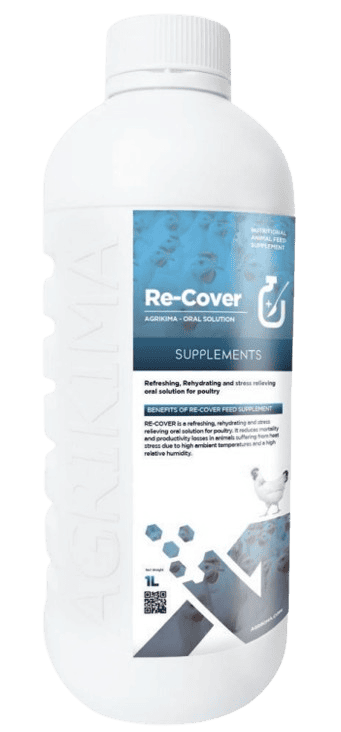
RE-COVER
An oral rehydration and heat-stress relief solution that can be offered in drinking water to help feverish, off-feed pigs stay hydrated and cope with hot weather while they recover under vet treatment; it supports comfort and fluid intake but does not treat the lung infection.
View product
AGRITOXINILSTOP
A mycotoxin binder added to feed to reduce the effect of aflatoxin and ochratoxin from mouldy feed, which can weaken pigs' immunity; it supports good feed safety as part of prevention alongside ventilation, good stocking and vet advice, and is not a treatment for pneumonia.
View productPrevention
- Ventilation is the single most important control: design or adapt houses so stale air and ammonia can escape, for example with adjustable side curtains, open ridges or eaves, while keeping cold draughts off pigs at floor level.
- Avoid overcrowding by giving each growing pig enough floor and lying space, and plan pen numbers so you are not forced to squeeze pigs together as they grow.
- Practise all-in, all-out management where possible: fill a pen or house with pigs of the same age, empty it completely when they leave, then clean, disinfect and let it dry before the next batch.
- Do not mix pigs of different ages or from different litters more than necessary, and keep weaners away from older coughing pigs.
- Buy replacement pigs only from known, healthy farms with no history of coughing, never from mixed markets if you can avoid it, and keep new pigs isolated for at least three to four weeks before joining the herd.
- Ask your vet whether Mycoplasma hyopneumoniae vaccine is available and worthwhile for your farm; vaccines are widely used in commercial herds elsewhere and reduce lung damage, though they do not fully stop infection and availability in Kenya varies.
- Keep floors dry and clean, remove dung daily, use dry bedding, and keep feed dust down to protect the airways.
- Control worms with a deworming plan from your vet, especially for free-range or soil-kept pigs, as roundworms and lungworms damage the lungs.
- Feed a balanced ration with adequate protein, vitamins and minerals, and keep feed dry and free of mould, because mycotoxins (poisons from moulds) weaken the immune system.
- Reduce stress at weaning and transport, protect pigs from cold nights in the rains and from heat in the dry season, and keep strict farm biosecurity, including limiting visitors and cleaning boots and equipment.
Risk to people
Mycoplasma hyopneumoniae, the main cause of enzootic pneumonia, does not infect people. Pasteurella multocida can occasionally infect people, mostly through pig bites, scratches or cuts, so wash and disinfect any wounds and see a health worker if a wound becomes red, swollen or painful. The dust and ammonia that make pig pneumonia worse also irritate farmers' own lungs, so improve ventilation and consider a dust mask when cleaning. Antibiotics used to treat pigs can leave residues in meat, so always respect the withdrawal period before slaughter or sale, and never sell or eat pork from pigs still under treatment.
Impact on your farm
On a Kenyan pig farm, pneumonia mostly costs money through slow growth rather than deaths. Coughing pigs eat feed but turn less of it into meat, so they take longer to reach market weight and each kilo of pork costs more to produce. Pens become uneven, with runts that must be kept longer or sold cheaply. Treatment, vet visits and labour add to costs, and severe outbreaks with Pasteurella or other germs can cause deaths and condemned lungs at slaughter. Because feed is the biggest cost in pig keeping, even a small drop in growth across a whole batch can wipe out much of the profit. Herds with ongoing pneumonia may also struggle to sell breeding stock to other farmers.
Outlook and recovery
Most pigs with mild enzootic pneumonia recover enough to keep eating and growing, although they often grow more slowly and some lung scarring remains. Pigs with severe secondary infection, high fever and laboured breathing have a more guarded outlook; quick vet treatment improves their chances, but some may die or stay stunted. The disease tends to stay in a herd once present, flaring up with poor air, crowding and stress, so long-term success depends far more on ventilation, stocking, all-in all-out management and careful buying than on medicines alone. Herds that improve their housing and management usually see far less coughing and better growth.
Common questions
My pigs cough a little every morning but still eat well. Should I worry?
A morning cough in several growing pigs is a classic early sign of enzootic pneumonia. They may seem fine, but they are probably growing slower than they should. Ask your vet to check the herd, and start improving ventilation, cleaning out ammonia and reducing crowding now. Early action is cheaper than treating a severe outbreak later.
Can I just buy an antibiotic from the agrovet and put it in the water?
It is not safe to treat without a vet. Some common antibiotics, such as penicillin, do not work against Mycoplasma at all, and the wrong drug or wrong amount wastes money, leaves residues in meat and breeds resistant germs. A vet can identify what is causing the problem, choose an effective drug and tell you the correct withdrawal period before slaughter.
Should I close the pig house completely to keep my sick pigs warm during the rains?
No. Closing the house traps ammonia, dust and germs, which makes pneumonia worse. Pigs need fresh air moving above them, but no cold draughts at floor level. Keep them warm with dry bedding, a solid lower wall or boards to block wind at pig height, and openings higher up for stale air to escape.
Will the cough go away once I treat my pigs?
Treatment usually reduces fever and heavy breathing and helps pigs eat again, but the dry cough can continue for weeks because damaged airways heal slowly. Antibiotics also do not remove the mycoplasma from the herd, so coughing may return with new batches unless you fix ventilation, crowding and mixing.
How can I tell pneumonia from African swine fever?
Pneumonia usually spreads slowly, causes coughing and slow growth, and few pigs die. African swine fever often causes high fever, red or purple skin, pigs refusing feed and many sudden deaths across ages within days. If you see these signs, stop all pig movement, do not sell or slaughter pigs, and report immediately to your County Veterinary Officer.
Is pork from a pig that had pneumonia safe to eat?
Pork from a pig that has recovered and has completed the full withdrawal period after any treatment is generally considered safe after normal meat inspection. Badly affected lungs are usually condemned at slaughter. Never slaughter or sell a pig that is sick, feverish or still within its drug withdrawal period.
A guide, not a diagnosis. This page is general information to help you recognise problems early. Always confirm with a vet or animal health worker before treating.