What it is
Worms are spread by eggs passed in the dung of infected pigs. The large roundworm egg is swallowed with soil, dung or dirty feed, hatches in the gut, and the young larva (immature worm) burrows through the gut wall and travels to the liver. There it causes small areas of inflammation that heal as white scars, known as 'milk spots'. The larvae then move to the lungs, where they cause irritation and coughing, are coughed up, swallowed, and grow into long, white, pencil-thick adult worms in the small intestine. Adults compete for nutrients and, in heavy infections, can block the gut or the bile duct. Whipworms live in the large intestine (caecum and colon); they bury their thin front end into the gut lining, causing inflammation, diarrhoea with mucus and sometimes blood, and poor absorption of water and nutrients. Nodular worm larvae burrow into the wall of the large intestine and form small lumps (nodules), which damage the gut and reduce growth; in sows this shows as poor body condition and lighter litters. Worm damage also weakens the pig's defences, so pigs with heavy worm burdens often suffer more from pneumonia and other gut infections.
Which animals are most at risk
All pigs can carry worms, but the damage is greatest in weaners and growers, roughly from weaning to about six months of age, because they have not yet built up immunity and are growing fast. Roundworms cause most trouble in weaners and growers, whipworm mainly in growers on dirty or earth floors, and nodular worms are more often a problem in sows and older pigs. Pigs kept free-range, tethered or on earth floors, as is common in western Kenya, the Lake Victoria region and many rural homesteads, are at high risk. Confined pigs on concrete are not safe either if floors are cracked, dung is left lying, or the same pens are used batch after batch without thorough cleaning. Farms that buy weaners from markets, mix pigs from different sources, or have no regular deworming routine tend to have heavier burdens. Risk is higher in and after the rainy seasons.
Signs to look for
Early signs
- Pigs grow more slowly than expected and take longer to reach market weight, even though they are eating normally.
- Uneven growth within a litter or pen, with some pigs clearly smaller and thinner than their pen-mates.
- A dull, rough or staring hair coat instead of a smooth, shiny one.
- A dry cough in weaners and young growers, often heard when they get up or start moving, about one to two weeks after they first meet heavy egg contamination.
- Soft or pasty dung, sometimes on and off, in growers.
- Feed seems to 'disappear' without the pigs gaining weight, meaning poorer feed conversion.
As it gets worse
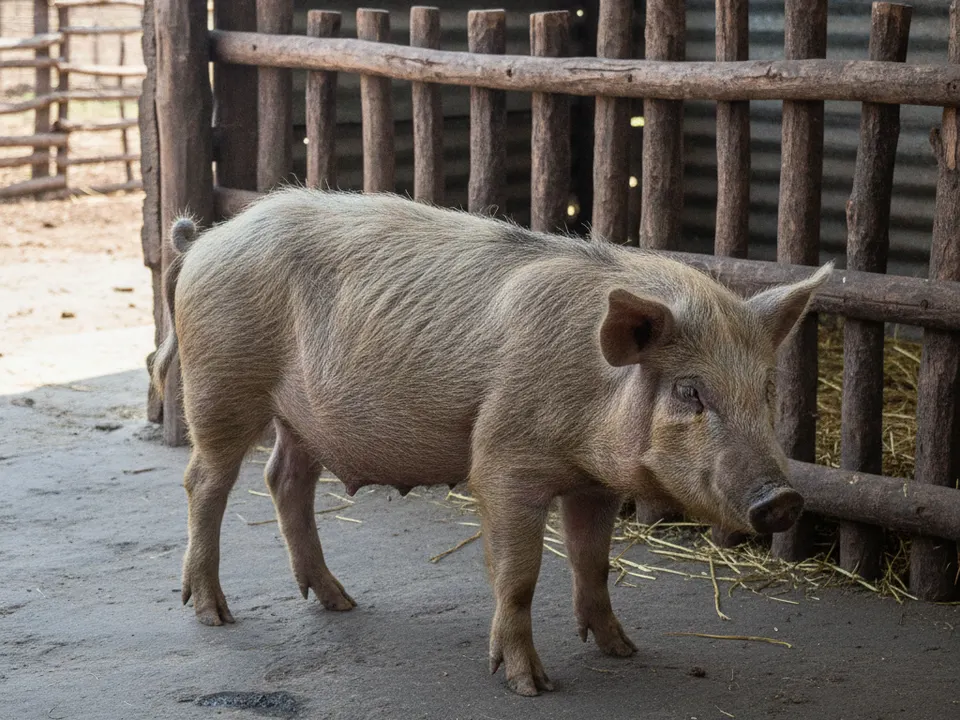
- Thin pigs with a visible backbone and hips but a swollen, rounded 'pot belly'.
- Long, white, round worms the thickness of a pencil seen in dung or vomited.
- Watery diarrhoea with mucus and sometimes streaks of blood, especially with heavy whipworm infection, leading to dehydration (sunken eyes, dry skin that stays tented when pinched).
- Laboured breathing or persistent coughing, and more cases of pneumonia in the pen.
- Yellow colour of the gums, whites of the eyes or skin (jaundice) if worms block the bile duct, which is uncommon but serious.
- Sudden belly pain, straining, swollen belly or death in rare cases where a mass of roundworms blocks the intestine.
- Sows in poor body condition that produce fewer or lighter piglets and less milk.
- At slaughter, livers covered in white 'milk spots' are trimmed or condemned.
What to do right now
- Separate pigs that are very thin, scouring heavily or coughing badly so they are not pushed off feed and water by stronger pen-mates.
- Make sure all pigs have constant access to clean, fresh drinking water, especially those with diarrhoea, which lose water fast.
- Clean out dung from the pen every day and keep floors as dry as possible, so pigs are not swallowing more eggs while you wait for the vet.
- Collect fresh dung samples from several pigs and label them by pen and age for a worm egg test.
- Wear gloves or wash your hands well with soap after handling pigs, dung or bedding, and keep children away from pig manure.
- Record which pigs are affected, their signs, their approximate weight or growth and your past deworming dates and products.
- Do not buy and give dewormers by guesswork; ask your vet or a qualified animal health officer which product and programme suit your farm.
- If any pig becomes yellow, has a swollen painful belly, stops eating or dies, call the vet urgently and keep the body for examination if possible.
How it spreads
- Pigs swallow worm eggs from dung-contaminated floors, soil, bedding, feed troughs and water, which is why dirty pens are the main source of infection.
- Roundworm and whipworm eggs have a tough shell and can stay alive in soil, cracks in floors and old pens for several years, so a pen can stay infective long after the original pigs have left.
- Sows that carry worms shed eggs into the farrowing pen, and piglets become infected from the sow's udder, skin and the floor soon after birth.
- Free-range, tethered and scavenging pigs pick up eggs from soil around homesteads, rubbish areas and where pig manure has been spread.
- New pigs bought from markets or other farms can bring worms in, and so can boots, wheelbarrows and tools moved from dirty pens to clean ones.
- Warm, wet conditions during the long and short rains help eggs develop and survive, and muddy pens and wallows increase contact with them.
- Earth floors, cracked concrete and pens that are not cleaned daily allow eggs to build up to very high levels.
Could it be something else?
Swine dysentery (Brachyspira infection)
Both cause mucus and blood in the dung of growers, but swine dysentery usually spreads quickly through a pen, the dung is often grey, jelly-like and blood-stained, and pigs can lose condition fast. Whipworm diarrhoea tends to build more slowly on dirty or earth floors. A vet needs dung samples or a post-mortem to tell them apart, and the two can occur together.
Enzootic pneumonia and other respiratory disease
Enzootic pneumonia (caused by Mycoplasma) also gives a dry cough and slow growth in growers, but the cough continues for weeks and is worse in dusty, crowded, poorly ventilated houses. Roundworm coughing tends to come and go as batches of larvae pass through the lungs, and the farm usually also has worms in dung or milk spots at slaughter. Worms make pneumonia worse, so both may be present.
Sarcoptic mange
Mange also causes poor growth and rough skin, but pigs rub and scratch constantly against walls and posts, and the skin becomes crusty and thickened, especially around the ears, neck and legs. Worms do not cause intense itching.
African swine fever
African swine fever causes high fever, pigs refusing feed, red or purple blotches on ears and belly, weakness and many sudden deaths within days. Worms cause slow, chronic problems, not sudden deaths across the herd. If pigs are dying suddenly, treat it as an emergency: stop all movement and report to the County Veterinary Officer immediately, because African swine fever is notifiable.
How it is diagnosed
A vet or animal health officer usually begins with the pigs' history: age, growth rates, deworming record, floor type and whether pigs are free-range. The most useful test is a faecal egg count, where fresh dung is examined under a microscope to find and count worm eggs; this shows which worms are present and roughly how heavy the burden is. Keep in mind that young worms migrating through the liver and lungs do not yet lay eggs, so pigs that are coughing can still have a negative dung test, and whipworm eggs can be shed on and off. Post-mortem examination of a pig that has died or been culled can show adult worms in the gut, nodules in the large intestine wall and milk spots on the liver. Slaughterhouse feedback on milk-spot livers is a very valuable sign that roundworms are circulating on the farm. To help, collect fresh dung (straight from the pig or just passed) from several pigs of different ages into clean, labelled containers, keep them cool and get them to the lab the same day if possible. Write down ages, weights or growth, which pigs are coughing or scouring, what dewormer was last used and when.
Treatment
Worms are treated with anthelmintics (dewormers), which must be chosen and prescribed by a vet or qualified animal health professional who will set the product, dose and timing for your pigs. Common drug groups used in pigs include benzimidazoles (such as fenbendazole, flubendazole or albendazole), macrocyclic lactones (such as ivermectin or doramectin), levamisole and, in some places, piperazine. Not all dewormers work equally well against all worms: whipworm in particular is harder to kill, and some products that work well against roundworms are weaker against whipworm, which is why knowing which worms you have matters. Some dewormers are given in feed or water over several days, others by injection or by mouth. Because roundworm and whipworm eggs survive in pens for years, the vet will usually advise a repeat treatment and a cleaning plan, otherwise pigs are simply reinfected. Pigs with severe diarrhoea may also need rehydration and supportive care, and pigs with pneumonia may need separate treatment for the lung infection; antibiotics do not kill worms and should only be used when a vet diagnoses a bacterial infection, because careless antibiotic use drives antimicrobial resistance. Every dewormer has a meat withdrawal period, the time that must pass after treatment before the pig can be slaughtered for food; follow it strictly. Using the same dewormer over and over, or underdosing by guessing weights, can lead to worms becoming resistant to the drug, so weigh or measure pigs and follow your vet's advice on rotating products. After effective treatment, coughing and diarrhoea usually settle and growth picks up, but lost growth is not fully regained and liver scars take time to fade.
Medicines must be prescribed and dosed by a vet. Always respect milk and meat withdrawal periods, and finish the full course of any antibiotic.
How Agrikima products can help
These support the animal alongside — never instead of — your vet's treatment, vaccination and good management.
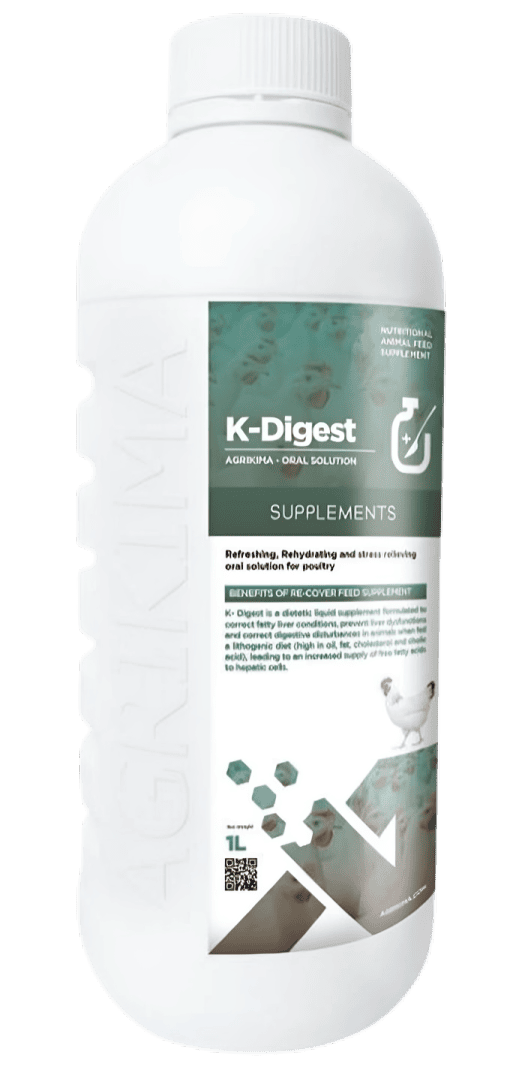
K-DIGEST
Can be used as supportive care alongside vet-prescribed deworming, to support liver function and digestion in growers recovering from roundworm liver damage and worm-related digestive stress. It does not kill worms or replace a dewormer.
View product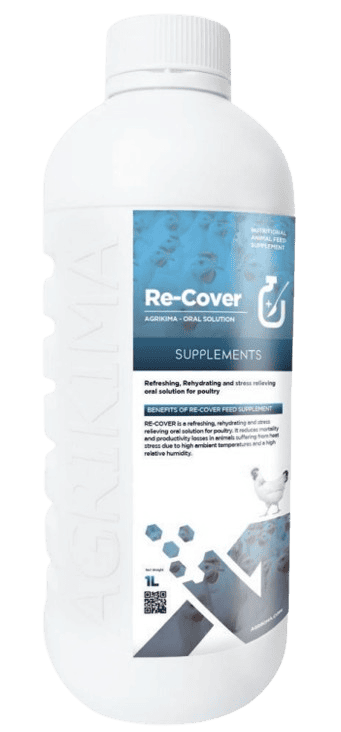
RE-COVER
An oral rehydration solution that helps replace fluids and salts lost by pigs with worm-related diarrhoea, especially heavy whipworm cases, while the vet's treatment takes effect. It supports hydration only and does not treat the worms.
View productPrevention
- Follow a regular deworming programme agreed with your vet; a common pattern is to deworm sows before farrowing, boars at regular intervals, and piglets around weaning and again before moving to growing pens, adjusted to your farm's worm test results.
- Wash sows with soap and water, especially the udder and belly, before moving them into a clean farrowing pen, so piglets are not born into a load of worm eggs.
- Clean pens daily by scraping out dung and wet bedding; worm eggs resist most disinfectants, so physical removal, then washing and letting the pen dry, is the most effective step.
- Use solid, smooth concrete floors with a good slope for drainage, and repair cracks where eggs collect; earth floors are very difficult to keep worm-free.
- Run pens 'all in, all out' where possible: empty, scrub, wash and dry a pen completely before bringing in a new batch.
- Quarantine newly bought pigs for two to three weeks in a separate pen, deworm them as advised by your vet, and only then mix them with your herd.
- For free-range or tethered pigs, move them to fresh ground regularly, avoid ground where pig manure was recently spread, and keep them away from rubbish dumps and latrines.
- Compost pig manure well before spreading it, and do not put fresh pig manure on vegetable gardens, pig grazing areas or near water sources.
- Keep feed and water troughs raised or cleaned daily so they are not contaminated with dung, and use boots and tools dedicated to each pen or cleaned between pens.
- Feed a balanced diet with enough protein, minerals and vitamins, because well-fed pigs cope better with worms and recover faster after treatment.
Risk to people
The pig roundworm, Ascaris suum, can infect people who accidentally swallow its eggs from soil, pig manure, unwashed hands or vegetables grown with fresh pig manure. In people, the migrating larvae can cause coughing, wheezing or stomach upset, and occasionally adult worms develop; children who play around pig pens are most at risk. Wash hands with soap after handling pigs, dung or bedding, wear gloves and boots when cleaning pens, compost manure well before using it on crops, and wash vegetables thoroughly. Separately, free-range pigs that eat human faeces can pick up the pork tapeworm (Taenia solium), which forms cysts in pork and can cause serious disease, including epilepsy, in people; use latrines, keep pigs confined, have pork inspected and always cook pork thoroughly. Finally, respect dewormer withdrawal periods so that drug residues do not end up in pork sold to your family or customers.
Impact on your farm
Worms are rarely dramatic, which is why they are often ignored, but they cost Kenyan pig farmers money every day. Wormy pigs eat the same expensive feed but convert less of it into meat, so they take longer to reach market weight and each kilogram of pork costs more to produce. Uneven growth means pigs in a batch do not all reach selling weight together, which complicates marketing. Livers with milk spots are trimmed or condemned at slaughter, and buyers or abattoirs may pay less for pigs from farms with repeated problems. Worms make pneumonia and gut infections worse, increasing vet bills and losses among weaners. In sows, nodular worms and heavy burdens reduce body condition, milk yield and litter weights. Because the eggs build up in pens over years, a farm that ignores worms usually sees its problems slowly get worse with every batch.
Outlook and recovery
The outlook for pigs with internal worms is good when the problem is recognised and treated properly. Most pigs respond well to the right dewormer, with coughing and diarrhoea easing and appetite and growth improving afterwards. However, growth lost during heavy infection is not fully made up, and pigs that were badly stunted as weaners may never reach the size of their healthy pen-mates. The biggest risk is reinfection: if pens are not cleaned and the deworming programme is not continued, pigs pick up new worms within weeks. Rare complications such as intestinal or bile duct blockage can be fatal. Long-term success depends on combining correct deworming with clean, dry housing and good feeding.
Common questions
I saw long white worms in my pig's dung. Is it too late?
No. Seeing adult roundworms tells you the burden is significant, but most pigs recover well after correct deworming. Ask your vet to recommend a suitable product and dose for the pig's weight, clean the pen thoroughly to remove eggs, and check the rest of the herd, because if one pig has worms the others almost certainly do too.
How often should I deworm my pigs?
There is no single schedule that suits every farm. Many farms deworm sows before farrowing, boars every few months, and piglets around weaning and again before moving to growing pens. Free-range pigs and farms with earth floors usually need more frequent treatment than pigs on clean concrete. A worm egg test and your vet's advice will help you set the right programme and avoid wasting money or encouraging drug resistance.
What are the white spots on my pig's liver at the slaughterhouse?
These are 'milk spots', scars left where young roundworm larvae travelled through the liver. They show that pigs were picking up roundworm eggs, often in the weeks before slaughter. The liver is usually trimmed or condemned. It is a useful warning that your pens hold roundworm eggs and your deworming and cleaning routine needs improving.
I dewormed my pigs but they still look thin and cough. Why?
There are several possible reasons. The product may not work well against the worms you have, especially whipworm; the dose may have been too low because the pig's weight was guessed; the pigs may have been reinfected straight away from a dirty pen; or the worms may be resistant to that drug. The cough or poor growth may also come from another problem such as pneumonia, mange or poor feeding. Ask your vet to test dung and examine the pigs before treating again.
Can I sell or slaughter a pig right after deworming?
Not immediately. Every dewormer has a meat withdrawal period written on its label or given by your vet, and you must wait until it has passed before the pig is slaughtered for food. Selling earlier risks leaving drug residues in pork, which is unsafe and can lead to rejection by buyers and abattoirs.
Will cleaning with disinfectant kill worm eggs in my pens?
Most common disinfectants do not reliably kill roundworm and whipworm eggs, which have very tough shells. The most effective approach is to scrape out all dung and bedding, scrub and wash the floor and walls, and then let the pen dry fully, ideally in the sun, before restocking. Repairing cracks in floors removes hiding places for eggs.
A guide, not a diagnosis. This page is general information to help you recognise problems early. Always confirm with a vet or animal health worker before treating.