What it is
MMA has no single cause. It usually starts when bacteria that live in the sow's environment and gut, especially coliforms such as E. coli and Klebsiella, enter the udder through the teats or the womb during and after farrowing. These bacteria release poisons called endotoxins. Endotoxins cause fever, make the sow feel ill and lose appetite, and block the hormones (especially oxytocin and prolactin) that make and release milk. So even a sow with only mild infection can suddenly stop letting her milk down. Many things make this more likely: a long or difficult farrowing, a retained piglet or afterbirth, constipation around farrowing (which lets more endotoxins pass from the gut into the blood), overfeeding or a sudden change of feed just before farrowing, a fat sow, not drinking enough water, hot and stuffy farrowing pens, dirty wet floors, and mouldy feed. Some moulds produce mycotoxins (poisons made by fungi) that can upset hormones and reduce milk. Stress from moving the sow late into an unfamiliar pen also plays a part. The result is inflamed, painful udder glands that feel hard and hot, a womb that may hold infected fluid, and a sow that cannot feed her litter.
Which animals are most at risk
Any sow can be affected in the first three days after farrowing, with most cases starting within 12 to 72 hours. Older sows with many litters, fat sows, and first-time gilts with long farrowings are at higher risk. Sows that farrow large litters or have a long farrowing, a retained piglet or retained afterbirth are especially vulnerable. In Kenya, the problem is common on smallholder units where farrowing pens are hard to keep dry, water is carried by bucket and runs out, and feed is mixed at home from maize germ, bran and brewers' by-products that can go mouldy, particularly during the long and short rains. Hot months raise the risk in tin-roofed, poorly ventilated sties. Farms that move sows into the farrowing pen only a day or two before birth, or change their feed suddenly at that time, also see more cases.
Signs to look for
Early signs
- The sow's rectal temperature rises above about 39.5°C; note that a slight rise just after farrowing can be normal, so a reading that keeps climbing or stays high needs a vet.
- She eats less or refuses feed and drinks little, often from the first or second day after farrowing.
- She lies flat on her belly (on her udder) and will not roll over to let piglets suckle.
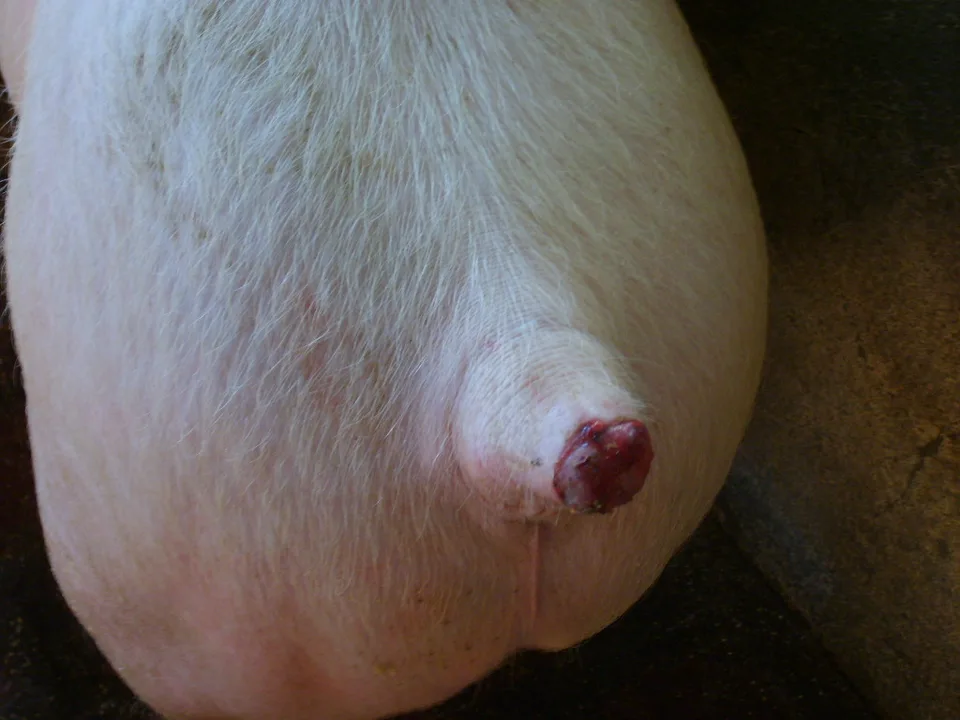
- One or more udder glands feel hard, hot, swollen or painful, and she may flinch or bite when touched.
- Piglets squeal, fight at the udder, move from teat to teat and keep trying to suckle without settling.
- Her dung becomes dry, hard and small, or she passes none, showing constipation.
As it gets worse
- Piglets look hollow in the flanks, thin and weak, with rough coats, and some lie away from the sow, chilled or sleepy.
- More piglets are crushed because they crowd the sow looking for milk, and some develop scours (diarrhoea) or die.
- A thick, white, yellow or bloody discharge with a bad smell comes from the vulva, often more than the small, clear discharge that is normal in the first days.
- The udder skin may turn reddish-purple and very hard, and almost no milk can be squeezed from the teats.
- The sow becomes dull, breathes fast, may stand reluctantly or not at all, and her ears and skin may feel cold or show bluish colour in severe toxic cases.
- In the worst cases the sow collapses and can die from the bacterial toxins if not treated quickly.
What to do right now
- Take the sow's rectal temperature with a clean thermometer and write it down with the time; repeat morning and evening for the first three days after every farrowing.
- Call your vet or County Veterinary Officer the same day you notice fever, a hard hot udder, smelly discharge or hungry piglets, because early treatment gives the best chance of saving milk and piglets.
- Make sure the sow has plenty of clean, cool water at all times; check that nipple drinkers are flowing well or offer water in a heavy bucket she cannot tip over.
- Keep the piglets warm in a dry, draught-free creep area with a heat source such as a covered lamp or warm bedding, because hungry piglets chill quickly and chilled piglets stop trying to feed.
- Feed weak piglets: make sure every piglet got colostrum in the first hours, and where milk is short use a piglet milk replacer from a clean cup or shallow dish, or foster some piglets onto another sow that farrowed within a day or two.
- Keep the farrowing pen clean and dry by removing wet bedding and dung, and reduce heat with good ventilation, shade over the roof or wetting the floor around (not under) the sow on hot days.
- Encourage the sow to stand and move a little and to eat a small amount of moist, fresh feed with some bran or fibre to help prevent constipation, without forcing her.
- Wear gloves and wash your hands with soap after handling the sow, her discharge or dead piglets, and do not give any injections or medicines unless your vet has prescribed them.
How it spreads
- MMA is not a contagious disease that jumps from pig to pig like a virus; it develops in individual sows when bacteria from the environment meet a sow whose defences are lowered.
- Dirty, wet farrowing pens and bedding contaminated with dung put large numbers of coliform bacteria in direct contact with the teats and vulva.
- Unclean hands or equipment used to help a sow during a difficult farrowing can carry bacteria into the womb.
- Constipation in the days before and after farrowing allows bacterial toxins from the gut to enter the bloodstream and trigger the syndrome.
- Not enough clean water, especially from blocked or slow nipple drinkers, reduces milk production and makes constipation worse.
- Heat stress in hot, poorly ventilated pigsties lowers feed and water intake and is a common trigger during the hot dry months.
- Mouldy feed, for example damp maize germ, maize bran or poorly stored brewers' waste, can add mycotoxins that weaken the sow and her milk supply.
- Piglet injuries to the teats from uncut sharp teeth can open a route for bacteria into the udder.
Could it be something else?
Normal recovery after farrowing
A healthy sow may have a small rise in temperature and a small amount of clear or slightly cloudy discharge for a few days. But she keeps eating, lies on her side to show her teats, and her piglets suckle and then sleep quietly together. In MMA the sow stops eating, hides her udder, and the piglets stay noisy and hungry.
Retained piglet or difficult farrowing (dystocia)
If the sow strains without producing piglets, or farrowing stopped suddenly with fewer piglets than expected, a piglet may be stuck. This can lead to MMA, so call the vet; only a vet or trained person with clean, lubricated gloved hands should examine inside.
Swine erysipelas
Erysipelas also causes high fever and refusal of feed, but often shows raised, diamond-shaped or square red patches on the skin and can affect pigs that have not just farrowed. MMA is tied to the days just after farrowing and centres on the udder, womb and milk supply.
African swine fever (ASF)
ASF causes very high fever, red or purple blotches on ears, belly and legs, and often sudden deaths in several pigs of any age, not just a sow that has farrowed. ASF is notifiable in Kenya: if more than one pig is sick or dying, stop all movement and report to your County Veterinary Officer immediately.
How it is diagnosed
A vet usually diagnoses MMA from the timing (soon after farrowing) and a careful examination. They will take the sow's rectal temperature, feel each udder gland for heat, hardness and pain, try to squeeze milk from the teats, look at any vulval discharge, check her dung and hydration, and watch how the piglets behave and how full their bellies look. They may do a gentle internal examination to check for a retained piglet or afterbirth. In some herds with repeated cases, the vet may take milk or discharge samples to grow the bacteria in a laboratory and test which antibiotics work, and may test feed for mycotoxins. If a sow dies, a post-mortem can confirm the problem and rule out other diseases. To help the vet, have ready: the farrowing date and time, how long farrowing took, the number of piglets born alive and dead, the sow's temperature readings, what and how much she has eaten and drunk, when she last passed dung, any recent change of feed, and whether other sows have had similar problems.
Treatment
Treatment must be prescribed and supervised by a vet, and usually combines several approaches. Anti-inflammatory and pain-relief drugs (non-steroidal anti-inflammatories such as meloxicam, flunixin or ketoprofen) are often the most important part, because they bring the fever down, ease pain and help the sow eat and let down her milk. Where the vet believes bacterial infection is involved, an antibiotic may be given, for example amoxicillin, oxytetracycline or a trimethoprim-sulfonamide combination, ideally chosen on the basis of the vet's experience on your farm or a laboratory test. The vet may also give oxytocin, a hormone that helps the udder release milk and helps the womb empty, and may remove a retained piglet or afterbirth. Fluids may be needed for a dehydrated sow. Expect the vet to also advise on caring for the piglets, including fostering and milk replacer. Many sows begin eating and producing milk again within one to two days if treated early. Always follow the exact product, dose and course length the vet gives, finish the course, and respect the meat withdrawal period printed on the label and explained by the vet before any treated sow is sold or slaughtered. Using antibiotics only when needed and exactly as prescribed helps slow antimicrobial resistance, where bacteria stop responding to medicines on your farm and in your community.
Medicines must be prescribed and dosed by a vet. Always respect milk and meat withdrawal periods, and finish the full course of any antibiotic.
How Agrikima products can help
These support the animal alongside — never instead of — your vet's treatment, vaccination and good management.
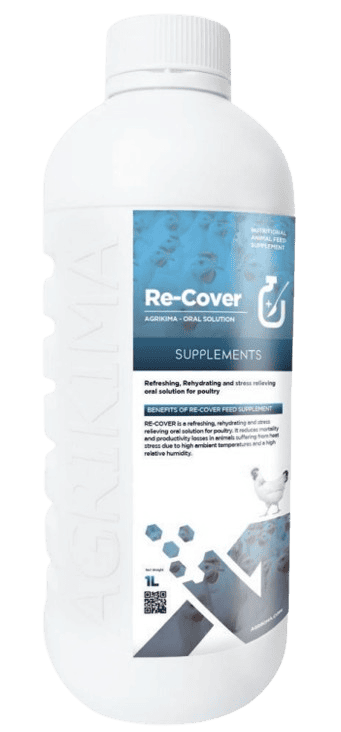
RE-COVER
An oral rehydration and heat-stress relief solution that can be added to the sow's drinking water to encourage her to drink and help replace fluids and electrolytes while she is feverish, off feed or coping with a hot farrowing house. Good water intake supports milk production and helps against constipation. It supports recovery alongside the vet's treatment and does not treat the infection.
View product
AGRITOXINILSTOP
A mycotoxin binder that can be mixed into gestation and lactation feed to help protect sows from aflatoxin and ochratoxin in feed ingredients such as damp maize germ or bran, which can weaken sow health. It is a preventive feed-quality aid used together with dry feed storage and throwing away mouldy feed, not a treatment for MMA.
View productPrevention
- Feed sows correctly in pregnancy so they are in good body condition, not too fat or too thin, and avoid sudden feed changes in the last week before farrowing; many vets advise reducing the amount slightly just before farrowing and increasing it gradually afterwards.
- Include enough fibre, such as wheat bran or good-quality forage, in late pregnancy and early lactation to keep dung soft and prevent constipation.
- Provide unlimited clean water; a lactating sow needs a lot of water every day, so check drinker flow regularly and never let buckets run dry, especially during hot months.
- Move the sow into a clean, washed, disinfected and dried farrowing pen about five to seven days before her due date so she settles and gets used to the pen.
- Wash the sow, especially her udder and back end, before moving her into the farrowing pen, and keep the pen dry by removing dung and wet bedding daily.
- Keep farrowing houses cool and well ventilated, with shade, roof insulation or extra air openings where tin roofs make sties hot.
- Store feed ingredients such as maize germ, bran and brewers' waste dry and off the floor, throw away any feed that smells musty or looks mouldy, and consider a mycotoxin binder in sow feed when feed quality is uncertain.
- Watch every farrowing, help only with clean gloved and lubricated hands when truly needed, record each sow's temperature for three days afterwards, and discuss culling with your vet for sows that get MMA repeatedly.
Risk to people
MMA is not considered a disease that passes to people in the usual way, but the bacteria in the discharge, dung and infected milk, such as E. coli, can cause illness if they get into the mouth or cuts. Wear gloves when handling the sow's back end, discharge or dead piglets, wash hands well with soap and water afterwards, and keep children away from sick animals. The main human-health concern is drug residues: sows treated with antibiotics or other medicines must not be slaughtered or sold for meat until the full withdrawal period on the label and given by your vet has passed. Never slaughter a sick or feverish sow for home use or sale.
Impact on your farm
MMA is one of the most costly problems in the farrowing pen because it hits the litter at its weakest point. Piglets that do not get enough colostrum and milk in the first days grow slowly, are more likely to get scours, are crushed more often and may die, so the number of piglets weaned per sow falls. Survivors are often lighter at weaning and take longer to reach market weight, which means more feed and more time before you can sell them. The farmer also pays for vet visits, medicines and milk replacer, and spends many hours hand-feeding piglets. Affected sows may lose condition, come back on heat later and sometimes have to be culled early, which is a big loss on a smallholder unit with only one or two breeding sows. On farms where MMA keeps returning, it is a strong sign that farrowing hygiene, water supply, feed quality or sow feeding need to be improved.
Outlook and recovery
Most sows recover well if the problem is spotted early and treated by a vet within the first day, and many return to good milk production within one to two days. The outlook is poorer when treatment is delayed, when the sow has a very high fever or has already collapsed, when a retained piglet or severe womb infection is present, or when several udder glands are badly damaged. Glands that become very hard and scarred may never produce milk again, which reduces how many piglets that sow can rear in later litters. For the piglets, the outlook depends on how quickly they get colostrum, warmth and replacement milk or foster mothers; with good care, many litters can be saved. Sows that have had MMA more than once are more likely to have it again, and the farmer and vet may decide to cull them.
Common questions
Is some discharge after farrowing normal?
Yes. A small amount of clear, slightly cloudy or reddish discharge in the first two or three days after farrowing is normal as the womb cleans itself. Worry when the discharge is thick, yellow, white or brown, smells bad, keeps increasing, or comes with fever, loss of appetite or hungry piglets. That suggests infection, and the vet should see the sow.
How can I tell if my piglets are getting enough milk?
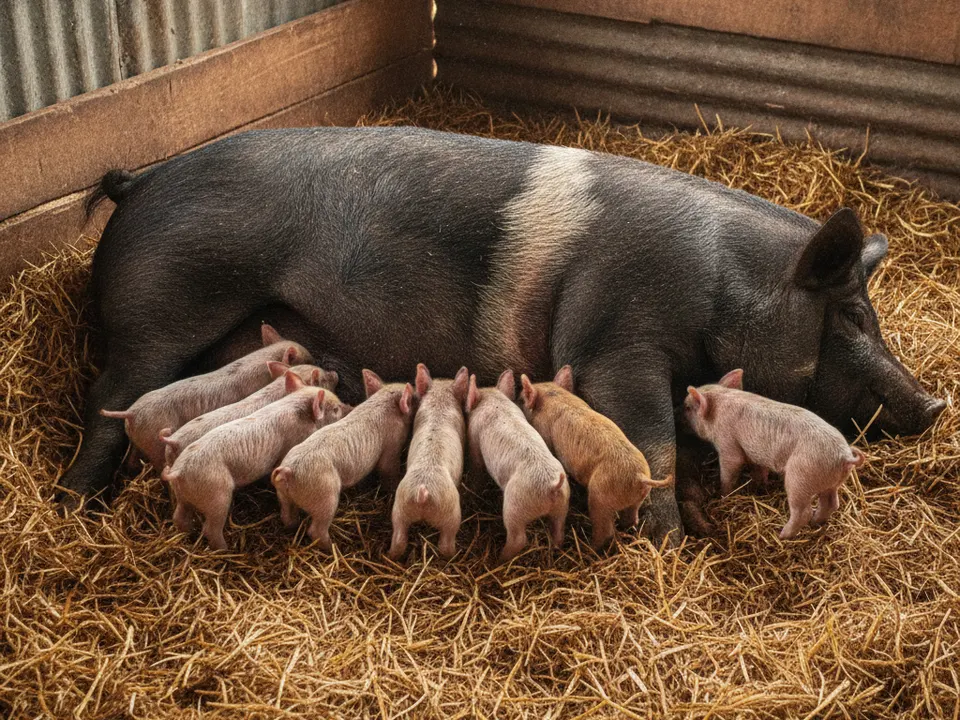
Well-fed piglets suckle in quiet, regular sessions, then fall asleep together in a heap with round, full bellies. Hungry piglets squeal, fight at the udder, keep moving from teat to teat, look thin with sunken flanks, and may wander away from the sow or lie chilled. If you see these signs, check the sow's temperature and udder and call your vet.
Can I give my sow an antibiotic from the agrovet to save time?
Please do not treat on your own. MMA often needs pain relief and anti-inflammatory drugs and sometimes a hormone to release milk, not only an antibiotic, and the vet needs to check for a retained piglet. Using antibiotics without a vet's advice can mean the wrong drug, the wrong amount or the wrong length of treatment, which wastes money, may leave residues in the meat and helps create resistant bacteria. Call your vet and use only what they prescribe.
What do I feed the piglets if the sow has no milk?
First make sure each piglet got colostrum in its first 12 to 24 hours, from the sow or from a sow that farrowed at the same time. If another sow farrowed within a day or two and has spare teats, you can foster some piglets onto her. Otherwise use a commercial piglet milk replacer from the agrovet, mixed as the label says and fed little and often from clean cups or shallow dishes. Do not feed plain cow's milk alone for long, and keep everything very clean to avoid scours.
Why do my sows keep getting MMA after every farrowing?
Repeated cases usually point to something on the farm rather than bad luck. Common causes are dirty or wet farrowing pens, not enough water, constipation from low-fibre feed, fat sows, sudden feed changes near farrowing, hot sties and mouldy feed. Ask your vet to visit and look at your whole farrowing routine. Recording temperatures, feed and water for every sow helps find the pattern, and sows that get it repeatedly may need to be culled.
Will the sow's udder recover for her next litter?
Often yes, if treatment was early and the glands softened again. But glands that stayed very hard for a long time may be permanently damaged and produce little or no milk in future litters. At weaning, feel each gland; ask your vet to help judge whether the sow still has enough working teats to rear a full litter.
A guide, not a diagnosis. This page is general information to help you recognise problems early. Always confirm with a vet or animal health worker before treating.