What it is
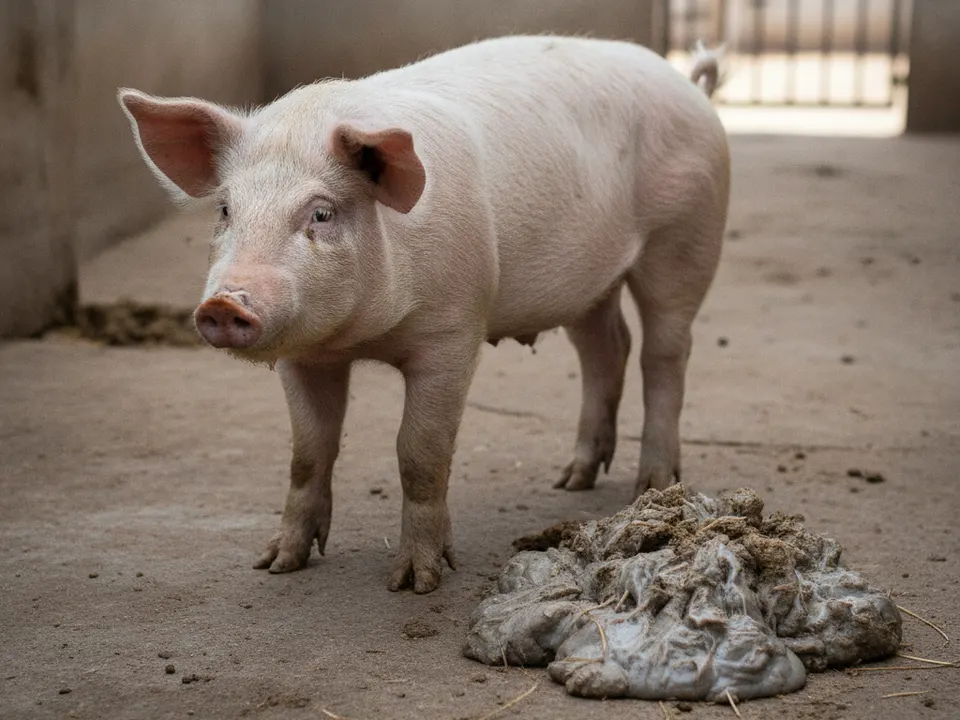
Pigs are naturally curious animals that spend much of their day rooting, chewing and exploring with their snouts. When they are kept in bare, crowded or uncomfortable pens with nothing to root in, that natural urge gets redirected onto the nearest thing that moves and can be chewed, which is often a pen-mate's tail. Stress makes this much worse. Common triggers include too many pigs in a pen, hot and stuffy housing, poor airflow or ammonia smell, too few feeders or drinkers so pigs fight for access, empty or blocked drinkers, sudden feed changes, and diets short in protein, especially the amino acid lysine (an essential building block of protein that pigs must get from feed), or short in salt and minerals. Sick pigs, pigs with worms or mange, and mixing of strange pigs also raise stress. The bite itself starts as gentle chewing, but once the skin breaks and blood appears, biting often becomes more forceful. The open wound lets bacteria in from the floor and mouths of other pigs. Infection can spread along the tail into the spine, forming abscesses (pockets of pus) around the backbone that press on the nerves and cause weakness or paralysis of the back legs. Bacteria can also travel in the blood to the joints, lungs, kidneys and other organs, which is why badly bitten pigs may later be found to have abscesses throughout the carcass at slaughter.
Which animals are most at risk
Growing and fattening pigs (weaners and growers, roughly from weaning to market weight) are most often affected, because they are active, competitive and often kept in groups. Fast-growing improved breeds such as Large White and Landrace crosses kept intensively are commonly affected, but any pig can bite or be bitten. Pigs in zero-grazing style concrete pens with no bedding or rooting material are at highest risk, while free-range and pigs with access to soil and forage bite less often. Risk rises in the hot, dry months before the long and short rains, when iron-roofed sties become very hot, and whenever feed is scarce, expensive or suddenly changed. Farmers who buy pigs from several sources and mix them, or who keep more pigs than the space allows as the pigs grow, see more cases. Tail-bitten pigs, small or weak pigs, and pigs lying in corners are the usual victims.
Signs to look for
Early signs
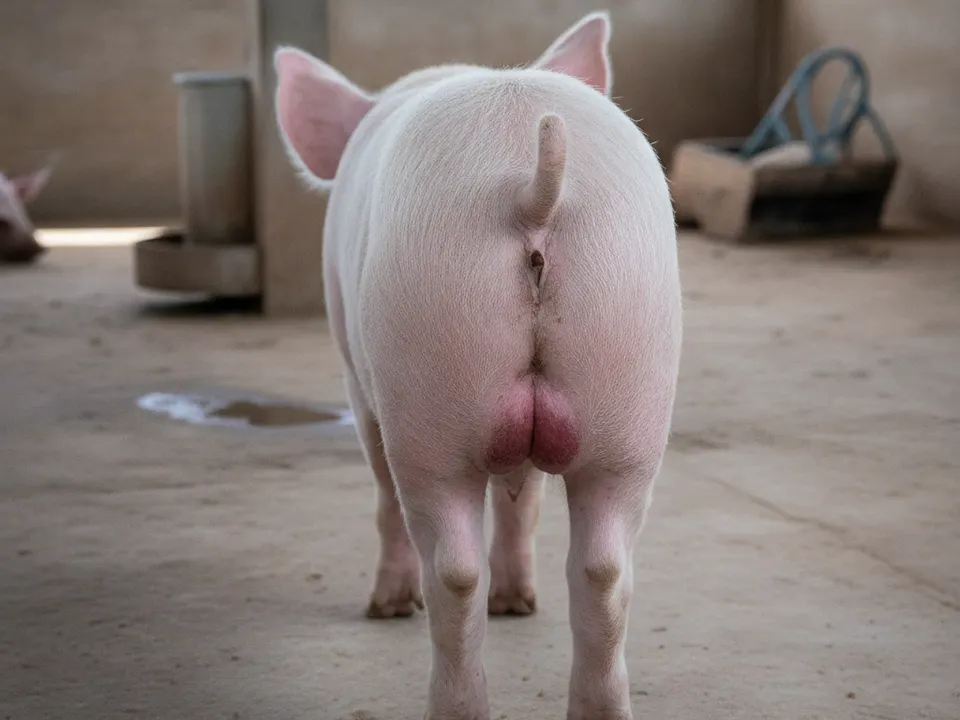
- Pigs hold their tails down or tucked between the back legs instead of curled up; this is one of the best early warnings that biting has started or is about to start.
- Pigs follow one another and take tails into their mouths, chewing gently, often while the victim does not react much.
- Tails look wet, slimy or slightly swollen from chewing, sometimes with small bite marks or hair rubbed off.
- The group seems restless, with more nosing, fighting and squealing than usual, especially at feeding time or in the heat.
- One or two pigs spend a lot of time chasing and biting, and the same victims keep moving away or hiding in corners.
- Pigs may also start chewing ears, flanks or the pen fittings, a sign that they are frustrated or bored.
As it gets worse
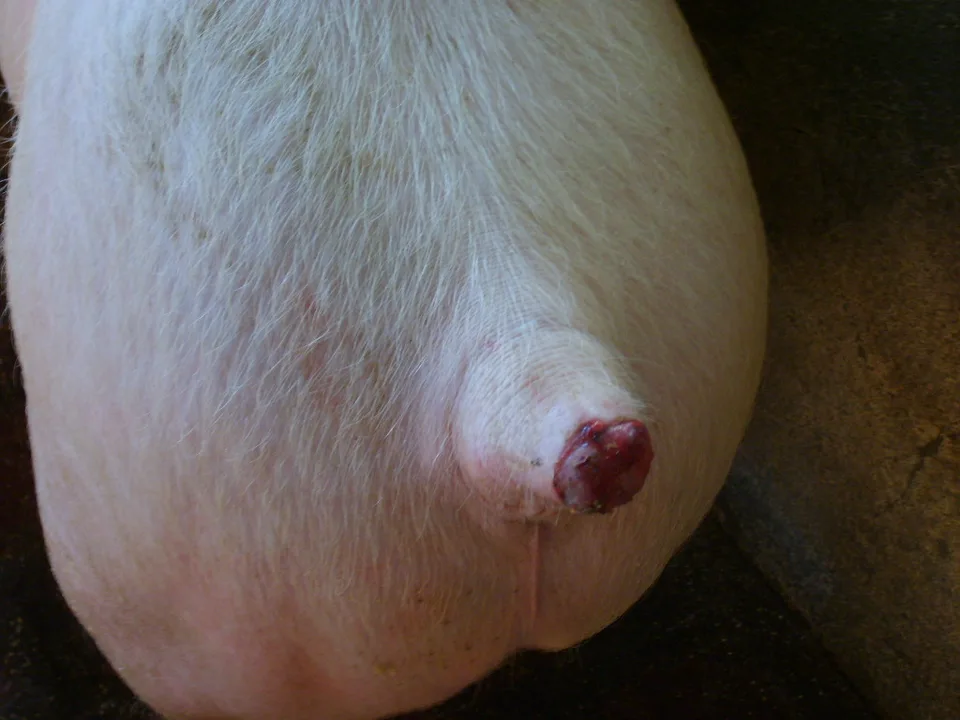
- Tails are raw, red and bleeding, and blood may be seen on the victim's back legs, the floor or the faces of other pigs.
- Parts of the tail are missing, leaving a short stump, and several pigs may be chasing the bleeding pig.
- The tail stump becomes swollen, hot, smelly and crusted with pus or black dead tissue, showing infection.
- The bitten pig eats less, loses weight, grows slowly and may have a fever (feels hot and lies dull).
- Lameness, swollen joints, a hunched back, dragging or wobbling back legs, or inability to stand, which can mean an abscess near the spine pressing on the nerves.
- Severely affected pigs may become very weak and die, and at slaughter the carcass may be partly or fully condemned because of abscesses.
What to do right now
- Remove the bitten pig at once to a clean, dry, quiet hospital pen so it is not attacked again, and keep it alone or with calm pigs until the wound heals.
- Watch the pen for a few minutes to identify the main biter or biters and move them out too, because one persistent biter can keep an outbreak going.
- Check every drinker immediately: make sure water is clean, flowing well and that there are enough drinking points so all pigs can drink without fighting.
- Cool the pens in hot weather by improving airflow, giving shade, wetting the roof or providing a wallow or sprinkler area, and avoid handling pigs in the midday heat.
- Give the remaining pigs something safe to root and chew straight away, such as fresh straw, dry grass, hay, maize stalks, sisal-free ropes, fresh soil or untreated wooden blocks.
- Reduce crowding if you can by moving some pigs to another pen, and make sure all pigs can reach the feeder at the same time.
- Gently rinse a bleeding tail with clean water only if it is easy and safe, wear gloves, and do not use harsh chemicals, engine oil or home remedies on the wound.
- Call your vet or animal health officer, especially if tails are infected, pigs are lame or weak, or more than one or two pigs are affected; do not give any drugs without their advice.
How it spreads
- It is not passed from pig to pig like a germ, but the behaviour spreads quickly because other pigs copy the biter and are attracted by the smell and taste of blood.
- Overcrowding, where pigs cannot all lie down, eat or drink comfortably at the same time, is one of the most common triggers.
- Heat stress during hot months, in iron-roofed pens with poor ventilation, makes pigs restless and irritable and increases biting.
- Boredom in bare concrete pens with no straw, grass, soil or chewable objects to root in leaves pigs with nothing to do.
- Shortage of water, from blocked nipple drinkers, dry troughs or too few drinking points, causes frustration and competition.
- Poor or unbalanced feed, including sudden diet changes, too little protein or lysine, too little salt, or mouldy feed, is linked to outbreaks.
- Mixing unfamiliar pigs, moving pigs, rough handling and other stress events can set off biting.
- Illness in the group, such as worms, mange, diarrhoea or coughing, adds stress and can trigger biting.
Could it be something else?
Fighting injuries after mixing
When strange pigs are mixed they fight to sort out who is boss. The scratches and bites are mainly on the head, ears, neck and shoulders, and they usually calm down within a few days. Tail biting focuses on the tail and keeps getting worse rather than settling.
Mange (Sarcoptic mange)
Mange is caused by tiny mites in the skin. Pigs scratch and rub themselves on walls constantly, and the skin becomes crusty, thick and scaly, especially on the ears, face and legs. The tail is not bitten off by other pigs. A vet can confirm mange with a skin scraping.
Tail and ear necrosis
In some piglets and weaners the tail tip or ear edges turn dark, dry and die off, sometimes linked to infection, poor circulation or mouldy feed. There are no clear bite wounds and pen-mates may not be chasing the pig. A vet can help tell the two apart and look for the cause.
Hind-leg weakness from other causes
Back-leg weakness can also come from calcium and phosphorus deficiency, injuries, joint infections or some diseases. If the weak pig has a bitten or infected tail, a spinal abscess is likely, but if the tail is normal, the vet will look for other causes.
How it is diagnosed
Tail biting itself is usually easy to recognise from the wounds and the behaviour you can see in the pen. What the vet adds is an assessment of how serious the damage is and whether infection has spread. The vet will examine the tail stump for swelling, heat, pus and dead tissue, check temperature, watch the pig walk, and feel the back and joints for pain or swelling. Weakness or paralysis of the back legs suggests an abscess near the spine. The vet will also walk through the housing to find the triggers, checking space per pig, ventilation, temperature, drinkers, feeders, feed quality and bedding. In pigs that die or are slaughtered, a post-mortem examination (opening the carcass to look inside) can show abscesses along the spine and in organs. To help, the farmer should record how many pigs are affected and since when, which pigs seem to be the biters, the number of pigs in the pen and its size, recent feed changes, any mixing or moving of pigs, how much water they get, and any treatments already given.
Treatment
For a mild bite, the vet may simply clean the wound and apply an antiseptic or wound spray, some of which also contain a bitter or coloured repellent that discourages other pigs from biting. Infected tails may need the dead tissue removed and the wound cleaned properly. Where infection has set in, the vet may prescribe an antibiotic, often from the penicillin or tetracycline groups or others chosen to suit the likely bacteria, and may give an anti-inflammatory painkiller such as meloxicam to reduce pain and swelling. Only a vet should decide which drug is needed, how much and for how long, because antibiotics used wrongly help bacteria become resistant (antimicrobial resistance), making future infections harder to treat on your farm and for people. Every drug has a meat withdrawal period, which is the number of days after the last treatment before a pig can be slaughtered for food; you must respect it and record it. Pigs with abscesses along the spine and paralysis respond poorly to treatment, because antibiotics struggle to reach pus pockets, and the vet may advise humane culling to end suffering. Such pigs should not be sent for slaughter while sick or within a withdrawal period. Most importantly, the vet will help you fix the cause, because treating wounds without changing the housing, feeding or water usually leads to new cases.
Medicines must be prescribed and dosed by a vet. Always respect milk and meat withdrawal periods, and finish the full course of any antibiotic.
How Agrikima products can help
These support the animal alongside — never instead of — your vet's treatment, vaccination and good management.

LYSINE
Where a vet or nutritionist finds the diet is short in lysine, adding this amino acid helps balance the protein in the feed, which supports growth and removes one known dietary trigger for tail biting; it works alongside enough space, water, cooling and rooting material, not instead of them.
View product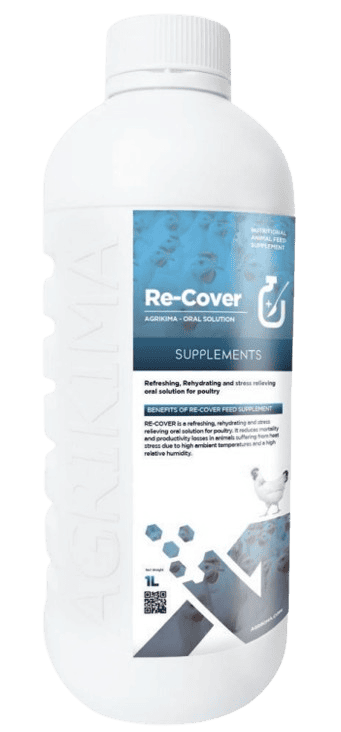
RE-COVER
During hot weather or after an outbreak, this oral rehydration and heat-stress relief solution added to clean drinking water can help pigs stay hydrated and cope with heat, reducing a common stress behind biting; it supports recovery but does not heal wounds or replace vet treatment and better ventilation.
View productPrevention
- Give pigs enough space as they grow so all can lie down together, move freely and avoid each other; reduce numbers or split groups before pens become crowded rather than after biting starts.
- Provide rooting and chewing material every day, such as straw, hay, dry grass, maize stover, fresh soil, or hanging ropes and untreated wood, and refresh it often because pigs lose interest in the same object.
- Make sure clean water is always available, with enough drinkers for the group, drinkers checked and cleaned daily, and nipple flow tested, especially in hot weather.
- Keep pens cool and well ventilated, with shade, good roof height, insulation or wetting of iron roofs, and a wallow or sprinkler where possible during the hot months.
- Feed a balanced diet with enough protein, especially lysine, plus salt and minerals; buy feed from reliable suppliers, avoid mouldy feed and change diets gradually over several days.
- Provide enough feeder space so pigs do not fight to eat, and feed at regular times so pigs are not hungry and frustrated.
- Avoid unnecessary mixing and moving, keep groups stable, handle pigs calmly and quarantine new stock before adding them to the herd.
- Control worms and mange with a regular programme agreed with your vet, keep pens clean and dry to cut ammonia smell, and check pigs' tail posture daily so you act at the first tucked tails.
Risk to people
Tail biting itself does not spread to people, but infected tail wounds and abscesses can contain bacteria such as Streptococcus suis and Erysipelothrix (the cause of swine erysipelas), which can infect people through cuts or scratches on the hands. Wear gloves when handling bitten tails, wash hands with soap afterwards, and cover any cuts on your skin. Meat from pigs with abscesses should be inspected at a licensed slaughterhouse and not eaten from home slaughter of sick pigs. Always respect the meat withdrawal period after any antibiotic or other drug, so that residues do not end up in pork eaten by your family or customers.
Impact on your farm
Tail biting costs Kenyan pig farmers money in several ways. Bitten pigs eat less and grow slowly, so they take longer to reach market weight and eat more feed per kilo gained. Treatment and vet costs add up, and some pigs become lame or paralysed and must be culled. At the slaughterhouse, abscesses found in the spine or carcass can lead to parts of the carcass or the whole carcass being condemned, and buyers may pay less for scarred or poor-condition pigs. Outbreaks also take a lot of the farmer's time and cause stress in the whole herd, which can slow growth of pigs that were not even bitten. Because the triggers are often things like crowding, heat and water, the same problems usually reduce performance across the farm, so fixing them pays back beyond tail biting alone.
Outlook and recovery
Pigs with mild, fresh bites usually heal well once they are removed from the biters and the wound is kept clean, although the tail may end up shorter. The outlook becomes poorer once infection spreads; pigs with swollen, pus-filled stumps can recover with vet care but often grow more slowly. Pigs with back-leg weakness or paralysis from spinal abscesses rarely recover fully, and humane culling is often the kindest option. The outlook for the herd depends mostly on whether the farmer finds and fixes the cause. Outbreaks that are caught early, at the stage of tucked tails and gentle chewing, can often be stopped within days by improving space, water, cooling, feed and rooting material.
Common questions
Is tail biting a disease I can vaccinate against?
No. Tail biting is a behaviour caused by stress, boredom and unmet needs, not by a single germ, so there is no vaccine. Prevention means good housing, enough space, constant water, cool pens, balanced feed and things for pigs to root and chew. Vaccines against other diseases can still help indirectly, because healthy pigs are less stressed.
Should I cut my piglets' tails to stop biting?
Tail docking, which is cutting off part of the tail in young piglets, is practised on some farms and can reduce the damage, but it does not remove the cause, and docked pigs can still bite tails, ears and flanks. It is painful and should only be done, if at all, by a trained person with advice from a vet on pain relief and hygiene. Many countries now discourage routine docking for welfare reasons. Fixing space, water, heat, feed and boredom is the better long-term answer.
What should I do with the pig that is doing the biting?
Move it out of the group into a separate pen. Some biters calm down once given space, bedding and chewing material, and can later be kept with a smaller, calm group. If a pig keeps biting wherever it goes, many farmers choose to fatten and sell it separately once any withdrawal period is finished. Remember that a biter is usually a sign the pen has a problem, so check conditions for the rest of the group too.
Can I put engine oil, ash or pepper on the tail to stop other pigs biting?
It is better not to. Engine oil and harsh chemicals damage the wound, can poison pigs that lick it, and can leave residues in meat. Ash and pepper may irritate the wound and introduce dirt. Ask your vet or agrovet for a proper wound spray, some of which contain a safe bitter or coloured repellent, and focus on removing the injured pig and fixing the cause.
Why did my pig become paralysed weeks after its tail healed?
Bacteria from an infected tail can travel up the tail bones into the spine and form an abscess, a pocket of pus, that presses on the nerves to the back legs. This can happen even after the tail itself looks better. Call your vet, but be prepared that these pigs often do not recover and humane culling may be recommended. Early cleaning and vet care for infected tails reduces this risk.
Can the type of feed really cause tail biting?
Yes, feed is an important trigger. Diets short in protein, especially the amino acid lysine, or short in salt and minerals, are linked to more biting, as are sudden diet changes, mouldy feed and too little feeder space. Buy feed from reliable suppliers, follow formulation advice for each stage of growth, change feeds gradually and make sure every pig can eat without fighting.
A guide, not a diagnosis. This page is general information to help you recognise problems early. Always confirm with a vet or animal health worker before treating.