What it is
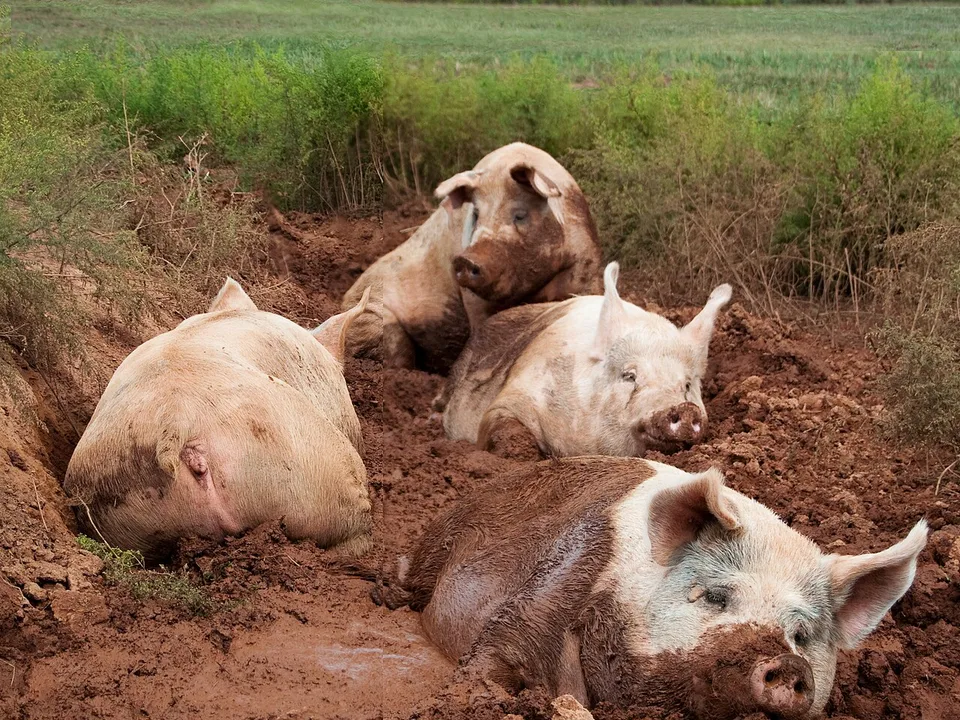
A pig's body works best within a narrow temperature range, and its normal rectal temperature is about 38.5 to 39.5°C. Unlike cattle or people, pigs cannot sweat to cool themselves. They lose heat mainly by panting, by lying on cool, wet surfaces and by wallowing in mud or water so that evaporation cools the skin. When the air is hot and humid, the roof is hot iron sheeting, there is no breeze, or pigs are packed tightly, these cooling methods fail. Body temperature rises, the heart beats faster and blood is pushed to the skin, leaving less for the gut and other organs. The pig eats less to avoid the heat produced by digestion, so growth and milk production fall. In the reproductive system, heat harms eggs, early embryos and sperm, so sows return to heat, lose litters early or produce small litters, and boars become less fertile for several weeks after a hot spell. If body temperature keeps rising, the pig develops heat stroke: organs, brain and muscles are damaged, the blood becomes acidic, and the pig collapses and can die within a short time. Large, fat pigs and sows in late pregnancy produce the most body heat, so they are in the greatest danger.
Which animals are most at risk
All pigs can suffer, but the most at risk are heavy finishing pigs close to market weight, fat pigs, sows in late pregnancy and lactating sows eating large amounts of feed, and working boars. Pigs with existing lung problems such as pneumonia struggle more because they cannot pant efficiently. Some improved breeds and lines carrying the stress gene (porcine stress syndrome) can collapse and die suddenly when heated or excited. Piglets are less at risk from heat because they need warmth, but they suffer when the sow stops eating and her milk drops. Risk is highest in hot lowland areas such as the Coast, Lake Basin, lower Eastern and parts of the Rift Valley floor, during the hot dry season and on hot, still afternoons in any area. Smallholder pigs kept in small, low, iron-roofed pens with no shade or wallow are at high risk, and so are commercial units with high stocking and poor ventilation. Pigs being transported to market or the slaughterhouse are among the most vulnerable.
Signs to look for
Early signs
- Faster breathing than normal while resting, with the flanks moving more quickly.
- Pigs lie flat on their sides, stretched out and spaced apart rather than huddled together.
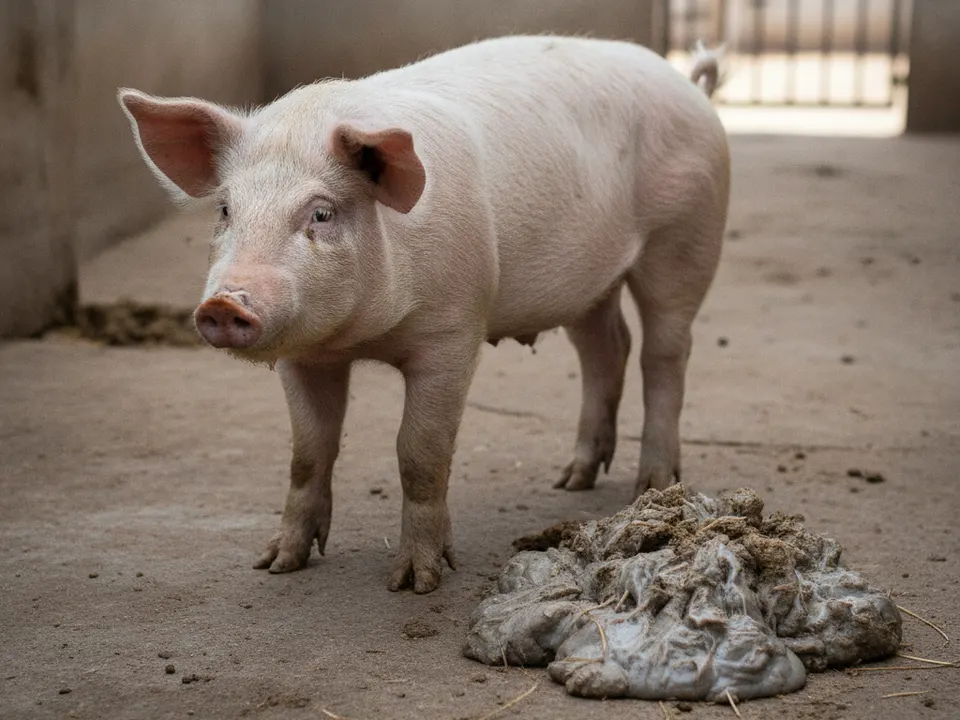
- Pigs seek out wet areas, lie in the dunging area or wallow in dung and urine to cool their skin, so they become dirtier than usual.
- Eating less, especially in the afternoon, and leaving feed in the trough.
- Drinking much more water and playing with or crowding around drinkers.
- Reduced activity, dullness and reluctance to get up or move.
- Sows lying on their bellies to keep the udder away from piglets, or stopping nursing.
As it gets worse
- Open-mouth panting with rapid, shallow breathing, sometimes with drooling or foam at the mouth.
- Skin turns red or blotchy purple, particularly on the ears, belly and legs, and feels hot to touch.
- Weakness, staggering, trembling or muscle stiffness when made to move.
- Vomiting, or the pig lies down and will not get up even when encouraged.
- Collapse, convulsions or loss of consciousness, which is heat stroke and an emergency.
- Sudden deaths, often of the biggest pigs or heavily pregnant sows, on a hot day or during or shortly after transport.
- Later effects in the herd: sows returning to heat, abortions, small litters, more stillborn piglets, sows taking longer to come on heat after weaning, and poor conception from a boar used in hot weather.
What to do right now
- Move affected pigs gently into the coolest shaded place available, without chasing, hitting or rushing them, because excitement adds more body heat.
- Wet the skin with cool, clean water using a hosepipe on a gentle spray, a watering can or wet sacks, starting with the legs, belly and neck and then the rest of the body; do not use ice or ice-cold water, which can shock the pig.
- Keep air moving over the wet skin by opening doors, windows and curtains, removing sacks or barriers that block breeze, and using a fan if you have one, so the water can evaporate and carry heat away.
- Make sure every pig has easy access to plenty of fresh, cool drinking water; check that nipple drinkers flow well and add extra buckets or troughs that cannot easily be tipped over.
- Wet the floor or create a shallow wallow so pigs can lie on a cool, wet surface, and reduce crowding by moving some pigs to another pen if possible.
- Do not force-feed or drench a pig that is collapsed or struggling to breathe, because it may choke; stop feeding in the heat of the day and offer feed in the cool early morning and evening instead.
- Postpone any moving, mixing, loading, castration or other handling until the cool part of the day.
- Record which pigs are affected, their signs, how many die and the weather, and call your vet urgently if any pig is collapsed, fitting, foaming at the mouth, or if pigs keep dying, or if they stay sick after cooling, as this could be an infection such as African swine fever.
How it spreads
- Heat stress is not infectious and does not pass from pig to pig; it is triggered by the environment and management.
- Hot, sunny afternoons, especially during the hot dry months before the long and short rains, are the most common trigger.
- High humidity makes things worse because wet air slows evaporation from the skin and lungs, so hot, humid weather at the Coast, around Lake Victoria and in Western Kenya is especially risky.
- Low iron-sheet roofs without a ceiling or insulation radiate heat down onto the pigs, turning the pen into an oven by midday.
- Overcrowding, poor airflow, closed walls and few openings trap body heat and moisture inside the pen.
- Running out of drinking water, or nipple drinkers with weak flow, quickly turns mild heat stress into a dangerous situation.
- Chasing, loading, transport in the heat of the day, mixing and fighting all increase body heat, which is why many deaths happen in lorries and at markets.
- Feeding a large meal in the hottest part of the day adds heat from digestion at the worst possible time.
Could it be something else?
African swine fever (ASF)
ASF causes high fever, red or blue-purple skin on ears and belly, loss of appetite and many deaths, which can look like heat stroke. But in ASF pigs stay feverish and sick even after they are cooled and the weather is cool, deaths spread through the herd over days, and there may be bloody diarrhoea, vomiting or abortions in cool weather. ASF is notifiable in Kenya; if you suspect it, stop all movement and report to the County Veterinary Officer immediately.
Pneumonia and other lung infections
Pigs with pneumonia breathe fast and may pant, but they also cough, have a fever, and breathe hard even in the cool morning or at night. Heat-stressed pigs usually breathe more normally once the day cools down.
Swine erysipelas
Erysipelas causes fever, dullness and red skin, but often shows raised, diamond-shaped pink-purple patches on the skin, lameness from painful joints, and can occur in any weather. Heat stress does not produce these diamond-shaped patches.
Salt poisoning (water deprivation)
When pigs run out of water, especially in hot weather, they become thirsty and then show nervous signs: wandering, pressing the head against walls, blindness, and fits that start a day or more after water returns. Always check water supply first. A vet should guide how water is reintroduced, as giving unlimited water too fast can make these pigs worse.
How it is diagnosed
Heat stress is usually diagnosed from the situation and the signs: hot weather or a hot pen, fast panting, pigs lying stretched out and wet, poor appetite, and improvement once they are cooled. A vet will take the rectal temperature, listen to the heart and lungs, and check the pen's roof, ventilation, stocking density and water flow. Because heat stroke can look like serious infections such as African swine fever, erysipelas or pneumonia, the vet may take blood samples or perform a post-mortem on any pig that dies to rule these out. At post-mortem, heat stroke shows congestion of organs and fast decay of the carcass but no specific infection. For fertility problems after hot months, the vet will look at breeding records, returns to heat and litter sizes, and may check boar semen. Before the vet arrives, write down when signs started, the time of day and weather, which pigs are affected (age, weight, pregnant or not), how many have died, how much they are eating and drinking, whether water ever ran out, and any recent moving, mixing or transport. Do not open dead pigs yourself; keep the carcass covered and away from other animals in case an infectious disease is involved.
Treatment
For pigs in heat stroke, the vet's first priority is controlled cooling and keeping the pig calm, because cooling quickly enough is what saves most animals. The vet monitors rectal temperature and stops active cooling once it approaches normal, to avoid the pig becoming too cold. Depending on the case, the vet may give fluids into a vein or under the skin to correct dehydration and blood chemistry, and may prescribe anti-inflammatory and pain-relief drugs such as non-steroidal anti-inflammatory drugs (for example meloxicam or flunixin) to reduce inflammation and support recovery. Sedatives are used only with great care, since they can interfere with breathing. Oral rehydration and electrolyte solutions are often recommended for the herd during and after a hot spell. Antibiotics do not treat heat stress; they are only used if the vet finds a bacterial infection such as pneumonia, and should never be given just in case, because unnecessary use builds antimicrobial resistance. All drugs must be prescribed by a vet, who will tell you the meat withdrawal period, the time you must wait after treatment before a pig can be slaughtered for food. Mildly affected pigs often recover within hours of cooling, while pigs that collapsed may need close nursing for a day or two and should be watched for lasting weakness. For herd fertility problems, the vet will advise on breeding management, boar use and cooling sows rather than a single drug.
Medicines must be prescribed and dosed by a vet. Always respect milk and meat withdrawal periods, and finish the full course of any antibiotic.
How Agrikima products can help
These support the animal alongside — never instead of — your vet's treatment, vaccination and good management.
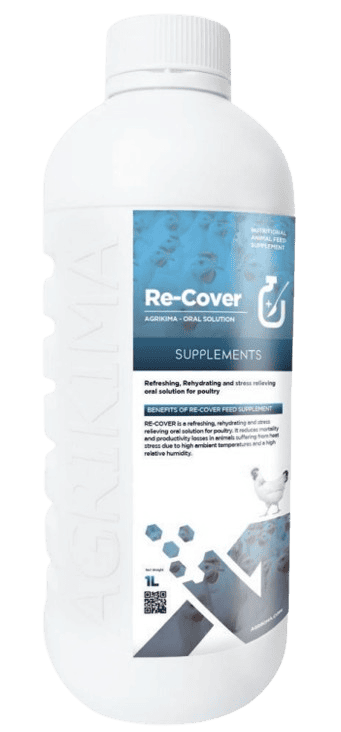
RE-COVER
RE-COVER is an oral rehydration and heat-stress relief solution that can be added to drinking water during hot spells and after transport to help pigs replace water and electrolytes lost through panting and reduced eating. It supports hydration and recovery alongside shade, cooling, good housing and vet care; it does not replace cooling a collapsed pig or calling the vet.
View product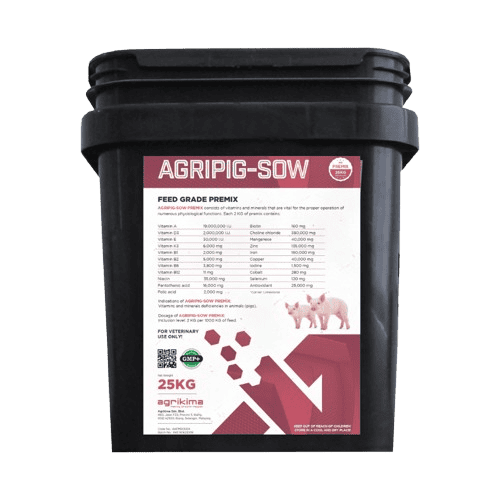
AGRIPIG-SOW
AGRIPIG-SOW is a breeding sow supplement that can help support fertility and lactation in sows whose feed intake and body condition drop during the hot season. It is an aid to good nutrition alongside cooling the sow house, sound breeding management and vet advice, and it cannot overcome fertility losses if sows are kept in hot, poorly ventilated pens.
View productPrevention
- Provide good shade for every pig: plant trees around the pigsty, extend roof overhangs, and never keep pigs in an open yard with no shelter from the midday sun.
- Improve the roof by raising it high, placing a ceiling or a layer of grass thatch, makuti, or other insulation under iron sheets, and painting the top of the roof white or a light colour to reflect sunlight.
- Build or orient pens to catch the breeze, usually with the long side running east to west, and use open sides with wire mesh or curtains that can be rolled up on hot days.
- Give pigs a way to cool their skin, such as a clean wallow, a wet floor area, drip coolers for sows in farrowing pens, or a hosepipe or sprinkler run in short bursts during the hottest hours.
- Ensure unlimited fresh, clean, cool water at all times; pigs drink far more in hot weather, so check nipple flow daily, shade water tanks and pipes, and have a backup supply in case water runs out.
- Reduce stocking density during the hot season and avoid mixing unfamiliar pigs, which leads to fighting and extra heat.
- Feed in the cool early morning and late evening, split the daily ration into smaller meals, and ask a nutritionist about feed formulation for hot weather, such as adjusting fibre and energy sources to reduce digestive heat, and feeding wet mash where practical.
- Plan transport for the cool hours of early morning or night, avoid feeding a large meal just before loading, do not overload the vehicle, provide ventilation and shade on the truck, and never leave a loaded vehicle parked in the sun.
- Protect breeding stock by giving sows and boars the coolest, best-ventilated pens, using boars mainly in the cool part of the day, and expecting lower fertility after hot spells so you can plan matings and replacement gilts accordingly.
- Treat and prevent lung disease, keep pigs at a healthy body condition rather than overly fat, and when buying breeding stock ask your supplier about stress-resistant lines suited to your local climate.
Impact on your farm
Heat stress costs Kenyan pig farmers money in several ways, even when no pigs die. Growing pigs eat less, so they grow slowly and take longer to reach market weight, which means more days of feeding and housing per pig. Lactating sows produce less milk, so piglets are weaned lighter and weaker, and sows lose body condition. Breeding suffers most of all: sows return to heat, have smaller litters, abort or take longer to come back on heat after weaning, and a boar used during a hot spell may sire few piglets for several weeks afterwards. This seasonal infertility can leave gaps in production months later. Sudden deaths of heavy finishers or pregnant sows are a direct and painful loss, because these are the most valuable animals on the farm. Deaths and bruising during transport reduce the price farmers get at market or the slaughterhouse, and stressed carcasses may give poorer quality pork. For smallholders who depend on selling a few pigs to pay school fees or other bills, a single hot-season loss can be a serious setback.
Outlook and recovery
The outlook is good for pigs with mild to moderate heat stress that are cooled promptly and given water; most recover within hours once the temperature drops. Pigs that have collapsed, are fitting or have very high body temperatures are in danger, and some die even with fast cooling and vet care, especially heavy pigs and those with lung disease or the stress gene. Some survivors may have lasting weakness or reduced performance. The effects on fertility are usually temporary and improve once the weather cools, but because sperm and eggs take weeks to develop, poor results can continue for some time after the hot period ends. The best results come from preventing heat stress through good housing, shade, water and careful timing of feeding and transport, rather than treating it after it happens.
Common questions
Why do my pigs lie in their own dung and urine when it is hot? Are they dirty pigs?
No, this is a sign they are trying to cool down. Pigs cannot sweat, so they lie on wet surfaces and wallow to let moisture evaporate from their skin. If there is no clean water or wallow, they use dung and urine instead. When you see this, it means the pen is too hot. Provide shade, a wet floor area or a clean wallow, and better airflow, and the pigs will usually keep their dunging area separate again once they are comfortable.
Can I just pour a bucket of very cold water over a pig that has collapsed in the heat?
Sudden ice-cold water can shock the pig and cause blood vessels in the skin to tighten, which may trap heat inside the body. It is better to use cool, clean water, wet the legs, belly and neck first and then the whole body, and keep air moving so the water evaporates. Keep the pig calm, do not force water into its mouth if it is struggling to breathe, and call your vet immediately.
My sows were fine but after the hot season many came back on heat or had small litters. Could heat be the reason?
Yes, this is common and is often called seasonal infertility. Heat harms eggs and early embryos in sows and reduces sperm quality in boars. Because sperm takes several weeks to form, a boar can stay less fertile for weeks after a hot spell. Ask your vet to review your breeding records, rule out infections that cause abortions or returns, and help you plan cooler housing for sows and boars before the next hot season.
Will antibiotics help my pigs with heat stress?
No. Heat stress is caused by too much heat, not by germs, so antibiotics do nothing for it. Using them without a reason wastes money, leaves drug residues in pork and helps germs become resistant to treatment, a problem called antimicrobial resistance. Your vet may prescribe antibiotics only if they find a real bacterial infection, such as pneumonia, alongside the heat stress.
How can I take pigs to market without losing them on the way?
Transport in the cool early morning or at night, not in the afternoon heat. Do not give a large meal just before loading, as a full stomach makes the pig hotter. Load calmly without beating or chasing, do not overcrowd the vehicle, make sure it has shade and airflow, and avoid stopping in the sun. Wetting the pigs and the floor of the truck before departure on a warm day can help. Heavy, fat pigs need the most care.
How do I know if it is heat stress or African swine fever?
Heat-stressed pigs usually improve once the day cools or once they are wetted and shaded, and problems match hot weather. African swine fever keeps pigs feverish and sick even in cool weather, often causes red or purple skin, bloody diarrhoea or abortions, and deaths spread through the herd over days. If pigs stay sick after cooling or keep dying, stop all pig movement and contact your vet or County Veterinary Officer immediately, because African swine fever is notifiable and must be reported.
A guide, not a diagnosis. This page is general information to help you recognise problems early. Always confirm with a vet or animal health worker before treating.