What it is
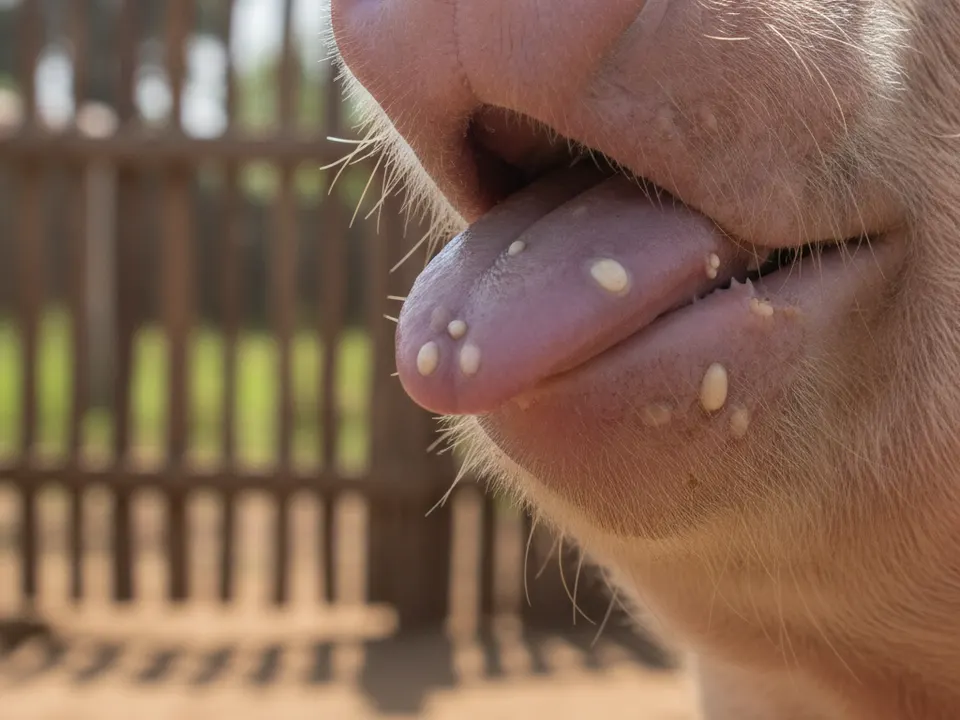
The adult pork tapeworm lives only in the human gut. It can grow to several metres long and releases segments full of eggs into the person's stool. When pigs roam freely or are kept where people use open fields, bushes or broken latrines, they eat this faeces and swallow the eggs. Inside the pig, the eggs hatch and the tiny larvae pass through the gut wall into the blood. They settle in muscle, especially the tongue, jaw (chewing) muscles, heart, diaphragm, shoulders and thighs, and sometimes the brain. There each larva forms a cyst, called a cysticercus: a small bladder of clear fluid with a white dot inside, which is the head of a future tapeworm. The cysts usually cause little harm to the pig because it is slaughtered young. When a person eats raw or undercooked pork containing living cysts, the head attaches to their gut wall and grows into a new adult tapeworm, and the cycle continues. A person can also swallow the eggs directly, through unwashed hands, contaminated water or vegetables, or from a tapeworm carrier in the household. The eggs then form cysts in the person's muscles, eyes and brain, which is called human cysticercosis.
Which animals are most at risk
Pigs of any age can be infected, but the problem is most common in free-range and tethered pigs kept by smallholders, especially where many homes lack latrines or where latrines are open, shallow or broken. In Kenya, pork tapeworm has been reported most often in pig-keeping areas of western Kenya and around Lake Victoria, but it can occur anywhere pigs can reach human faeces. Pigs kept in confinement with good housing, clean feed and clean water, and fed by people who use proper toilets, are at much lower risk. Local and crossbred pigs sold through informal markets, and pigs slaughtered at home or in unlicensed slabs without meat inspection, carry the greatest risk to consumers. Risk can rise in the rains, when faeces and eggs are washed into water sources and feeding areas, though infection happens all year.
Signs to look for
Early signs
- In almost all cases there are no signs at all: the pig eats, grows and behaves normally.
- On gently lifting and checking the underside of the tongue, you may see or feel small, firm, round, whitish bumps the size of a rice grain to a pea.
- Some cysts may be seen on the inside of the lips or under the eyelids in more heavily infected pigs.
- A pig that you know has roamed freely near open defecation sites should be treated as at risk even if it looks perfectly well.
As it gets worse
- Heavily infected pigs may show many cysts across the tongue and inside the mouth.
- Rarely, cysts in the brain can cause nervous signs such as fits, circling, walking in a strange way, or unusual sensitivity of the snout.
- Rarely, very heavy infection of the jaw and tongue muscles can make chewing or swallowing difficult.
- At slaughter, the cut muscle (especially the tongue, jaw muscles, heart, diaphragm, shoulder and thigh) shows many small clear or white cysts, giving the 'measly' look.
- Older cysts may become cloudy, gritty or chalky (calcified) and look like small hard white spots in the meat.
What to do right now
- Do not eat, sell, give away or feed to dogs any pork from a pig you suspect has cysts until a vet or meat inspector has examined it.
- Confine all your pigs at once in a clean pen or sty so they can no longer scavenge around homes, bushes, fields or latrines.
- Give clean feed and clean drinking water from a protected source, and make sure nobody uses the pig pen or feeding area as a toilet.
- Wash your hands well with soap and water after handling pigs, raw pork or soil, and before eating or preparing food.
- Record which pigs were affected, where they came from, where they grazed, and when, so the vet can trace the source.
- Call your vet, the nearest meat inspector or the Sub-County or County Veterinary Office for advice on examining, treating or slaughtering the pigs.
- If pork from a suspect pig has already been eaten, especially undercooked, advise the family to visit a health facility for advice and possible tapeworm testing.
- Check that every household member has access to and uses a proper, covered latrine, and repair or dig one if needed.
How it spreads
- Pigs become infected by eating human faeces, or soil, water and feed contaminated with faeces from a person who carries the adult tapeworm.
- Free-range, scavenging or loosely tethered pigs in villages without good toilets are the main way the cycle is kept going.
- One tapeworm carrier can pass huge numbers of eggs, so a single person using the open bush near pigs can infect many animals.
- People get the adult tapeworm by eating raw, undercooked or lightly roasted pork that contains living cysts, including home-slaughtered pork that was never inspected.
- People get cysts in their own bodies (cysticercosis) by swallowing tapeworm eggs through dirty hands, contaminated drinking water or raw vegetables, or from food handled by a carrier.
- Selling uninspected pork at markets, roadside joints and ceremonies spreads the tapeworm to new households and areas.
- Using untreated human waste or latrine contents on gardens or pig feed crops can spread eggs to both pigs and people.
Could it be something else?
Cysticercus tenuicollis (cysts from the dog tapeworm Taenia hydatigena)
These cysts come from dogs, not people. They are usually larger, thin-walled, watery bladders hanging from the liver surface, the fat in the belly (omentum) or the abdominal lining, not scattered through the muscle and tongue. A meat inspector can tell them apart.
Hydatid cysts (Echinococcus, also from dogs)
Hydatid cysts are usually much bigger, often from a marble to an orange in size, and are found mainly in the liver and lungs, not in the tongue or muscle meat. They are a sign that dogs are being fed raw offal and are a separate human health risk.
Small abscesses or injection-site lumps
Abscesses contain thick pus, not clear fluid with a white dot, and are often near old injection sites or wounds. Injection lumps are usually single and in the neck or thigh where drugs were given.
Sarcocystis and other tiny muscle parasites
These are usually so small they are hard to see with the naked eye, or appear as thin pale streaks along the muscle fibres rather than round fluid-filled cysts. A lab test or experienced inspector is needed to confirm.
How it is diagnosed
In the live pig, a vet or experienced inspector may restrain the pig, open its mouth and look at and feel the underside of the tongue for cysts. Finding cysts on the tongue is a strong sign of infection, but many infected pigs have no tongue cysts, so a clean tongue does not prove the pig is free. Blood tests, such as tests that detect parasite proteins (antigen tests) or the pig's antibodies, can be done in some laboratories, including research and university labs, and are used mainly in surveys. The most common way the infection is found in Kenya is routine meat inspection at a licensed slaughterhouse, where the inspector looks at and cuts into the tongue, jaw muscles, heart, diaphragm and other muscles. The inspector decides whether the carcass can be passed, must be treated (for example by approved freezing where facilities exist), or must be condemned, depending on how many cysts are found. To help, the farmer can share where the pig was raised, whether it was free-range or tethered, whether other pigs from the same home or village had cysts, and the toilet situation around the home. Always slaughter pigs at a licensed slaughterhouse or slab where an inspector can check the meat.
Treatment
Because infected pigs are rarely sick, treatment is mainly about stopping the cysts from reaching people. A vet may treat at-risk or infected pigs with an anti-parasite drug from the benzimidazole group; oxfendazole is the drug most studied and used for killing cysts in pigs, while other related drugs are considered less reliable for this purpose. Availability and registration of these products for this use in Kenya can vary, so the vet will decide what is suitable and legal. All treatment must be prescribed and supervised by a vet; do not guess doses or use human medicines on pigs. The drug kills the cysts, but dead cysts take several weeks to break down and can leave small scars in the meat, so the vet will advise how long to wait before the pig is slaughtered. There is also a meat withdrawal period after treatment, during which the pork must not be eaten or sold, and you must follow it strictly. A vaccine for pigs against pork tapeworm has been developed and is used in some countries, but it is not widely available in Kenya at present; ask your County Veterinary Office about any local programmes. In control programmes, treating pigs works best when people in the community are also tested and treated for tapeworm by health workers, latrines are improved and pigs are confined. Deworming of people is done only by medical clinicians, not vets or farmers.
Medicines must be prescribed and dosed by a vet. Always respect milk and meat withdrawal periods, and finish the full course of any antibiotic.
Prevention
- Build and use a proper, covered latrine for every household, and make sure workers and visitors use it too; this is the single most important step to break the cycle.
- Keep pigs confined in a pen, sty or fenced area at all times so they cannot scavenge human faeces, and never let them roam near bushes, fields or broken latrines.
- Give pigs clean feed and clean water from a protected source, and never use human waste or latrine contents as manure on pig feed crops or near pig pens.
- Always slaughter pigs at a licensed slaughterhouse or slab where a meat inspector checks the carcass, and do not buy or sell uninspected pork.
- Cook pork thoroughly all the way through until no pink meat remains and juices run clear; avoid lightly roasted, rare or raw pork, including at nyama choma joints.
- Practise good hand hygiene with soap and water after using the toilet, after handling pigs or soil, and before preparing or eating food, and wash raw vegetables in clean water.
- Ask your vet about strategic treatment of pigs in high-risk areas, and ask health workers about tapeworm testing and treatment for people in your household and village.
- Work with neighbours, extension officers and community health volunteers, because pork tapeworm is controlled best when the whole village improves toilets and confines pigs together.
Risk to people
Pork tapeworm is a serious zoonosis, meaning it passes between animals and people. There are two forms in people. First, eating raw or undercooked pork with living cysts gives a person the adult tapeworm in the gut (taeniasis). This often causes few signs, perhaps mild stomach upset, but the person may notice small white flat segments in their stool, and they pass eggs that can infect pigs and other people. Second, swallowing the eggs themselves, through dirty hands, contaminated water or food, or from a household member who carries the tapeworm, causes cysts in the person's own body (cysticercosis). When cysts form in the brain (neurocysticercosis), they can cause seizures, epilepsy, severe headaches and other serious problems, and this is a recognised major preventable cause of epilepsy in areas where the parasite is common. Note that eating infected pork gives the gut tapeworm, while brain cysts come from swallowing eggs, so both good cooking and good hygiene and toilets are needed. To protect your family, cook pork thoroughly, buy only inspected pork, wash hands with soap after the toilet and before food, drink safe water, wash vegetables, and use a proper latrine. Anyone who sees tapeworm segments in their stool, or has new seizures or persistent severe headaches, should go to a health facility promptly. Treatment for people must be given by medical health workers.
Impact on your farm
For a Kenyan pig farmer, the biggest direct cost comes at slaughter. A carcass with cysts may be condemned or downgraded by the meat inspector, meaning the farmer loses most or all of the value of a pig that took months to raise. Buyers and butchers who check tongues often refuse or pay much less for pigs with visible cysts, and some farmers then sell such pigs cheaply through informal channels, which spreads the disease to consumers. Once an area is known for measly pork, prices and trust in local pork can fall for every farmer there. The largest cost, however, falls on families and communities: human cysticercosis of the brain causes seizures, lost work and school days, medical bills and stigma. Confining pigs does mean more spending on feed and housing, but it also improves growth, reduces other diseases and protects the family's health and the farm's reputation.
Outlook and recovery
For the pig, the outlook is usually good in terms of health, because most infected pigs never show illness. The problem is the meat: once cysts are present, the carcass may be condemned or downgraded, and even after vet treatment the dead cysts and scars can take weeks to clear, so meat quality and value may still be affected. Pigs that are confined and protected from human faeces after treatment are unlikely to be reinfected. On a farm and village level, the outlook depends on breaking the cycle: where every household uses latrines, pigs are confined and all pork is inspected and well cooked, the disease can be greatly reduced over time. Where pigs keep roaming and open defecation continues, pigs will keep getting reinfected no matter how often they are treated.
Common questions
My pig looks healthy. Can it still have pork tapeworm?
Yes. Most infected pigs look and grow completely normally. The cysts sit quietly in the muscle and are usually only found when the tongue is checked or the meat is inspected after slaughter. That is why prevention, confinement and meat inspection matter so much, and why you cannot judge a pig as safe just by how it looks.
If the tongue has no cysts, is the pork safe?
Not necessarily. Checking the tongue can catch many heavily infected pigs, but lightly infected pigs often have no tongue cysts at all while still having cysts in the meat. The only reliable checks are proper meat inspection at a licensed slaughter point and cooking all pork thoroughly before eating.
Can I eat the pork if I cut out the cysts?
No. Cysts are spread through the muscle, and many are too small or deep to see, so cutting out the visible ones does not make the meat safe. Let the meat inspector decide whether the carcass can be passed, treated or must be condemned. Never sell or give away measly pork, as this puts other families at risk.
Does cooking or freezing kill the cysts?
Thorough cooking, so that the meat is cooked all the way through with no pink parts and the juices run clear, kills the cysts. Deep freezing for several days can also kill them, but home freezers vary and may not get cold enough, so do not rely on freezing alone. Lightly roasted or rare pork, and pork that is still pink in the middle, can still pass the tapeworm.
Can I get brain cysts from eating infected pork?
Eating infected pork gives you the tapeworm in your gut, not brain cysts directly. Brain cysts come from swallowing the tapeworm eggs, which are found in the faeces of a person carrying the worm. However, once you carry the tapeworm, you can pass eggs to yourself and your family through poor hand washing. So both cooking pork well and using toilets and washing hands are needed to stay safe.
Will deworming my pigs regularly solve the problem?
Ordinary routine dewormers may not reliably kill pork tapeworm cysts, and even the right drug only works if the pig stops eating human faeces afterwards. Any treatment must be chosen and prescribed by a vet, with the correct withdrawal time before slaughter. Lasting control comes from confining pigs, using latrines, inspecting meat and cooking pork well, with treatment of pigs and people as part of a wider plan.
A guide, not a diagnosis. This page is general information to help you recognise problems early. Always confirm with a vet or animal health worker before treating.