What it is
Iron is the mineral the body uses to make haemoglobin, the red substance inside red blood cells that carries oxygen from the lungs to every part of the body. A newborn piglet has only a small store of iron in its liver. It then grows extremely fast, often doubling its birth weight within the first week, and every gram of new body needs more blood. Sow milk is rich in energy and protein but naturally very low in iron, and feeding the sow more iron does not meaningfully raise the iron in her milk. In the wild, or on free range, piglets top up their iron by rooting in soil. On a clean concrete floor there is no soil, so the small birth store runs out quickly. When iron runs short, the piglet cannot make enough haemoglobin, its red blood cells become fewer and paler, and its body receives less oxygen. The heart works harder to pump the thin blood, breathing becomes fast and laboured after any effort, growth slows, and the immune system weakens. This is why anaemic piglets so often pick up scours, joint infections and pneumonia. In severe cases the heart is overworked, fluid builds up in the body, and the piglet can collapse and die, sometimes the strongest, fastest-growing one in the litter.
Which animals are most at risk
Piglets between about one and four weeks of age are most at risk, with signs usually showing from the second or third week. Fast-growing improved breeds such as Large White, Landrace and their crosses are affected more than slower-growing local pigs, and the biggest, quickest-growing piglets in a litter can be hit hardest. Piglets in zero-grazing style indoor pens with concrete floors, which is the common system in Kenyan smallholder and commercial piggeries, are at much higher risk than piglets raised outdoors on soil. Litters born to young gilts, very large litters, and piglets that are weaned late without good creep feed are also at higher risk. The problem happens in any season, but cold, wet weather during the long and short rains adds stress and makes scours and pneumonia in anaemic piglets more common.
Signs to look for
Early signs
- Skin and ears look pale white or slightly yellow instead of a healthy pink; this is easiest to see on white breeds.
- The inside of the eyelids and the gums look pale pink or almost white when you gently open them.
- Piglets grow more slowly than expected and look smaller or thinner than litter-mates that are doing well.
- The hair coat becomes rough and dull, and the skin may look wrinkled.
- Piglets tire quickly, lie down more and are slower to come to the teat.
- Breathing becomes fast or jerky after short bursts of activity such as suckling or running, then settles when they rest.
As it gets worse
- Marked laboured breathing with a jerky, thumping movement of the flanks, which is why the condition is called 'thumps'.
- Scours (diarrhoea), often yellowish or pasty, that keeps coming back or does not respond well to treatment.
- Swelling around the head, neck or belly caused by fluid building up under the skin.
- Weakness, staggering or collapse, especially after being chased or handled.
- Frequent secondary infections such as swollen joints, coughing or pneumonia.
- Sudden death of a piglet that seemed to be growing well, often one of the heaviest in the litter.
- Survivors that stay stunted and never catch up with healthy pigs of the same age.
What to do right now
- Look at every piglet in the litter and in other litters of a similar age, check skin and eyelid colour, and write down which piglets are pale, scouring, breathing badly or have died.
- Keep the piglets with the sow so they continue to suckle; milk is still their main food and source of energy even though it is low in iron.
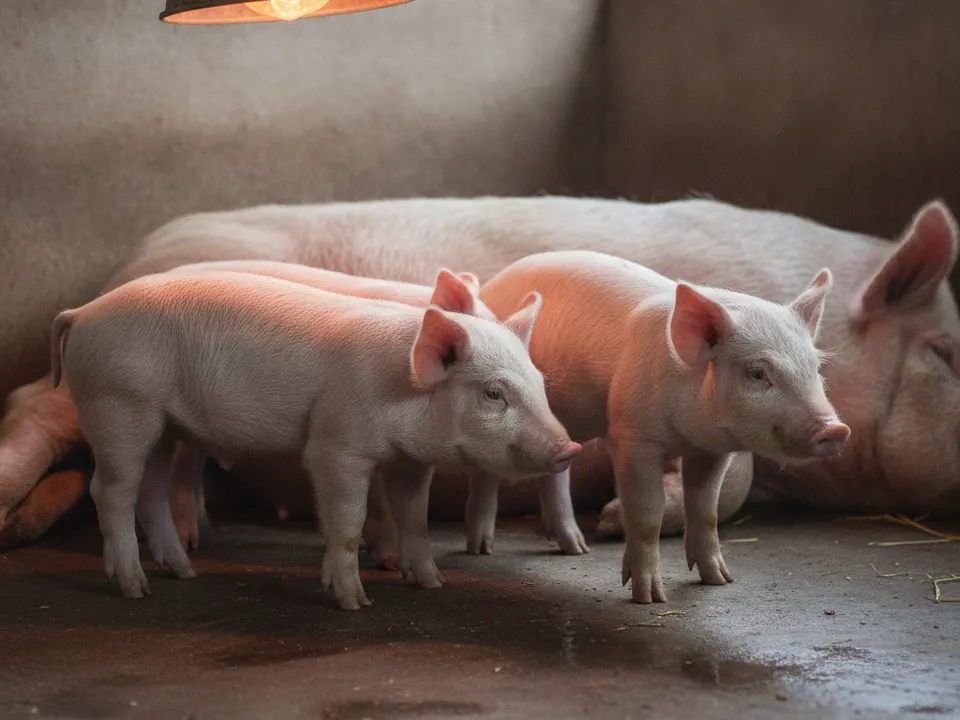
- Keep the creep area warm, dry and draught-free using a heat lamp, a covered corner or dry bedding, because anaemic piglets chill easily and cold makes scours and pneumonia worse.
- Handle the piglets as little and as gently as possible, and avoid chasing them, because exertion can make an anaemic piglet collapse.
- Make sure clean drinking water is available in a shallow container they can reach, and offer a fresh, good-quality creep feed if they are old enough to start nibbling.
- If piglets have scours, clean the pen often, keep bedding dry and ask your vet about oral rehydration to replace lost fluids.
- Do not give iron injections, antibiotics or other drugs to sick piglets on your own; let the vet examine them first, because some sick piglets react badly to iron and the dose must be right.
- Wash your hands and boots after handling scouring piglets to avoid carrying germs to other litters, and call your vet or animal health assistant as soon as possible.
How it spreads
- It is not infectious and does not pass from pig to pig; it is a nutritional shortage caused by how piglets are raised.
- The main trigger is not giving piglets an iron injection or other reliable iron source in the first few days of life.
- Housing on concrete or raised slatted floors with no access to soil removes the piglet's natural way of picking up iron.
- Large litters and fast-growing improved breeds use up their iron stores faster, so they show signs sooner.
- Delaying creep feed (the early starter feed offered to piglets while still suckling) or using a creep feed low in iron keeps piglets dependent on milk for too long.
- Injecting iron too late, giving a poor-quality or expired product, or injecting into fat instead of muscle means the piglet does not absorb enough.
- Blood loss from lice, mange or rough handling, and diarrhoea that damages the gut, can make an existing shortage worse.
Could it be something else?
Piglet scours from E. coli or coccidiosis
Infectious scours can appear in piglets that are pink and well coloured, and E. coli scours often starts in the first days of life before anaemia normally develops. Anaemic piglets are pale first, and the scours comes alongside slow growth and jerky breathing. Both can happen together, so a vet may need to check dung samples and blood.
Pneumonia
Pneumonia usually brings coughing, sneezing, fever and breathing that is hard even at rest. The jerky breathing of anaemia mostly appears after exertion and settles with rest, and the piglet is pale rather than feverish.
Vitamin E and selenium deficiency (mulberry heart disease, white muscle disease)
This can also cause sudden deaths and weakness in fast-growing piglets, but the skin is not necessarily pale, and some piglets show stiffness or trembling. It matters because piglets low in vitamin E and selenium can react badly or even die after an iron injection, so the vet may check for both.
African swine fever
African swine fever affects pigs of all ages at once, causes high fever, red or purple blotches on the ears and belly, loss of appetite and many rapid deaths across the farm. Anaemia affects only young piglets, does not cause fever or skin blotches, and does not spread to older pigs. If you see fever and deaths in older pigs, call the County Veterinary Officer immediately, because African swine fever is notifiable.
How it is diagnosed
A vet or animal health assistant usually suspects iron deficiency from the age of the piglets, the pale skin and eyelids, the jerky breathing and, most importantly, the farm history of whether and when the piglets received iron. A simple blood test can measure haemoglobin or packed cell volume (the proportion of blood made up of red cells), which confirms anaemia and shows how severe it is; some vets carry a quick handheld haemoglobin meter. If a piglet has died, a post-mortem examination typically shows very pale tissues, thin watery blood, an enlarged soft heart, fluid in the chest and belly, and a pale or swollen liver. The vet will also look for secondary problems such as scours or pneumonia and may check the sow and diet for vitamin E and selenium shortage. To help, prepare the farrowing date, litter size, birth and current weights if you have them, the name and date of any iron product given and where it was injected, any treatments already given, and the number of piglets sick or dead.
Treatment
The main treatment is replacing the missing iron, usually with an injectable iron product such as iron dextran or gleptoferron given into the neck muscle; in some cases oral iron is used instead. The vet decides the product, the amount, the route and whether a repeat dose is needed based on the piglet's age, weight and condition, so this must be prescribed and given or supervised by a vet. Very weak piglets may first need warmth, fluids and supportive care, and the vet may check or treat for vitamin E and selenium shortage, because iron given to deficient piglets can cause severe reactions. Secondary infections such as bacterial scours, joint infection or pneumonia may need antibiotics, which only work against bacteria and do nothing for the anaemia itself. Use antibiotics only when a vet prescribes them, finish the full course, and never use them as a routine substitute for iron and good management, because overuse breeds resistant germs (antimicrobial resistance) that make future treatment harder for pigs and people. Any drug used carries a meat withdrawal period, the time after treatment before the pig can be slaughtered for food, so record the product and date and follow the label and vet advice. Most piglets improve in colour, energy and appetite within days of iron treatment, though catching up on lost growth takes longer.
Medicines must be prescribed and dosed by a vet. Always respect milk and meat withdrawal periods, and finish the full course of any antibiotic.
How Agrikima products can help
These support the animal alongside — never instead of — your vet's treatment, vaccination and good management.
Prevention
- Give every piglet a reliable iron source in the first days of life; an iron injection into the neck muscle around day 1 to day 3 is the standard method, so plan this with your vet or a trained animal health assistant who can show you the correct technique.
- Inject into the neck muscle behind the ear rather than the ham, using a clean, sharp needle for each litter, so the iron is absorbed well and the valuable ham meat is not damaged or stained.
- Buy iron products only from licensed agrovets, check the expiry date, store them as the label says, and record the date and product used for every litter.
- Ask your vet whether a second iron dose is needed for very fast-growing piglets, large litters or piglets that will be weaned late.
- Offer a good-quality creep feed from about the first or second week so piglets start eating solid feed that supplies iron and other nutrients before milk alone becomes too little.
- Feed the sow a balanced diet with proper vitamins and minerals, especially vitamin E and selenium, during pregnancy and lactation, so piglets are born strong and are less likely to react badly to iron.
- Some farmers give piglets a tray of clean soil; only use soil from a place where pigs have never been kept, because soil from pig areas can carry worms and germs, and do not rely on soil as the only iron source.
- Control lice and mange on the sow, keep farrowing pens clean and dry, and prevent scours, because blood loss and damaged guts make anaemia worse.
Impact on your farm
Iron deficiency anaemia quietly eats into piggery profits. Anaemic piglets grow slowly, so weaners are lighter at sale or take longer to reach market weight, which means more feed and labour per pig. More piglets die before weaning, and every lost piglet is lost income from a sow you have already fed for months. The weak immunity of anaemic piglets leads to more scours and pneumonia, which means extra vet visits and drug costs and the risk of meat withdrawal delays. Stunted survivors may never reach their genetic potential, making the whole batch uneven and harder to sell at a good price. Because prevention is simple and inexpensive compared to these losses, routine iron for every litter is one of the best-value practices on a Kenyan pig farm.
Outlook and recovery
The outlook is good when anaemia is spotted early and the vet treats it promptly; most piglets regain their pink colour and energy within days and start growing again. Recovery is slower and less certain when the anaemia is severe, when piglets already have serious scours or pneumonia, or when they are also short of vitamin E and selenium. Some badly affected piglets die despite treatment, and some survivors stay smaller than their litter-mates. Litters that get iron on time rarely develop the problem at all.
Common questions
Why can't the sow's milk give the piglets enough iron? Can I feed the sow more iron instead?
Sow milk is naturally very low in iron, and giving the sow extra iron in her feed does not raise the iron in her milk enough to protect fast-growing piglets. Iron also does not pass well from the sow to the unborn piglets. That is why the piglets themselves need their own iron source in the first days of life. Feeding the sow well still matters, because it produces strong piglets and plenty of milk, but it cannot replace iron for the piglets.
My piglets are kept outside and root in the soil. Do they still need iron?
Piglets that root freely in clean soil from early in life pick up some iron naturally, so anaemia is less common in outdoor and free-range systems. However, improved breeds grow so fast that soil alone may not be enough, and piglets in the first days often stay close to the sow before they start rooting. Ask your vet whether your system needs routine iron. For most farms with improved breeds, giving iron is the safer choice.
I heard some piglets died after the iron injection. Why does that happen?
Deaths after iron injection are uncommon but do happen. The most common reason is that the piglets were short of vitamin E and selenium, which protect the body from damage when iron is given. Other causes are giving the wrong amount, using a poor or expired product, or injecting very weak or sick piglets. This is why the sow's diet should contain enough vitamin E and selenium, and why iron should be given correctly under guidance from a vet or trained animal health assistant.
Which day is best to give the iron, and where do I inject it?
Iron is usually given within the first three days of life, often around day 3 once the piglet has suckled well and is settled. It is normally injected deep into the muscle of the neck, just behind the ear, not into the ham. Your vet or animal health assistant can show you the right product, amount and technique, and you should record the date for every litter.
Can I use iron by mouth instead of an injection?
Oral iron pastes and drenches exist and are used on some farms, but how much the piglet absorbs can vary, and it must be given at the right time to work. Injection is the most widely used and reliable method. If you prefer oral iron, discuss it with your vet so the product and timing suit your piglets.
My piglets are pale and scouring. Will antibiotics fix it?
Antibiotics do not cure anaemia; they only help if a bacterial infection is also present, and only a vet should decide that. The pale skin and jerky breathing come from lack of iron, which needs iron treatment. Giving antibiotics without a vet wastes money, can leave drug residues in meat, and helps germs become resistant. Call your vet so the cause of the scours and the anaemia can both be treated properly.
A guide, not a diagnosis. This page is general information to help you recognise problems early. Always confirm with a vet or animal health worker before treating.