What it is
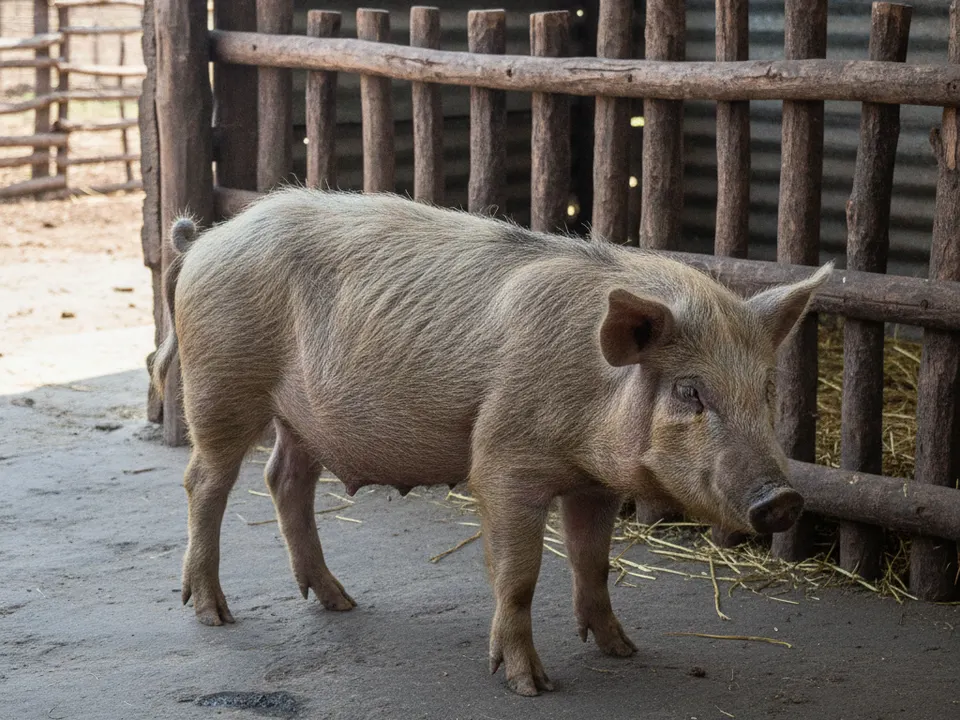
Mange in pigs is caused by the mite Sarcoptes scabiei var. suis. A mite is a very small relative of ticks and spiders, too small to see clearly without a microscope. The female mite digs tunnels in the top layer of the skin, lays her eggs there, and the young mites hatch and mature in about two weeks, so numbers build quickly. The digging, the mites' droppings and their saliva irritate the skin and, after a few weeks, the pig's immune system reacts strongly against them. This reaction is an allergy (hypersensitivity), and it causes the intense itch and the small red pimples seen especially on the belly, flanks and back. The pig scratches and rubs, breaking the skin and letting germs in. In some pigs, usually older sows and boars, the skin reacts by becoming very thick, grey, wrinkled and crusty, especially inside the ears and around the head and neck. These chronic carriers may not even itch much, but they are full of mites and keep infecting other pigs. Energy that should go into growth and milk is spent on scratching and fighting the skin damage, which is why mangy pigs grow slowly.
Which animals are most at risk
Any pig can get mange, but it shows most clearly in weaners and growing pigs from about two months of age, which develop the itchy allergic rash. Adult sows and boars are the main hidden carriers, often with thick crusts inside the ears. Herds that share boars, buy pigs from markets, or mix pigs from different sources are at higher risk. In Kenya this includes many smallholder units in places like Kiambu, Murang'a, Nakuru, Busia and Western Kenya, where pigs are kept in small wooden or mud pens, often crowded and with little bedding change. Free-range and tethered pigs that mix with neighbours' pigs are also exposed. Mange can occur all year, but crowding during the cool, damp long and short rains, when pigs huddle together for warmth, favours spread. Pigs that are thin, wormy or poorly fed tend to suffer more severely.
Signs to look for
Early signs
- Frequent scratching with the hind legs, and rubbing of the head, neck and sides against walls, posts, feeders and other pigs.
- Repeated head shaking and flapping of the ears, because the inside of the ear is usually where mites first settle.
- Small red pimples or spots on the belly, flanks, back and inside the thighs, often seen best on white or light-skinned pigs.
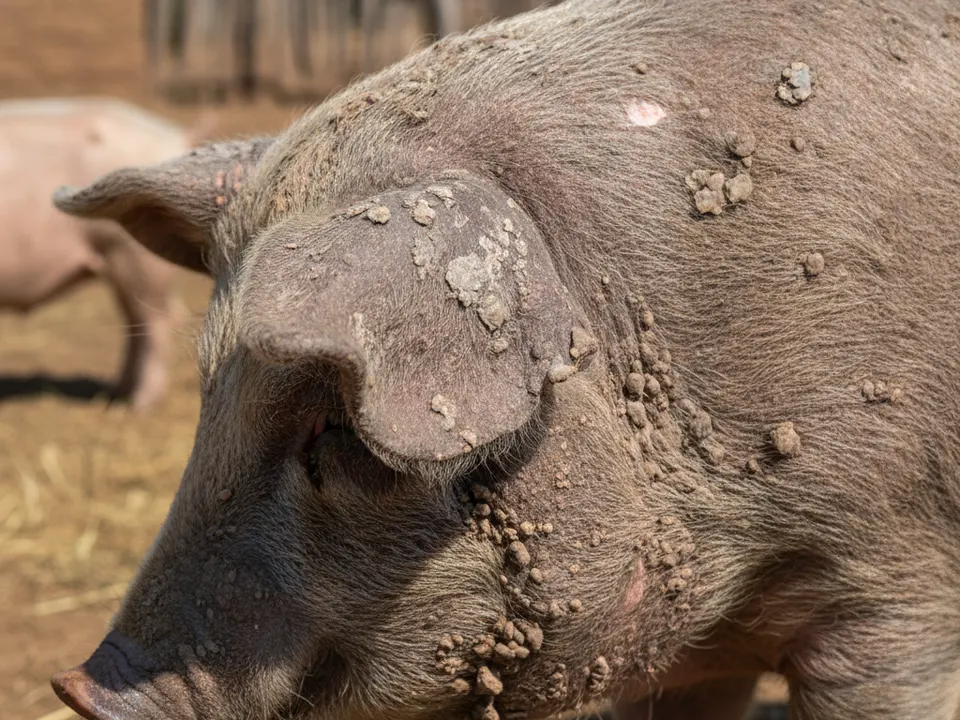
- Light grey or brown scaly crusts starting on the inner surface of the ears.
- Restlessness, with pigs getting up and lying down often instead of resting quietly after feeding.
- Shiny, polished patches on pen walls and posts where pigs rub regularly.
As it gets worse
- Thick, grey, asbestos-like crusts filling the inside of the ears that can be peeled away as flakes.
- Thick, wrinkled, leathery skin, especially on the neck, shoulders, flanks and around the eyes, sometimes with deep cracks.
- Patchy or widespread hair loss, with rough, dry, scurfy skin.
- Scratch wounds, scabs and small bleeding areas from constant rubbing, which may become infected and smell bad.
- Slow growth, poor body condition and uneven pen mates, with some pigs clearly smaller than others of the same age.
- Sows that are restless while nursing and may lie on and crush piglets, and boars that lose interest in serving.
What to do right now
- Watch your pigs for a few minutes and note which ones scratch, rub or shake their heads, and check inside the ears of sows and boars for crusts.
- Separate the worst-affected pigs into a clean pen if you can, and stop buying, selling or lending pigs and boars until the vet has seen the herd.
- Remove and burn or bury dirty bedding, scrape and clean pen floors and walls, and allow pens to dry in the sun where possible.
- Make sure all pigs have clean drinking water, shade, and a balanced feed, because well-fed pigs cope better with skin damage and heal faster.
- Wear gloves and wash your hands and arms with soap after handling itchy pigs, and wash your clothes, since the mite can cause a temporary itchy rash in people.
- Do not apply engine oil, paraffin, diesel or other home mixtures to the skin; they can burn the skin, poison pigs and contaminate meat.
- Write down how many pigs are affected, their ages, and any recent new pigs or boar visits, then call your vet or County Veterinary Officer to plan treatment.
How it spreads
- Direct skin-to-skin contact between pigs is the main route, especially when pigs sleep packed together in a pen.
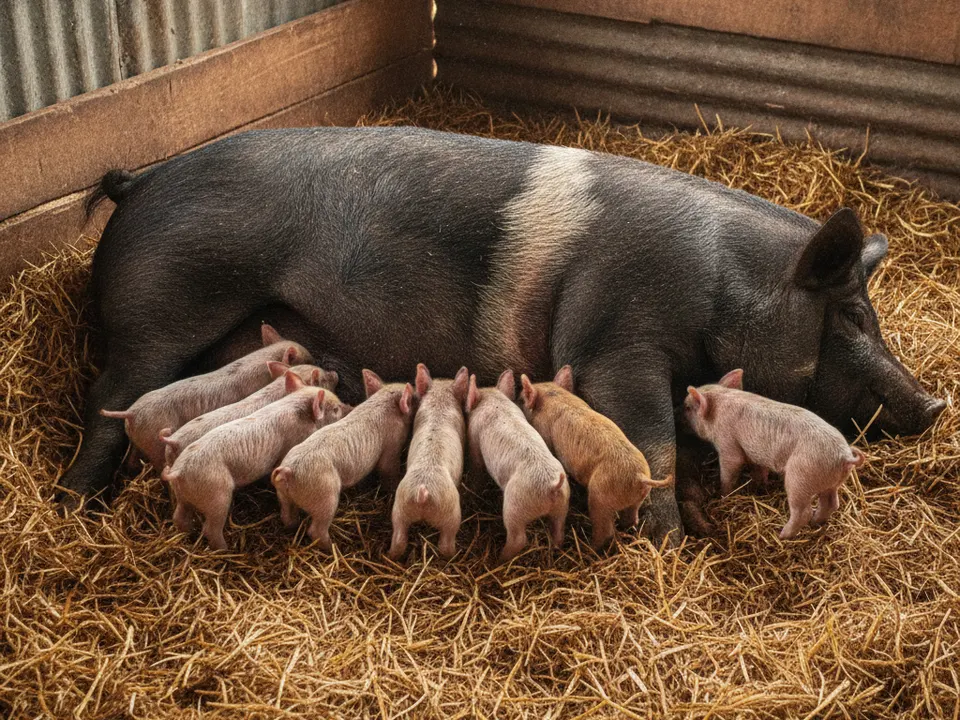
- Sows with crusty ears pass mites to their piglets while suckling and sleeping together, so the disease carries on from litter to litter.
- Boars that move between farms for service, or between sows on one farm, can spread mites widely because they are often heavily infested.
- Buying in pigs from markets or other farms without checking or treating them is a common way mange first enters a clean herd.
- Mites can survive off the pig for a short time, usually a few days and longer in cool, damp conditions, so dirty bedding, rubbing posts, walls and transport crates can pass them on.
- Crowding, poor hygiene, poor nutrition and stress make it easier for mite numbers to rise and spread.
Could it be something else?
Lice (Haematopinus suis)
Pig lice are large enough to see with the naked eye, grey-brown and about the size of a grain of rice, crawling on the skin behind the ears, on the neck and inside the legs. Their white eggs (nits) are glued to the hairs. Lice also cause itching, but you can see the parasite itself. A pig can have lice and mange at the same time.
Greasy pig disease (exudative epidermitis)
This is a bacterial skin infection mostly of young piglets, from a few days to a few weeks old. The skin becomes covered in a brown, greasy, sticky layer that starts on the face and spreads over the body. Affected piglets are usually dull and may die, and they do not scratch much. Mange is very itchy and is seen mainly in older weaners, growers and adults.
Parakeratosis (zinc deficiency)
This causes thick, dry, brown-grey crusts in growing pigs, usually in an even pattern on both sides, on the legs, belly and back. It is not itchy, the pigs do not rub, and it is linked to diets low in zinc or very high in calcium. It improves when the diet is corrected.
Ringworm (fungal skin infection)
Ringworm shows as round, slowly spreading patches of brown or reddish scaly skin, often behind the ears or on the back and flanks. It causes little or no itch. Mange causes strong itching and crusts inside the ears, which ringworm does not.
How it is diagnosed
A vet will first look at the herd as a whole: how many pigs are scratching, where the crusts are, and how growth looks across pens. Some vets count how often pigs scratch over a few minutes of watching, which gives a useful picture of how bad the problem is. To confirm it, the vet takes deep skin scrapings, usually from the inner surface of the ear where crusts are thickest, and examines them under a microscope for mites and eggs. Mites can be hard to find in pigs with the allergic rash, so a negative scraping does not always rule mange out; scrapings from older sows and boars with ear crusts are more likely to show mites. In some laboratories a blood test can show whether a herd has been exposed. At slaughter, inspectors may notice the typical pimply skin on carcasses, which tells you the herd is affected. To help the vet, note which pigs are scratching, when it started, whether you bought pigs or used an outside boar recently, what treatments you have already tried and when, and keep the most affected sow or boar available for examination.
Treatment
Mange is treated with acaricides, which are medicines that kill mites, and these must be prescribed by a vet who will choose the right product and timing for your farm. Commonly used options include the avermectin group (such as ivermectin or doramectin), given by injection or sometimes in feed, and sprays or pour-ons such as amitraz; which products are registered and available varies, so your vet will advise. The key point is that the whole herd must be treated together, including sows, boars, growers and piglets, because untreated carriers quickly reinfect everyone. Many products do not kill mite eggs, so a repeat treatment is often needed after a set interval, and sows are usually treated before farrowing so they do not pass mites to their new litter. Boars, which spread mites widely, are often treated more frequently. If scratching has caused infected wounds, the vet may decide other treatment is needed, but antibiotics do nothing against the mites themselves and should only be used when the vet prescribes them, to avoid wasting money and building antibiotic resistance. All these medicines have a meat withdrawal period, which is the time after treatment during which the pig must not be slaughtered for food; for some injectable products this can be several weeks, so always follow the label and your vet's advice, especially for pigs close to market weight. Expect the itching to ease over one to a few weeks, but thick crusts and skin take longer to heal, and allergic itching can continue for a while even after the mites are dead.
Medicines must be prescribed and dosed by a vet. Always respect milk and meat withdrawal periods, and finish the full course of any antibiotic.
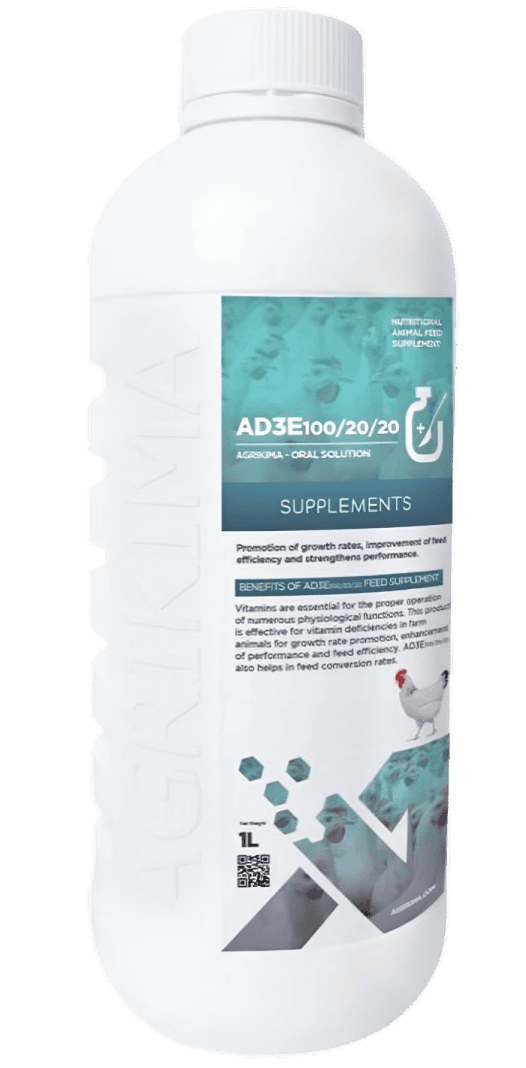
How Agrikima products can help
These support the animal alongside — never instead of — your vet's treatment, vaccination and good management.
Prevention
- Check every new pig before it joins your herd, especially inside the ears, and keep new arrivals in a separate pen for a few weeks; ask your vet about treating them for mange during this time.
- Buy breeding stock from farms that are known to be free of mange and willing to tell you their health status.
- Avoid using boars from other farms unless you know their health status, and ask the owner whether the boar is regularly treated for mange.
- Work with your vet on a planned whole-herd control programme, with sows treated before farrowing and boars treated regularly; some farms can eventually eradicate mange completely.
- Clean pens between batches by removing bedding, scraping and washing floors and walls, and leaving them empty and dry for some days before restocking.
- Avoid overcrowding, so pigs are not lying on top of each other, and give dry bedding, especially during the cold and wet seasons.
- Feed a balanced ration with adequate protein, vitamins and minerals, and control worms and lice, because healthy pigs resist skin damage better.
- Check ears and skin of sows and boars regularly and act early when you see head shaking or rubbing, instead of waiting until the whole herd is affected.
Risk to people
The pig mange mite can occasionally cause an itchy rash of small red bumps on people who handle infested pigs a lot, usually on the arms, hands and body where they touch the pigs. This rash is normally temporary because the pig mite cannot complete its life cycle on humans, and it usually fades once contact with infested pigs stops. Wear gloves or long sleeves when handling itchy pigs, wash with soap afterwards, and wash work clothes. See a health worker if a rash is very itchy, spreads or becomes infected. Also respect the meat withdrawal period of any mange medicine your vet uses, so that drug residues do not end up in pork that your family or customers eat.
Impact on your farm
Mange is rarely a killer, but it quietly eats into a pig farmer's profit. Itchy pigs spend energy scratching instead of growing, so they take longer to reach market weight and eat more feed for every kilo they gain. In Kenya, where feed is the biggest cost of keeping pigs, this lost feed efficiency hurts. Pens of uneven pigs are harder to sell as one batch, and buyers and butchers may offer less for scrubby, scabby pigs or for carcasses with damaged skin. In sows, restlessness can lead to more piglets being crushed, and poor body condition can affect milk and the next breeding. Boars that are itchy and uncomfortable may serve poorly. Repeated spending on treatments that fail because only some pigs were treated also adds up. A farm with mange can also lose sales of breeding stock, because other farmers will not want to buy infested pigs.
Outlook and recovery
The outlook for mange is good when it is handled properly. Most pigs recover well once the mites are killed, although thick skin and ear crusts can take weeks to clear and allergic itching may linger for a while. Success depends mostly on treating every pig on the farm at the same time, repeating treatment when the vet advises, cleaning pens, and stopping reinfection from new pigs or visiting boars. Farms that only treat the pigs that look sick usually find that mange comes back within weeks. Pigs with badly infected skin, or very thin pigs, recover more slowly. With a planned programme and good biosecurity, many farms can get rid of mange entirely.
Common questions
Can I use used engine oil or diesel to treat mange, like my neighbours do?
This is a common practice, but it is not recommended. Engine oil and diesel can burn and dry out the skin, cause more irritation, be absorbed into the body and poison pigs, and contaminate the meat. They also do not reliably kill all mites, so the problem returns. Your vet can give you a proper acaricide that is safe for pigs, with a known meat withdrawal period.
I treated my pigs once and the itching came back. Why?
There are usually three reasons. First, many mange medicines do not kill the eggs, so new mites hatch later unless a repeat treatment is given at the right interval. Second, if only the itchy pigs were treated, the sows and boars carrying mites in their ears reinfect everyone. Third, dirty pens and new pigs can bring mites back. Ask your vet to plan whole-herd treatment with a repeat, and clean the pens at the same time.
Do I need to treat piglets and sows that look healthy?
Yes. Older sows and boars can carry many mites in their ear crusts with little itching, and they are the main source of infection for each new litter. Piglets usually pick up mites from their mother within their first weeks. Treating only the pigs that scratch leaves the source untouched, so your vet will usually advise treating all pigs on the farm together.
Can my dogs, goats or cattle catch mange from my pigs?
The pig mange mite is adapted to pigs and does not normally set up lasting infection in other animals. Dogs, goats and cattle have their own types of mange mite. They may get a brief irritation from close contact, but they are not usually the source of pig mange. The main risk to your pigs is other pigs.
Can I sell or slaughter pigs that have been treated for mange?
Only after the meat withdrawal period has passed. Every mange medicine has a set time after treatment when the pig must not be slaughtered for food, and for some injections this is several weeks. Check the label and ask your vet, especially if pigs are near market weight, so you can plan treatment and sale dates together.
Is mange dangerous enough to kill my pigs?
Mange very rarely kills pigs directly, which is why it is easy to ignore. The real damage is slow growth, wasted feed, skin infections, crushed piglets and lower prices. Treating it early and properly usually pays back through faster growth and better pigs.
A guide, not a diagnosis. This page is general information to help you recognise problems early. Always confirm with a vet or animal health worker before treating.