What it is
Most scours starts when germs that live in the farm environment, in sow dung or on the sow's skin get into a piglet's gut before its defences are ready. Enterotoxigenic E. coli (a type of E. coli that makes toxins) sticks to the gut lining and releases poisons that pull water and salts out of the body into the gut, giving watery yellow diarrhoea, often in the first few days of life. Clostridium perfringens, especially type C, is a bacterium that damages and kills the gut lining, causing bloody diarrhoea and sudden death in the first week; type A causes milder, creamy diarrhoea. Rotavirus is a virus that destroys the tiny finger-like projections (villi) that absorb milk, so milk passes through undigested, usually in piglets from about one to five weeks old. Coccidia, mainly Cystoisospora suis, are tiny single-celled parasites that invade the gut wall, typically causing pasty to watery, yellow-grey, sour-smelling diarrhoea from around five to fifteen days of age. Often more than one of these causes is present at the same time. In every case the result is the same: the piglet loses water, salts and energy faster than it can replace them, its blood becomes thick and acidic, its body temperature drops, and without help it collapses and dies. Poor colostrum intake, chilling and a dirty farrowing pen are the biggest factors that turn a few germs into a serious outbreak.
Which animals are most at risk
Piglets from birth to about three weeks of age are most at risk, with E. coli and clostridia striking mainly in the first week, coccidia from around the end of the first week to the third week, and rotavirus anywhere from one to several weeks, including around weaning. Litters from gilts (first-time mothers) suffer more because gilts have less experience of the farm's germs and so pass fewer protective antibodies in their colostrum. Small, weak or late-born piglets in large litters miss out on colostrum and are hit hardest. Risk is higher in cold, damp, draughty housing without a warm creep area, in pens with cracked concrete or earth floors that cannot be cleaned, and where farrowing pens are used back-to-back without cleaning and resting. Outbreaks are common during the long and short rains and on cold highland nights in places like Kiambu, Nyeri and Nakuru. Both zero-grazing style indoor pig units and backyard sties are affected; free-range piglets that wallow in muddy, dung-soaked ground are also at risk.
Signs to look for
Early signs
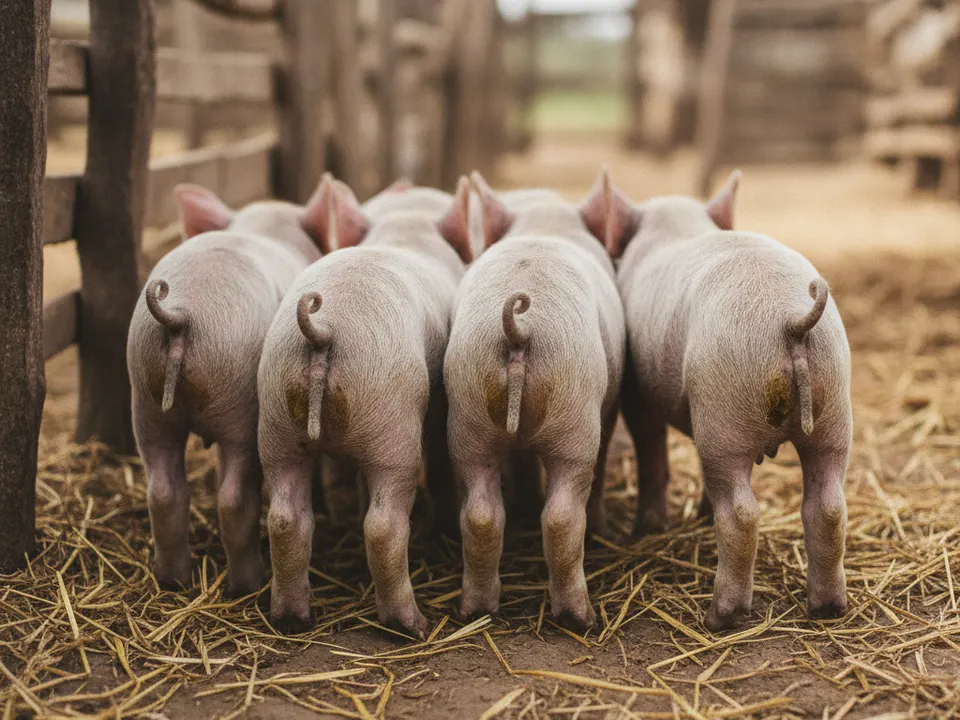
- Wet, pasty or watery droppings, often yellow, creamy-white or grey, sticking to the tail and back legs.
- A wet, shiny pen floor and a sour or unpleasant smell in the farrowing pen.
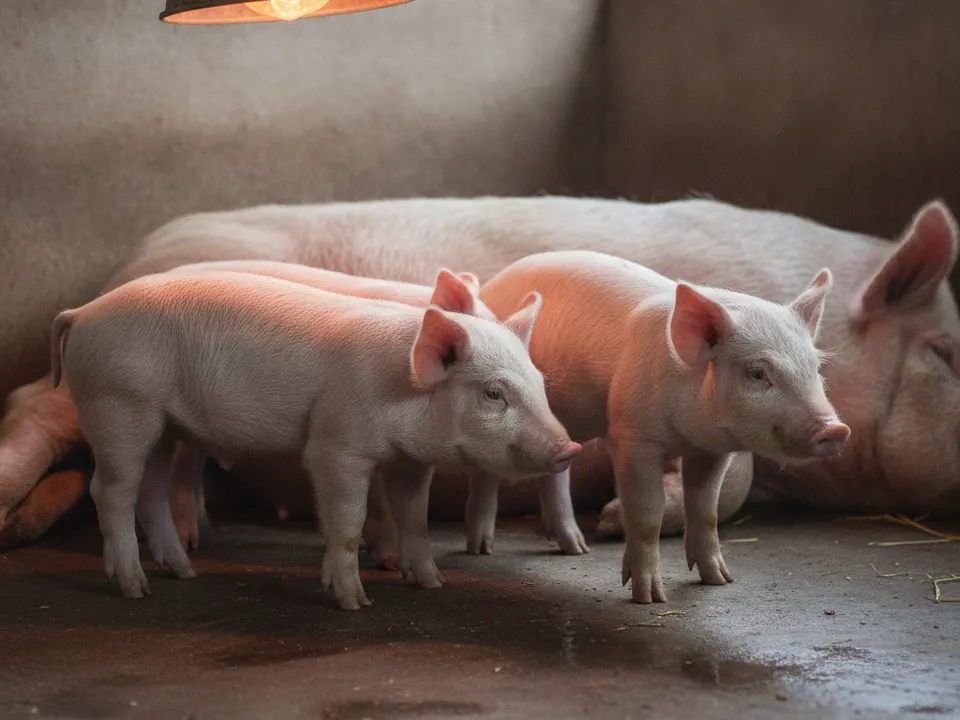
- Piglets huddling together, lying on top of each other or under the heat lamp, and shivering.
- Some piglets suckling less, or wandering away from the udder and standing with heads down.
- Rough, dull hair coat and slightly sunken flanks.
- Dung-stained, reddened skin around the anus and tail.
As it gets worse
- Very watery diarrhoea that may run straight through, sometimes with blood or a reddish-brown colour (a warning sign for clostridia).
- Sunken eyes, wrinkled skin that stays tented when gently pinched, and a thin, bony appearance from dehydration.
- Cold ears, legs and body to the touch, weakness and wobbling when walking.
- Vomiting in some piglets, particularly with viral causes.
- Piglets lying flat on their side, unable to stand or suckle, sometimes paddling their legs.
- Sudden deaths, sometimes before diarrhoea is even seen, and several piglets in a litter dying over a few days.
- Survivors that stay stunted, pot-bellied and slow-growing for weeks.
What to do right now
- Call your vet or County Veterinary Office the same day; piglets dehydrate within hours, so do not wait to see if it passes.
- Keep the piglets warm: provide a dry, draught-free creep corner with clean dry bedding and a safe heat source such as a covered lamp or brooder, and check that piglets lie spread out comfortably rather than piled up.
- Clean out wet bedding and dung at least twice a day, keep the floor as dry as possible and put down fresh dry bedding such as wood shavings or dry grass.
- Make sure every piglet can suckle; help weak piglets onto a teat and check the sow is eating, drinking and has milk.
- Offer clean, fresh drinking water and an oral rehydration solution in a clean, shallow drinker the piglets can reach, as advised by your vet, without stopping access to the sow's milk.
- Keep the affected litter separate, and use a dedicated pair of boots, broom and bucket for that pen, or clean and disinfect them before going to other pigs.
- Wash your hands with soap after handling sick piglets or their dung, and wear gloves if you can.
- Record which piglets are sick, their ages, deaths and anything you have done, and do not give antibiotics or other drugs unless your vet prescribes them.
How it spreads
- Piglets swallow germs from the sow's dung, teats and skin, and from dirty floors, bedding and walls in the farrowing pen.
- Scouring piglets pass huge numbers of germs in their droppings, which quickly contaminate the whole pen and infect littermates.
- Germs and coccidia eggs (oocysts) survive for a long time in cracked floors, wet bedding and dung left between litters, so the next litter is infected if the pen is not properly cleaned and dried.
- Boots, hands, buckets, brooms and wheelbarrows carry dung from a sick pen to a clean one.
- Bought-in pigs, especially gilts and sows from other farms, can bring new strains of E. coli or rotavirus onto your farm.
- Chilling from cold floors, draughts or wet pens weakens piglets and slows their gut, making infection much more likely, especially on cold nights during the long and short rains.
- Too little colostrum, from a sow with poor milk, mastitis, a very large litter or weak piglets that cannot compete for teats, leaves piglets without the antibodies they need.
- Sudden changes such as moving the sow, mixing litters or feed changes in the sow can trigger outbreaks.
Could it be something else?
African swine fever (ASF)
ASF can cause diarrhoea, often bloody, but pigs of all ages including sows and growers fall sick, with high fever, red or purple blotches on ears, belly and legs, loss of appetite and very high deaths across the herd. Scours usually affects only young piglets while the sow stays bright. ASF is notifiable in Kenya: if older pigs are sick or dying, stop all movement and report to your County Veterinary Officer immediately.
Transmissible gastroenteritis or porcine epidemic diarrhoea (viral)
These viruses spread very fast through the whole farm, causing vomiting and watery diarrhoea in pigs of all ages, with very high deaths in piglets under a week old. Ordinary scours tends to affect individual litters. If many litters and older pigs develop diarrhoea and vomiting at once, call the vet urgently for laboratory testing.
Starvation and chilling (sow milk failure)
When the sow has little milk, for example from mastitis, fever or poor feeding, piglets become thin, squeal, fight at the udder and get weak and cold, but droppings may be normal or scanty rather than watery. Check the sow's udder for hard, hot or swollen quarters and whether milk comes when you gently squeeze a teat.
Iron-deficiency anaemia
Indoor piglets not given iron become pale (white ears and gums), breathe fast after exertion and grow poorly at around two to four weeks. They may have mild diarrhoea but the main sign is paleness. Anaemic piglets also catch scours more easily, so both can occur together; ask your vet about iron injections soon after birth.
How it is diagnosed
A vet will look at the age of the affected piglets, the colour and smell of the diarrhoea, how many litters are affected, whether the sows are sick, and your housing, cleaning and colostrum management. The age when scours starts is a very useful clue: first few days points to E. coli or clostridia, around one to two weeks points to coccidia, and later ages to rotavirus or E. coli. To confirm the cause, the vet may collect fresh droppings or rectal swabs from untreated piglets for laboratory testing, such as bacterial culture, antibiotic sensitivity testing, virus tests and examination for coccidia oocysts. A post-mortem of a freshly dead or a sick piglet chosen by the vet is often the most useful test, because the gut damage from clostridia, coccidia and viruses looks different, and samples can be sent to a county or national veterinary laboratory. Before the vet arrives, keep a freshly dead piglet cool (not frozen) in a sealed bag, avoid giving any medicines so tests are accurate, and write down the date each piglet fell sick, its age, the litter, sow parity (first litter or not), any deaths, and any treatments or vaccines already used.
Treatment
Treatment depends on the cause, so it must be prescribed by a vet. The most important part of treatment for every type of scours is replacing lost water, salts and energy, usually with oral rehydration solutions and keeping piglets warm; very weak piglets may need fluids given by the vet. For bacterial scours caused by E. coli or clostridia, the vet may prescribe an antibiotic, ideally chosen after a sensitivity test, because E. coli on many farms has become resistant to commonly used drugs. Classes sometimes used include penicillins such as amoxicillin, and other classes your vet judges suitable. For coccidiosis, antibiotics do not work; the vet may prescribe an anticoccidial drug such as toltrazuril, which works best when given to piglets early, before signs appear, in litters at risk. Rotavirus and other viruses cannot be cured by antibiotics; treatment is supportive with fluids, warmth and hygiene, though the vet may sometimes treat secondary bacterial infections. The whole litter is often treated, not just the sick piglets, because littermates are usually already infected. Follow the vet's instructions exactly, finish the full course and never share leftover drugs between farms; using antibiotics carelessly breeds resistant germs that will make future outbreaks harder to control. Every drug has a meat withdrawal period, the time that must pass before the pig can be slaughtered for food; ask your vet and follow the label. Most piglets that are treated early improve within a few days, but badly dehydrated ones may still die.
Medicines must be prescribed and dosed by a vet. Always respect milk and meat withdrawal periods, and finish the full course of any antibiotic.
How Agrikima products can help
These support the animal alongside — never instead of — your vet's treatment, vaccination and good management.
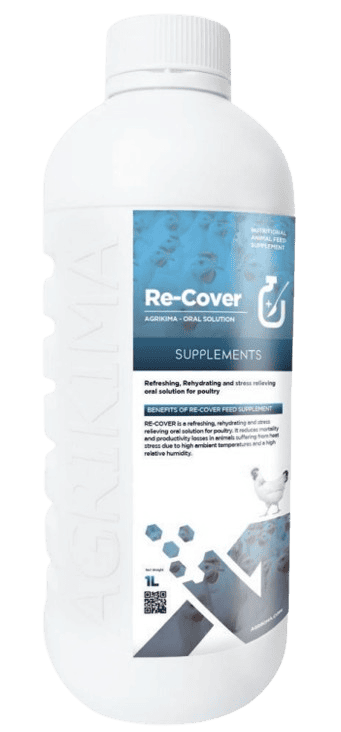
RE-COVER
An oral rehydration solution that helps replace the water and salts piglets lose through diarrhoea; offer it in clean, shallow drinkers alongside the sow's milk and the treatment your vet prescribes, to support hydration while the cause is being dealt with. It does not kill the germs causing scours.
View product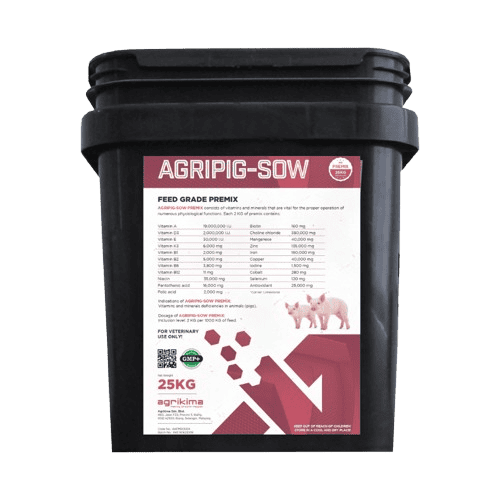
AGRIPIG-SOW
A breeding sow supplement that supports lactation, helping the sow produce good milk for her piglets as part of a balanced diet; good milk and colostrum supply is one of the foundations of scours prevention, alongside sow vaccination, warmth and farrowing hygiene.
View productPrevention
- Colostrum first: make sure every piglet suckles within the first few hours of birth, because piglets can only absorb protective antibodies from colostrum well during the first day; split-suckle large litters by closing the first-born, stronger piglets in a warm box for an hour or two so weaker ones can feed.
- Warmth: give piglets a dry, draught-free creep area with bedding and a safe heat source, since newborn piglets need much more warmth than the sow, especially at night and during the rains.
- All-in, all-out farrowing hygiene: before each sow farrows, remove all dung and bedding, scrub the pen with water and detergent, apply a disinfectant recommended by your vet or agrovet, and leave the pen empty and dry for several days.
- Wash the sow, especially her udder, belly and legs, with warm water and mild soap before she enters the clean farrowing pen, and treat her for worms and mange as advised by your vet.
- Vaccinate sows and gilts before farrowing against E. coli and Clostridium perfringens where vaccines are available; this protects piglets through colostrum, so ask your vet what is available in your area and the right timing.
- Feed the pregnant and nursing sow a balanced diet with enough energy, protein, minerals and clean water so she produces plenty of good-quality milk, and avoid mouldy feed, which can reduce milk and weaken immunity.
- Repair cracked floors and use concrete or slatted floors that can be cleaned; avoid earth floors in farrowing pens where possible.
- Give piglets iron as recommended by your vet, ask about preventive anticoccidial treatment if coccidiosis has been confirmed on your farm, and quarantine bought-in pigs for at least two to three weeks before mixing them with your herd.
Risk to people
Most germs that cause piglet scours mainly affect pigs, but some types of E. coli, Clostridium, rotavirus and other gut germs such as Cryptosporidium and Salmonella found in pig dung can make people sick, especially children, older people and anyone with a weak immune system. Wash hands with soap and clean water after handling piglets, dung or bedding, keep children from playing in pig pens, and do not eat, drink or smoke while working with sick pigs. Keep pig dung away from household water sources and vegetable gardens unless it has been properly composted. If piglets or pigs have been treated with antibiotics or other drugs, do not slaughter them for meat until the withdrawal period given by your vet has passed, because drug residues in pork can harm people and add to antimicrobial resistance.
Impact on your farm
Scours costs Kenyan pig farmers money in several ways. The most obvious loss is dead piglets: a sow that farrowed ten piglets but weans only five has eaten the same feed for nearly four months for half the income. Survivors often stay stunted, take longer to reach market weight and eat more feed per kilo of gain, cutting profit when they are sold as weaners or porkers. There are also costs for vet visits, drugs, extra labour and bedding. On farms where scours keeps returning, farmers lose trust in their breeding sows and may cull good animals. Because many smallholders rely on selling weaners to raise school fees or other household needs, losing a litter can be a serious blow.
Outlook and recovery
The outlook depends on how early the problem is spotted, the cause, the age of the piglets and how dehydrated they are. Piglets that are caught early, kept warm and given fluids and the right vet treatment usually recover within a few days, although some may grow more slowly afterwards. Very young piglets, especially those under a week old, and those with clostridial or bloody diarrhoea, can die quickly even with treatment. Piglets already lying flat, cold and unable to suckle have a poor chance. On a farm level, outbreaks usually stop returning once colostrum, warmth, hygiene and sow vaccination are put right, but if the pens stay dirty and cold the problem will come back with the next litters.
Common questions
My piglets have yellow scours but they still suckle. Should I still call the vet?
Yes. Piglets can go from mild diarrhoea to dangerous dehydration within a day, and the whole litter is often infected even if only a few show signs. Your vet can help find the cause and stop it spreading to other litters. Meanwhile keep them warm, dry and suckling, and provide clean water and rehydration solution.
Can I just buy an antibiotic from the agrovet and treat the piglets myself?
It is better not to. Antibiotics do nothing against rotavirus or coccidia, two very common causes of scours, and the wrong antibiotic or the wrong amount can fail, waste money and breed resistant germs. Some drugs are also unsafe for very young piglets. Let your vet decide the cause and prescribe the right treatment, and always respect the meat withdrawal period.
Why do my gilts' litters get scours more than my older sows' litters?
Gilts have not yet been exposed to all the germs on your farm, so their colostrum contains fewer protective antibodies. Their milk supply may also be lower. Bring gilts onto the farm well before breeding so they adapt, ask your vet about vaccinating them before farrowing, and pay extra attention to colostrum intake, warmth and hygiene for their litters.
Should I stop the piglets from suckling while they have diarrhoea?
No. The sow's milk gives piglets energy, water and antibodies that help them fight infection. Keep them suckling and offer an oral rehydration solution and clean water alongside the milk. Only your vet should advise any change in feeding.
How warm should the piglets be?
Newborn piglets need a much warmer spot than the sow, especially in the first week. A good guide is their behaviour: if they pile on top of each other or shiver, they are too cold; if they lie spread out and away from the heat, they are too hot; if they lie side by side comfortably, the temperature is right. Block draughts, use dry bedding and a safely covered heat lamp or brooder in the creep corner.
I cleaned the pen with water but scours came back. What am I missing?
Water alone does not kill germs or coccidia eggs. Remove all dung and bedding, scrub with detergent, rinse, then apply a disinfectant suitable for pig houses and let the pen dry completely and rest empty for several days before the next sow moves in. Coccidia eggs are very tough, so drying and resting matter a lot. Also check that boots, brooms and buckets are not carrying dung from other pens.
A guide, not a diagnosis. This page is general information to help you recognise problems early. Always confirm with a vet or animal health worker before treating.