What it is
The disease is caused by a bacterium called Erysipelothrix rhusiopathiae. It is a tough germ that can survive for weeks to months in soil, manure, slurry and damp, dirty pens, especially in cool, wet conditions. Many healthy-looking pigs carry it in their tonsils (the glands at the back of the throat) and pass it in their dung and saliva without showing illness. When a pig's defences drop, for example after stress, a change of feed, hot weather or mixing with new pigs, the bacteria multiply and enter the bloodstream. This is called septicaemia (blood poisoning). In the blood the germ damages the small blood vessels, which causes fever and the raised red or purple patches on the skin, and it can kill quickly. In pigs that survive or have a slower infection, the bacteria settle in the joints, causing swollen, painful arthritis, and on the heart valves, where they form cauliflower-like growths that make the heart fail, sometimes leading to sudden collapse when the pig is exerted. In pregnant sows the fever and infection can cause abortion or weak litters.
Which animals are most at risk
Growing and finishing pigs from about three months to a year old are most commonly affected, along with unvaccinated breeding sows and boars. Young piglets are usually protected for a few weeks by antibodies from the sow's first milk (colostrum), if the sow herself is immune. Outbreaks are often seen during hot weather and at changes of season, for example during the warm dry months or the humid start of the long and short rains, when stress and dampness combine. Pigs kept on bare soil, in muddy runs, or in dirty, poorly drained pens are at higher risk, as are herds that buy pigs from markets without quarantine. Both commercial units and smallholder or backyard pigs can be affected; unvaccinated herds in areas where the disease has occurred before carry the greatest risk.
Signs to look for
Early signs
- High fever: the pig feels hot, often lies apart from the group and may shiver or pile up despite warm weather.
- Loss of appetite, with the pig ignoring its feed or eating only a little, while some still drink.
- Dullness and reluctance to get up; when forced to move the pig walks stiffly, as if walking on eggshells, and squeals when touched.
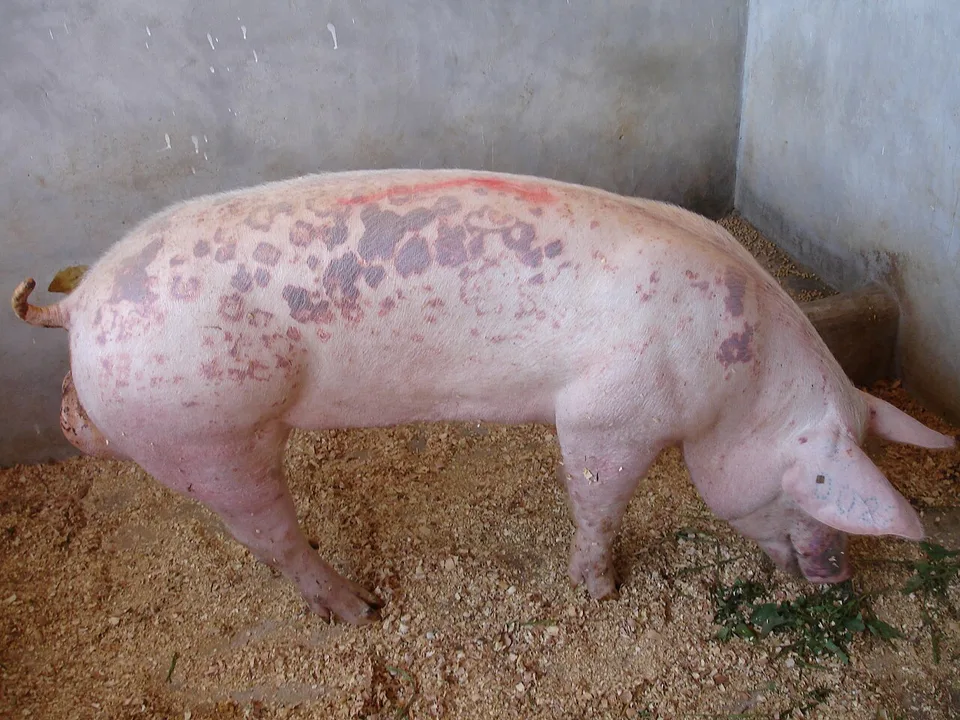
- Pink, red or purple raised patches appearing on the back, flanks, belly, neck or ears, often one to three days into the illness; they are firm and can be felt with your fingers.
- Patches that are square, rectangular or diamond-shaped, from the size of a coin to the palm of your hand, sometimes joining together.
- Constipation, or sometimes vomiting, in a pig that was eating well the day before.
- One or more pigs found dead suddenly with no warning, sometimes with a purplish tinge to the skin of the ears and belly.
As it gets worse
- Skin patches that darken to purple, then dry out, harden and may peel off in pieces; in severe cases the tips of the ears or tail die and fall away.
- Swollen, hot and painful joints, especially the knees, hocks and fetlocks, with lameness that lasts weeks or months.
- Chronic poor growth, with pigs that stay thin, rough-coated and much smaller than their pen mates.
- Breathing difficulty, tiring easily, a bluish tinge to the skin and sudden collapse or death, especially when the pig is chased or exerted, due to damaged heart valves.
- Abortion, stillborn piglets, small weak litters or returns to heat in sows that had a fever during pregnancy.
- Poor milk production in sick sows, leading to hungry, weak piglets.
- Deaths in a pen of growers that continue over several days if no treatment is given.
What to do right now
- Move sick pigs to a clean, dry, shaded pen away from the healthy ones, and look after the healthy pigs first each day before handling the sick ones.
- Call your vet or animal health assistant the same day, because erysipelas usually responds well when treated early, and the vet needs to rule out African swine fever.
- Protect yourself: wear gloves, cover any cuts on your hands and wash thoroughly with soap and water after touching pigs, pens, carcasses or meat.
- Give constant access to clean, cool drinking water in a trough the pig can reach easily without walking far, as feverish pigs lose water quickly.
- Keep the sick pigs cool and comfortable on soft, dry bedding such as wood shavings or dry grass, out of direct sun and draughts, and avoid chasing or forcing them to move, as pigs with heart damage can collapse.
- Stop selling, buying, mixing or moving pigs until the vet has seen them, and do not sell sick pigs for slaughter.
- Check every pig in the herd twice a day for fever, dullness, skin patches and lameness, and write down the date, pig, signs and any deaths.
- Clean out manure and wet bedding from the pens, and keep dead pigs covered and away from dogs until the vet advises how to dispose of them, usually by deep burial with lime or burning.
How it spreads
- Healthy carrier pigs shed the bacteria in dung, urine, saliva and nose discharge, contaminating pens, troughs and water for other pigs.
- Pigs swallow the germ by eating contaminated feed, soil, manure or swill, or by drinking dirty water.
- Bacteria can enter through skin wounds, cuts from fighting, rough floors, tail biting or navel infections in piglets.
- Soil and muddy pig runs can stay contaminated for long periods, so outbreaks can return to the same plot season after season.
- Buying in pigs from markets or other farms without knowing their health or vaccination status brings carriers onto the farm.
- Stress triggers disease in carrier pigs: sudden feed changes, transport, mixing groups, overcrowding, hot weather and sudden temperature swings.
- Biting flies, rodents, birds and other animals such as sheep and poultry can also carry the germ and help move it around a farm.
- Feeding uncooked kitchen waste or pork scraps can introduce the bacteria, as well as far more dangerous diseases like African swine fever.
Could it be something else?
African swine fever (ASF)
ASF is a deadly, notifiable viral disease present in Kenya. It causes blotchy red to purple discolouration, mainly of the ears, belly and legs, which is usually flat and not raised in neat diamonds, with very high fever and many deaths across the herd, often within days. Pigs with ASF do not respond to antibiotics. If several pigs are dying quickly, especially with purple ears and bloody diarrhoea or nose bleeding, treat it as suspected ASF, stop all movement and report to your County Veterinary Officer immediately.
Streptococcus suis or Glässer's disease (bacterial joint and brain infections)
These also cause fever, swollen joints and sudden death, mainly in younger weaned piglets. Look for nervous signs such as paddling, shaking, tilting of the head or lying on the side, which are not typical of erysipelas, and the absence of raised diamond skin patches. A vet often needs laboratory tests to separate them.
Sunburn, bruising or skin irritation
Sunburn affects pale pigs on the back and ears after time in strong sun and the pig is otherwise bright and eating. Bruises and bite marks from fighting are irregular, follow scratches or wounds, and come without fever. Erysipelas patches are raised, shaped like squares or diamonds and come with fever and dullness.
Foot injuries and mycoplasma arthritis
Lameness from a cracked hoof, stone or rough floor usually affects one foot, with a visible wound or heat in the claw, and no fever. Mycoplasma joint infections cause lameness in growers, often without high fever or skin patches. A vet can check joints and may take samples to tell them apart.
How it is diagnosed
A vet will usually suspect erysipelas from the combination of fever, raised diamond-shaped skin patches and stiff walking, and by checking the herd's vaccination history. A quick improvement within a day or so of correct antibiotic treatment strongly supports the diagnosis. To confirm it, the vet may take blood, swabs from affected joints or tissue from dead pigs and send them to a laboratory, such as a county veterinary laboratory or the Central Veterinary Laboratories in Kabete, where the germ can be grown (cultured) or detected by PCR, a test that finds the germ's genetic material. A post-mortem (examining a dead pig) is very useful: the vet may find an enlarged spleen, small bleeding spots on the kidneys and heart, swollen joints, or cauliflower-like growths on the heart valves in chronic cases. Because African swine fever can look similar, your vet may also take samples to rule it out. To help, have ready: how many pigs are sick and dead and when it started, ages affected, any recent purchases, feed changes or mixing, vaccination records, and any treatments already given. Keep a fresh carcass cool and covered, away from dogs and other animals, until the vet sees it, and do not open it yourself.
Treatment
Swine erysipelas is one of the pig diseases that usually responds well to antibiotics when treatment starts early. Penicillin is generally the drug of choice, given by injection, and pigs in the acute stage often improve within a day or two; other antibiotic classes may be used depending on the vet's judgement and laboratory results. The vet may treat the whole pen or group, not just the sick pigs, because others are likely to be incubating the disease. Anti-inflammatory drugs may be given to bring down fever and ease joint pain so pigs get up to eat and drink. The vet will often also recommend vaccinating the rest of the herd once the outbreak is under control. Chronic cases with badly damaged joints or heart valves respond poorly, and the vet may advise culling pigs that will not recover or grow well. All treatment must be prescribed and supervised by a vet; do not guess doses or buy antibiotics to use on your own. Every drug has a withdrawal period, the time you must wait after the last treatment before a pig can be slaughtered for meat; follow it exactly and keep records, so that drug residues do not reach consumers. Use antibiotics only when prescribed, complete the full course, and never use them as a substitute for vaccination and hygiene, because overuse breeds antimicrobial resistance, where germs stop responding to drugs on your farm and in people.
Medicines must be prescribed and dosed by a vet. Always respect milk and meat withdrawal periods, and finish the full course of any antibiotic.
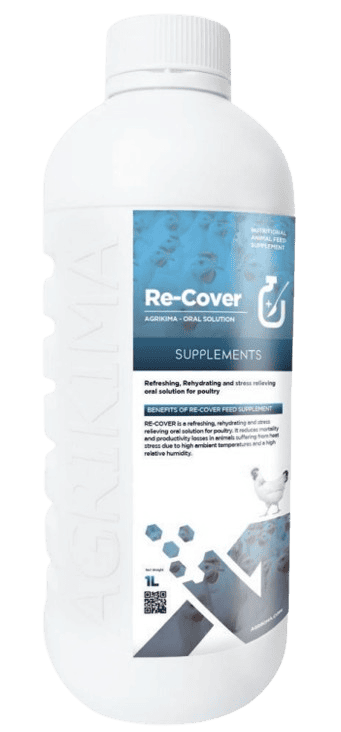
How Agrikima products can help
These support the animal alongside — never instead of — your vet's treatment, vaccination and good management.
Prevention
- Vaccinate breeding sows and boars regularly and vaccinate growing pigs according to your vet's advice; both inactivated (killed) and live vaccines exist, and availability in Kenya varies, so ask your vet or agrovet which product and timing suit your herd.
- Vaccinate sows before farrowing so piglets get protective antibodies through colostrum, and make sure every newborn piglet suckles well in its first hours of life.
- Buy pigs only from known, healthy herds with vaccination records, and keep new arrivals in a separate pen for at least two to four weeks, watching for fever and skin patches before mixing.
- Keep pens clean and dry: remove manure daily, fix leaking drinkers, improve drainage, and use concrete floors that can be washed and disinfected between batches.
- Avoid keeping pigs on the same muddy soil runs year after year, because the germ survives in soil; rest and lime contaminated ground where possible.
- Reduce stress by avoiding sudden feed changes, overcrowding and unnecessary mixing of groups, and give shade, good ventilation and plenty of water during hot weather.
- Feed a balanced ration with correct protein, vitamins and minerals so pigs keep strong immunity, and store feed dry to avoid mouldy feed that weakens pigs.
- Control rodents, birds and flies around the piggery, do not feed raw kitchen waste or pork scraps, and dispose of dead pigs safely by deep burial or burning.
Risk to people
Swine erysipelas can infect people, so it is a zoonosis (a disease that passes from animals to people). Farmers, butchers, meat handlers, vets and cooks get infected mainly through small cuts or scratches on the hands when touching infected pigs, carcasses, raw pork, manure or contaminated equipment. In people it usually causes erysipeloid: a painful, itchy, red-to-purple swelling on a finger or hand that spreads slowly, sometimes with mild fever and stiffness of nearby joints. It usually heals with treatment, but rarely it can spread to the blood and heart, which is serious. To protect yourself, wear gloves when handling sick or dead pigs and raw meat, cover cuts with a waterproof plaster, wash hands well with soap after work, and clean knives and boards thoroughly. Cook pork thoroughly. If you develop a painful, spreading purple swelling on your hand after handling pigs or pork, see a doctor or visit a health centre and tell them you work with pigs. Also follow drug withdrawal periods strictly so antibiotic residues do not end up in pork.
Impact on your farm
On a Kenyan farm, erysipelas can cause sudden deaths of growers and finishers that are close to market weight, which is a heavy loss after months of feed costs. Pigs that survive may stay lame or stunted, take much longer to reach slaughter weight and fetch lower prices. Chronic heart damage can cause unexpected deaths later, even during loading for market. In breeding herds, abortions, stillbirths, small litters and sows returning to heat reduce the number of piglets sold or raised. Meat inspectors at the slaughterhouse may condemn parts or whole carcasses with skin lesions, swollen joints or signs of infection, cutting income further. There are also costs for vet visits, drugs and vaccines, plus lost sales during the time pigs cannot be sold because of treatment withdrawal periods. Because the germ lingers in soil, a farm that does not change its management may face repeat outbreaks.
Outlook and recovery
For pigs with the acute form, the outlook is usually good if a vet starts treatment early, and many recover fully within days. Delay worsens the chances, as pigs can die within a day of first signs, especially in unvaccinated herds. Pigs whose skin patches turn to dead, dark areas, or whose ear tips and tail die, recover more slowly. The chronic form is much harder: damaged joints often stay stiff and swollen, and heart valve damage usually cannot be reversed, so these pigs may grow poorly or die suddenly and are often better culled. Herds that vaccinate, keep pens clean and dry, and reduce stress usually see outbreaks stop and rarely return.
Common questions
How can I tell erysipelas from African swine fever?
Erysipelas typically causes raised, firm, square or diamond-shaped patches you can feel with your fingers, affects some pigs rather than wiping out the herd, and responds quickly to treatment by a vet. African swine fever causes flat, blotchy purple skin especially on the ears and belly, very high death rates in a short time, and does not respond to antibiotics. You cannot always tell by eye, so if many pigs are dying fast, stop all movement, do not sell or slaughter any pigs, and report to your County Veterinary Officer immediately, because ASF is notifiable.
Can I eat or sell meat from a pig that had erysipelas?
Do not slaughter or sell sick pigs. Meat from pigs with active infection may be condemned by the meat inspector and can infect people who handle it. After a pig has recovered and been treated, you must wait for the full withdrawal period of every drug used before slaughter, and the pig should go through an inspected slaughterhouse. Ask your vet when the pig is safe to sell.
Is there a vaccine, and where do I get it?
Yes, vaccines against swine erysipelas exist and are widely used around the world, both killed and live types. Supply in Kenya can vary, so ask your vet, County Veterinary Office or a reputable agrovet which vaccine is available and when to give it. Breeding pigs usually need regular boosters, and your vet will advise a schedule for growers and sows based on your herd.
Why did my pigs get sick when I have never bought new pigs?
Many healthy pigs carry the germ in their throats without showing signs, and it can also survive in soil, manure and damp pens for a long time. Stress such as hot weather, feed changes, overcrowding or mixing groups can trigger disease in pigs that were already carrying it. Birds, rodents and contaminated feed or swill can also bring it in. That is why vaccination and clean, dry housing matter even in closed herds.
My pig recovered but is still lame. Will it get better?
Some lameness improves over weeks with rest, soft bedding and good feeding, but if the germ has damaged the joints badly, the stiffness may be permanent. Pigs with chronic erysipelas may also have damaged heart valves and can die suddenly. Ask your vet to examine the pig; if it is not growing or walking well, culling under the vet's advice may make more economic sense than keeping it.
Can my family catch this from our pigs?
Yes. People usually get a painful, purplish swelling on the hand or finger after the germ enters a cut while handling pigs, pork or manure. Wear gloves, cover cuts, wash hands with soap after work and cook pork well. Keep children away from sick pigs. Anyone with a spreading painful swelling on the hand after pig work should see a doctor and mention contact with pigs.
A guide, not a diagnosis. This page is general information to help you recognise problems early. Always confirm with a vet or animal health worker before treating.