What keeps them healthy
Good health in pigs rests on five things working together: feed, water, housing, hygiene and disease protection. Pigs grow very fast, so they need a balanced ration with enough energy, protein (especially the amino acid lysine, a building block of muscle), minerals such as calcium and phosphorus for bones, and vitamins. Clean water must be available all the time. Pigs drink far more than many farmers expect, and a lactating sow needs a great deal, because milk is mostly water. Pigs cannot sweat properly, so they depend on shade, airflow and wet floors or wallows to stay cool. Heat stress cuts their appetite, fertility and growth. A dry, draught-free sleeping area with clean bedding protects piglets, which chill easily. Regular cleaning breaks the cycle of worms, mange mites and gut germs. Good biosecurity protects the herd from outside infections. Biosecurity means the habits that keep disease out, such as controlling visitors, footbaths, and never feeding uncooked swill. When all these are right, the pig's immune system copes with the everyday germs around it, and the pig stays active, eats well and grows steadily.
What to keep an eye on
Every pig benefits from a daily check, but some groups need closer watching. Newborn piglets in their first weeks chill easily, can be crushed by the sow, and can become anaemic (short of iron in the blood) if raised on concrete with no soil. Weaners, the young pigs taken off the sow, face stress from separation, a new diet and mixing, and often show the first signs of diarrhoea or poor growth. Sows around farrowing and during milk production need extra feed, water and attention. Boars and heavy finishers suffer more in heat. In Kenya, the hot dry months before the long rains bring heat stress. The long and short rains bring wet, muddy pens, more worms and mange, and more mouldy feed. Backyard and free-range systems face more parasite and disease contact. Zero-grazing and commercial units face crowding and faster spread once a disease gets in.
Normal vs warning signs
Signs of good health
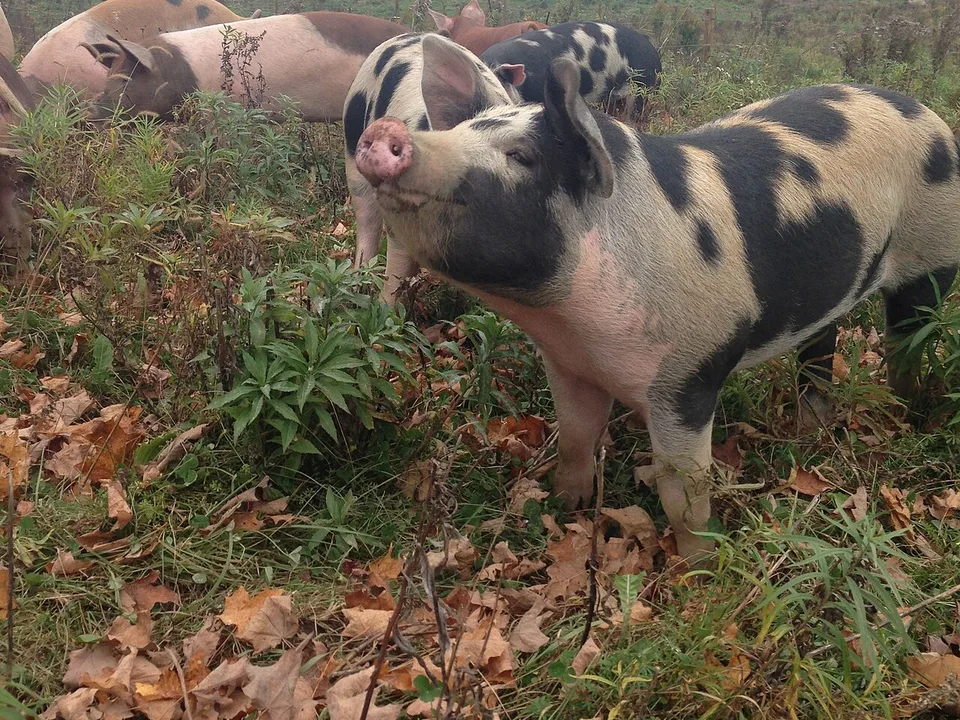
- Bright, alert and curious: a healthy pig lifts its head, grunts and comes to investigate when you enter the pen.
- Eats eagerly: all pigs rush to the trough at feeding time and finish their ration in a reasonable time without leaving feed behind.
- Tail curled, wagging or swinging when the pig is active. Many pigs relax the tail when asleep, which is normal.
- Normal body temperature is about 38.5–39.5 °C. Young piglets may run slightly higher, and readings rise a little after exercise or on hot afternoons.
- Breathing is quiet, even and done with the chest, without heaving flanks. Pigs breathe faster in heat and young piglets breathe faster than adults.
- Droppings are firm, formed and moist, shaped like soft balls or logs. Suckling piglets normally pass softer, pasty yellowish droppings.
- Urine is clear to pale yellow, and the pig passes it easily without straining.
- Lies stretched out on its side or on its belly, close to its pen mates but not piled on top of them. It gets up easily when disturbed.
- Skin is clean, smooth and free of scabs, crusts or blotches. The coat lies flat and the ears are clean inside.
- Walks freely on all four legs with no limping, and keeps the dunging area separate from the sleeping area.
First signs something is wrong
- Leaves feed, eats slowly, or does not get up at feeding time. This is often the very first sign of illness.
- Temperature above about 40 °C in a pig that has been resting in the shade suggests fever. A low temperature in a weak pig is also serious.
- Lies apart from the group, hides in the bedding, or pigs pile on top of each other when the weather is not cold, which suggests chill or fever.
- Tail hangs straight and limp while the pig is awake, or the pig looks dull with its head down and ears drooping.
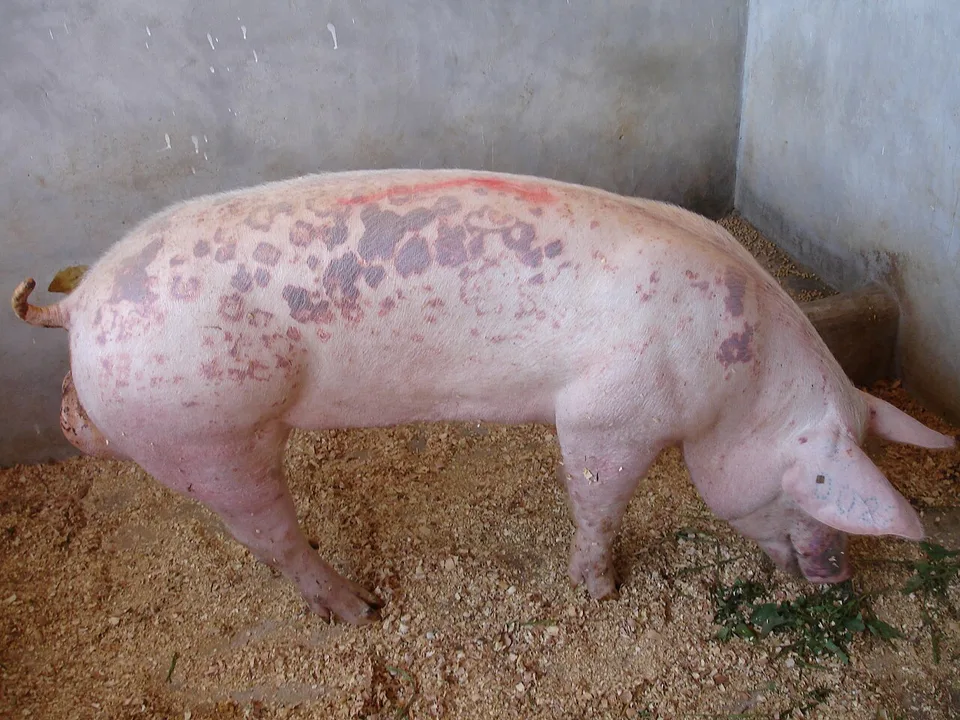
- Red, purple or bluish patches on the ears, belly, legs or tail are a warning sign of serious disease, including African swine fever. Isolate the pig and call the vet at once.
- Diarrhoea, blood in the droppings, hard dry droppings with straining, or vomiting.
- Coughing, sneezing, discharge from the nose or eyes, or fast heaving breathing at rest in cool weather.
- Constant scratching and rubbing on walls, crusty skin, or bitten tails and ears, which can point to mange, lice or stress.
- Limping, swollen joints, trembling, staggering, or walking in circles.
- Sudden death of one or more pigs. Do not open or sell the carcass, and call the vet immediately.
Daily routine
- Do your pen check every morning at feeding time, when changes in appetite are easiest to see. Do a quick second look in the evening.
- If any pig is off feed, dull or has a fever, move it to a separate sick pen and use separate boots and buckets for it. Handle it last.
- Make sure every pig has clean drinking water at all times. Check that nipple drinkers actually release water, and that water troughs are clean.
- Give shade, airflow and a way to cool off in hot weather. In cold, wet weather, give dry bedding and a draught-free sleeping area, especially for piglets.
- Stop buying in, selling or moving pigs if any are unwell. Keep visitors, traders and butchers out of the pens until the vet has seen them.
- Write down what you see: which pig, its temperature, its signs and when they started. Take a photo of any skin changes to show the vet.
- Call your vet or County Veterinary Officer early. Do not give leftover or borrowed drugs, because the wrong treatment can hide the problem or leave residues in the pork.
Common risks
- Health is lost most often when a new pig is brought in without a quarantine period and carries an infection such as African swine fever, mange or worms into the herd.
- Feeding uncooked kitchen waste, hotel swill or pork scraps can bring in serious viruses, including African swine fever, which survives for a long time in pork products.
- Visitors, traders, butchers and vehicles moving between farms can carry germs on boots, clothes, crates and tyres.
- Dirty, wet pens, blocked drains and dung left lying around allow worm eggs, mange mites and diarrhoea-causing germs to build up.
- Mouldy maize, maize bran or other feeds can contain aflatoxins. These are poisons made by moulds that damage the liver and weaken immunity even when the feed looks fairly normal.
- Sudden changes in feed, overcrowding, mixing unfamiliar pigs, hot afternoons and cold, wet nights all stress pigs and make them more likely to fall sick.
- Free-ranging pigs that roam can pick up worms, pork tapeworm cysts and infections from other herds, and may eat rubbish or human faeces.
Often mistaken for illness
Normal panting and wallowing in hot weather
Pigs breathe faster and lie in water, mud or their own wet dung on hot afternoons to cool down, because they cannot sweat. A healthy pig that is just hot still gets up, eats when feed comes, and breathes normally again in the cool evening. A sick pig breathes hard even in cool weather, has a fever when rested, and refuses feed.
Sow off feed around farrowing
Many sows eat less in the day before farrowing (giving birth) and may be restless and build a nest. Appetite usually returns within a day or so after farrowing. Call the vet if she stays off feed after this time, or has a fever, a hard, hot or red udder, a foul discharge, or piglets that are hungry and squealing.
Swollen red vulva in a gilt or sow on heat
A gilt is a young female that has not yet farrowed. When a gilt or sow is on heat (ready to mate), the vulva becomes swollen and pink. She may be restless, mount others and stand still when pressed on the back. This lasts a couple of days and returns about every three weeks. Swelling with pus, a foul smell or bleeding is not normal.
Sunburn or rough skin in white pigs
White or pink pigs kept in the sun can redden on the back and ears, which then peel. The redness is on the parts that face the sun, and the pig is otherwise bright and eating. Blotchy red or purple patches on the belly, ear tips and legs, together with fever and dullness, are a disease warning and need the vet.
Doing a health check
You can do a simple home health check every day. Stand quietly at the pen before feeding and watch for a minute. Does every pig get up, grunt and come forward? Count them. Then feed, and watch who eats eagerly and who hangs back. Look at the droppings in the dunging area, the skin, the eyes, the tail and the way each pig walks. Listen for coughing. To take a temperature, use a digital thermometer from the agrovet. Clean it, lubricate the tip with a little petroleum jelly or cooking oil, and gently insert it into the rectum (back passage) about 3–5 cm. Angle it slightly so the tip touches the rectal wall. Hold it until it beeps, usually about a minute. Take readings while the pig is calm and eating or resting, not after chasing it or in the hottest part of the day. Clean and disinfect the thermometer between pigs. If one pig looks unwell, take the temperature of a healthy pen mate too, so you can compare. To check breathing, count flank movements for 30 seconds while the pig rests, then double the number. To track growth, weigh pigs on a scale or use a pig weigh band (a measuring tape that estimates weight from chest size) once a month. Keep a notebook with dates, weights, temperatures, feed changes, deworming, vaccinations and any sick pigs. When you call the vet, this record helps them reach a diagnosis faster. If a pig dies, the vet may do a post-mortem (an examination of the body after death) and take samples for a laboratory.
Routine vet care
Routine vet care keeps healthy pigs healthy. A good plan, agreed with your vet or animal health officer, usually includes several things. Piglets raised on concrete get iron in their first days of life to prevent anaemia, and your vet will advise on the product and how to give it. Deworming follows a regular schedule, especially for sows before farrowing and for weaners and growers, using a dewormer the vet recommends. Mange and lice are controlled by treating sows before farrowing and treating new arrivals. Castration of male piglets not kept for breeding should be done young, cleanly and with pain relief where possible. Vaccination needs vary by area and farm. Ask your vet which vaccines are available and worth using locally. There is currently no approved vaccine for African swine fever in Kenya, so biosecurity is the main protection. The vet can also check your feed ration, inspect breeding stock, advise on farrowing pens, and examine any pig that dies unexpectedly. Any drug a vet prescribes, including dewormers, antibiotics and mange treatments, has a withdrawal period. This is the time you must wait after treatment before the pig can be slaughtered for meat. Always follow it. Antibiotics should only be used when a vet has prescribed them for a bacterial infection, and the full course should be given. Routine use of antibiotics as 'growth boosters' or 'just in case' breeds resistant germs. These germs make treatment fail for both pigs and people.
How Agrikima products can help
These support the animal alongside — never instead of — your vet's treatment, vaccination and good management.

AGRITOXINILSTOP
Mixed into pig meal or home rations based on maize and maize bran, this mycotoxin binder helps protect pigs from aflatoxin and ochratoxin in feed that may carry hidden mould poisons. This supports normal liver function, appetite and growth. It is an aid alongside proper dry feed storage and never a reason to feed visibly mouldy feed.
View product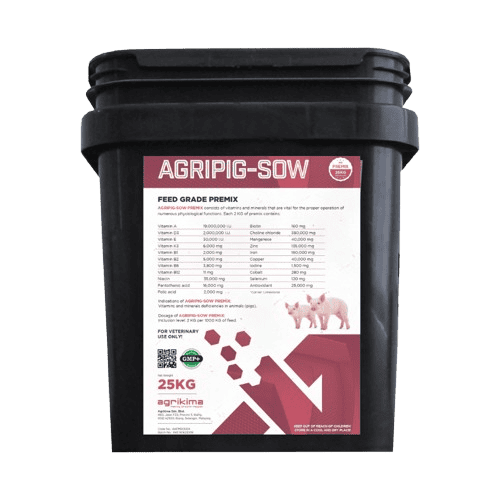
AGRIPIG-SOW
For breeding sows and gilts, this supplement helps meet the extra nutritional needs of fertility and milk production when added to a balanced sow ration. It supports regular breeding and strong litters as part of good feeding, water supply and vet-guided herd care.
View productKeeping them healthy
- Quarantine every new pig for at least two to three weeks in a separate pen away from the herd. Watch it daily, and deworm and treat it for mange on the vet's advice before mixing.
- Never feed uncooked swill, hotel waste or pork scraps. Kitchen waste should only be fed if it is boiled thoroughly, and pork products should be left out completely, because they can carry African swine fever.
- Keep a footbath with fresh disinfectant at the pen entrance, limit visitors, and keep traders, butchers and their vehicles away from the pens.
- Feed a balanced ration suited to each stage: creep feed for piglets, then weaner, grower, finisher, and sow and boar meals. Make feed changes gradually over several days.
- Store maize, bran and pig meal dry, off the floor and away from leaking roofs. Do not feed mouldy or musty-smelling feed, as it may contain aflatoxins.
- Provide clean water all day. Check drinkers daily and clean troughs often.
- Clean the pens daily and remove dung. Keep floors sloped and drains clear, and disinfect and rest pens between batches.
- Avoid overcrowding, give shade and cooling in the dry season, and keep sleeping areas dry and draught-free in the rains.
- Keep free-range pigs confined or tethered, build and use latrines for people, and deworm regularly to cut worm and pork tapeworm cycles.
Risk to people
Pigs that look healthy can still carry germs that infect people, so good hygiene always matters. Pork tapeworm is a real risk in East Africa, especially with free-range pigs. Pigs pick up tapeworm cysts by eating human faeces, and people get the tapeworm by eating undercooked pork. Tapeworm eggs from a human carrier can also cause cysts in people, including in the brain, which can lead to epilepsy. Use latrines, keep pigs confined, have pigs slaughtered where meat is inspected, and cook pork thoroughly. Pigs can also pass on Streptococcus suis, Salmonella, brucellosis and influenza viruses. Wash your hands after handling pigs or dung, cover cuts, and wear boots and overalls in the pens. Do not let children play in pig pens. Always respect drug withdrawal periods so that pork reaching your family and customers is free of residues.
Impact on your farm
Healthy pigs make money; sick pigs quietly lose it. A pig that eats well and grows steadily reaches market weight sooner and costs less to feed per kilogram of pork. A healthy sow comes back on heat on time, farrows regularly and raises strong litters. On a Kenyan smallholding, a few weeks of poor growth from worms, mange or low-grade illness can wipe out the profit on a batch of finishers. A disease outbreak can do far worse. African swine fever can kill most of an infected herd and lead to movement restrictions in the area. Catching problems early through a daily check means lower vet and drug costs, fewer deaths, and pork that is free of drug residues and sells well to butchers and processors.
Long-term health
A herd that is fed well, housed well, kept clean and protected from outside disease will usually stay productive with only occasional minor problems. When something does go wrong, the outlook depends heavily on how early it is noticed. A pig that is spotted on the first morning it leaves feed, isolated and seen by a vet has a much better chance of recovery than one found after days of illness. Early action also gives the rest of the herd a better chance of staying healthy. Farmers who keep simple daily records and know their pigs' normal behaviour catch problems sooner and lose fewer animals.
Common questions
What is the normal temperature of a pig?
A healthy pig's temperature is usually about 38.5–39.5 °C. Young piglets can be slightly higher. Temperatures also rise a little after the pig has been chased or excited, or on a hot afternoon. Take the temperature when the pig is calm, using a digital rectal thermometer. If a resting pig reads above about 40 °C and is also dull or off feed, it likely has a fever and you should call the vet. Comparing with a healthy pen mate helps you judge.
Why is my pig's tail straight? Is it sick?
A curly or wagging tail is a good sign of a happy, healthy pig. A pig's tail often relaxes and straightens when it is asleep or resting quietly, and that is normal. Worry when the tail hangs limp and straight while the pig is awake, especially if the pig is also dull, off feed or lying apart. Then check its temperature and watch it closely. Also look for tail biting, which usually points to crowding, boredom, heat or a diet problem.
How often should I check my pigs?
Look at every pig at least once a day, ideally at morning feeding, when a pig that does not come to eat stands out at once. A short evening check is also useful, especially for sows about to farrow and young piglets. Weigh or use a weigh band monthly to make sure growth is on track. Keep a simple notebook so you can see changes over time.
How much water does a pig need?
Pigs need far more water than many farmers think, and they need it all day, not just at feeding times. Needs rise with body size, hot weather and milk production, and a lactating sow drinks a great deal. A sow short of water produces less milk, and her piglets suffer. Check that nipple drinkers actually flow when pressed and that troughs are clean and full. If pigs crowd around the water or eat less, check the water supply first.
Is it normal for my pigs to lie in mud or their own dung?
Pigs cannot sweat, so in hot weather they lie in water, mud or wet patches to cool their skin. This is normal cooling behaviour, not dirtiness. If they are lying in dung, it usually means they have no better way to cool off. Give them shade, airflow, a clean wet area or a sprinkler, so they can cool without dirtying themselves. Given space, a healthy pig keeps its sleeping area dry and dungs in one corner.
Do I need to give vitamins or supplements to healthy pigs?
Pigs fed a good, balanced commercial meal or a well-formulated home mix usually get most of what they need. Extra support can still help in some situations, such as breeding sows, pigs fed mostly home-grown maize and bran, or times of heat or stress. Ask your vet or animal nutrition adviser before adding supplements, so you fix real gaps rather than waste money. Supplements support good feeding and management; they do not replace them.
A guide, not a diagnosis. This page is general information to help you recognise problems early. Always confirm with a vet or animal health worker before treating.