What it is
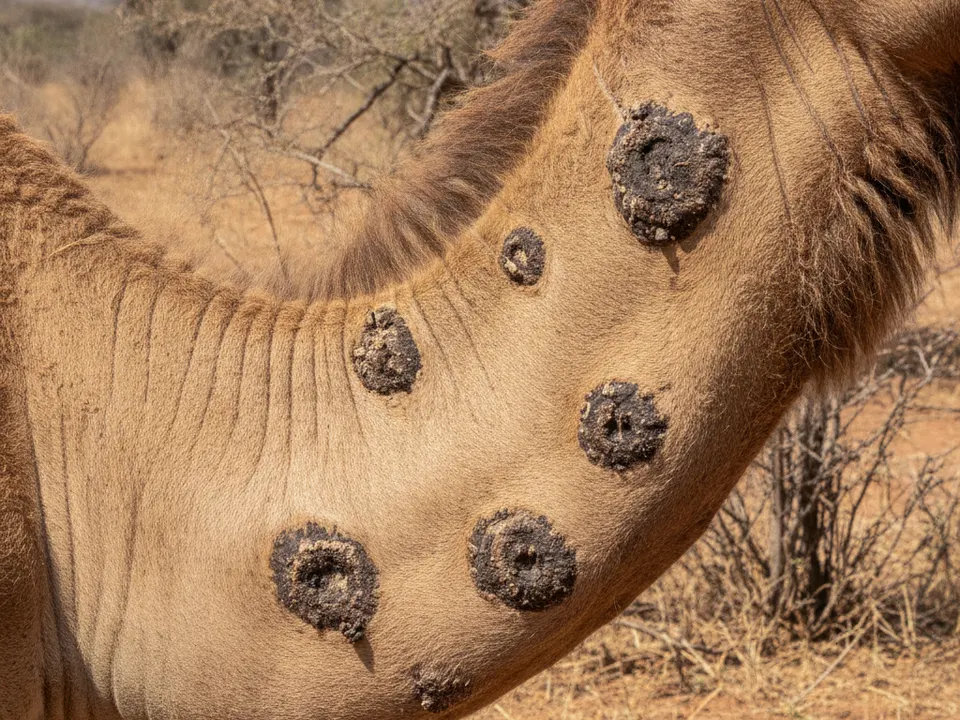
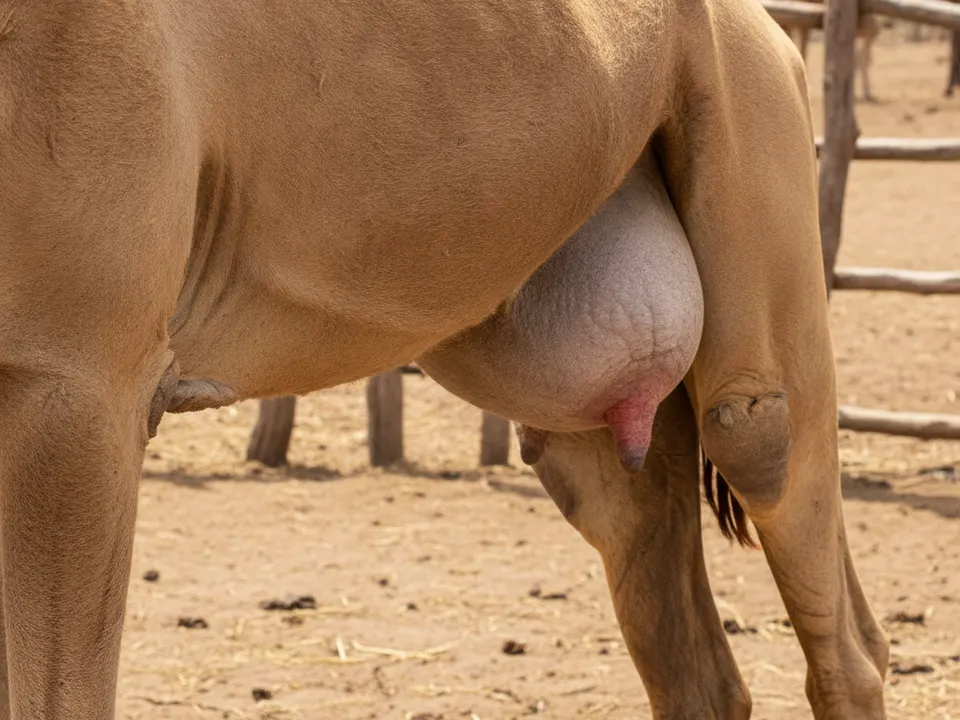
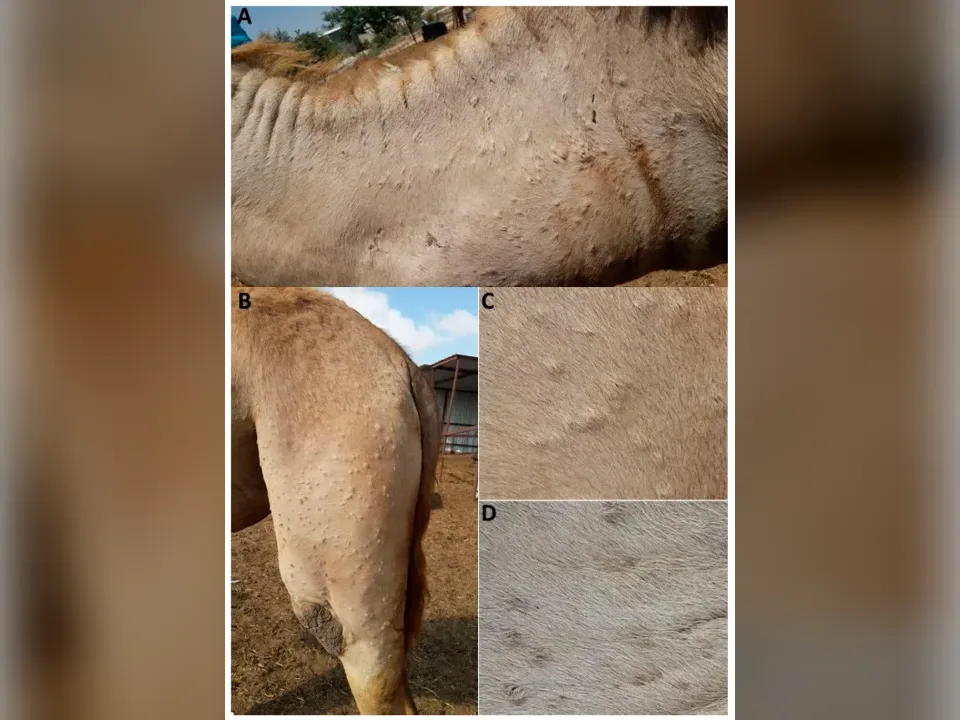
Camel pox is caused by the camelpox virus, an orthopoxvirus. Orthopoxviruses are a family of viruses that also includes cowpox and the old human smallpox virus. The virus enters through small breaks in the skin or the lining of the mouth and nose. It multiplies there and in nearby lymph nodes, which are the 'glands' under the jaw and in front of the shoulder, so they swell. It then travels in the blood and settles in the skin. Each lesion goes through stages over days: a red spot (macule), a raised bump (papule), a fluid blister (vesicle), a pus-filled bump (pustule), and finally a dry crust or scab that falls off and leaves a scar. In the mild form, lesions stay mostly on the lips, nostrils, eyelids and face. In the generalised form, lesions cover the neck, legs, belly, udder and genitals, and can also form inside the mouth, throat, airways and gut. This makes eating, drinking and breathing painful. Raw lesions easily become infected with bacteria, which causes much of the serious illness and many of the deaths. The scabs that fall off are full of virus and can stay infectious in the dry environment for a long time.
Which animals are most at risk
Young camels, usually under about three years old and especially calves still suckling, are most at risk of the severe, generalised form. Older camels that have never been exposed can also get sick, while camels that recovered before usually stay protected for a long time. Pregnant females may abort. Camels weakened by poor grazing, heavy worm or tick loads, or other illness tend to suffer more. Outbreaks are often reported during and after the rains, when herds gather at water points and fresh grazing and when movement and trading increase. In Kenya the disease matters most in pastoral camel areas such as Marsabit, Wajir, Mandera, Garissa, Isiolo, Turkana, Samburu and Laikipia, and in herds where animals are bought and sold frequently.
Signs to look for
Early signs
- Fever: the camel feels hot, seems dull and may stand apart from the herd or lie down more than usual.
- Reduced appetite and less interest in browsing, and a lactating camel may give noticeably less milk.
- Watery eyes and tears running down the face, sometimes with a runny nose.
- Swollen, firm glands under the jaw, below the ear or in front of the shoulder that you can feel with your hand.
- Small red spots on the lips, around the nostrils and on the eyelids that soon become raised bumps.
- Swelling of the lips and face, and drooling in some animals.
As it gets worse
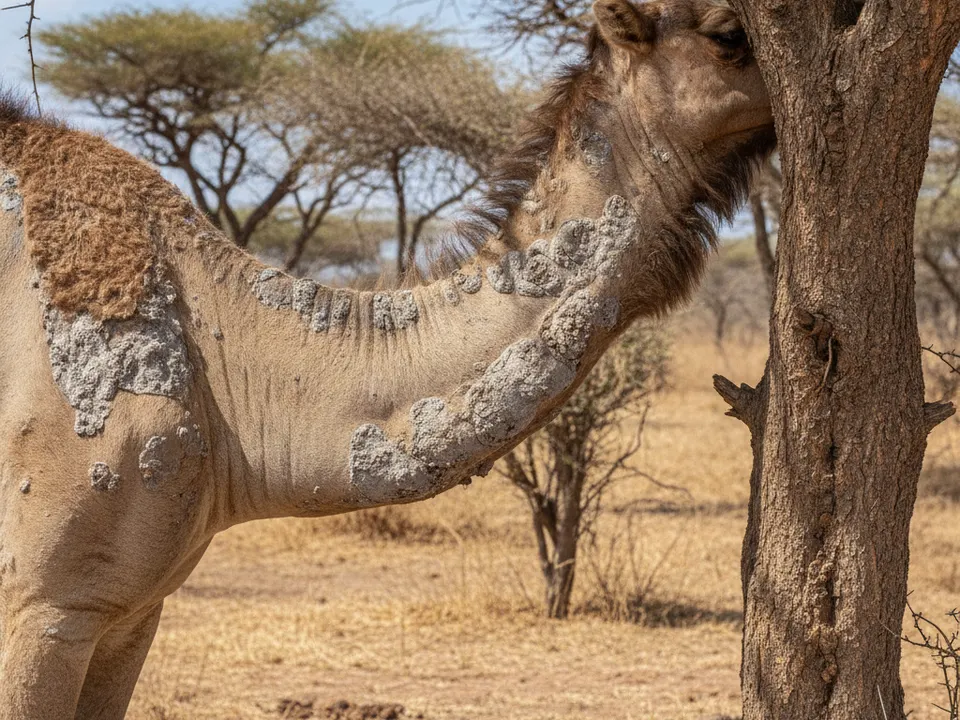
- Blisters and pus-filled bumps that break and form thick brown or dark crusts on the head, neck, legs, belly, udder, groin and around the tail.
- In calves, lesions joining together over large areas of skin, with the calf becoming weak and thin very quickly.
- Sores in the mouth and on the tongue that make the camel unable to eat or drink properly, and calves that refuse to suckle.
- Difficult or noisy breathing and discharge from the nose when lesions reach the airways.
- Swollen, crusted eyelids, cloudy eyes and sometimes blindness in one or both eyes.
- Bad-smelling, pus-filled wounds when bacteria infect the lesions, and flies gathering on them.
- Diarrhoea, dehydration and severe weight loss in calves with the generalised form.
- Abortion in pregnant camels and, in severe cases, death, mostly among young calves.
What to do right now
- Isolate every camel with fever or pox lesions in a separate shaded area, away from the rest of the herd and especially away from young calves and pregnant females.
- Stop buying, selling, lending or moving camels from your herd, and keep the herd away from shared water points and markets where possible until the vet has seen it.
- Wear gloves when you handle sick camels, wash your hands well with soap and water afterwards, and cover any cuts on your hands.
- Make sure sick camels have easy access to clean water, shade and soft, palatable browse or fodder, because mouth sores make eating painful.
- Help calves that cannot suckle well by gently offering milk or water, and watch them closely for weakness and dehydration.
- Use separate ropes, buckets and milking containers for sick animals, and milk sick camels last so you do not carry the virus to healthy ones.
- Collect fallen scabs and contaminated bedding and burn or bury them, and clean shared equipment.
- Record which animals are sick, their ages and signs, and call your vet or County Veterinary Officer; do not give antibiotics or other drugs unless a vet prescribes them.
How it spreads
- Direct contact between a sick camel and a healthy one, especially nose-to-nose contact, licking and suckling, spreads the virus quickly.
- Scabs that fall off sick camels contain a lot of virus and can stay infectious for months in dry, shaded places such as bomas, resting spots and under trees.
- Shared water troughs, feeding places, ropes, saddles, halters and milking containers carry the virus from one camel to another.
- Bringing in newly bought camels, or mixing herds at markets, water points and during migration, is a common way the disease enters a healthy herd.
- Biting ticks, especially Hyalomma ticks, may be able to carry the virus between camels, although direct contact is the main route.
- People's hands and clothing can carry virus from a sick camel to a healthy one, for example when one person milks the whole herd.
Could it be something else?
Camel contagious ecthyma (orf-like disease)
This is caused by a different virus (a parapoxvirus) and also mostly affects young camels. The thick, wart-like crusts usually stay on the lips, muzzle and around the mouth and rarely spread over the whole body, and fever is often mild. The two diseases can look very similar and can even occur together, so only a laboratory test on scabs can tell them apart for certain.
Camel papillomatosis (warts)
Warts are firm, dry, cauliflower-like growths on the lips and face that grow slowly. There is no fever, no blister or pus stage, and the camel usually stays bright and eats well.
Mange (sarcoptic mange)
Mange causes intense itching, so the camel rubs and bites itself. You see hair loss and thick, wrinkled, crusty skin, often on the head, neck, flanks and inside the thighs, but no fever and no sequence of blisters turning into pustules. A vet can confirm it with a skin scraping.
Dermatophilosis (rain scald)
This bacterial skin infection appears in wet weather as tufts of matted hair that lift off like a paintbrush, leaving raw, moist skin underneath. It does not usually start on the lips, nostrils and eyelids, and the camel is rarely feverish.
How it is diagnosed
An experienced vet can often suspect camel pox from the typical lesions on the lips, nostrils and eyelids, the fever, the swollen glands and the way it spreads through young camels. Because contagious ecthyma and other skin diseases look similar, the vet may collect samples to confirm it. Useful samples are fresh scabs, fluid from unbroken blisters, and swabs from lesions, sometimes with a blood sample. These are sent to a laboratory such as the Central Veterinary Laboratories at Kabete or a regional veterinary laboratory, where tests such as PCR (a test that detects the virus's genetic material) or virus isolation confirm the cause. If a calf dies, a post-mortem can show lesions in the mouth, airways and gut. You can help by writing down when the first animal got sick, how many camels and calves are affected, their ages, any deaths or abortions, recent purchases or herd mixing, and any treatments already given. Keep sick animals restrained in a shaded place where the vet can examine them safely.
Treatment
There is no medicine that kills the camelpox virus, so treatment is supportive. This means helping the camel's own body fight the virus while preventing complications. Antibiotics do not cure camel pox; the vet uses them only to control bacterial infection of the sores, for example with broad-spectrum antibiotics such as oxytetracycline or penicillin-type drugs, chosen according to the case. Using antibiotics only when they are needed, for the full course the vet prescribes, helps prevent antimicrobial resistance, where bacteria stop responding to drugs. The vet may also clean lesions with mild antiseptic solutions, apply soothing ointments or fly-repellent wound sprays, treat eye lesions to protect sight, and recommend vitamins and fluids for weak calves. Anti-inflammatory or fever-reducing medicine may be used in some cases. Any drug given to a camel can leave residues in milk and meat, so follow the withdrawal period your vet gives you before milk is drunk or sold or the animal is slaughtered. Many medicines have no withdrawal period specifically set for camels, so the vet will advise a safe waiting time. Most lesions dry and scab within one to two weeks and the whole illness often runs over about four to six weeks. Calves with the generalised form need close nursing and may still die despite good care.
Medicines must be prescribed and dosed by a vet. Always respect milk and meat withdrawal periods, and finish the full course of any antibiotic.
How Agrikima products can help
These support the animal alongside — never instead of — your vet's treatment, vaccination and good management.
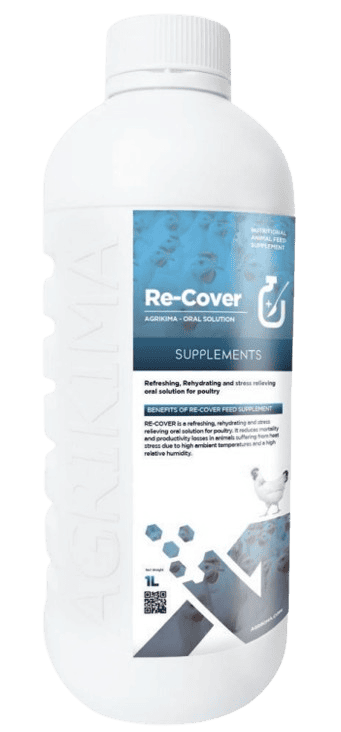
RE-COVER
An oral rehydration solution that can help sick camels, and especially calves with mouth sores, fever or diarrhoea, replace lost water and salts when they are drinking and eating less. It supports recovery alongside vet care and good nursing and does not act against the virus.
View product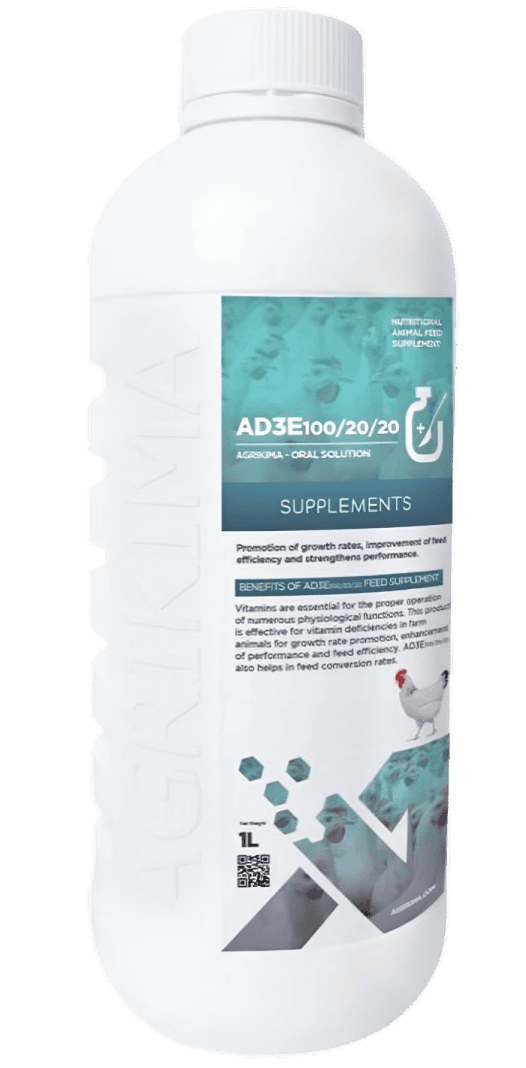
AD3E 100/20/20
Vitamins A, D3 and E support normal skin and mucous membrane health and general condition. This can help camels recovering from pox, particularly during dry seasons when browse is poor in vitamin A. Use it as your vet advises, as a nutritional aid alongside treatment, not as a cure.
View productPrevention
- Vaccination: live and inactivated camel pox vaccines exist and are used in several camel-keeping countries, and they give good protection. Availability in Kenya varies, so ask your County Veterinary Officer whether vaccine can be obtained and when to vaccinate young camels.
- Quarantine newly bought camels for at least two to three weeks, away from your herd, and check them for fever and skin lesions before mixing them in.
- Avoid buying camels from herds or markets where pox is known to be present, and limit mixing with other herds at water points during an outbreak where you can.
- Control ticks and other parasites regularly with products and methods advised by your vet, because ticks may carry the virus and heavy parasite loads weaken camels.
- Keep camels, especially calves and pregnant females, in good body condition with adequate browse, water and mineral supplements, because well-fed camels cope better with infection.
- Clean bomas and resting areas, and collect and destroy scabs after an outbreak, because the virus can survive a long time in dry scabs.
- Keep separate equipment for sick animals, and teach herders and milkers to wash their hands between animals.
- Keep records of illness, purchases and vaccinations so that outbreaks can be traced and the vet can advise you better.
Risk to people
Camel pox can infect people, though this is uncommon. Herders, milkers and people who nurse sick camels have developed sore, pus-filled lesions on the hands and fingers, sometimes with mild fever and swollen glands in the armpit. Most human cases are mild and heal on their own, but anyone with a weak immune system, or any person who develops sores after handling sick camels, should visit a health centre and tell the health worker about the contact. To protect yourself, wear gloves when handling sick camels or their scabs, cover cuts and scratches, wash your hands well with soap and water, and do not let children play with sick calves. Do not drink raw milk from sick camels; boil all camel milk, and discard milk during the drug withdrawal period your vet gives you.
Impact on your farm
For a pastoral family, camels are milk, transport, savings and status, so camel pox hits hard. Sick lactating camels give much less milk, at the very time families depend on it. Calves can die or be stunted for months, which slows herd growth. Pregnant camels may abort, losing a whole year of production. Damaged skin lowers the value of hides, and visibly sick or scarred camels fetch lower prices or cannot be sold while the herd is affected. Extra labour is needed to nurse calves and keep sick animals apart, and vet visits, antiseptics and antibiotics add cost. Outbreaks can also disrupt marketing and movement between herds and counties.
Outlook and recovery
Most adult camels recover within about four to six weeks, and recovered camels usually stay protected against the disease for many years. The outlook is much worse for young calves with the generalised form, especially when lesions reach the mouth and airways and they cannot suckle or breathe easily, and some will die. Recovery depends on the age and condition of the camel, how quickly bacterial infection of the sores is controlled, good nursing with water and soft feed, and fly control. Some camels are left with scars, and a few may lose sight in an eye. Pregnant females that abort will usually recover but lose that season's calf.
Common questions
Can I drink milk from a camel that has camel pox?
It is safest not to drink raw milk from a sick camel. The virus can pass to people through contact, and sick camels often have lesions on the udder and teats. Boil any camel milk before drinking. If your vet has given the camel antibiotics or other drugs, throw the milk away for the whole withdrawal period they tell you, even if you boil it, because boiling does not remove drug residues.
Will a camel get camel pox again after it recovers?
Camels that recover from camel pox usually develop strong, long-lasting immunity, so they rarely get sick again. This is why the disease mostly affects young camels in herds where it is common. Camels from areas without the disease, or herds that have not been exposed for a long time, can still get sick at any age.
Is there a camel pox vaccine in Kenya?
Effective camel pox vaccines exist and are widely used in some Middle Eastern and Asian countries. Availability in Kenya can be limited and changes over time. Ask your County Veterinary Officer or a reputable agrovet whether a vaccine is available in your area and how it should be used for young camels.
Can camel pox spread to my goats, sheep or cattle?
Camelpox virus mainly infects camels, and goats, sheep and cattle are generally not affected. However, goats and sheep have their own pox and orf diseases that look similar, so if other animals on your farm develop skin lesions, ask your vet to check them rather than assuming they caught it from the camels.
Should I open or scrape off the scabs to help the camel heal?
No. Picking or scraping scabs makes the wounds raw, spreads the virus on your hands and invites bacterial infection and flies. Let the scabs dry and fall off naturally. Keep the area clean as your vet advises, and collect fallen scabs and burn or bury them so they do not infect other camels.
Can people really catch camel pox from camels?
Yes, but it is uncommon. Herders and milkers who handle sick camels have developed sores on their hands and fingers. These are usually mild and heal, but you should still wear gloves, cover cuts, wash your hands well and visit a health centre if you develop sores after handling sick camels.
A guide, not a diagnosis. This page is general information to help you recognise problems early. Always confirm with a vet or animal health worker before treating.