What it is
Camel mange is caused by Sarcoptes scabiei var. cameli, a mite too small to see clearly with the naked eye. The female mite digs tunnels (burrows) in the top layer of the skin, where she lays eggs. The eggs hatch, the young mites grow into adults within about two to three weeks, and the cycle repeats, so numbers build up fast on one animal. The burrowing, together with the mites' saliva and droppings, triggers a strong allergic-type reaction in the skin. This is why the itching is so severe. The skin responds by thickening, losing hair and forming crusts and scales. Constant rubbing, scratching and biting break the skin, producing cracks (fissures) that weep fluid and bleed slightly. These open cracks can become infected by bacteria and attract flies, which makes the skin worse. A heavily affected camel spends so much time scratching and is so uncomfortable that it browses less and rests poorly, so it loses body condition and milk. In young or already weak camels, widespread mange combined with poor nutrition and secondary infection can lead to severe wasting and occasionally death.
Which animals are most at risk
All camels can get mange, but young camels, weaned calves, old animals and any camel in poor body condition suffer the worst disease. Pregnant and heavily lactating she-camels, and pack or transport camels that work hard and carry saddles, are also at higher risk. Mange problems tend to rise during long dry seasons and cooler months, when grazing is poor, camels are weak and herds crowd together at the few remaining water points and in enclosures at night. Pastoral and agro-pastoral herds in Turkana, Marsabit, Wajir, Mandera, Garissa, Isiolo, Samburu and similar areas, where herds mix at wells and markets, are commonly affected. Herds that buy in camels without a quarantine period, or that share grazing with infected herds, are more likely to be hit. Once mange is in a herd, untreated carrier animals keep reinfecting the others.
Signs to look for
Early signs
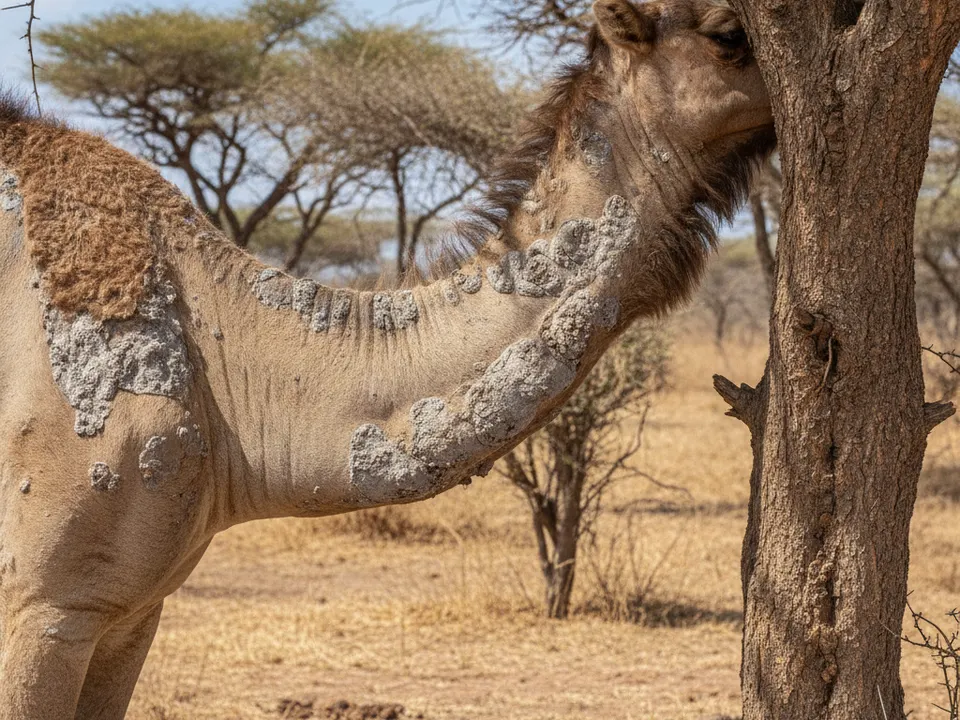
- Frequent rubbing of the head, neck and body against trees, posts, walls or other camels, and biting or nibbling at the skin.
- Restlessness, especially at night, with the camel getting up and lying down more often than usual.
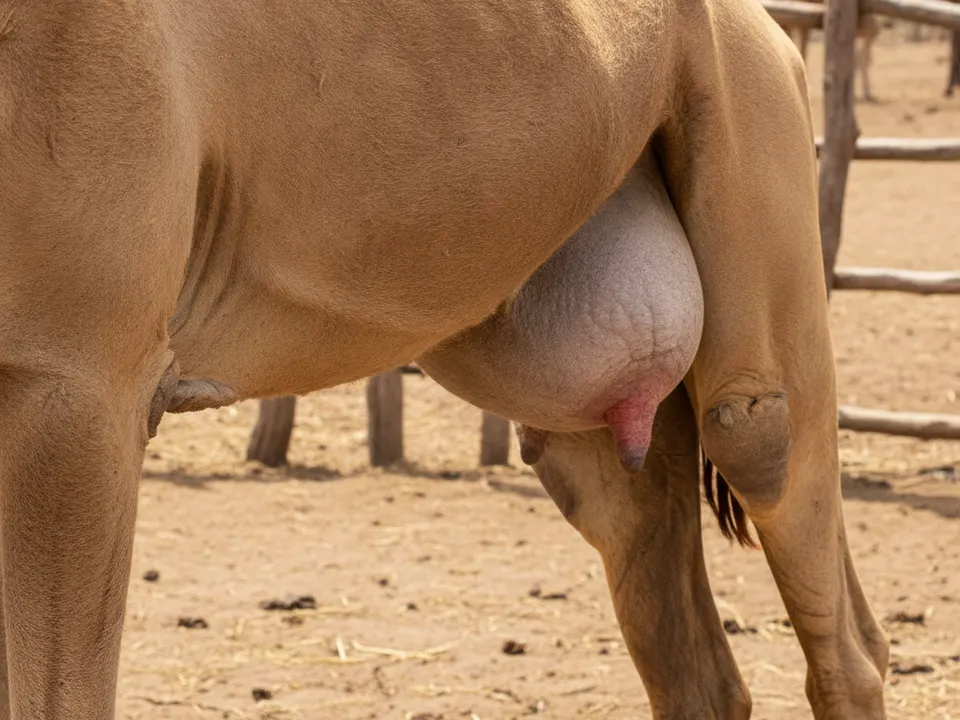
- Small raised bumps, redness and fine scaling on the face, around the eyes and lips, on the neck, flanks, inner thighs, belly, udder or around the genitals.
- Thinning hair and small bald patches where the camel has been rubbing, often with grey, dandruff-like flakes.
- Itching that gets worse when the camel is warm, for example after resting in the sun or after a trek.
As it gets worse
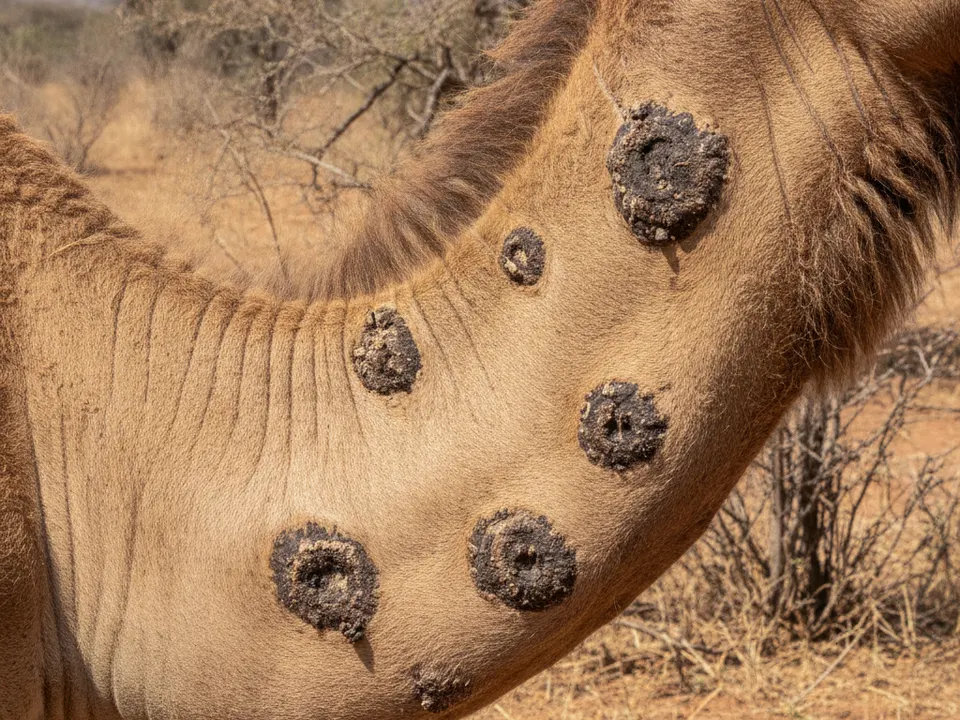
- Large bald areas with very thick, wrinkled, grey or dark skin that feels hard and leathery, sometimes covering most of the body.
- Heavy yellow-grey crusts and deep cracks in the skin that may ooze clear fluid, bleed slightly or smell bad when infected.
- Flies gathering on raw, broken skin, and sometimes wounds from the camel rubbing itself on thorny trees.
- Weight loss, a visible drop in hump size, poor appetite and a dull, tired look, because the camel spends its energy scratching instead of browsing.
- Marked fall in milk yield in lactating she-camels, and calves that stop growing well.
- Pack camels that cannot carry a saddle because the skin under it is sore, cracked or infected.
- In very weak or young camels, severe wasting, weakness and occasionally death, usually when mange is combined with hunger and other infections.
What to do right now
- Separate camels that are itching or have crusty, hairless skin from the rest of the herd, and keep them in their own resting area and away from shared rubbing trees as far as possible.
- Protect yourself: wear gloves and long sleeves when handling affected camels, wash your hands and arms with soap and water afterwards, and change and wash clothes that touched the skin.
- Stop sharing saddles, pack frames, ropes, mats and blankets between affected and healthy camels, and set aside equipment used on sick animals until it can be cleaned.
- Check every camel in the herd carefully, including calves, looking at the head, neck, flanks, inner thighs, udder and genitals, and write down which animals show signs.
- Make sure affected camels have easy access to water, shade and the best grazing or browse you can find, because weak, hungry camels suffer far worse mange.
- Rest working or pack camels with skin lesions, especially where the saddle sits, so the skin is not rubbed further.
- Avoid putting used engine oil, battery acid, diesel, strong detergents or other harsh substances on the skin; these can burn the skin, poison the camel and contaminate milk and meat.
- Call your vet, County Veterinary Officer or a trained animal health worker to confirm the problem and plan proper treatment for the whole herd, and do not sell or move itchy camels to markets until they are treated.
How it spreads
- Direct body contact between camels is the main route, especially when animals are crowded together in night enclosures (bomas), at water points, at markets and during treks.
- Mites can survive for a short time off the animal, so shared rubbing trees, fence posts, resting grounds and walls of night enclosures can pass mites from one camel to the next.
- Saddles, pack frames, harnesses, ropes, blankets and mats used on an infected camel and then on a healthy one can carry mites.
- Bringing in a newly bought camel, or mixing herds at shared grazing, wells and markets, is a common way the disease enters a clean herd.
- Mothers pass mites to their calves through close contact during suckling and resting.
- Poor body condition, stress, heavy work and long dry spells do not cause mange on their own, but they weaken the skin's defences so mites multiply faster and disease becomes severe.
Could it be something else?
Ringworm (dermatophytosis)
Ringworm is a fungal infection that makes round, well-defined grey or white crusty patches, mostly on the head, neck and shoulders of young camels. It is usually much less itchy than mange, and the patches are round and separate rather than spreading, thickened and wrinkled. A vet can tell them apart with skin scrapings and hair samples.
Camelpox
Camelpox causes fever and pock-like lumps that turn into blisters and scabs, starting on the lips, nostrils, eyelids and then the legs, udder and body. Affected camels, especially young ones, are clearly sick with fever and swollen glands. Mange does not cause fever on its own and is mainly intense itching with thick, hairless skin.
Contagious ecthyma (camel orf)
Orf mainly affects young camels and causes thick, warty scabs on the lips, mouth corners and nostrils, which can stop them suckling or browsing. It rarely spreads over the body, flanks and thighs the way mange does, and itching is not the main feature.
Lice and heavy tick infestation
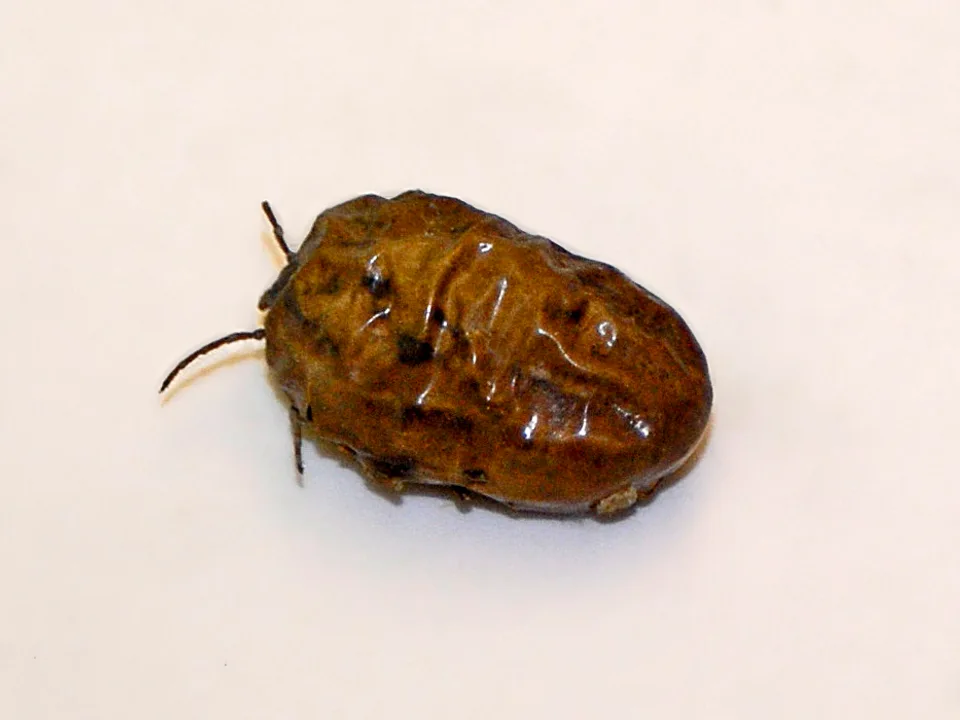
Lice and ticks can also cause rubbing and hair loss, but you can see them with your eyes: lice and their eggs (nits) stuck to hairs, or ticks attached around the ears, tail, udder and between the legs. Sarcoptic mites are too small to see and live inside the skin, which becomes very thick and crusted.
How it is diagnosed
A vet or trained animal health worker will usually suspect mange from the typical intense itching and the pattern of thick, crusted, hairless skin starting on the head, neck, flanks and inner thighs. To confirm it, they take deep skin scrapings: they gently scrape the edge of an active lesion with a blade until the skin just starts to show tiny pinpoint spots of blood, then look at the scrapings under a microscope for mites, eggs or mite droppings. Mites can be hard to find, so several scrapings from different places may be needed, and a negative result does not fully rule out mange. Sometimes the vet confirms the diagnosis by how well the herd responds to anti-mite treatment. They will also look for other causes of skin disease such as ringworm, camelpox, orf, lice and ticks, and check for secondary bacterial infection. Before the vet comes, the farmer can help by keeping suspected camels tied or penned apart, counting how many animals are itching, noting when the itching started, which camels were recently bought or mixed with other herds, what treatments have already been tried (including traditional remedies), and whether any family members or herders have developed an itchy rash.
Treatment
Treatment must be prescribed and supervised by a vet, who will choose the product, the dose and how often to repeat it based on the camels' weight, condition and whether they are being milked. The commonly used treatments are anti-parasite drugs from the macrocyclic lactone group, such as ivermectin or doramectin, usually given by injection, and acaricides (mite- and tick-killing chemicals) such as amitraz, certain pyrethroids or organophosphates, applied as a spray or wash over the whole body. Because mite eggs are not always killed, treatment almost always has to be repeated after an interval set by the vet, and the whole herd, not just the visibly sick camels, should be treated at the same time to stop reinfection. Before spraying, the vet may advise soaking and softening thick crusts so the product reaches the mites. Where the cracked skin has become infected, the vet may add an antibiotic; antibiotics do not kill mites and should only be used when truly needed, exactly as prescribed, to reduce the risk of antimicrobial resistance (germs becoming resistant to medicines). Withdrawal periods are very important with these drugs: this is the time after treatment when milk and meat must not be used for people. Many anti-mite products are not approved for animals producing milk for human use, or have long withdrawal times, and camel milk is a daily food for many pastoral families, so tell the vet which camels are being milked. Expect itching to ease over one to several weeks after effective treatment, while hair regrowth and the skin returning to normal take much longer, often a few months in severe cases. Very weak camels may also need better feeding and supportive care to recover.
Medicines must be prescribed and dosed by a vet. Always respect milk and meat withdrawal periods, and finish the full course of any antibiotic.
How Agrikima products can help
These support the animal alongside — never instead of — your vet's treatment, vaccination and good management.

Prevention
- Quarantine newly bought camels or camels returning from markets and long treks for a few weeks, check them carefully for itching and crusty skin, and have them treated by a vet before they join the herd if needed.
- Treat the whole herd when mange is diagnosed, follow the full repeat treatment the vet recommends, and recheck the herd afterwards so no carrier animals are left to reinfect the others.
- Keep camels in good body condition with the best browse and grazing available, access to water and salt or mineral licks, especially before and during long dry seasons, because well-fed camels resist mange better.
- Avoid overcrowding in night enclosures where possible, and give sick and healthy camels separate resting places.
- Do not share saddles, pack frames, harnesses, ropes and blankets between camels without cleaning them; wash them and leave them in strong sun to dry before reuse.
- Reduce mixing with herds known to have mange at wells, grazing areas and markets, and agree with neighbouring herders on treating at the same time where mange is widespread.
- Include regular skin checks in your routine herd inspections, looking closely at the head, neck, thighs, udder and genitals, so mange is caught early when it is easier to control.
- Keep good records of which camels were treated, with what, when, and the withdrawal dates for milk and meat, and plan routine parasite control with your vet or County Veterinary Officer.
Risk to people
Camel mange mites can spread to people who handle, milk, ride or sleep close to affected camels. In people the mite usually causes very itchy red bumps and small blisters on the arms, hands, chest, belly and legs where they touched the camel. This form from animals usually does not settle permanently on people and tends to fade once contact with infected camels stops and the herd is treated, but the itching can be severe and the skin can become infected from scratching. To protect yourself and your family, wear gloves and long sleeves when handling itchy camels, wash with soap and water after contact, wash clothes and bedding that touched affected camels, and keep children from playing with or sleeping beside them. Anyone with an itchy rash after working with camels should visit a health facility and mention the contact with mangy camels. Also respect milk and meat withdrawal periods after anti-mite drugs, so that drug residues do not end up in the family's food.
Impact on your farm
Mange causes real losses for camel keepers. Itchy camels browse less and rest poorly, so they lose weight and condition, and she-camels give noticeably less milk, which hits household food and milk sales directly. Calves from affected mothers grow slowly and weak young camels may die when mange is combined with drought and hunger. Camels with thick, scarred skin and bald patches fetch lower prices at livestock markets, and their hides are damaged and worth less. Pack and transport camels may be unable to carry saddles for weeks, interrupting water carrying, trade and migration. There are also extra costs for drugs, vet services and labour, often for repeated treatments of the whole herd, and lost milk during withdrawal periods. Because the mites spread to people, herders and milkers can suffer itchy rashes that affect their sleep and work.
Outlook and recovery
The outlook is good for most camels when mange is caught early and the whole herd is treated properly, with repeat doses as advised by the vet. Itching usually eases within weeks of effective treatment, although hair and skin may take a few months to look normal again, and badly scarred skin may stay thicker. Recovery is slower and less certain in camels with widespread, long-standing mange, deep infected cracks, very poor body condition, or other diseases at the same time, and some severely affected young or weak camels may not survive. Reinfection is common if only some camels are treated, if treatment is stopped early, if new camels are brought in without checks, or if the herd keeps mixing with infected herds. Good nutrition and consistent herd-wide control make the biggest difference to long-term success.
Common questions
Can I use used engine oil or diesel to treat mange in my camels?
This is a common traditional practice, but it is not recommended. Engine oil and diesel can burn and irritate already damaged skin, they can be absorbed and poison the camel, and they contaminate milk, meat and hides. They may soften crusts and smother some mites, but they do not reliably clear the infestation, so mange usually comes back. Ask your vet or animal health worker for a proper anti-mite treatment and a plan for the whole herd.
Why do I need to treat camels that are not itching yet?
Mites spread quietly from camel to camel before you see signs, so animals that look healthy may already be carrying them. If you treat only the visibly sick camels, the hidden ones keep reinfecting the herd and you end up treating again and again. Treating the whole herd at the same time, and repeating treatment as the vet advises, gives the best chance of breaking the cycle.
Can my family still drink milk from a camel being treated for mange?
Not always. Many anti-mite drugs pass into milk, and some are not approved for animals producing milk for people or have long withdrawal periods. Always tell the vet which camels are being milked so they can choose a suitable product and tell you exactly how long to throw away the milk. Respect that time fully, even though it means losing milk for a while.
I have an itchy rash after milking a mangy camel. Did I catch it from her?
Quite possibly. Camel mange mites can cause itchy red bumps on people, especially on the arms, hands and chest. It usually settles once the camels are treated and you avoid close contact with infected animals, but you should visit a health facility for advice and to make sure scratching has not caused infection. Wear gloves and long sleeves and wash well after handling camels until the herd is clear.
How long until my camel's hair grows back?
Itching often improves within one to a few weeks of effective treatment, but the skin needs time to heal. Hair regrowth and softening of thick skin usually take a couple of months or longer in bad cases, and some scarred skin may never look completely normal. If itching continues or new crusts appear after the full course, call the vet back, because treatment may need adjusting or the camel may have been reinfected.
Will one injection cure my camel of mange?
Usually not. Treatments do not always kill mite eggs, so new mites hatch after the first treatment. Vets therefore normally repeat treatment after a set interval and treat all camels in the herd together. Follow the full plan your vet gives you, and keep affected camels well fed and watered, which helps their skin recover.
A guide, not a diagnosis. This page is general information to help you recognise problems early. Always confirm with a vet or animal health worker before treating.