What it is
The disease is mainly caused by bacteria called Staphylococcus aureus. Streptococcus bacteria, including Streptococcus agalactiae, are also often found in the sores, and other germs such as Dermatophilus congolensis may join in. These bacteria live on skin and in the environment. They usually cannot get through healthy, unbroken skin. Trouble starts when the skin is damaged by thorns, tick bites, biting flies, rubbing saddles or ropes, branding or fighting. The bacteria enter the small wound and multiply under the skin. The body sends white blood cells to fight them, and pus builds up, forming a firm, painful lump. As the lump grows, it cuts off blood supply to the skin above it, so that skin dies, turns dark or leathery, and peels or sloughs away. This leaves an open, weeping ulcer that slowly fills in and scars. The infection drains to the nearest lymph nodes (the glands that filter infection), which swell. Poor nutrition makes everything worse: camels short of salt, minerals such as calcium, phosphorus and zinc, and vitamin A in a long dry season have weaker skin and weaker immunity, so sores appear more easily and heal more slowly.
Which animals are most at risk
Camels of all ages can be affected, but young camels and those around one to four years old are often reported to be hit harder, along with weak, thin or recently weaned animals. Pack and working camels that carry saddles and loads are at risk on the hump, withers and shoulders where equipment rubs. The disease is most common in pastoral systems in counties such as Turkana, Marsabit, Wajir, Mandera, Garissa, Isiolo, Samburu and parts of Laikipia, especially in the hot dry season when browse is thorny and dry, salt licks are far away, ticks are plentiful and camels are crowded at few water points. Herds that are not given salt or mineral supplements, have heavy tick burdens, or share equipment between many animals have more cases.
Signs to look for
Early signs
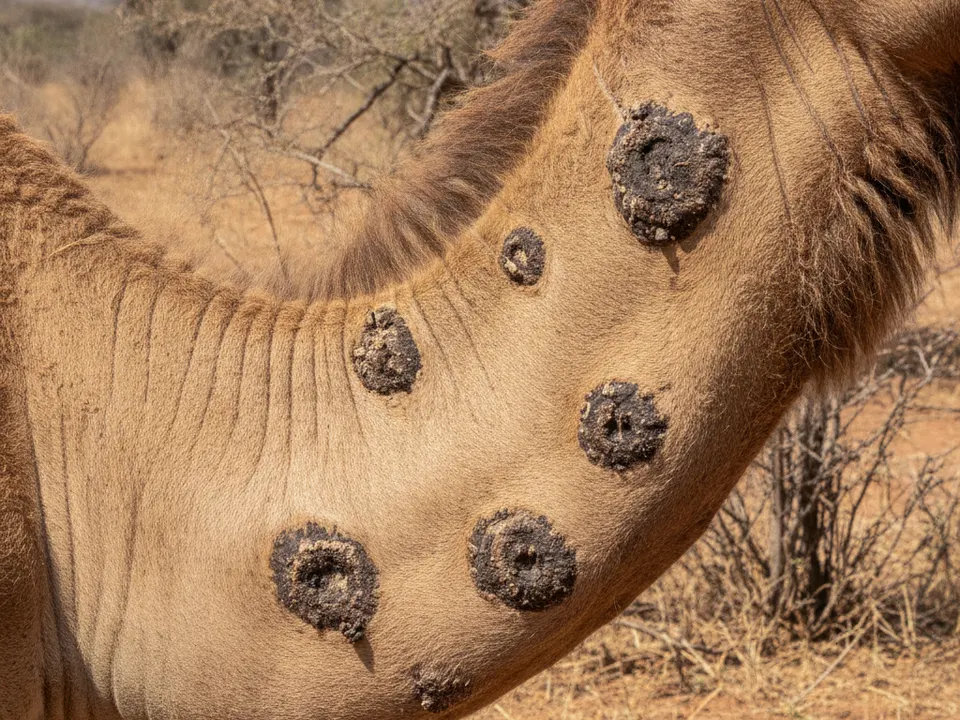
- Small, firm, painful swellings or nodules the size of a pea to a walnut on the neck, shoulders, withers, chest or flanks.
- Patches where the hair stands up, falls out or looks matted over a swelling.
- Swellings that feel warm and that the camel flinches from when touched.
- The camel rubs or scratches the area against trees, fences or other camels.
- Glands (lymph nodes) near the sores, such as in front of the shoulder, start to feel enlarged.
As it gets worse
- Lumps become soft in the centre, then burst and release thick yellow, cream or blood-tinged pus.
- The skin over the lump dies, turning dark, dry and leathery, then peels away leaving a raw, weeping ulcer.
- Sores join together into large crusted areas of damaged skin, sometimes over much of the neck and shoulder.
- Clearly swollen, firm lymph nodes that may themselves form abscesses.
- Flies gather on the sores, and maggots (myiasis) may appear in neglected wounds with a foul smell.
- Weight loss, reduced feeding and lower milk yield in badly affected camels.
- Occasional fever and dullness when infection is widespread, and scarred, thickened skin after healing.
What to do right now
- Separate affected camels from the rest of the herd and keep them in their own enclosure or tethered apart, especially at night and at watering points.
- Do not share saddles, pads, ropes or halters between sick and healthy camels; set aside equipment used on the sick camel.
- Wear gloves or cover your hands when touching sores, avoid contact with pus, and wash your hands well with soap and water afterwards.
- Keep flies off the sores as far as you can, for example by keeping the camel in shade away from dung heaps and removing soiled bedding, so maggots do not get into the wounds.
- Do not squeeze, cut or burn the lumps yourself; wrong opening or traditional firing can push infection deeper and leave large scars.
- Make sure the camel has easy access to clean water, shade and good browse, and offer salt if it is normally given.
- Check the whole herd carefully, feeling the neck and shoulders for early lumps, and write down which animals are affected.
- Call your vet or the nearest veterinary officer and describe the sores, numbers affected and any fever or weight loss.
How it spreads
- Direct contact between camels, especially when they rub necks and shoulders together in crowded night enclosures (bomas) or at watering points.
- Shared equipment such as saddles, saddle pads, halters, ropes and grooming tools carry pus from one camel to the next.
- Thorny browse such as Acacia and Balanites scratches the neck and shoulders while camels feed, opening the skin to bacteria.
- Ticks and biting flies damage the skin and may carry bacteria from sore to sore; flies are attracted to open, weeping lesions.
- Pus and scabs that fall onto the ground, fences and resting places contaminate the environment for other camels.
- Poorly done branding, ear-marking or traditional firing leaves wounds that can become infected.
- Stress from long treks, heavy loads, drought, hunger and mineral shortage lowers resistance and triggers outbreaks.
Could it be something else?
Camelpox
Camelpox is a viral disease that causes many small raised spots that turn into blisters and scabs, often starting on the lips, nostrils and eyelids and spreading over the body, usually with fever and more severe illness in young camels. Contagious skin necrosis usually starts with fewer, larger lumps on the neck and shoulders that fill with pus. A vet may need samples to tell them apart.
Mange (sarcoptic mange)
Mange is caused by tiny mites. It brings intense itching, hair loss and thick, wrinkled, crusty skin, often starting on the head, neck, inner thighs and belly, without the deep pus-filled lumps. A vet confirms it with a skin scraping under the microscope.
Ringworm (dermatophytosis)
Ringworm is a fungal infection that causes round, grey, scaly, hairless patches, often on the head and neck of young camels. The patches are dry and flaky and do not usually form pus-filled lumps or swollen glands.
Caseous lymphadenitis
This is a different bacterial disease (Corynebacterium pseudotuberculosis) where the lymph nodes themselves form large abscesses with thick, cheesy pus, often without the spreading skin sores. Laboratory culture of the pus is the reliable way to tell the difference.
How it is diagnosed
A vet usually suspects contagious skin necrosis from the typical pattern: lumps and necrotic sores on the neck and shoulders, swollen glands, and a history of thorny browse, ticks or saddle rubbing in the dry season. To confirm it and choose the right treatment, the vet may take a swab or a sample of pus from an unopened abscess and send it to a laboratory, such as a County or regional veterinary laboratory or the Central Veterinary Laboratories at Kabete, for bacterial culture and an antibiotic sensitivity test, which shows which drugs will work against the germs found. Skin scrapings may be taken to rule out mange, and scabs or tissue samples may be tested if camelpox or other diseases are possible. You can help by noting when the sores first appeared, how many camels are affected and their ages, any recent treks, new animals, tick problems or changes in grazing, whether salt or minerals are being given, and any treatments already used. Do not burst or treat lumps before the vet sees them, as this can spoil samples.
Treatment
Treatment depends on how many sores there are and how deep they go. For ripe abscesses, the vet will usually open them at the lowest point with clean instruments to let the pus drain, then flush the cavity and clean the sores with an antiseptic such as dilute iodine (povidone-iodine) or chlorhexidine. Dead skin may be gently removed so healthy tissue can heal. Antiseptic or antibiotic sprays and ointments are often applied to open sores, together with a fly repellent or wound spray to prevent maggots. Where many sores are present, glands are badly swollen or the camel has a fever, the vet may prescribe antibiotics given by injection. Drug classes commonly used include penicillins, tetracyclines such as oxytetracycline, and sometimes other groups chosen after a sensitivity test, because Staphylococcus bacteria can be resistant to some antibiotics. Only use antibiotics prescribed by a vet, give the full course exactly as directed, and never use leftover or shared drugs, because incomplete or wrong use breeds antibiotic-resistant bacteria that are harder to treat in camels and people. Very few drugs are tested and labelled specifically for camels, so vets set cautious milk and meat withdrawal periods (the time after treatment before milk or meat is safe to use); follow these strictly and ask your vet how long to keep milk out of the food chain. The vet may also treat for ticks and advise salt, mineral and vitamin supplements to help healing. Expect sores to take several weeks to heal, and some camels need repeat cleaning visits.
Medicines must be prescribed and dosed by a vet. Always respect milk and meat withdrawal periods, and finish the full course of any antibiotic.
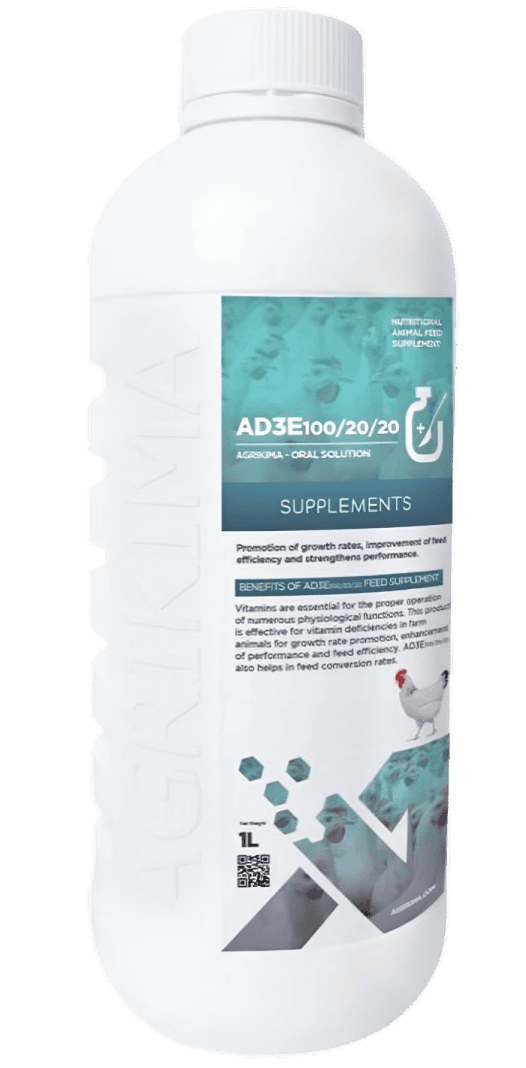
How Agrikima products can help
These support the animal alongside — never instead of — your vet's treatment, vaccination and good management.
Prevention
- Provide salt and a good camel mineral supplement regularly, especially in the dry season, as mineral shortage is closely linked to outbreaks.
- Control ticks with a regular programme advised by your vet or extension officer, and check the neck, shoulders and under the tail often.
- Look after saddles and pads: keep them clean, well padded and fitted, rest camels with rubs, and do not move equipment from sick to healthy animals.
- Treat any thorn scratches, branding marks or small wounds early by cleaning them and protecting them from flies.
- Avoid overcrowding in night bomas and at watering points where camels rub against each other, and clean resting areas of pus and scabs.
- Isolate new or returning camels for a few weeks and check their skin before mixing them with the herd.
- Isolate camels with sores as soon as you see them so the disease does not spread through contact.
- Keep camels in good body condition through careful grazing management and planned movements in drought, as strong camels resist infection better.
Risk to people
The bacteria involved, especially Staphylococcus aureus, can infect people through cuts and scratches on the hands, causing boils, skin infections and occasionally more serious illness. Some strains are resistant to common antibiotics. Wear gloves or cover your hands when handling sores or pus, wash well with soap afterwards, and keep children away from sick camels. Burn or bury dressings, scabs and pus-soaked material. If a camel has sores on or near the udder or shows signs of mastitis, do not drink its milk. Camel milk is often drunk raw in pastoral areas; boiling milk kills these bacteria and is strongly advised. After any antibiotic treatment, keep milk and meat out of human food until the vet's withdrawal period has passed, because drug residues can cause allergic reactions and add to antibiotic resistance.
Impact on your farm
Contagious skin necrosis rarely kills camels, but it quietly drains income. Painful sores and fever reduce feeding, so camels lose condition and milk yield drops, which matters greatly in pastoral homes where camel milk is a main food and a growing cash income in markets such as Isiolo, Garissa and Nairobi. Milk from treated camels must be held back during withdrawal periods. Pack and working camels cannot carry saddles over neck and shoulder sores, so trade and transport work stops. Scarred skin lowers hide value, and camels with visible sores fetch lower prices at livestock markets or are refused by buyers. Treatment, repeated cleaning, transport to the vet and supplements add cost, and an outbreak that runs through young stock can set back herd growth.
Outlook and recovery
Most camels recover well when sores are cleaned, drained and protected early and nutrition is improved, although healing often takes several weeks and scars may remain. Recovery is slower in thin, young or mineral-deficient camels, in those with many joined-up sores or badly swollen glands, and where flies and maggots get into wounds. Cases can become long-lasting or keep returning if ticks, saddle rubs, thorns and mineral shortage are not dealt with. Early action and herd-wide prevention give the best results.
Common questions
Can I just burst the abscess myself and put on engine oil or ash?
Please do not. Opening a lump at the wrong time or with dirty tools can push infection deeper, and engine oil, ash or hot irons damage the skin further and slow healing. They also do not kill the bacteria reliably. Let the vet open ripe abscesses cleanly, flush them and advise on safe wound care and fly control.
Why does this disease seem worse in the dry season?
In the dry season camels browse more thorny bushes, ticks and biting flies are often heavy, salt and minerals are scarce, and camels crowd at few water points. Damaged skin, poor nutrition and close contact together give the bacteria an easy way in. Giving salt and minerals and controlling ticks before the dry season helps a lot.
Is it safe to drink milk from a camel with these sores?
If the sores are only on the neck or shoulders and the camel is not on any drugs, boiled milk is generally considered safe, but hygiene during milking is important. Do not use milk from a camel with sores on the udder or signs of mastitis, and never use milk during the withdrawal period after antibiotic treatment. Always boil camel milk before drinking.
Will antibiotics from the agrovet cure it quickly?
Antibiotics help in some cases, but they work best alongside cleaning and draining the sores, and only if the right drug is used for the full course. Many camel cases need little or no injected antibiotic if wounds are well managed. Buying and using antibiotics without a vet risks the wrong drug, the wrong amount, resistant bacteria and drug residues in milk and meat. Let your vet decide.
Can my goats, sheep or cattle catch it from the camels?
The same types of bacteria can cause skin infections and abscesses in other livestock, so it is sensible to keep sick camels and their equipment away from other animals and to clean shared enclosures. Good hygiene and tick control protect the whole homestead.
Is there a vaccine for contagious skin necrosis?
There is no widely used commercial vaccine for this disease in camels in Kenya. Prevention depends on good nutrition with salt and minerals, tick and fly control, well-fitted clean saddles, quick care of small wounds and isolating affected camels early. Ask your vet or County Veterinary Officer about local advice.
A guide, not a diagnosis. This page is general information to help you recognise problems early. Always confirm with a vet or animal health worker before treating.