What keeps them healthy
A camel stays healthy when its body, its food, its water and its surroundings are in balance. The camel is a pseudo-ruminant, which means it chews cud like a cow but has a three-part stomach instead of four. Microbes in the first stomach break down tough browse such as acacia, Salvadora (the 'toothbrush tree') and dry grasses. These microbes need steady feeding and enough salt and minerals to work well. Camels need much more salt than cattle, which is why pastoralists take herds to salty water points or salt licks. The hump is a store of fat, not water. In good seasons it fills up, and in the long dry season the camel burns that fat slowly, so the hump shrinks. The camel copes with heat in a special way. When water is short, it lets its body temperature rise during the hot day and cools down again at night, which saves sweat and water. Its kidneys make thick, small amounts of urine, and its gut pulls water out of droppings, which is why healthy droppings are dry. A camel can go many days without drinking, especially when it eats green browse, and then drink a very large volume in a few minutes without harm. Good health also depends on low parasite numbers (worms, ticks, mange mites and the blood parasites that cause surra, which is camel trypanosomiasis), a calm herd, and a body condition that is neither too thin nor too fat.
What to keep an eye on
All camels benefit from daily observation, but some need closer attention. Young calves in their first months are the most fragile, because they depend on colostrum (the first thick milk) and milk, and they suffer quickly from diarrhoea, pneumonia and ticks. Heavily pregnant females and those in early lactation need good feed and water because pregnancy lasts about 13 months and milking drains their reserves. Breeding bulls lose condition during the rut, the mating season, because they eat less. In Kenya, camels in pastoral systems in Turkana, Marsabit, Wajir, Mandera, Garissa, Isiolo and Samburu face long dry seasons and long distances to water. Camels kept in semi-zero-grazing or peri-urban dairy units, for example around Isiolo, Nanyuki and Nairobi, face different risks: limited browse, crowding, fly build-up and feed that may be stored poorly. The period at the start of the long and short rains is important too, because biting flies and ticks increase and lush feed can upset digestion.
Normal vs warning signs
Signs of good health
- The camel is alert, holds its head and neck up, and turns its ears and eyes towards sounds and movement around it.
- It chews cud for long periods every day, often while kneeling (couched) on its chest with the legs folded under, with a steady side-to-side jaw movement.
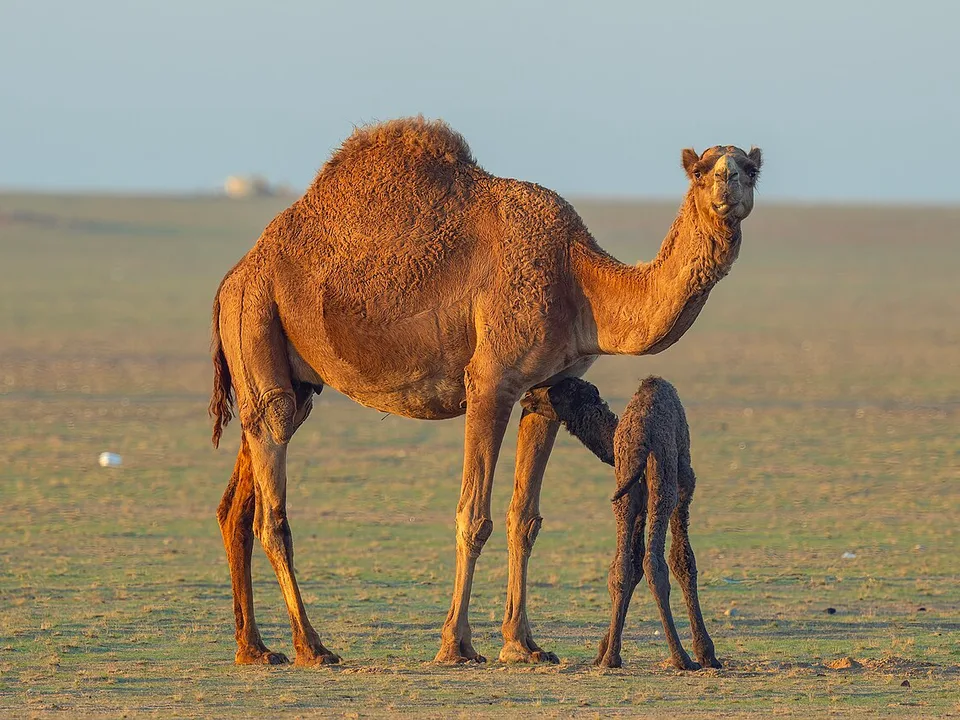
- Droppings are small, firm, dry oval pellets that do not stick to the tail; calves still feeding mainly on milk normally pass softer, pasty droppings.
- The hump is firm and stands upright, its size matching the season: fuller after good rains and smaller but still firm late in the dry season.
- The eyes are bright and clear with no tears or crust, and the inner eyelid and gums are moist and pink.
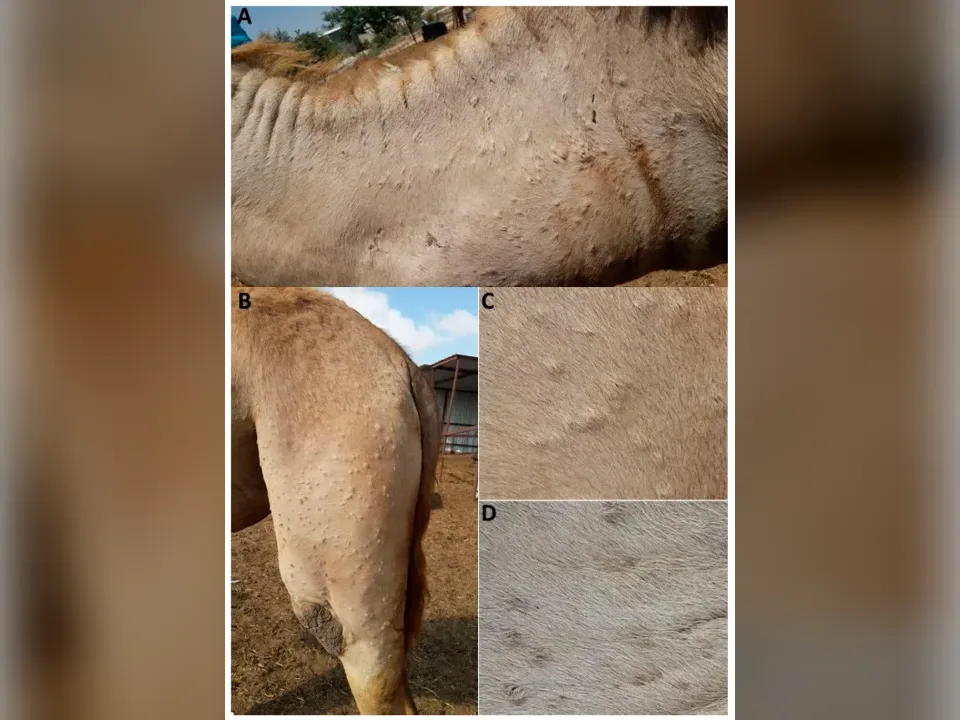
- The coat is clean, and the skin is soft and elastic with no crusts, bald itchy patches or lumps.
- Body temperature follows a daily pattern: roughly 36–38 °C in a well-watered camel, rising to about 40 °C by late afternoon when water is short, then cooling at night.
- At rest the camel breathes slowly and evenly, about 5–12 breaths per minute, and the heart beats about 40–50 times per minute.
- It walks evenly with the herd, eats eagerly when browsing, drinks well at watering, and milking females keep steady milk yields.
First signs something is wrong
- The camel stops chewing cud or eats much less than usual, even when good browse is available.
- It stands or lies apart from the herd, lags behind on the way to browse, or does not get up when the herd moves.
- It lies flat on its side for long periods instead of resting couched on its chest; this is a serious warning sign in a camel.
- Droppings become watery, very soft, bloody or foul-smelling in an adult, or stop completely.
- The morning temperature is above about 38.5 °C, or any reading is above 40 °C, together with dullness or poor appetite.
- The eyes look dull or sunken, tears run down the face, or there is thick discharge from the nose or eyes.
- The hump collapses, leans or shrinks fast and ribs and hip bones show more than the season explains.
- Breathing becomes fast, noisy or laboured, or the camel coughs, grinds its teeth or groans while lying down.
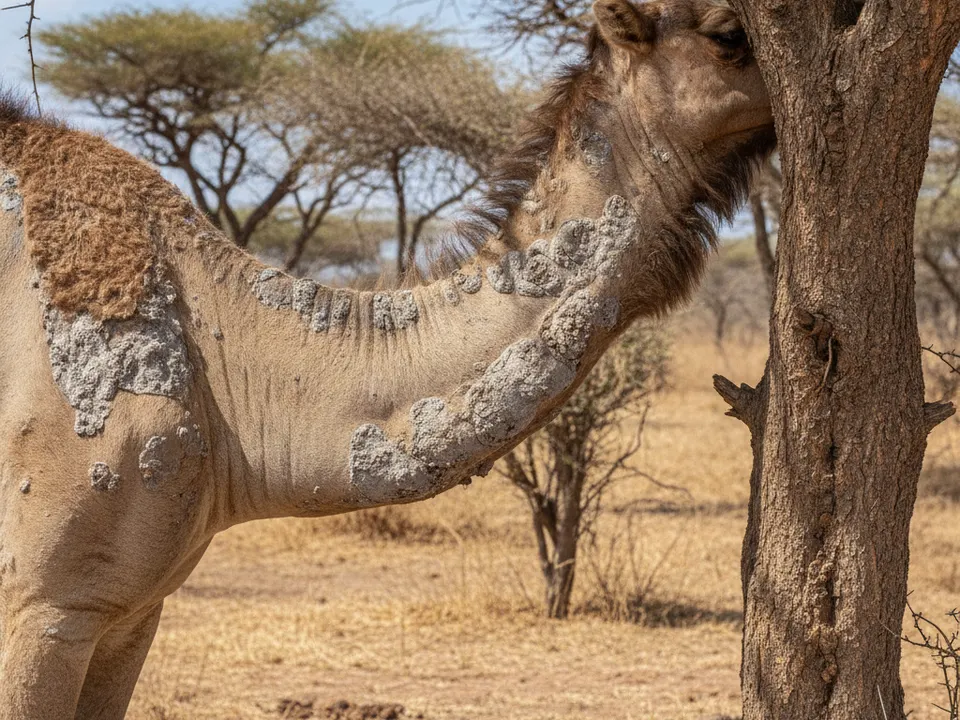
- There is lameness, swelling of the legs, joints, lymph nodes or under the jaw, scabs on the lips and nostrils, or itchy, thickened, crusty skin.
- Milk yield drops suddenly, the udder is hot or hard, or a pregnant female aborts or produces a weak calf.
Daily routine
- Look at every camel at least once a day, ideally when they leave the boma in the morning and when they return, and note any animal that is slow, alone or not chewing cud.
- Take the morning temperature of any camel that looks dull, and compare it with its normal reading in your records.
- Separate a camel that seems unwell from the herd, give it shade, water and fresh browse, and keep it calm and away from strangers' herds.
- Stop moving, selling or buying camels from a group where an animal looks sick until a vet has checked it.
- Wear gloves and wash your hands after handling sick animals, aborted calves, afterbirths or discharges, and boil milk from any camel that is unwell.
- Write down what you saw, when it started, what the camel ate and drank, and any treatments given, then call your vet, a trained animal health worker or the County Veterinary Officer.
- Do not give antibiotics, trypanocides or other drugs bought from the agrovet without a vet's advice, because wrong drugs or wrong amounts can hide disease, cause resistance and leave residues in milk and meat.
Common risks
- A healthy herd stays healthy mainly through good management: enough browse, regular watering and access to salt or mineral licks.
- Health can quickly be put at risk when new camels are brought in from markets without a quarantine period, because they may carry mange, surra, camel pox or brucellosis.
- Sharing water points and night bomas with many other herds increases the chance of picking up infections and parasites.
- Biting flies, such as horse flies and stable flies, increase during and after the rains and spread surra from sick camels to healthy ones.
- Long treks, transport, overcrowding and sudden changes in feed are stress triggers that can weaken a normally healthy camel.
- Drought, poor browse and lack of minerals slowly lower body condition and immunity, so diseases appear more easily at the end of the long dry season.
Often mistaken for illness
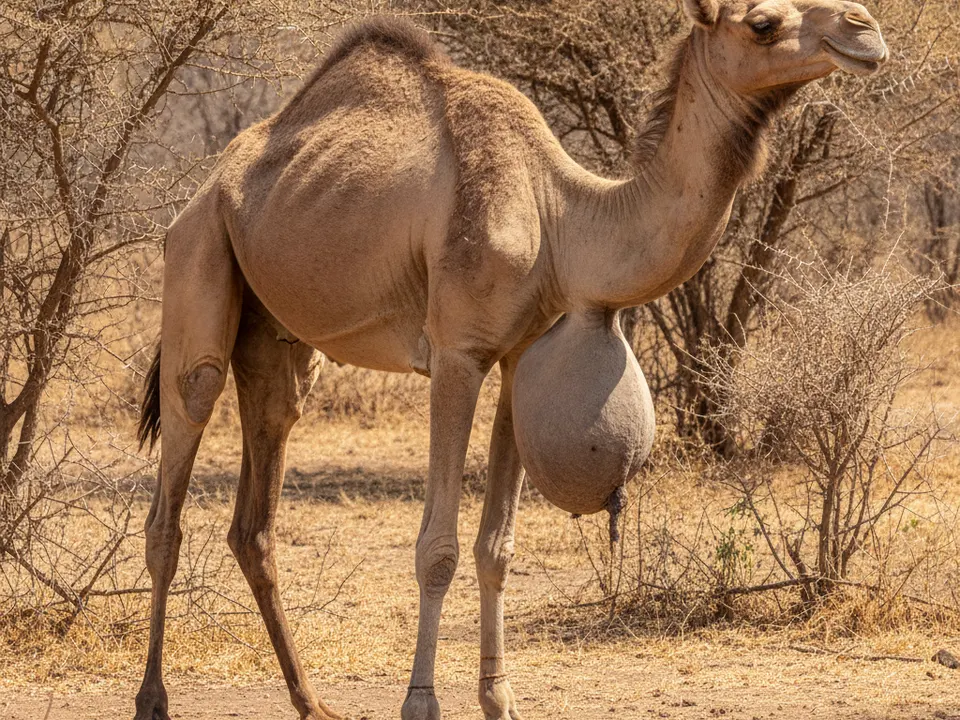
Bull in rut (mating season)
A breeding bull pushes a pink, balloon-like soft palate called the dulla out of the side of his mouth, froths, gurgles, grinds his teeth, splashes urine onto his tail and gives off a strong smell from glands behind the head. He eats less and may become aggressive. This is normal breeding behaviour, not choking or rabies, though he still needs careful handling. A bull with a dulla that keeps eating cud between displays and stays alert is usually just in rut. Signs outside the breeding season, drooling without the dulla, difficulty swallowing or paralysis need a vet urgently.
High afternoon temperature in the hot season
When water is short, a healthy camel lets its temperature rise to about 40 °C by late afternoon and cools down overnight. This saves water and is normal. Take temperatures early in the morning when you want to check for fever. A camel that is hot in the cool morning, or hot and dull, off feed or breathing fast, may have a fever and should be seen by a vet.
Seasonal hair shedding
Camels shed patches of old hair as the hot season begins, leaving uneven, thin-looking areas. The skin underneath is smooth, soft and not itchy. Mange, caused by mites, makes the camel rub and scratch, and the skin becomes thick, wrinkled, crusty and often smelly, starting around the head, neck, belly and inner legs. If you see itching and crusts, call the vet.
Not drinking for several days and dry droppings
A healthy camel, especially on green browse, may go many days without drinking and normally passes very dry pellets. This is how it saves water. The worry is a camel that refuses water at the watering point when others drink, or has sunken eyes, skin that stays tented when pinched, and stops passing droppings. A pregnant female that lifts her tail when a bull comes near is also normal, as this is a known sign of pregnancy, not a sign of pain.
Doing a health check
A short home health check, done the same way each time, gives you a picture of what is normal for each camel. Start by watching from a distance before you disturb the herd: who is alert, who is chewing cud, who is standing alone, and how each animal walks. Then check the hump, ribs and hip bones to judge body condition; you should feel the ribs with light pressure but not see every rib sharply. Look at the eyes, nostrils, lips and mouth for discharge, sores or scabs. Run your hand over the skin of the neck, belly and legs for lumps, ticks, wounds or crusts, and gently feel under the jaw and in front of the shoulders for swollen lymph nodes. Check droppings in the boma and at resting places. For milking females, look at milk volume and check that the udder is soft and even. To take the temperature, couch the camel and hobble a front leg, with a helper holding the head rope. Lift the tail, insert a clean, lubricated digital thermometer gently into the rectum and press the tip against the side wall. Hold it until it beeps, then clean and disinfect it. Do this early in the morning for the most useful reading, and write it down. Count breaths by watching the flank rise and fall for one minute while the camel rests. You can feel or listen to the heart on the lower left chest behind the elbow. Keep a simple notebook of each camel's normal readings, body condition, milk yield, calving dates and treatments. If something looks wrong, your vet will use the same check plus blood smears for surra, blood tests for brucellosis, faecal tests for worms, skin scrapings for mange or milk tests for mastitis. Your notes will help the vet a great deal.
Routine vet care
Healthy camels still benefit from routine vet care, planned with your vet or County Veterinary Officer for your area and season. Routine care often includes a yearly or seasonal herd check: body condition, teeth, feet, udders and breeding history. Parasite control is a big part of it. The vet can test droppings and decide when and with what to deworm, rather than dosing blindly, which helps slow drug resistance in worms. In areas with biting flies and tsetse, the vet may screen blood for surra and advise on trypanocidal drugs, which must be used correctly because the wrong product can harm camels. Ticks and mange mites are controlled with acaricides chosen by the vet for camels. Vaccine options for camels are fewer than for cattle and vary by country, so ask your vet which vaccines, such as camel pox, are available and advised in your county. Testing for brucellosis is important in milking herds, especially where milk is sold. The vet may also advise on mineral and salt supplements, calf care and colostrum, castration and identification such as ear tags or brands. If any drug is used, the vet will tell you the withdrawal period, which is how long you must wait before milk or meat is safe to use or sell. Follow it strictly. Use antibiotics only when a vet says they are needed, and finish the course as prescribed, because careless use creates resistant germs that harm both animals and people.
How Agrikima products can help
These support the animal alongside — never instead of — your vet's treatment, vaccination and good management.
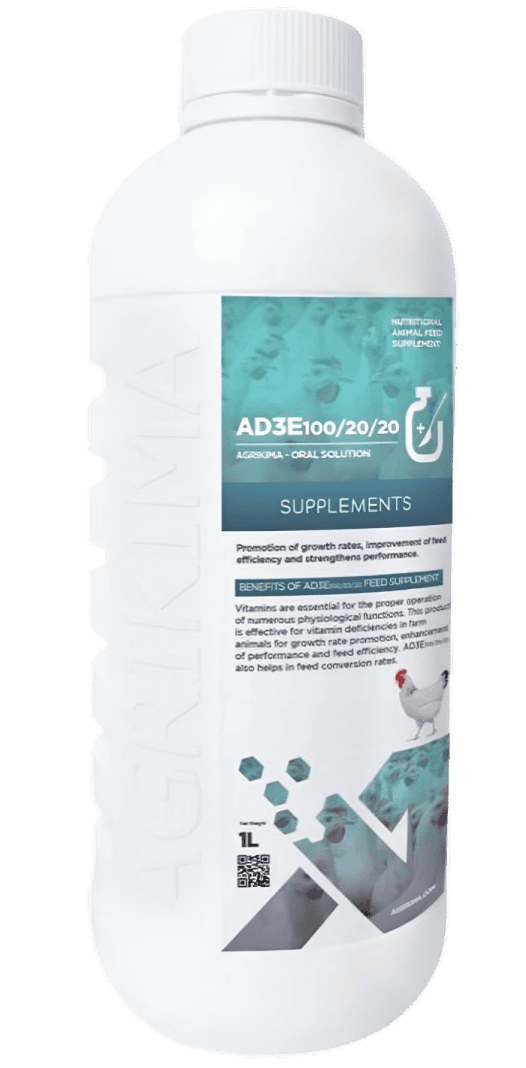
AD3E 100/20/20
During the late dry season, when green browse is scarce and vitamin A levels can drop, AD3E can help top up vitamins A, D3 and E for pregnant and milking camels. Use it alongside good browse, salt and minerals and routine vet care, following the label and your vet's advice.
View product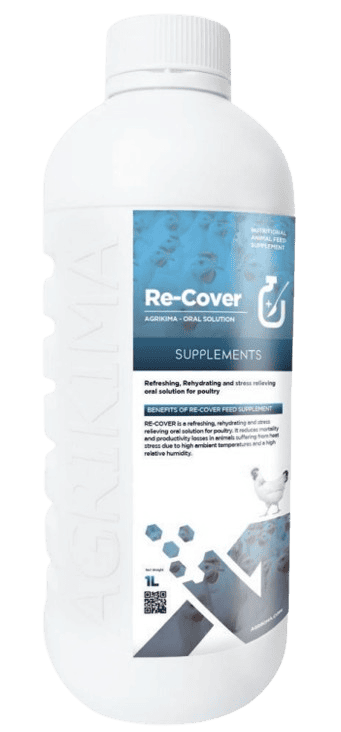
RE-COVER
Before and after long treks, transport or very hot periods, this oral rehydration solution can help camels replace fluids and electrolytes and cope with heat stress. It supports, but does not replace, regular watering, shade and calm handling.
View productKeeping them healthy
- Give camels enough time on mixed browse each day, and when you must hand-feed, introduce new feeds slowly so the stomach microbes can adjust.
- Provide regular access to salt, mineral licks or traditional salty water points, because camels have a very high salt need and lack of it lowers appetite and health.
- Water camels on a regular schedule suited to the season and keep watering points as clean as possible, avoiding stagnant, dirty pools.
- Make sure every newborn calf suckles colostrum within the first hours of life, keep calf pens clean and dry, and protect calves from ticks and cold nights.
- Plan deworming, tick, mange and surra control with your vet, using tests where possible and keeping records of every product used.
- Quarantine new or returning camels for a few weeks, watch them daily, and ask the vet to test them, for example for brucellosis and surra, before they join the herd.
- Keep night bomas clean, dry and not overcrowded, and remove dung regularly to reduce flies, especially in dairy units near towns.
- Store any concentrates or hay dry and off the ground so they do not go mouldy, and never feed mouldy feed.
- Keep simple records of temperature, body condition, milk yield, breeding and treatments, so you can compare each camel with its own normal.
Risk to people
Even camels that look completely healthy can carry germs that infect people. Brucellosis, a bacterial infection causing long-lasting fever and joint pain in people, can pass through raw camel milk and through contact with afterbirths and aborted calves. Camels in Kenya and the region have also been found to carry MERS coronavirus, a virus that can cause severe breathing illness in people, usually with no signs in the camel. To protect your family, boil or pasteurise camel milk before drinking, wash hands with soap after milking and handling camels, wear gloves when helping with calving or handling afterbirths, and cook camel meat thoroughly. Anyone who develops fever, cough or joint pain after close contact with camels should visit a health facility and mention their work with camels. Always respect drug withdrawal periods so that drug residues do not end up in milk or meat.
Impact on your farm
Healthy camels are the backbone of many households in northern and eastern Kenya. They give milk through long dry seasons when cattle and goats are struggling, and camel milk is increasingly sold in towns such as Isiolo, Garissa, Wajir and Nairobi. Camels also provide meat, transport, income from sales and social value in dowry and other traditions. Because camels breed slowly, with a pregnancy of about 13 months and usually one calf every two years or so, losing a breeding female or calf is a very large setback that takes years to recover from. Illness often shows first as a quiet drop in milk, slower growth or weight loss, long before an animal collapses. A farmer who checks the herd daily and knows normal signs can catch problems early. This keeps treatment costs lower, protects milk sales and reduces the risk that one sick camel infects the rest of the herd.
Long-term health
Camels are hardy animals and can live and work for well over 20 years when they are well managed. A camel that is alert, chewing cud, keeping its hump and body condition for the season and passing firm dry droppings is usually in good health. The outlook for any camel depends on how quickly problems are spotted, how good the feed, water and mineral supply is, and how well parasites and infections are controlled. Camels hide illness, so changes can be small at first. Herders who check their animals daily, keep records and call the vet early are much more likely to keep a productive herd through droughts and disease seasons.
Common questions
What is a normal temperature for a camel?
It changes with the time of day and how much water the camel has. A well-watered camel usually stays around 36–38 °C. When water is short in the hot season, a healthy camel can warm up to about 40 °C by late afternoon and cool down again overnight. This is normal and helps it save water. For checking fever, take the temperature early in the morning. A morning reading above about 38.5 °C, or any reading over 40 °C, together with dullness or poor appetite, is a reason to call the vet.
My camel's hump has become small. Is it sick?
Not always. The hump stores fat, and camels use it up during the long dry season, so it shrinks naturally when browse is poor. A healthy hump stays firm and upright even when smaller. Be concerned if the hump shrinks quickly, falls to one side or becomes floppy, or if the ribs and hip bones show a lot while other camels in the same herd still look fine. That can point to worms, surra, poor teeth or another illness, and a vet should check the camel.
How long can a healthy camel go without water?
It depends on the season, the heat, the work it does and the browse. On green browse in cooler weather, camels may go a long time without drinking, and in hot dry periods they need water more often. Milking females, pregnant camels and calves need water more regularly than other camels. Long water stress lowers milk yield and body condition, so even though camels can survive without water, regular watering keeps them productive.
Why is my bull camel blowing a pink bubble out of his mouth?
That pink balloon is the dulla, part of the soft palate that bulls push out during the rut, the breeding season. It comes with gurgling sounds, froth, teeth grinding, a strong smell and splashing urine on the tail. It is normal and not a sign of choking. Rutting bulls can be dangerous, so handle them carefully and keep children away. If you see drooling without a dulla, trouble swallowing, staggering or paralysis, call a vet immediately.
How often should I deworm and treat my camels?
There is no single schedule that suits every herd. It depends on your area, the season, the rains and the type of grazing. Ask your vet to test droppings and blood, and to plan worm, tick, mange and surra control for your herd. Treating only when needed, with the right product, saves money and slows drug resistance. Always follow the milk and meat withdrawal periods the vet gives you.
Do I need to give vitamins or supplements to healthy camels?
Camels on good mixed browse with access to salt and minerals usually get most of what they need. Late in the long dry season, when browse is dry and green feed is scarce, levels of vitamins such as vitamin A can fall. Stress such as long treks or transport in heat also drains camels. Talk to your vet or agrovet about whether a vitamin or rehydration product would help your herd at such times, and always follow the label. Supplements support good feeding, salt and parasite control but do not replace them.
A guide, not a diagnosis. This page is general information to help you recognise problems early. Always confirm with a vet or animal health worker before treating.