What it is
Surra is caused by Trypanosoma evansi, a single-celled parasite called a trypanosome that swims in the blood and body fluids. Unlike the trypanosomes behind 'nagana' in cattle, it does not need tsetse flies; any biting fly that feeds on an infected camel and then quickly bites another can carry it on its mouthparts. Once inside, the parasites multiply in waves. Each wave brings a bout of fever, then the camel's immune system knocks the numbers down, then the parasites change their outer coat and multiply again. This is why the fever comes and goes. The parasites and the body's reaction to them destroy red blood cells, causing anaemia (too little blood to carry oxygen). The camel loses appetite, burns its fat reserves including the hump, and the liver and other organs are stressed. Low blood protein lets fluid leak out of the vessels, producing soft swellings (oedema) under the belly, brisket and legs. In pregnant camels the fever and anaemia can kill the unborn calf, leading to abortion or weak calves. Without treatment many camels slowly waste and die, often when another stress such as drought or a long trek is added.
Which animals are most at risk
Camels of all ages can get surra, but adult camels, pregnant and milking females, and working pack camels suffer most because they are under the most stress. Camels from dry areas with little fly challenge suffer badly when moved into wetter, bushier areas. Risk is highest during and after the long rains (March to May) and short rains (October to December), when biting flies are plentiful. Pastoral herds in northern and eastern Kenya, including Marsabit, Wajir, Mandera, Garissa, Isiolo, Samburu, Turkana and Laikipia, are heavily affected, as are herds that graze along rivers such as the Tana, Ewaso Ng'iro and Daua. Camels that are underfed, wormy, or stressed by drought, long treks or other illness are more likely to become seriously sick. Horses, donkeys and dogs can also be infected and may become very ill; cattle, goats and sheep usually get milder infections.
Signs to look for
Early signs
- Bouts of fever that come and go: the camel feels hot, is dull and stands apart, then seems to recover for a few days before the next bout.
- Runny, watery eyes and a slightly reduced appetite, often around the time of the fever.
- Gradual weight loss even when grazing is fair, with the camel lagging behind the herd.
- A drop in milk yield in lactating females.
- Pale pink rather than healthy pink gums and inner eyelids, a first sign of anaemia.
- Many herders notice a strong, unusual sweetish or sharp smell to the urine of infected camels; this is a useful warning sign but not proof on its own.
As it gets worse
- Obvious wasting with ribs and hip bones showing, and a small, soft or collapsed hump.
- Very pale or whitish gums and eyelids, weakness, and tiring quickly when walking or loaded.
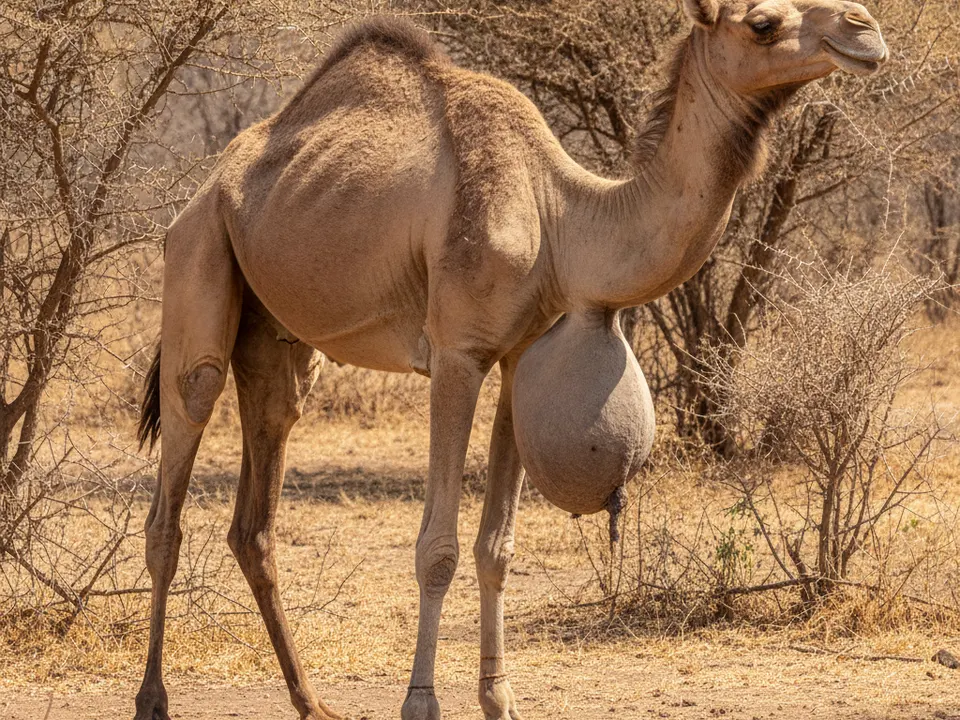
- Soft swellings (oedema) under the belly, brisket, sheath or udder and on the lower legs that may pit when pressed with a finger.
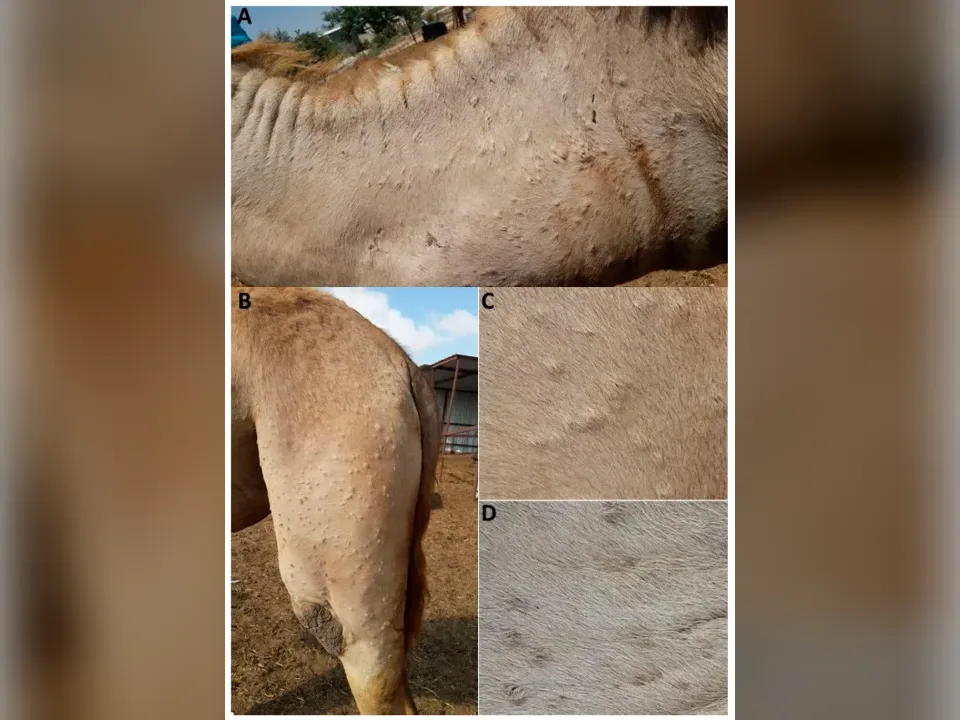
- Dull, rough coat and hair loss in patches.
- Abortion, stillbirth or the birth of weak calves that do poorly.
- Lying down for long periods, difficulty getting up, and in some cases staggering or other nervous signs.
- Death, either suddenly in a severe acute attack or after a long, slow decline, often triggered by drought or another stress.
What to do right now
- Separate the sick camel from the herd where you can, and keep it in shade near the boma so it does not have to walk far.
- Make sure it has easy access to clean drinking water and good-quality browse or fodder, because fever and anaemia sap its strength.
- Stop loading, working or trekking the camel; extra exertion can make an anaemic camel collapse.
- Protect it from biting flies as much as possible, for example by keeping it away from rivers and thick bush and resting it in an open, breezy spot at the hottest fly times.
- Check the rest of the herd closely for thin animals, pale gums, runny eyes, swellings and recent abortions, and write down what you find.
- Record the camel's temperature if you have a thermometer, the dates of fever bouts, and any treatment already given.
- Call your vet, County Veterinary Officer or a trained animal health worker to take blood samples before any drug is used.
- Do not inject cattle trypanocides or any other drug without a vet's advice; camels react badly to some products and wrong doses cause poisoning and drug resistance. Use a new or properly sterilised needle for every animal.
How it spreads
- Horse flies (Tabanus, the large flies with a painful bite) are the main carriers; they bite, get disturbed, and finish their meal on the next camel, carrying blood and parasites with them.
- Stable flies (Stomoxys) and camel flies (Hippobosca) also carry the parasite in the same way, especially when camels crowd together at water points and night bomas.
- Fly numbers rise sharply during and after the long rains and the short rains, so new infections peak in the wet season and the weeks after it.
- Grazing near rivers, swamps, riverine forest and thick bush, where biting flies breed, greatly increases the risk.
- Reusing the same needle or syringe on several camels can carry infected blood from one animal to the next.
- Moving camels into a new area, buying in animals from markets, and mixing herds at shared watering points bring infected camels into contact with healthy ones.
- Chronically infected camels that look only slightly thin can carry the parasite for a long time and act as a hidden source for the rest of the herd.
Could it be something else?
Heavy worm burden (especially Haemonchus, the barber's pole worm)
Worms also cause pale gums, weight loss and bottle-jaw type swelling, but usually without bouts of fever. Several camels on the same grazing are often affected, and a faecal egg count at a lab will show many worm eggs. Surra is confirmed by finding trypanosomes or antibodies in a blood sample. The two often occur together, so a vet may test for both.
Starvation and drought stress
In drought the whole herd loses condition together, the hump shrinks in all animals, and they pick up when rains and pasture return. Camels with surra lose weight even when feed is available, show fever and runny eyes, and keep wasting after the rains.
Brucellosis
Brucellosis also causes abortion, but aborting camels usually stay in fair body condition without repeated fever, pallor or wasting. Brucellosis is diagnosed with a separate blood test and can infect people through raw milk and birth fluids, so handle all abortions with gloves.
Sarcoptic mange
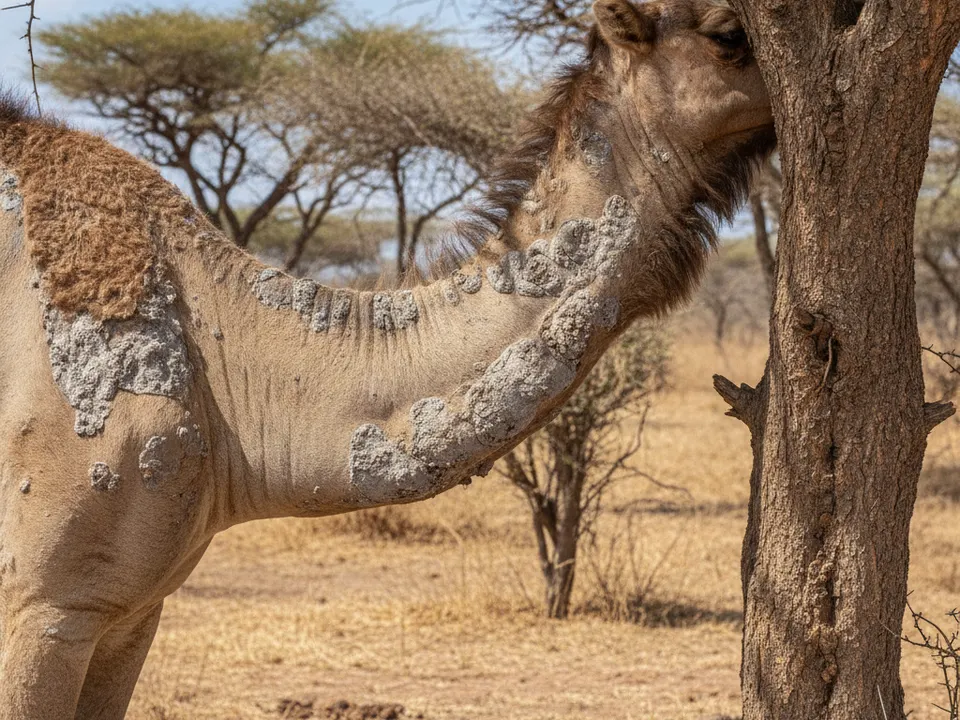
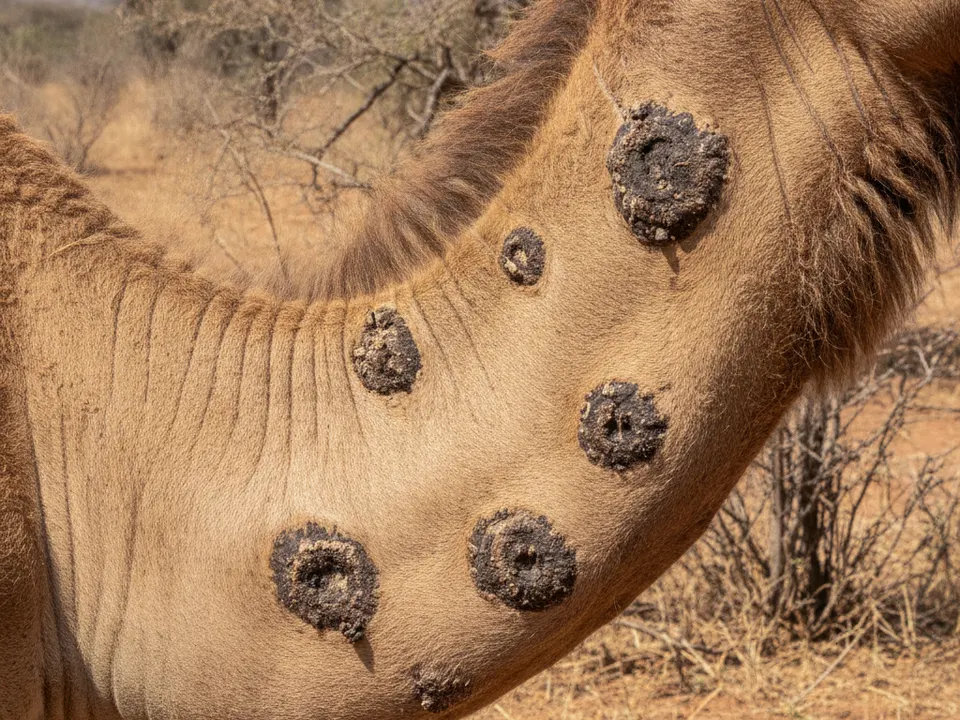
Mange camels lose condition and hair, but the main sign is intense itching, rubbing and thick, crusty, wrinkled skin, especially on the head, neck, flanks and legs. Surra causes patchy hair loss without the severe itching and crusts, and comes with pale gums and fever.
How it is diagnosed
Signs alone are not enough because many conditions cause wasting. A vet or animal health technician will check temperature, body condition, gum colour and swellings, then take blood. The simplest test is to look at a fresh drop of blood or a stained blood smear under the microscope for moving trypanosomes. Spinning blood in a thin tube (the buffy coat or haematocrit centrifuge test) concentrates the parasites and also measures the packed cell volume (PCV), which shows how anaemic the camel is. Because parasite numbers rise and fall, a negative smear does not rule surra out, especially in chronic cases. Labs can also use blood tests that detect antibodies, such as the card agglutination test (CATT/T. evansi) or ELISA, or a PCR test that finds the parasite's genetic material. In dead camels a post-mortem may show a thin carcass, pale tissues, watery fluid in body cavities and an enlarged spleen and lymph nodes, but blood tests on living herd mates are more useful. To help the vet, note when the fever bouts happened, which camels are thin or have aborted, where the herd has grazed and watered recently, any recent purchases or treks, and any drugs already given, with names and dates. Ideally have the camel sampled while it has a fever, when parasites are easiest to find.
Treatment
Surra is treated with trypanocides, which are drugs that kill trypanosomes. They are not antibiotics, and antibiotics do not cure surra, though a vet may use them if there is a second bacterial infection. Drugs commonly used in camels include quinapyramine and melarsomine, which has been developed specifically for T. evansi in camels. Some trypanosome drugs used in cattle, such as diminazene and isometamidium, are riskier in camels, which are more sensitive to their toxic effects, so the choice of drug, the dose and the route must be decided by a vet for camels specifically. Some products can also be used preventively at the start of the fly season under veterinary guidance. Treatment must be prescribed by a vet; never borrow cattle doses. Injection site swelling, drooling, trembling or restlessness can occur with some drugs, so the camel should be watched after treatment. Most treated camels improve over days to weeks, but rebuilding the hump, body condition and blood takes longer and needs good feeding and rest. Resistance of T. evansi to trypanocides is a real and growing problem, driven by under-dosing, fake or poor-quality drugs and repeated use of the same product, so buy from licensed agrovets and follow the vet's plan. All trypanocides have milk and meat withdrawal periods, during which milk and meat must not be used for people; ask the vet for the exact period of the product used and keep to it.
Medicines must be prescribed and dosed by a vet. Always respect milk and meat withdrawal periods, and finish the full course of any antibiotic.
How Agrikima products can help
These support the animal alongside — never instead of — your vet's treatment, vaccination and good management.
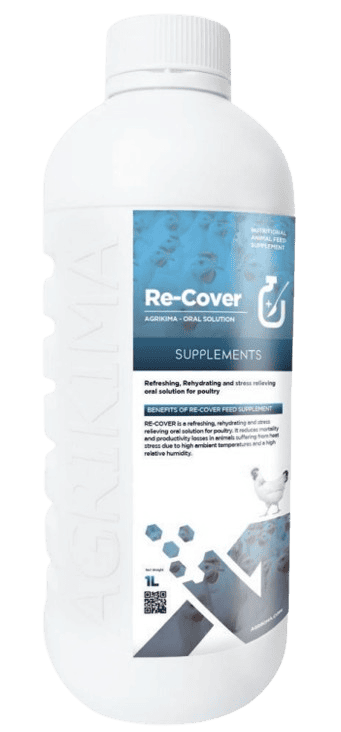
RE-COVER
An oral rehydration and heat-stress relief solution that can help a feverish, weak camel keep drinking and stay hydrated in hot conditions while it receives vet-prescribed trypanocide treatment. It supports comfort and recovery only and does not kill the parasite.
View product
AD3E 100/20/20
Vitamins A, D3 and E can help support a camel recovering from surra whose body reserves have been run down, particularly after drought and weight loss, when advised by your vet as part of recovery feeding. It does not treat surra or replace trypanocides, fly control or good nutrition.
View productPrevention
- Reduce fly contact: where possible, graze away from rivers, swamps and thick bush during and after the rains, and water camels at cooler times of day when biting flies are less active.
- Ask your vet about fly control products that are approved for camels, such as pour-ons or sprays, and about fly traps or insecticide-treated targets near bomas and water points.
- Under veterinary advice, consider preventive trypanocide treatment for high-risk herds before or at the start of the rainy season or before moving camels into fly-infested areas.
- Check new camels before mixing them with your herd: keep them apart for a few weeks and have them blood-tested for surra.
- Use one clean needle per camel for all injections and never share syringes between herds.
- Keep camels in good body condition with access to browse, salt and minerals, and plan for drought, because well-fed camels cope with infection far better.
- Control worms with a planned deworming programme agreed with your vet, since worms and surra together cause severe anaemia.
- Watch the herd regularly for weight loss, pale gums, runny eyes and abortions, and have suspect camels tested early rather than waiting for them to waste.
- Buy trypanocides only from licensed agrovets, use the full prescribed dose, and rotate products as your vet advises to slow down drug resistance.
Risk to people
Surra is not considered an important disease of people, although a very small number of human infections with T. evansi have been reported worldwide. The main human concern is drug residues: camel milk is often drunk raw, and milk or meat from camels treated with trypanocides must not be consumed until the withdrawal period given by the vet is over. Because abortions in camels can also be caused by brucellosis, which does infect people, always wear gloves when handling aborted calves and birth fluids, bury or burn them, and boil camel milk before drinking.
Impact on your farm
For pastoral and commercial camel keepers in Kenya, surra is one of the biggest drains on income. Milk yield falls in sick females, and since camel milk is a key food and cash product in northern Kenya, families feel the loss quickly. Abortions and weak calves slow herd growth for years. Wasted camels fetch much lower prices at market, and pack and riding camels cannot work. Repeated drug purchases, transport to get treatment, and losses from deaths in severe or neglected cases add to the cost. Chronic carriers keep the disease circulating, so one untreated camel can cost the whole herd. Drug resistance makes treatment less reliable and more expensive over time.
Outlook and recovery
Camels diagnosed and treated early with an appropriate trypanocide usually recover well, although they need weeks of good feeding and rest to regain the hump and body condition. The outlook is more guarded in camels that have been sick for a long time, are severely anaemic, very thin, heavily pregnant or also carrying worms or other diseases. Relapses happen if the drug did not clear all the parasites, if the parasites are resistant, or if the camel is quickly reinfected by flies. Recovered camels can be infected again, so prevention and regular checks remain important.
Common questions
My camels are far from tsetse areas. Can they still get surra?
Yes. Surra does not need tsetse flies. It is carried by common biting flies such as horse flies and stable flies, which are found across camel country, especially after the rains. That is why surra occurs throughout northern and eastern Kenya, even in dry areas.
Can I use the trypanosome injection I use for my cattle?
Not without a vet's advice. Camels are more sensitive than cattle to some trypanocides, and a cattle product or dose can poison a camel or fail to clear the infection. Using the wrong drug or too little of it also helps the parasite become resistant. Ask a vet which product is suitable for camels and how it should be given.
Is the strange smell of the urine enough to know my camel has surra?
The unusual urine smell that many herders recognise is a helpful warning, and it is worth taking seriously. But it is not proof, and other conditions can change urine smell. A blood test is the reliable way to confirm surra, so use the smell as a reason to call the vet, not as a replacement for testing.
Can we drink the milk from a camel with surra?
The parasite itself is not considered a real risk to people through milk, but sick camels give less milk and it should be boiled like all camel milk. The bigger concern is drugs: after a camel is treated with a trypanocide, its milk and meat must not be used until the withdrawal period stated by the vet has passed.
Why did my camel get sick again after being treated?
There are several possible reasons. The camel may have been reinfected by flies, the dose may not have been right, the drug may have been of poor quality, or the parasites in your area may be resistant to that drug. Tell your vet so they can retest the camel and, if needed, change the treatment and advise on fly control.
Can surra spread to my donkeys, horses, goats or dogs?
Yes, T. evansi can infect several animals. Horses, donkeys and dogs can become seriously ill, while cattle, goats and sheep usually have milder infections but can still carry the parasite. If other animals near your camels become thin, weak or feverish, ask the vet to test them too.
A guide, not a diagnosis. This page is general information to help you recognise problems early. Always confirm with a vet or animal health worker before treating.