What it is
Anthrax is caused by a bacterium called Bacillus anthracis. Outside the body it forms spores. A spore is a tough, sleeping form of the germ that can survive in soil for decades and resists heat, drying and many disinfectants. Cattle swallow spores while grazing on contaminated ground, drinking contaminated water or eating contaminated feed. Inside the animal the spores wake up and multiply very fast in the blood. The bacteria produce powerful poisons (toxins) that damage blood vessels, stop the blood from clotting, cause fluid to leak into tissues and lead to shock and death, often within hours. When the animal dies, its blood is full of bacteria. If the carcass is opened or the blood spills onto the ground, the bacteria meet air and turn back into spores, which contaminate that spot for many years. If the carcass is left closed, the bacteria inside are largely destroyed by decay within a few days. This is why opening a suspected anthrax carcass is the worst thing a farmer can do.
Which animals are most at risk
All cattle can get anthrax, whatever their age, breed or sex, and it also affects sheep, goats, camels, pigs and wildlife. Unvaccinated herds are at greatest risk. Free-range and pastoral herds grazing communal land, riverbanks, swamps and low-lying areas are especially exposed, but zero-grazed cattle can also be infected through cut fodder or feed from contaminated land. Outbreaks in Kenya often follow dry spells broken by heavy rain, or happen in the dry season when grazing is short. Areas with a history of anthrax, and farms near where carcasses were opened or buried shallowly, remain risky for many years. Herds in counties where cattle are often moved, traded or slaughtered at home without inspection face higher risk of the disease spreading.
Signs to look for
Early signs
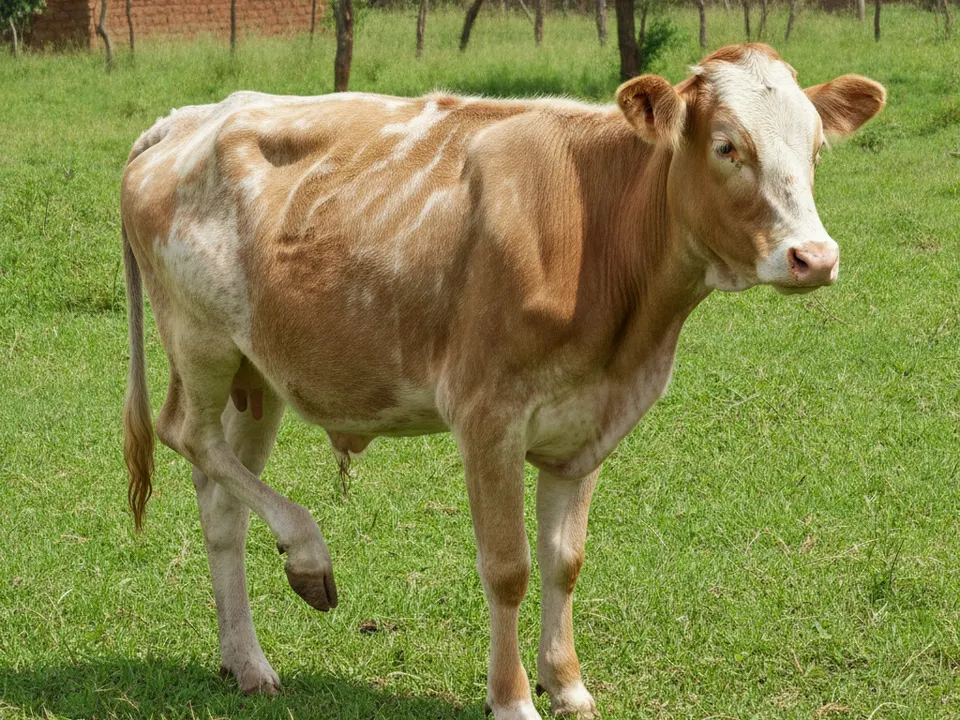
- Sudden death of an animal that looked healthy the evening before is the most common first sign; many cattle die without any illness being seen.
- High fever: the animal feels very hot to the touch, especially the ears and the base of the horns.
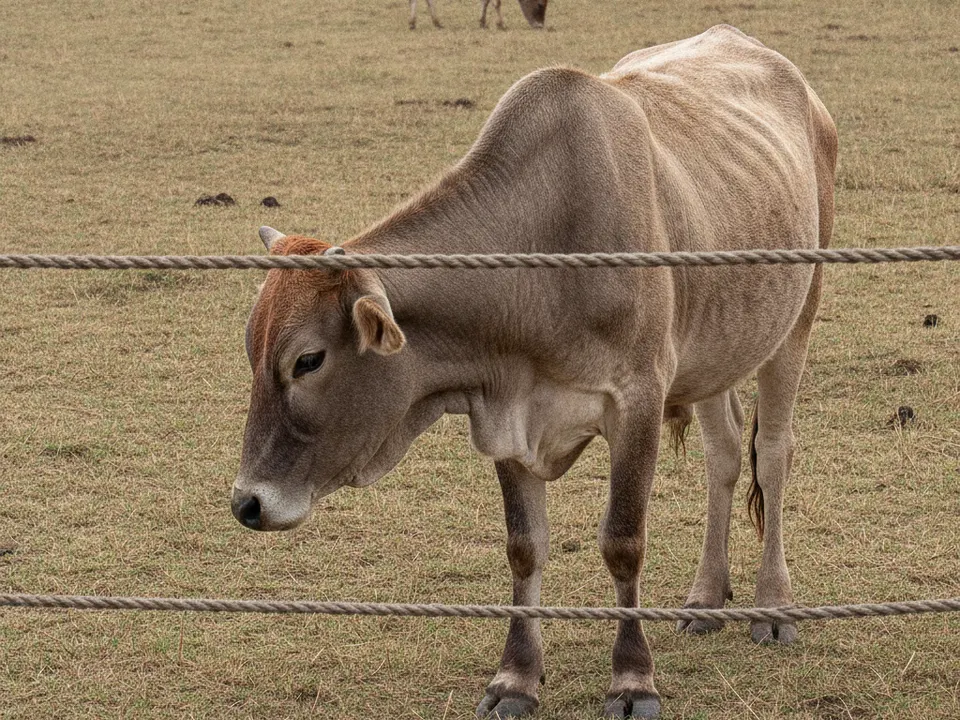
- Dullness, standing apart from the herd and refusing to eat or chew the cud.
- Fast, laboured breathing and a fast heartbeat.
- Trembling, staggering or excitement followed by weakness.
- A sudden fall in milk yield; milk may be yellowish or tinged with blood.
- Pregnant cows may abort.
As it gets worse
- Collapse, struggling (paddling the legs) and death, often within a few hours of the first signs.
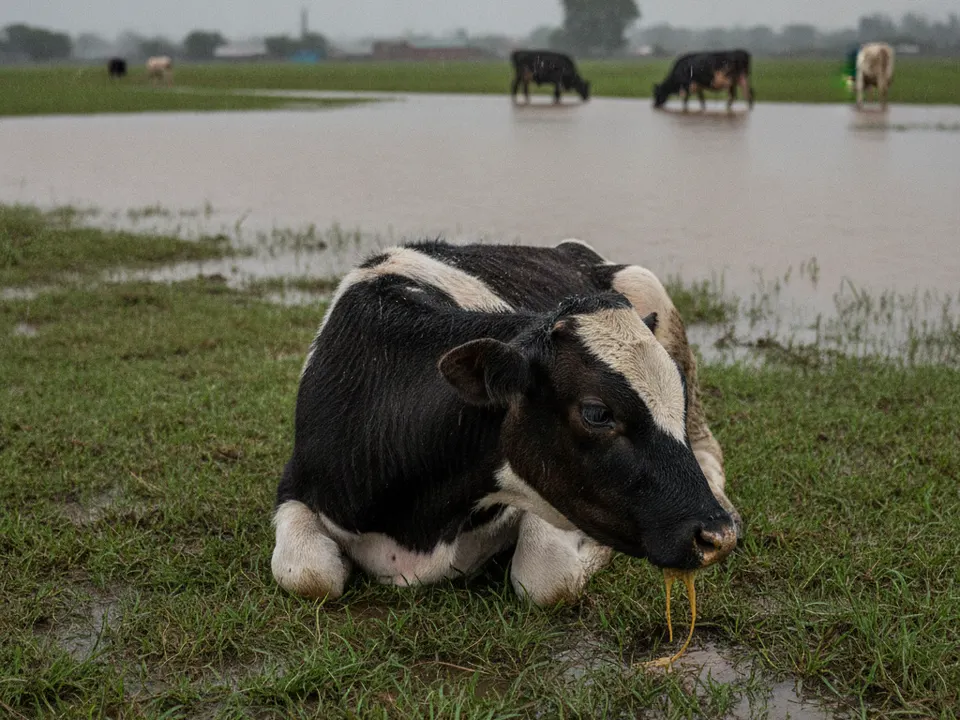
- Dark, thick, tar-like blood that does not clot coming from the nose, mouth, anus or vulva, sometimes also in the urine or dung.
- Soft swellings under the skin of the throat, neck, brisket, belly or flanks in some animals that live a little longer.
- After death the carcass bloats very quickly and decomposes fast.
- The carcass does not go stiff (no rigor mortis), so the legs stay floppy hours after death.
- Bloody diarrhoea in some cases before death.
What to do right now
- Do not open, cut, skin, butcher or move the carcass, and do not let anyone take meat, hides or horns from it, even if neighbours ask.
- Call the County Veterinary Officer or your nearest government vet immediately; anthrax is notifiable by law and they will guide you and test the carcass.
- Keep people, children, dogs and other animals away by fencing off or guarding the carcass, and cover it with branches, iron sheets or a tarpaulin to keep off vultures, dogs and flies.
- Move the rest of the herd away from the area where the animal died and stop grazing and watering there until the vet says otherwise.
- Stop all movement of animals, milk, meat and hides into or out of the farm until the vet gives advice.
- Do not use or sell milk from sick animals or animals that died, and discard it safely as the vet directs.
- Check the rest of the herd often for fever, dullness or swellings, keep any sick animal separate with shade and water, and tell the vet straight away rather than giving any drugs yourself.
- Anyone who touched the carcass, blood or milk should wash thoroughly with soap and water, avoid touching their face, and watch for skin sores or illness, going to a health facility and saying they had contact with a possible anthrax case.
How it spreads
- Grazing on pasture where spores are present in the soil, especially at old anthrax sites, old burial spots or places where carcasses were opened in the past.
- Weather changes that bring spores to the surface: heavy rains or flooding after a long drought, or the start of the long and short rains, wash and concentrate spores in low-lying areas and around water points.
- Very short dry-season grazing, which makes cattle pull up roots and swallow soil along with the grass.
- Disturbing soil through ploughing, digging, road building or digging up old burial sites.
- Opening, skinning or butchering a carcass, which spills blood full of bacteria and creates new spore-contaminated ground.
- Scavengers such as dogs, hyenas and vultures, and flies, which can spread infected blood and tissue from carcasses to new places.
- Contaminated feed or materials, such as poorly processed bone meal, meat meal, hides or hair from infected animals.
- Moving infected animals or carcass products to markets and other farms, which can carry the disease into new areas.
Could it be something else?
Blackquarter (blackleg)
Blackquarter mostly kills well-fed young cattle between about 6 months and 2 years. It causes a hot, then cold, swollen leg or shoulder muscle that crackles like paper when pressed because of gas under the skin, and the animal is usually lame first. Anthrax affects any age, has no crackling muscle swelling and causes dark unclotted blood from body openings. Only a vet test can confirm which one it is, so treat every sudden death as possible anthrax until a vet rules it out.
Lightning strike
Death from lightning usually happens during or just after a storm, often under a tree or near a wire fence, sometimes with several animals together. There may be singe or burn marks on the skin and burnt grass nearby. The carcass stiffens normally and blood clots. Anthrax deaths are not linked to storms and show unclotted blood and no stiffening.
Acute poisoning (plants, nitrate, cyanide or pesticides)
Poisoning often follows a change of feed, access to wilted sorghum, young sudan grass, certain toxic plants, fertiliser or a recently sprayed area, and several animals may be affected at once. Signs like drooling, frothing, muscle twitching or bright red or chocolate-brown blood point towards poisoning. Blood still clots and the carcass stiffens normally. A vet blood smear is needed to exclude anthrax.
Haemorrhagic septicaemia
This bacterial disease, more common in buffalo and cattle in wet seasons, causes high fever, a large hot swelling of the throat and lower neck and noisy, difficult breathing, usually over hours to a day or two. It does not normally cause dark unclotted blood from all body openings with failure of the carcass to stiffen. Laboratory tests by the vet separate the two.
How it is diagnosed
A vet suspects anthrax from the history of sudden death, the dark unclotted blood, rapid bloating and lack of stiffening. The carcass must NOT be opened for a post-mortem. Instead, the vet or animal health officer, wearing gloves and protective clothing, takes a small blood sample from a vein in the ear or tail, or cuts off the tip of the ear, and seals the wound and sample safely. A thin blood smear is stained (commonly with polychrome methylene blue) and looked at under a microscope for the typical square-ended rods with a pink capsule. Samples may also be sent to a regional veterinary laboratory for culture or PCR, a test that detects the germ's genetic material. The farmer can help by keeping the carcass untouched and guarded, writing down when the animal was last seen healthy, what signs were seen, how many animals are sick or dead, where the herd has grazed and watered recently, and the vaccination history of the herd.
Treatment
Most cattle with anthrax are found dead, so treatment is often not possible. If an animal is found early, while it still has fever and before it collapses, a vet may treat it with antibiotics that anthrax bacteria are usually sensitive to, such as penicillin or oxytetracycline. Even with prompt treatment, many animals still die because the toxins have already done damage. The vet will usually vaccinate the healthy animals in the herd and may advise on giving antibiotics to in-contact animals; because the anthrax vaccine contains live spores, antibiotics given around the same time can stop the vaccine from working, so only the vet should plan this. All treatment must be prescribed and supervised by a vet. Milk and meat from treated animals must not be used until the drug withdrawal period on the label or set by the vet has passed, and milk and meat from sick animals must never enter the food chain. Antibiotics should be used only as directed to avoid antimicrobial resistance, where germs stop responding to drugs. The vet will also arrange safe carcass disposal, usually by burning on site or deep burial covered with soil and disinfectant as the authorities direct, and disinfection of the place where the animal died. Expect quarantine of your farm and sometimes the surrounding area, with restrictions on moving animals and selling milk or meat, usually until a set period after the last case and after vaccination.
Medicines must be prescribed and dosed by a vet. Always respect milk and meat withdrawal periods, and finish the full course of any antibiotic.
Prevention
- Vaccinate cattle against anthrax every year in areas where it has occurred, ideally before the high-risk season; in Kenya a combined blackquarter and anthrax vaccine is available through agrovets and vet offices, and your vet will advise on timing.
- Join county or community vaccination campaigns, as vaccinating whole neighbourhoods protects shared grazing and water points better than single farms.
- Never open, skin, butcher or eat cattle that die suddenly; report them and let the vet arrange proper disposal by burning or deep burial.
- Avoid grazing cattle on known anthrax sites, old burial places and low-lying flood areas, especially after heavy rains that follow drought.
- Provide supplementary feed or hay in the dry season so cattle do not graze too close to the soil and swallow spores.
- Buy bone meal and animal-based feeds only from reliable suppliers who process them properly, and avoid feeding carcass products to livestock.
- Mark and fence off places where anthrax carcasses were disposed of, and do not dig, plough or build on them.
- Control dogs and scavengers around the farm, and quarantine and check newly bought animals and confirm their vaccination history before mixing them with your herd.
Risk to people
Anthrax is a zoonosis, meaning it spreads from animals to people, and it can be deadly. People usually get it by handling, skinning or butchering infected carcasses, touching hides, hair or blood, or eating meat from animals that died suddenly. The most common form is skin anthrax: a painless itchy bump that becomes a sore with a black centre, often on the hands, arms or face, sometimes with swelling. Eating infected meat can cause gut anthrax with fever, vomiting, belly pain and bloody diarrhoea, which is often fatal. Breathing in spores is rare but very dangerous. Cooking does not make anthrax meat safe, and it must never be eaten, sold or given away. Never handle a suspected carcass with bare hands; if you must go near, wear gloves, boots and covering clothes, then wash well with soap and water. Anyone with contact who develops a sore, fever or stomach illness should go to a health facility quickly and mention contact with a possible anthrax animal, as human anthrax can be treated with antibiotics when caught early.
Impact on your farm
Anthrax can kill several animals in a herd within days, and each dairy cow or ox lost is a big blow to a smallholder's savings, milk income and ploughing power. Farms with confirmed cases face quarantine, so milk and animal sales stop for a time, which hurts families who depend on daily milk money. Abortions and milk drop in survivors add to the loss. There are also costs for vaccination, disposal and disinfection. When people eat meat from anthrax carcasses, human illness and deaths can follow, bringing medical costs, lost work and great distress to the community. Because spores stay in soil for years, land can remain a risk long after the outbreak, making annual vaccination a lasting expense that is still far cheaper than the losses.
Outlook and recovery
The outlook for an individual animal is very poor. Most die before any signs are noticed, and even animals treated early often do not survive. The outlook for the herd is much better if the death is reported quickly, the carcass is not opened, the rest of the herd is moved off contaminated ground and vaccinated, and the vet's quarantine advice is followed. Vaccination usually stops new cases once immunity develops, though a few animals may still die in the days after vaccination while protection builds. Farms that vaccinate every year in risk areas rarely see repeat outbreaks, while farms where carcasses were opened may face cases for many years.
Common questions
Can I eat or sell the meat if I cook it well?
No. Meat from an animal that died suddenly or is suspected of anthrax must never be eaten, sold or given away, however well it is cooked. Handling and cutting the meat can infect your skin, and eating it can cause gut anthrax, which often kills. In Kenya, people have died after sharing meat from cattle that died this way. Report the death and let the vet dispose of the carcass.
Why must the carcass not be opened?
Inside a closed carcass, the anthrax bacteria are mostly killed as the body decays. When the carcass is opened or the blood spills, the bacteria meet air and turn into spores that can live in the soil for decades and infect animals grazing there in future. Opening the carcass also exposes you directly to the germ. Leaving it closed protects your family, your neighbours and your land.
Do I have to report anthrax, and what happens after I report it?
Yes. Anthrax is a notifiable disease in Kenya, so the law requires you to report suspected cases to the County Veterinary Officer or the Directorate of Veterinary Services. The vet will test the carcass, arrange safe disposal, and usually vaccinate your herd and nearby herds. Your farm may be placed under quarantine, meaning you cannot move animals in or out or sell milk, meat or hides until the vets lift the restriction. Public health officers may also check on people who had contact.
How often should I vaccinate my cattle against anthrax?
In areas where anthrax has occurred, cattle are usually vaccinated once a year, preferably before the risky season such as the onset of the rains. Many farmers use the combined blackquarter and anthrax vaccine. Ask your vet or County Veterinary Officer about the right timing for your area, and keep a record of every vaccination. Do not give antibiotics around vaccination time unless the vet advises, because they can stop the live vaccine working.
Can a supplement or vitamin help my cattle against anthrax?
No supplement or vitamin can prevent or treat anthrax. Good nutrition keeps animals generally strong, but it does not protect them from this germ. The only reliable protection is yearly vaccination, avoiding contaminated ground and proper carcass disposal. If you suspect anthrax, the answer is to call the vet and lock down the carcass, not to buy remedies.
Is it safe to graze where an animal died of anthrax?
Treat that spot as dangerous for many years. Fence it off or mark it, and do not graze, dig or plough there. Keep vaccinating your herd every year, because spores can be brought to the surface by rain, flooding or digging. Your vet can advise on how long to keep animals off the wider area after an outbreak.
A guide, not a diagnosis. This page is general information to help you recognise problems early. Always confirm with a vet or animal health worker before treating.