What it is
Redwater is caused by Babesia, a single-celled parasite called a protozoan. It is not a bacterium and not a virus. In East Africa the main species is Babesia bigemina. Babesia bovis is more dangerous and occurs where the Asian blue tick (Rhipicephalus microplus) has become established. When an infected tick feeds, it injects the parasites into the cow's blood. They enter the red blood cells and multiply, and each cell bursts as new parasites are released to invade more cells. As millions of red cells are destroyed, the cow runs a high fever and becomes anaemic. Her blood cannot carry enough oxygen, so she weakens, breathes fast and her heart pounds. The red pigment from burst cells (haemoglobin) spills into the blood and passes out in the urine, turning it red-brown. The liver is overwhelmed breaking down this pigment, so the gums, eyes and skin turn yellow (jaundice). With Babesia bovis, infected red cells also stick inside the small blood vessels of the brain. This causes the 'cerebral' form, with nervous signs, which is very often fatal. Kidney damage, shock and lack of oxygen are what usually kill the animal.
Which animals are most at risk
Adult cattle that have never met the parasite are most at risk, especially exotic dairy breeds such as Friesian, Ayrshire, Jersey and Guernsey, and their high-grade crosses. Animals moved from tick-free highland farms or bought from zero-grazing units and then put out to graze in tick areas are classic victims. Calves under about nine months have natural protection: they usually get only mild disease and then become immune. That is why herds where calves meet ticks early are often stable, while herds where tick control suddenly fails get serious outbreaks in adults. Indigenous zebu (such as Boran and East African Shorthorn Zebu) are more resistant to both ticks and disease, though they can still fall sick. Risk rises during and after the long and short rains when tick numbers rise. Free-range, communal grazing and pastoral systems carry more tick exposure, but zero-grazed cows can also be infected through ticks brought in on fodder or visiting animals. Pregnant cows, newly calved high-yielders and stressed or poorly fed animals tend to suffer worse disease.
Signs to look for
Early signs
- High fever, often above 40°C (normal is about 38.5°C). Check with a rectal thermometer, as the cow may feel hot and look dull before anything else shows.
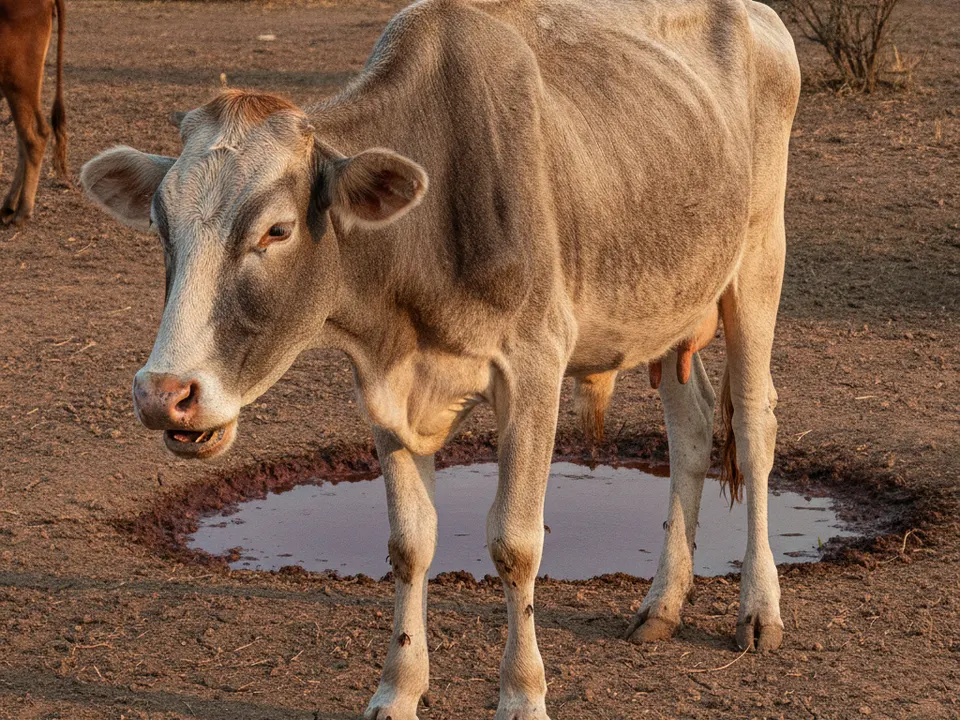
- Dullness and standing apart from the herd, with drooping ears and head held low.
- Reduced appetite and stopping chewing the cud.
- A sudden, sharp drop in milk yield in dairy cows.
- Faster breathing and a fast, pounding heartbeat you can feel or see on the left side of the chest.
- Gums, the inside of the eyelids and the vulva start to look paler pink than normal.
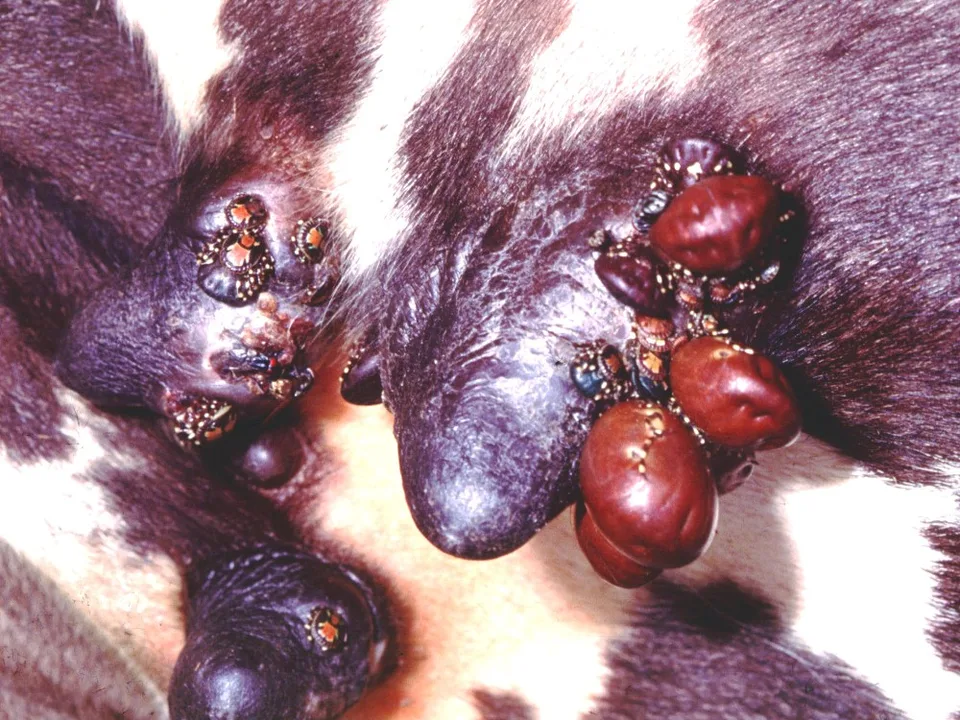
- Blue ticks are found on the ears, neck, dewlap, belly, udder, between the legs or under the tail.
As it gets worse
- Red-brown, coffee- or port-wine-coloured urine that stays coloured when left in a container. True blood would settle as a red layer at the bottom.
- Very pale, almost white gums and eyes, later turning yellow (jaundice).
- Severe weakness, staggering and lying down and unable to rise.
- Constipation with hard, dry dung, or sometimes diarrhoea.
- Abortion in pregnant cows because of the high fever. Bulls may become temporarily infertile.
- Nervous signs in the cerebral form: incoordination, grinding teeth, pressing the head against walls, aggression or 'madness', paddling, fits and coma.
- Rapid loss of condition. Death can follow within a few days, sometimes within 24 hours of signs appearing in the cerebral form.
What to do right now
- Call your vet or County Veterinary Officer immediately. Redwater can kill within days, and early treatment makes the biggest difference.
- Move the sick animal slowly and calmly into a shaded, quiet pen close by. Do not chase, drive long distances or wrestle her, as a severely anaemic cow can collapse and die from stress.
- Provide clean, fresh drinking water within easy reach, plus soft, palatable fodder. Do not force-drench a weak or nervous animal, because liquid can go into the lungs.
- Take and record her rectal temperature, and note the colour of her urine and gums. Keep a urine sample in a clean, closed bottle for the vet.
- Check her and the rest of the herd for ticks. Hand-pick or carefully remove ticks from the sick animal without crushing them on your skin.
- Check every other animal's temperature twice a day for the next week, especially exotic and recently bought cattle. Report any fever early.
- Keep animals with nervous signs in a safe pen away from people and walls, as they may charge or fall. Do not try to restrain a fitting animal alone.
- Do not buy and inject drugs from the agrovet yourself. The wrong drug or dose can kill an anaemic cow or leave dangerous residues. Wait for the vet's diagnosis and prescription.
How it spreads
- The main carrier is the blue tick (Rhipicephalus decoloratus). It is a one-host tick, which means it spends its whole life on one animal before dropping off to lay eggs.
- An infected female tick passes the parasite into her eggs. The next generation of ticks then infects new cattle, so pasture can stay dangerous even after the original sick animals are gone.
- The Asian blue tick (Rhipicephalus microplus) carries both Babesia bigemina and the more deadly Babesia bovis. It has spread into parts of East Africa and is often harder to control with some acaricides (tick-killing chemicals).
- Recovered cattle and many local zebu cattle carry low levels of the parasite in their blood without looking sick. Ticks feeding on them can pick it up and pass it on.
- It can also spread through blood on shared needles, dehorning or castration tools, and through blood transfusions. Use a clean needle for each animal.
- Outbreaks are often triggered when dipping or spraying is stopped or done badly, when the rains bring a surge of ticks, or when cattle from tick-free areas are moved onto tick-infested land.
- Redwater does not pass directly from cow to cow by contact, breath or milk. Ticks or blood are needed.
Could it be something else?
Anaplasmosis (gall sickness)
Gall sickness also causes fever, pale gums and strong jaundice, and is also tick-borne. However, the urine usually stays normal in colour or is only dark yellow, not red-brown. It tends to develop more slowly, and constipation is very common. The two diseases often occur together, so a blood smear is needed to be sure.
East Coast Fever (ECF, ndigana)
ECF is spread by the brown ear tick. It causes clearly swollen lymph nodes (glands) below the ear and in front of the shoulder, watery eyes, coughing, laboured breathing and froth from the nose near death. It does not cause red urine or marked jaundice.
Leptospirosis
This bacterial disease can cause red urine and jaundice, mainly in calves, along with abortion storms and 'milk drop' with thick, clotted milk in cows. Ticks are not involved. It is diagnosed with blood and urine tests, and it can infect people.
Post-calving haemoglobinuria and kale or rape poisoning
Red urine without high fever in a high-yielding cow a few weeks after calving points to low phosphorus. Red urine in cattle fed large amounts of kale, rape or other brassicas points to plant poisoning. A normal temperature and no ticks make redwater less likely, but your vet should still check.
How it is diagnosed
A vet usually suspects redwater from fever, red-brown urine, pale or yellow gums and the presence of blue ticks. To confirm it, the vet takes a drop of blood, ideally from a small prick on the ear tip or tail. Babesia bovis gathers in these small vessels. The vet makes a thin smear on a glass slide, stains it and looks under a microscope for the pear-shaped parasites inside red cells. A packed cell volume test (PCV, which measures how much blood the cow has left) shows how severe the anaemia is. In animals that have already been treated or are carriers, parasites may be hard to find. In that case laboratory tests such as PCR (which detects the parasite's genetic material) or serology (blood tests for antibodies) can help. These are also useful for checking a herd's immunity. If an animal dies, a post-mortem by the vet or a Veterinary Investigation Laboratory typically shows yellow tissues, a large dark spleen, an enlarged liver, a swollen gall bladder with thick bile and dark urine in the bladder. With Babesia bovis, the brain often looks cherry-pink, and a brain smear confirms it. Important: if an animal dies suddenly with dark blood oozing from the nose, mouth or anus, do not open the carcass, because it could be anthrax. Call the vet. To help your vet, write down when you first noticed signs, the temperature readings, what the urine looks like (keep a sample in a clean, closed container), when the herd was last dipped or sprayed and with what product, any recent purchases or animal movements, and how many animals are affected.
Treatment
Treatment must be prescribed and given by a vet. Redwater is treated with specific anti-protozoal drugs that kill Babesia. The commonly used active ingredients are diminazene aceturate and imidocarb dipropionate. Imidocarb can also give the animal some protection against reinfection for a period of weeks, and vets sometimes use it under supervision to protect newly introduced animals. These drugs work best early, before the anaemia becomes severe. Many animals start to improve within a day or two: the fever falls and the urine colour clears. Severely anaemic animals may also need a blood transfusion from a healthy donor cow, fluids, anti-inflammatory drugs to bring the fever down, and vitamin and iron support to rebuild blood. Cerebral cases need intensive care and often do not survive. Antibiotics alone do not cure redwater, because Babesia is not a bacterium. However, a vet may prescribe an antibiotic such as oxytetracycline if gall sickness (anaplasmosis) is also present, which is common. Use antibiotics only when prescribed and finish the course as directed. Misuse breeds antimicrobial resistance, meaning medicines stop working for animals and people. All these drugs have milk and meat withdrawal periods: the time you must wait before milk can be sold or drunk, or the animal slaughtered. For imidocarb the meat withdrawal period is very long, often several months. Follow the exact period on the label and the vet's advice. Recovery of full strength and milk yield can take several weeks, and the cow needs good feed, rest and tick protection meanwhile.
Medicines must be prescribed and dosed by a vet. Always respect milk and meat withdrawal periods, and finish the full course of any antibiotic.
How Agrikima products can help
These support the animal alongside — never instead of — your vet's treatment, vaccination and good management.
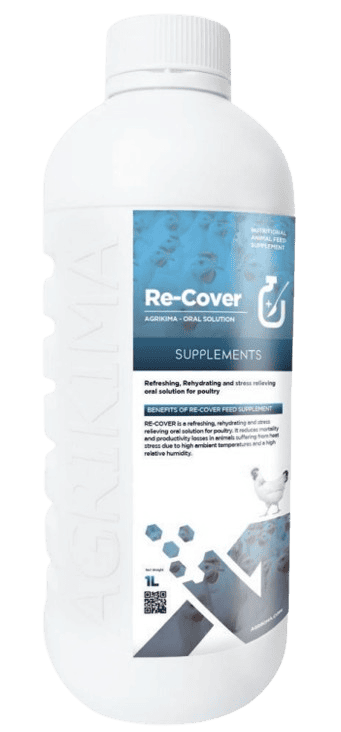
RE-COVER
An oral rehydration solution that can help keep a feverish, dehydrated cow drinking and support her fluid and electrolyte balance during recovery, given alongside the vet's anti-protozoal treatment. Offer it only in drinking water to animals that can swallow normally, and never drench a weak, lying-down or nervous animal.
View product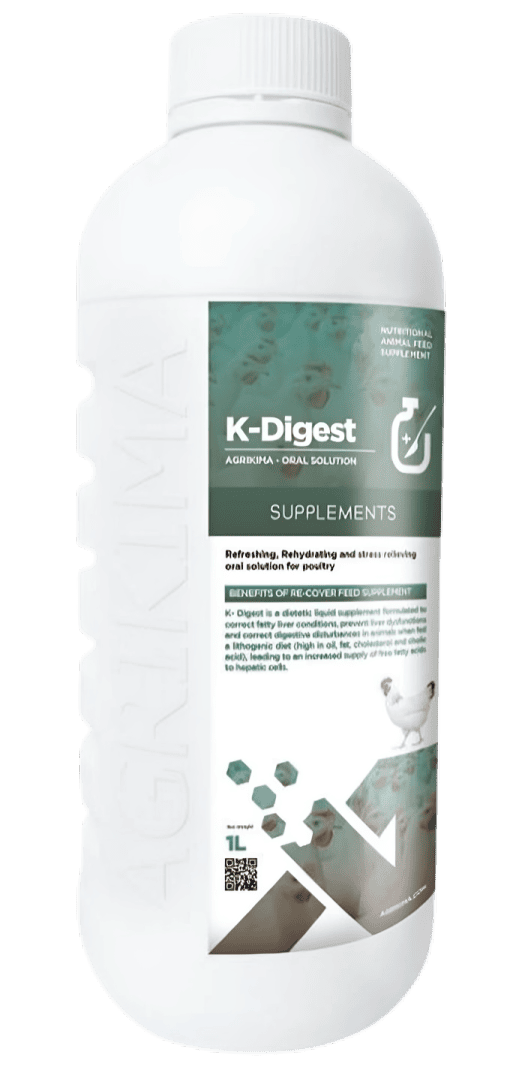
K-DIGEST
Supports liver function and digestion during recovery, after jaundice has put the liver under strain and appetite has dropped. It is an aid to help the cow get back on feed alongside the vet's treatment and good nutrition. It does not kill Babesia.
View productPrevention
- Keep tick control regular and effective. Dip or spray at the interval your vet or extension officer recommends for your area, usually more often during the rains. Always mix the acaricide at the correct strength on the label.
- Spray thoroughly. Wet the whole body, including the ears, under the tail, the udder or scrotum, between the legs and the belly, where blue ticks hide. Hand-dress these spots with a tick grease if needed.
- Slow down acaricide resistance. Ask your vet or agrovet about rotating between different chemical groups rather than using the same product for years. Report it if ticks survive dipping.
- Do not stop or suddenly reduce tick control in a herd that has been heavily dipped for years. Adults in such herds often have no immunity and can suffer a severe outbreak. Discuss any change in your tick programme with a vet first.
- Take special care with new animals, especially exotic cattle from tick-free areas. Treat them for ticks on arrival, keep them apart and watch their temperature for several weeks. Ask your vet whether protective treatment is advisable.
- Let young calves meet low numbers of ticks under close observation where your vet advises it. Calves under nine months usually get only mild disease and become immune. This is part of building 'endemic stability', a herd that is naturally protected.
- Ask your vet about vaccination. Live redwater vaccines are used in some countries, but their availability in Kenya is limited and they must be handled and given by a vet.
- Use a clean needle for every animal, and disinfect dehorning, castration and ear-tagging tools between animals to avoid spreading infected blood.
- Manage pasture and fodder. Slash long grass and bush around homesteads and night bomas. Avoid bringing tick-infested cut fodder into zero-grazing units, and keep stray or neighbours' animals away.
- Feed animals well, with balanced energy, protein and minerals, so they cope better if infected.
Risk to people
The Babesia species that cause redwater in Kenyan cattle are not known to infect people. There is no risk from touching a sick cow or drinking properly boiled milk from her. The main human risk is drug and chemical residues. Anti-protozoal drugs, antibiotics and acaricides can pass into milk and meat. Do not drink or sell milk, or slaughter a treated animal, until the full withdrawal period on the label and your vet's advice has passed. Imidocarb in particular has a very long meat withdrawal period. When mixing and applying acaricides, wear gloves, long sleeves and boots, avoid splashing your skin and eyes, and wash afterwards. Ticks can carry other diseases that affect people, so remove them with gloves or tweezers rather than crushing them with bare fingers. If an animal dies suddenly with dark blood from its openings, do not open the carcass, as this could be anthrax, which is dangerous to people. Call the vet.
Impact on your farm
On a Kenyan farm, redwater can be very costly. A single dead in-calf Friesian or high-grade cross can wipe out many months of milk income and years of breeding investment. Animals that survive often lose much of their milk for weeks, lose body condition and may abort their calves. Bulls can be temporarily infertile after the fever, delaying calving across the herd. Vet call-outs, anti-protozoal drugs, blood transfusions and the long withdrawal periods for some drugs add further losses, as milk and meat cannot be sold during that time. Ongoing dipping or spraying is a regular expense, and resistant ticks force farmers onto pricier acaricides. The fear of redwater, together with ECF and gall sickness, also holds back farmers from keeping more productive exotic breeds in tick areas, limiting farm income and growth.
Outlook and recovery
With early diagnosis and prompt treatment by a vet, most cows with redwater caused by Babesia bigemina recover. Improvement is often seen within one to two days. The outlook gets much worse once the animal is severely anaemic, lying down or showing jaundice for several days, and the cerebral form caused by Babesia bovis is often fatal even with treatment. Exotic breeds, heavily pregnant or freshly calved cows, and animals with mixed infections such as gall sickness or ECF also do worse. Survivors usually remain carriers with long-lasting immunity to that Babesia species, which protects them as long as they keep meeting ticks. Full return to milk and body condition may take several weeks of good feeding and rest.
Common questions
My cow is passing red urine. Can she get better on her own?
Some calves and resistant local zebu recover from mild infections without treatment. However, an adult exotic or cross-bred cow with red urine and fever is in serious danger and can die within days. Do not wait to see. Call the vet immediately, because the treatment works best early, before she loses too much blood.
Why do my local zebu cattle stay healthy while my Friesian gets redwater?
Indigenous zebu have natural resistance to ticks and to Babesia, and many were exposed as calves, so they are immune carriers. Friesians and other exotic breeds are more sensitive, carry more ticks, and are often bought from tick-free areas with no immunity. Mixing them with carrier zebu on tick-infested grazing puts the Friesian at high risk unless tick control is excellent.
Is redwater the same as gall sickness?
No, although they look similar and often occur together. Both are tick-borne and cause fever, anaemia and jaundice. Redwater is caused by Babesia and gives red-brown urine. Gall sickness (anaplasmosis) is caused by a different germ, Anaplasma, and the urine usually stays normal coloured. They need different medicines, which is why the vet's blood smear matters.
Can I drink or sell milk from a cow being treated for redwater?
The disease itself does not pass to people through milk. However, the drugs used to treat it do get into milk and meat. You must throw away milk and avoid slaughtering the animal for the full withdrawal period stated on the drug label and by your vet. For some drugs, such as imidocarb, the meat withdrawal period lasts several months.
I dip every week but still get redwater. What is going wrong?
Common reasons are acaricide mixed too weak, poor coverage of the ears, tail and udder, and ticks that have become resistant to the chemical you use. New animals or neighbours' cattle can also bring ticks in. Ask your vet or extension officer to check your mixing and spraying method. Consider testing for resistance and rotating to a different chemical group. Also remember that a herd kept almost tick-free for years has little natural immunity, so even a few infected ticks can cause disease.
Can I buy the redwater injection from the agrovet and give it myself?
It is not safe to do this without a vet. Wrong diagnosis is common, because gall sickness, ECF and others look similar. A wrong drug or dose can kill a weak, anaemic cow. Some drugs also need careful handling and have long withdrawal periods. Call a vet to confirm the disease and prescribe the right treatment. While you wait, keep the cow calm, shaded and watered.
A guide, not a diagnosis. This page is general information to help you recognise problems early. Always confirm with a vet or animal health worker before treating.