What it is
Calf pneumonia is a 'complex', meaning several germs and stresses work together. It usually begins with a virus such as bovine respiratory syncytial virus (BRSV), parainfluenza-3 (PI3), infectious bovine rhinotracheitis (IBR, a herpes virus) or bovine viral diarrhoea virus (BVDV), which weakens the immune system. These viruses damage the lining of the windpipe and the tiny hair-like cilia that normally sweep dust and germs out of the lungs. Bacteria that already live harmlessly in the calf's nose and throat, such as Mannheimia haemolytica, Pasteurella multocida, Histophilus somni and Mycoplasma bovis, then take the chance to travel down into the lungs and multiply. They cause inflammation, pus and areas of dead, solid lung tissue that can no longer take in oxygen. Stresses such as damp bedding, ammonia from urine, draughts, cold nights, crowding, weaning, transport and poor colostrum make the calf far more likely to get sick. In severe cases the lung damage is permanent, leaving scarred lungs and sometimes abscesses or adhesions (where the lung sticks to the chest wall).
Which animals are most at risk
Calves from a few weeks old up to about six months are most at risk, with many cases around weaning and after transport or mixing. Calves that got little or late colostrum, calves recovering from scours (diarrhoea), and underfed or worm-burdened calves are especially vulnerable. Exotic dairy breeds and crosses (Friesian, Ayrshire, Jersey) kept in zero-grazing units are commonly affected, because they are often housed in closed or crowded pens. Risk rises in the cold, wet months of the long and short rains and during cold nights in highland dairy areas such as Nyandarua, Kiambu, Nyeri, Meru, Uasin Gishu and Kericho. Calves kept in dark, damp, low-roofed sheds, iron-sheet structures with no air outlet, or pens shared with older cattle, are at the greatest risk. Bought-in calves from markets are also high risk in their first few weeks on a new farm.
Signs to look for
Early signs
- Fever: a rectal temperature above about 39.5°C (normal for a calf is roughly 38.5–39.5°C). A cheap digital thermometer catches pneumonia before other signs are obvious.
- Dull calf that is slow to come for milk, drinks less, or leaves milk in the bucket.
- Clear, watery discharge from the nose, and sometimes watery eyes.
- Occasional dry cough, often heard when the calf gets up or is moved.
- Slightly faster breathing than the other calves while resting.
- One or both ears drooping, or the calf tilting its head to one side.
- Standing or lying apart from the group, with less interest in its surroundings.
As it gets worse
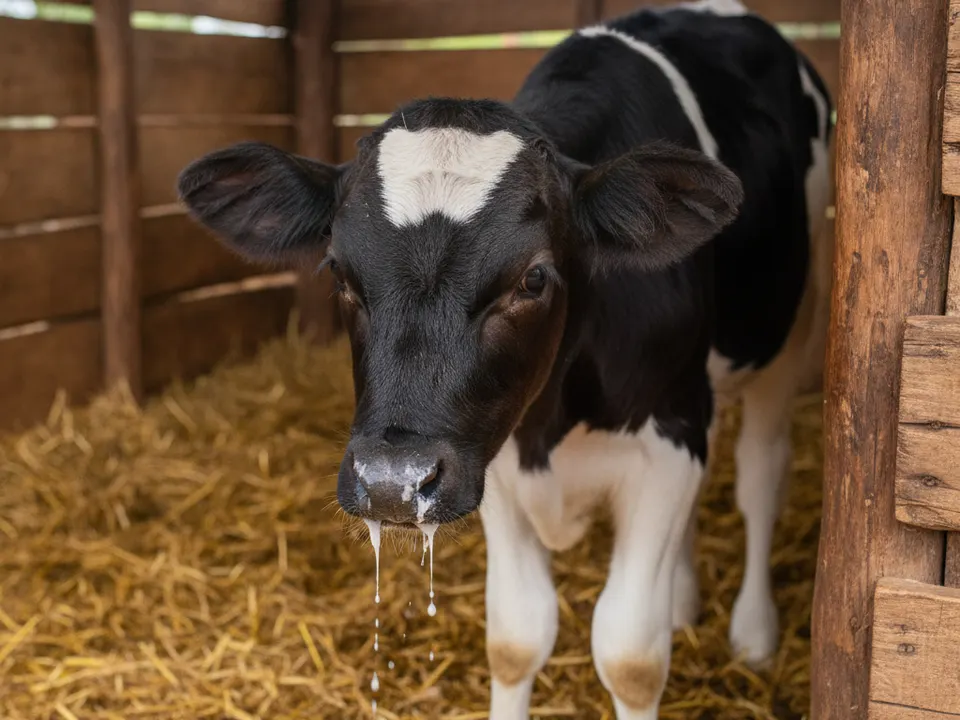
- Thick, cloudy, yellow or green nasal discharge that may crust around the nostrils.
- Frequent, wet or painful-sounding cough.
- Fast, laboured breathing with the belly and flanks pumping hard; the calf may breathe with its mouth open, neck stretched out and tongue out.
- Grunting or groaning with each breath, a sign of chest pain and severe lung damage.
- Complete refusal of milk or feed, sunken eyes and dehydration.
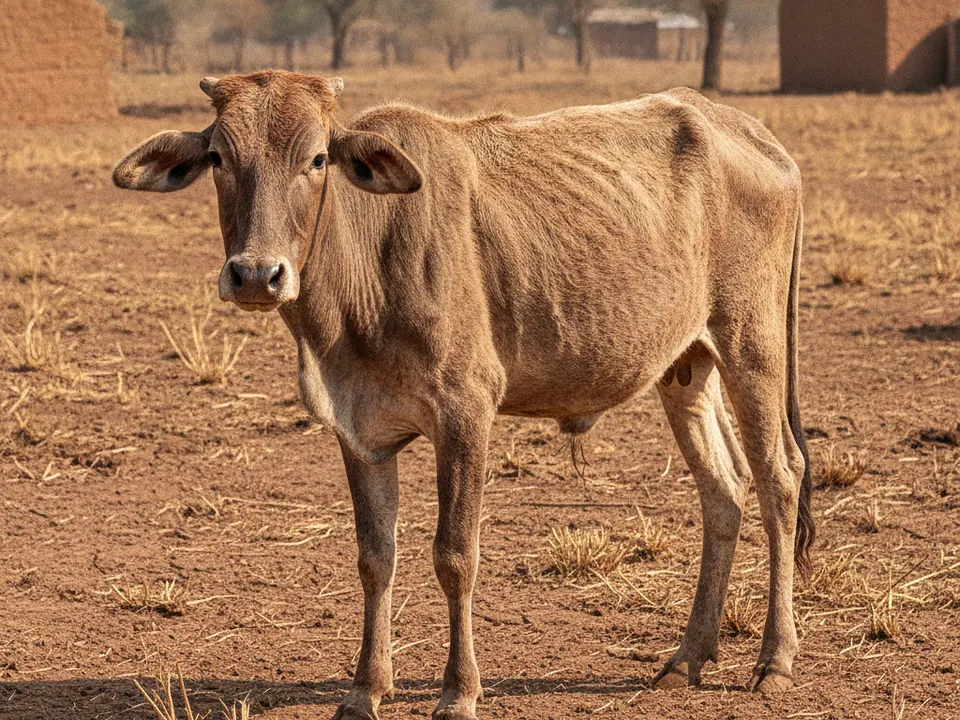
- Rapid weight loss, rough dull coat and a hollow-flanked look.
- Calf lying down most of the time and reluctant or unable to stand.
- Sudden death in some very severe cases, sometimes with few signs seen beforehand.
What to do right now
- Separate the sick calf into a clean, dry pen that has fresh air but no draught at calf height, so it can rest and is less likely to infect others.
- Give plenty of thick, dry bedding such as dry grass, straw or wood shavings so the calf can nest and keep warm; on cold nights a clean, dry calf jacket or sack cover can help.
- Make sure clean, fresh water is always available, and keep offering milk in small, frequent feeds; do not force-feed or drench a calf that is breathing hard, as liquid can go into its lungs.
- Take and write down the temperature of the sick calf and of all the calves in the same pen, because others may be in the early stage of disease.
- Call your vet or animal health officer the same day; calf pneumonia gets worse quickly and early treatment gives the best chance of full recovery.
- Improve air flow in the calf house straight away by opening vents, removing wet bedding, cleaning out dung and urine, and reducing crowding, while avoiding direct draughts on the calves.
- Feed and handle the healthy calves first and the sick one last, and wash your hands and buckets after handling the sick calf.
- Do not give leftover antibiotics or any drug without the vet's advice, because the wrong drug or an incomplete course can fail and adds to antibiotic resistance.
How it spreads
- Sick calves cough and sneeze out droplets that healthy calves breathe in, especially in crowded or closed pens.
- Direct nose-to-nose contact between calves, and shared buckets, teats and feeders that carry nasal discharge.
- Bringing in new calves from markets or other farms, which may carry viruses or bacteria without looking sick.
- Poor ventilation lets germs, dust and ammonia build up in the air, so calves breathe in more germs and their airways get irritated.
- Damp, wet bedding and cold draughts at calf level chill calves and lower their resistance.
- Big temperature swings between warm days and cold nights, common in the highlands and during the cold June–August season and the rains.
- Stress from weaning, dehorning, castration, transport, sudden feed changes or mixing calves of different ages.
- Calves that did not get enough good colostrum in the first hours of life have weak protection and fall sick easily.
Could it be something else?
East Coast fever (ECF, ndigana)
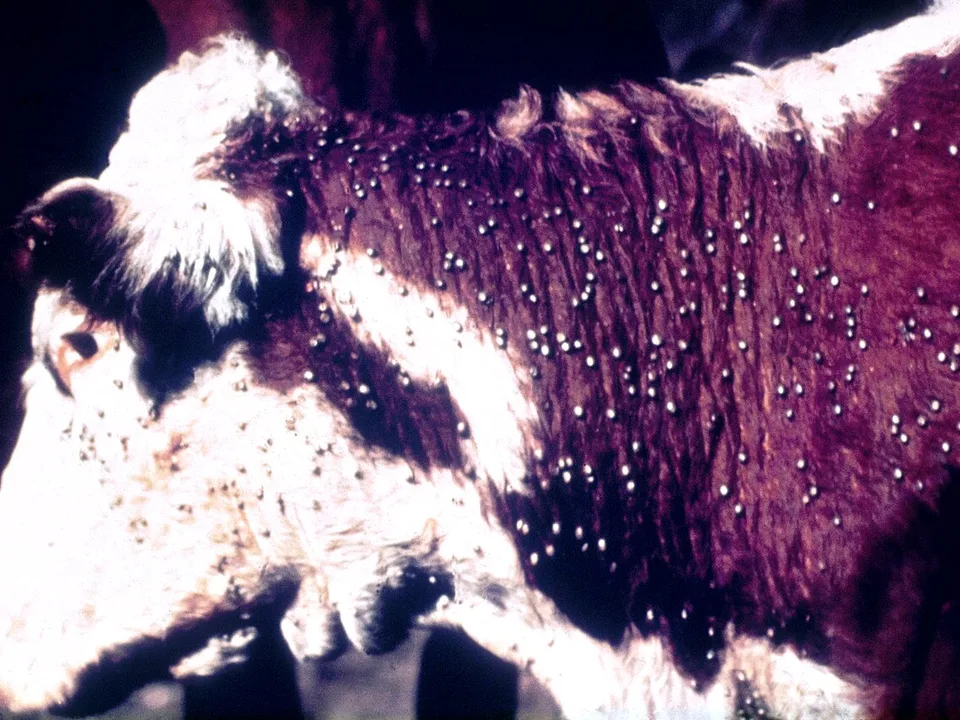
ECF is spread by the brown ear tick. Look for swollen lymph nodes, especially the gland below the ear and in front of the shoulder, and ticks on the calf. Late ECF causes frothy fluid from the nose and fast breathing because the lungs fill with fluid. Pneumonia does not cause the obvious swollen glands. A vet can confirm ECF with a gland or blood smear. If you see swollen glands, tell the vet urgently because ECF needs different treatment.
Lungworm (husk, Dictyocaulus viviparus)
Lungworm mainly affects calves that are grazing on wet pastures, not calves kept indoors from birth. It causes a harsh cough, especially after the calf moves, and fast breathing, often with little or no fever at first. Several grazing calves usually start coughing at about the same time. A vet can check dung samples for lungworm larvae.
Aspiration pneumonia (from drenching or bottle-feeding)
This happens when milk, medicine or liquid goes down the windpipe instead of the gullet, for example when a weak calf is force-fed or drenched with its head held high. Signs often start suddenly within a day or two of the drenching, usually in a single calf, and the breath may smell bad. There is usually no history of spread to other calves.
Contagious bovine pleuropneumonia (CBPP)
CBPP is a notifiable disease that mostly affects older cattle, often in pastoral herds and where animals are moved and mixed across areas. Several adults may have cough, painful breathing, standing with elbows turned out, and deaths spreading through the herd. If adult cattle are also coughing and sick, or there are unexplained deaths, report to the County Veterinary Officer at once.
How it is diagnosed
A vet usually diagnoses calf pneumonia from the history and a careful examination. They will take the rectal temperature, count the breathing rate, check the nose, eyes, ears and cough, and listen to the chest with a stethoscope for crackling, wheezing or areas with no breath sounds. Some vets use a scoring system that adds up points for temperature, cough, nose and eye discharge and ear position, to pick out which calves need treatment. Where available, a vet may use ultrasound of the chest to see damaged lung. To find out which germs are involved, the vet can take deep nasal swabs or a wash from the windpipe and send them to a laboratory, such as the County Veterinary Laboratory or the Central Veterinary Laboratories at Kabete, for culture, antibiotic sensitivity testing or PCR tests for viruses. If a calf dies, a post-mortem (opening the carcass to examine the organs) is very useful: the vet looks at the lungs and can send samples to the lab, which helps protect the rest of your calves. Before the vet arrives, write down each sick calf's temperature, age, when signs started, how much milk it is drinking, any recent transport, weaning, dehorning or new arrivals, colostrum feeding at birth, and any drugs already given. Keep a dead calf cool and covered for post-mortem rather than throwing it away.
Treatment
Treatment must be prescribed and supervised by a vet. Because bacteria do most of the lung damage, the vet will usually give an antibiotic, chosen according to the likely germs, the farm's history and, where possible, laboratory sensitivity results. Drugs commonly used for calf pneumonia include oxytetracycline, florfenicol, macrolides such as tulathromycin or tilmicosin, and penicillin-based products; some antibiotics, such as fluoroquinolones (for example enrofloxacin), are important for human medicine and should be kept for cases where other drugs have failed or tests show they are needed. Antibiotics do not kill the viruses that often start the disease, but they control the bacteria that cause most of the damage and deaths. The vet will often also give an anti-inflammatory painkiller (a non-steroidal anti-inflammatory drug, NSAID, such as meloxicam or flunixin) to bring down fever and lung swelling, which helps the calf breathe and start drinking again. Very weak or dehydrated calves may need fluids by mouth or by drip. A good response usually shows within one to three days as the temperature drops and appetite returns; if not, the vet may change the drug or look for another cause. Always finish the full course exactly as the vet says, even if the calf looks better, and keep records of what was given. Every drug has a meat withdrawal period, which is the time you must wait before the animal can be slaughtered for food, and you must respect it. Using antibiotics only when needed, at the right dose and for the full course, helps prevent antimicrobial resistance, where germs stop responding to medicines. Where several calves are sick at once, the vet may advise treating the whole group, but this should be a vet decision, not a routine habit.
Medicines must be prescribed and dosed by a vet. Always respect milk and meat withdrawal periods, and finish the full course of any antibiotic.
How Agrikima products can help
These support the animal alongside — never instead of — your vet's treatment, vaccination and good management.

MIX5
A plant-extract supplement whose label says it relieves respiratory problems; it can be used, with your vet's agreement, as supportive care alongside the vet's prescribed treatment to help calves cope with respiratory stress. It does not cure pneumonia and is not a replacement for antibiotics, good ventilation or veterinary care.
View product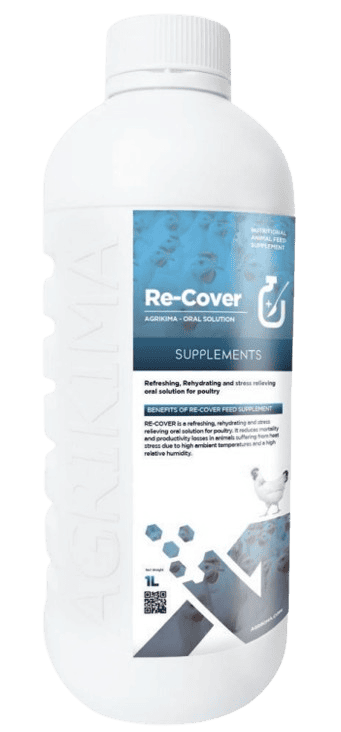
RE-COVER
An oral rehydration solution that helps replace fluids and salts in calves that are drinking less or have fever, supporting recovery while the vet's treatment works. Offer it only to calves that can swallow normally, never drench a calf that is breathing hard, and follow your vet's advice on how it fits with milk feeding.
View productPrevention
- Make sure every newborn calf drinks enough good-quality colostrum (first milk) within the first two to six hours of life, and more within the first day; this is the single most important protection against pneumonia and scours.
- Design or modify calf housing so stale air can escape: leave open spaces or vents along the top of the walls or along the roof ridge so warm, moist air rises out, while keeping walls solid at calf height to stop draughts.
- Keep bedding deep, clean and dry; if you kneel on it and your knees get wet, it is too wet. Remove dung and urine often to reduce ammonia, which you can smell as a sharp stinging odour.
- Avoid crowding and mixing calves of different ages; individual calf pens or small groups of similar age reduce spread, and calves should be housed away from adult cattle.
- Reduce stress at weaning: wean gradually, make sure calves are eating enough concentrate and drinking water before milk is stopped, and do not dehorn, castrate, move or vaccinate at the same time as weaning.
- Isolate newly bought calves for at least two to three weeks, watch them and take temperatures daily before mixing them with your own calves.
- Talk to your vet about vaccination; vaccines against some respiratory viruses (such as IBR, BRSV and PI3) and some bacteria exist, but availability in Kenya varies, and a vaccination plan for cows and calves should be made with your vet.
- Feed calves well with enough milk, a good calf starter, clean water and correct minerals and vitamins (including vitamin A, which supports the lining of the airways), and control worms and ticks so their immune systems stay strong.
- Clean and disinfect calf pens, buckets and teats between calves, and let pens dry fully before a new calf goes in.
- Check calves every day, including temperatures for any calf that seems slightly off, so pneumonia is caught early when treatment works best.
Risk to people
Calf pneumonia is not considered a significant risk to people, and the usual germs involved do not commonly infect humans. The main human-health concern is drug residues: if a treated calf is slaughtered or sold for meat before the antibiotic withdrawal period ends, the meat can contain drug residues that are unsafe and contribute to antibiotic resistance. Always follow the vet's withdrawal instructions and keep treatment records. As good practice, wash your hands after handling sick calves. If adult cattle in the herd have a long-lasting cough and are losing weight, ask the vet to check for bovine tuberculosis, which can infect people through raw milk.
Impact on your farm
Calf pneumonia is costly for Kenyan farmers in several ways. Some calves die, which means losing the future heifer or bull and all the milk and money already spent raising it. Calves that recover often have scarred lungs, so they grow more slowly, reach breeding weight later, calve for the first time later and may produce less milk in their first lactation. Treatment costs, vet visits and extra labour add up, especially when several calves fall sick together in the rainy or cold season. Repeated outbreaks on one farm also mean more antibiotic use, higher risk of drug resistance and a weaker replacement herd. For a smallholder whose dairy heifer is a major investment, preventing pneumonia through good colostrum and housing is far cheaper than treating it.
Outlook and recovery
Calves treated early, when they first show fever, dullness and a runny nose, usually recover well, often within a few days. The outlook becomes poorer when treatment starts late, the calf has stopped drinking, breathes with its mouth open or grunts, or has already had several bouts of pneumonia. Some recovered calves are left with permanent lung damage and remain 'poor doers' that grow slowly and may cough for a long time; some of these never become profitable and may be culled. Calves that had good colostrum, are well fed and are housed in clean, dry, airy pens recover faster and are less likely to relapse. Fixing the housing and management problems that caused the outbreak is essential, or new cases will keep appearing.
Common questions
Should I close the calf house tightly at night to keep the calves warm?
No. Closing the house completely traps damp air, ammonia and germs, which is one of the main causes of pneumonia. Instead, keep the calves warm with deep dry bedding and, if needed, calf jackets, and block draughts at calf level while leaving openings high up so stale air can escape. A good test is the smell: if the air smells stuffy or of ammonia when you enter in the morning, ventilation is not enough.
Can I treat the calf myself with an antibiotic from the agrovet?
It is best not to. Calf pneumonia can look like East Coast fever, lungworm or other problems that need different treatment. The wrong antibiotic or an incomplete course may fail, waste money and help create resistant germs. Call your vet or animal health officer, who can choose the right drug, add an anti-inflammatory if needed, and tell you the withdrawal period.
Why did my calf get pneumonia even though it was well fed?
Good feeding helps, but pneumonia is mostly driven by colostrum, housing and stress. A calf that got little or late colostrum, lives in a damp or poorly aired pen, was recently transported, weaned or mixed with other calves, or faces cold nights can still get sick. Look at all these factors together, not just feeding.
My calf recovered but still coughs sometimes. Is that normal?
A mild cough can last for a while after pneumonia as the airways heal, but a calf that keeps coughing, has a fever again, breathes fast or is losing weight may have a relapse or permanent lung damage. Take its temperature and ask your vet to re-examine it. Some calves with badly scarred lungs never fully recover their growth.
Is calf pneumonia contagious to my other calves?
Yes. The viruses and bacteria spread through coughing, nose contact and shared buckets, especially in crowded pens. When one calf is sick, others in the same air space may already be infected. Isolate the sick calf, check temperatures of the rest daily, and improve ventilation and hygiene straight away.
Is there a vaccine against calf pneumonia in Kenya?
Vaccines exist for some of the viruses and bacteria involved, but which ones are available in Kenya changes over time and they do not cover every germ. Vaccination also only works well alongside good colostrum, housing and low stress. Ask your vet whether a vaccine is suitable and available for your farm and how to time it for cows and calves.
A guide, not a diagnosis. This page is general information to help you recognise problems early. Always confirm with a vet or animal health worker before treating.