What it is
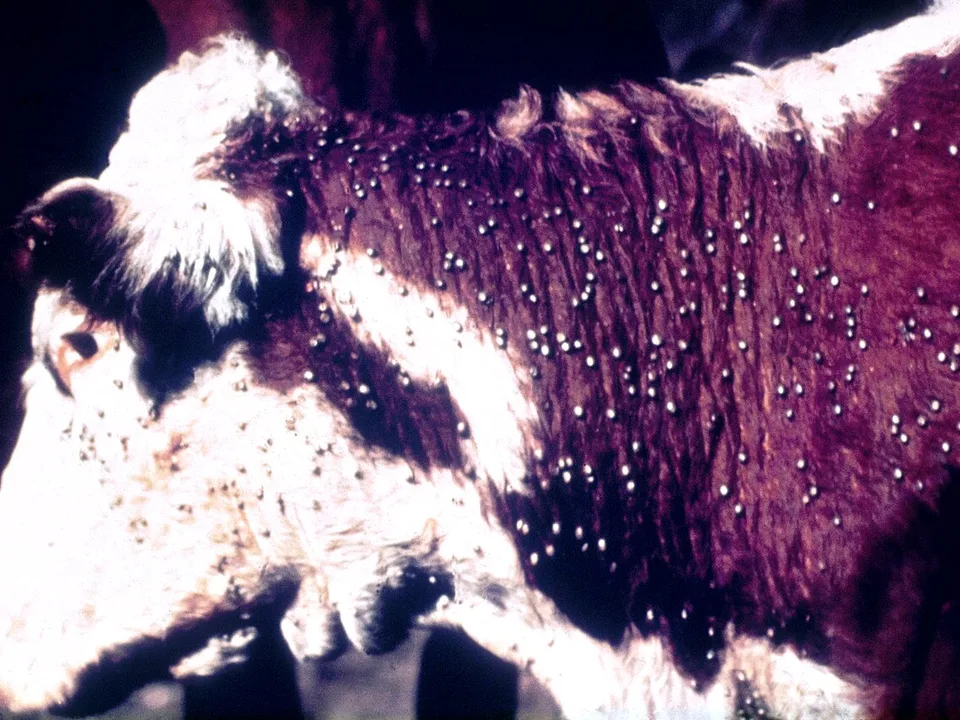
Ticks are eight-legged relatives of spiders. They climb onto cattle from grass, bushes and the walls and floors of sheds. Then they push their mouthparts into the skin and feed on blood for several days, swelling up as they feed. Each kind prefers a part of the body. The brown ear tick (Rhipicephalus appendiculatus) gathers on the ears and carries East Coast fever. The blue tick (Rhipicephalus decoloratus) spreads over the body and carries redwater (babesiosis) and gall sickness (anaplasmosis). The colourful bont tick (Amblyomma) has long mouthparts and attaches to the udder, teats, scrotum, armpits and between the legs, and carries heartwater. Hyalomma ticks, with striped legs, attach under the tail, around the anus and on the feet. Damage happens in several ways. Many ticks together take a lot of blood, causing anaemia (too few red blood cells), weakness and poor growth. Bites leave wounds that become infected, form abscesses or attract flies that lay eggs, so maggots develop. Bont ticks can destroy teats and quarters of the udder, causing blind quarters and mastitis. Hides become scarred and lose value. Tick saliva can irritate skin and, in a few cases, harm the animal directly. Most serious of all, ticks inject the germs of tick-borne diseases while they feed.
Which animals are most at risk
All cattle can be infested, but exotic and crossbred dairy breeds such as Friesian, Ayrshire and Jersey suffer most, because they have less natural resistance to ticks and tick-borne diseases than local zebu and Boran cattle. Calves are at high risk of East Coast fever and blood loss, while adult exotic cattle brought from low-tick areas often have no immunity and can die quickly from tick-borne diseases. Risk is highest during and after the long and short rains, and in areas with long grass, bush and wildlife, such as parts of the Rift Valley, Central, Western, Coast and pastoral areas. Free-range and communal-grazing herds pick up ticks daily, but zero-grazing cattle are not safe either, because ticks arrive on fodder and live in sheds. Farms where dipping has broken down, or where one acaricide has been used for years without results, are especially at risk.
Signs to look for
Early signs
- A few ticks seen on the ears, under the tail, around the udder or between the hind legs when you run your hand over the animal.
- Animals rubbing, licking, tail-switching or stamping more than usual because of irritation.
- Small raised bumps or scabs on the skin where ticks have fed and dropped off.
- Ticks of different sizes, from tiny to swollen grey or blue-grey, showing that ticks are breeding on the farm.
- Slight drop in milk or appetite, especially in exotic cows, during the rainy season.
As it gets worse
- Dense clusters of ticks packed inside the ears, along the tail fold and over the udder, sometimes hundreds on one animal.
- Pale gums, inner eyelids and vulva, weakness and loss of condition from blood loss.
- Swollen, hard or damaged teats, blind quarters, abscesses and mastitis on the udder where bont ticks have fed.
- Crusty sores, hair loss, deep wounds, pus or maggots under the tail, on the feet or on the scrotum.
- Torn or thickened ears from heavy ear tick feeding.
- Signs of tick-borne disease, which need a vet urgently: high fever, swollen glands below the ears or in front of the shoulder and breathing trouble (East Coast fever); red or coffee-coloured urine (redwater); yellow eyes and gums with constipation (gall sickness); circling, high stepping, chewing movements or fits (heartwater).
What to do right now
- Inspect every animal carefully, running your hands over the ears, tail fold, udder, between the legs and feet, and note which animals carry the most ticks.
- Take the temperature of any dull, weak or off-feed animal if you have a thermometer, and call the vet immediately if you see fever, swollen glands, red urine, yellow gums or nervous signs.
- Separate visibly sick animals into a shaded, quiet pen with clean water and good feed, and keep newly bought animals apart until checked and treated.
- Do not pull ticks off roughly; the mouthparts stay in the skin and cause sores. If you remove a few, wear gloves and never crush ticks with bare fingers.
- Before spraying, read the acaricide label or ask your vet or agrovet; mix exactly as the label says and wet the whole animal, including inside ears, under the tail and between the legs.
- Keep wounds clean and protect them from flies; ask your vet what to apply to sores and damaged teats.
- Write down dates, products, active ingredients and how the animals responded, so the vet can judge whether resistance is a problem.
- Protect yourself when handling acaricides: wear gloves, long sleeves, boots and a mask where advised, do not eat or smoke while spraying, and wash afterwards.
How it spreads
- Ticks are picked up from grass and bush where tick eggs have hatched, especially on communal grazing land, roadsides and long grass near sheds.
- Newly bought or borrowed cattle, including bulls brought in for breeding, can bring ticks and resistant tick strains onto a farm.
- Wildlife, goats, sheep, dogs and stray cattle carry ticks and drop them onto shared pasture and around homesteads.
- Cut fodder such as Napier grass and roadside grass carried into zero-grazing units can contain tick larvae.
- Cracks in walls, bedding and rough floors in cattle sheds give ticks hiding places to lay eggs and wait for animals.
- Warm, wet weather during and after the long and short rains allows ticks to multiply quickly, so numbers rise sharply in these seasons.
- Spraying or dipping that is irregular, uses weak or wrongly mixed acaricide (tick-killing chemical) or misses the ears, tail and udder lets ticks survive and breed.
Could it be something else?
Lice
Lice are much smaller, flat and move through the hair; you see them and their whitish eggs stuck to hairs on the neck, shoulders and tail head. They are worse in cold, dry months, while ticks are firmly attached, round and swell with blood.
Lumpy skin disease
Lumpy skin disease causes firm, round lumps in the skin itself across the whole body, with fever and swollen glands. Ticks can be lifted at the edge and have legs; a lump from lumpy skin disease is part of the skin and cannot be pulled away.
Mange
Mange is caused by tiny mites you cannot see. It gives thickened, wrinkled, hairless and itchy skin, often on the neck and tail head, but you will not find attached ticks unless both problems are present.
Dermatophilosis (streptothricosis)
This bacterial skin infection forms thick crusts that look like paintbrush tufts of matted hair, often on the back after rain. It is often linked with bont ticks, so both may appear together; a vet can confirm it with a skin sample.
How it is diagnosed
Tick infestation itself is easy to see. A vet or animal health assistant will examine the ears, tail, udder, scrotum, armpits, groin and feet, count roughly how many ticks there are and identify the types, because each type points to different disease risks. They check the gums and eyes for paleness or yellowness, take temperature and feel lymph nodes (glands). If tick-borne disease is suspected, they may take a blood smear, a gland smear or blood for laboratory tests such as PCR to find East Coast fever, redwater, gall sickness or heartwater germs. If an animal dies, a post-mortem can confirm the cause. Where ticks survive regular, correct spraying, the vet can collect engorged ticks for an acaricide resistance test at a veterinary or KALRO laboratory. To help, keep records of when you sprayed or dipped, which product and active ingredient you used and how you mixed it, when signs started, which animals are affected, and any recent purchases. Keep some ticks in a closed container if asked.
Treatment
Treatment has two parts: killing the ticks and treating any harm or disease they have caused. For the ticks, the vet will advise on an acaricide and how often to use it. Common classes in Kenya include synthetic pyrethroids (such as cypermethrin, deltamethrin or flumethrin), amidines (amitraz), organophosphates (such as chlorfenvinphos), combination products, and pour-ons or injectable products such as fipronil or macrocyclic lactones like ivermectin for some tick types. These come as dips, sprays, pour-ons or injections. In high-challenge areas, especially for East Coast fever, regular treatment, often weekly in the rainy season, is commonly recommended, but the right interval depends on product, area and season, so follow the label and your vet. Tick grease may be advised for ears and tail. If ticks survive correct use, the vet may suspect resistance and suggest a test and a change to a different chemical class, not just a different brand. For tick-borne diseases, prescription drugs are used, such as buparvaquone for East Coast fever, diminazene or imidocarb for redwater, and oxytetracycline for gall sickness and heartwater. Infected wounds, abscesses or mastitis may need antibiotics; use them only when prescribed and finish the course, because misuse builds antimicrobial resistance. Severely anaemic animals may need supportive care. All treatment must be prescribed by a vet. Many acaricides and medicines have milk and meat withdrawal periods, the time you must wait before selling or drinking milk or slaughtering; always ask and follow them.
Medicines must be prescribed and dosed by a vet. Always respect milk and meat withdrawal periods, and finish the full course of any antibiotic.
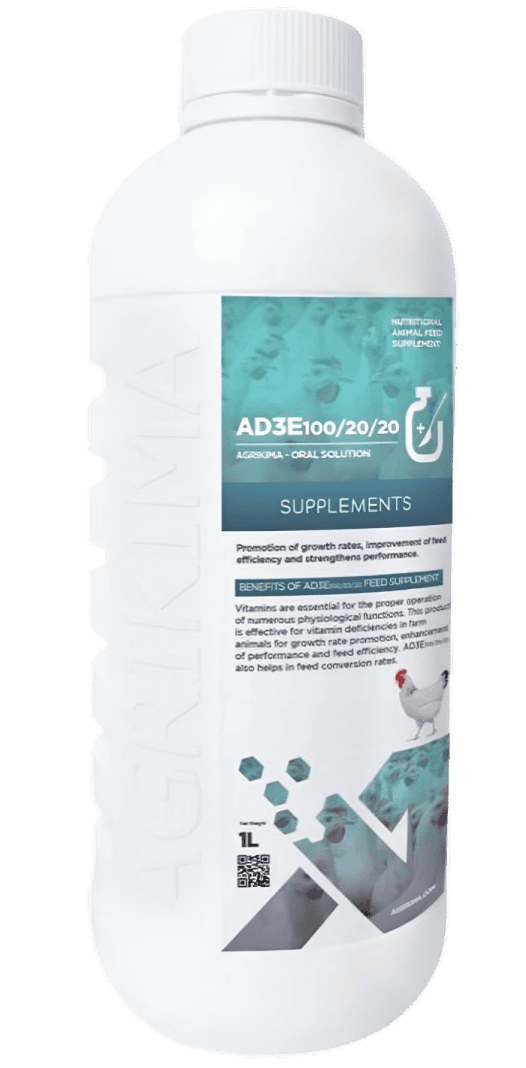
How Agrikima products can help
These support the animal alongside — never instead of — your vet's treatment, vaccination and good management.
Prevention
- Set a regular tick-control routine with your vet or extension officer, based on the tick types and diseases in your area, and increase attention during the long and short rains.
- Always mix acaricide exactly to the label strength, use clean water, and spray enough to soak the whole animal, paying special attention to ears, tail brush, udder, scrotum, armpits and between the legs.
- Prevent resistance: avoid weak mixes, missed animals and too-frequent changes of brand; when a change is needed, rotate to a different chemical class as advised, and ask for a resistance test if control fails.
- Vaccinate against East Coast fever where available using the infection-and-treatment method (the Muguga cocktail), given only by trained, licensed vets, especially for valuable exotic and crossbred calves.
- Quarantine and treat all newly bought or returning cattle before they join the herd, and check visiting bulls.
- Keep grass short around sheds, cut bush, seal cracks in walls, clean bedding regularly, and avoid bringing roadside fodder from tick-heavy areas straight into the zero-grazing unit; wilting cut fodder in the sun can help.
- Control ticks on dogs, goats and sheep on the same farm, and avoid letting stray animals and wildlife mix with your herd where possible.
- Feed well and give clean water and minerals so cattle stay in good condition and cope better with ticks; consider hardier local or cross breeds in very high-tick areas.
Risk to people
Cattle ticks can also bite people. Hyalomma ticks can carry Crimean-Congo haemorrhagic fever, a rare but serious viral disease in humans, and Amblyomma ticks can carry African tick bite fever. Never crush ticks with bare hands or teeth, wear gloves when removing them, and check yourself and children for ticks after working with cattle. See a health worker if you get fever, headache, rash or bleeding after a tick bite. Acaricides are poisons: wear protective clothing, avoid breathing spray, store chemicals locked away from children and food, never use drink or food containers for mixing, and dispose of leftover dip safely away from water sources. Respect milk and meat withdrawal periods on acaricide and drug labels so residues do not reach your family or customers.
Impact on your farm
Ticks are one of the most costly livestock problems in Kenya and East Africa. Heavy infestation reduces milk yield and weight gain, and damaged teats and blind quarters can permanently reduce a cow's milk. Scarred hides fetch less. The biggest losses come from tick-borne diseases: East Coast fever alone kills many calves and exotic cattle every year, and redwater, gall sickness and heartwater add to deaths, abortions and long recoveries. Farmers also spend a lot on acaricides, drugs and vet visits, and money is wasted when chemicals are wrongly mixed or ticks have become resistant. For a smallholder with two or three dairy cows, losing one cow or calf can wipe out a large part of the family's income.
Outlook and recovery
Tick infestation on its own usually responds well when the right acaricide is used correctly and regularly, and skin and ear damage heal over a few weeks. Teat and udder damage from bont ticks may be permanent. The outlook becomes serious when tick-borne disease develops: early vet treatment of East Coast fever, redwater or gall sickness gives a much better chance, while late treatment often fails, especially in exotic cattle and calves. Farms with acaricide resistance struggle until the vet identifies an effective chemical class. Recovery is better in animals that are well fed, in good condition and vaccinated against East Coast fever.
Common questions
How often should I spray or dip my cattle?
It depends on your area, the tick types, the season, your cattle breed and the product. In East Coast fever areas, especially with exotic cattle, treatment is often done about weekly in the rainy season, and sometimes less often in dry spells. Always follow the product label and ask your vet or extension officer to design a schedule for your farm.
I spray every week but ticks are still there. Why?
Common reasons are weak mixing, using too little spray, missing the ears, tail and udder, spraying in rain so the chemical washes off, or old or poor-quality product. If you are doing everything correctly and ticks survive, they may be resistant. Ask your vet to test ticks and advise a change to a different chemical class, not just a new brand name with the same active ingredient.
Can I sell or drink milk after spraying?
Some acaricides have no milk withdrawal, but many do, and pour-ons and injectables often have longer withdrawal periods. Read the label carefully and ask your agrovet or vet. Never ignore withdrawal periods, because residues in milk and meat harm consumers and can get milk rejected at collection centres.
Is it okay to pull ticks off by hand?
Picking a few ticks is not enough to control them and can leave mouthparts in the skin, causing sores. If you remove ticks, wear gloves, pull slowly and steadily close to the skin, and kill them without crushing them with your fingers. Proper acaricide treatment of the whole herd is the main control method.
Do local zebu cattle need tick control?
Zebu and Boran cattle resist ticks and some tick-borne diseases better than exotic breeds, but they can still carry heavy loads, lose condition and spread ticks to other animals. They need tick control too, though the vet may advise a different strategy than for exotic cows. Never assume local cattle are fully protected.
Is the East Coast fever vaccine worth it?
For many farmers in East Coast fever areas, especially those keeping exotic or crossbred calves, vaccination by the infection-and-treatment method can greatly reduce deaths. It must be given by a trained, licensed vet, and vaccinated animals still need tick control because the vaccine does not protect against redwater, gall sickness or heartwater. Ask your County Veterinary Office whether it is available in your area.
A guide, not a diagnosis. This page is general information to help you recognise problems early. Always confirm with a vet or animal health worker before treating.