What it is
Ringworm in cattle is mostly caused by the fungus Trichophyton verrucosum. Other related fungi sometimes cause it too. These fungi belong to a group called dermatophytes, which means fungi that live on skin and hair. The fungus produces tiny seeds called spores. When a spore lands on skin that is slightly scratched, damp or weak, it grows into the top layer of skin and into the hair roots. It feeds on keratin, the tough protein in hair and the outer skin. The hair breaks off and falls out, and the skin reacts by making thick, dry crusts. This gives the classic round, grey, ash-like patch. The patch grows outwards in a ring as the fungus spreads to new hair. Over time the animal's immune system fights the fungus off, the crust falls away and hair grows back. Spores shed from crusts and broken hair can survive for a very long time in the environment, often months and sometimes years, on wooden posts, walls, feeders and equipment. This is why ringworm keeps coming back on the same farm.
Which animals are most at risk
Calves and young stock, usually from a few months to about two years old, are most at risk because they have not yet built immunity. Adult cattle usually only get it if they are new to an infected farm, poorly fed or stressed. Any breed can be affected, both exotic dairy breeds and local zebu. Outbreaks are most common in housed calves, so zero-grazing units, calf pens, feedlots and crowded bomas are higher risk than free-grazing herds. Ringworm tends to be worse in cool, damp periods, such as during and after the long and short rains, when animals are kept indoors more and sunlight is less. Animals that are thin, short of vitamins and minerals, or carrying heavy parasite loads may get bigger and longer-lasting patches.
Signs to look for
Early signs
- Small round areas, about the size of a coin, where the hair looks dull, raised or broken off short.
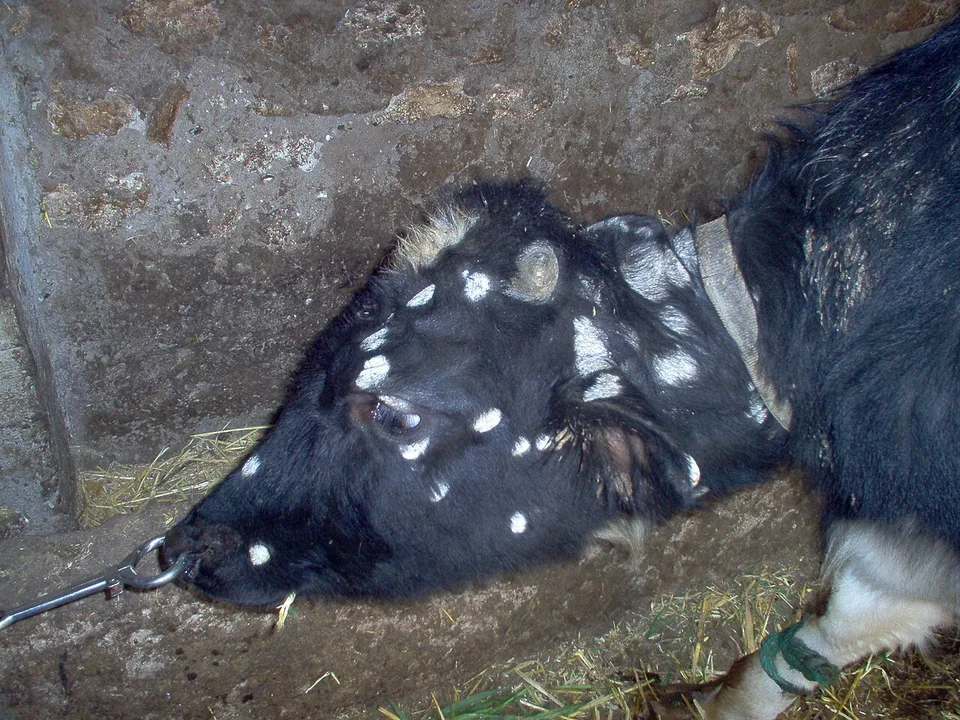
- Patches first appear on the head, especially around the eyes, muzzle and ears, and on the neck.
- A light grey or white scaly surface on the patch, like dandruff or ash.
- Little or no itching in most animals, although some may rub the patch on posts.
- The animal usually stays bright, eats well and has no fever.
As it gets worse
- Thick, raised, grey-white crusts that look like dried porridge or asbestos, sometimes 5 cm or more across.
- Many patches joining together to cover large areas of the face, neck, shoulders, chest and sometimes the back, legs and tail.
- Crusts falling off to leave hairless, slightly pink or moist skin underneath, which slowly regrows hair.
- Several calves in the same pen affected at the same time.
- In severe, long-standing cases in weak calves, poorer growth and a rough coat, and occasionally secondary bacterial infection with pus or a bad smell if crusts are picked or scratched.
What to do right now
- Put on gloves and long sleeves before handling affected animals, and wash your hands and arms with soap and water afterwards.
- Separate affected calves from healthy ones where possible, and keep them in a clean, dry, well-ventilated and well-lit pen.
- Give affected animals their own brushes, buckets, ropes and halters, and do not use these on healthy stock.
- Do not apply used engine oil, diesel, paraffin or other harsh home remedies, as these can burn the skin, poison the animal and contaminate milk and meat.
- Avoid picking crusts with bare hands; if they fall off, collect them and burn or bury them, because they are full of spores.
- Record which animals are affected, where the patches are and when they started, and take photos so you can track progress.
- Call your vet or animal health assistant to confirm it is ringworm and advise on a safe treatment, especially if many animals are affected or the animal seems sick.
- Watch children and other family members for itchy red rings on their skin, and keep young children away from affected calves.
How it spreads
- Direct contact between animals, for example calves rubbing heads, licking each other or lying together in a crowded pen.
- Indirect contact with spores left on fences, wooden posts, walls, gates, feed troughs, crushes and loading ramps where infected animals have rubbed.
- Shared grooming brushes, halters, ropes, blankets and other equipment that are moved from one animal to another without cleaning.
- People's hands and clothing, which can carry spores between animals and pens.
- Buying in new animals that carry the fungus, sometimes before patches are obvious.
- Triggers that make outbreaks worse include overcrowding, damp, dark, poorly ventilated housing, poor nutrition, and stress such as weaning, transport or other illness.
Could it be something else?
Dermatophilosis (streptothricosis, rain scald)
Dermatophilosis is a bacterial infection that flares in wet weather. It causes tufts of matted hair stuck together like a paintbrush, often along the back and on the legs. When you lift the scab, there is often yellow-green pus or a raw moist area underneath. Ringworm crusts are dry, round and grey, mostly on the head and neck of young stock.
Lumpy skin disease
Lumpy skin disease is a viral disease that causes firm, raised lumps in the skin all over the body, usually with fever, drop in milk, runny nose and swollen lymph nodes. The animal looks sick. Ringworm patches are flat or crusty rather than deep lumps, and the animal is not ill. If you see lumps with fever, call the vet urgently.
Mange (mites) and lice
Mange and lice cause intense itching, so animals rub and lick constantly, and hair loss is patchy and irregular, not neat circles. Lice can often be seen on the neck, shoulders and tail head when you part the hair. Ringworm patches are round, crusty and usually not very itchy.
Warts (papillomatosis)
Warts are grey, raised, cauliflower-like growths that stick out from the skin, often on the head, neck and udder of young cattle. Ringworm crusts are flatter, round and scaly, and the hair around them is broken off.
How it is diagnosed
A vet can often recognise ringworm just by looking at the round, grey, crusty patches on young stock. To be sure, especially if it looks unusual or is not getting better, the vet may take hair plucked from the edge of a patch and skin scrapings. These are examined under a microscope to look for fungal spores on the hair, and can be grown in a fungal culture at a laboratory, which can take one to several weeks. The ultraviolet lamp test used for dogs and cats is not reliable for cattle ringworm, because the common cattle fungus usually does not glow. To help the vet, note when the first patches appeared, how many animals are affected and their ages, any new animals brought in, and whether any people in the household have red, itchy rings on their skin. Do not wash or treat patches just before the vet comes, as this can make the samples less useful.
Treatment
Many cases of cattle ringworm clear on their own within about one to four months, as the animal builds immunity. Treatment aims to shorten the course, reduce spread to other animals and people, and protect hides. A vet usually recommends topical treatment, which means medicine applied to the skin. First, crusts may be gently softened and removed with a stiff brush, and the brush and crusts are then disinfected or burned. Antifungal washes or sprays are then applied to the affected areas, or to the whole animal in bad outbreaks. Products used include enilconazole, natamycin, lime sulphur and some iodine or chlorhexidine preparations, depending on what is registered and available in Kenya. Treatment usually has to be repeated several times, and the vet will tell you the right product, strength and schedule for your animals. Oral antifungal drugs such as griseofulvin are not permitted for food-producing animals in many countries and should not be used in cattle. Antibiotics do not kill the ringworm fungus; they are only useful if the vet finds a secondary bacterial infection, and should be used only on vet prescription to help prevent antimicrobial resistance. Always ask about and follow milk and meat withdrawal periods, which are the times after treatment when milk must be thrown away and animals must not be slaughtered. Where available in some countries, a ringworm vaccine is used for prevention and sometimes in outbreaks, but it is not widely available in Kenya. Expect patches to stop spreading first, then crusts to drop and hair to regrow over several weeks.
Medicines must be prescribed and dosed by a vet. Always respect milk and meat withdrawal periods, and finish the full course of any antibiotic.
How Agrikima products can help
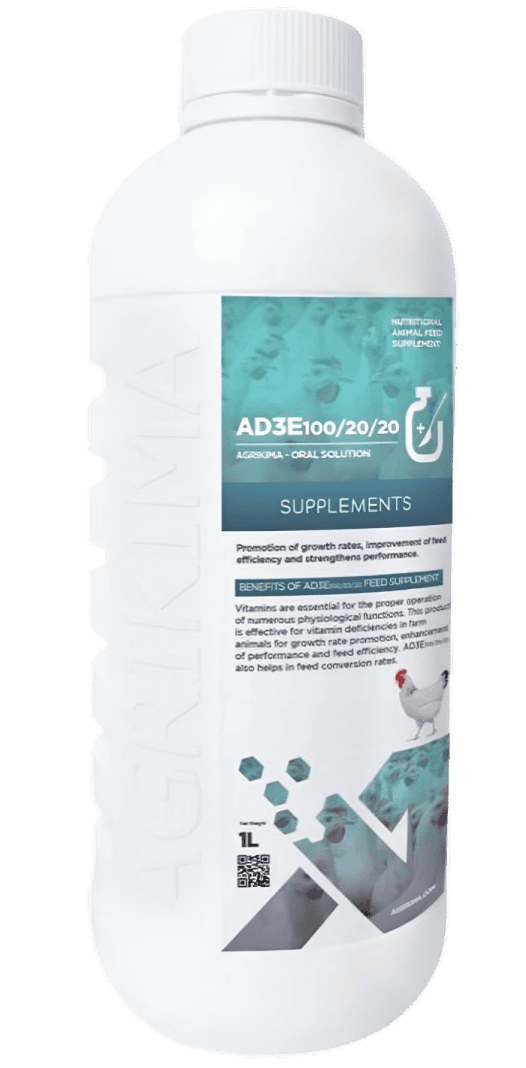
These support the animal alongside — never instead of — your vet's treatment, vaccination and good management.
Prevention
- Avoid overcrowding calves and young stock, and give each animal enough space so they are not constantly rubbing against each other.
- Keep calf housing dry, well ventilated and as bright as possible, because sunlight and dry air help reduce fungal survival.
- After an outbreak, scrape and brush down walls, posts, troughs and crushes, remove crusts and bedding, and then apply a disinfectant your vet or agrovet recommends as effective against fungal spores; repeat cleaning between batches of calves.
- Do not share brushes, halters, ropes and blankets between animals without cleaning and disinfecting them.
- Quarantine newly bought animals for at least two to three weeks, check their head and neck closely for patches, and treat any before mixing with your herd.
- Feed a balanced diet with enough energy, protein, minerals and vitamins, especially vitamin A, which helps keep skin healthy; good nutrition helps young animals fight off the fungus faster.
- Keep internal and external parasites under control, as heavily parasitised animals are weaker and may suffer worse skin infections.
- Where a licensed ringworm vaccine becomes available, discuss with your vet whether it makes sense for farms with repeated outbreaks.
Risk to people
Cattle ringworm is a zoonosis, which means it can spread from animals to people. In people it causes red, itchy, scaly rings or patches, often on the hands, arms, neck, face or scalp. It can be quite inflamed, sometimes with pus-filled spots, and children are especially likely to catch it from calves. To protect yourself, wear gloves and long sleeves when handling affected animals, wash hands and arms well with soap and water afterwards, wash work clothes separately, and keep young children away from infected calves. Do not use animal antifungal products on people. If anyone in the household develops itchy red rings on the skin, they should visit a health centre or pharmacist and mention contact with cattle ringworm.
Impact on your farm
Ringworm rarely kills cattle, but it can cost a Kenyan farm money and time. Badly affected calves may grow more slowly, especially if they are also poorly fed or carrying worms. The patches damage the skin and lower the value of hides sold to traders and tanneries. Animals with obvious patches may fetch a lower price at market or be rejected for shows and breeding sales. Outbreaks in zero-grazing units and calf pens can involve many animals, increasing labour and treatment costs, and spores in old wooden housing can cause the problem to keep returning year after year. Infection spreading to family members and farm workers can also mean time lost and medical costs.
Outlook and recovery
The outlook is very good for most animals. Healthy, well-fed calves usually recover fully within about one to four months, and hair grows back normally, sometimes slightly lighter in colour at first. Once recovered, most animals have good immunity and rarely get it badly again. Recovery can be slower in animals that are thin, stressed, kept in crowded or damp housing, or have other diseases or heavy parasite loads. Treatment and good hygiene help shorten outbreaks and reduce spread, but because spores survive so long in buildings, new calves can be infected unless housing and equipment are thoroughly cleaned.
Common questions
Is ringworm caused by worms, and will deworming cure it?
No. Ringworm is caused by a fungus, not a worm. It gets its name from the ring-shaped patches. Deworming will not cure ringworm. However, keeping worms and other parasites under control helps calves stay strong, which can help them recover faster.
Will ringworm go away without treatment?
Often, yes. In healthy, well-fed calves the patches usually clear by themselves within about one to four months as the animal's immune system fights the fungus. But during that time the animal keeps shedding spores that infect other animals, people and the buildings. Treatment, isolation and cleaning help shorten the outbreak and protect the rest of the herd and your family.
Can I use used engine oil or diesel on the patches like my neighbours do?
Please do not. Used oil and diesel can burn and irritate the skin, may be licked and swallowed, and contain harmful chemicals that can contaminate milk and meat. They have not been shown to be a safe or reliable treatment. Ask your vet or agrovet for a proper antifungal wash registered for cattle and follow the label and withdrawal period.
Can I still sell milk from a cow with ringworm?
Ringworm itself does not make milk unsafe, as it is a skin infection. However, if you treat the cow with any antifungal or other product, you must follow the milk withdrawal period on the label or as told by your vet. Always milk with clean hands, keep crusts away from the milk, and wash your hands well after handling the cow.
My child has a red itchy ring on the arm. Could it be from our calves?
It could be. Cattle ringworm commonly spreads to children who play with or feed calves. Take the child to a health centre or pharmacist and tell them about the ringworm in your cattle so they can give the right human treatment. Keep children away from affected calves until they have healed, and make sure everyone washes their hands after touching animals.
Why does ringworm keep coming back every year in my calf pen?
The spores from crusts and hair can survive for months or even years in wooden posts, walls, feeders and bedding. Each new group of young calves picks them up. To break the cycle, remove old bedding and crusts, scrub surfaces, apply a disinfectant that works against fungi, let in sunlight and air, avoid overcrowding, and quarantine new animals.
A guide, not a diagnosis. This page is general information to help you recognise problems early. Always confirm with a vet or animal health worker before treating.