What it is
Several worm species are involved, often together. Haemonchus (barber's pole worm) lives in the abomasum (the true, fourth stomach) and feeds on blood, causing anaemia (thin, pale blood). Ostertagia (brown stomach worm) burrows into the glands of the abomasum, so the stomach cannot digest protein properly and the animal loses weight and scours. Cooperia and Trichostrongylus live in the small intestine and damage its lining, cutting the absorption of food. Oesophagostomum (nodular worm) forms small lumps in the large intestine, and Bunostomum (hookworm) also sucks blood. In very young calves, Toxocara vitulorum, a large white roundworm, passes from the mother to the calf through her milk in the first days of life and can cause severe pot belly, diarrhoea and even blockage of the gut. Overall, worms reduce appetite, leak protein and blood from the gut, and divert the animal's energy into repair, so the animal looks hungry and thin even when feed is available.
Which animals are most at risk
Calves, weaners and young stock in their first year or two on pasture are most at risk, because they have not yet built immunity. Calves under about six months are the main victims of Toxocara. Adult cattle usually develop partial immunity, but cows around calving, heavily milking dairy cows, undernourished animals, and those weakened by other diseases such as East Coast fever or trypanosomiasis can still suffer. Risk is highest during and after the long and short rains, on overstocked communal or free-range grazing, on wet low-lying pasture, and where calves graze the same paddock year after year. Pastoral herds sharing water points and grazing are exposed, and zero-grazed calves are not completely safe if fodder is cut low or calf pens are dirty and damp. Exotic dairy breeds and their crosses often show disease more clearly than hardy local zebu cattle, though all breeds can be affected.
Signs to look for
Early signs
- Young stock grow more slowly than others of the same age and do not gain weight despite eating.
- The coat becomes rough, dull and staring, and calves may keep their long baby coat for longer than normal.
- Appetite drops slightly and animals spend less time grazing.
- Dung becomes softer than normal, and the tail and hindquarters become soiled.
- Milk yield in cows may dip slightly without another obvious cause.
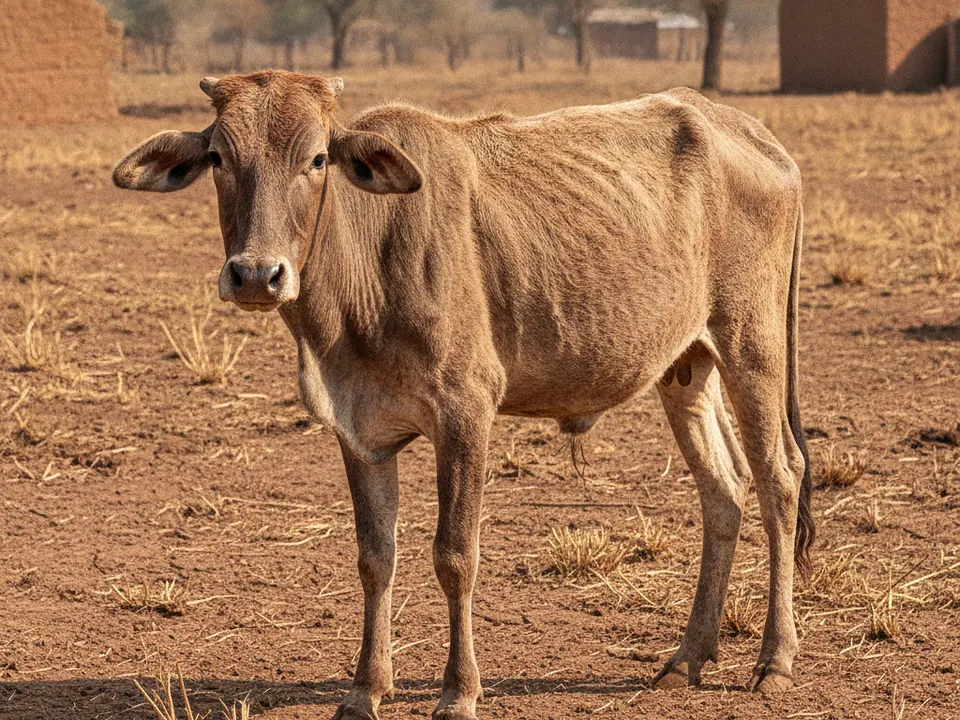
- Calves look slightly pot-bellied while the backbone and hips begin to show.
As it gets worse
- Persistent watery, dark or greenish diarrhoea with marked weight loss and visible ribs and hip bones.
- Pale or white gums and inner eyelids, weakness and tiring quickly, especially with blood-sucking worms like Haemonchus.
- Bottle jaw: a soft, cold, fluid swelling under the jaw, caused by loss of protein from the blood.
- A very swollen, hanging pot belly in calves, sometimes with a smell of butyric acid (like rancid butter) on the breath or dung in Toxocara infection.
- Dehydration, with sunken eyes and skin that stays tented when pinched.
- Animals lying down a lot, unable to keep up with the herd, and in severe cases collapse and death, particularly in calves.
What to do right now
- Separate the weakest, scouring or very thin animals into a clean, dry pen so they are not pushed off feed and water by stronger animals.
- Provide plenty of clean drinking water at all times, as scouring animals lose a lot of fluid.
- Give good quality feed such as fresh fodder, good hay and a suitable concentrate or calf feed to help the animal rebuild, without sudden large diet changes.
- Check gums and inner eyelids for paleness and feel under the jaw for swelling, and note which animals are worst so the vet can see them first.
- Estimate each animal's weight with a weigh band or scale, because any dewormer the vet recommends must be given for the true weight.
- Collect fresh dung samples from several affected animals for a faecal egg count before any treatment is given.
- Move young stock off heavily grazed, wet or contaminated paddocks if you have cleaner grazing, and clean calf pens of dung and wet bedding.
- Call your vet or County Veterinary Officer if animals are collapsing, have bottle jaw, very pale gums or severe diarrhoea, and keep a record of dates, signs and any previous deworming.
How it spreads
- Adult worms in the gut lay eggs that pass out in the dung of infected cattle onto pasture, paddocks and around water points.
- In warm, moist weather the eggs hatch and develop into infective larvae (the young stage that can infect cattle) within one to two weeks, and these larvae crawl out of the dung onto wet grass.
- Cattle swallow the larvae while grazing, especially on short, heavily grazed pasture close to dung pats, and the larvae mature into egg-laying adults in roughly three weeks.
- The long and short rains create ideal conditions, so pasture contamination and infections rise sharply during and just after the rains.
- Cut-and-carry fodder for zero-grazed animals can carry larvae if it is cut very close to the ground or from wet, low-lying areas where infected cattle have grazed or manure has been spread.
- Calves can pick up Toxocara vitulorum from their dam's milk in the first weeks of life, so even calves that have never grazed can be infected.
- Some larvae of Ostertagia can lie dormant inside the stomach wall during harsh dry periods and then emerge together later, causing sudden severe disease.
- Buying in untreated or poorly treated animals brings new worms, including dewormer-resistant strains, onto your farm.
Could it be something else?
Liver fluke (fascioliasis)
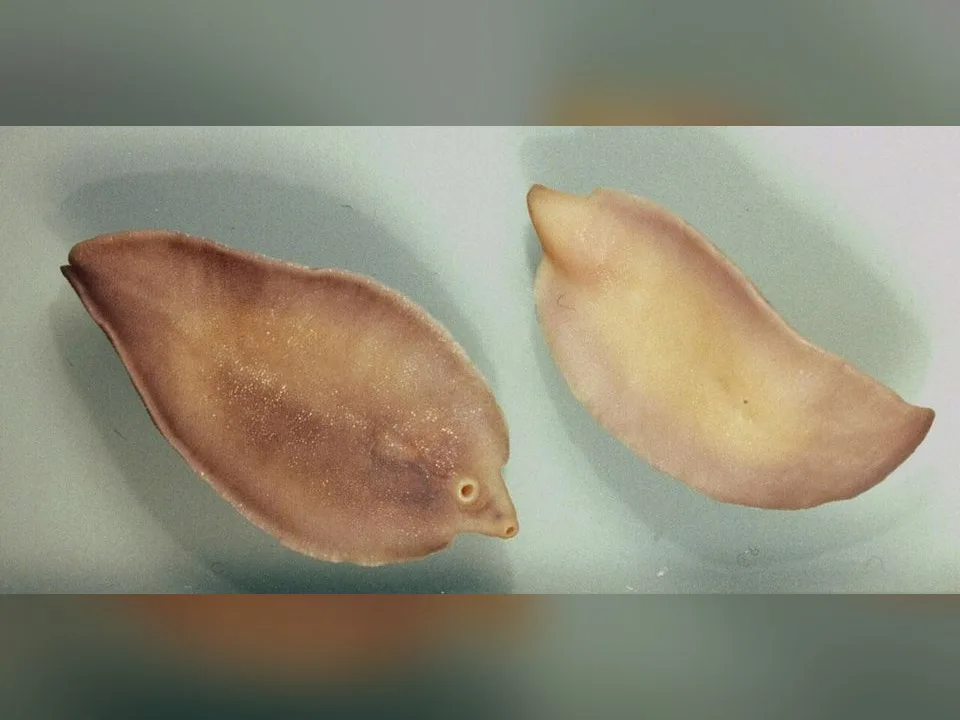
Flukes also cause weight loss, anaemia and bottle jaw, but they are linked to swampy areas with water snails, and adult cattle are often affected as well as young stock. A dung test for fluke eggs (sedimentation) or liver damage at slaughter confirms it. Many common roundworm dewormers do not kill flukes.
Trypanosomiasis (nagana)
Trypanosomiasis causes anaemia, weight loss and a rough coat, but occurs in tsetse fly areas, often with swollen lymph nodes, fever, tear-streaming eyes and abortion. A blood smear examined by the vet finds the parasites, while worm cases show eggs in the dung.
Coccidiosis
Coccidiosis mainly affects calves of about three weeks to six months in crowded, dirty pens, and causes diarrhoea that often contains blood and mucus, with straining. A dung test shows coccidia (oocysts) rather than worm eggs, and dewormers do not treat it.
Poor nutrition or mineral deficiency
Underfed animals are thin with rough coats, but usually without diarrhoea, pale gums or bottle jaw, and the whole herd is affected similarly. They improve once feed improves, and a dung test shows few worm eggs.
How it is diagnosed
A vet confirms worms by examining the animal, checking the colour of the gums and inner eyelids for anaemia, feeling for bottle jaw and assessing body condition, and by testing fresh dung. The faecal egg count (often the McMaster method) counts how many worm eggs are in each gram of dung and gives a guide to the burden, though egg counts in adult cattle can be low even when worms cause harm. A larval culture can show which worm species are present. Blood tests can measure anaemia, and in some labs a test called plasma pepsinogen helps detect stomach damage from Ostertagia. A post-mortem on an animal that has died is very useful: the vet can see and count worms in the stomach and gut. To prepare, collect fresh dung straight from the rectum or immediately after an animal passes it, from several affected animals (around five to ten if possible), place each sample in a clean labelled bag or container with the air squeezed out, keep it cool but not frozen, and get it to the vet or lab within a day or two. Write down ages, weights, grazing history, when and with what product you last dewormed, and any deaths. KALRO, county veterinary laboratories and some private labs and vets can run these tests.
Treatment
Treatment uses anthelmintics (dewormers), chosen by the vet according to the worm species, the animal's age and pregnancy status, whether it is producing milk, and the resistance pattern on your farm. The main drug groups are the benzimidazoles (such as albendazole and fenbendazole), levamisole, the macrocyclic lactones (such as ivermectin, doramectin and moxidectin), and closantel, which mainly targets blood-sucking Haemonchus and flukes. Some of these, such as albendazole, should not be used in early pregnancy, and not all are approved for milking cows, so the vet's choice matters. They may be given as drenches (by mouth), injections or pour-ons. Doses must be calculated on accurate body weight and prescribed by a vet; underdosing because weight was guessed is a major cause of resistance. Very sick animals may also need supportive care such as fluids, vitamins, iron or other treatment for anaemia, and good nutrition. Every dewormer has a milk and meat withdrawal period, which is the time after treatment when milk must be discarded and the animal must not be slaughtered; follow the label and your vet's advice strictly. Antibiotics do not kill worms and should only be used if the vet finds a separate bacterial infection. Many vets will suggest a repeat dung test about two weeks after deworming to check the product actually worked; if egg counts do not fall properly, the worms may be resistant and a different drug group will be needed. Most animals start to improve within days to weeks, but weight and condition take longer to recover.
Medicines must be prescribed and dosed by a vet. Always respect milk and meat withdrawal periods, and finish the full course of any antibiotic.
How Agrikima products can help
These support the animal alongside — never instead of — your vet's treatment, vaccination and good management.
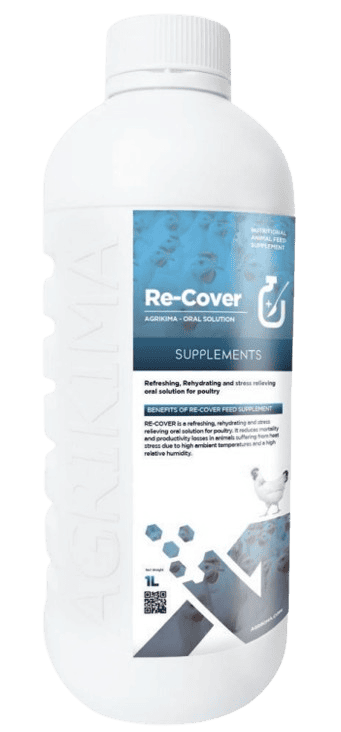
RE-COVER
Oral rehydration support for calves and young stock losing fluid through worm-related diarrhoea, helping replace water and salts while the vet-prescribed dewormer and better grazing deal with the worms; it does not kill worms.
View product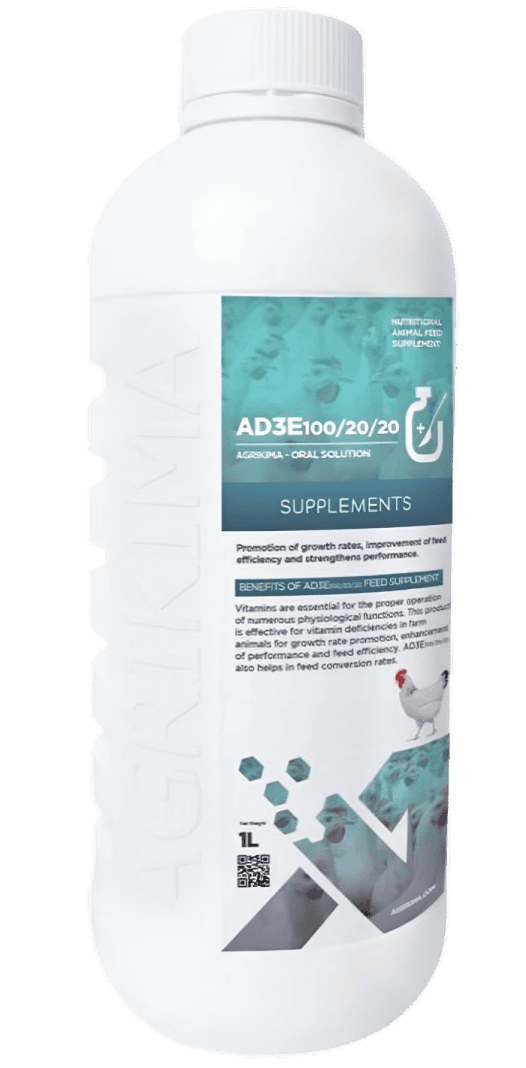
AD3E 100/20/20
Vitamin A, D3 and E supplementation to support recovery, coat condition and growth in young cattle whose nutrient absorption has been reduced by heavy worm burdens, used alongside vet-directed deworming and good feeding, not as a treatment for worms.
View productPrevention
- Deworm strategically rather than routinely: work with your vet to plan treatments around the risk periods, typically at the start and end of the long and short rains and before moving young stock to fresh pasture, instead of dosing every month.
- Always weigh or weigh-band animals and dose for the heaviest in a group of similar animals, calibrate drench guns, and never guess weights or dilute products.
- Use dung tests (faecal egg counts) to decide which animals and groups really need treatment and to check that your dewormer still works on your farm.
- Slow down resistance by leaving some healthy, well-conditioned adult animals untreated when advised by your vet, so that some worms that are not resistant remain on pasture (called refugia), and do not change drug groups every time without reason.
- Practise rotational grazing, avoid overstocking, and keep calves off wet, low-lying and heavily contaminated paddocks; where possible graze young stock ahead of adults or alternate with other species or crops.
- In zero-grazing units, cut fodder at least a hand's width above the ground, avoid cutting from wet areas where infected animals graze, compost manure well before spreading, and keep calf pens dry and clean.
- Feed animals well, with enough protein, energy, minerals and vitamins, because well-nourished cattle resist and tolerate worms much better.
- Quarantine and test or treat newly bought animals in a separate pen for some weeks before they join the herd, so you do not bring in resistant worms; ask your vet about treating young calves for Toxocara in their first weeks of life in high-risk herds.
Risk to people
The common cattle roundworms do not pose a significant infection risk to people. The main human health concern is drug residues: milk and meat from treated animals can contain dewormer residues if the withdrawal period is not respected. Always follow the label and vet's withdrawal instructions, discard milk for the full period, and do not sell or slaughter treated animals early. Wash hands after handling dung, sick calves and dewormers, and store products out of reach of children.
Impact on your farm
Worms are one of the most common hidden causes of lost production on Kenyan farms. Heavily infected calves and heifers grow slowly, so they reach breeding weight later and first calve later, which delays income from milk. Dairy cows may give less milk and lose condition, and beef and fattening animals take longer to reach market weight and fetch lower prices. Severe cases cause deaths in young stock, and money is lost on repeated, ineffective dewormers when resistance develops or products are underdosed. Weakened animals are also more likely to fall ill with tick-borne diseases and other infections. Because the losses are often gradual rather than dramatic, many farmers underestimate them.
Outlook and recovery
Most animals recover well when worms are diagnosed early, treated with an effective dewormer at the correct dose, and given good feed and clean grazing. Recovery of weight and condition can take several weeks, and young stock that were stunted for a long time may never fully catch up in growth. The outlook is poorer in calves with severe anaemia, bottle jaw or heavy dehydration, in animals also suffering other diseases, and on farms where worms are resistant to the dewormers used. Without changes to grazing and deworming practice, re-infection is likely, especially in the rains.
Common questions
How often should I deworm my cattle?
There is no single schedule for every farm. Deworming every month or two without testing is expensive and speeds up resistance. Most farms do better with a strategic plan made with their vet, focusing on young stock and high-risk seasons such as the long and short rains, and guided by dung tests. Adult cattle in good condition often need less frequent treatment than calves and weaners.
I dewormed my calves but they still look thin and pot-bellied. Why?
Several things can cause this. The dose may have been too low because weight was guessed, the product may not suit the worm species, the worms on your farm may be resistant, the calves may have been put straight back on contaminated pasture, or the problem may be something else such as coccidiosis, liver fluke, trypanosomiasis or poor feeding. Ask your vet to do a dung test before and about two weeks after treatment to check whether the dewormer is working.
Do zero-grazed cattle need deworming?
Zero-grazed cattle usually have fewer worms than free-grazing animals, but they are not completely safe. Fodder cut close to the ground or from wet areas, poorly composted manure and dirty calf pens can all carry larvae, and calves can get Toxocara from their mothers' milk. Use dung tests to decide how often they really need treatment.
Should I keep switching dewormer brands to avoid resistance?
Switching brands does not help if the new brand has the same active ingredient or drug group. What matters is the drug group, for example a benzimidazole versus levamisole versus a macrocyclic lactone. Dose correctly, test whether your current product works, and change groups only when your vet advises, often once a year or when a test shows resistance. Your vet may also suggest combination products.
Can I drink milk from a cow that has just been dewormed?
Only after the withdrawal period on the product label has passed, as confirmed by your vet. Some dewormers are not allowed in milking cows at all. Milk taken during the withdrawal period must be thrown away, not sold or fed to people, because it can contain drug residues.
Is bottle jaw always caused by worms?
No. Bottle jaw is a sign of protein loss from the blood, and in Kenya it is commonly caused by blood-sucking worms like Haemonchus or by liver fluke, but it can also appear with other serious illnesses. It is a sign of advanced disease, so call your vet promptly rather than waiting.
A guide, not a diagnosis. This page is general information to help you recognise problems early. Always confirm with a vet or animal health worker before treating.