What it is
Scours is usually caused by germs that attack the lining of the calf's gut. The main ones are E. coli bacteria, rotavirus, coronavirus, Cryptosporidium and Salmonella. Often more than one germ is involved at the same time. Certain types of E. coli (called enterotoxigenic E. coli, often K99 strains) mainly hit calves in their first few days. They stick to the gut wall and release a toxin that pulls large amounts of water and salts out of the body into the gut. Rotavirus and coronavirus usually strike from about the first to the third week. They destroy the tiny finger-like structures (villi) that absorb food, so milk passes through undigested and draws even more water with it. Cryptosporidium is a tiny parasite, too small to see, that damages the same villi, usually in calves of one to three weeks. Salmonella can affect calves of any age. It often invades the blood and causes fever and sometimes bloody dung. Whatever the germ, the calf loses water, sodium, potassium and bicarbonate. Its blood becomes acidic (a state vets call acidosis), its circulation weakens, and it grows cold, weak and unable to suck. Non-infectious problems make all of this worse or start it off. These include a calf that got too little colostrum, overfeeding milk, sudden changes of milk or milk replacer, cold milk, and dirty feeding buckets.
Which animals are most at risk
Calves in their first month are most at risk. E. coli scours peaks in the first week, virus and Cryptosporidium scours in weeks one to three, and Salmonella can appear at any age. Calves that did not suck or receive enough colostrum in the first few hours of life are the most likely to get sick and die. So are calves born after a difficult calving, twins, calves from first-calf heifers (whose colostrum is often lower in antibodies) and calves of thin or poorly fed cows. In Kenya, zero-grazing dairy units with Friesian, Ayrshire and crossbred calves are hit hard. Calves are often separated early, bucket-fed, and kept in shared, damp pens close to adult cows. Problems grow when many cows calve close together, because germ levels build up in the calving and calf areas. Cases often rise in the cold, wet long and short rains. In pastoral and extensive systems, calves born into crowded, dung-soaked night bomas (enclosures) or kraals are also at high risk. Farmers who sell all the first milk, or who believe colostrum is dirty and throw it away, unknowingly put their calves in danger.
Signs to look for
Early signs
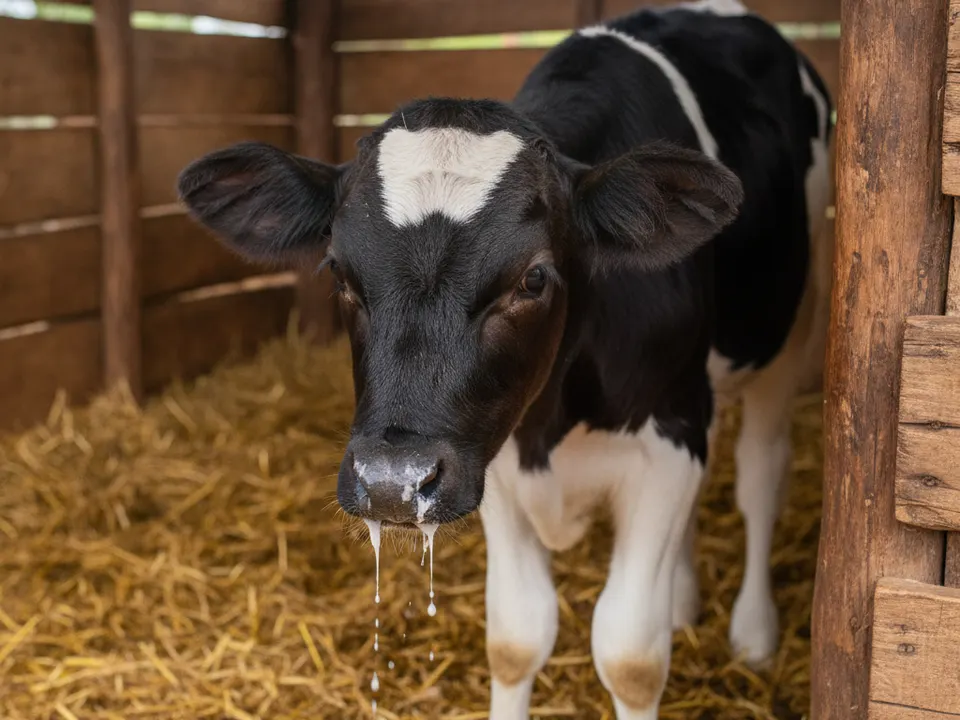
- Dung becomes soft, then watery. It is often yellow, pale white, grey or greenish and may smell sour or unpleasant.
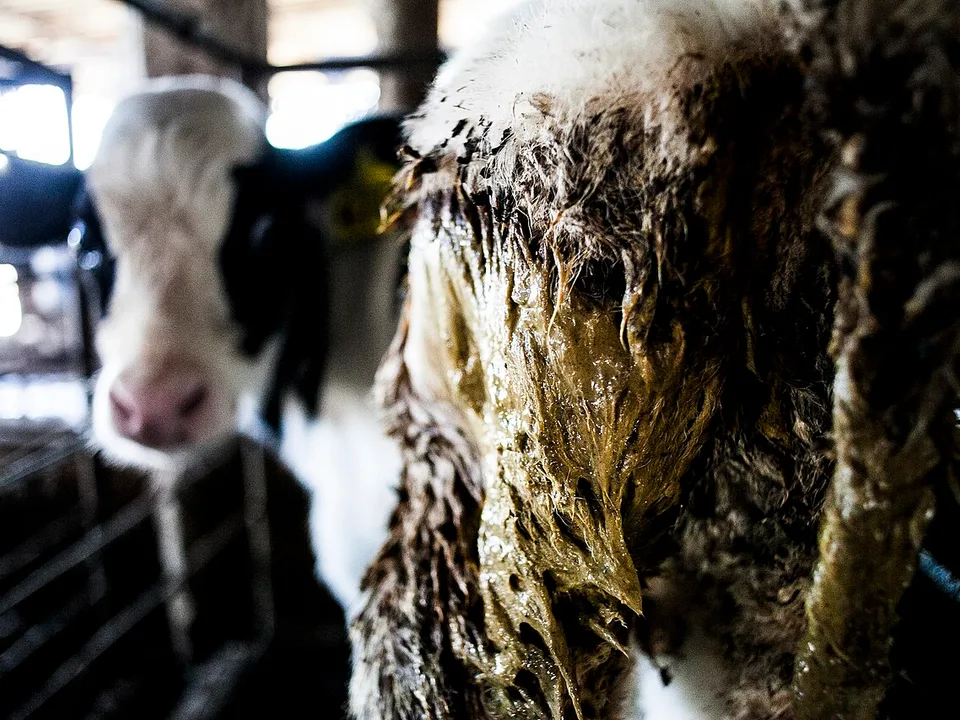
- A dirty, wet tail and hindquarters, with dung stuck to the hocks.
- The calf is slower to come for its milk, drinks less eagerly or leaves milk in the bucket.
- Mild dullness. The calf stands with a slightly hunched back, ears drooping, and lies down more than usual.
- Early dehydration. When you pinch a fold of skin on the neck or upper eyelid, it takes more than a second or two to flatten back.
- The mouth and nose feel drier and stickier than normal.
As it gets worse
- Eyes clearly sunken into the head, with a visible gap between the eyeball and the eyelid.
- The calf is very weak and wobbly, cannot stand, or lies flat on its side.
- The suck reflex is weak or absent. When you put your fingers in its mouth, the calf does not suck, and the mouth feels cool.
- Cold legs, ears and mouth. A very weak calf may be colder than normal, not hotter.
- Skin stays tented for many seconds after pinching, and the gums may look pale or bluish.
- Blood, mucus or shreds of gut lining in the dung, high fever and a very depressed calf can point to Salmonella or another serious infection.
- Swollen, painful joints or a hot, swollen navel appearing with the scours, suggesting infection has spread through the blood.
- Coma and death, sometimes within a day in very young calves with E. coli scours.
What to do right now
- Separate the scouring calf into a clean, dry, draught-free pen with thick dry bedding, away from other calves, and feed and handle it last.
- Keep the calf warm. Put it on deep dry straw or sacks, out of rain and wind, and use a calf jacket or an old blanket in cold weather. A cold calf cannot recover.
- Keep offering its normal milk in small, frequent feeds. Do not starve the calf of milk, because it needs the energy to heal its gut and stay alive.
- Start oral rehydration solution (electrolytes) as soon as scours begins. Give it as separate feeds between milk feeds, not mixed into the milk, and follow the product label and your vet's advice on amounts.
- Check dehydration twice a day using the skin-pinch test, sunken eyes and suck reflex. If the calf cannot stand or will not suck, call the vet urgently, because it needs fluids into the vein.
- Do not force fluids down a calf that cannot swallow. Do not use a stomach tube unless you have been trained, as fluid can go into the lungs.
- Do not give antibiotics, human medicines or other drugs bought over the counter without a vet's advice. Many scours are viral or parasitic, and the wrong drug wastes money and can harm the calf.
- Protect yourself and your family. Wear gloves or wash your hands with soap after handling the calf, its dung and its buckets, and keep children away from sick calves.
- Clean and scald or disinfect feeding buckets and teats after every use, and remove soiled bedding often.
- Record each case: calf, age, date, colostrum history, signs and treatments. Call your vet the same day, especially if more than one calf is affected.
How it spreads
- Infected calves pass huge numbers of germs in their dung. Other calves pick them up by licking contaminated walls, buckets, bedding, teats or the farmer's hands.
- Adult cows can carry E. coli, rotavirus, coronavirus, Cryptosporidium and Salmonella without looking sick. They shed these germs around calving, so a dirty calving area infects the newborn within hours.
- Dirty feeding buckets, bottles and teats that are not washed between calves pass infection from one calf to the next very efficiently.
- Cryptosporidium eggs (oocysts) survive a long time in damp bedding and resist many common disinfectants. One sick calf can contaminate a calf shed for weeks.
- People, boots, wheelbarrows and shared equipment carry dung from sick calves to healthy ones, especially when the youngest calves are fed after the sick ones.
- Wet, muddy, crowded calf pens during the long and short rains build up germ numbers quickly, and cold, wet calves resist infection poorly.
- Failure to give enough good colostrum early is the biggest trigger. Without it the calf has no antibodies and even small numbers of germs can cause severe scours.
Could it be something else?
Coccidiosis
Coccidiosis is caused by a different parasite and is usually seen in calves older than three to four weeks, often weaned calves in dirty, crowded pens. The dung is often dark, with blood and mucus, and the calf strains hard as if trying to pass dung. Scours in calves under two weeks is much less likely to be coccidiosis. A faecal test separates the two.
Nutritional (dietary) scours
This follows overfeeding, sudden changes in milk or milk replacer, poorly mixed replacer, or cold milk. The calf usually stays bright and keeps a good appetite. The dung is pasty, often pale, and it clears quickly once feeding is corrected. If the calf becomes dull, stops sucking or gets dehydrated, treat it as infectious scours.
Navel ill and septicaemia
Navel ill is infection entering through the navel. The navel is swollen, hot, painful or oozing pus, and joints may swell. The calf has a fever and is very dull, sometimes with little or no diarrhoea at first. Navel ill and scours often happen together in calves that missed colostrum, so the vet needs to check both.
Worms and older-calf diarrhoea
Worm diarrhoea is mostly seen in calves grazing pasture at a few months old, not in newborns. The calves are pot-bellied, have rough coats and grow poorly, with ongoing scour. Faecal egg counts confirm it.
How it is diagnosed
The vet starts by looking at the calf's age, the colour and smell of the dung, and how dehydrated and weak the calf is. They take its temperature and check the navel, joints and suck reflex. They will also ask how many calves are affected and at what ages. The age at which calves start scouring is a strong clue to the cause. To find the exact germ, the vet may collect fresh dung from one or more sick calves, ideally early in the illness and before any treatment. The samples go to a County or regional veterinary laboratory, the Central Veterinary Laboratory at Kabete, or a private lab. Some vets carry quick pen-side test kits that check dung for rotavirus, coronavirus, Cryptosporidium and E. coli K99 within minutes. Blood tests can show how dehydrated and acidic the calf is. In healthy calves aged a few days, a blood test of total protein or antibody level shows whether calves are getting enough colostrum, which is very useful when a whole farm has a problem. If a calf dies, a post-mortem examination by the vet gives the best information for protecting the others. Before the vet arrives, write down each sick calf's age and date of birth, when the scours started, and whether and when it got colostrum. Note how much milk it is drinking, any treatment already given, and how many calves are affected. Keep a fresh dung sample in a clean, sealed container in a cool place.
Treatment
Fluid therapy is the most important treatment, whatever germ is involved. Calves that are still standing and sucking are usually treated with oral rehydration solutions. These contain salts such as sodium and potassium, an energy source such as glucose, and an alkalising agent that corrects blood acidity. Milk feeding continues alongside them. Calves that are badly dehydrated, cannot stand or will not suck need intravenous fluids, given by drip into a vein, often over several hours. Only a vet can give these, and they can save calves that look close to death. The vet may give an anti-inflammatory painkiller, such as an NSAID like meloxicam or flunixin. These can help the calf feel better and start eating again. Antibiotics do not cure rotavirus, coronavirus or Cryptosporidium. They are only justified when the vet finds signs of bacterial infection spreading in the body, such as fever, severe depression, blood in dung, a very young calf with E. coli, or suspected Salmonella. If an antibiotic is needed, the vet chooses the drug and the course. Using antibiotics for every scour drives antimicrobial resistance, where germs stop responding to medicines, and this harms animals and people. Where Cryptosporidium is confirmed, some vets use specific anti-parasite products such as halofuginone lactate where they are available. These mainly reduce the severity of the disease and the shedding of eggs. All treatments must be prescribed by a vet. Any drug given has a meat withdrawal period, a time when the calf must not be slaughtered for food, and this applies to calves sold for meat. With good fluids, most calves improve within a few days, but the dung may stay loose for a while as the gut lining regrows. Expect the vet to also review colostrum feeding and hygiene so that more calves do not fall sick.
Medicines must be prescribed and dosed by a vet. Always respect milk and meat withdrawal periods, and finish the full course of any antibiotic.
How Agrikima products can help
These support the animal alongside — never instead of — your vet's treatment, vaccination and good management.
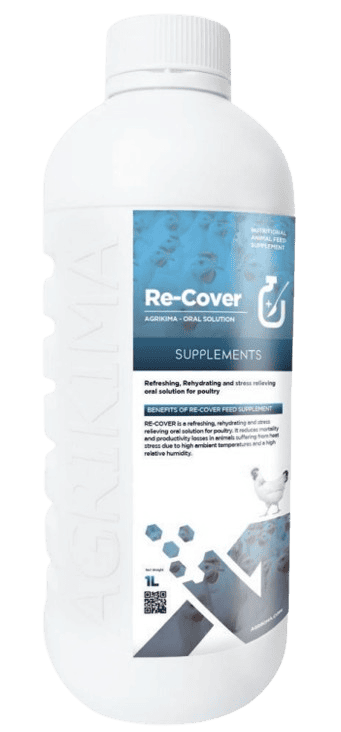
RE-COVER
RE-COVER is an oral rehydration solution. It can help replace the water and salts a scouring calf loses, alongside continued milk feeding, warmth and vet care. Ask your vet whether it suits young calves, give it between milk feeds rather than mixed into milk, and follow the label. It does not kill the germs causing scours and cannot replace intravenous fluids for a calf that cannot stand or suck.
View product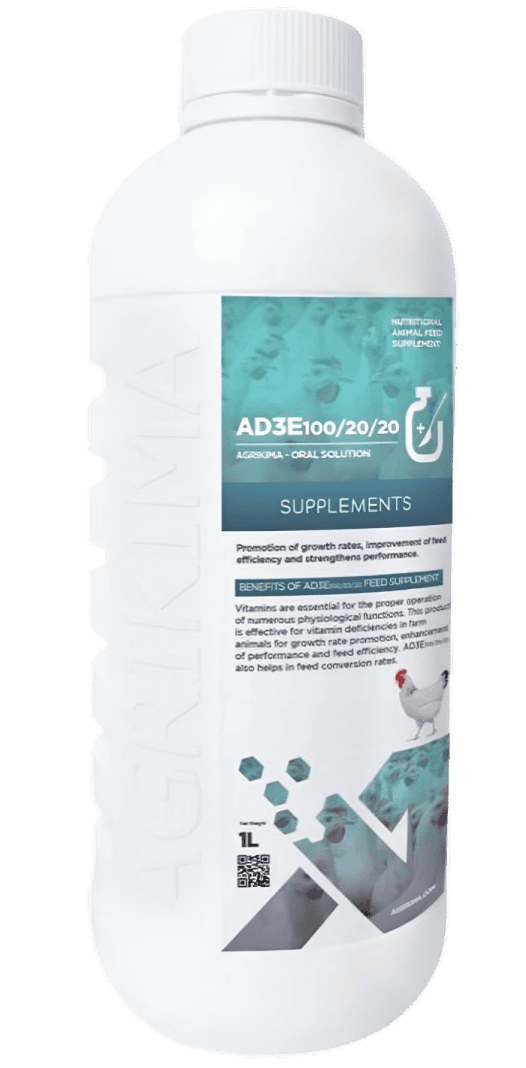
AD3E 100/20/20
AD3E supplies vitamins A, D3 and E. Where pregnant cows are on poor dry-season pasture, it can help prevent vitamin shortages, supporting colostrum quality and newborn calf vigour as part of good late-pregnancy feeding. Use it on your vet's or agrovet's advice and follow the label. It does not treat scours, and it is not a substitute for colostrum and hygiene.
View productPrevention
- Make sure every calf gets good-quality colostrum, the cow's first thick milk, as early as possible, ideally within the first one to two hours of birth. A first feed of around a tenth of the calf's body weight within the first few hours is widely advised. The calf's gut absorbs antibodies well only in the first day.
- Do not throw away or sell the first milk. If a cow has little or watery colostrum, use frozen colostrum saved from another healthy cow on the farm, thawed gently in warm water and never boiled or microwaved hot.
- Prepare a clean, dry, well-bedded calving area away from the main cow shed and dung channels. Clean it between calvings, and wash dirty udders and teats before the calf sucks.
- Dip the navel of every newborn calf in a suitable antiseptic such as iodine solution soon after birth, and keep the calf on clean, dry bedding.
- House young calves in individual, dry, draught-free pens for the first weeks, so they cannot lick each other, and keep them away from adult cattle dung.
- Wash and scald or disinfect buckets, bottles and teats after every feed. Give each calf its own bucket where possible, and always feed the youngest and healthiest calves first and sick calves last.
- Feed milk or milk replacer at the same times, at body temperature, in consistent amounts, and mix replacer exactly as the label says. Avoid sudden changes.
- Feed pregnant cows well, especially in the last two to three months of pregnancy, with enough energy, protein, minerals and vitamins (particularly vitamin A and E in the dry season), so they produce good colostrum.
- Ask your vet whether vaccines for pregnant cows against E. coli, rotavirus and coronavirus are available and suitable for your farm. They work only if the calf then drinks that cow's colostrum, and availability in Kenya varies.
- Clean out and dry calf pens between batches. Leave them empty for a while if possible, and talk to your vet about disinfectants that work against Cryptosporidium if it is a problem on your farm.
Risk to people
Some causes of calf scours can infect people. Cryptosporidium causes watery diarrhoea, stomach cramps and sometimes fever in humans. It can be serious in young children, elderly people and anyone with a weak immune system, including people living with HIV. Salmonella from calves can cause food poisoning-like illness in people, and some E. coli strains carried by cattle can also make people sick. Wear gloves or wash your hands well with soap and clean water after handling sick calves, their dung, bedding or buckets, and always before eating or preparing food. Keep children from playing with scouring calves. Do not use calf buckets for the household. Keep calf dung away from water sources and vegetable gardens. If you or a family member develop diarrhoea after working with sick calves, see a health worker and mention the calves. Any calf treated with drugs must not be slaughtered or eaten until the withdrawal period given by the vet has passed.
Impact on your farm
Scours is one of the biggest causes of calf deaths in Kenya. Each dead heifer calf is a lost future dairy cow and years of lost milk income. Calves that survive often grow more slowly, take longer to reach breeding weight and calve later. Some remain weak and more prone to pneumonia. Treatment costs include vet visits, intravenous fluids, electrolytes and medicines, and a sick calf needs a lot of extra labour for nursing and cleaning. When many calves on one farm are affected, losses can be heavy and discourage farmers from rearing their own replacements. Antibiotics used without need add cost and fuel drug resistance. For most farms, spending on colostrum management and hygiene is far cheaper than treating outbreaks.
Outlook and recovery
The outlook is good for calves that are treated early, while they can still stand and suck. Most recover within several days with fluids, continued milk, warmth and nursing. The outlook becomes guarded to poor once a calf is lying flat, cold, unable to suck or severely sunken-eyed. Many of these calves can still be saved with prompt intravenous fluids from a vet, but delays are often fatal, especially in calves only a few days old. Calves that missed colostrum, have navel or joint infection, or have Salmonella do worse. Recovered calves may scour on and off for a short time and grow slowly for a while. Good feeding helps them catch up. Repeated outbreaks on one farm usually mean colostrum, hygiene or housing need fixing.
Common questions
Should I stop giving milk to a calf with scours?
No. Older advice was to starve the calf of milk, but this weakens it and slows gut healing. Keep offering its normal milk in smaller, more frequent feeds if it drinks less. Give oral rehydration solution as separate feeds in between, not mixed with the milk. If the calf refuses to suck at all, call the vet.
Can I just buy an antibiotic from the agrovet and inject the calf?
It is not a good idea without a vet's advice. Many scours are caused by viruses or Cryptosporidium, and antibiotics do nothing against these. What saves most calves is fluids and warmth. Unnecessary antibiotics cost money, can upset the calf's gut further, leave residues in meat and help create resistant germs. Your vet will decide whether an antibiotic is truly needed and which one.
How can I tell if my calf is dangerously dehydrated?
Pinch a fold of skin on the neck or upper eyelid and let go. In a healthy calf it flattens almost at once. If it stays up for several seconds, the eyes look sunken, the mouth feels cool or dry, and the calf is weak or will not suck, it is seriously dehydrated. A calf that cannot stand is an emergency and needs a vet to give fluids into the vein.
Is it true that colostrum is dirty and should be thrown away?
No. Colostrum, the thick yellow first milk, is the calf's only source of protective antibodies. It also contains energy and vitamins it badly needs. Calves that miss it are far more likely to get scours and die. Give it to the calf as early as possible after birth. If there is extra, freeze it in clean containers for calves whose mothers have too little.
Can I make my own rehydration fluid at home?
In an emergency, a home mix of clean boiled water, salt and sugar is better than nothing. However, it often lacks the right balance of salts and the alkalising ingredients a scouring calf needs, and mixing it wrong can do harm. A proper calf oral rehydration product, used as the label and your vet advise, is safer. Always keep some in stock before the calving season.
Several of my calves are scouring at the same age. What should I do?
This suggests a farm-level problem, such as a germ building up in the calving area or calf pens, or calves not getting enough colostrum. Call your vet to take dung samples so the cause can be identified, and possibly blood tests from healthy calves to check colostrum intake. Meanwhile, separate sick calves, clean and dry the pens, use separate buckets and feed sick calves last. Also review how quickly and how much colostrum each new calf receives.
A guide, not a diagnosis. This page is general information to help you recognise problems early. Always confirm with a vet or animal health worker before treating.