What it is
CBPP is caused by Mycoplasma mycoides subspecies mycoides. A mycoplasma is a very small germ, similar to a bacterium but with no cell wall, which is why some common antibiotics such as penicillin do not work against it. When a healthy animal breathes in droplets coughed out by a sick animal, the germ settles in the lungs. It causes strong inflammation (swelling and heat) of the lung tissue and of the pleura, the thin lining that covers the lungs and the inside of the chest wall. The lung becomes heavy, solid and full of fluid, and yellow fibrin (a sticky, clotting material) and straw-coloured fluid build up in the chest. This makes each breath painful and reduces the space for air, so the animal struggles to breathe. Often only one lung is badly affected. In animals that survive, the body may wall off dead pieces of lung inside a tough capsule called a sequestrum. The live germ can hide inside this capsule for a long time, and these 'carrier' animals can start shedding the germ again, especially when stressed. In young calves the germ can also settle in the joints and cause painful, swollen joints. The time from infection to showing signs (the incubation period) varies widely, commonly several weeks and sometimes several months, so infected animals can be moved and sold before anyone notices a problem.
Which animals are most at risk
All cattle can catch CBPP, of any breed, sex or age, including local Zebu, Boran and dairy breeds. Water buffalo can also be infected; goats and sheep are not affected by this germ. Herds that have never been exposed or vaccinated tend to suffer the most severe illness and deaths, while herds in long-affected areas may show milder or slower-spreading disease with many carriers. Young calves are more likely to show swollen, painful joints rather than only lung signs. In Kenya the disease has mostly affected pastoral and agro-pastoral systems, especially in northern, north-eastern and border counties where cattle are moved long distances, mix at markets and water points, and cross borders with neighbouring countries. Risk rises during droughts and dry seasons when herds concentrate around water and grazing, and when cattle are trekked to markets. Zero-grazing and smallholder dairy farms are at lower risk but can be infected by buying animals from markets or affected areas without checking and quarantining them.
Signs to look for
Early signs
- Fever: the animal feels hot, its ears and muzzle may be warm and dry, and a thermometer in the rectum shows a temperature clearly above normal.
- Dullness and reduced appetite; the animal lags behind the herd, chews the cud less and may stand alone in shade.
- A dry, short cough, most noticeable in the morning, after walking or when the animal is driven quickly.
- Faster breathing than other cattle at rest, with the flanks moving more than normal.
- A drop in milk yield in lactating cows.
- In some animals, especially in partly protected herds, the early signs are mild and easy to miss, so a slow trickle of coughing animals over weeks should raise suspicion.
As it gets worse
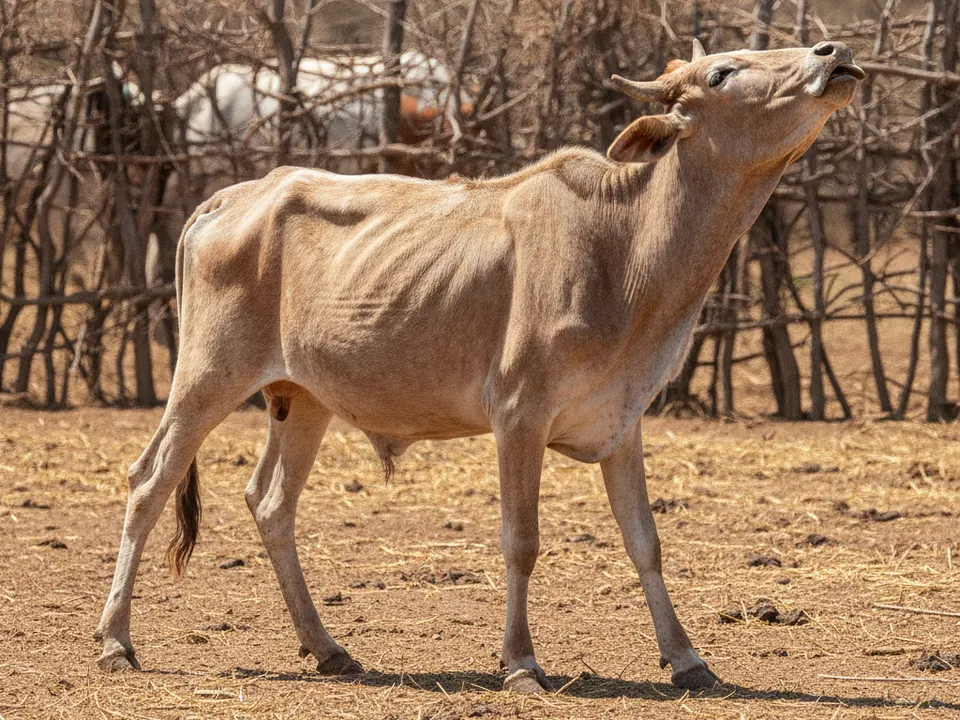
- Hard, laboured breathing with the head and neck stretched forward, mouth open and sometimes the tongue out.
- Standing with the elbows turned outwards and the back arched, refusing to lie down or lying only on the chest, to ease chest pain.
- Grunting or groaning with each breath, and a soft, painful, wet cough.
- Clear pain when you press firmly between the ribs or tap on the chest: the animal flinches, groans or moves away.
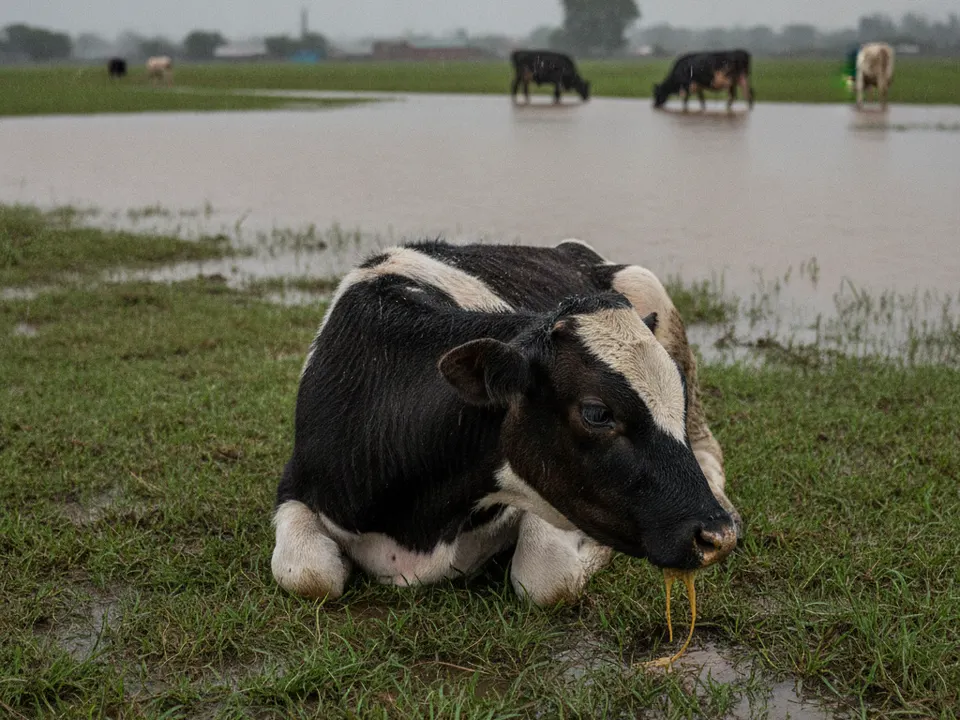
- Frothy saliva at the mouth and nasal discharge, sometimes with swelling under the chest or throat.
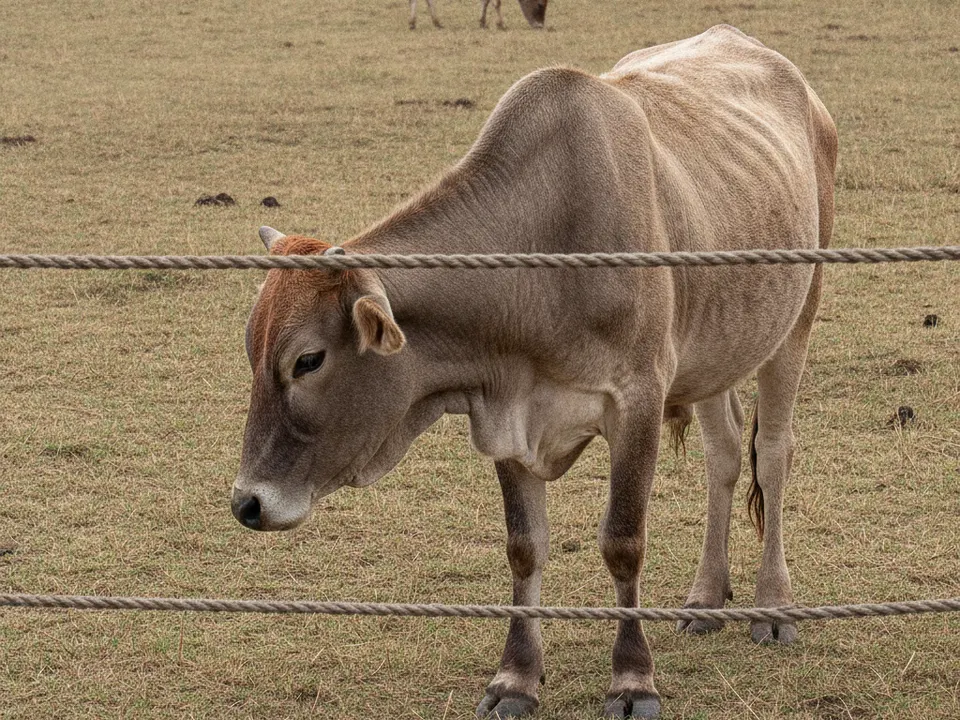
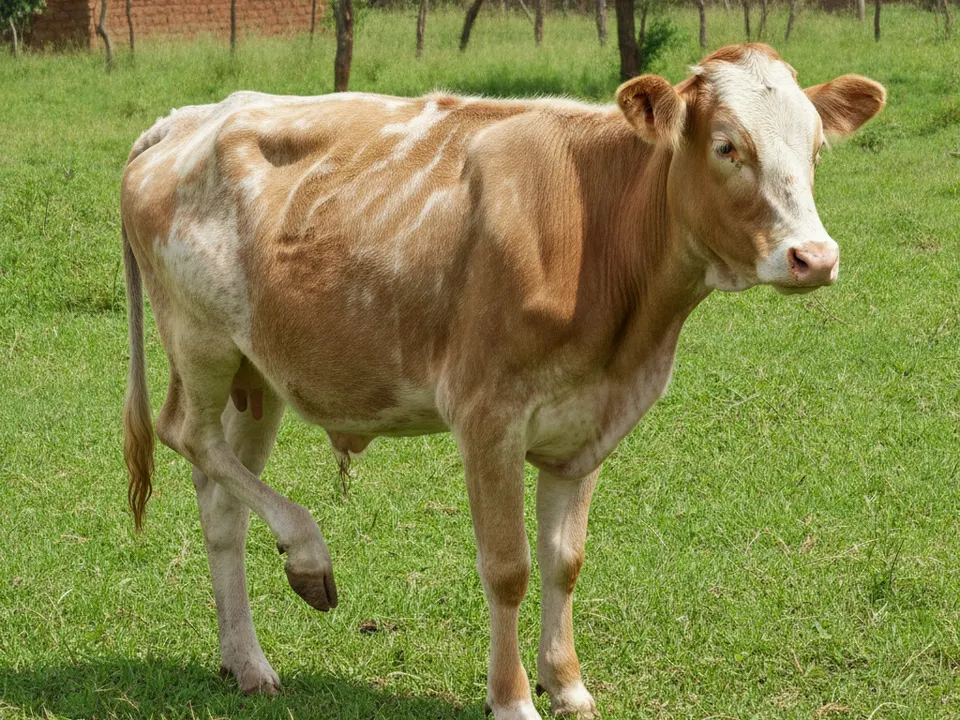
- Rapid weight loss, weakness and reluctance to walk; some animals collapse and die within days to a few weeks.
- In calves, hot, swollen and painful knees, hocks or other joints, with lameness.
- Animals that survive the acute stage may stay thin, with a lingering cough and poor body condition for months.
What to do right now
- Report your suspicion immediately to the County Veterinary Officer, the nearest government vet or animal health office, or through your local chief or extension officer; this is a legal requirement for CBPP.
- Stop all movement of cattle onto or off your farm or boma, and do not sell, give away, exchange or take any animals to market until a vet tells you it is safe.
- Separate coughing or feverish animals from the rest of the herd, ideally in a pen or area several metres away and downwind, and keep them away from neighbours' cattle and shared water points.
- Give sick animals shade, shelter from wind and rain, clean fresh water close by and soft, good-quality feed so they do not have to walk far; avoid driving or chasing them, as exercise makes breathing harder.
- Do not give any antibiotics or other drugs on your own; incomplete or wrong treatment can hide the disease, create carriers and make diagnosis harder, so wait for the vet's instructions.
- Write down which animals are sick, their ear tags or descriptions, their temperatures if you have a thermometer, dates signs started and any deaths, so the vet can trace the outbreak.
- If an animal dies, cover the carcass, keep dogs and people away, do not eat or sell the meat, and wait for the vet, who may want to do a post-mortem.
- Tell neighbours who share grazing or water with you so they can watch their herds and keep them apart from yours.
How it spreads
- The main route is breathing in droplets coughed out by an infected animal, so close, repeated contact between cattle is what spreads the disease most.
- Spread is fastest where cattle are packed together: night bomas and kraals, crowded water points, dips, livestock markets, holding grounds, trucks and trekking routes.
- Bringing in new cattle from markets, dowry exchanges, restocking or cross-border trade is a common way the disease enters a clean herd, because animals can look healthy during the long incubation period.
- Chronic carrier animals that recovered from earlier illness can keep the germ walled off in their lungs and later shed it again, quietly re-infecting the herd.
- Drought and seasonal migration, when many herds share scarce grazing and water, greatly increase contact between herds and the chance of spread.
- Stress from long walks, poor feeding, transport and other diseases can make carriers shed more and make exposed animals sicker.
- The germ does not survive long outside the animal in sunlight and dry conditions, so spread through equipment, pasture or water is much less important than direct animal-to-animal contact, though very close contact with fresh discharges, urine or infected afterbirth may play a small part.
Could it be something else?
Pasteurellosis / shipping fever pneumonia (Mannheimia and Pasteurella bacteria)
This pneumonia often follows stress such as transport, weaning or bad weather and tends to appear in a group soon after the stress event, often with a lot of nasal discharge. It usually responds quickly to vet-prescribed antibiotics. CBPP spreads more slowly through a herd over weeks to months, causes marked chest pain and the typical outstretched neck, and needs lab or post-mortem confirmation by a vet to tell the two apart.
East Coast fever (theileriosis)
East Coast fever is tick-borne and causes clearly swollen lymph nodes (glands), especially below the ear and in front of the shoulder, along with fever, watery eyes and, at the end, frothy discharge from the nose as the lungs fill with fluid. CBPP does not cause the large swollen glands, and it spreads by contact rather than ticks. A vet can confirm East Coast fever with a blood or gland smear.
Lungworm (verminous bronchitis)
Lungworm mainly affects young cattle grazing wet pasture, especially during and after the rains, and causes coughing and fast breathing but usually little fever or chest pain. Signs improve after vet-advised deworming. CBPP affects adults and young stock, causes high fever and painful breathing, and is linked to contact with other herds rather than pasture.
Bovine tuberculosis
Tuberculosis is a slow, long-lasting disease with gradual weight loss and a soft cough in a few animals, developing over months to years, and usually without sudden high fever. CBPP can cause acute illness with fever and painful breathing in several animals over weeks. Both need vet testing, and tuberculosis can infect people, so a vet should investigate any herd with chronic coughing.
How it is diagnosed
A vet will suspect CBPP from the history (new animals, market contact, a spreading cough in the herd) and from examining sick animals: taking their temperature, watching their breathing, listening to the chest with a stethoscope and pressing or tapping the chest to check for pain and areas that sound dull. Confirmation needs laboratory tests, so the vet or veterinary officer will usually take blood samples from several animals in the herd for antibody tests such as the complement fixation test (CFT) or competitive ELISA (c-ELISA). These tests work best for checking the herd as a whole rather than proving whether one single animal is or is not infected. Samples of nasal swabs, chest fluid or lung tissue can be sent for culture or PCR (a test that detects the germ's genetic material). A post-mortem (opening a dead or culled animal) is very useful: the vet looks for a heavy, solid lung with a 'marbled' pattern, yellow fibrin, straw-coloured fluid in the chest, the lung stuck to the chest wall, and sometimes walled-off sequestra. Do not open dead animals yourself; leave this to the vet. To help, prepare a clear history: when the first animal got sick, how many are coughing, any deaths, recent purchases, market visits, shared water or grazing, vaccination dates and where your cattle have moved. Keep sick animals restrained in a crush or yard so the vet can examine them safely.
Treatment
Because CBPP is notifiable, decisions about treatment are made with the government veterinary services, and what is allowed can depend on the local situation and current national policy. Control in Kenya relies mainly on reporting, movement control, vaccination and, in some situations, removing infected animals, rather than on treating individual animals. Where treatment is permitted, a vet may prescribe antibiotics that act against mycoplasma, such as tetracyclines (for example oxytetracycline), macrolides (for example tylosin) or fluoroquinolones (for example danofloxacin). Penicillin-type antibiotics do not work because the germ has no cell wall. Antibiotics can reduce fever, ease breathing and cut deaths, but they do not reliably clear the germ from the lungs, and treated animals can still become chronic carriers that spread disease later. For this reason, using antibiotics without vet control is risky for your herd and your neighbours. Vets may also give anti-inflammatory drugs to ease pain and fever. Treatment must only be given as prescribed by a vet, with the full course completed. Misuse and under-dosing of antibiotics also drives antimicrobial resistance, where drugs stop working for animals and people. All these drugs have milk and meat withdrawal periods: you must not sell or drink milk, or slaughter animals for meat, until the withdrawal time stated by the vet and on the product label has passed. Expect the vet to examine and sample the whole herd, advise on vaccination of healthy animals, and explain quarantine rules and whether any animals should be culled.
Medicines must be prescribed and dosed by a vet. Always respect milk and meat withdrawal periods, and finish the full course of any antibiotic.
Prevention
- Vaccinate: in areas where CBPP occurs, the government-approved live vaccine (commonly the T1/44 strain, produced in Kenya) is the main tool, usually given in campaigns or by vets; protection does not last for life, so cattle need repeat vaccination as advised, and some animals develop swelling at the injection site, which the vet can advise on.
- Join and support county vaccination campaigns, and keep records of which animals were vaccinated and when.
- Buy cattle only from known, healthy herds, ask about their vaccination and disease history, and avoid buying from areas under quarantine.
- Quarantine every new animal for several weeks away from your herd and watch it for cough, fever or breathing problems before mixing; ask a vet to check or test it if possible.
- Limit contact with other herds at water points, dips, grazing areas and markets where you can, especially during droughts and migration.
- Respect movement permits and quarantine orders; illegal movement of cattle is one of the main ways CBPP spreads between counties and across borders.
- Keep cattle in good body condition with adequate feed, water and mineral supplementation, and reduce stress during transport and trekking, because healthy, well-fed animals cope better with all diseases.
- Report any cough spreading through the herd early, so outbreaks are stopped while they are small.
Risk to people
CBPP does not infect people, and there is no known risk of catching it from handling sick cattle. However, if cattle are treated with antibiotics, their milk and meat can contain drug residues that are harmful to people and add to antimicrobial resistance; always keep to the withdrawal period given by the vet before using or selling milk or meat. Do not eat or sell meat from animals that died of illness, as other dangerous diseases can look similar, and wash your hands after handling sick animals.
Impact on your farm
CBPP is one of the most costly cattle diseases in pastoral parts of East Africa. Direct losses include deaths, which can be high in herds never exposed before, and severe weight loss in animals that survive. Lactating cows lose milk, which hits household nutrition and income, and sick bulls and oxen cannot work. Recovered animals often stay in poor condition and may carry the germ, lowering their value. Calves with joint infections may never thrive. Indirect losses are often larger: quarantines and movement bans stop farmers from selling animals when they need cash, markets may close, and traders pay lower prices for cattle from affected areas. Costs of vet visits, testing, vaccination and any treatment add up. For the wider economy, CBPP limits export of live cattle and beef, and outbreaks in one area threaten neighbouring counties and countries.
Outlook and recovery
The outlook varies. In herds never exposed before, acute CBPP can kill many animals within weeks, and severely affected animals with very laboured breathing often die even with care. Some animals recover, especially with early vet involvement, rest, good feeding and shade, but many stay thin for a long time and may remain chronic carriers with walled-off lung lesions that can spread the disease again. For this reason the herd, not just the individual animal, is the focus: quick reporting, movement control and vaccination give the best chance of stopping losses. Herds and areas that keep up regular vaccination and controlled movement have far fewer and smaller outbreaks.
Common questions
My cow is coughing. Does that mean it has CBPP?
Not necessarily. Many things cause coughing in cattle, including lungworm, dust, other pneumonias and East Coast fever. CBPP is more likely if the animal has fever, painful and laboured breathing with the neck stretched out, and especially if several animals start coughing over a few weeks after contact with other herds or new purchases. Only a vet with lab tests can confirm it, so if you see these signs, report early rather than wait.
Can I just buy antibiotics from the agrovet and treat it myself?
Please do not. CBPP is a notifiable disease, so you must report it, and treatment decisions are made with the veterinary services. Antibiotics may make the animal look better, but they often do not clear the germ, so the animal can become a hidden carrier that infects your herd and your neighbours later. Wrong or incomplete use also leads to drug resistance and leaves residues in milk and meat. Let the vet decide what, if anything, should be given.
What happens after I report CBPP? Will my cattle be taken away?
Veterinary officers will visit, examine and sample your animals and may place your farm or area under quarantine. This means cattle cannot be moved, sold or taken to markets until the restriction is lifted. They will usually vaccinate healthy animals in the area. In some cases, they may advise that infected animals be removed to protect other herds; ask the officer to explain the rules and any support available. Reporting early usually means a smaller, shorter problem for you and your community.
Is CBPP the same disease as the lung disease in goats?
No. The serious lung disease of goats, contagious caprine pleuropneumonia (CCPP), is caused by a different mycoplasma and affects goats, not cattle. CBPP affects cattle and buffalo, not goats or sheep. Both are contagious and should be reported, but vaccines for one do not protect against the other.
How often should my cattle be vaccinated against CBPP?
In areas where the disease occurs, vaccination is usually repeated regularly, often yearly, because protection from the vaccine does not last for life. The exact timing depends on local risk and county campaigns, so follow your County Veterinary Officer's advice and keep a record of vaccination dates for each animal. Vaccinate before the dry season movements and before taking animals to markets where possible.
An animal recovered from CBPP. Is it safe to keep or sell it?
Recovered animals can carry the germ hidden in their lungs for a long time and may spread it again, especially when stressed by transport or hunger. Do not sell or move them without vet approval, and never sell them to an unknown buyer to 'get rid of the problem', as this spreads the disease to other farms. Your vet will advise whether to keep, monitor or remove recovered animals.
A guide, not a diagnosis. This page is general information to help you recognise problems early. Always confirm with a vet or animal health worker before treating.