What it is
ECF is caused by Theileria parva, a single-celled parasite (a protozoan, a microscopic organism that is not a bacterium or a virus). An infected brown ear tick bites the cow and injects the parasite with its saliva while it feeds. The parasite enters the animal's white blood cells, called lymphocytes, which normally fight infection. Inside these cells it makes them multiply out of control, a little like a cancer. This is why the lymph nodes swell so much. Lymph nodes are the glands that filter infection, such as the ones below the ear and in front of the shoulder. The infected cells spread through the body and the immune system breaks down. In the late stage, fluid leaks into the lungs. This is called pulmonary oedema, and it causes the laboured breathing and the froth at the nose. Most animals that die of ECF die because they cannot breathe. The disease usually appears about one to three weeks after an infected tick bite, often around 8 to 12 days. Animals that recover often stay carriers. A carrier has the parasite in its blood without looking sick, and ticks can pick it up from it.
Which animals are most at risk
Exotic and cross-bred dairy cattle such as Friesian, Ayrshire, Jersey and Guernsey are most at risk. In them the disease is often severe and many die if not treated. Calves of all breeds are very vulnerable, especially those born to unvaccinated mothers in tick areas. Indigenous zebu cattle raised in areas where ECF is common often survive mild infection as calves and gain some natural resistance, but they can still get sick and die. This is especially true when they are moved to a new area or are stressed. Cattle brought from tick-free or low-ECF areas into high-risk areas are in great danger. High-risk areas include much of central, western, Rift Valley and coastal Kenya and the Lake Victoria basin. Farms with poor or irregular tick control are at risk, and so are zero-grazing units that cut fodder from roadsides or bushy areas. Cattle on communal grazing, or grazing near wildlife, are also at risk. Risk rises in the rainy seasons and the weeks after them.
Signs to look for
Early signs
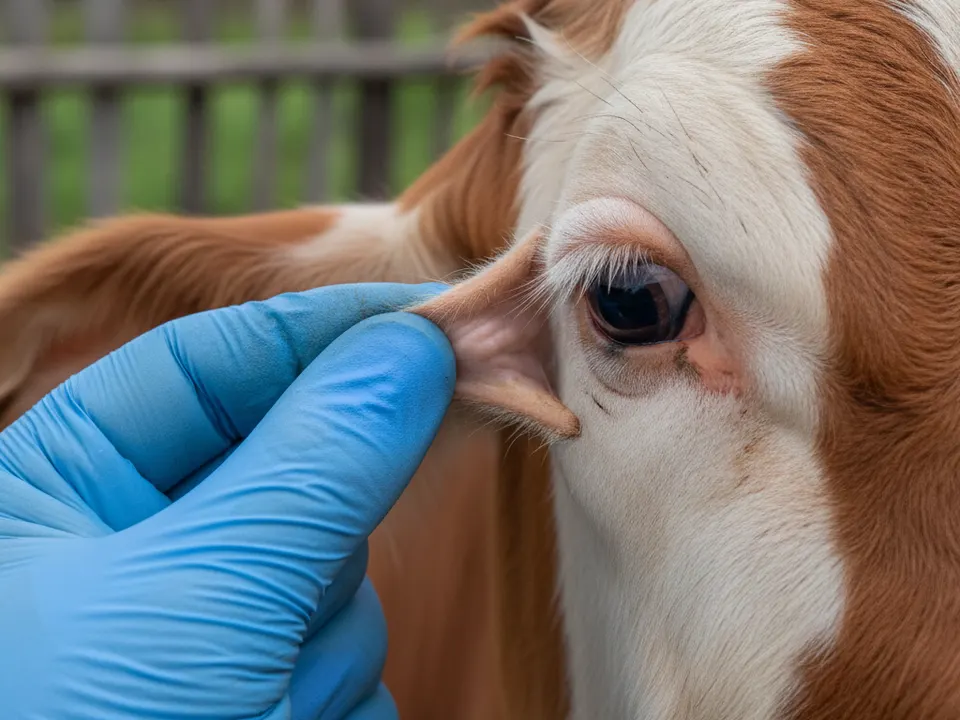
- A swollen, firm lymph node just below the ear, at the base of the jaw. It is often on the same side where ticks were feeding. It can be felt and often seen.
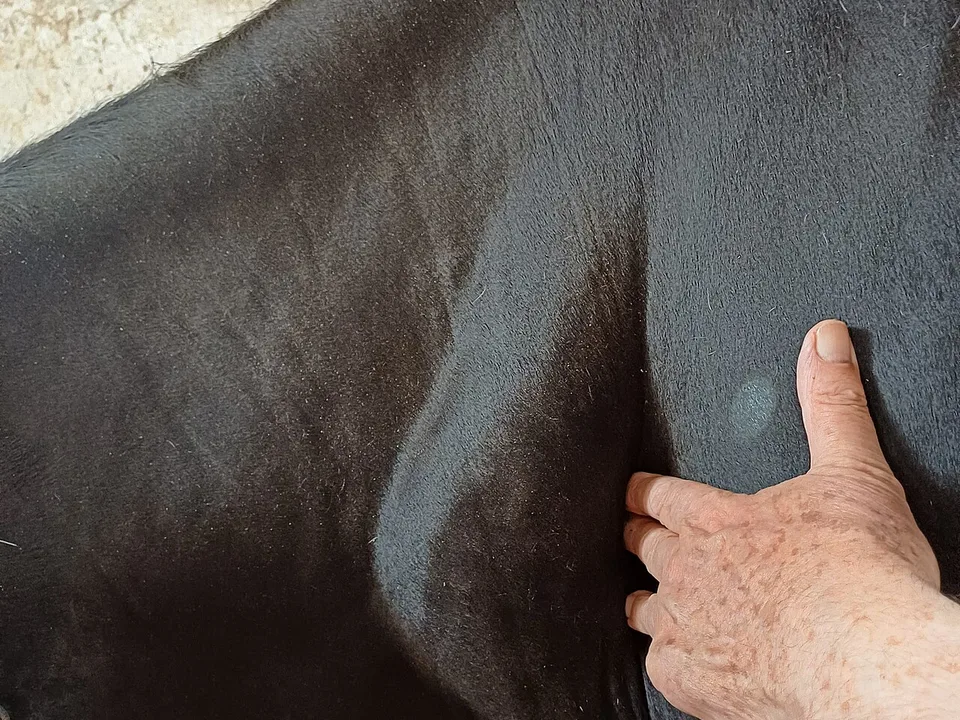
- A swollen lymph node in front of the shoulder, felt as a sausage-shaped lump under the skin.
- High fever. The animal feels hot, and a thermometer in the rectum often reads 40°C or more. The fever keeps going for days.
- Dullness, standing apart from the herd, and a drop in appetite and chewing the cud.
- A sudden, sharp fall in milk yield in dairy cows.
- Watery eyes and a clear runny nose.
- Brown ear ticks found in or around the ears, or recent signs of heavy tick burden.
As it gets worse
- Fast, laboured breathing with the neck stretched out. There may be a cough and loud breathing sounds.
- Frothy, foamy discharge from the nose. This comes from fluid in the lungs and is a serious warning sign.
- Many lymph nodes in the body become swollen, not just the ones near the ear and shoulder.
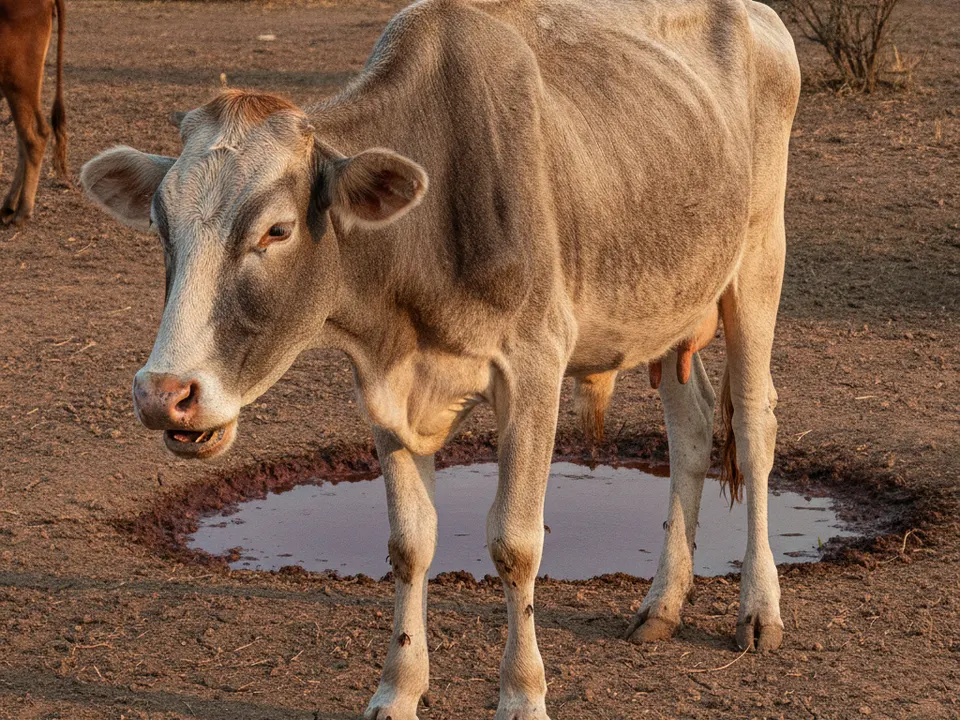
- Rapid weight loss, weakness and wobbly walking. Many animals end up lying down and unable to rise.
- Cloudy or bluish-white eyes, and pale gums and inner eyelids.
- Diarrhoea, sometimes with blood or mucus, in the late stage.
- Occasionally, nervous signs such as circling, head-pressing or staggering. This is sometimes called 'turning sickness'.
- Death, often within about one to three weeks of the first fever if no treatment is given.
What to do right now
- Call your vet or animal health officer as soon as you notice swollen glands and fever. Early treatment greatly improves the chance of survival, and waiting even a few days can be fatal.
- Take the animal's temperature with a rectal thermometer if you have one, and write it down with the time. Keep recording it so the vet can see how the illness is progressing.
- Keep the sick animal in a shaded, well-ventilated and quiet place, away from the rest of the herd. Avoid making it walk long distances, because exertion worsens breathing problems.
- Provide plenty of clean, fresh drinking water within easy reach. Offer soft, palatable feed such as fresh green grass or good hay, even if it eats only a little.
- Check the sick animal and the rest of the herd carefully for ticks, especially in the ears, around the eyes, tail and udder. Ask your vet about spraying or dipping the herd with an effective acaricide to stop further spread.
- Do not give any drugs, injections or herbal mixtures before the vet sees the animal unless the vet tells you to. Wrong or late treatment can hide signs, waste money and reduce the chance of recovery.
- Check the other cattle daily for swollen glands, dullness or a drop in milk. Catching the next case early saves lives.
- Stop buying new animals or moving cattle off the farm until the outbreak is under control. Do not cut fodder from tick-infested roadsides or bush during this time.
How it spreads
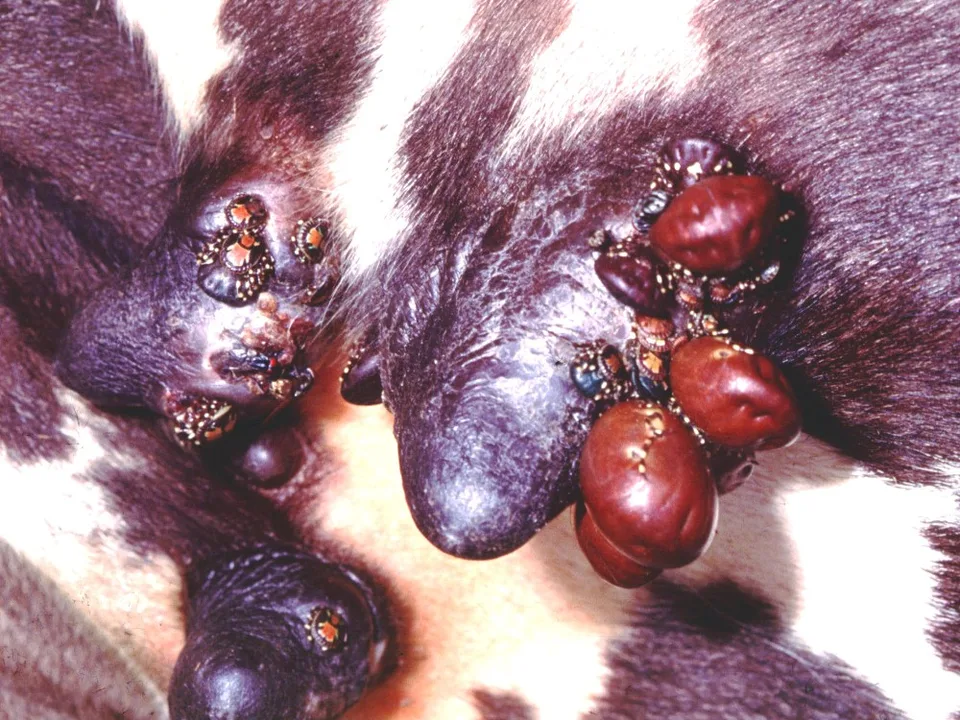
- The main carrier is the brown ear tick (Rhipicephalus appendiculatus). It is a small, reddish-brown tick that likes to attach inside and around the ears, and also on the eyelids, tail and udder.
- A young tick (larva or nymph) picks up the parasite by feeding on an infected or carrier animal. It passes the infection on at its next life stage, as a nymph or an adult, when it feeds on a new animal.
- The parasite is not passed from the female tick into her eggs. Infection keeps going on a farm because ticks keep feeding on carrier cattle.
- ECF does not spread directly from cow to cow by contact, milk, coughing or sharing water. It needs the tick.
- Ticks are carried onto farms on new animals bought from markets. They also come on cut-and-carry grass and fodder in zero-grazing units, and on animals grazing roadsides, communal land or bushy pasture.
- Tick numbers, and so ECF cases, often rise during and after the long and short rains, when grass is green and ticks are active.
- African buffalo can carry a form of Theileria parva. Where cattle share grazing with buffalo, near parks and conservancies, ticks can pass a severe form called Corridor disease to cattle.
- When dipping or spraying is skipped, done badly, or done with an acaricide (tick-killing chemical) that ticks have become resistant to, ticks build up quickly and outbreaks follow.
Could it be something else?
Anaplasmosis (gall sickness)
Gall sickness causes pale, then yellow, gums and eyes (jaundice). Dung is often hard, dry and constipated. There is usually fever, but lymph nodes are not greatly swollen, and froth at the nose is not typical. It is mostly seen in adult cattle. The two diseases can happen together, so a vet test is the only way to be sure.
Babesiosis (redwater)
Redwater usually causes red or coffee-coloured urine, with pale or yellow gums from loss of blood cells. Fever is high. Lymph nodes are not usually the big feature. It is spread by blue ticks rather than brown ear ticks.
Heartwater
Heartwater often shows nervous signs such as high-stepping, chewing movements, twitching eyelids, circling and paddling of the legs. Sudden death is common. It is linked to the colourful bont ticks (Amblyomma) rather than brown ear ticks, and does not cause large lymph node swellings.
Trypanosomiasis (nagana)
Nagana is spread by tsetse flies in bush areas. It usually develops slowly over weeks or months, with wasting, pale gums and a staring coat. Lymph nodes may be mildly enlarged, but the fast, severe illness with froth at the nose seen in ECF is less usual. A blood test tells them apart.
How it is diagnosed
A vet or animal health officer first examines the animal. They feel the lymph nodes, take the temperature, listen to the chest and check for ticks. In ECF areas, swollen nodes with a high fever and ticks on the ears strongly suggest the disease. To confirm it, the vet may take a small sample from a swollen lymph node using a fine needle. This is called a lymph node biopsy or smear. They also take a blood smear. These are stained and looked at under a microscope for the parasite inside white blood cells. These parasite clusters are called schizonts or 'Koch's blue bodies'. Laboratories such as county veterinary labs and the Central Veterinary Laboratories at Kabete can do further tests like PCR, which detects the parasite's genetic material, or blood tests for antibodies. If an animal dies, a post-mortem examination often shows lungs full of froth and fluid, greatly enlarged lymph nodes, small white spots in the kidneys, and ulcers in the stomach. Before the vet arrives, write down when the animal first looked sick and its temperature readings. Note when it was last dipped or sprayed, which acaricide you used, and any recent purchases or movement of animals. Note also whether you cut fodder from outside the farm. Tell the vet whether the animal was vaccinated against ECF, and any drugs already given.
Treatment
The main specific treatment for ECF is an anti-theilerial drug. Buparvaquone is the most widely used. Parvaquone and halofuginone have also been used. These drugs act directly against the Theileria parasite. They work best when given early, while the animal is still eating and before breathing problems set in. Once froth at the nose and severe breathing distress appear, many animals die even with treatment. Alongside this, the vet may give supportive treatment. This can include anti-inflammatory drugs to bring down fever and inflammation, drugs to help clear fluid from the lungs, and vitamins. Antibiotics such as oxytetracycline may be given to control secondary bacterial infections like pneumonia. Antibiotics do not reliably cure ECF itself, and they should only be used when prescribed. Unneeded antibiotics add cost and help bacteria become resistant (antimicrobial resistance), so future treatments stop working. All treatment must be prescribed and given by a qualified vet or animal health officer. Doses depend on the drug, the animal's weight and its condition. Many of these drugs have long withdrawal periods, the time after treatment when milk and meat must not be sold or eaten. Buparvaquone in particular has a long meat withdrawal period. Always ask your vet and read the label for the exact milk and meat withdrawal times. Expect the animal to need close nursing for one to several weeks. Recovery can be slow, and milk yield may take a long time to return.
Medicines must be prescribed and dosed by a vet. Always respect milk and meat withdrawal periods, and finish the full course of any antibiotic.
How Agrikima products can help
These support the animal alongside — never instead of — your vet's treatment, vaccination and good management.
Prevention
- Keep up regular, effective tick control by dipping, spraying or using pour-on acaricides. Ask your vet or agrovet to advise how often, because this depends on the season and how many ticks are in your area. Treat more often during and after the rains, when ticks are most active.
- Pay close attention to the ears, which are the favourite site of the brown ear tick. When hand-spraying, make sure the inside and back of the ears, the eyelids, tail brush and udder are well soaked. Some farmers also use tick grease in the ears.
- Mix and use acaricides exactly as the label says. Watch for signs that ticks are surviving treatment, because ticks can become resistant. Ask your vet about switching to a different class of acaricide if control fails.
- Talk to your vet about ECF vaccination by the Infection and Treatment Method (ITM). ITM uses a live vaccine, such as the Muguga cocktail, given together with a long-acting antibiotic. It must be given by trained, authorised vaccinators, and the vaccine has to be kept in liquid nitrogen. It can give strong, long-lasting protection, especially for calves and exotic dairy cattle. Vaccinated animals may become carriers, so follow local guidance. Vaccination does not replace tick control.
- In zero-grazing units, avoid cutting fodder from roadsides, bushy areas or places where other cattle graze. Inspect fodder and the animals often for ticks, and keep the area around the unit slashed and clean.
- Quarantine newly bought cattle for a few weeks. Treat them for ticks before they join the herd, and check them for swollen glands and fever. Buy from known, healthy herds where possible.
- Keep grass short around sheds, fences and kraals, and reduce bush where ticks hide. Where possible, keep cattle from grazing where buffalo or other wildlife pass.
- Give good nutrition, clean water and shade, and reduce stress. A well-fed animal copes better with infection. Check animals daily, feeling the glands below the ear and in front of the shoulder so you notice early swelling.
Risk to people
East Coast Fever does not infect people. The Theileria parasite only affects cattle and buffalo. However, the drugs used to treat it, especially buparvaquone and antibiotics, can leave residues in milk and meat. Do not sell or consume milk or meat from treated animals until the withdrawal period stated by your vet and on the label has passed. Acaricides used for tick control are also poisonous to people. Wear gloves, long sleeves and boots when mixing and spraying. Do not eat, drink or smoke while working with them. Wash well afterwards, and store chemicals away from children, food and water sources.
Impact on your farm
ECF is one of the most costly cattle diseases for Kenyan farmers. On a smallholder dairy farm, losing a single exotic cow can wipe out a family's main source of daily income, as well as the money and years spent raising her. Even when animals survive, milk yield often falls sharply and may not fully recover in that lactation. Pregnant cows may abort, recovered animals can lose a lot of body condition, and fertility can suffer. Calf deaths reduce replacement stock and slow herd growth. Farmers also carry the costs of treatment, vet visits, acaricides and lost milk sales during withdrawal periods. For many families, fear of ECF is one reason they keep fewer improved dairy breeds. At community level, frequent ECF outbreaks limit dairy development and food security.
Outlook and recovery
The outlook depends mostly on how early treatment starts and on the type of animal. Cattle treated with an anti-theilerial drug in the early stage, when they have swollen glands and fever but are still eating and breathing normally, often recover. Once the animal is breathing with difficulty, has froth at the nose or is lying down, the chance of survival drops sharply, even with treatment. Exotic breeds and young calves generally do worse than local zebu cattle from ECF areas. Animals that recover may take weeks to regain condition and milk yield. Many stay carriers for a long time, so continued tick control on the farm remains important.
Common questions
Can I treat East Coast Fever myself with drugs from the agrovet?
ECF treatment should be prescribed and given by a vet or animal health officer. The right drug, dose and supportive care depend on the animal's weight and stage of disease. Many farmers lose animals because they first try cheap antibiotics alone, or give the wrong dose, and waste precious days. Antibiotics on their own do not reliably cure ECF. Call the vet early. The first few days of fever are when treatment works best.
My cow recovered from ECF. Is she safe now?
A recovered cow usually has strong protection against the same type of parasite, but she may stay a carrier. A carrier carries the parasite in her blood without looking sick, and ticks can pick it up from her and pass it to other cattle. Keep up good tick control on the whole herd. Also watch her condition and milk yield, as full recovery can take time.
Does the ECF vaccine mean I can stop dipping or spraying?
No. The ITM vaccine protects against East Coast Fever, but it does not protect against other tick-borne diseases like gall sickness, redwater and heartwater. It also may not cover every local strain of the parasite. Ticks also cause damage, stress and skin wounds on their own. Continue regular tick control, though your vet may advise you on a suitable routine for vaccinated animals.
I practise zero-grazing. How can my cows get ECF if they never go out?
Ticks can be carried in with cut fodder, especially grass cut from roadsides, swampy edges or bushy places where other cattle graze. They can also come in on new animals, or on people's clothes and equipment. Cut fodder from clean, well-managed plots where possible. Check your cows' ears and bodies for ticks regularly, and keep up tick control even in zero-grazing units.
How do I know if the swelling below the ear is ECF and not something else?
In ECF the lymph node below the ear, and the one in front of the shoulder, become firm and enlarged. This usually comes with a high fever, dullness and a drop in milk. Other problems such as abscesses or lumpy jaw can cause swellings too. Only a vet examination and a lymph node or blood smear can confirm ECF. If you see swollen glands with fever, treat it as an emergency and call the vet.
When can I sell milk again after my cow is treated?
This depends on the drugs used. Anti-theilerial drugs and antibiotics each have their own milk and meat withdrawal periods, and some are long. Ask your vet to tell you clearly, and check the product labels. During this time, discard the milk safely rather than selling it or feeding it to people. Some buyers and milk cooperatives test for residues, and sending milk with residues can lead to rejection or penalties.
A guide, not a diagnosis. This page is general information to help you recognise problems early. Always confirm with a vet or animal health worker before treating.