What it is
Foot rot is mainly caused by a bacterium called Fusobacterium necrophorum, often working together with other bacteria such as Porphyromonas and Prevotella species. These germs live naturally in the gut and dung of cattle and survive in mud, manure and wet bedding. They cannot easily get through healthy, dry skin. Trouble starts when the skin between the claws is softened by constant wetness or damaged by stones, thorns, sticks, stubble or rough concrete. The bacteria enter through the small wound and release toxins (poisons) that kill the surrounding tissue. This is called necrosis, meaning tissue death, and it is what produces the grey, dead-looking material and the very bad smell. The body reacts with inflammation, so the foot becomes hot, swollen and very painful. If not treated, the infection can travel deeper into the tendons, the coffin joint (the joint inside the hoof) and bone, which is much harder to treat and may end the cow's productive life. Sole ulcers and laminitis are different problems. Laminitis is inflammation of the corium, the sensitive living layer inside the hoof that produces horn. It is most often linked to rumen acidosis, a condition where too much grain or concentrate and too little fibre makes the rumen too acidic, releasing harmful substances into the blood that damage the corium. Weak, poor-quality horn then grows, leading to bruising, sole ulcers (an open sore in the sole, usually near the heel of the outer hind claw) and white line disease (separation where the sole meets the wall).
Which animals are most at risk
Any cattle can get foot rot, from calves to old bulls, but adult dairy cows are most often affected. Zero-grazed cows standing in wet, dung-covered concrete units, cattle walking long distances on stony tracks to water, and herds kept in muddy kraals or bomas overnight are all at high risk. Cases usually increase during and just after the long and short rains, but in very dry, hot conditions cracked, dry skin can also let infection in. High-producing exotic dairy breeds such as Friesian/Holstein and Ayrshire, and their crosses, tend to suffer more from laminitis and sole ulcers because they are fed more concentrate and often housed on concrete. Cows in the weeks around calving are especially vulnerable because their hoof tissue softens and their diet often changes suddenly. Animals with poor nutrition, especially low zinc, vitamin A or overall poor body condition, may have weaker skin and horn. Pastoral herds are generally less affected by laminitis but can still get foot rot around wet watering points.
Signs to look for
Early signs
- Sudden lameness in one foot, often appearing over a day or two; the cow may hold the foot up or touch it to the ground only lightly.
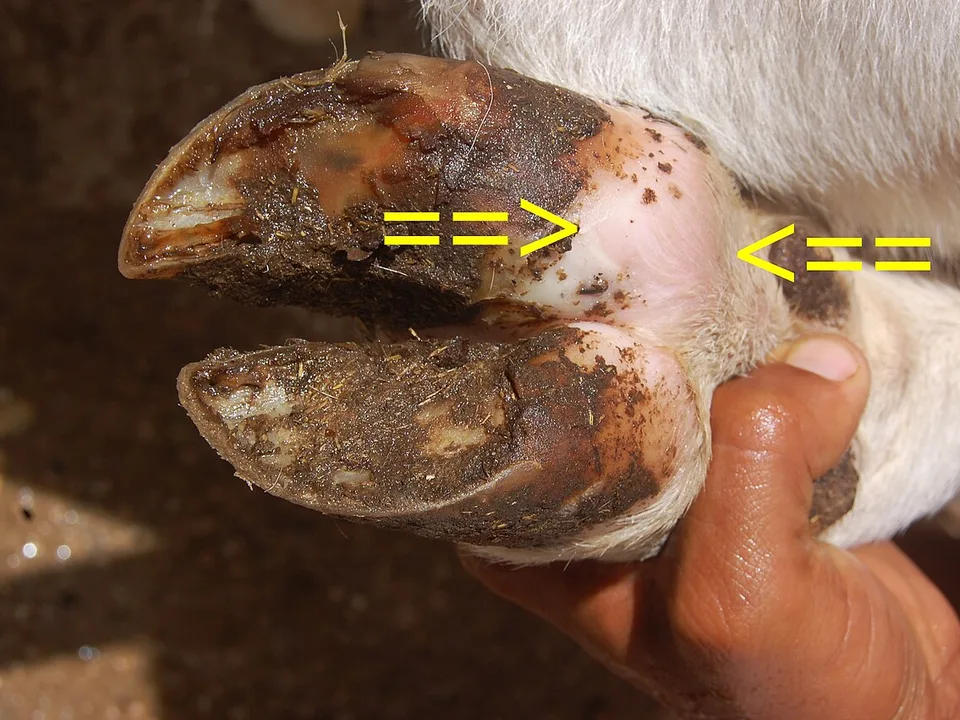
- Swelling of the skin just above the hoof (the coronet) and between the claws, usually even on both sides of the foot.
- The two claws start to spread apart because of the swelling between them.
- The foot feels warm or hot to the touch and the cow flinches or pulls away when you press it.
- The cow is slower to walk to feed and water, lags behind the herd, lies down more and may eat less.
- A drop in milk yield, sometimes noticed before the lameness is obvious.
As it gets worse
- A split or crack in the skin between the claws with grey, yellowish or cheesy dead tissue.
- A strong, rotten, very unpleasant smell from the foot that is typical of foot rot.
- Swelling spreading up the leg towards the fetlock, and the cow refusing to put any weight on the foot.
- Fever, dullness and marked loss of appetite and body condition.
- Pus coming out above the hoof or at the heel, or a hugely swollen, very painful single claw, which can mean the infection has reached the joint or tendon.
- For laminitis: cows standing with an arched back, shifting weight, walking stiffly on several feet, with yellow or reddish bruising, ridges or softened horn on the soles and, later, sole ulcers near the heel.
What to do right now
- Move the lame cow to a clean, dry, well-bedded pen or a dry paddock close to feed and water, so she does not have to walk far or stand in mud and dung.
- Gently wash the foot with clean water and look between the claws, at the heel and on the sole; note any crack, smell, stone, nail or wound, and remove loose debris if you can do so safely.
- Make sure she has easy access to clean drinking water, good fodder and shade, because lame cows often eat and drink less.
- Check the mouth, tongue and teats of the lame cow and look over the rest of the herd; if you see blisters, drooling or many lame animals, stop all movement and call the County Veterinary Officer at once.
- Call your vet or animal health assistant promptly, because foot rot responds best when treated early, before infection goes deep.
- Do not cut deeply into the foot, apply harsh chemicals such as battery acid, used engine oil or undiluted disinfectants, or give leftover antibiotics without a vet's prescription.
- Wear gloves when handling the infected foot, wash your hands afterwards, and clean any tools so you do not carry bacteria to other animals.
- Record the date, which foot, the signs you see, milk yield and any treatment, so you and the vet can track recovery and spot patterns in your herd.
How it spreads
- Wet, muddy conditions during the long and short rains soften the skin between the claws and let bacteria get in, so cases often rise in rainy months.
- Dirty, dung-filled walkways, kraals, bomas and zero-grazing units keep feet constantly wet and full of bacteria.
- Sharp stones, thorns, maize stubble, broken concrete and rough murram tracks cause small cuts that bacteria can enter.
- Infected cows shed large numbers of bacteria from their feet onto the ground, bedding and water points, contaminating the area for other cattle.
- Crowding at gates, water troughs, crushes and milking areas increases contact with contaminated mud and dung.
- Buying in cattle without checking their feet, or sharing grazing and watering points with other herds, can bring in more bacteria.
- For laminitis and sole ulcers, sudden increases in dairy meal or grain, low-fibre diets, long hours standing on hard concrete, poorly trimmed hooves and the stress around calving are the main triggers.
Could it be something else?
Digital dermatitis (hairy heel warts, 'strawberry foot')
Digital dermatitis causes a red, raw, strawberry-like or hairy, wart-like sore, usually at the back of the foot just above the heels, not deep in the cleft. There is usually little or no swelling of the whole foot and no cracked, rotting skin between the claws, though the cow is very sensitive to touch. It spreads quickly through a housed herd.
Sole ulcer, white line disease or a stone or nail in the sole
These problems are in the horny sole or wall, not the skin between the claws. Swelling above the hoof is usually absent or limited to one claw. When the foot is lifted and pared by a trimmer or vet, you find a bruise, hole, black track or foreign object in the sole or along the white line, often on the outer claw of a hind foot.
Foot-and-mouth disease (FMD)
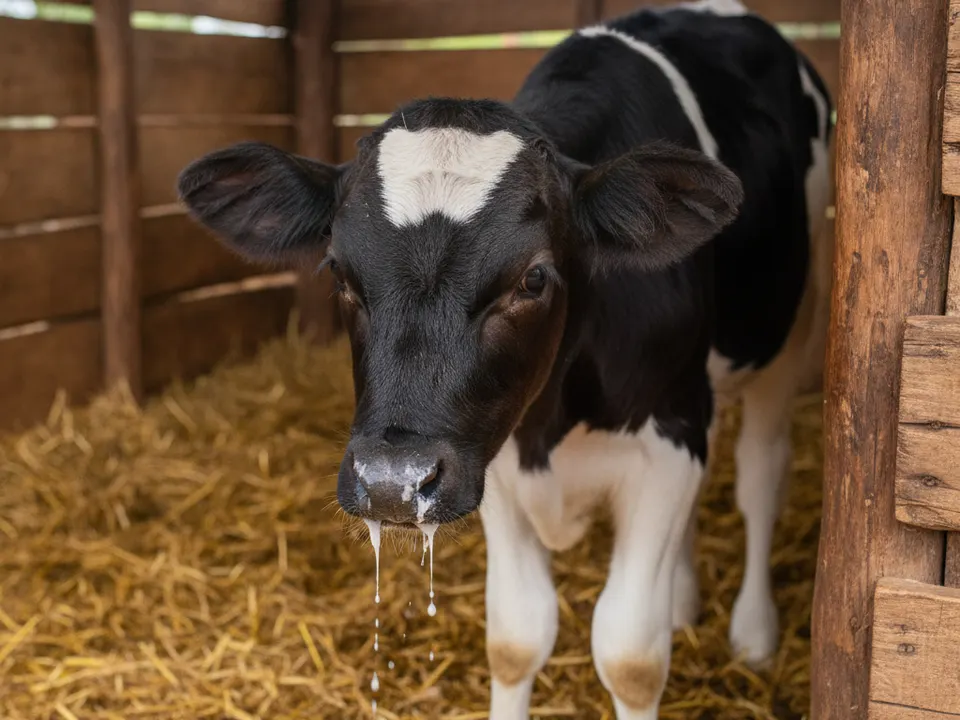
FMD is a notifiable viral disease. It usually affects many animals at once, with blisters and raw sores in the mouth, on the tongue and teats as well as between the claws, heavy drooling, smacking of the lips, high fever and a sharp milk drop. Foot rot usually affects one foot of one or a few animals with no mouth sores. If you see mouth blisters or many lame animals at once, report to the County Veterinary Officer immediately.
Interdigital fibroma (corn) or injured joint
A corn is a firm, fleshy lump of tissue growing between the claws, which may become infected but grows slowly over weeks rather than appearing suddenly. A sprain, fracture or septic joint higher up the leg causes lameness with swelling at the fetlock, knee or hock rather than at the foot itself, and no foul smell from the cleft.
How it is diagnosed
Foot rot is usually diagnosed by the vet on the farm by examining the foot. The vet will restrain the cow safely, often in a crush with the leg lifted, clean the foot and look closely between the claws for the typical cracked, dead tissue and smell, with even swelling of both claws. They will check the sole and white line by paring with a hoof knife to rule out sole ulcers, white line disease, stones or nails, and look at the back of the foot for digital dermatitis. They will also check the mouth and the rest of the herd to rule out foot-and-mouth disease. If the foot is badly swollen, the vet may test whether the infection has reached the joint, and in some cases may suggest an X-ray or sampling, although this is not common in field practice in Kenya. Laboratory tests for the bacteria are rarely needed. For laminitis and sole ulcers the vet will also ask about the diet, how much concentrate is fed and how it was changed, housing and recent calvings. To help, have the cow ready in a crush or safe handling area, note which foot is lame and when it started, how many animals are lame, what you feed (especially dairy meal), any recent rain or change in housing, and any treatments already given.
Treatment
Foot rot usually responds well to prompt treatment. The vet will clean the foot thoroughly and gently remove dead tissue from between the claws. A topical antiseptic or antibiotic spray may be applied, and sometimes the foot is bandaged and kept dry for a short time. Because the infection is under the skin, most cases also need a course of antibiotics given by injection. Drugs commonly used include penicillins, oxytetracycline, sulfonamides and, in some situations, cephalosporins such as ceftiofur; the vet chooses the drug, dose and length of course for your animal. Anti-inflammatory painkillers (NSAIDs, such as meloxicam or flunixin) are often given to reduce pain and swelling, which helps the cow get up, eat and keep producing. Most cows begin walking better within a few days, but you should call the vet back if there is no clear improvement, because this may mean deep infection of the joint or tendon, which may need surgery, claw amputation or culling. For sole ulcers and white line disease, the main treatment is corrective hoof trimming to take weight off the sore claw, often by gluing a block onto the healthy claw, together with pain relief. Laminitis is managed by correcting the diet, increasing fibre and reducing concentrates, soft bedding, trimming, and pain relief. All drugs used in cattle have milk and meat withdrawal periods, meaning milk must be thrown away and animals must not be slaughtered for a set time after treatment. Ask your vet for the exact withdrawal period and follow it strictly. Use antibiotics only when prescribed and complete the full course, because misuse speeds up antimicrobial resistance, where germs stop responding to medicines, a serious problem for both animals and people.
Medicines must be prescribed and dosed by a vet. Always respect milk and meat withdrawal periods, and finish the full course of any antibiotic.
How Agrikima products can help
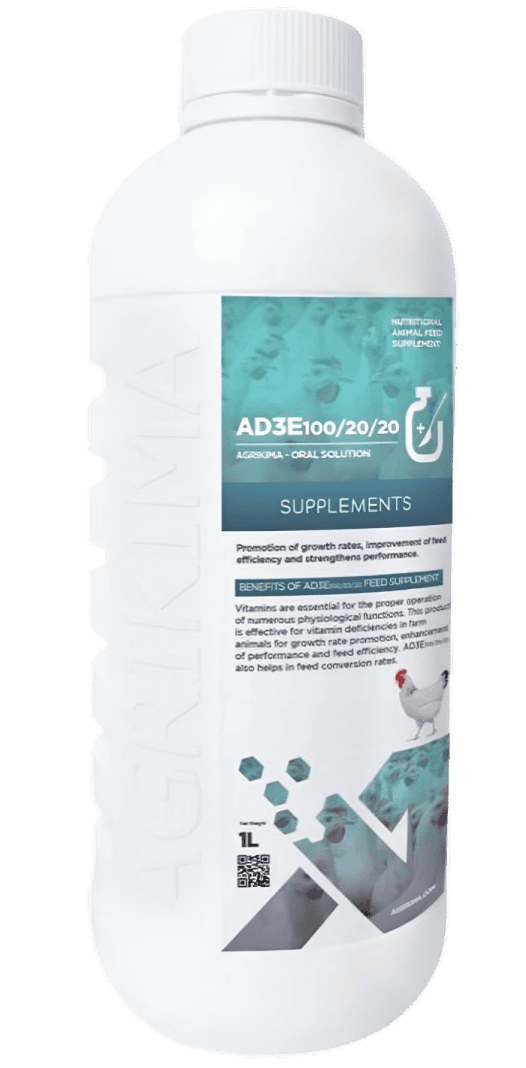
These support the animal alongside — never instead of — your vet's treatment, vaccination and good management.
Prevention
- Keep walkways, gates, water points and zero-grazing units as dry and clean as possible: scrape out dung daily, improve drainage, raise or gravel muddy areas and fix leaking troughs, especially during the long and short rains.
- Remove sharp stones, thorns, broken concrete, nails, wire and stubble from areas where cattle walk, and repair rough or broken floors in cow units.
- Provide clean, dry, comfortable lying areas such as cubicles with mats, sand or dry bedding, so cows spend less time standing in wet dung.
- Use a footbath regularly where foot problems are common, with a product such as copper sulphate or zinc sulphate prepared according to the label or your vet's advice; change the solution often, wash feet before the bath if possible, and dispose of used solution safely away from water sources.
- Arrange regular hoof trimming by a trained trimmer, often before calving and around mid-lactation in dairy herds, to keep weight evenly spread and catch sole ulcers early.
- Feed a balanced diet with enough long fibre such as good hay, napier grass or silage, introduce dairy meal and grain gradually, and avoid sudden diet changes, to reduce rumen acidosis and laminitis.
- Make sure the ration supplies enough minerals and vitamins, particularly zinc, vitamin A and biotin, which support healthy skin and horn; ask your vet or nutritionist about a suitable mineral lick or premix.
- Check and treat lame animals early, isolate infected cows until healed, and inspect the feet of new animals before mixing them with the herd. Vaccines against foot rot exist in some countries but are not widely available in Kenya, so management remains the main tool.
Risk to people
Foot rot is not considered a disease that spreads from cattle to people in normal farm work, although the bacteria involved can occasionally cause infections in people with open wounds, so wear gloves, cover cuts and wash hands after handling infected feet. The main human health risk is drug residues: milk and meat from cows treated with antibiotics or painkillers must not be consumed or sold until the full withdrawal period stated by the vet or on the label has passed. Footbath chemicals such as formalin and copper sulphate can harm people and the environment; formalin in particular irritates the eyes, skin and lungs and is a cancer risk, so use protective gloves and eye protection, work in open air, keep chemicals away from children, food and water sources, and follow label instructions.
Impact on your farm
Lameness is one of the most costly problems on Kenyan dairy farms, even though it rarely kills. A lame cow eats less and walks less to feed and water, so milk yield can drop sharply, and recovery of yield may be slow. Milk must also be discarded during and after antibiotic treatment because of withdrawal periods, adding to the loss. Lame cows lose body condition, show heat less clearly and often take longer to get back in calf, lengthening the calving interval and reducing the number of calves and lactations over a cow's life. Treatment, vet visits, hoof trimming and extra labour add direct costs. Severe or repeated cases, especially sole ulcers and deep joint infections, are a common reason for early culling, often at low prices because of poor condition. In beef and draught animals, lameness slows weight gain and reduces working ability. For smallholders with only a few cows, one chronically lame cow can cut household income noticeably.
Outlook and recovery
Most cases of simple foot rot recover well, often within days to a couple of weeks, when the cow is treated early by a vet and kept in a clean, dry place. Recovery is slower and less certain if treatment is delayed, if the cow keeps standing in mud and dung, or if infection has spread into the joint, tendon or bone; these deep infections may need surgery or lead to culling. Sole ulcers take several weeks to heal and often return in the same cow, especially if diet, flooring and trimming are not improved. Laminitis can leave long-term damage to the hoof, causing repeated problems. The outlook for the herd depends strongly on fixing the cause: drier, cleaner walkways, good bedding, regular trimming and a balanced, fibre-rich diet greatly reduce new cases.
Common questions
Can I treat foot rot myself with antibiotics from the agrovet?
It is best to have a vet or animal health assistant examine the foot first. Several conditions look similar, including sole ulcers, stones, digital dermatitis and foot-and-mouth disease, and they need different treatment. Antibiotics should only be used when prescribed, with the right drug, dose and length of course, and you must follow the milk and meat withdrawal period. Using leftover or wrong antibiotics can fail to cure the cow and helps create drug-resistant germs.
Why do I get more lame cows during the rains?
Constant mud and wet dung soften the skin between the claws, making it easy for bacteria and small injuries to get in. The rains also make walkways and kraals dirtier and slippery. Improving drainage, scraping dung often, raising feeding and watering areas and providing a dry lying place can greatly reduce cases in the wet season.
Is foot rot the same as foot-and-mouth disease?
No. Foot rot is a bacterial infection of usually one foot, with swelling, a crack between the claws and a rotten smell, and it is not notifiable. Foot-and-mouth disease is a notifiable viral disease that causes blisters in the mouth, drooling, high fever and lameness in many animals at once. If you see mouth sores or several animals suddenly lame, stop animal movement and report to the County Veterinary Officer immediately.
Can I milk my cow and sell the milk while she has foot rot?
Foot rot itself does not make milk dangerous, but if the cow is treated with antibiotics or other drugs, the milk must be thrown away for the full withdrawal period your vet gives you. Selling milk with drug residues is illegal and can harm consumers and cause milk to be rejected at the cooling centre or processor. Keep a record of the treatment date so you know when the milk is safe again.
Does feeding a lot of dairy meal cause lameness?
It can contribute. Large amounts of dairy meal or grain, especially when increased suddenly and with too little roughage, can make the rumen too acidic. This can lead to laminitis, which weakens the hoof and causes sole ulcers and white line disease weeks later. Increase concentrates gradually, split them into several small feeds a day, and always provide plenty of good fibre such as napier grass, hay or silage.
How often should my cows go through a footbath?
It depends on how many lame cows you have, the season and the product used. Herds with frequent foot problems often use a footbath regularly, sometimes more often in the rainy season. Follow the product label and your vet's advice on strength and frequency, change the solution when it is dirty, and remember that a footbath helps prevent infections but does not replace clean, dry housing or veterinary treatment of lame cows.
A guide, not a diagnosis. This page is general information to help you recognise problems early. Always confirm with a vet or animal health worker before treating.