What it is
The main cause is Moraxella bovis, a bacterium that lives in the eyes and noses of some cattle without causing harm. It becomes a problem when the surface of the eye is damaged first, for example by strong sunlight (ultraviolet light), dust, wind, grass seeds and awns, or the feet and mouths of flies feeding on tears. Once the surface is scratched, the bacteria stick to the cornea and release toxins that kill the cells on its surface. This creates an ulcer, which is a raw hole in the clear layer of the eye. The eye responds with tears, swelling and redness, and the cornea fills with fluid, which gives the blue-white cloudy look. Blood vessels then grow in from the edge to heal it, which is why a pink or red ring sometimes appears around the patch. Other germs can join in or make it worse, including Moraxella bovoculi, Mycoplasma and the IBR virus (infectious bovine rhinotracheitis). Lack of vitamin A, which keeps the eye surface healthy, can also make cattle more likely to be affected. In severe cases the ulcer becomes so deep that the eye bulges forward or bursts, and the animal loses sight in that eye permanently.
Which animals are most at risk
Young cattle, especially calves and weaners under about two years old, are most often affected because they have not yet built immunity. Breeds with white faces and pink eyelid skin, such as Herefords and some Friesian and Simmental crosses, suffer more because sunlight damages their eyes more easily, while Boran and other zebu cattle with dark pigmented eyelids tend to be less affected, although they can still get it. Outbreaks are most common in the hot, dry months and as the grass dries and seeds after the rains, when flies, dust and sunlight are all high. Animals grazing tall, seeding pasture, feeding from overhead hay racks, or crowded in dusty bomas and feedlots are at higher risk. In pastoral systems, herds that walk long distances on dusty tracks and share water points with many other herds are exposed often. Zero-grazed animals are not immune, especially where manure builds up and attracts flies or where they feed on coarse, dusty hay. Animals that are short of vitamin A, for example on dry, bleached pasture for long periods, or that have IBR, are also more likely to get pinkeye.
Signs to look for
Early signs
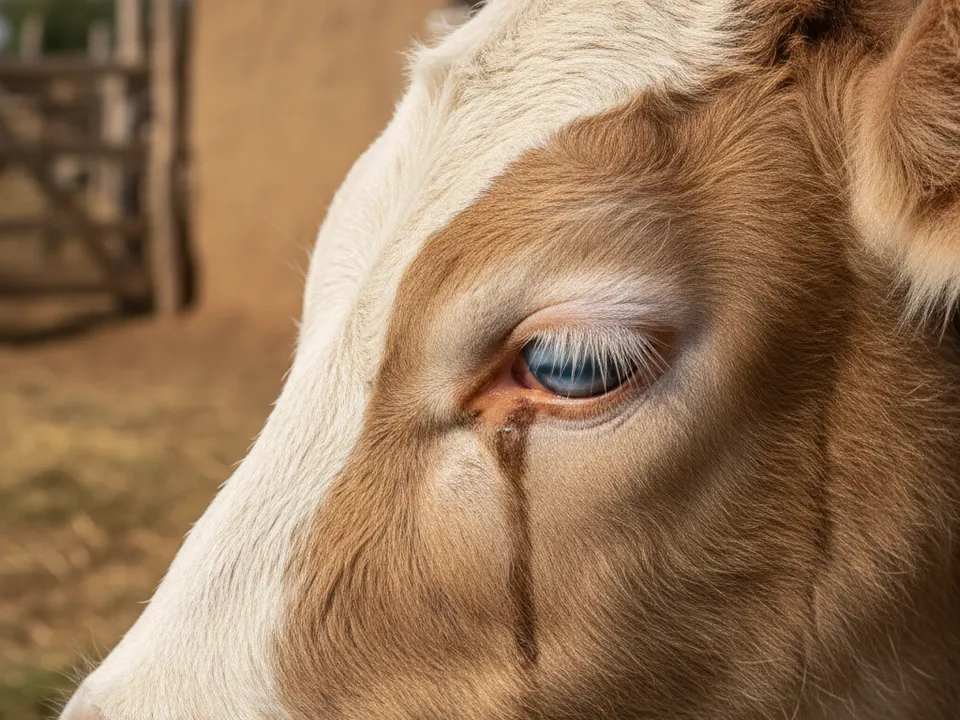
- Heavy watering of one or both eyes, with wet tear stains running down the face that attract flies.
- Squinting or keeping the eye partly or fully closed, and blinking often.
- Avoiding bright sunlight, seeking shade, or holding the head low and turned away from the sun.
- Red, swollen lining of the eyelids and a pink or bloodshot white of the eye.
- A small white or grey spot in the centre of the clear part of the eye, which is often the start of the ulcer.
- Rubbing the eye on the legs, posts or other animals because of irritation and pain.
As it gets worse
- The whole clear front of the eye turns cloudy blue or milky white, so the animal cannot see through it.
- A visible pit, crater or raised white area in the centre of the eye where the ulcer has deepened.
- A pink or red ring of blood vessels growing in from the edge of the eye towards the cloudy patch.
- Thick yellow pus-like discharge instead of clear tears.
- Reduced feeding and weight loss because the animal is in pain or cannot see to find feed and water.
- The eye bulges forward like a cone, or bursts and then shrinks, leaving the animal permanently blind in that eye.
- Blind animals walking into fences, getting separated from the herd, or struggling to find water, sometimes with both eyes affected.
What to do right now
- Move affected animals into a shaded shed or under trees, out of direct sunlight, wind and dust, which reduces pain and stops further damage to the eye.
- Separate affected animals from the healthy herd where possible, and use a separate feed trough and water container to slow the spread.
- Put feed and clean water where the animal can easily find them, especially if it cannot see well, and keep it away from ditches, wires and other hazards.
- Check the eyes of every animal in the herd, especially calves and young stock, so you can catch early cases with only watering and squinting.
- Start reducing flies straight away by removing manure and wet bedding, and cleaning around troughs, feeding areas and the boma.
- If you can safely see a grass seed or thorn sitting loosely in the eye, gently flush the eye with clean, cooled boiled water, but do not dig or scrape at it.
- Wash your hands well after handling each animal's face, and use a clean cloth per animal so you do not carry infection from eye to eye.
- Do not put salt, sugar, ash, chilli, herbal pastes, human eye drops or any powder into the eye, as these damage the cornea further and can cause blindness.
- Record each affected animal, which eye, the date and signs, then call your vet or the County Veterinary Office early, because an ulcer can deepen within days.
How it spreads
- Flies are the most important spreaders: they feed on the tears of an infected animal and carry bacteria on their legs and mouths to the eyes of the next animal.
- Direct contact between cattle, such as rubbing heads, sharing feed troughs or crowding at water points, passes infected tears from eye to eye.
- Dust from dry paddocks, roads and bomas scratches the eye surface and opens the way for infection.
- Tall grass with seed heads, thorny bush and stemmy hay scratch eyes while grazing or feeding, especially when cattle push their heads into hay racks.
- Strong sunlight during the dry season damages the eye surface, particularly in cattle with white faces and pink, unpigmented eyelids.
- Carrier animals that look healthy can keep the bacteria in the herd from one season to the next and start new outbreaks.
- People can carry infection on hands, cloths and equipment when they examine or treat one animal's eyes and then touch another's.
Could it be something else?
Foreign body in the eye (grass seed or thorn)
Usually only one animal and one eye is affected, often suddenly. On close look you may see a seed, awn or splinter under the eyelids or stuck to the eye. It does not spread through the herd the way pinkeye does, though a seed can also lead to a pinkeye-like ulcer.
IBR (infectious bovine rhinotracheitis) eye form
IBR usually affects both eyes, makes the eyelid lining very red, and cloudiness tends to start at the edge of the cornea rather than as a central ulcer. Affected cattle often have fever, nasal discharge, cough or drooling, and milk may drop sharply.
Malignant catarrhal fever (MCF)
MCF makes both eyes go cloudy from the edges inwards, and the animal is very sick with high fever, thick nasal discharge, crusty nose and mouth sores, and often dies. It is linked to contact with wildebeest, especially around calving season, and needs an urgent vet visit.
Eye cancer (squamous cell carcinoma) or eyeworms
Eye cancer is mostly seen in older, white-faced cattle as a pink or white growth on the eyelid or third eyelid that slowly gets bigger. Eyeworms (Thelazia) cause watering and redness, and thin white worms may be seen moving on the eye surface or under the lids.
How it is diagnosed
Most vets diagnose pinkeye from the history and a close examination: young animals, several cases in the herd, a dry, dusty or fly-heavy season, and a central ulcer on the cornea. The vet may restrain the animal and drop a harmless orange-green dye called fluorescein into the eye, which glows on damaged areas and shows the size and depth of the ulcer. They will look under the eyelids and third eyelid for grass seeds or thorns, and check for fever, nasal discharge or mouth sores that would point to IBR or MCF instead. If the herd has repeated outbreaks or treatment is not working, the vet can take a swab of the eye for laboratory culture to confirm which bacteria are involved and which antibiotics they respond to. Before the vet arrives, note how many animals are affected, when it started, which eyes, whether any animal has a fever or is off feed, any recent new animals, and what treatments have already been used. Have a crush, cattle race or a strong head rope ready, and a shaded place to examine the animal, because a sore eye is hard to see in bright sun.
Treatment
Treatment must be prescribed and given or guided by a vet, as the right choice depends on how deep the ulcer is and how many animals are affected. Because pinkeye is caused by bacteria, antibiotics are the main treatment. Commonly used options include long-acting oxytetracycline injections, penicillin given by the vet as a small injection into the tissue around the eye (subconjunctival injection), and antibiotic eye ointments containing drugs such as cloxacillin. Some vets also give anti-inflammatory painkillers so the animal is more comfortable and keeps eating. To protect the eye from sunlight, flies and dust, the vet may glue a cloth eye patch over the eye, or in severe cases stitch the third eyelid or eyelids closed for a few weeks to let a deep ulcer heal. If the eye has burst or is badly infected and painful, the vet may recommend removing it for the animal's welfare. Most early cases begin to improve within a few days of treatment, but a cloudy patch can take several weeks to clear, and a small white scar may remain. Every drug used has a milk and meat withdrawal period, which is the time you must wait before selling or drinking milk or slaughtering the animal; ask your vet for the exact period and follow the label. Use antibiotics only when prescribed, complete the course, and never share leftover drugs between animals or farms, because careless antibiotic use breeds resistant bacteria that make future infections harder to treat in both animals and people.
Medicines must be prescribed and dosed by a vet. Always respect milk and meat withdrawal periods, and finish the full course of any antibiotic.
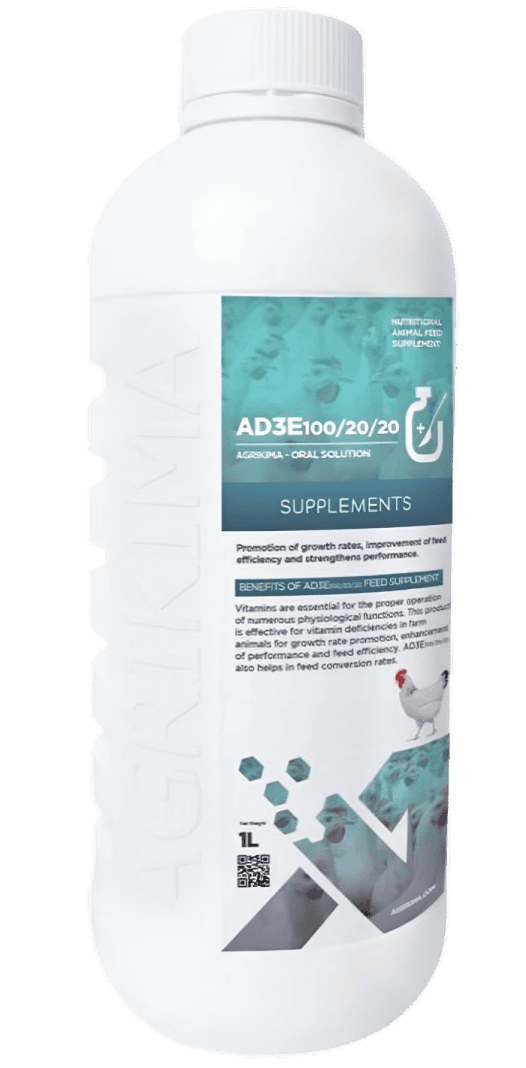
How Agrikima products can help
These support the animal alongside — never instead of — your vet's treatment, vaccination and good management.
Prevention
- Control flies all year and especially in the dry season: remove manure and wet bedding regularly, keep feeding and water areas clean, and ask your vet or agrovet about approved fly control such as pour-ons, ear tags or sprays, following label withdrawal periods.
- Cut or graze down tall, seeding grass and clear thorny bush in paddocks and around troughs so cattle do not scratch their eyes while feeding.
- Reduce dust in bomas, sheds and holding pens by avoiding overcrowding and, where practical, wetting dusty walkways and feeding areas.
- Feed hay from ground-level troughs or racks at head height rather than high overhead racks, which drop seeds and dust into the eyes.
- Provide shade in paddocks and zero-grazing units so cattle can rest out of strong sun, which is especially important for white-faced animals.
- Make sure cattle get enough vitamin A, from green forage, good silage or a vitamin supplement, particularly during long dry spells when pasture is bleached and dry.
- Quarantine new or returning cattle for a few weeks and check their eyes before mixing them with the herd, since healthy-looking carriers can bring infection in.
- Vaccinate against IBR where your vet recommends it; pinkeye vaccines exist in some countries but availability in Kenya is limited and protection varies, so discuss options with your vet.
- When choosing breeding stock in high-risk areas, favour animals with dark, pigmented skin around the eyes.
Risk to people
Pinkeye bacteria are not considered a significant risk to people, but wash your hands after handling infected eyes to avoid carrying infection to other cattle. The main human risk comes from drug residues: do not drink, sell or give to calves milk from treated cows, or slaughter treated animals, until the withdrawal period given by your vet or on the drug label has passed.
Impact on your farm
Pinkeye seldom kills cattle, but it quietly drains money from a Kenyan farm. Painful animals eat less, so calves and weaners grow more slowly and dairy cows can drop in milk. Treatment costs include vet visits, antibiotics and labour, and milk must be thrown away during the withdrawal period, which hurts dairy farmers who depend on daily milk sales. Animals with a scarred or blind eye fetch a lower price at livestock markets and are often rejected by buyers, and a blind animal in a pastoral herd can get lost, injured or fail to keep up on long walks to water. In an outbreak, many young animals can be affected at once, multiplying the losses. Prevention through fly, dust and grass control is usually far cheaper than treating a herd outbreak.
Outlook and recovery
The outlook is good when pinkeye is caught early, before a deep ulcer forms. Most treated animals recover their sight, although the cloudy patch can take several weeks to clear and a small white scar may remain without causing major problems. Recovery is slower or incomplete when treatment is delayed, when flies, dust and sunlight keep irritating the eye, or when other infections such as IBR are present. Deep ulcers that cause the eye to bulge or burst often leave permanent blindness in that eye, though most animals adapt well with one eye if kept in a safe area. Animals that recover may have some immunity, but outbreaks can return in later dry seasons if carriers and fly problems remain.
Common questions
Is pinkeye contagious to my other cattle?
Yes. It spreads quickly through a herd, mainly by flies carrying infected tears, and by direct contact at troughs and in crowded bomas. Separate affected animals where possible, control flies, and check the whole herd daily so early cases are treated quickly.
My neighbour says to blow salt or sugar into the eye. Is that safe?
No. Salt, sugar, ash, chilli, herbs and battery water are common home remedies, but they scratch and burn the already damaged surface of the eye. This makes the ulcer deeper and raises the chance of blindness. Keep the animal in shade and call your vet instead.
Will my cow go blind?
Most animals treated early recover their sight, though a small white scar may stay. The risk of blindness rises if the ulcer becomes deep before treatment, or if the eye keeps being irritated by sun, dust and flies. That is why calling the vet at the first sign of squinting and a white spot is so important.
Can I still sell milk from a cow with pinkeye?
Pinkeye itself does not make milk unsafe, but most treatments involve antibiotics. Once the cow is treated, milk must be discarded until the withdrawal period your vet gives you has passed. Selling milk earlier puts residues into the food chain and can get you into trouble with milk buyers and cooperatives.
Why does pinkeye keep coming back every dry season?
Some cattle carry the bacteria without showing signs, and each dry season brings the conditions that trigger outbreaks: lots of flies, dust, strong sun and seeding grass. Year-round fly control, cutting tall grass, providing shade, good vitamin A nutrition and quarantining new animals reduce repeat outbreaks. Talk to your vet about a herd plan, including IBR vaccination where advised.
Is there a pinkeye vaccine in Kenya?
Pinkeye vaccines are made in some countries, but they are not widely available in Kenya and they do not always protect against every strain of the bacteria. Vaccinating against IBR, which can trigger or worsen eye problems, may help where your vet recommends it. Good management of flies, dust, grass and shade remains the most reliable protection.
A guide, not a diagnosis. This page is general information to help you recognise problems early. Always confirm with a vet or animal health worker before treating.