What it is
After calving, a dairy cow's milk production rises fast, but her appetite rises more slowly. For several weeks she uses more energy than she eats. This gap is called negative energy balance. To fill it, she breaks down body fat and sends it to the liver. The liver can only process so much fat at once. When it is overloaded, it turns the extra fat into ketone bodies (acetone, acetoacetate and beta-hydroxybutyrate, often called BHB). In small amounts these are a normal fuel. In large amounts they make the cow feel sick, lower her appetite even more and cause the sweet acetone smell. A vicious circle follows: less eating means more fat breakdown, which means more ketones. Fat can also build up inside the liver (fatty liver), which makes the liver work poorly and slows recovery. Ketosis can be primary, caused mainly by poor energy intake, or secondary, triggered when another illness such as a retained placenta, uterine infection (metritis), mastitis, lameness or a displaced stomach stops the cow eating. In some cows high ketone levels affect the brain, causing nervous ketosis. Silage that has fermented badly (butyric silage, which smells rancid like spoilt butter) contains ketone-like compounds and can add to the problem.
Which animals are most at risk
High-yielding dairy cows (Friesian, Holstein, Ayrshire, Jersey, Guernsey and their crosses) are most at risk, especially in their second lactation onward. Risk is highest from about the first week to the first two months after calving, with most cases in the first month. Cows that were fat at calving, cows with twins, and cows that had a hard calving, retained placenta, milk fever or uterine infection are at higher risk. In Kenya, zero-grazing and semi-zero-grazing dairy units in places like Kiambu, Nyandarua, Nakuru, Uasin Gishu, Meru and Murang'a see it most. Risk rises in the dry season when forage is poor and in herds that rely on low-quality fodder with uneven concentrate feeding. Local zebu and kienyeji cattle producing little milk rarely get the classic form, but any cow that stops eating late in pregnancy can develop a related condition (pregnancy toxaemia or fatty liver).
Signs to look for
Early signs
- The cow eats less dairy meal first, often still picking at hay or napier, and may refuse concentrates completely.
- Milk yield drops over a few days, sometimes sharply, often during the first month after calving.
- Her breath, milk or urine may smell sweet, like nail-polish remover or overripe fruit, though not every farmer can smell it.
- Dung becomes firmer, drier and smaller in amount than normal for a fresh cow.
- She looks dull, stands apart from the others and is slower to come to the trough.
- Rumen movements and cudding are reduced; you see her chewing the cud less than usual.
As it gets worse
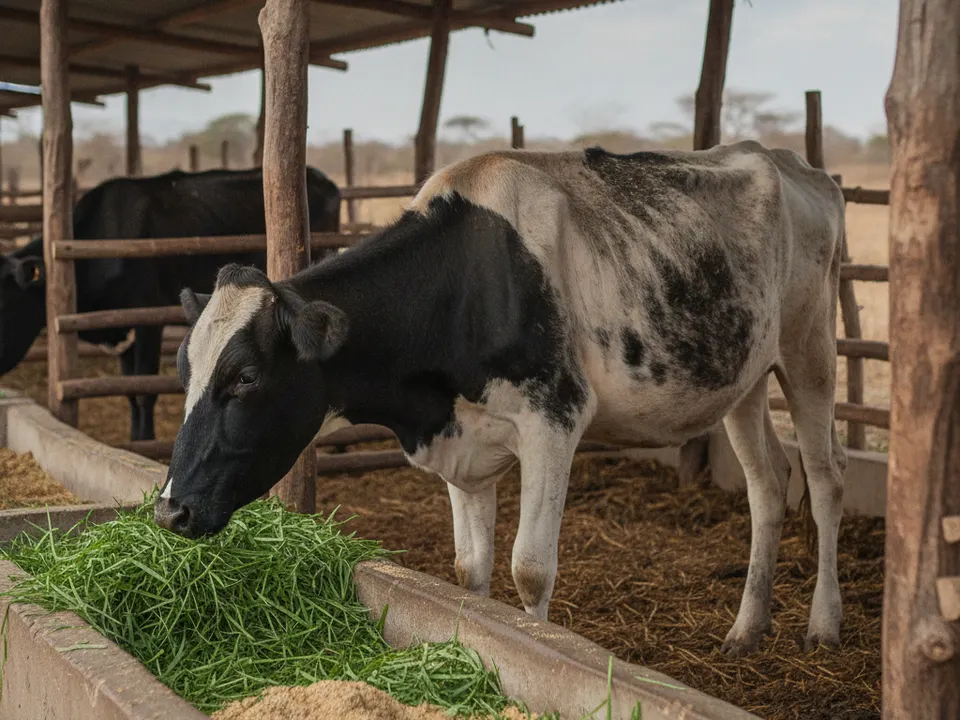
- Rapid weight loss; her hips, ribs and backbone show clearly within a week or two.
- She refuses most feed and may drink less, and milk can fall to very low levels.
- Nervous signs in some cows: constant licking of the body, walls or objects, chewing movements with drooling, head pressing, circling, staggering or seeming blind.
- Some cows with nervous ketosis become excitable or aggressive and may bellow or charge without warning.
- Very weak cows may lie down a lot and struggle to rise if fatty liver develops.
- Other fresh-cow problems appear or worsen, such as a displaced abomasum, metritis or mastitis.
What to do right now
- Call your vet or local animal health service as soon as you notice a fresh cow going off feed and dropping milk, because early treatment works far better than late treatment.
- Keep the cow in a clean, dry, shaded pen with soft bedding, away from bullying by other cows, so she can eat and rest in peace.
- Offer plenty of fresh, palatable, good-quality forage such as leafy napier, good hay or fresh grass, and remove any mouldy or rancid-smelling feed.
- Make sure she has constant access to clean, fresh water, placed where she can reach it easily.
- Do not suddenly load her with large amounts of dairy meal, as this can upset her rumen; let the vet advise on a safe feeding plan.
- Check her back end for a retained placenta or smelly discharge, check the udder for mastitis and take her temperature if you have a thermometer, then tell the vet what you found.
- If she shows nervous signs such as licking, head pressing or aggression, keep people and children away, do not put your hand in her mouth, and handle her calmly from behind a barrier.
- Record her calving date, milk yield, feed and signs so the vet can make a quick, accurate decision, and do not give any drugs or home drenches without the vet's advice.
How it spreads
- Ketosis is not infectious and does not spread from cow to cow, but several cows in a herd can be affected if they share the same poor feeding or management.
- Too little energy in the diet after calving, for example poor-quality napier, dry-season stover or not enough dairy meal for the milk being produced, is the main trigger.
- Cows that are too fat at calving eat less after calving and mobilise more fat, so they are much more likely to develop ketosis and fatty liver.
- Any disease that reduces appetite around calving, such as milk fever, retained placenta, metritis, mastitis, lameness or a displaced abomasum, can tip a cow into secondary ketosis.
- Sudden changes of feed around calving, or putting a fresh cow straight onto a large amount of concentrate the rumen is not used to, upset digestion and reduce intake.
- Badly fermented, mouldy or spoilt silage and other feeds can lower appetite and add ketone-like compounds to the diet.
- Stress from transport, overcrowding, competition at the feed trough, heat or rough handling around calving cuts feed intake.
- Shortage of clean drinking water reduces how much a cow eats, especially in hot, dry weather.
Could it be something else?
Milk fever (hypocalcaemia)
Milk fever usually strikes within one to three days of calving, with wobbling, cold ears, an S-bend in the neck and the cow going down. Ketosis usually comes later, from the first week to a few weeks after calving, with a gradual drop in appetite and milk and often a sweet smell. A cow can have both, and milk fever raises the risk of ketosis.
Displaced abomasum (twisted stomach)
This also causes a fresh cow to go off feed and drop milk, and it often causes secondary ketosis. The vet confirms it by tapping the left or right side while listening with a stethoscope for a hollow 'ping' sound. Ketosis that does not improve with treatment should always be checked for this.
Rabies
Rabies can cause bellowing, drooling, aggression and staggering like nervous ketosis, but it gets steadily worse, often with paralysis, straining and death within days, and the cow may have been bitten by a dog. Nervous ketosis is linked to recent calving and usually improves with energy treatment. If in any doubt, treat it as possible rabies: do not put your hand in the mouth and call the vet at once.
Metritis or retained placenta
A uterine infection causes a smelly, brown or reddish discharge from the vulva, often with fever and a dull, off-feed cow. It can cause secondary ketosis, so both may be present. Check the back end and the discharge and tell the vet.
How it is diagnosed
The vet will ask when the cow calved, how her appetite and milk changed, what she is being fed and whether she had any calving problems. A full examination checks temperature, rumen movement, heart, lungs, udder, uterus and both sides of the abdomen for a displaced abomasum. Ketosis is confirmed with simple cow-side tests: strips dipped in urine or milk that change colour when ketones are present, or a handheld meter that measures BHB in a drop of blood, which is the most accurate on-farm test. The vet will look for any underlying disease, because secondary ketosis will not clear until the cause is treated. In nervous cases, the vet will rule out rabies, heartwater and poisoning. Blood tests for liver function may be used when fatty liver is suspected. To help, write down the calving date, any calving problems, daily milk records, what she eats and in what amounts, recent feed changes and any other sick cows. Keep the cow confined so the vet can examine her easily.
Treatment
Treatment aims to give the cow energy quickly, stop the fat breakdown and fix any underlying disease. The vet commonly gives glucose (dextrose) solution into the vein for a fast energy boost, which often brings quick improvement but wears off within hours. This is usually followed by oral propylene glycol, a liquid energy source drenched by mouth for several days, because it is converted to glucose in the liver. Some vets add a corticosteroid such as dexamethasone to help raise blood sugar, but this is not suitable for every cow, especially pregnant ones or those with infections. Vitamin B12 and cobalt, or other supporting products, may be used in some cases. If there is a displaced abomasum, metritis, mastitis or lameness, the vet will treat that too, sometimes with antibiotics or surgery. Antibiotics do not treat ketosis itself and should only be used when the vet finds an infection, because misuse drives antimicrobial resistance. All doses and schedules must come from the vet. Some drugs used carry milk and meat withdrawal periods, so ask the vet how long to discard milk and hold back from slaughter, and follow it. Mild cases often improve within a few days; cows with fatty liver or another disease may need longer and repeat treatment.
Medicines must be prescribed and dosed by a vet. Always respect milk and meat withdrawal periods, and finish the full course of any antibiotic.
How Agrikima products can help
These support the animal alongside — never instead of — your vet's treatment, vaccination and good management.
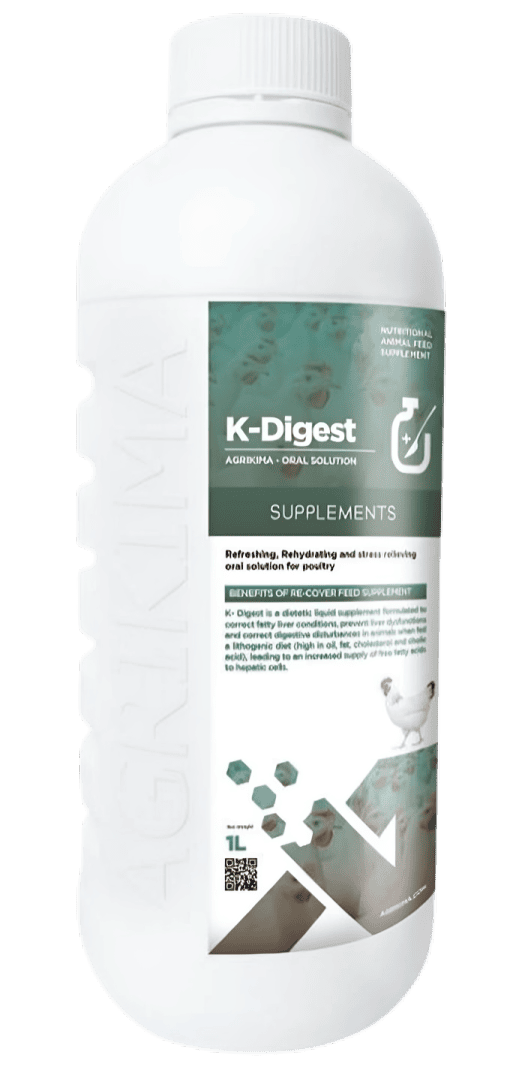
K-DIGEST
Can be used, alongside the vet's energy treatment and improved feeding, to support liver function and digestion in fresh cows under the strain of fat breakdown and a reduced appetite. It does not treat ketosis or replace glucose or propylene glycol from the vet.
View product
AGRITOXINILSTOP
Where silage, maize or dairy meal may be mouldy, adding this mycotoxin binder to the feed of transition and fresh cows helps protect them from toxins that can suppress appetite and burden the liver. It supports prevention only and does not replace good-quality feed or vet treatment.
View productPrevention
- Manage body condition: aim for cows to be moderate, not fat or thin, at drying off and calving, roughly 3 to 3.5 on the usual 5-point body condition scale; adjust feeding in late lactation rather than in the dry period.
- Feed dry cows well but not excessively, with good forage, and in the last two to three weeks before calving introduce a small amount of the dairy meal she will get after calving so the rumen can adjust.
- After calving, increase concentrates gradually over a few weeks while offering plenty of good-quality forage, so energy intake rises without upsetting the rumen.
- Plan fodder for the dry season by making hay or silage during the long and short rains, and only feed well-made silage; discard silage that smells rancid, is mouldy or is slimy.
- Provide a balanced mineral supplement suitable for dairy cattle, including cobalt and other trace elements, and keep clean water available at all times.
- Prevent the diseases that trigger ketosis: good calving hygiene, prompt help with hard calvings, milk fever prevention and early treatment of retained placenta, metritis, mastitis and lameness.
- Watch every fresh cow closely for the first six weeks: check appetite, cudding, dung and milk daily, and ask your vet about routine ketone testing of high-risk cows.
- Reduce stress around calving with enough trough space, a comfortable, clean calving area and minimal regrouping; for high-risk cows, ask the vet whether preventive propylene glycol drenching after calving is worthwhile.
Risk to people
Ketosis itself is not infectious and cannot pass to people. The main risks are drug residues: some treatments, such as corticosteroids or antibiotics given for linked infections, carry milk and meat withdrawal periods, so discard milk and delay slaughter for as long as the vet advises. If a cow shows nervous signs and rabies has not been ruled out, do not put your hand in her mouth or touch saliva, keep children away and call the vet immediately.
Impact on your farm
Ketosis costs Kenyan dairy farmers far more than the vet bill. Milk yield falls during the illness, and many cows never reach their full peak that lactation, which means lost daily income from the cooperative or milk buyer. Affected cows are more likely to get a displaced abomasum, metritis and mastitis, each with its own treatment costs. Fertility often suffers: cows come on heat late, need more inseminations and the calving interval stretches, so fewer calves and less milk over the cow's life. Milk may have to be discarded during drug withdrawal periods. Severe cases with fatty liver can lead to early culling or death of a valuable high-grade cow. The hidden, subclinical form, with no clear signs, quietly reduces milk and fertility across a herd, so herds that see a few clinical cases probably have more mild ones.
Outlook and recovery
Most cows with primary ketosis caught early recover well within a few days of treatment and better feeding, and milk usually returns, though often not quite to the level it would have reached. The outlook is less certain when the cow was very fat at calving, has developed fatty liver, has nervous signs that last, or has another disease such as a displaced abomasum or severe metritis. Secondary ketosis only resolves when the underlying illness is fixed. Cows that have had ketosis are more likely to get it again in later lactations, so careful body condition and transition feeding matter. Delay in calling the vet makes recovery slower and the risk of death or culling higher.
Common questions
Can I just drench my cow with molasses or sugar water?
Molasses and sugar are mostly fermented by microbes in the rumen, so much less of the energy reaches the blood as glucose than people expect. They can help appetite and are a useful part of the diet, but they are not a reliable treatment for ketosis. The vet usually uses glucose into the vein and propylene glycol by mouth. Drenching a weak or nervous cow can also cause choking or feed going into the lungs, so always ask the vet first.
Is the milk from a cow with ketosis safe to drink or sell?
Ketosis is not infectious, so the disease itself does not make milk dangerous. However, the milk may taste odd, and if the cow has been given drugs with a withdrawal period, that milk must be discarded for the full time the vet tells you. Selling milk with drug residues is illegal and can harm consumers and your reputation with the buyer.
Why does my best cow keep getting ketosis every time she calves?
High-yielding cows have a bigger energy gap after calving, so they are naturally more at risk. Repeat cases are often linked to the cow being too fat at calving, poor dry-cow feeding, sudden diet changes or another disease like milk fever or metritis. Work with your vet or extension officer on her body condition in late lactation and a step-by-step feeding plan around calving.
Can I test for ketosis myself at home?
Yes, cow-side test strips for urine or milk, and handheld blood BHB meters, are available through some agrovets and vets. They are useful for checking fresh cows in the first weeks after calving. A positive test still needs a vet visit, because the vet must find out whether another disease is causing it and decide on treatment.
My cow is licking the walls and acting strange after calving. Is it ketosis or rabies?
Nervous ketosis can cause licking, chewing, head pressing and aggression in a recently calved cow, but rabies can look similar. You cannot safely tell them apart yourself. Keep away from her mouth and saliva, keep children away, confine her safely and call the vet immediately. If rabies is suspected, the vet will advise on reporting and precautions.
Do local zebu or kienyeji cattle get ketosis?
Classic ketosis is rare in cattle that produce little milk, because their energy needs after calving are much lower. However, any cow that stops eating around calving, especially if she is fat or carrying twins, can develop fatty liver or a similar energy problem. Good feeding in late pregnancy and early lactation helps all cattle.
A guide, not a diagnosis. This page is general information to help you recognise problems early. Always confirm with a vet or animal health worker before treating.