What it is
Calcium is the mineral the body needs for muscles, including the heart and gut muscles, to contract. When a cow calves and starts making colostrum (the first thick milk), she suddenly pours large amounts of calcium into the udder. Her body has to pull calcium from her bones and absorb more from her gut to keep up. In the last weeks before calving her body may not have 'switched on' these systems yet, especially if her dry-period diet was high in calcium or potassium. This happens often with older cows, whose bones release calcium more slowly. Blood calcium falls faster than the body can replace it. As calcium drops, the muscles become weak and stop working properly. First the cow trembles and wobbles, then she cannot stand, then the gut stops moving so she becomes constipated and bloated, and finally the heart weakens. Low phosphorus and low or high magnesium can make the problem worse or make the cow slower to respond to treatment. Milk fever is a 'metabolic' disease, which means it comes from the body's chemistry and feeding, not from germs, so it does not pass from cow to cow.
Which animals are most at risk
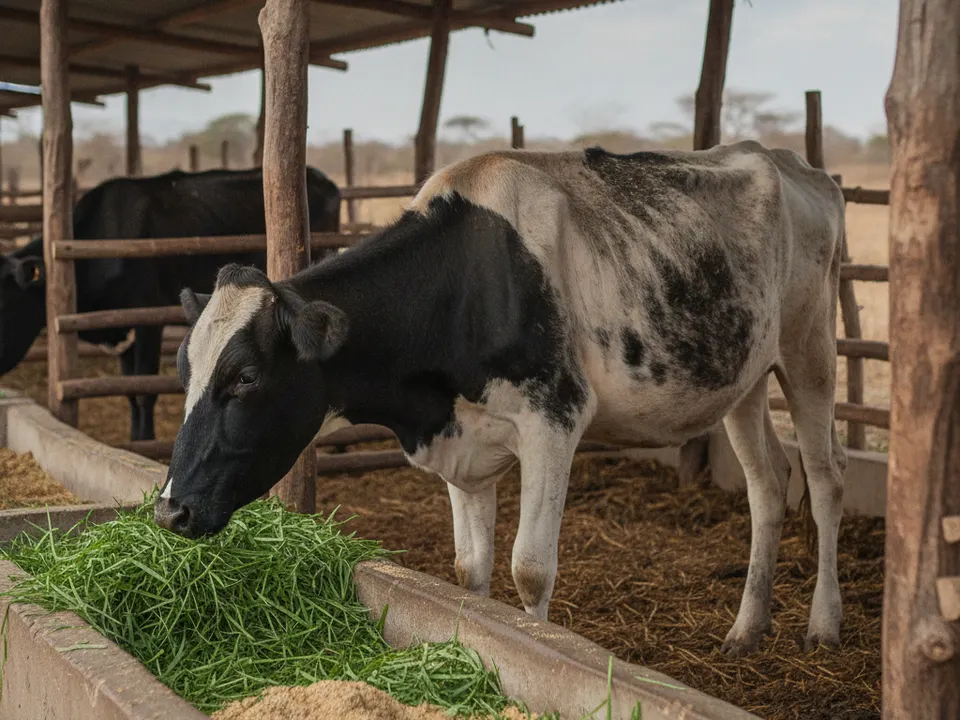
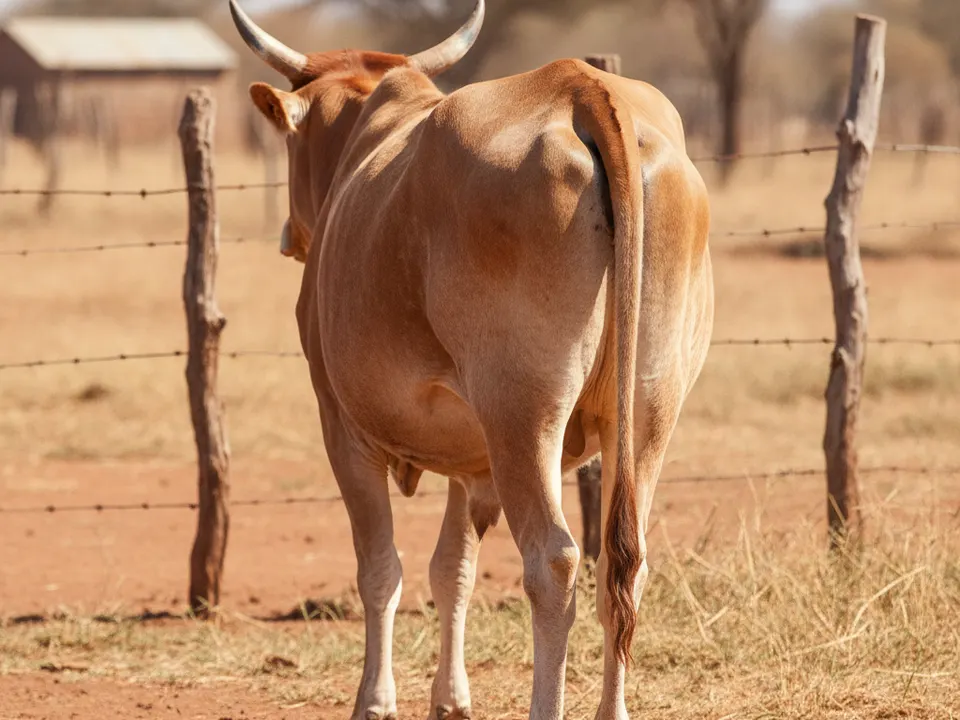
Milk fever mostly affects dairy cows from their third calving onwards, because older cows produce more milk and release calcium from their bones more slowly. First-calf heifers rarely get it. High-yielding exotic breeds kept in zero-grazing and semi-intensive units in Kenya are most at risk, especially Jerseys and their crosses. Friesians, Ayrshires and Guernseys are also affected. Local zebu and Boran cattle with lower yields are affected far less often, though it can happen. Most cases occur from the day before calving to about three days after, with the peak in the first 24 hours. Cases can occasionally occur late in pregnancy or weeks into lactation. Risk rises when dry cows are fed the same high-calcium ration or mineral mix as milking cows, when they graze lush grass during the long and short rains, when they are overfat, and when there is a cow with a past history. Dairy goats and sheep can get a similar condition, but the pattern differs.
Signs to look for
Early signs
- Within hours of calving the cow seems nervous, excited or restless, and may stop eating.
- She trembles, especially over the shoulders, flanks and hind legs, and may twitch her ears or grind her teeth.
- She walks with a wobbly, stiff or shuffling gait, may sway her hindquarters, and keeps shifting her weight between her back feet.
- She stops chewing the cud, and dung output drops or stops.
- Her ears, legs and skin feel cooler than normal when you touch them, and her muzzle may look dry.
- Milk yield and appetite fall suddenly even though she has just calved.
As it gets worse
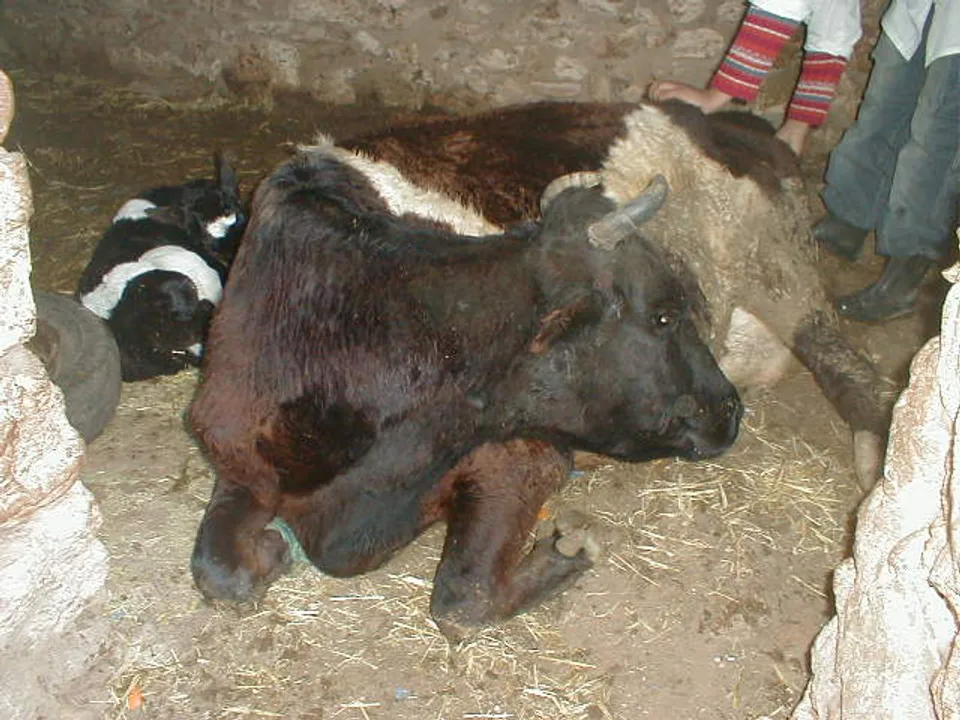
- She goes down and lies on her chest, unable to rise even when encouraged.
- She often turns her head round into her flank, or holds her neck in a kink like an 'S' shape.
- Her eyes look dull and staring with large pupils, and she seems drowsy or does not notice what is going on around her.
- Her ears and legs feel cold, and a thermometer in the rectum often reads below normal temperature.
- Her left side swells with gas (bloat) because the stomach and gut have stopped moving, and she may be constipated with the anus relaxed.
- Her heartbeat becomes weak and fast, and in the final stage she lies flat on her side, cannot lift her head, slips into a coma and can die within hours.
What to do right now
- Call your vet or the nearest animal health assistant at once and say clearly that a freshly calved cow is down. Milk fever is an emergency and a cow can die within a few hours.
- If she is down, roll her gently onto her chest with her legs tucked under her, and wedge sacks of feed, hay bales or folded bedding against her side to keep her upright. A cow lying flat on her side can bloat and choke on stomach contents.
- Gently turn her head forward so she is not lying on it, and every two to three hours change which side she leans on, so the down leg does not lose its blood supply and get permanently damaged.
- Do not pour water, drench or medicine into the mouth of a cow that is down, drowsy or cannot swallow properly, because the liquid can go into her lungs and cause fatal pneumonia. Do not inject calcium yourself, because calcium given wrongly can stop the heart.
- Move her, or protect her where she lies, onto soft, dry, non-slippery bedding such as straw, sand or grass. Give her shade from the sun and shelter from rain and cold, and keep other cattle away so they do not trample her.
- Keep the calf safe and fed with colostrum from another source or by hand if needed. Until the vet advises otherwise, take only a small amount of milk for the calf rather than fully milking her out.
- Do not try to lift her by the tail, beat her or force her up. This can injure her badly. Let the vet decide when and how to help her stand.
- Note the time she went down, her signs and anything she has eaten, and keep an eye on any other cows due to calve soon, especially older ones.
How it spreads
- It does not spread from animal to animal. It is triggered by the sudden demand for calcium when milk production starts at calving.
- Feeding a lot of calcium in the dry period (the last two to three weeks before calving) is a common trigger. Lucerne, other legumes, high-calcium mineral licks and lime all add calcium. This keeps the cow's calcium-releasing systems 'asleep' until it is too late.
- Diets high in potassium, such as heavily fertilised young grass, napier grown on manure-rich soil, or a lot of molasses, make the blood more alkaline. This reduces the cow's ability to mobilise calcium.
- Low magnesium in the diet interferes with the hormones that control calcium, so cows on lush pasture or poor rations with no magnesium are at higher risk.
- Overfat cows at calving, often from being dried off with poor control of feeding, are more likely to get milk fever and related problems.
- Stress around calving, such as a difficult birth, long walking, sudden feed changes, going off feed or cold wet weather, can push a borderline cow into milk fever.
- Cows that have had milk fever before are much more likely to get it again at the next calving.
Could it be something else?
Grass tetany (hypomagnesaemia, low blood magnesium)
Grass tetany usually makes cows very excitable and aggressive. They have muscle spasms, stagger, paddle their legs and have fits. It often affects cows at any stage of lactation grazing lush rain-season grass. Milk fever cows are usually quiet, drowsy and floppy, and it happens right around calving. The two can occur together, so the vet may give a treatment that covers both.
Calving injury (nerve damage or pelvic/hip injury)
After a hard or assisted calving with a big calf, a cow may be bright and alert and still eating, but unable to use her hind legs, or her legs splay out to the sides. Her ears are warm and she does not turn her head to her flank. If a cow does not rise after calcium treatment, the vet will check for these injuries.
Toxic (acute) mastitis
In toxic mastitis one quarter of the udder is usually hot, hard or swollen, or the milk is watery, clotted or bloody. The cow may have had a high fever before she weakened. Milk fever cows have a normal-looking udder and milk. Toxic mastitis can make a cow go down and feel cold, and it can also follow milk fever, so always check the udder and the milk.
Ketosis and acute metritis (womb infection)
Ketosis usually appears one to six weeks after calving. The cow eats less, loses weight and drops in milk, and her breath or milk may smell sweet, like nail polish. Metritis gives a foul-smelling, dark discharge from the vulva a few days after calving, often with fever. Neither usually causes the sudden collapse with cold ears in the first day that is typical of milk fever.
How it is diagnosed
A vet usually diagnoses milk fever from the timing, the cow's age and history, and a physical examination. The typical picture is an older, high-yielding cow, within a day or two of calving, that is down with cold ears, a low temperature, a weak heartbeat, no gut sounds and her head turned to her flank. The strongest confirmation is a fast response to calcium given into the vein. The cow often burps, passes dung, trembles and may try to stand within minutes to hours. Where possible, the vet may take a blood sample before treatment to measure calcium, phosphorus and magnesium. This is especially useful if the cow does not respond or if there are several cases in the herd. The vet will also check the udder, the womb, and the legs and hips to rule out mastitis, metritis or injury. If a cow dies, a post-mortem examination plus samples of eye fluid can help confirm low calcium or magnesium. To help your vet, write down the calving date and time, whether the birth was difficult, when you first saw signs, what she ate in the last three weeks before calving (including any lucerne, mineral lick or lime), whether she had milk fever before, and what, if anything, has been given to her.
Treatment
The main treatment is replacing calcium quickly. The vet usually gives a calcium solution, most commonly calcium borogluconate. Sometimes it is a combined solution that also contains magnesium, phosphorus and glucose. It goes slowly into a vein while the vet listens to the heart, because calcium given too fast can cause a dangerous heart rhythm or sudden death. This is why it must be done by a trained person. Part of the dose may also be given under the skin for a slower, longer effect. Once the cow can swallow normally, the vet may give oral calcium in a gel, bolus (large tablet) or drench to keep levels up over the next day. Most cows respond within minutes to a few hours. They burp, pass dung and urine, stop trembling and often get up. About a third of cows or more may relapse within a day or two and need repeat treatment, so keep watching closely. If the cow does not rise, the vet will look for other problems such as low phosphorus or magnesium, muscle or nerve damage from lying too long, mastitis, metritis or a calving injury, and may treat these as well. Antibiotics do not treat milk fever. A vet will only use them if there is a confirmed bacterial problem alongside it, such as mastitis or a womb infection. Using them without need adds to antimicrobial resistance, which is when germs stop responding to medicines. Plain calcium solutions usually have little or no milk withdrawal. However, combination products and any other drugs given, such as anti-inflammatories or antibiotics, can carry milk and meat withdrawal periods. Always ask your vet and follow the label before selling milk or meat. All treatment, products and doses must be prescribed by a vet.
Medicines must be prescribed and dosed by a vet. Always respect milk and meat withdrawal periods, and finish the full course of any antibiotic.
How Agrikima products can help
These support the animal alongside — never instead of — your vet's treatment, vaccination and good management.

DCP-18
After calving only, DCP-18 (dicalcium phosphate) can be part of the milking cow's mineral ration to help replace the calcium and phosphorus she loses in milk, which supports bones and steady recovery. It is a nutritional aid alongside vet treatment and a correct dry cow diet, not a treatment for a cow that is down. Do not feed extra calcium sources like this in the last three weeks before calving, because that can increase the risk of milk fever.
View product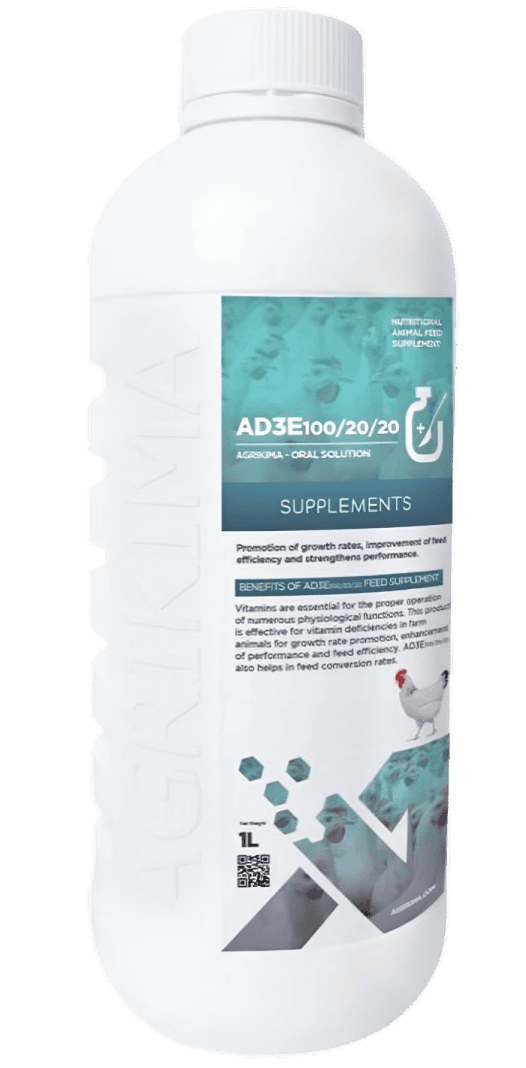
AD3E 100/20/20
Vitamin D3 helps the cow absorb calcium from her gut and release it from her bones, and vitamins A and E support immunity around calving. Ask your vet whether AD3E fits your herd's dry cow and fresh cow plan, and use it only on their advice for timing and amount, because too much vitamin D is harmful. It supports good management and does not replace calcium treatment or a correct dry cow ration.
View productPrevention
- Feed dry cows separately from milking cows, especially in the last three weeks before calving. Avoid lucerne, desmodium and other legumes in large amounts, high-calcium dairy mineral mixes, lime and chalk at this time, so her body learns to release its own calcium before she calves.
- Ask your vet or a dairy nutritionist about a properly balanced 'close-up' dry cow ration. Commercial farms may use anionic salts (special minerals that make the blood slightly acidic and help calcium release). This must be done carefully and measured by a professional, because mistakes can harm the cow.
- Make sure the dry cow ration has enough magnesium, for example from a dry cow mineral with magnesium, and avoid too much potassium. Do not give heavy amounts of manure-fertilised young grass, napier or molasses right before calving.
- Manage body condition so cows are fit but not fat at drying off and at calving. Dry off at the right time, give dry cows a ration suited to them, not the milking ration, and avoid sudden feed changes around calving.
- For high-risk cows, meaning older cows, Jerseys and any cow with a past case, ask your vet about giving oral calcium at calving and again 12 hours later. Some vets may also advise vitamin D3 a few days before the expected date. Vitamin D3 must be timed and dosed by a vet, because too much is toxic.
- Keep good breeding and health records so you know which cows are due, which had milk fever before, and can watch them closely from the day before calving until three days after.
- Provide a clean, dry, comfortable calving area close to the house with good footing. Reduce stress and long walks at calving, and make sure fresh cows have water and good feed straight away so they keep eating.
- Once a cow has calved, she needs good calcium, phosphorus and energy in her milking ration to keep up with milk production. Your vet may advise taking only part of the milk in the first day or two for very high-risk cows.
Impact on your farm
Milk fever hits the best cows in the herd, the mature high yielders that pay the bills on a Kenyan dairy farm. A cow that dies at calving is a huge loss: the price of a good dairy cow plus a whole lactation of milk, often with a newborn calf that then needs hand-rearing. Even cows that recover often produce less milk in that lactation. They are also more likely to suffer retained afterbirth, womb infections, mastitis, displaced abomasum (twisted stomach), ketosis and delayed return to heat. This means extra vet bills, discarded milk during treatments and longer calving intervals. Cows that stay down for long can develop permanent leg and muscle damage and may have to be culled. Many cows also have 'subclinical' milk fever, low calcium without going down, which quietly lowers appetite and milk and raises the risk of other diseases. On a zero-grazing farm with a few cows, one case can wipe out months of income from milk sold to the cooperative or local buyers.
Outlook and recovery
The outlook is good when treatment starts early. Most cows treated while still standing or lying on their chest get up and recover, often within hours. The longer a cow stays down, the worse the chances. Cows lying flat on their side, bloated, or in a coma have a much poorer outlook. Cows that lie for many hours can suffer crush damage to the muscles and nerves of the legs. They may never rise again even after their calcium is back to normal. Relapses within a day or two are common, so careful watching and repeat vet visits may be needed. Recovery is slower or less likely if there are other problems at the same time, such as low phosphorus or magnesium, a difficult calving, mastitis or metritis. Cows that recover are at higher risk of milk fever at their next calving, so prevention planning with your vet is important.
Common questions
Can I buy a calcium injection from the agrovet and give it myself?
It is not safe to do this yourself. Calcium given into the vein too fast, or at the wrong dose, can upset the heart rhythm and kill the cow on the spot. A vet listens to the heart while giving it slowly. Injections under the skin and oral calcium also need the right product and dose. Oral calcium should never be given to a cow that cannot swallow well. Call your vet or animal health assistant and let them treat her, then follow their advice for any follow-up.
Why does milk fever affect my best cows and not the heifers?
Older cows produce more colostrum and milk, so they lose more calcium suddenly at calving. Their bones also release calcium more slowly than young animals. First-calf heifers make less milk and are still good at moving calcium around, so they rarely get milk fever. Jerseys are especially at risk because their milk is rich in calcium compared with their body size.
Should I feed extra calcium or lime before calving to prevent milk fever?
No. This is one of the most common mistakes. Feeding a lot of calcium in the last few weeks before calving makes the cow rely on her feed for calcium. When she calves, her body has not yet learned to pull calcium from her bones, so her blood levels crash. Keep calcium moderate in the dry period, avoiding big amounts of lucerne, high-calcium mineral mixes and lime, and ask your vet about a proper dry cow ration. After calving, when she is milking, she needs good calcium and phosphorus in her ration.
My cow had milk fever last year. Will she get it again?
She is at higher risk, but it is not certain. Talk to your vet well before her next calving. Common steps include a correct dry cow ration, keeping her from getting fat, enough magnesium, and having oral calcium ready to give at calving under vet advice. Watch her closely from the day before she is due until three days after calving, and call the vet at the first sign of trembling or wobbling.
Is the milk from a cow treated for milk fever safe to drink or sell?
Milk fever itself does not make milk dangerous to people. Plain calcium treatment usually has little or no withdrawal period. But some combined products and any other medicines, such as antibiotics for mastitis or a womb infection, do have milk and meat withdrawal periods. Ask your vet exactly what was given and how long to wait, and keep that milk out of the cooperative tank until the time is over. The colostrum is still valuable for her calf.
Why are her ears cold if it is called 'fever'?
The name is misleading. Milk fever is not an infection and the cow usually does not have a fever. Low calcium weakens the muscles and heart, so blood flow to the ears and legs drops and the body temperature often goes below normal. Cold ears and a low thermometer reading in a freshly calved cow are actually strong clues that it is milk fever and not an infection.
A guide, not a diagnosis. This page is general information to help you recognise problems early. Always confirm with a vet or animal health worker before treating.