What it is
Rabies is caused by the rabies virus, a member of the lyssavirus group. The virus lives in the saliva of an infected animal and enters the body through a bite, a scratch or saliva getting into a fresh wound or onto the moist lining of the eyes, nose or mouth. After entry it may stay quietly near the bite for a long time, then it travels slowly along the nerves to the spinal cord and brain. This silent period, called the incubation period, varies a lot: often a few weeks to a few months, but sometimes longer, and it tends to be shorter when the bite is on the head or neck. Once the virus reaches the brain, it disturbs how the brain controls behaviour, swallowing, voice and movement. This is why the animal becomes aggressive or strangely dull, cannot swallow so saliva pours from the mouth, bellows abnormally and gradually becomes paralysed. At this stage the virus also moves into the salivary glands, so the saliva becomes infectious. There is no cure once signs appear, and death usually follows within a few days to about a week or so.
Which animals are most at risk
Any cow, bull, heifer or calf of any breed can get rabies; there is no breed resistance. The highest risk is in areas with many unvaccinated dogs, such as villages and peri-urban settlements where dogs roam freely, and in pastoral and free-range systems where cattle graze far from home or are kept in open bomas at night near jackals and hyenas. Herds near game parks, conservancies and forest edges face extra risk from wildlife. Zero-grazing cattle in well-fenced units are at lower risk but are not completely safe, because stray dogs can still get into sheds. Curious young stock that approach strange dogs, and cattle that defend calves, are often bitten on the face and nose. Rabies occurs throughout the year in Kenya; there is no strong rainy-season pattern, but cases tend to cluster where a rabid dog has recently been seen in the area.
Signs to look for
Early signs
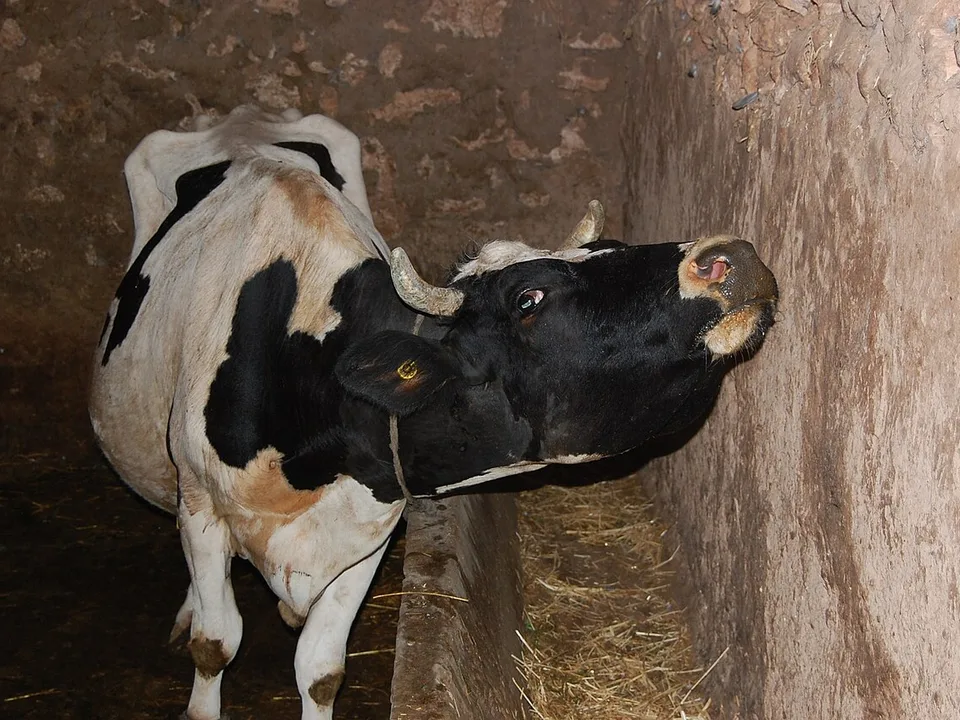
- A change in behaviour: a calm cow becomes restless, nervous, aggressive or unusually alert, or a normally lively cow becomes dull and stands apart from the herd.
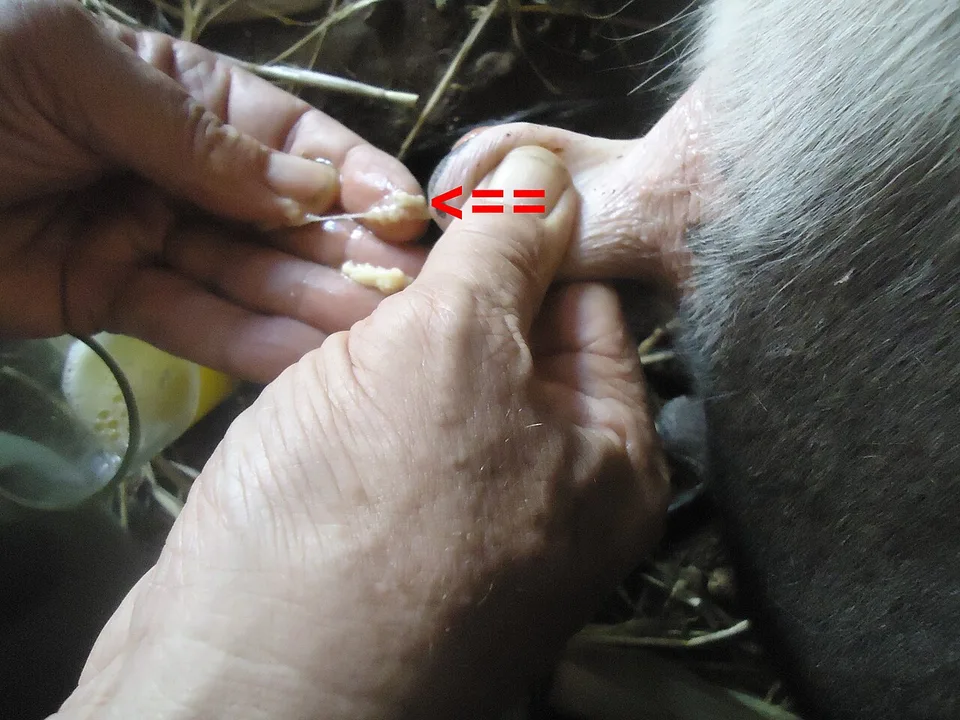
- Drooling of thick, stringy saliva because the animal struggles to swallow, often with the mouth held slightly open as if it has something stuck in the throat.
- Repeated, hoarse or unusual bellowing that sounds different from normal calling, sometimes almost non-stop.
- Reduced or no eating and drinking, even though the animal may go to the water trough and appear to try to drink.
- Sudden drop in milk yield in a milking cow.
- Straining as if trying to pass dung or urine (called tenesmus), with little coming out.
- Itching, licking or rubbing at one spot, which may be the old bite site, or an unusual sexual excitement such as mounting.
As it gets worse
- Attacking or charging people, other animals or objects, sometimes with head-butting; in the dumb form the animal may instead be very quiet and depressed.
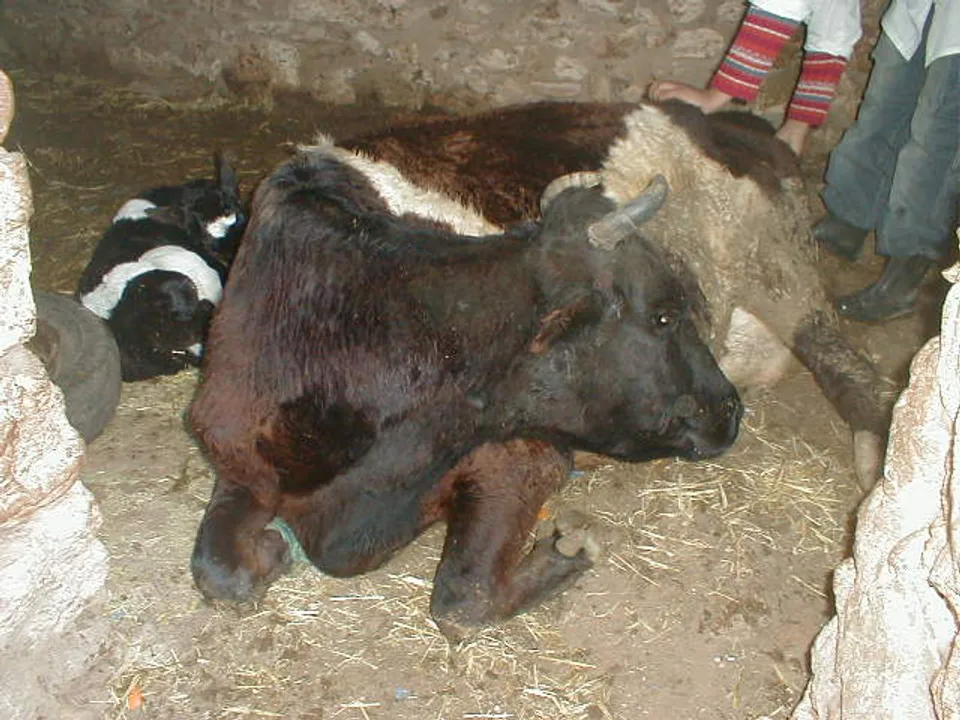
- Wobbly walking, knuckling of the fetlocks, swaying of the hindquarters and dragging of the back legs as paralysis develops.
- Inability to swallow at all, a dropped jaw, and constant drooling with the tongue sometimes hanging out.
- The tail may hang limp and the animal may lose control of the anus and bladder.
- Lying down and being unable to get up, with paddling of the legs or convulsions near the end.
- Death, usually within a few days to about a week or so after the first signs appear.
What to do right now
- Do not put your hand into the cow's mouth, do not try to drench it or force feed it, and do not try to clear what looks like a choke; treat every drooling cow with strange behaviour as possible rabies.
- Keep children, visitors and other animals well away, and if possible confine the animal in a strong pen or crush on its own without getting close, using gates and ropes from a safe distance.
- Call the County Veterinary Officer or your nearest veterinary office straight away and report a suspected rabies case, as the law requires; give them your location and a description of the signs.
- If anyone has been bitten, or has had saliva from the cow or a suspect dog in a wound, cut, eyes, nose or mouth, wash the area immediately with plenty of soap and running water for about 15 minutes and take the person to the nearest health facility the same day for rabies post-exposure treatment.
- Leave water and some feed where the animal can reach them without you entering its space, and give shade, but do not handle it.
- Tie up or confine your dogs, check them and other livestock for bite wounds, and tell the vet about any animal that may have been bitten or in contact.
- Stop all movement, sale or slaughter of the sick animal and any in-contact animals, and do not use its milk or meat for people or for feeding dogs.
- If the animal dies, do not open the carcass or let dogs and scavengers reach it; cover it and wait for the veterinary officer to take samples and supervise safe disposal, usually deep burial or burning.
How it spreads
- The main source in Kenya is the bite of a rabid dog, especially unvaccinated village or stray dogs that roam between homesteads and grazing areas.
- Wild carnivores such as jackals, hyenas, mongooses and wild cats can carry rabies and may bite cattle at night in bomas or on open grazing, particularly near wildlife areas.
- Infection can happen when saliva from a rabid animal enters a fresh wound, a scratch or the moist lining of the mouth, eyes or nose, even without a deep bite.
- Cattle bitten while grazing are often not noticed at the time, so the farmer may not know an animal was exposed until weeks or months later.
- Spread from one cow to another is uncommon, but a rabid cow's saliva is infectious, so licking, shared feed troughs and water points contaminated with fresh saliva should be treated as a risk.
- People are infected mainly through bites from rabid dogs, but farmers, herders and family members can be exposed by putting bare hands into the mouth of a sick cow or by getting its saliva into cuts or eyes.
- Rabies does not spread through the air, through dung or through normal handling of an animal that is not sick, but any contact with saliva from a suspected case must be taken seriously.
Could it be something else?
Choke (something stuck in the gullet)
A choked cow also drools and stretches its neck, but it usually starts suddenly after eating root crops, maize cobs or fruits, the animal is otherwise alert and normal in behaviour, and there is often bloat. There is no aggression, strange bellowing or paralysis. Because rabies can look exactly like choke, never put a bare hand into the mouth of any drooling cow; let the vet examine it with gloves and a mouth gag.
Heartwater and cerebral East Coast Fever (turning sickness)
These tick-borne diseases also cause nervous signs such as circling, high stepping, head pressing and convulsions. However, the animal usually has a high fever, many ticks, and in ECF swollen lymph nodes below the ear and in front of the shoulder. Rabid cattle often have little or no fever early on and show typical drooling, voice changes and straining.
Milk fever and grass tetany
These are metabolic problems of low calcium or low magnesium, usually in high-yielding cows around calving or on lush pasture after the rains. The cow may be excitable, tremble, stagger or go down, but she does not usually drool heavily or bellow strangely, and she often improves quickly after the vet gives calcium or magnesium. Rabies does not respond to these treatments.
Lead poisoning and listeriosis
Lead poisoning, often from licking old batteries or paint, causes blindness, head pressing, frothing and fits, usually in calves or young stock with access to rubbish. Listeriosis, linked to spoiled silage, causes circling and one-sided facial paralysis with a drooping ear and eyelid. Only a vet and laboratory can reliably tell these apart from rabies, so treat any cow with nervous signs as possible rabies until told otherwise.
How it is diagnosed
There is no reliable test for rabies in a live cow. The vet will make a suspected diagnosis from the signs, how quickly they get worse and the history, such as a dog or wild animal bite or a rabid dog reported nearby. Confirmation is done after death, when the vet or veterinary officer safely removes the head or a brain sample and sends it to an approved veterinary laboratory, where it is tested, commonly with a fluorescent antibody test that detects the virus in brain tissue. Do not try to remove the head or open the carcass yourself; this must be done by trained staff with protective equipment. To help the vet, write down when the signs started, how they changed, whether any dog, jackal or other animal was seen biting or fighting the cattle, which other animals and people had contact with the cow, especially its saliva, and whether your dogs and cattle are vaccinated. Keep the carcass covered and guarded from dogs and scavengers until the vet advises on sampling and disposal.
Treatment
There is no treatment that cures rabies once signs appear, in cattle or in people. Antibiotics, painkillers, vitamins and dewormers will not help, because rabies is caused by a virus that has already reached the brain, and giving drugs only puts the person handling the animal at risk of saliva exposure. The vet's job is to confirm the suspicion, protect people and stop further spread. In most cases the vet will advise that a clearly rabid animal be humanely put down under veterinary supervision in a way that keeps the brain intact for laboratory testing, or will keep it strictly isolated until it dies. The vet will also advise on in-contact and bitten animals: depending on official guidance, these may be vaccinated, placed under quarantine and observation for a long period because the incubation period can be months, or in some situations slaughtered under supervision. Do not use or sell milk or meat from suspected cases or recently bitten animals unless the veterinary officer clears it. Where any veterinary product is used on in-contact animals, follow the vet's instructions on milk and meat withholding periods. Expect the veterinary team to trace and vaccinate dogs in the area, follow up on the animal that did the biting, and work with public health officers to make sure exposed people get post-exposure treatment.
Medicines must be prescribed and dosed by a vet. Always respect milk and meat withdrawal periods, and finish the full course of any antibiotic.
Prevention
- Vaccinate all your dogs and cats against rabies, starting at the age recommended by your vet and repeating as advised; vaccinating dogs is the single most effective way to protect both cattle and people, and dog vaccination is a legal requirement in Kenya.
- Take part in county and national mass dog vaccination campaigns, and encourage neighbours to do the same, because rabies control works only when most dogs in an area are vaccinated.
- Ask your vet whether rabies vaccination of cattle is recommended in your area; livestock rabies vaccines exist and are often used for valuable animals in high-risk zones such as near wildlife or where cases have occurred.
- Keep cattle in well-fenced bomas or sheds at night, especially near game parks, forests and areas with jackals and hyenas, and repair gaps that let stray dogs in.
- Control stray and roaming dogs through responsible ownership: feed, house and confine your own dogs, and report aggressive strays to local authorities rather than handling them yourself.
- Check cattle regularly for bite wounds, especially on the nose, face and legs, and report any bite from a dog or wild animal to the vet so that the animal can be watched or vaccinated as advised.
- Teach everyone on the farm, including herders and children, never to put bare hands into the mouth of a drooling animal and to report any animal behaving strangely.
- Report every suspected case and every bite from a suspected rabid animal, so that veterinary and health officers can act quickly and stop the disease spreading in your community.
Risk to people
Rabies is a zoonosis, meaning it passes from animals to people, and it is almost always fatal in people once symptoms start. The main risk from a rabid cow is saliva entering a cut, scratch, the eyes, nose or mouth, most often when someone puts a hand in the mouth thinking the cow is choking, or when giving medicine by mouth. Bites from cattle are rare but possible. Never handle the mouth of a drooling cow with nervous signs, wear gloves and eye protection if you must be near it, and keep children away. If exposure happens, wash the wound or area immediately with soap and plenty of running water for about 15 minutes, then go to a health facility the same day; post-exposure vaccination, sometimes with immunoglobulin, is very effective if started promptly and completed. Do not drink milk or eat meat from a suspected rabid animal, and do not let dogs eat the carcass. Do not wait for symptoms in yourself before seeking help, because by then it is too late.
Impact on your farm
Rabies kills the animal it infects, so each case is the loss of a whole cow, bull or heifer, often a dairy animal worth a large share of a smallholder family's savings. Milk from the sick cow, and sometimes from in-contact animals under observation, must be discarded, cutting daily income. Movement restrictions and quarantine on in-contact animals can delay sales, breeding and transport to market. The farm may face costs for veterinary visits, dog vaccination and supervised disposal, and people exposed to saliva need a course of post-exposure treatment, which costs time and money even where vaccine is subsidised. Beyond the farm, rabies harms whole communities: it causes human deaths every year in Kenya, mostly from dog bites, and outbreaks create fear and lost working days. These losses are largely preventable through dog vaccination and quick reporting.
Outlook and recovery
Once a cow shows signs of rabies, the outlook is hopeless: there is no cure and the animal will die, usually within a few days to about a week or so. Nothing a farmer or vet can give will reverse it. The real outlook depends on what happens around the case: how quickly it is reported, whether people exposed get post-exposure treatment in time, whether other bitten animals are found and managed, and whether dogs in the area are vaccinated. Animals that were bitten but have not yet shown signs may still develop rabies weeks or months later, which is why vets may advise long observation or vaccination. With good dog vaccination coverage and fast reporting, further cases in the herd and in people can be prevented.
Common questions
My cow is drooling and seems to be choking. How do I know it is not rabies?
You cannot be sure by looking, and that is exactly why rabies is so dangerous. Choke usually starts suddenly during or after feeding on things like cassava, potatoes, maize cobs or mangoes, and the cow is otherwise behaving normally. Rabies often comes with strange bellowing, behaviour changes, straining and wobbly back legs, and sometimes a history of a dog or jackal bite. Because the two can look the same, never put your bare hand in the mouth. Call the vet, keep people away and let the vet examine the animal with protective gear.
Can I treat a rabid cow with antibiotics or other injections from the agrovet?
No. Rabies is caused by a virus that has already reached the brain by the time you see signs, and no antibiotic, vitamin injection or herbal remedy can cure it. Trying to treat the animal only exposes you to its saliva. The right steps are to isolate the animal, protect people and report it to the County Veterinary Officer.
Can we drink the milk or eat the meat of a cow with rabies?
No. Do not drink milk or eat meat from a cow suspected of having rabies, and do not feed the carcass to dogs. Although the main risk to people is through saliva, handling, slaughtering and cutting up a rabid animal can expose people to infected tissue, and authorities advise against using any products from suspected cases. The veterinary officer will advise on safe disposal, usually deep burial or burning.
A dog bit one of my cows but she looks fine. What should I do?
Report it to your vet straight away and try to find out what happened to the dog. If the dog was vaccinated and stays healthy, the risk is lower, but if it was a stray, wild or sick animal, treat the bite seriously. The vet may advise vaccination of the cow, a period of observation that can last several months because rabies can take a long time to show, or other measures under official guidance. Keep a note of the date of the bite and watch the cow closely for behaviour changes, drooling or bellowing.
Why do I have to report rabies? What happens after I do?
Rabies is a notifiable disease under Kenyan law, which means anyone who suspects it must report it to the County Veterinary Officer or the Directorate of Veterinary Services. Reporting lets officers confirm the case, trace people and animals that were exposed, make sure exposed people get treatment, and vaccinate dogs in the area to stop more cases. You may be told not to move, sell or slaughter the sick animal or in-contact animals for a period; these movement restrictions exist to stop the disease spreading to other farms and families. Reporting protects your family and your neighbours.
Should I vaccinate my cattle against rabies?
Vaccinating your dogs is the most important step, because dogs are the main source of rabies for both cattle and people in Kenya. Rabies vaccines for cattle do exist and are worth discussing with your vet if you live near wildlife areas, have had cases nearby, have many stray dogs around, or keep valuable breeding or dairy animals. Your vet can tell you whether it makes sense for your herd and arrange the vaccination.
A guide, not a diagnosis. This page is general information to help you recognise problems early. Always confirm with a vet or animal health worker before treating.