What it is
Colic is a sign, not a single disease. The donkey's gut is long and folded, with narrow bends where dry, coarse food can pack together and block the passage. The most common cause in East African donkeys is impaction: a hard plug of poorly chewed fibre such as dry grass, maize stover, straw or wheat husks, made worse when the donkey is not drinking enough. Bad teeth (sharp edges, missing, loose or overgrown teeth, common in older working donkeys) mean food is swallowed in long pieces that are hard to digest. Sand and soil eaten while grazing on bare ground or from feed thrown on the floor can settle in the gut and irritate or block it. Gas colic happens when food ferments too fast, for example after a sudden switch to lush wet-season grass, too much grain, maize bran or kitchen waste. Worms, especially large and small strongyles (redworms) and in young donkeys roundworms, damage the gut wall and blood supply, and tapeworms can trigger blockages where the small and large intestine meet. In Kenyan towns, donkeys often eat plastic bags, ropes and rubbish, which can form a mass that blocks the gut. Less often, a section of gut twists or becomes trapped, cutting off its blood supply; this is very painful and usually fatal without surgery. Whatever the cause, a blocked or stretched gut causes pain, stops normal movement of food, pulls fluid out of the body and can let toxins into the blood. A donkey in pain stops eating, and in donkeys this quickly mobilises body fat into the blood (hyperlipaemia), which can damage the liver and kidneys.
Which animals are most at risk
Any donkey can get colic, but some are at higher risk. Older donkeys with worn, loose or missing teeth are very prone to impaction. Working donkeys used for carting water, sand, building materials or farm produce are at risk when they are overworked, dehydrated and fed irregularly on poor roughage. Donkeys that are suddenly confined, for example moved from free-ranging to a small boma, or that have reduced exercise because of lameness, are more likely to impact. Young foals with heavy roundworm burdens and donkeys that have not been dewormed are at risk of worm-related colic. Urban and peri-urban donkeys that scavenge rubbish are at risk of plastic blockages. Risk rises in the dry season when grazing is coarse and water is scarce, in cold highland mornings when donkeys drink less, and at the start of the long and short rains when lush grass appears suddenly. Fat donkeys, pregnant or nursing jennies (females), miniature donkeys and stressed donkeys are at especially high risk of hyperlipaemia if colic stops them eating.
Signs to look for
Early signs
- Dullness and depression: the donkey stands quietly in a corner with its head low, ears back or drooping, and seems less interested in its surroundings or companions.
- Reduced appetite or complete refusal of feed, including favourite feeds; a donkey that does not finish its food should always be checked.
- Fewer droppings than normal, or droppings that are small, dry, hard or coated in mucus (slime).
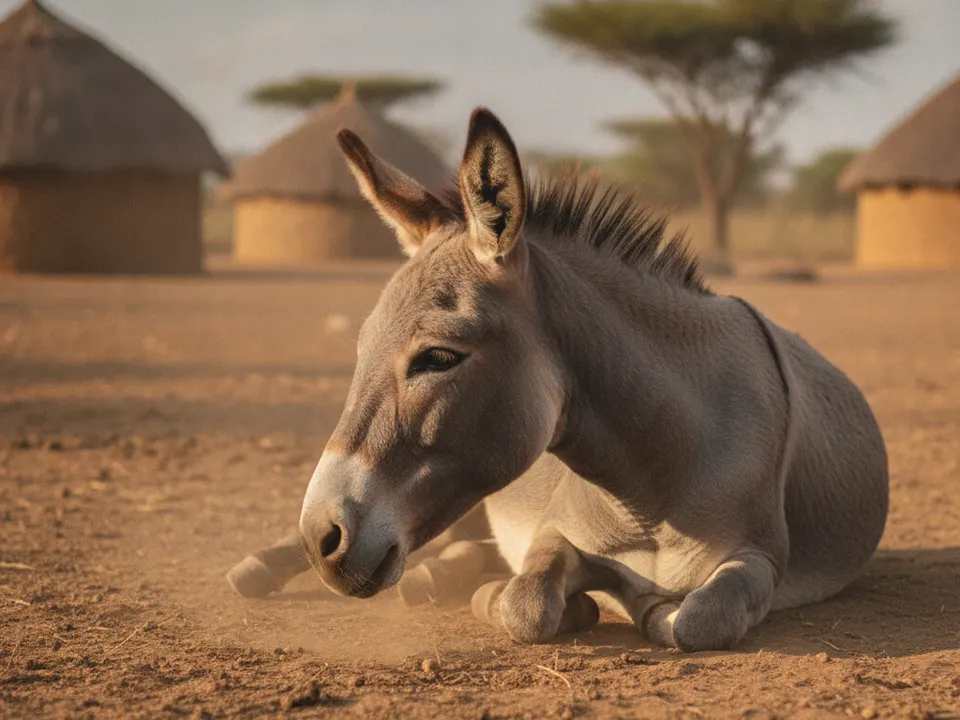
- Lying down more than usual, or lying down at an unusual time of day, and being reluctant to get up.
- Looking round at the flank or belly, lifting the upper lip, grinding the teeth or stretching out as if to urinate without passing much urine.
- Shifting weight, resting legs repeatedly or standing in an odd, tense posture.
- Quieter or fewer gut sounds when you put your ear against the flank; a healthy gut gurgles regularly.
As it gets worse
- Pawing the ground, kicking at the belly, getting up and lying down repeatedly, or rolling, though many donkeys never show these dramatic signs even when very sick.
- No droppings at all for many hours and a completely silent belly when you listen at both flanks.
- Fast breathing and sweating, sometimes patchy, even at rest in the shade.
- Gums that are dark red, purple or muddy grey instead of moist pink, and that are dry or tacky to touch.
- A swollen, tight belly, especially with gas colic.
- Weakness, wobbliness, cold ears and legs, or collapse.
- Signs that hyperlipaemia is developing: deep depression, total refusal to eat, bad breath, a yellowish tinge to the gums or eyes, and swelling under the belly or head.
What to do right now
- Call a vet immediately; colic in donkeys is an emergency and early treatment greatly improves the chance of survival. If you cannot reach a private vet, contact your County Veterinary Office, an animal welfare organisation or a local agrovet who can link you to a vet.
- Remove all feed, including hay and bedding the donkey might eat, until the vet has examined it, but leave clean, fresh water available and note whether it drinks.
- Put the donkey in a safe, shaded, well-bedded area with soft ground and no sharp objects or ditches, so that if it lies down or rolls it will not injure itself.
- Let a quiet donkey lie down and rest; you do not need to force it to walk for hours. If it is rolling violently, gently lead it on a short walk only if you can do so safely, and keep yourself out of reach of its legs.
- Keep its usual companion donkey close by, within sight, because donkeys bond strongly and separation stress can make things worse.
- Stop all work immediately and remove any harness, saddle or cart.
- Check and write down simple information while you wait: whether droppings are passed, gut sounds at both flanks, gum colour, behaviour every 15 to 30 minutes, and anything unusual it may have eaten such as plastic.
- Do not give any medicine, painkiller, oil, traditional remedy or drench by mouth before the vet arrives; drenching can go into the lungs, and painkillers can hide signs the vet needs to see.
How it spreads
- Colic is not infectious and does not spread from donkey to donkey, but several donkeys on the same farm can develop it if they share the same poor feed, water or worm burden.
- Not drinking enough water is a major trigger, for example when water is far away, dirty, too cold in the early morning in highland areas, or when working donkeys are not given time to drink during long carting days.
- Sudden changes in diet, such as moving from dry-season stover to lush green grass after the rains, or suddenly being given grain, maize bran, bread or kitchen leftovers, can upset the gut.
- Feeding only very coarse, dry roughage such as straw or stover, especially to donkeys with poor teeth, increases the risk of impaction.
- Grazing on bare, sandy or overgrazed land, or eating feed thrown on the ground, leads to sand and soil building up in the gut.
- Heavy worm burdens from irregular or no deworming, and grazing on the same small paddock year after year, damage the gut.
- Eating plastic bags, sacks, ropes and rubbish, common for donkeys roaming in towns and markets, can cause blockages.
- Stress from overwork, long transport, sudden confinement, pain elsewhere, or a change of owner or companion can reduce eating and drinking and set off colic.
Could it be something else?
Hyperlipaemia (fat mobilisation)
Hyperlipaemia also makes a donkey dull and stop eating, and it often follows colic or any stress. Colic usually comes with reduced droppings and belly-focused signs such as looking at the flank or lying down; hyperlipaemia tends to show deep, steady depression, yellowish gums and sometimes swelling, often in fat or pregnant donkeys. They often occur together, and only a vet's blood test can confirm hyperlipaemia.
Laminitis (founder)
Laminitis is painful inflammation inside the hooves, often after grain overload or lush grass. The donkey may lie down a lot and seem in pain like colic, but it stands leaning back to take weight off the front feet, is reluctant to walk, and the hooves feel hot with a strong pulse above the hoof. Droppings are usually normal.
Choke (blocked food pipe)
In choke, food is stuck in the oesophagus (food pipe) in the neck. The donkey is distressed, stretches its neck, coughs or gags, and food, saliva or green fluid comes out of the nose and mouth. Colic does not usually cause food coming from the nose.
Urinary blockage, foaling or uterine problems
A donkey that strains repeatedly and passes little or no urine may have bladder stones or a urinary problem. A heavily pregnant jenny that is restless, lying down and looking at her flank may be starting to foal or have a twisted uterus. A vet examination is needed to tell these apart from gut colic.
How it is diagnosed
A vet diagnoses colic by examining the whole donkey. They will check the heart rate, breathing rate, temperature, gum colour, how quickly colour returns to the gum after pressing it, and listen to the gut sounds on both sides. They look at the teeth and droppings. Where the donkey is large enough, the vet may do a rectal examination, gently feeling inside through the back passage to find an impaction, gas or a twisted gut, although this is more limited in small donkeys. They may pass a stomach tube through the nose to release gas or fluid and check for reflux (fluid backing up from the gut), which can indicate a serious blockage. A blood test, especially for triglycerides (blood fats), is very important in donkeys to check for hyperlipaemia, and may also check dehydration, liver and kidney function. Some referral clinics can use ultrasound. If a donkey dies, a post-mortem can show the cause and protect the rest of the herd. To help the vet, note when you last saw the donkey eat, drink and pass droppings, what it has been fed and any recent changes, when it was last dewormed and with what, how much work it has done, whether it is pregnant, and any changes in signs over time. Keep a sample of recent droppings and the feed if you can.
Treatment
Treatment depends on the cause and how severe it is, and must be prescribed and given by a vet. Most donkey colic cases, especially mild impactions and gas, respond to medical treatment on the farm. The vet will usually give pain relief and anti-inflammatory medicines, commonly non-steroidal anti-inflammatory drugs such as flunixin meglumine or meloxicam, and sometimes antispasmodics such as butylscopolamine to relax the gut, or sedatives such as xylazine or detomidine. Donkeys process several of these drugs differently from horses, so the vet must use donkey-specific knowledge rather than horse doses. For impaction, the vet often passes a stomach tube through the nose to give water, electrolytes (body salts) and a lubricant such as liquid paraffin to soften and move the blockage, sometimes repeated over a day or two. Badly dehydrated donkeys may need fluids into the vein. If hyperlipaemia is found or suspected, the vet will focus on getting energy and nutrition into the donkey quickly, through tempting feeds, tube feeding or glucose-containing fluids, and treat the underlying cause. Worms, dental problems and sand are dealt with once the donkey is stable, for example by the vet planning a suitable dewormer and dental rasping. Antibiotics are not routine for colic and should only be used when the vet finds a specific reason, because unnecessary use encourages antimicrobial resistance. A twisted or strangulated gut needs surgery, which is rarely available or affordable in most parts of Kenya, so in such cases the vet may advise humane euthanasia to end suffering. After treatment, feed is reintroduced slowly in small amounts of soft, moist forage under the vet's guidance. If the donkey's milk is used or the animal may enter the food chain, ask the vet about withdrawal periods for every drug given and follow them.
Medicines must be prescribed and dosed by a vet. Always respect milk and meat withdrawal periods, and finish the full course of any antibiotic.
How Agrikima products can help
These support the animal alongside — never instead of — your vet's treatment, vaccination and good management.
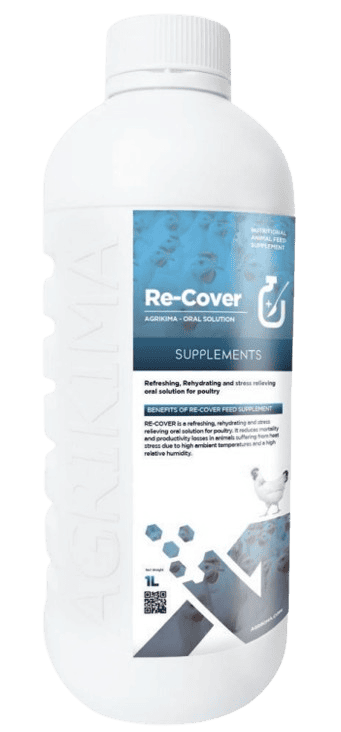
RE-COVER
After the vet has examined and treated the donkey and agrees it can drink normally, RE-COVER mixed in fresh drinking water can help replace water and body salts and encourage drinking during recovery and in hot weather, since dehydration is a major cause of impaction colic. Offer it as a choice alongside plain water, never drench it, and never use it instead of calling the vet.
View product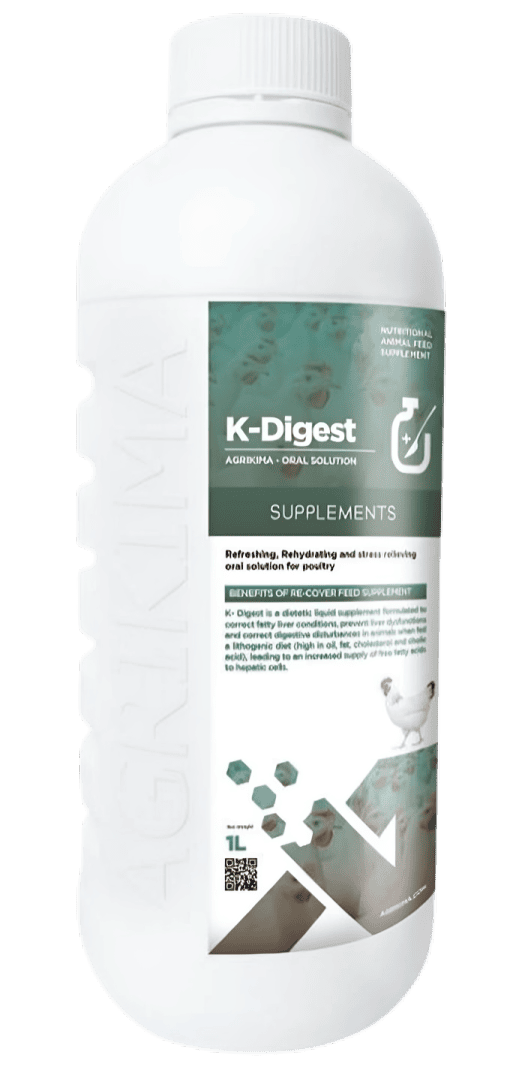
K-DIGEST
During recovery, when the vet advises slowly reintroducing feed, K-DIGEST can be used as digestive stress support while the donkey returns to normal eating. It is an aid alongside vet treatment, gradual diet changes, dental care and deworming, not a treatment for colic itself.
View productPrevention
- Make sure clean water is always available, and give working donkeys time to drink before, during and after work; in cold highland mornings, offering slightly warmed or sun-warmed water can encourage drinking.
- Feed plenty of good-quality roughage such as grass or hay little and often through the day, and avoid feeding only straw, stover or very coarse husks, especially to older donkeys.
- Make any change in diet gradually over one to two weeks, including when lush grass appears at the start of the long and short rains, and avoid sudden feeding of grain, maize bran, bread or kitchen waste.
- Have the teeth checked by a vet or trained equine dental worker at least once a year, and more often for older donkeys; watch for signs such as dropping food, slow chewing, long fibres in droppings or weight loss.
- Deworm regularly according to a plan agreed with your vet or County Veterinary Officer, ideally guided by dung egg counts, and pick up droppings from small paddocks and bomas to reduce re-infection.
- Feed off the ground using a feeder, sack or clean surface, and avoid grazing on bare, sandy land to reduce sand intake.
- Keep donkeys away from rubbish heaps, markets and plastic waste, and remove plastic bags, ropes and twine from feeding areas.
- Avoid overworking and overloading donkeys, give rest days, keep donkeys at a healthy body condition rather than fat, and keep them with a companion to reduce stress.
Risk to people
Colic itself does not infect people. However, a donkey in pain can kick, bite, fall or roll suddenly, so stay out of reach of its legs, never stand directly behind or under it, and keep children away. If the donkey's milk is used or the animal may enter the food chain, any drugs given by the vet will have withdrawal periods; follow the vet's advice so that medicine residues do not reach people. Wash your hands after handling droppings, as donkey dung can carry some germs.
Impact on your farm
For many Kenyan families, a donkey is a working partner that carries water, firewood, farm produce and goods to market and earns daily income through carting. A donkey with colic cannot work, so the household may lose income, have to buy water or pay for transport while it recovers. Vet fees, medicines and repeat visits add costs, and severe cases can end in the loss of the donkey, which is expensive to replace. Repeated colic often points to underlying problems such as poor teeth, worms or poor water access, which also reduce the donkey's working life and strength. Prevention through water, sensible feeding, deworming and dental care is far cheaper than treatment and keeps the donkey working for many more years.
Outlook and recovery
Many donkeys with mild impaction or gas colic recover well if a vet treats them early and feeding is restarted carefully. The outlook becomes worse the longer colic goes unnoticed, which is a real risk because donkeys hide pain so well. Signs of a poorer outlook include a very fast heart rate, dark or purple gums, no gut sounds, a swollen belly, severe or uncontrolled pain, and fluid coming back up the stomach tube, which may mean a twisted or strangulated gut. Hyperlipaemia greatly reduces the chance of survival, so getting the donkey eating again quickly is vital. Donkeys that recover may get colic again unless the cause, such as bad teeth, worms, poor water access or coarse feed, is corrected.
Common questions
My donkey is just standing quietly and not eating. Could that really be colic?
Yes. Unlike horses, many donkeys do not roll or kick when they have belly pain. Often the only signs are dullness, standing with the head low, not eating and passing fewer droppings. Any donkey that suddenly stops eating should be treated as an emergency, both because of possible colic and because not eating can trigger hyperlipaemia. Call a vet rather than waiting to see if it gets better.
Can I give my donkey cooking oil, paraffin or a painkiller before the vet comes?
No. Drenching oil or any liquid by mouth can go down the windpipe into the lungs and cause pneumonia or death, and paraffin and many home remedies are harmful. Painkillers, including human tablets like paracetamol, can mask the signs the vet needs to judge how serious the colic is, and some are dangerous at the wrong dose. Remove feed, keep water available, keep the donkey safe and calm, and let the vet decide on treatment.
Should I keep walking my donkey all night so it does not roll?
Usually not. Gentle walking for short periods can help if the donkey is rolling violently and you can do it safely, but long, forced walking exhausts the donkey and you. A quiet donkey that lies down calmly can be allowed to rest in a safe, soft, shaded place. Rolling does not by itself twist the gut; a twist is usually the cause of severe pain, not the result. Your safety matters too, so stay clear of thrashing legs.
How soon can my donkey go back to work after colic?
This depends on the cause and how quickly it recovers, so follow your vet's advice. Most donkeys need at least a few days of rest, with small, frequent meals of soft, moist forage and plenty of water, before slowly returning to light work. Watch closely for normal appetite, regular soft droppings and good energy. Returning to heavy carting too soon, especially in hot weather, can bring the colic back.
Why does my old donkey keep getting colic?
Repeated colic in older donkeys is very often linked to dental problems. Worn, loose, missing or sharp teeth mean food is not chewed properly and forms impactions. Other common reasons are not drinking enough, very coarse feed, worms and eating sand or plastic. Ask a vet to check the teeth and deworming history, and change to softer, chopped or soaked feeds if the teeth are poor.
Can a rehydration or digestive supplement replace the vet?
No. Supplements cannot clear a blockage or fix a twisted gut, and colic always needs a vet. Once the vet has treated the donkey and confirmed it can safely drink and eat, an oral rehydration product added to drinking water may help encourage drinking and replace body salts, and a digestive support product may be used while feed is reintroduced. Always ask your vet first and use them only as support alongside proper treatment and management.
A guide, not a diagnosis. This page is general information to help you recognise problems early. Always confirm with a vet or animal health worker before treating.