What it is
Inside each hoof, the coffin bone (also called the pedal bone, the last bone of the leg) hangs from the inner hoof wall by thousands of thin, folded layers of tissue called laminae. Think of them like the interlocking fingers of two hands. In laminitis these laminae become inflamed and weak. Blood flow in the foot is disturbed, the tissue swells inside the rigid hoof capsule, and this causes intense pain. If the damage is severe, the bone can tilt downwards (rotation) or drop (sinking) inside the hoof, and in the worst cases press through the sole; this is often called founder. Common triggers in donkeys are too much rich feed (grain, maize bran, dairy meal, kitchen leftovers, lush rain-season grass), obesity, and hormone disorders: insulin problems linked to being fat (sometimes called equine metabolic syndrome) and, in older donkeys, a pituitary gland disorder called PPID or Cushing's disease. Laminitis can also follow a severe infection or toxaemia, such as a retained afterbirth after foaling, colic, or heavy overloading on one leg when the other leg is injured. Overgrown hooves cause problems in a different way. Donkeys evolved on dry, hard, stony ground that wears the hoof naturally. Where the ground is soft, wet or the donkey is kept in a muddy pen, the toe grows long, the heels collapse or grow too high, and the hoof starts to curl. This changes the angle of the leg, strains tendons and joints, lets dirt and germs get into cracks and the white line (the join between wall and sole), and puts extra pulling force on the laminae, so a donkey with neglected feet is more likely to develop or suffer badly from laminitis.
Which animals are most at risk
Any donkey can be affected, but some are at higher risk. Fat donkeys, especially those with a thick, hard crest on the neck and fat pads on the body, are the most likely to get laminitis. Older donkeys (roughly mid-teens and above) are at risk of PPID, which often shows as a long, curly coat that does not shed, and these animals are prone to repeated laminitis. Pet, companion and lightly worked donkeys kept on good grass or fed generously are at higher risk than lean, hard-working ones. Overgrown hooves are most common in donkeys kept in wetter highland areas of Kenya and East Africa, in muddy or manure-filled pens, in zero-grazing or tethered systems with little movement, and wherever no trained hoof trimmer is available. Jennies (female donkeys) that have recently foaled and retained the afterbirth are at risk of laminitis from toxaemia. Risk rises during the long and short rains when grass grows fast and the ground stays soft and wet.
Signs to look for
Early signs
- The toe of the hoof looks longer than normal, with flaring, chipped or cracked edges, or the hoof shape is uneven between feet.
- The donkey is slower than usual, reluctant to walk on hard or stony ground, or takes short, careful steps.
- It shifts its weight from one foot to another when standing, or rests a front foot more often than normal.
- The hoof wall feels warmer than usual when you hold your hand on it, especially compared with a healthy donkey's feet.
- You can feel a stronger, bounding pulse at the back of the fetlock (just above the hoof), called the digital pulse, which is normally hard to feel.
- The donkey lies down more than usual, is quiet, or is slower to come for food; donkeys are very stoic and these small changes may be the only sign of pain.
- Bad-smelling black material in the grooves beside the frog (the soft V-shaped part of the sole) may show thrush in neglected feet.
As it gets worse
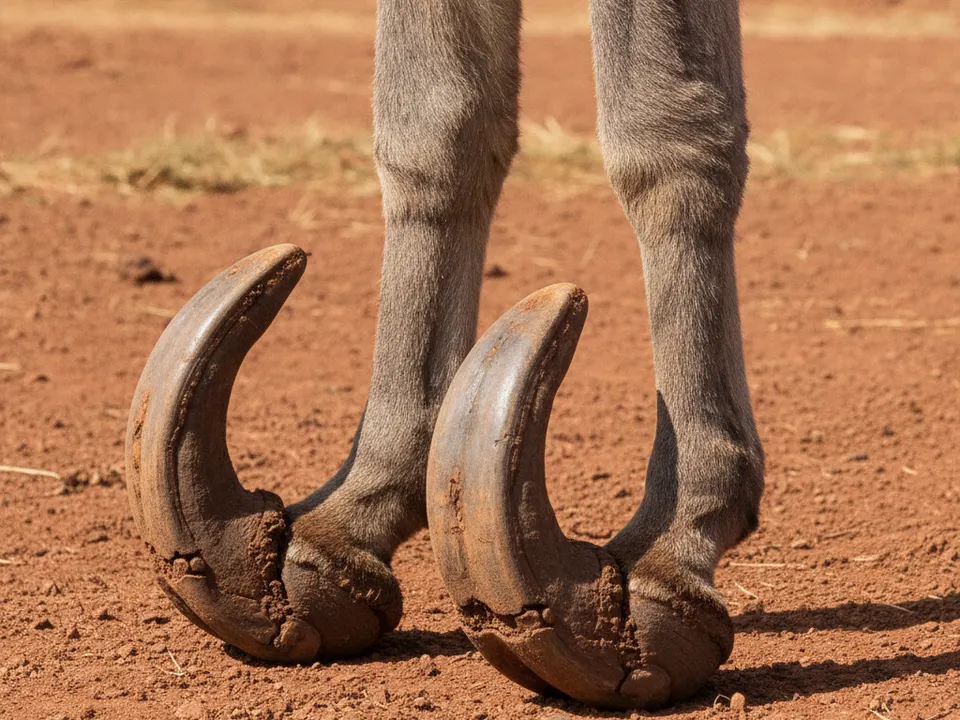
- The hooves are very long and curled up at the toe like a slipper or ski, sometimes twisted to one side, so the donkey walks on its heels or the side of the hoof.
- The donkey stands rocked back with its front feet pushed forward and its weight on its heels and hind legs, to take weight off the painful toes.
- It refuses to move, or moves only with great difficulty, and may lie flat for long periods and be unwilling to get up.
- Hooves are clearly hot, with a strong, pounding digital pulse in two or more feet.
- Rings or ridges on the hoof wall that are wider at the heel than the toe, a dished front wall, or a dropped, flat or bulging sole show long-standing or past laminitis.
- A separated, crumbly white line, a bruised or red-tinged sole, or pus coming from the coronet (the hairline at the top of the hoof) or sole.
- Loss of appetite and dullness; in a donkey this is an emergency because not eating can quickly lead to hyperlipaemia, a dangerous build-up of fat in the blood.
What to do right now
- Stop all work and riding immediately; a lame or laminitic donkey should not carry loads or pull carts until the vet says it is safe.
- Move the donkey a short, slow distance to a small, dry pen or stable with soft footing such as deep sand, wood shavings or clean dry bedding, so the soles are supported and it can lie down comfortably.
- Remove all grain, maize bran, dairy meal, kitchen scraps and sweet foods, and keep it off lush grass, but do not starve it; give clean, dry hay or mature dry grass, or barley straw if available.
- Make sure it keeps eating and drinking, with clean fresh water always within easy reach; if a donkey stops eating for even a day, tell the vet urgently because of the risk of hyperlipaemia.
- Keep a calm companion donkey nearby, as donkeys bond strongly and stress from separation can make them stop eating.
- Provide shade and shelter from rain, and keep the standing area clean and dry.
- Do not force the donkey to walk, do not attempt heavy trimming of a laminitic foot yourself, and do not give painkillers or other medicines from the agrovet without a vet's advice, as some horse medicines and doses are not right for donkeys.
- Write down when signs started, which feet are hot, what it has eaten and any recent illness, and call your vet or County Veterinary Officer the same day.
How it spreads
- Neither condition is contagious; they do not pass from one donkey to another, but donkeys kept under the same poor management often suffer together.
- Lack of regular trimming lets hooves grow long and out of shape, especially when donkeys stand on soft soil, mud, sand or manure where there is little natural wear.
- Sudden access to rich feed is a classic trigger, such as a donkey breaking into a grain store, eating maize bran, dairy meal or chicken feed, or being fed leftovers and sweet foods.
- Lush, fast-growing grass in the long and short rains, or after a dry spell, is high in sugars and can trigger laminitis in fat or sensitive donkeys.
- Obesity and hormone problems (insulin dysregulation and, in older donkeys, PPID) make the feet much more sensitive to laminitis.
- Serious illness such as a retained afterbirth, womb infection, severe diarrhoea or colic can release toxins that damage the laminae.
- Standing on one leg for a long time because the other leg is injured can cause laminitis in the healthy, overloaded foot.
- Constantly wet, dirty standing areas soften the horn, encourage thrush and cracks, and make overgrown feet worse.
Could it be something else?
Hoof abscess
An abscess is a pocket of pus inside the hoof. It usually causes sudden, severe lameness in just one leg, sometimes so bad the donkey will not put the foot down. Laminitis more often affects both front feet. An abscess may burst out at the coronet or sole, and the vet can find a very sensitive spot with hoof testers. The two can occur together, so the vet should still check.
Thrush and white line disease (seedy toe)
These are infections of the horn in dirty, wet or overgrown feet. Thrush shows as black, foul-smelling material in the frog grooves; white line disease shows as crumbly, hollow horn where the wall meets the sole. They cause soreness but usually not the strong heat, bounding pulse and rocked-back stance of laminitis.
Arthritis or old joint injury
Older and hard-worked donkeys often have stiff joints. The lameness tends to improve as the donkey warms up, the joints may be swollen or thickened, and the hooves are not usually hot with a strong digital pulse. A vet may need to examine and X-ray to tell the difference.
Tetanus
Tetanus can cause a stiff, 'sawhorse' stance that looks like a laminitic donkey reluctant to move. However, tetanus also causes a stiff neck and tail, ears held rigidly, flared nostrils, jaw stiffness and the third eyelid flicking across the eye when startled. The hooves are not hot. Tetanus is an emergency and needs a vet immediately.
How it is diagnosed
The vet will watch the donkey stand and walk, look closely at the shape and length of every hoof, feel each foot for heat and the digital pulse, and use hoof testers (a large pincer tool) to find painful areas. Cleaning and paring the sole helps show bruising, white line separation or abscesses. Where available, X-rays of the feet show the length of the hoof and whether the coffin bone has rotated or sunk, which guides trimming and tells how serious the case is. The vet may take blood to check for insulin problems or PPID, especially in fat or older donkeys, and to check blood fat levels if the donkey has stopped eating. They will also ask about recent feed and management to find the trigger. To help, tell the vet when you first noticed the problem, what the donkey has been eating (including any grain, bran or access to lush pasture), whether it has been eating and drinking normally, its approximate age, recent foaling or illness, any medicines given, and when the feet were last trimmed. Keep the donkey standing on soft ground nearby so it does not have to walk far for the examination.
Treatment
Treatment aims to control pain, protect the inside of the foot, correct the hoof shape and remove the trigger. Vets commonly use anti-inflammatory painkillers from the NSAID group, such as phenylbutazone, flunixin or meloxicam. Donkeys process several of these drugs differently from horses, so the choice, dose and timing must be decided by a vet who knows donkeys; never use horse instructions or leftover medicine. Strict rest on deep, soft bedding is usually advised, sometimes with frog or sole supports, padding or special boots fitted by the vet or a trained farrier. Overgrown hooves are trimmed back gradually and carefully, often over several sessions, guided by X-rays if available, to bring the toe back and realign the foot without causing more pain or damage. Abscesses are opened and drained, and the foot kept clean and covered. Antibiotics are only needed if there is a deep infection; they do not treat laminitis itself, and using them without need adds to antimicrobial resistance, where germs stop responding to medicines. The vet will plan a diet change, usually a weight-loss plan for fat donkeys based on hay, straw and limited grazing, and may treat PPID with prescribed medication where diagnosed. A donkey that has stopped eating may need urgent fluids and nutrition. Expect recovery from laminitis to take weeks to months, with repeat visits and trims. If a donkey's milk is used or the animal may enter the food chain, follow the withdrawal period the vet gives for each drug before milk or meat is used.
Medicines must be prescribed and dosed by a vet. Always respect milk and meat withdrawal periods, and finish the full course of any antibiotic.
Prevention
- Have hooves checked and trimmed by a trained farrier or hoof trimmer about every 6 to 10 weeks, more often on soft or wet ground; welfare organisations working with donkeys in Kenya can help locate trained trimmers in some counties.
- Pick out and look at your donkey's feet regularly, ideally daily or several times a week, checking for cracks, smell, stones, heat and changes in length.
- Keep donkeys lean: feed mainly fibre such as hay, mature dry grass or straw, and avoid or strictly limit grain, maize bran, dairy meal, bread and kitchen scraps.
- Control grazing during the long and short rains when grass is lush; use a smaller paddock, a dry yard with hay, or limit grazing time for fat or previously laminitic donkeys.
- Learn to body condition score your donkey; feel the neck crest, ribs, back and rump, and ask your vet to show you what a healthy donkey feels like, as donkeys store fat in patches.
- Provide a dry, hard standing area such as gravel, murram or concrete, away from mud and manure, so hooves stay strong and some natural wear occurs.
- Store grain and concentrates securely so donkeys cannot break in and gorge.
- Call the vet early for older donkeys with a long coat that does not shed, drinking or urinating more, or repeated laminitis, as this may be PPID that can be managed.
- Make sure retained afterbirths, colic and severe infections get prompt veterinary care, and keep donkeys vaccinated against tetanus as advised by your vet, since foot wounds and abscesses can let tetanus in.
Risk to people
Laminitis and overgrown hooves do not infect people. If a donkey is treated with painkillers or antibiotics and its milk is consumed or sold, or it may enter the food chain, drug residues can remain; follow the vet's withdrawal period before using milk or meat. Take care when handling painful feet, as a sore donkey may kick, and keep your own tetanus vaccination up to date if you handle hooves and wounds.
Impact on your farm
In Kenya and East Africa, many donkeys carry water, firewood, produce and goods to market, and pull carts that earn the household's daily income. A lame donkey cannot work, so the family loses income and must carry loads by hand or hire transport. Long, untreated hooves shorten a donkey's working life by damaging joints and tendons, and laminitis can leave it permanently lame or lead to it being put down on welfare grounds, which is a large loss given the cost of a replacement donkey. Vet visits, X-rays, repeated trimming and months of rest add cost, while prevention through regular trimming and sensible feeding costs far less. Severe lameness and neglected feet are also a welfare concern and can bring problems with welfare inspections where donkeys work at markets and in towns.
Outlook and recovery
Overgrown hooves that are caught early usually respond well to a series of careful trims, and most donkeys return to comfortable work. Very long, twisted hooves that have been neglected for years may have caused lasting changes to joints and bones, and some lameness may remain. With laminitis, the outlook depends on how severe it is, how quickly treatment starts and whether the coffin bone has rotated or sunk. Mild cases treated early can recover well over weeks to a few months. Severe cases with major bone movement, sole penetration or repeated attacks have a guarded to poor outlook, and some donkeys must be put to sleep to end their suffering. Donkeys that have had laminitis once are more likely to get it again, so lifelong weight control, careful feeding and regular trimming are essential. A donkey that stops eating because of pain faces the added danger of hyperlipaemia, which can be fatal, so fast action matters.
Common questions
How often should my donkey's hooves be trimmed?
Most donkeys need a trim about every 6 to 10 weeks, but it depends on the ground and the individual. Donkeys on soft, wet soil or in muddy pens often need trimming more often, while working donkeys on hard, stony ground may wear their feet more. Check the feet often; if the toe is getting long, the hoof is flaring or cracking, or the donkey walks differently, it is time for a trim.
Can I trim my donkey's hooves myself?
Light maintenance is possible after proper training, but trimming the wrong way can lame a donkey. Donkey hooves are shaped differently from horse hooves, with more upright walls and a different angle, so horse-style trimming can damage them. Very overgrown or laminitic feet should always be trimmed by a trained farrier or under a vet's guidance, often over several sessions. Ask your vet or a donkey welfare organisation about training.
Why does my donkey get laminitis when it is fed well?
Donkeys are built to survive on dry, poor-quality grazing. Rich feeds such as grain, maize bran, dairy meal and lush rain-season grass contain more sugar and starch than their bodies can handle. This makes them fat and can upset insulin levels, which damages the laminae in the feet. A healthy donkey diet is mostly fibre such as hay, straw and mature grass, with concentrates only if the vet or nutrition adviser recommends them.
Can I give my donkey painkillers from the agrovet?
Please do not, unless a vet has examined the donkey and prescribed them. Donkeys break down some common painkillers differently from horses, so horse doses and timings can be wrong. Some medicines are dangerous in a dehydrated or sick donkey, and painkillers can hide how bad the problem is, so the donkey may walk and damage its feet further. Your vet will choose a safe drug and dose.
Should I starve my fat donkey to help its laminitis?
No. Donkeys must never be starved or made to lose weight quickly. When a donkey stops eating or is suddenly underfed, its body releases fat into the blood, which can cause hyperlipaemia, a life-threatening condition. Weight loss must be slow, using hay, straw or dry grass and limited grazing, following your vet's plan.
Will a donkey with laminitis ever work again?
Many donkeys with mild laminitis that is treated early return to light or normal work after a period of rest and careful trimming. Donkeys with severe laminitis, where the bone inside the foot has moved a lot, may only manage light duties or a quiet life as a companion. Your vet can judge this from the examination and, if possible, X-rays, and will advise when and how to bring the donkey back into work slowly.
A guide, not a diagnosis. This page is general information to help you recognise problems early. Always confirm with a vet or animal health worker before treating.