What it is
These wounds are caused by pressure and friction on the skin. When a pack saddle, cart pad, breastband, girth, crupper (the strap under the tail) or breeching (the strap around the hindquarters) presses hard on one spot, it squeezes the small blood vessels in the skin shut. Without blood, the skin and tissue underneath starve of oxygen and begin to die. If the equipment also slides back and forth, it rubs the hair off and wears through the skin like sandpaper. Hard or rough materials make this much worse. Examples are nylon rope, wire, plastic sacks, sharp metal parts, knots and unpadded wooden saddles. So do sweat, wet rain-soaked pads, and dried mud or dirt stuck in the harness. Thin donkeys are at special risk because their spine, withers and hip bones stick out with little muscle or fat to cushion them. Once the skin is broken, bacteria from soil, dung and dirty harness enter the wound and cause infection, pus and swelling. Flies are drawn to the smell. Some lay eggs that hatch into maggots (fly larvae that eat flesh), a condition called myiasis. Others carry Habronema worm larvae, which cause 'summer sores': wounds that refuse to heal. Deep or dirty wounds can also let in the tetanus germ (Clostridium tetani), which lives in soil and dung. Tetanus is often fatal in donkeys.
Which animals are most at risk
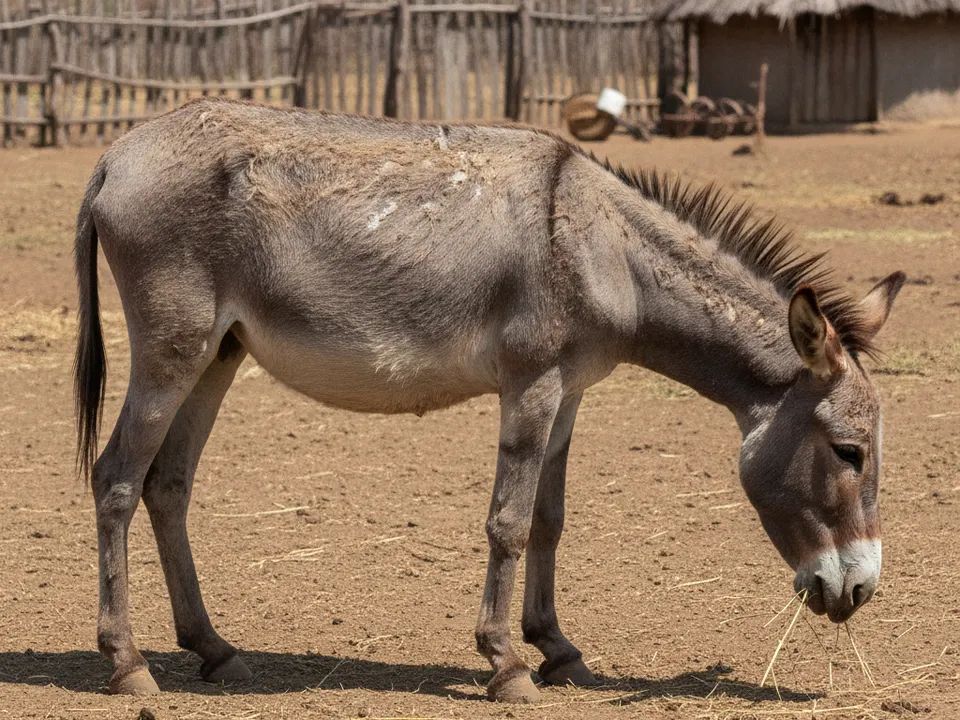
Any working donkey can get harness wounds. The highest risk is in donkeys pulling carts or carrying packs every day, such as water vendors, traders, building-sand haulers and farmers taking produce to market. Thin or old donkeys and those with poor body condition are especially at risk, because their bones stand out. So are young donkeys put to work before they are fully grown, and donkeys working on hilly or rough roads. Donkeys on hire or shared between several handlers often suffer most, because nobody owns the duty of checking the harness. Wounds increase in the rainy seasons, when pads stay wet and flies are many. They also increase in the dry, hot months, when donkeys sweat and work longer distances to fetch water. Both peri-urban cart work and pastoral pack work see many cases.
Signs to look for
Early signs
- A warm, slightly swollen or tender patch where the harness sits, often on the withers, along the spine, behind the elbows (girth area), on the chest or at the base of the tail.
- Hair that is rubbed short, broken or missing in the shape of the pad, strap or shaft.
- Dry, rough or scaly skin, or a small graze, under the harness.
- The donkey flinches, dips its back, lays its ears back or moves away when you touch the area or bring the saddle or harness close.
- Patches of white hair growing on the withers or back. This is a sign of old pressure damage and shows the harness has been hurting the donkey for some time.
- Uneven sweat marks under the saddle after work, with dry spots where pressure was highest.
As it gets worse
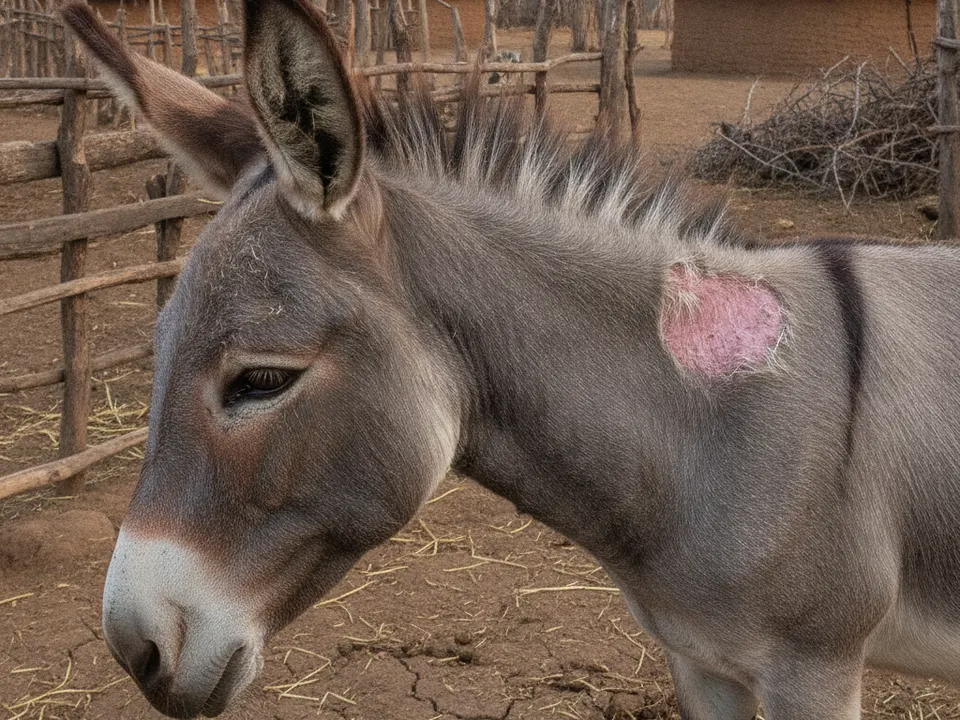
- Open, raw, red or pink sores that weep clear fluid, blood or pus.
- Thick scabs, crusts or a hard, leathery dead patch of skin (called a 'sitfast') that does not lift off.
- Swelling that is hot and painful, sometimes a soft lump full of pus (an abscess).
- A bad smell from the wound, and flies clustering on it. Maggots may be seen moving inside.
- Wounds that keep growing extra red, lumpy flesh and refuse to heal for weeks, sometimes with small yellow gritty spots. These may be summer sores caused by Habronema.
- The donkey is dull, eats less, loses weight or refuses to move forward when harnessed.
- Stiffness, difficulty opening the mouth, a stiff tail, a raised third eyelid, or jumpiness at noise. These are signs of tetanus and are an emergency.
What to do right now
- Stop work immediately and take off the saddle, pads and harness. Any further use will make the wound deeper and more painful.
- Move the donkey to shade with clean drinking water and good forage. A tired, hot working donkey also needs rest and water to recover.
- Gently clean the sore with plenty of clean water that has been boiled and cooled. You may add a little salt (about one teaspoon per litre). Pour it over the wound to wash away dirt and loose hair without scrubbing.
- Do not put on used engine oil, battery acid, paraffin, cow dung, ash, chilli, strong detergent or hot irons. These common home remedies burn the tissue, delay healing and can poison the donkey.
- Protect the wound from flies by keeping the donkey in a shaded, clean area away from dung heaps. Check the wound twice a day for maggots, and tell the vet straight away if you see any.
- Wear gloves or wash your hands well with soap after touching the wound, and keep any cuts on your own hands covered.
- Write down where the wounds are, how big they are, which harness part touches that spot, and what loads and hours the donkey has worked. Then take a photo if you can.
- Call your vet or animal health officer, especially if the wound is deep, smells bad, has maggots, is near the spine or withers, or the donkey has not had a tetanus vaccine. Also call if the donkey becomes stiff or stops eating.
How it spreads
- These wounds are not contagious. One donkey cannot catch them from another. But the same poor harness and work habits usually affect every donkey on the farm or in the group.
- Badly fitting equipment is the main trigger. Common faults are saddles and pads that are too small, too thin, lumpy or worn. Others are breastbands that sit too high on the windpipe or too low on the shoulder points, and cruppers made of thin rope.
- Carts that are unbalanced cause many wounds. If the load sits too far forward, the shafts push down on the back and withers. If it sits too far back, the belly band lifts and rubs. Shafts set at the wrong height for the donkey do the same.
- Overloading and long working hours without rest add heavy, constant pressure on the same spots. This is common when carrying water, firewood, building sand or farm produce to market.
- Wet, dirty or sweaty harness that is never cleaned or dried rubs harder and carries germs straight into small cuts.
- Working a donkey that already has a small sore makes it bigger and deeper every day.
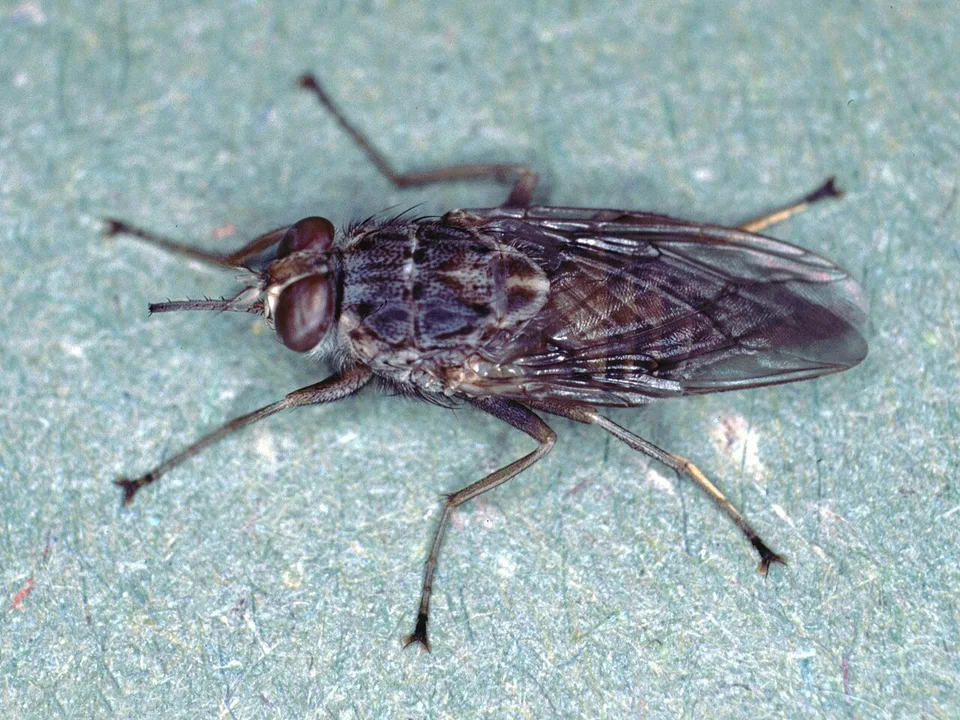
- Flies, especially in warm, wet weather during the long and short rains, turn small wounds into infected, maggot-filled sores. They also spread Habronema larvae from wound to wound and from donkey to donkey.
Could it be something else?
Sarcoid (a common skin tumour in donkeys)
Sarcoids are lumps or flat, wart-like, hairless patches that slowly grow. They often appear around the eyes, ears, groin, chest or legs, not only where the harness rubs. They do not heal with rest and may bleed when rubbed. A harness wound improves once pressure is removed. If a 'wound' keeps growing, ask the vet to check for sarcoid. Never cut or burn it yourself, because handling can make sarcoids worse.
Rain scald (dermatophilosis)
Rain scald happens in wet weather. It shows as many small crusty scabs along the back and rump that lift off with tufts of hair, like the tip of a paintbrush. The skin underneath is pink and moist. It is spread over a wide area rather than in the exact shape of a pad or strap, and it can appear in donkeys that are not working.
Mange, lice or ringworm
These cause patchy hair loss and crusting that can appear anywhere on the body, including the head, neck and legs. Mange and lice usually cause strong itching, so the donkey rubs on posts and walls. Ringworm forms round, grey, scaly bald patches. Several donkeys are often affected, and the patches do not match where the harness sits.
Summer sores (habronemiasis)
This is often a complication of a harness wound rather than a separate problem. Suspect it if a wound that should be healing instead grows lumpy, red, bleeding flesh with yellow gritty grains. It is worse in fly seasons and keeps coming back. A vet can confirm it and treat the worm larvae.
How it is diagnosed
A vet or animal health officer usually recognises harness wounds by looking at where they are and matching them to the equipment. They will examine the donkey's whole body and score its body condition. They will gently feel and probe the wound to judge how deep it goes, and check whether it involves muscle, the spine or the withers bones. They will look for pus pockets, dead tissue and maggots, and check for signs of tetanus. A good vet will also ask to see the donkey harnessed or loaded, to find exactly which part is causing the damage. Fixing that is half the treatment. If a wound does not heal as expected, the vet may take a swab to grow and identify the bacteria and choose the right antibiotic. A small tissue sample (biopsy) can rule out sarcoid or summer sores, and an X-ray may be needed if bone infection is suspected. To help the vet, keep the harness, saddle, pads and straps that the donkey was using, and do not wash or change them first. Note when you first saw the sore and how many hours and what loads the donkey has been working. Write down anything you have already put on the wound and whether the donkey has ever had a tetanus vaccine.
Treatment
Treatment depends on how deep and dirty the wound is, but rest from the harness is always the most important part. The vet will first clean the wound thoroughly. They may sedate the donkey and numb the area to cut away dead skin, pus and any sitfast, and to remove all maggots. Deep pus pockets may need to be opened and drained. The vet will then advise on daily cleaning and may provide an antiseptic wound dressing or wound spray, often combined with a fly repellent. Because many wounds are contaminated with soil and dung, the vet will think about tetanus protection. This usually means tetanus antitoxin for immediate protection and tetanus toxoid vaccine for longer-term protection, depending on the donkey's vaccination history. For deep, infected or swollen wounds, the vet may prescribe antibiotics such as a penicillin-type drug or another suitable class. Antibiotics are not needed for every shallow rub. Using them only when needed, and finishing the full course as prescribed, helps prevent antimicrobial resistance (germs no longer responding to medicines). The vet may also give pain relief, usually an anti-inflammatory drug. Donkeys break down several common horse drugs at a different speed from horses, so treatment must be prescribed and dosed by a vet who knows donkeys. Never borrow horse or cattle doses. Wounds that may be summer sores are often treated with a dewormer from the avermectin group, such as ivermectin, together with wound care. Some badly damaged withers or chronic wounds may need surgery. Where donkey milk or meat is used, ask the vet about withdrawal periods for every drug given. Expect shallow wounds to need days to a few weeks of rest. Deep or infected wounds can take many weeks. The vet will also advise on fixing or replacing the harness, and organisations working on donkey welfare in Kenya can often help with harness improvement.
Medicines must be prescribed and dosed by a vet. Always respect milk and meat withdrawal periods, and finish the full course of any antibiotic.
Prevention
- Fit the equipment to the donkey, not the donkey to the equipment. Pack saddles and cart pads should be wide, evenly padded and clear of the spine. There should be a gap you can fit your hand through above the withers and backbone.
- Use soft, broad padding such as folded clean cloth, sacking stuffed with dry grass or sisal, foam or old blankets. Replace hard nylon rope, wire and thin straps with wide, soft straps, or cover them with cloth or rubber tubing.
- Check the breastband sits across the chest below the windpipe and above the shoulder points. The crupper under the tail should be thick, soft and kept clean, and the girth should be firm but not cutting.
- Balance the cart so the load sits over the axle. The shafts should ride level with the donkey's sides, without pressing down on the back or lifting the belly band. Keep tyres pumped and wheels greased so the cart rolls easily.
- Do not overload. Match the load to the donkey's size, age, condition and the road, and reduce it on hills, rough tracks and hot days. Ask your vet or animal health officer for a sensible load guide.
- Give regular rest breaks with water and shade. Take off the harness whenever the donkey is resting for long periods and at the end of every day.
- Clean and dry the harness and pads every day, and never put a wet, muddy or sweat-crusted pad back on. Check the donkey's skin under the harness every day for heat, swelling, hair loss or tenderness, and rest it at the very first sign.
- Keep donkeys in good body condition with enough forage, clean water and salt, and deworm them as your vet advises. Thin donkeys get wounds much more easily.
- Vaccinate working donkeys against tetanus as your vet recommends, and keep a simple record of the dates.
- Reduce flies by removing dung daily, keeping shelters clean and dry, and treating every wound early. Do not work very young, very old, sick or heavily pregnant donkeys.
Risk to people
Harness wounds themselves do not pass to people, but infected wounds carry bacteria from soil and dung, and some wound germs can infect cuts on human skin. Wear gloves or wash your hands well with soap after cleaning wounds, and cover any cuts on your own hands. The tetanus germ that threatens wounded donkeys also lives in soil and dung and can infect people through deep cuts, so people who work with donkeys and in the soil should keep their own tetanus vaccination up to date. If donkey milk or meat is used, respect the drug withdrawal periods your vet gives so that medicine residues do not reach people.
Impact on your farm
For many Kenyan households a donkey is a business. It carries water for sale, transports building sand, firewood and produce, and takes children's school fees to market in the form of goods. A donkey with a harness wound must rest, and every day of rest is lost income. Chronic or repeated wounds mean many lost weeks a year. Families then have to pay for vet visits, dressings and medicines, or hire another donkey. Painful donkeys work slowly, become difficult to handle and may kick or refuse to move, which can injure handlers. Infected wounds lead to weight loss and a weaker animal. Tetanus following a wound can kill a donkey within days, wiping out the household's main transport and earning asset. Scarred, wounded donkeys also sell for less. Prevention through good harness and sensible loads costs far less than treating wounds.
Outlook and recovery
The outlook is good for fresh, shallow rubs and sores that are caught early, as long as the donkey is rested and the faulty harness is fixed. These usually heal within days to a few weeks, sometimes leaving white hair or a scar. Deep wounds, infected wounds with pus or maggots, wounds over the withers or spine, and old sitfasts take much longer and may need surgery. Some never return to full strength. Recovery is slower in thin, old or poorly fed donkeys and in the rainy fly season. The biggest risk is tetanus, which is often fatal in donkeys even with treatment, so prevention by vaccination matters. If the donkey goes back to work in the same harness and load, the wound will almost always return, usually worse than before.
Common questions
Can I keep working my donkey if the sore is small?
No. Even a small sore gets deeper every time the harness presses on it, and a few more days of work can turn a small rub into a wound that takes months to heal. Rest the donkey from that harness until the skin is fully healed and the hair is starting to grow back. Then fix the cause before work starts again. If you truly cannot stop all work, ask your vet whether a lighter task with no pressure on the wound is possible. Never work a donkey with an open wound under the harness.
Is it true that used engine oil or cow dung helps the wound heal?
No. These are common practices, but they harm the donkey. Used engine oil contains chemicals that irritate and poison tissue. Cow dung and ash are full of germs, including the tetanus germ. Battery acid, paraffin and chilli burn the skin. All of them delay healing and can cause serious infection. Clean the wound with boiled and cooled water, keep flies off, and use only dressings or sprays recommended by your vet or agrovet professional.
Why does my donkey get the sore in the same place again and again?
A sore that keeps coming back in the same spot means the cause has not changed. Usually one part of the harness, such as a hard knot, a thin strap, a pad that is too small or a shaft set at the wrong height, presses there every day. Look carefully at where the sore is and which part of the equipment touches it. Then change or pad that part, balance the load and reduce the weight. A vet, animal health officer or donkey welfare organisation can help you check the fit.
Does my donkey need a tetanus injection for a harness wound?
Donkeys are very sensitive to tetanus, and harness wounds are often dirty with soil and dung, where the tetanus germ lives. If your donkey has never been vaccinated, or you do not know, tell your vet about the wound quickly. They may give protection straight away and start a vaccination programme. The best plan is to vaccinate all working donkeys against tetanus on a schedule your vet recommends, before wounds happen.
There are maggots in the wound. What should I do?
Call your vet as soon as possible. Maggots eat living flesh and can make a wound much deeper very quickly, and they cause great pain. Until help arrives, keep the donkey in shade away from flies and wash out the wound with clean boiled and cooled water. Do not pour in paraffin, engine oil, diesel or pesticides meant for crops, because these poison the donkey and damage the tissue. The vet will remove the maggots, clean the wound and advise on fly protection.
How do I know when the donkey is ready to work again?
The wound should be completely closed, dry and covered with healthy skin, with no scab, swelling, heat or pain when you press gently. Hair is usually starting to grow back. Before work starts again, the harness must be fixed or replaced. Start with short, light work and check the skin every day. If you see any heat, swelling or tenderness, stop again straight away. Your vet can tell you when deep wounds are strong enough for pressure.
A guide, not a diagnosis. This page is general information to help you recognise problems early. Always confirm with a vet or animal health worker before treating.