What it is
Modern broilers grow extremely fast, and their muscles demand a lot of oxygen. Their lungs, however, are small and rigid for their body size. When oxygen is short, because of high altitude, a cold house, stale air, ammonia, dust or lung disease, the bird's blood vessels in the lungs tighten. The right side of the heart, which pumps blood through the lungs, has to push much harder. Over days and weeks it becomes thick, then stretched and weak, and its valve starts to leak. Blood backs up into the veins and the liver, pressure rises, and clear yellowish fluid (plasma) seeps out of the liver into the belly. This fluid is the 'water' in water belly. The bird also makes more red blood cells to try to carry more oxygen, which thickens the blood and makes the heart work harder still, so the problem feeds itself. Extra salt (sodium) in feed or water makes the body hold more fluid and worsens it. Damage to the lungs or liver from mouldy feed (mycotoxins), respiratory infections, carbon monoxide from charcoal brooders, and some nutrient shortfalls such as low vitamin E can add to the load.
Which animals are most at risk
Commercial broilers (such as Cobb, Ross and Arbor Acres) are by far the most at risk, especially the fastest-growing males. Signs usually appear from about the third week to slaughter, although the damage often starts during brooding. Farms at higher altitude, houses that are cold at night, and houses that are tightly closed with poor airflow carry the highest risk. It is most common during cold months and the long and short rains, when farmers close houses to keep birds warm. Improved kienyeji types (such as Kenbro, KALRO improved kienyeji or Kuroiler) and free-range indigenous chickens grow more slowly and are rarely affected. Layers can occasionally be affected but much less often than broilers.
Signs to look for
Early signs
- Birds that are slower and quieter than flock mates, spending more time sitting and less time at the feeder.
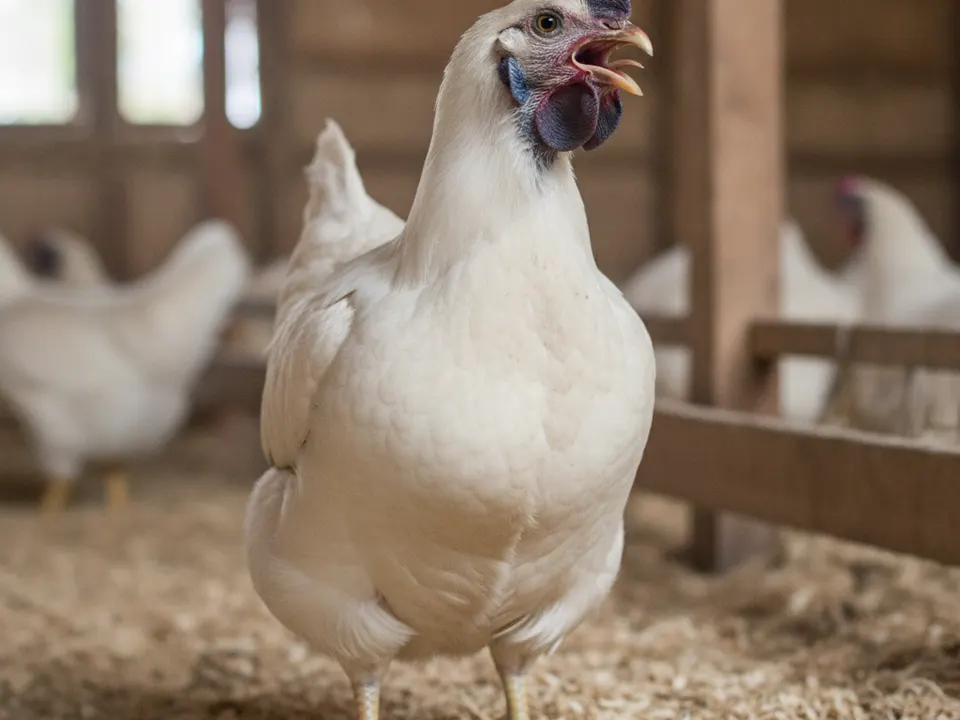
- Panting or breathing with the beak open, even when the house is not hot.
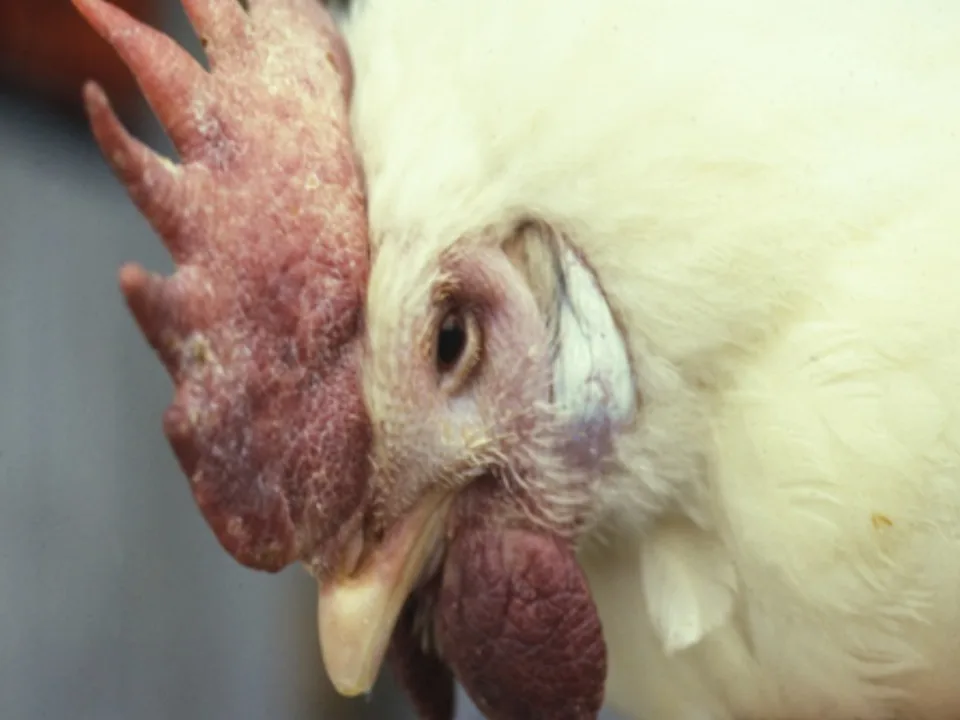
- Comb, wattles and face turning dark red or bluish-purple (cyanosis, meaning poor oxygen in the blood), especially after the bird moves.
- Slightly fuller-looking lower belly, sometimes with feathers on the belly looking thin or wet from lying down.
- Some birds look smaller or uneven compared with the rest, while others are the biggest birds in the house.
- A rise in daily deaths among the heaviest, best-looking males, which is often the first thing a farmer notices.
As it gets worse
- Tight, swollen belly that feels soft and fluid-filled, like a water balloon, when gently pressed.
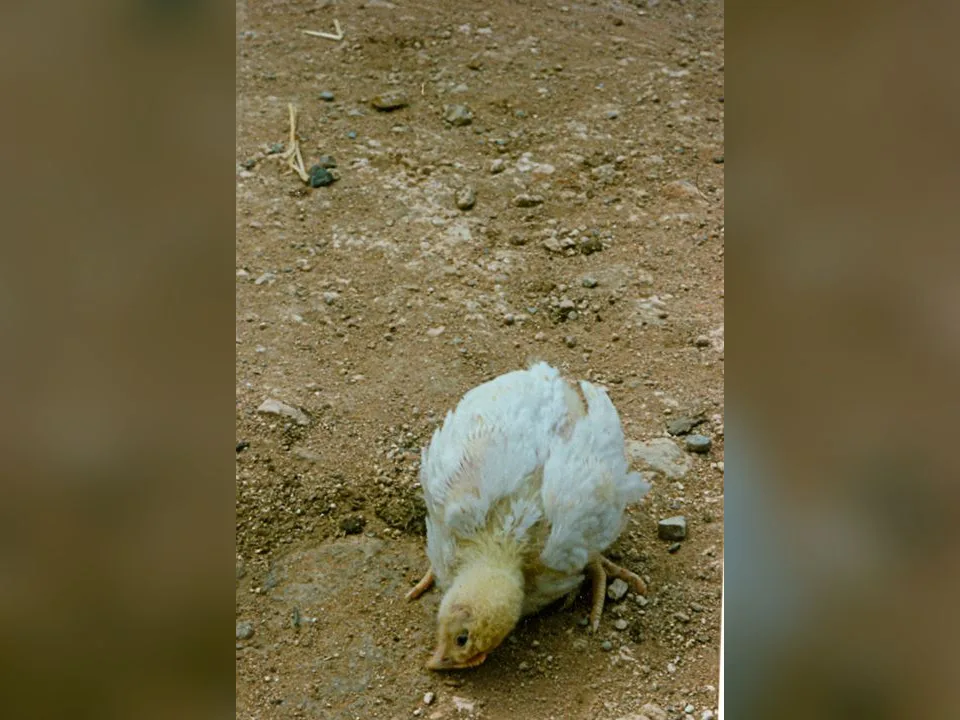
- Bird stands very upright, like a penguin, with legs wide apart to balance the heavy belly.
- Reddened or purplish skin over the belly, which may look shiny and stretched.
- Heavy, laboured breathing with the whole body moving, and the bird struggles to walk to feed and water.
- Bird gasps or collapses when chased or handled, and may die suddenly during catching or loading.
- Sudden death, with the dead bird showing a swollen belly and dark comb.
What to do right now
- Open up ventilation straight away so fresh air flows through the house, especially near the roof and above bird height, while avoiding cold draughts blowing directly on the birds.
- Check for ammonia: if the smell stings your eyes or nose when you bend down to bird level, the air is too dirty; remove wet, caked litter and add fresh, dry litter.
- Remove any charcoal jiko or burner from a closed brooder, or make sure fumes are vented outside, because carbon monoxide is deadly and worsens ascites.
- Keep the house at a steady, comfortable temperature; watch the birds, since huddling means too cold and spreading to the walls with panting means too hot.
- Handle birds as little as possible and do not chase them, because stressed ascites birds can collapse and die from the extra effort.
- Make sure clean, fresh water is always available, and stop adding salt, salty electrolytes or home remedies to the water unless your vet advises it.
- Do not try to drain the belly with a needle or knife; it does not cure the bird and causes pain, infection and death.
- Record daily deaths and the age, sex and size of birds affected, keep a few fresh dead birds cool for the vet, and call your vet or County Veterinary Office for a post-mortem.
How it spreads
- Ascites does not spread from bird to bird; it is triggered by conditions on the farm and by the bird's own fast growth.
- High altitude is a major trigger, because the air holds less oxygen; farms in places like Nakuru, Eldoret, Nyandarua, Nyeri, Kiambu and the Nairobi highlands see more cases than coastal or lowland farms.
- Cold brooding, especially on cold nights in June to August and during the rains, forces chicks to burn more energy and use more oxygen to keep warm, and this early stress often shows up as ascites weeks later.
- Poor ventilation lets ammonia, dust and carbon dioxide build up; houses closed tightly with polythene or sacks to keep warmth in are a common cause.
- Charcoal jikos or other burners inside a closed brooder release carbon monoxide, which blocks oxygen in the blood and damages the heart and lungs.
- Very fast early growth from high-energy pelleted feed fed freely from day one increases oxygen demand beyond what the lungs can handle.
- Too much salt in feed or water, for example salty borehole water, home-mixed rations with salty fish meal (omena), or adding table salt or electrolytes for long periods, makes fluid build-up worse.
- Respiratory diseases such as infectious bronchitis, Newcastle disease, mycoplasma (CRD) or aspergillosis (fungal lung infection from mouldy litter) damage the lungs and push birds into ascites.
Could it be something else?
Sudden death syndrome (flip-over)
Also kills big, fast-growing broilers, but the bird dies within moments, often found on its back, with no swollen belly and no fluid inside at post-mortem. Ascites birds are sick for days first and have a fluid-filled belly.
Yolk sac infection (omphalitis)
Affects chicks mostly in the first week, with a wet, swollen, smelly navel and a swollen belly from an infected yolk. Ascites usually appears from three weeks onward and the belly fluid is clear yellow and does not smell.
E. coli peritonitis and other bacterial infections
Birds often have fever signs, diarrhoea or airsac disease, and the belly contains cloudy, cheesy or foul-smelling material rather than clear fluid. A vet's post-mortem tells the difference quickly.
Aflatoxin poisoning or other liver damage
Mouldy feed causes poor growth across the whole flock, pale or yellow mottled liver, poor feathering and weak immunity. It can contribute to ascites, so the vet may find both; feed testing helps confirm it.
How it is diagnosed
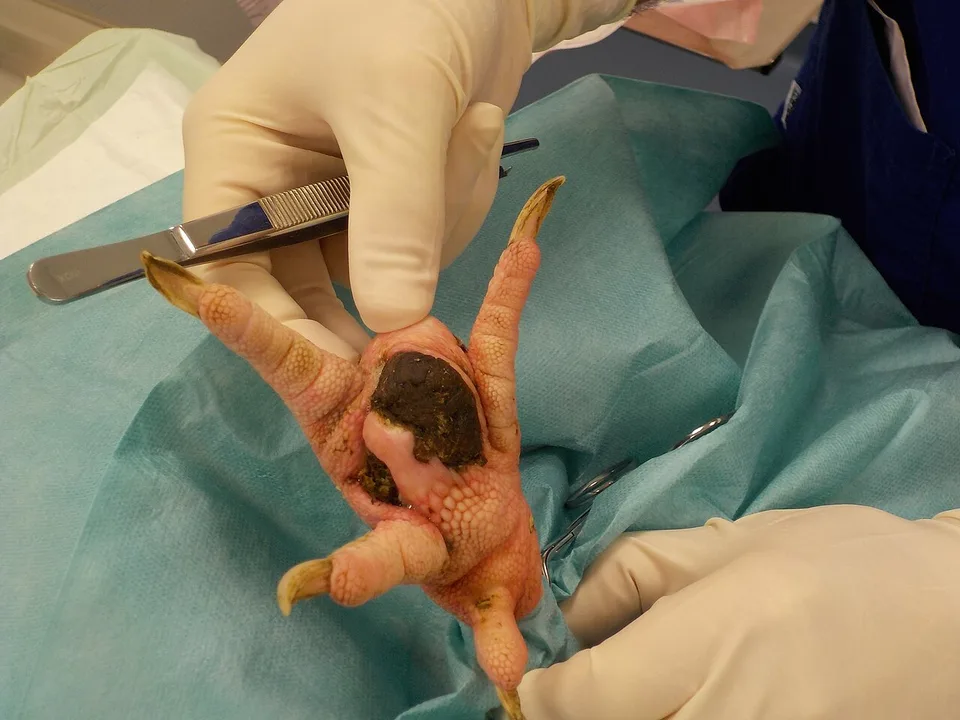
Ascites is usually confirmed by post-mortem (opening a dead bird). The vet looks for clear yellowish fluid in the belly, often with jelly-like clots, a heart that is enlarged and floppy with a thickened and stretched right side, a swollen, congested or shrunken liver, and dark, congested lungs. The vet may compare the weight of the right side of the heart with the whole heart to confirm right heart overload. They will also check for underlying causes such as lung infection, airsac damage, fungal growth from mouldy litter, or liver damage from mycotoxins, and may send samples to a laboratory (such as a county or KALRO/Kabete veterinary lab) for disease tests, feed mycotoxin tests or water salt tests. To help, keep two or three freshly dead or very sick birds cool (not frozen) in a clean bag, note the age of the flock, daily deaths, which birds are dying (big males or all sizes), the feed brand and batch, the water source, brooding method and night temperatures, and any vaccinations or treatments given.
Treatment
There is no medicine that reliably cures a broiler with an advanced water belly, and most such birds will not recover; the vet will usually advise humane culling of badly affected birds to end their suffering. The real treatment is at flock level, to stop more birds from developing it. The vet will typically advise on better ventilation and steady temperatures, reducing early growth rate (for example a lighting programme with a dark period at night, or a period of controlled feeding, or switching to mash or a lower-energy feed for part of the cycle), and checking feed and water for excess salt. If the post-mortem shows an underlying infection such as a bacterial respiratory disease, the vet may prescribe an appropriate treatment for that infection only. Antibiotics do not treat ascites itself, and using them without a clear bacterial cause wastes money and increases antimicrobial resistance (germs becoming resistant to drugs), which harms animal and human health. Diuretics (drugs that make the body lose water) have been tried in some settings, but results are inconsistent and they are not a routine answer. Any drug must be prescribed by a vet, and the meat withdrawal period (the time you must wait after the last dose before slaughter or sale) must be followed strictly, which matters greatly in broilers that are close to market age. Expect losses to slow within days to a couple of weeks once ventilation and growth management are corrected, although birds already damaged may keep dying.
Medicines must be prescribed and dosed by a vet. Always respect milk and meat withdrawal periods, and finish the full course of any antibiotic.
How Agrikima products can help
These support the animal alongside — never instead of — your vet's treatment, vaccination and good management.

AGRITOXINILSTOP
Mixed into feed as a mycotoxin binder, it helps reduce the harm from aflatoxin and ochratoxin in feed, which can damage the liver and lungs and add to the load that pushes broilers into ascites. It supports good feed storage and buying fresh feed; it does not treat birds that already have water belly.
View product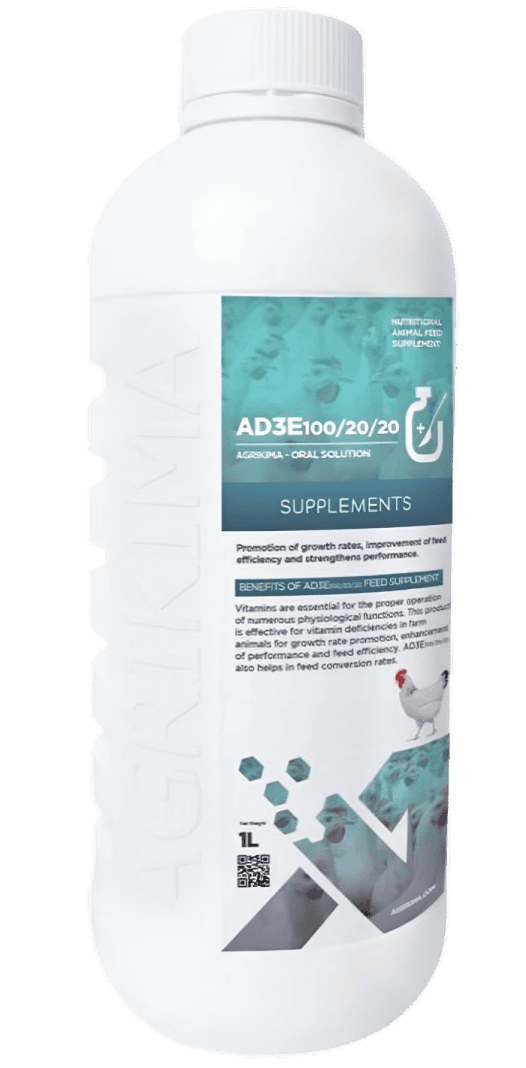
AD3E 100/20/20
Where your vet or feed supplier suspects the ration is low in vitamins, this vitamin A, D3 and E supplement can help support the bird's antioxidant defences and general health during stressful brooding and fast growth. It is an aid alongside proper ventilation, warmth and growth management, not a cure for ascites, and should be used as directed on the label.
View productPrevention
- Brood chicks warm and steady from day one, with a pre-heated house and dry litter, because cold stress in the first two weeks is one of the biggest causes of ascites later.
- Ventilate well at all ages: use adjustable curtains that open from the top, leave ventilation gaps under the roof, and never seal the house completely with polythene, even on cold nights.
- Use safe heat sources such as electric brooders, gas brooders or well-vented charcoal brooders placed so that fumes go outside, and never leave a smoking jiko in a closed brooder.
- On highland farms, slow early growth slightly using a lighting programme with some hours of darkness each night, or a feeding plan agreed with your vet or feed supplier; birds catch up later with little loss of final weight.
- Check the salt content of your water if you use a borehole, and avoid adding salt, salty fish meal or long-term electrolytes to home-mixed feed; buy feed from reputable millers.
- Store feed off the floor in a dry, airy store, use it while fresh, and never feed mouldy feed, because mycotoxins damage the liver and lungs.
- Keep litter dry and free of mould to prevent aspergillosis, and vaccinate against Newcastle disease, Gumboro (IBD) and infectious bronchitis as advised by your vet, since lung damage from disease increases ascites.
- Avoid overcrowding, buy chicks from reputable hatcheries, and keep records of deaths per day so you can spot a rising trend early and act.
Risk to people
Ascites is not an infection and cannot pass to people. However, birds with water belly are sick and should not be sold or eaten; they are condemned at meat inspection. If your vet prescribes any drug for an underlying problem, observe the full meat withdrawal period before selling or eating birds, to avoid drug residues in chicken meat.
Impact on your farm
Ascites hits the broiler farmer at the worst time, because birds usually die in the last weeks of the cycle when nearly all the feed, chick and brooding costs have already been paid. The best, heaviest males are often the ones lost. Surviving affected birds grow poorly, waste feed, and give uneven flock weights that brokers and hotels may pay less for. Birds with ascites are rejected at slaughterhouse inspection, and they often die during catching and transport. On highland farms with cold nights and closed houses, repeated ascites losses can make the difference between profit and loss for a small broiler business, and they also erode confidence in broiler farming as a reliable income.
Outlook and recovery
For an individual bird with a clearly swollen, fluid-filled belly, the outlook is poor; most die or need to be culled. Birds showing only early signs, such as panting and a dark comb, may stabilise if conditions improve quickly. For the flock, the outlook is good when the farmer acts early: improving ventilation, stopping cold stress, checking salt and feed quality, and managing early growth usually bring losses down in the current batch and prevent them in the next. Flocks at high altitude, in cold seasons, or with underlying lung disease will continue to have some risk, so prevention must become a routine part of every batch.
Common questions
Is water belly contagious? Will it spread to my other birds?
No. Ascites is not caused by a germ and does not pass from bird to bird. But if one bird has it, the same conditions (cold, stale air, altitude, fast growth) are affecting the whole flock, so more birds are likely to develop it unless you fix the house and management. Your vet should still check dead birds, because a lung infection can be the hidden trigger.
Can I remove the water with a needle to save the bird?
No. Draining the belly does not fix the overworked heart, the fluid comes back quickly, and the bird often dies from shock or infection. It is also painful for the bird. Birds with an advanced water belly should be humanely culled, and your effort should go into protecting the rest of the flock.
Why do my broilers in the highlands get it, but my cousin's in Mombasa do not?
At high altitude the air is thinner and holds less oxygen, and nights are colder. Broilers grow so fast that their lungs struggle even at sea level, so in the highlands their hearts are pushed much harder. Cold nights also make farmers close houses tightly, cutting fresh air. That is why farms around Eldoret, Nakuru, Nyandarua and similar areas need extra care with ventilation, warmth and growth rate.
Will antibiotics or electrolytes help my flock?
Antibiotics do not treat ascites, and using them without a vet's diagnosis wastes money and builds drug resistance. They only help if the vet finds a bacterial infection that is contributing. Many electrolyte products contain sodium (salt), and extra salt can actually make fluid build-up worse, so do not add them for long periods without your vet's advice. Clean, fresh water is what the birds need.
If I slow down their growth, will I lose money at market?
A short period of slower growth early in the cycle, through a lighting programme with some dark hours or controlled feeding agreed with your vet or feed supplier, usually lets birds catch up later. Many farmers find that fewer deaths in the last weeks more than make up for a small difference in growth. Talk to your vet about a plan that fits your altitude, house and market age.
Should I switch to improved kienyeji birds if ascites keeps happening?
Improved kienyeji types grow more slowly and are rarely affected by ascites, so they can suit cold highland farms with simple housing. But they take longer to reach market weight and sell into a different market. Before switching, try fixing brooding, ventilation, safe heating and feed quality, because these changes often solve the problem in broilers.
A guide, not a diagnosis. This page is general information to help you recognise problems early. Always confirm with a vet or animal health worker before treating.