What it is
Newcastle disease is caused by a virus called avian orthoavulavirus 1, still widely known by its older name, avian paramyxovirus type 1 (APMV-1). A virus is a tiny germ that can only multiply inside living cells, so antibiotics cannot kill it. Strains differ a lot in how dangerous they are. Mild (lentogenic) strains cause little or no illness and some of them are used to make vaccines. Moderate (mesogenic) strains mainly cause breathing problems and egg drop. Severe (velogenic) strains are the ones behind most outbreaks in East Africa and cause high deaths. After the bird breathes in or swallows the virus, it multiplies in the airways and gut, then spreads through the blood. It damages the lining of the airways, causing gasping and coughing. It damages the gut wall and blood vessels, causing bleeding in the gut and the green watery diarrhoea. In many birds it also attacks the brain and nerves, which causes the twisted neck, trembling, circling and paralysis. It damages the egg-making organs, so eggs drop suddenly and those laid are often soft, thin-shelled or misshapen. The time from infection to signs (the incubation period) is usually around 2 to 15 days, most often about 5 to 6 days.
Which animals are most at risk
All chickens of any age can be affected, and turkeys, guinea fowl, pigeons, quails and many other birds are also susceptible. Ducks and geese usually show fewer signs but can still carry the virus. The birds most at risk are unvaccinated ones, especially free-range kienyeji flocks where vaccination is irregular, and young growers whose protection from their mother's antibodies has worn off. Layers that missed booster vaccinations are at high risk of severe egg drop. In Kenya outbreaks are often reported during the dry and windy months and around festive seasons, when many birds are bought, sold and moved through markets. Farms that mix birds of different ages, buy birds often, share equipment or sit near busy live-bird markets face extra risk. Stress from poor feeding, heavy worm burdens, heat or transport makes birds less able to respond to vaccines and more likely to fall sick.
Signs to look for
Early signs
- Birds suddenly become dull, sit with ruffled feathers and eat and drink much less than usual.
- You hear gasping, sneezing, coughing or rattling breathing, and some birds breathe with their beak open.
- Layers show a sudden, sharp fall in egg numbers within a few days.
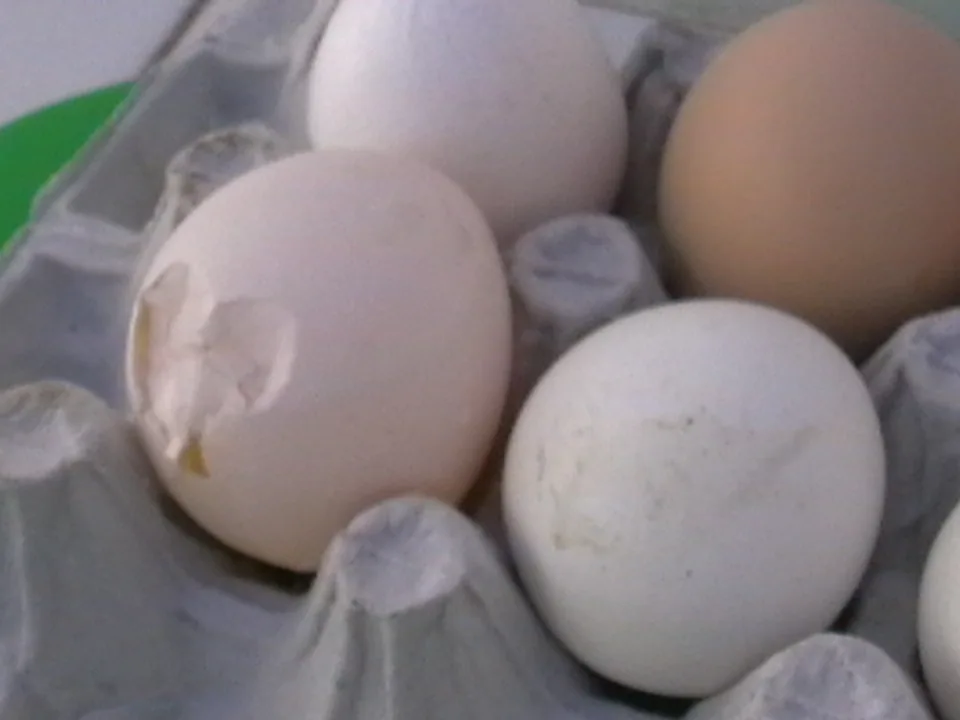
- Eggs become pale, thin-shelled, soft-shelled, rough or misshapen, and the egg white may be watery.
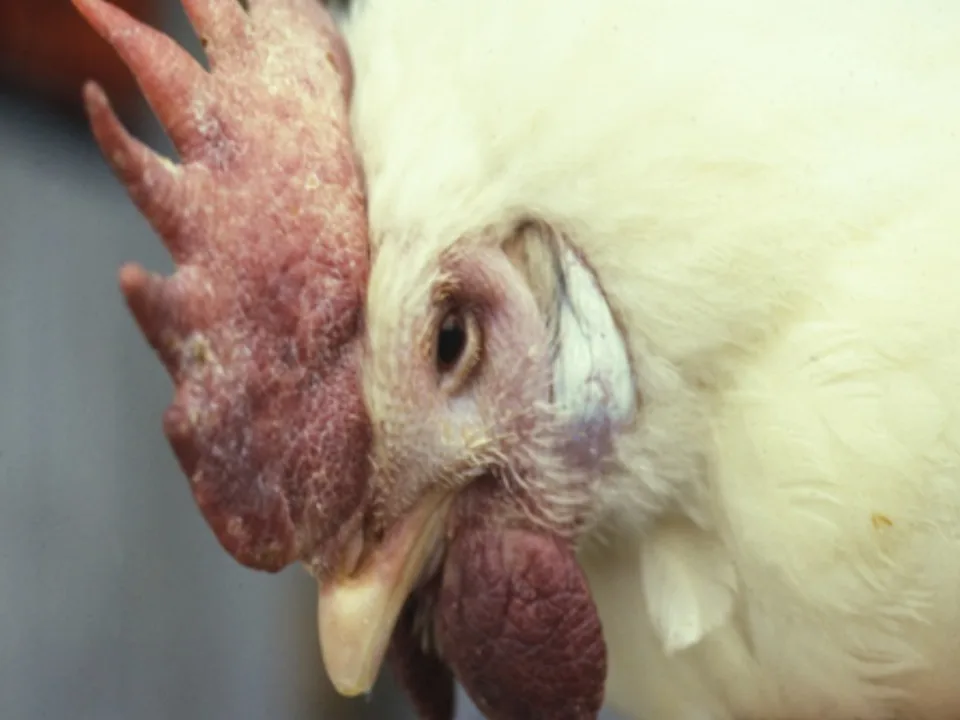
- Watery eyes, nasal discharge and some swelling around the eyes or head.
- A few birds die suddenly with little warning, often before other signs are obvious.
As it gets worse
- Green or greenish-white watery diarrhoea, sometimes with a strong smell, soiling the feathers around the vent.
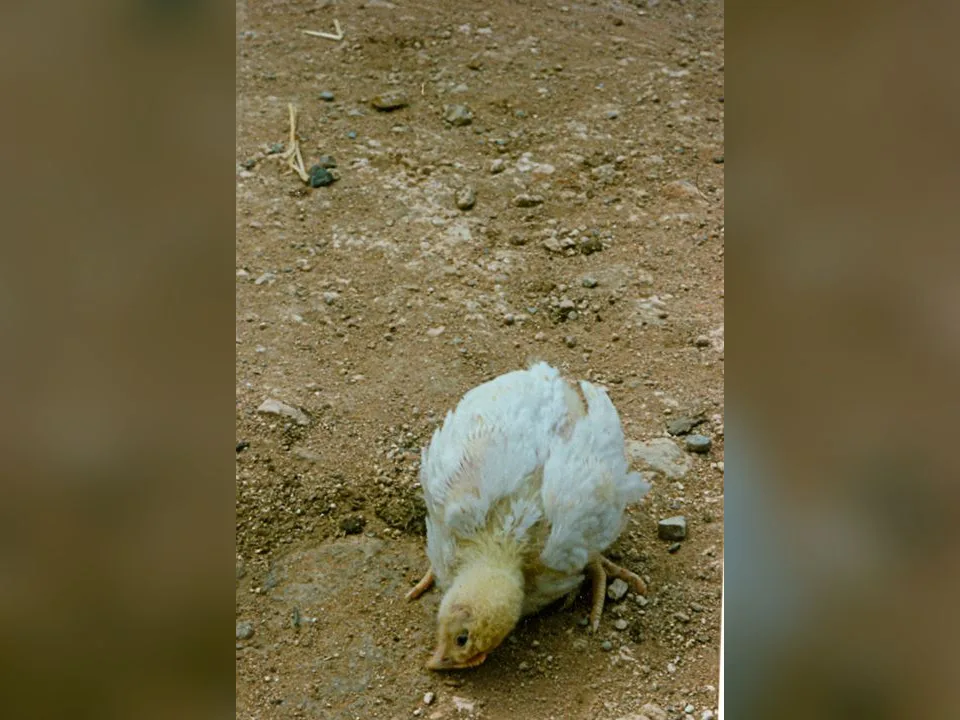
- Twisted neck (torticollis), with the head turned sideways, backwards or upside down, or the bird looking up at the sky ('star-gazing').
- Trembling of the head and neck, walking in circles, falling over or walking backwards.
- Drooping wings and paralysis of one or both legs, so birds sit or lie and cannot reach feed or water.
- Many birds die within a few days, and in an unvaccinated flock losses can reach nearly the whole flock.
- Some birds that survive stay permanently with a twisted neck or weak legs and never return to normal production.
What to do right now
- Report the suspected outbreak immediately to your County Veterinary Officer, local veterinary office or an extension officer; Newcastle disease is notifiable under Kenyan law, so reporting is required, not optional.
- Stop all movement: do not sell, give away, buy or slaughter birds, and do not take eggs, manure, trays or crates off the farm until the vet tells you it is safe.
- Confine your birds in their house or a fenced area so they cannot mix with neighbours' chickens, ducks or wild birds, and keep visitors and traders away.
- Separate visibly sick birds from the rest where possible, and give all birds clean drinking water, easy-to-reach feed, shade and a quiet, dry place.
- Protect yourself and avoid carrying the virus: use dedicated boots or a footbath, wash hands with soap after handling birds, and wear gloves and a mask when handling sick or dead birds or droppings.
- Collect dead birds promptly, keep them in sealed bags, and follow the vet's instructions on disposal, usually deep burial with lime or burning; never throw them in the bush or feed them to dogs.
- Write down the number of sick and dead birds each day, the date signs began, your vaccination records and recent purchases, so the vet can act quickly.
- Do not give antibiotics or other medicines on your own; they will not kill the virus and may hide the true problem, so wait for the vet's advice.
How it spreads
- Sick and recovering birds shed huge amounts of virus in their droppings and in mucus from the beak and nose, and healthy birds pick it up by breathing it in or eating contaminated feed and water.
- Buying new birds from markets, neighbours or traders and adding them straight to your flock is one of the most common ways kideri enters a farm.
- Free-ranging kienyeji chickens mix with neighbours' birds at feeding spots, rubbish heaps and water points, so the virus moves quickly from homestead to homestead.
- People carry the virus on their shoes, clothes, hands and bicycles or motorbikes, especially chicken traders, egg collectors and visitors who move between farms.
- Contaminated egg trays, crates, sacks, feeders, drinkers and vehicles can carry the virus from one farm or market to another.
- Wild birds, pigeons and other poultry such as ducks and guinea fowl can carry the virus, sometimes without looking sick.
- The virus survives for weeks in droppings, litter and on surfaces, especially in cool, shaded places, so a dirty house can infect new birds long after an outbreak.
- Carcasses of birds that died of the disease, if thrown in the bush or eaten by dogs, can spread the virus further around the village.
Could it be something else?
Highly pathogenic avian influenza (bird flu)
Bird flu can look almost the same, with sudden deaths, breathing trouble and egg drop. It more often causes swollen heads, blue or purple combs and wattles, and red spots on the shanks, but you cannot reliably tell the two apart on the farm. Both are notifiable, so only laboratory tests arranged by the vet can confirm which one it is.
Infectious bronchitis (IB)
IB causes coughing, sneezing and egg drop with wrinkled or misshapen eggs, but it does not cause twisted necks or paralysis, and deaths in adult birds are usually low. Newcastle disease in unvaccinated birds spreads faster and kills far more birds.
Fowl cholera
Fowl cholera is a bacterial disease that also causes sudden deaths and green diarrhoea, but birds often have hot, swollen wattles, swollen joints and it usually affects adult birds more. It does not usually cause nerve signs, and a vet can confirm it in the lab and treat it with suitable antibiotics, unlike Newcastle disease.
Marek's disease and vitamin deficiencies
Marek's disease causes paralysis, typically with one leg stretched forward and the other back, but it spreads slowly, affects a few young birds at a time and does not cause sudden flock-wide deaths or breathing signs. Vitamin E deficiency ('crazy chick disease') can cause twisted necks in young chicks, but there is no gasping, green diarrhoea or rapid spread, and it relates to poor or stale feed.
How it is diagnosed
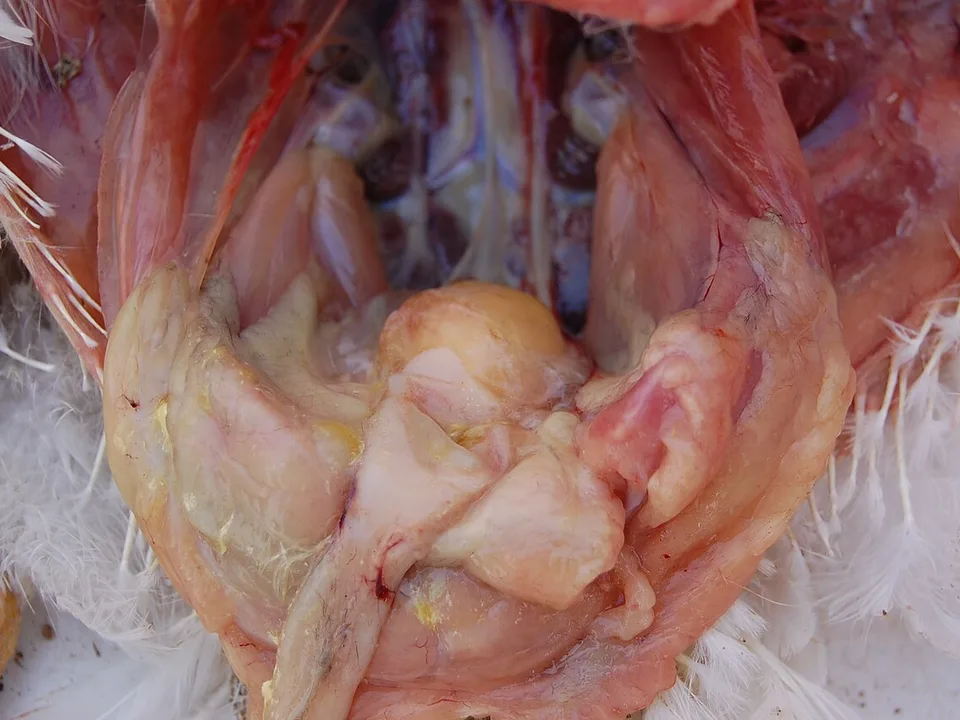
A vet will first look at the pattern: how fast birds are falling sick, the mix of breathing, gut and nerve signs, the egg drop and the vaccination history. At post-mortem (opening a dead bird) the vet often finds pinpoint bleeding at the tips of the glands in the proventriculus (the stomach before the gizzard), bleeding or ulcers in the intestines and caecal tonsils, and inflammation in the windpipe. These findings are strongly suggestive but not proof, because bird flu and some other diseases can look similar. Confirmation needs laboratory tests such as PCR (a test that detects the virus's genetic material), virus isolation, or blood tests for antibodies, done through regional veterinary investigation laboratories or the Central Veterinary Laboratories at Kabete. To help, the farmer can prepare: a written record of when signs started, how many birds are sick and dead each day, egg production records, the dates and type of each vaccination, the vaccine batch number and where it was bought, and any recent purchases or movement of birds. Keep two or three freshly dead or very sick birds in a sealed double plastic bag in a cool place (not frozen) for the vet, and do not open carcasses yourself.
Treatment
There is no treatment that cures Newcastle disease, and antibiotics do not kill the virus. Because it is notifiable, the government veterinary service leads the response. Depending on the situation, the vet may confirm the diagnosis, place the farm or area under quarantine, and advise or order humane culling of affected flocks to stop the spread, followed by cleaning and disinfection. In some outbreaks, vets may advise emergency vaccination of healthy birds on nearby farms, or of the still-healthy birds in a flock, to build protection quickly, though birds already incubating the virus may still fall sick. For birds that are kept, care is supportive: clean water, good feed, warmth or shade, and keeping stress low. If secondary bacterial infections are a real problem, a vet may prescribe an antibiotic, but this only treats the extra bacterial infection, not the virus, and should be used only when truly needed to limit antimicrobial resistance (germs becoming resistant to medicines). Any antibiotic must be prescribed by a vet, and the egg and meat withdrawal periods on the label must be followed, meaning eggs and meat cannot be eaten or sold until that time has passed. Expect losses to continue for several days even with good care, and expect some survivors to have lasting nerve damage and poor laying.
Medicines must be prescribed and dosed by a vet. Always respect milk and meat withdrawal periods, and finish the full course of any antibiotic.
Prevention
- Vaccinate every bird, including kienyeji chickens; vaccination is the single most important protection against kideri, and schedules vary by vaccine type and local disease risk, so follow the vaccine label and your vet.
- A common pattern in Kenya is a first Newcastle vaccine (often a live strain such as LaSota or Hitchner B1, by eye drop or drinking water) in the first one to two weeks of life, a booster around three to four weeks later, then regular boosters about every three months for layers, breeders and kienyeji flocks; layers are often also given an inactivated (killed) injectable vaccine by trained personnel before laying starts.
- Handle vaccines carefully: keep them cold from the agrovet to the farm, use clean water free of chlorine, use a stabiliser such as skimmed milk powder if the label advises, give vaccine in the cool of the morning, and make sure all the vaccine water is drunk within the time stated on the label.
- For village chickens, ask your vet or agrovet about heat-tolerant (thermostable) Newcastle vaccines, which cope better where there is no fridge, and consider organising vaccination with neighbours so the whole village is protected at once.
- Quarantine all new birds away from your flock for at least two weeks, buy only from trusted sources, and never bring birds back from the market and put them straight into your house.
- Keep a footbath at the entrance, limit visitors and traders, clean and disinfect crates, trays and equipment, and do not share equipment with other farms.
- Keep birds healthy so vaccines work: good feed, clean water, regular deworming, dry litter and protection from heat and overcrowding.
- After any outbreak, remove all litter and manure, clean and disinfect the house and equipment, leave it empty for the period your vet advises, and only restock with vaccinated birds.
Risk to people
Newcastle disease is not a serious threat to people, but the virus can occasionally cause a mild eye infection (conjunctivitis, with red, watery, sore eyes) in people who handle large amounts of virus, such as vaccinators, poultry workers and laboratory staff. It usually clears by itself within days. Avoid rubbing your eyes when handling sick birds or live vaccine, wash your hands with soap afterwards, and see a health worker if your eyes become sore. Do not eat or sell sick or dead birds; besides spreading the disease, this is against the rules during an outbreak. If a vet prescribes antibiotics for secondary infections, respect the egg and meat withdrawal periods so that drug residues do not reach people.
Impact on your farm
Newcastle disease is one of the most damaging poultry diseases in Kenya and across East Africa. In unvaccinated kienyeji flocks, an outbreak can wipe out most or all of a family's chickens within days, taking away a key source of eggs, meat, school fees and emergency cash. In commercial layers, even vaccinated flocks with weak protection can suffer a sharp egg drop and poor shell quality that lasts for weeks, and some birds never return to full production. Broiler farmers lose birds close to market weight and may be unable to sell during quarantine. Movement restrictions can stop sales of live birds and eggs from the farm and sometimes from the whole area, and markets may be closed. Costs add up from dead birds, lost production, cleaning and disinfection, delayed restocking and the price of replacement stock. Compared with these losses, regular vaccination is cheap insurance.
Outlook and recovery
For unvaccinated flocks infected with a severe strain, the outlook is poor: many or most birds may die, and survivors often have permanent nerve damage or reduced laying. Well-vaccinated flocks usually show much milder signs, often only a drop in eggs or some breathing problems, and losses are far lower. Recovery depends on the strain of virus, the bird's vaccination status and age, how quickly the flock is locked down, and whether other problems such as worms, poor nutrition or bacterial infections are present. Once a farm is cleaned, disinfected and restocked with properly vaccinated birds, and good biosecurity is kept up, the risk of another outbreak drops greatly.
Common questions
Can I treat kideri with antibiotics or local remedies?
No treatment cures Newcastle disease. It is caused by a virus, and antibiotics only work against bacteria. A vet may sometimes prescribe an antibiotic to control extra bacterial infections in surviving birds, but this does not stop the virus itself. Giving antibiotics without a vet wastes money, leaves residues in eggs and meat, and helps germs become resistant to medicines. Local remedies may help birds feel more comfortable but will not stop an outbreak. The right steps are to report, lock down, and follow the vet's advice.
My birds were vaccinated. Why did they still get sick?
Vaccines greatly reduce illness and deaths but do not give perfect protection. Common reasons for failure are a broken cold chain (vaccine got warm on the way from the agrovet), using chlorinated tap water that kills the live vaccine, not all birds drinking enough vaccine water, giving the vaccine to birds already incubating the virus, missing booster doses, or birds being stressed, wormy or poorly fed. Keep records of the vaccine batch, date and method, and discuss them with your vet so the schedule and handling can be improved.
Can I eat or sell birds or eggs from a flock with Newcastle disease?
During a suspected or confirmed outbreak you must not sell or move birds or eggs off the farm unless the veterinary officer allows it. Selling sick or in-contact birds is one of the main ways kideri spreads to other farms and markets. Sick or dead birds should not be eaten; they should be disposed of as the vet directs. Newcastle disease itself is not a major food safety risk to people, but the main concern is stopping the spread to other flocks.
Why do I have to report it, and what do movement restrictions mean for me?
Newcastle disease is notifiable in Kenya, which means the law requires anyone who suspects it to report it to the County Veterinary Officer or the Directorate of Veterinary Services. Reporting lets vets confirm the disease, warn neighbours and stop it spreading across the area. Movement restrictions, or quarantine, mean that no birds, eggs, manure, litter or used equipment can leave or enter your farm, and sometimes the whole area, until the vets lift the order. Markets may also be closed for a time. These measures can be hard, but they protect your neighbours and the wider poultry industry, and early reporting usually means a shorter, smaller outbreak.
Do kienyeji chickens really need vaccination?
Yes. Kienyeji chickens are hardy, but they are not naturally protected against Newcastle disease, and it is the main reason whole village flocks are lost. Because they roam freely and mix with other birds, they are often at higher risk than caged birds. Regular vaccination, with boosters about every three months or as your vet advises, and vaccinating together with neighbours, gives the best protection. Heat-tolerant vaccines can be useful where there is no fridge.
How long should I wait before restocking after an outbreak?
Wait until the veterinary officer lifts any restrictions and tells you it is safe. Before that, remove all litter, manure and feathers, clean and disinfect the house, feeders, drinkers and equipment, and leave the house empty for the period the vet recommends, commonly several weeks. When you restock, buy healthy birds from a trusted source, make sure they are vaccinated or vaccinate them on time, and keep strict biosecurity so the virus does not come back.
A guide, not a diagnosis. This page is general information to help you recognise problems early. Always confirm with a vet or animal health worker before treating.